


Site Admin
5. Joe Mauer
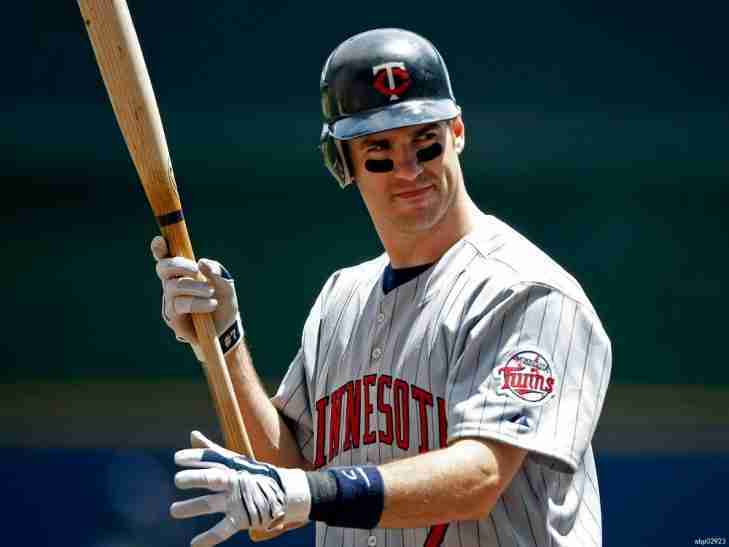
Joe Mauer was the ultimate hometown hero, a St. Paul native selected with the number one overall pick in the 2001 draft who famously chose the diamond over a future as a major college quarterback. While the expectations of a "local boy" can often be a burden, he spent the next fifteen seasons surpassing every metric of success established for the position.
Debuting for the Twins in 2004, Mauer demonstrated specialized hitting by becoming the first catcher in American League history to win a batting title (.347). In 2006, Mauer again demonstrated specialized hitting by becoming the first catcher in American League history to win a batting title (.347). He followed that with another crown in 2008, proving to be a professional mainstay who could consistently outperform the league’s best hitters while handling the physical rigors of the catching position. This early stretch established a high-quality floor, making him the most disciplined hitter in the Junior Circuit.
In 2009, despite missing the first month of the season, he showcased a mastery of the plate to lead the league in batting average for a third time, hitting a career-high .365. He swept the triple-slash categories by leading the league in on-base percentage (.444) and slugging percentage (.587), earning a near-unanimous American League MVP Award. He became the only catcher in history to win three batting titles, a feat of high-volume hitting that solidified his status as a premier superstar. During this peak, he also showed the organization a specialized defensive value, capturing three consecutive Gold Glove Awards for his elite work behind the dish.
His career saw a notable shift late in his career, as he moved to first base in 2014 due to concussion issues. Although he transitioned from catching, he stayed a key player and a top table-setter for the Twins. His Minnesota stats include 2,123 hits and a .306 batting average, indicating consistent performance over the years. His knack for hitting for average, combined with a stellar .388 OBP, kept him in the team’s strategic core until he retired after the 2018 season.
The organization retired his number 7 in 2019 and inducted him into the Twins Hall of Fame in 2023. A year later, Mauer reached the ultimate summit as a first-ballot Baseball Hall of Famer in 2024.
4. Kirby Puckett
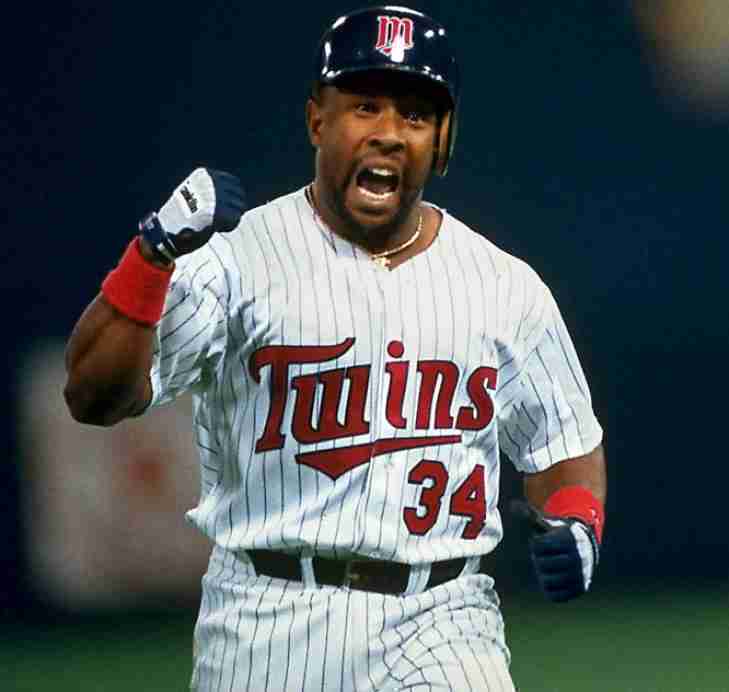
Kirby Puckett arrived in Minnesota in 1984 as a compact, energetic center fielder who famously recorded four hits in his major league debut. While his husky 5'8" frame defied the traditional mold of a speed-first outfielder, he quickly evolved into the most iconic and beloved figure in the history of the Twin Cities. For twelve seasons, all spent in a Twins uniform, he provided a brand of high-volume hitting and Gold Glove defense, standing as the definitive catalyst behind the franchise's two world championships and the undisputed heart of the organization during its most successful era.
After showcasing his talent with a 200-hit campaign in 1986, Puckett proved his skill at spotting gaps, leading the American League with 207 hits in 1987. He quickly became a key player and the emotional driving force of a team that stunned baseball by winning the 1987 World Series. This early period set a strong foundation for his career, marked by contagious enthusiasm and a particular talent for performing in crucial moments.
In 1991, Puckett achieved remarkable individual and team success, with a postseason performance that became legendary in Minnesota. During Game 6 of the World Series, facing elimination, he famously told his teammates to "jump on his back." He demonstrated exceptional all-around skill by making a leaping catch at the fence to prevent a home run and then hitting a walk-off homer in the 11th inning to send the game to a Game 7. This streak of excellence transformed him into a national icon, solidifying his legacy with a second world championship and a 1989 Batting Title, when he achieved a career-high batting average of .339.
His tenure featured a remarkable accumulation of hardware that reflected his dominance on both sides of the ball. Between 1986 and 1995, he was a perennial All-Star selection, earning six Gold Gloves for his defensive mastery in center field and six Silver Slugger Awards. He left behind a statistical footprint in Minnesota that includes 2,304 hits and a stellar .318 career batting average. While his career was tragically cut short in 1996 by a sudden loss of vision due to glaucoma, he had already amassed a lifespan of achievement that made him the franchise leader in hits, doubles, and total bases at the time of his retirement.
In 2001, when Puckett was inducted into the Baseball Hall of Fame on his first year of eligibility, it served as a final punctuation on a journey that saw him remain a "Lifer" in Minnesota. He walked away from the game as a high-caliber legend, honored with the retirement of his number 34 in 1997. Puckett was also part of the inaugural Twins Hall of Fame Class in 2000
2. Harmon Killebrew
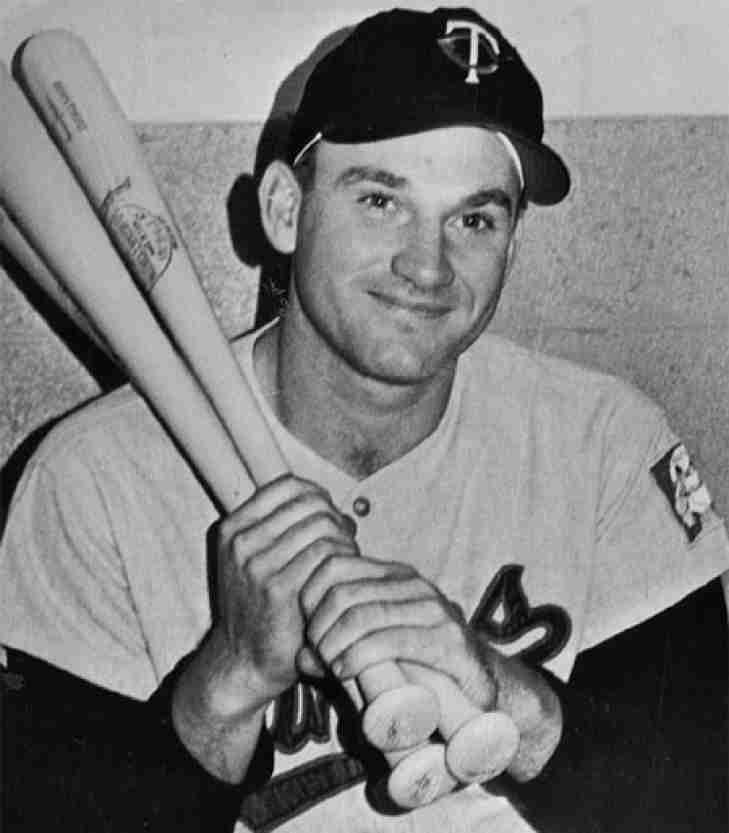
Harmon Killebrew arrived in Washington, D.C. in 1954 as a prized "Bonus Baby," a teenager whose raw strength was so prodigious that MLB rules forced him to stay on the big-league roster before he was technically ready for the assignment. While he spent his first few seasons navigating a slow, deliberate apprenticeship, the Senators' front office's patience eventually yielded one of the most feared power threats in the sport's history.
Killebrew had a breakout 1959 season that validated years of patience. After becoming the starting third baseman in Washington, he led the American League with 42 home runs and earned his first of thirteen All-Star selections. He proved a reliable mainstay capable of carrying a lineup, a trend that continued after the franchise moved to Minnesota in 1961. This period established a high-quality baseline, as he became the first player to hit 40+ home runs in a season eight times, a rare power achievement.
Killebrew hit his peak in 1969, setting the standard for Twins’ offense. That summer, he demonstrated patience and power, winning AL MVP with league-leading home runs (49), RBIs (140), and walks (145). His disciplined approach earned him a .427 OBP, showing he's more than a slugger. This dominance made him a superstar, supporting the Twins' first AL West division title.
Over his career, he was a tactical nightmare for pitchers, capturing six home run titles and finishing in the top five of the MVP voting six times. While he was never a traditional contact hitter, he demonstrated specialized value to the organization by drawing walks, leading the league in walks four times. His impact with the Senators/Twins with 559 home runs and 1,540 RBIs marks that reflect a lifetime of heavy lifting in the middle of the order.
Killebrew was inducted into the Baseball Hall of Fame, a fitting capstone to a journey that saw him become the first player in franchise history to have his number retired. He was also part of the inaugural Twins Hall of Fame Class in 2000.
3. Rod Carew
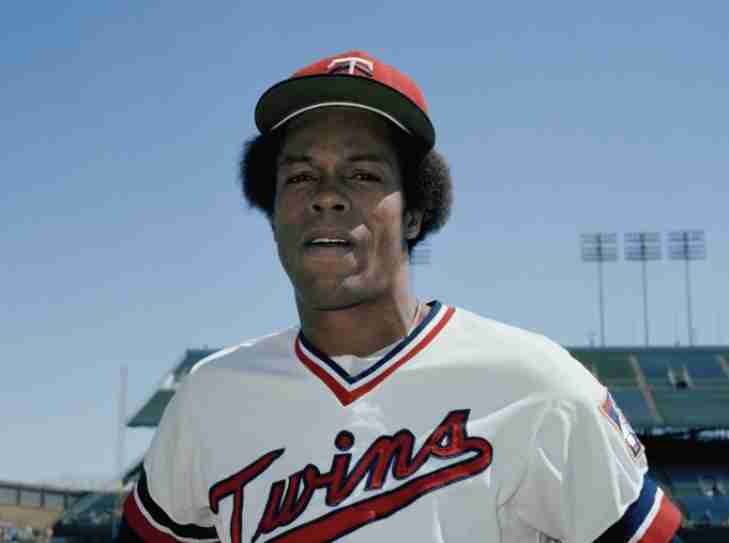
Rod Carew was a Panamanian-born infielder whose crouched stance and elite hand-eye coordination immediately baffled American League pitching. While he debuted as a second baseman, his evolution into a technical master of the strike zone saw him become the most prolific pure hitter of his generation.
Debuting in 1967, Carew quickly made a significant impact on MLB. He won the 1967 American League Rookie of the Year Award, showing his immediate influence on the game. He earned his first of twelve straight All-Star selections as a Twin. Carew established himself as a consistent professional, winning his first batting title in 1969 with a .332 average and helping Minnesota secure the first American League West title. This early period marked the beginning of a career where he would hit over .300 every season after his second year with the Twins.
During his Minnesota years, Carew established himself among the sport's legends. Between 1972 and 1975, he won four straight American League batting titles, joining Ty Cobb as the only players to lead the league in hitting for three or more straight seasons. He remained a technical marvel, hitting .364 in 1974 despite lacking home run power. Even during his transition from second to first base in late 1975, his offensive production stayed strong; in 1976, he narrowly missed a fifth straight title, finishing just .002 behind George Brett and setting a personal best with 49 stolen bases.
Carew reached his apex in 1977. That season, he showcased a mastery of the plate to flirt with the .400 mark deep into the calendar, eventually finishing at .388, the highest average in the majors in twenty years. He led the league in hits (239), runs (128), and triples (16), while also winning the American League MVP Award. His high-caliber production that year included sweeping the batting, on-base percentage, and OPS titles.
Carew’s career in Minnesota ended after a tumultuous 1978 season due to a strained relationship with Twins owner Calvin Griffith, who made offensive remarks. Carew vowed not to play for the team again. In 1979, he was traded to the California Angels in a deal that included Ken Landreaux. He continued his success there, achieving his 3,000th hit against the Twins.
In 1991, he was inducted into the Baseball Hall of Fame in his first year of eligibility. He remains a professional icon in Minnesota, with his number 29 retired by the organization in 1987. He proved that true greatness lies in the relentless pursuit of the hit, a journey that culminated in his induction into the inaugural Twins Hall of Fame Class in 2000.
Carew compiled 2,085 hits, seven batting titles, and the 1977 American League MVP.