
Site Admin
1. Walter Johnson
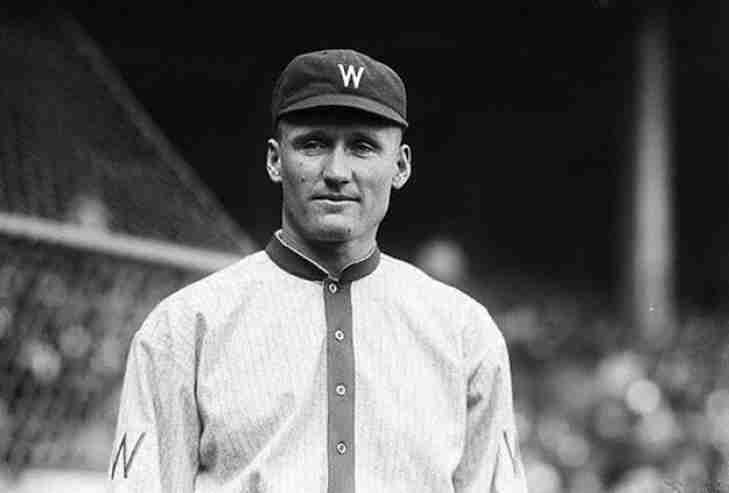
Walter Johnson came to Washington in 1907 as a raw, hard-throwing right-hander from the Idaho semi-pro leagues, possessing a sidearm delivery that produced a velocity the baseball world had never seen. Known as "The Big Train," he remained a loyal mainstay for a franchise that often struggled to provide him with adequate support.
Between 1910 and 1919, Johnson demonstrated a historic mastery of the American League, recording ten consecutive 20-win seasons. He reached a historic peak in 1913, authoring a season that many consider the greatest in pitching history; he won 36 games and posted a staggering 1.14 ERA, earning his first American League MVP Award. This run of dominance turned him into a national icon, as he led the league in strikeouts in eight of those ten years.
Johnson attained a legendary apex of performance late in his career, demonstrating that his technical expertise was equally formidable as his early-career intensity. In 1924, at the age of 36, he led the Senators to their inaugural American League pennant by securing his second Most Valuable Player (MVP) Award and leading the league in wins (23), earned run average (2.72), and strikeouts (158). He culminated this professional zenith with a distinguished performance in the 1924 World Series, appearing as a relief pitcher in Game 7 to hold the Giants scoreless across four extra innings. This high-pressure victory secured the sole world championship in Washington's original franchise history, thereby consolidating his position as the quintessential hero of the nation’s capital.
Johnson accumulated stats that remain virtually untouchable on the franchise leaderboards. He remains the all-time leader for the Senators/Twins organization in almost every significant category, including 417 wins, 3,509 strikeouts, and a record 110 shutouts. He tossed over 5,900 innings and completed 531 of his starts.
In 1936, Johnson was elected as one of the "First Five" inaugural members of the Baseball Hall of Fame, and he has a claim as one of the best hurlers of all time.
23. Norman Powell

Following the title win, Powell moved into a starting role at Shooting Guard. Powell, who had never averaged 10 Points per Game in a season, blossomed in the role, improving to 16 PPG, and raising his True Shooting Percentage to over .600. He was doing even better in 2020-21, averaging 17.7 Points per Game, but the struggling Raptors traded Powell to Portland.
43. Dell Curry

48. Dee Brown