


Site Admin
36. Ozzie Guillen
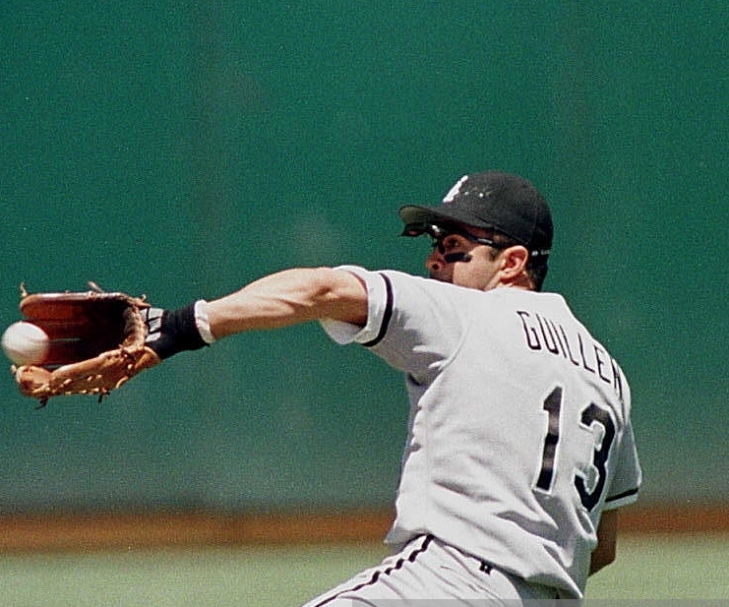
The journey in Chicago began with a bang in 1985, as Guillén matured instantly from a young prospect into the American League Rookie of the Year. He arrived with a flair for the dramatic and a glove that seemed to have a gravitational pull, anchoring the Chicago infield for thirteen consecutive seasons. He was a three-team All-Star during his tenure, providing defensive stability that kept the organization competitive amid roster transitions.
However, his offensive profile was an anomaly even in his own era. Guillén was a "put-the-ball-in-play" specialist who viewed the walk as a foreign concept. While he amassed a robust 1,608 hits for the franchise, his refusal to wait for a pitch resulted in a career .286 on-base percentage, a figure that remains a historical outlier for a player with such significant longevity. With an overall OPS of .625, Ozzie proved that a player could remain a vital, everyday starter through sheer defensive brilliance and a knack for timely contact, even while posting efficiency numbers that would sit many of his peers on the bench.
His identity was synonymous with a gritty, emotional style of play that resonated deeply with the fans at Comiskey Park. He swiped 163 bases during his Chicago stay, providing a spark of speed that complemented his aggressive mindset. Whether he was diving into the hole to take away a base hit or hacking at the first pitch to ignite a rally, Ozzie played with a visible passion that made him the emotional leader of the clubhouse. He showed that you could be a star through force of will and a vacuum for a glove, serving as the heartbeat of the team despite his statistical unorthodoxies.
The chapter eventually reached its conclusion after the 1997 season, but his legacy on the South Side was only half-written. While his playing career serves as a fascinating study in defensive value over traditional offensive metrics, his later return as the Manager of the Year and the tactical architect of the 2005 World Series championship cemented his White Sox legacy.
38. Tommy Thomas
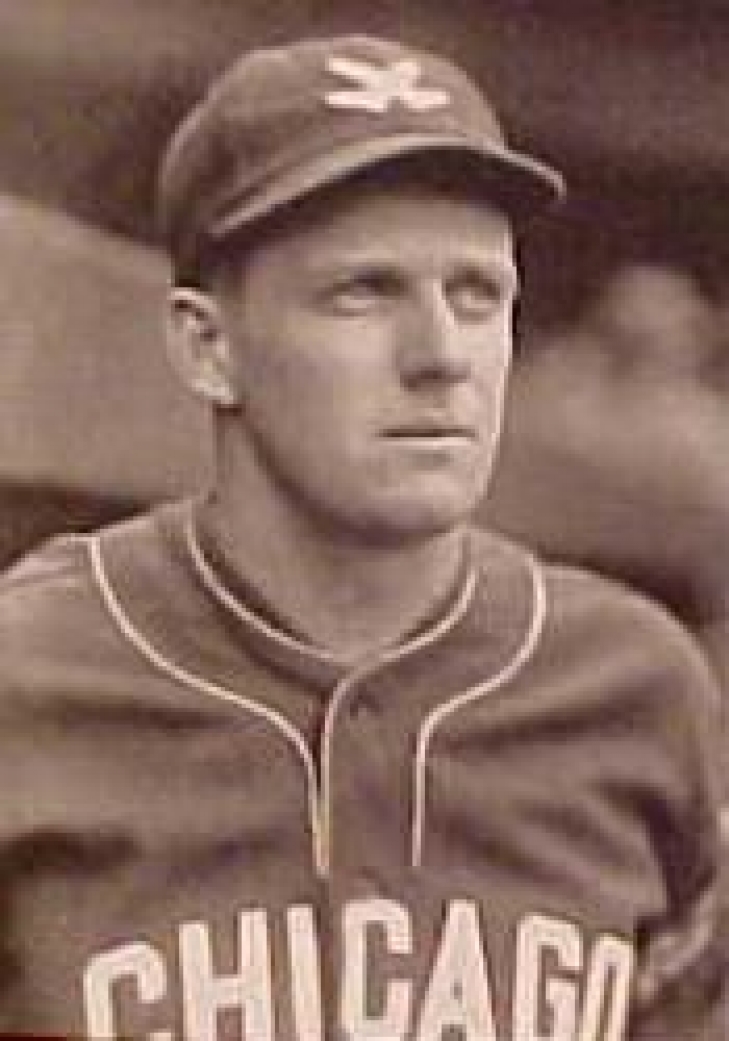
Thomas arrived in Chicago in 1926 and bypassed the usual maturation process, becoming a cornerstone of the franchise instantly. He debuted as a 26-year-old rookie and immediately validated the club’s investment, winning 15 games and holding opposing hitters to a league-best .244 batting average. He was a tactical technician from the jump, possessing a lively fastball and a sharp curve that helped him finish third in the American League in strikeouts in each of his first three seasons. He arrived with a reputation for durability and quickly evolved into a statistical titan who commanded the strike zone with professional poise.
The absolute pinnacle of his career arrived in 1927, a season in which he stood as the undisputed workhorse of the league. Thomas was an efficiency machine that summer, winning 19 games and posting a career-low 2.98 ERA. He led the American League in innings pitched with a staggering 307.2 and topped the leaderboard in bWAR for pitchers at 8.3, a total that underscored his value as a high-volume outlier. He followed this with a massive 6.6 bWAR in 1928, maintaining his status as a perennial leader in WHIP and run suppression while anchoring a White Sox staff that often struggled to provide him with adequate run support.
His identity was synonymous with a relentless, high-stakes durability. Thomas was an efficiency machine who led the league in complete games in 1929, but the sheer volume of his early-career workload eventually took its toll. By 1930, his production began to erode, and the misleading nature of his 83–92 record with the club took shape; the losses were often a byproduct of a diminishing supporting cast rather than a lack of competitive fire. He remained a high-leverage presence until his 1932 sale to the Washington Senators, concluding a stay on the South Side where he threw over 1,500 innings across 245 games.
34. Frank Smith
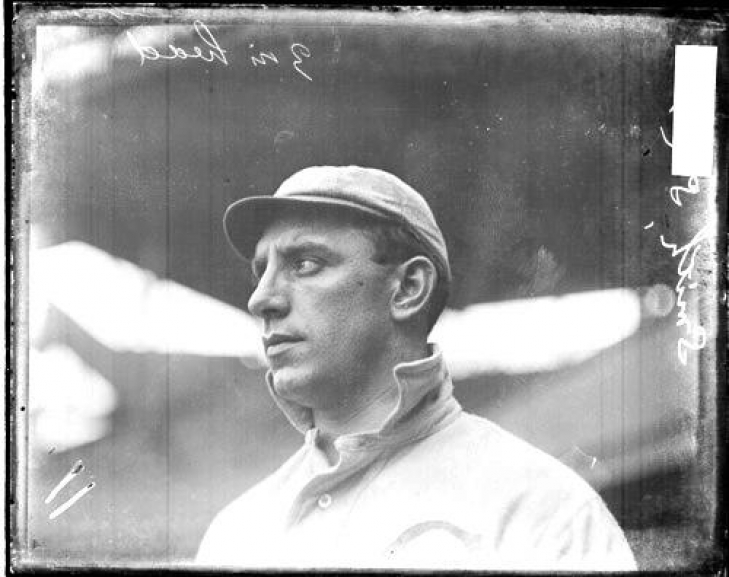
When Frank Smith debuted in 1904, he bypassed the usual maturation process, paying immediate dividends with 35 wins over his first two campaigns. He arrived with a "heavy" fastball that hitters struggled to lift, securing back-to-back top-ten finishes in ERA. However, the path to immortality wasn't a straight line. After an injury-plagued and ineffective 1906 season that saw his production crater, Smith authored one of the most resilient rebounds in franchise history. He returned in 1907 with a 23-10 record, proving that his earlier success was no fluke and that his arm was ready for the heavy lifting to come.
The absolute pinnacle of his career arrived in 1909, a season of such profound dominance that it remains a statistical masterpiece. That year, Smith was the definition of a workhorse, leading the American League in games pitched (51) and innings pitched (365.0). He wasn't just eating innings, though; he was an efficiency machine, posting a 1.80 ERA and a WHIP under 1.000. Had the Cy Young Award existed at the turn of the century, his trophy case would have been full; he led the league with a 7.1 bWAR, proving he was the most valuable player in the junior circuit that summer.
His identity was that of a complete ballplayer who helped his own cause at every turn. Smith was a legitimate threat in the batter's box, a rare hitting pitcher who batted .208 with 32 doubles and 69 RBIs during his Chicago stay. He was a high-volume producer who understood the tactical side of the game, using his immense physical strength to outlast opponents in the late innings. He concluded his journey with the White Sox with a sterling 108-80 record and a microscopic 2.18 ERA, numbers that cement his place as one of the primary architects of the team's early pitching pedigree.
The chapter reached an abrupt conclusion in 1910. After the immense physical toll of his 1909 workload, his game began to unravel, leading to a mid-season trade to the Boston Red Sox.
16. Jose Abreu
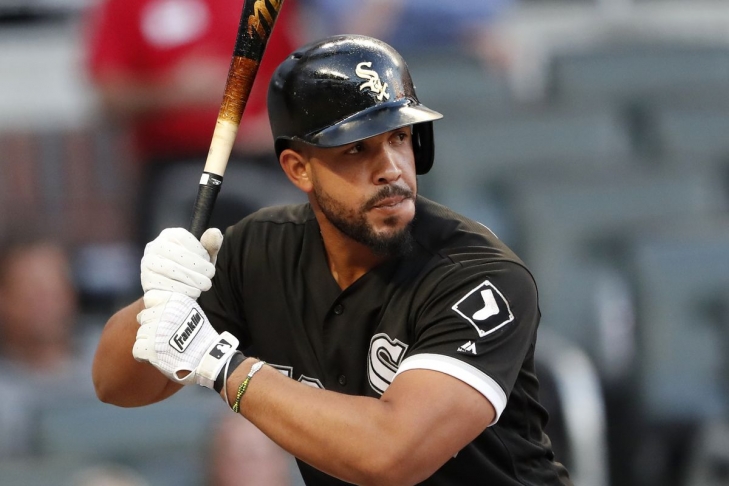
The middle of his Chicago residency was defined by a level of "Traditional Dominance" that was almost metronomic. From 2014 to 2017, Abreu was a lock for 25 home runs and 100 RBIs every single summer, batting at least .290 along the way. While the team around him underwent a painful and protracted rebuilding process, Abreu remained the steady hand in the middle of the order. He was a three-time All-Star who led by example, playing through injuries and serving as a mentor to the influx of young Cuban talent that followed in his footsteps. His 2019 season served as a loud reminder of his elite status, as he paced the American League with 123 RBIs.
The pinnacle of his tenure came during the chaotic, shortened 2020 season. In a year where every game felt like a playoff atmosphere, Abreu was the league's most dangerous weapon. He captured the American League MVP award, leading the circuit in hits (76), RBIs (60), and slugging (.617). It was the definitive proof he wasn't just about volume, but about high-leverage impact. He followed that up with another 30-home run campaign in 2021, proving that even as he entered his mid-30s, his bat remained as lethal as the day he stepped off the plane from Havana.
The final walk toward the exit came as a shock to the South Side faithful after the 2022 season. Despite batting over .300 in his final year with the Sox, Abreu departed as a free agent to join the Houston Astros in early 2023. It was a departure that felt like the closing of a significant chapter for the organization. He left the White Sox with 1,445 hits, 245 home runs, and a career .292 average.