


Site Admin
42. Chet Lemon
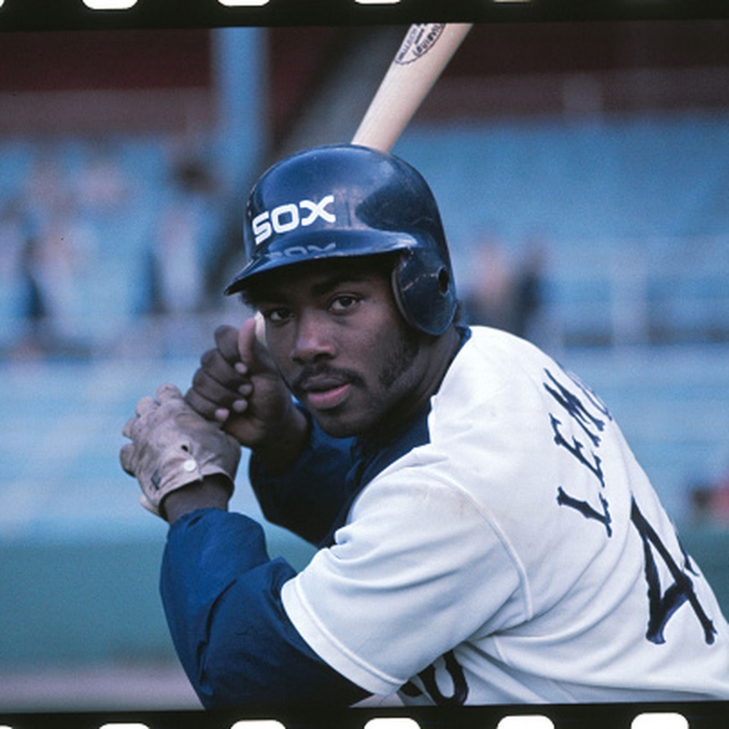
Chet Lemon debuted in the Chicago lineup in 1976 and matured instantly into a premier threat at the plate and in the field. He emerged as a versatile standout, taking over the starting center field job and providing an immediate defensive upgrade for the club. That summer, he showcased a rare blend of contact and power, batting over .300 for the first of three times in his Chicago stay. He was a model of consistency from the jump, proving that his game was built on a sophisticated balance of offensive production and elite run prevention.
The most impressive aspect of his tenure was the technical brilliance he displayed in the outfield. Lemon was a master of range and positioning, consistently shrinking the gaps for opposing hitters and finishing with a defensive bWAR over 1.0 in three separate campaigns. His craftsmanship on the grass was officially recognized with two consecutive All-Star selections in 1978 and 1979. He wasn't just a defensive specialist, though; he remained a high-frequency producer at the plate, leading the American League in doubles in 1979 with 44 and recording four seasons with double-digit home run totals.
His time with the club was defined by a quiet, professional durability and a high-leverage bat that seemed to surface in the biggest moments. Lemon was a fixture of the South Side outfield for six seasons, using a specialized approach to remain productive even as the league's pitching grew increasingly difficult to navigate. Whether he was making a diving catch to save a game or lacing a line drive into the gap to spark a rally, he competed with a focused intensity that made him a local favorite. He proved that a player could become the cornerstone of a franchise through a rare combination of defensive wizardry and offensive reliability.
After the 1981 season, Lemon was traded to the Detroit Tigers, where he would eventually capture a World Series title. With Chicago, Lemon compiled 804 hits, 74 home runs, and 338 RBIs with a .288 batting average.
39. Dick Allen
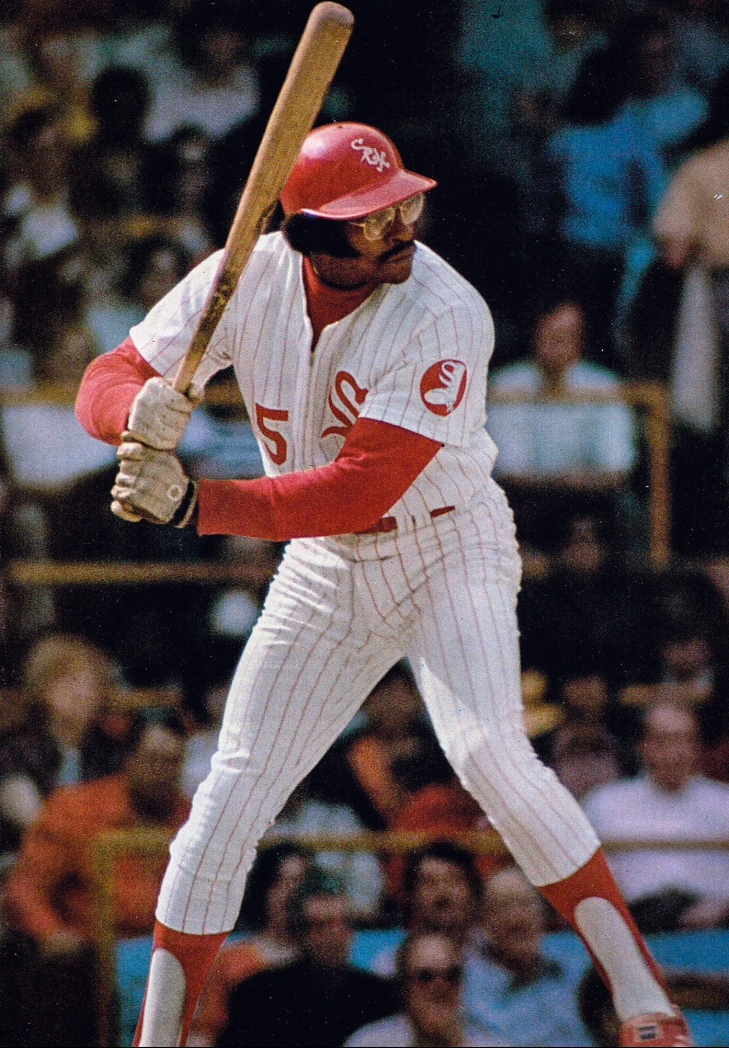
Allen’s journey in Chicago began with a franchise-altering trade from the Dodgers after the 1971 season. He matured instantly under the relaxed, player-first management of Chuck Tanner, shedding the "troublemaker" labels of his youth and emerging as the definitive statistical titan of the American League. He arrived with a "tree trunk" of a bat and a clinical approach to hitting, and he was rewarded immediately with the 1972 AL MVP award. That season was a masterclass in run production: Allen led the league in home runs (37), RBIs (113), walks (99), on-base percentage (.420), and slugging (.603). He was an efficiency outlier who missed the Triple Crown by just a few points in batting average, finishing with a staggering 1.023 OPS.
The absolute peak of his career was defined by a rare, high-leverage brilliance that galvanized the city. Allen followed his MVP campaign with two more All-Star selections in 1973 and 1974, continuing to rule the Junior Circuit with a blend of raw power and sophisticated plate discipline. In 1974, he captured his second home run title with 32 blasts, while again leading the league in slugging (.563) and OPS (.938). He wasn't just a volume-dense slugger; he was a tactical weapon who hit majestic, "laser shot" home runs to center field and famously once clubbed two inside-the-park homers in a single game. He played with a visible passion that turned Comiskey Park into a nightly destination.
His identity was synonymous with a quiet, steely resolve and a legendary status as the "Chili Dog MVP." Allen was the emotional heartbeat of the 1972 squad that finished second in the West, accumulating 85 home runs and a massive .307/.398/.589 slash line during his three-year stay. Whether he was launching a walk-off pinch-hit homer against Sparky Lyle or gliding from first to third on a single, he was the primary engine of a franchise resurgence.
The chapter of his playing days eventually gave way to a decades-long wait for the recognition his numbers demanded. While a 1974 trade eventually led him back to Philadelphia, his peak years remained anchored to the South Side. He left the organization as a statistical pillar, and though he passed away in 2020, his legacy culminated in 2025, when he was finally and rightfully inducted into the National Baseball Hall of Fame in Cooperstown.
37. Tommy John
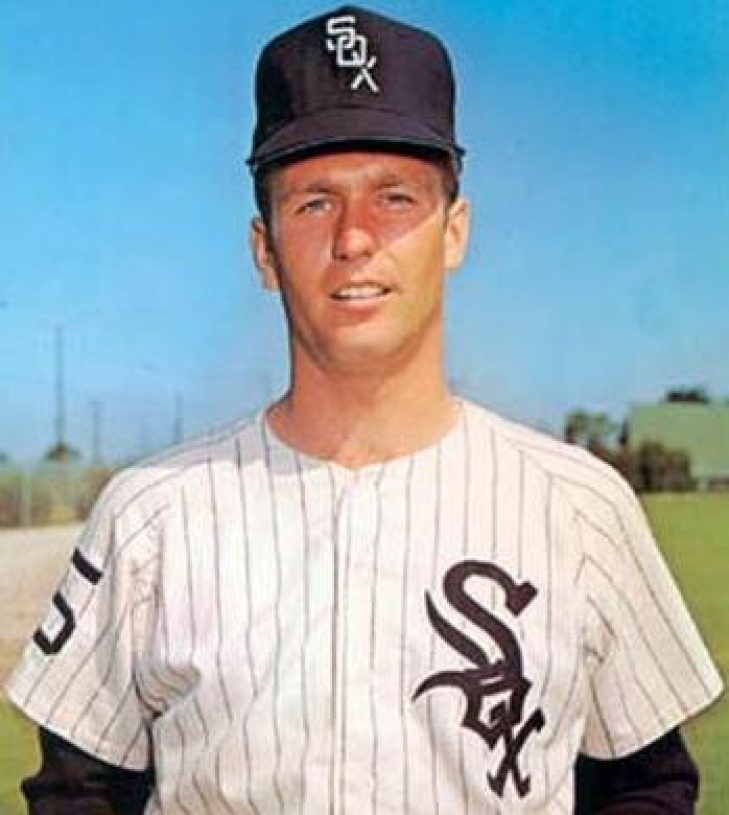
Arriving in a trade from the Cleveland Indians in 1965, Tommy John matured instantly into a cornerstone of the Chicago rotation. He arrived as a young pitcher with a burgeoning sinker and quickly evolved into a tactical master who specialized in run suppression. His stay in Chicago was marked by a remarkable stretch of consistency; from 1966 to 1968, he was a perennial fixture near the top of the ERA leaderboards, finishing in the top five for three consecutive seasons. He wasn't overpowering hitters with raw velocity, but rather dismantling them with a relentless sequence of ground balls and strikes.
The peak of his career in a White Sox uniform was marked by an elite ability to finish what he started. John led the American League in shutouts twice during his seven-year tenure, proving that his game was built on a high-volume workload and an unwavering focus. He earned an All-Star nod in 1968, a season in which he stood as one of the few arms capable of matching the historic efficiency of the league's most decorated stars. With two top-six finishes in WHIP during his prime years, he was a pitcher who simply refused to give opposing offenses any free real estate.
The chapter concluded after the 1971 season, when he was traded to the Dodgers in a blockbuster deal for Dick Allen. While the move sparked a new era for both franchises, John left the South Side as an established master of his craft.
His identity was defined by a quiet, professional durability. John logged over 1,400 innings during his stay with the club, pitching with a technical grace that allowed him to navigate the high-leverage moments of the late 1960s. He concluded his journey with the White Sox with 82 wins and a sparkling 2.95 ERA, a total that remains one of the most effective marks in the team’s modern history. He proved that a southpaw with a sharp sinker and a disciplined mind could thrive in any environment, setting a standard for craftsmanship that would carry him through four decades of professional ball.
35. Willie Kamm
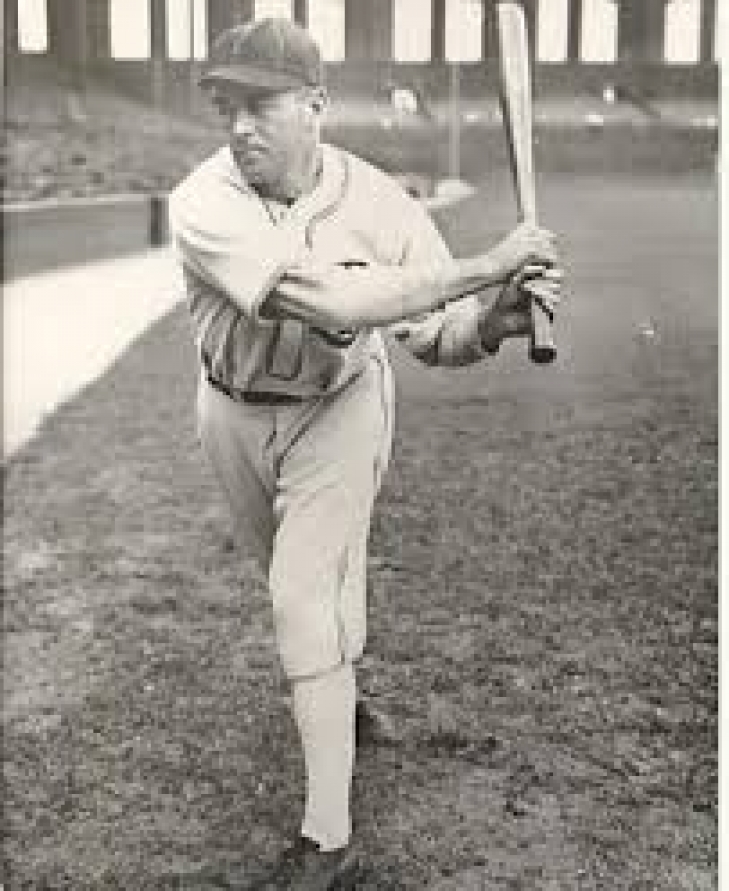
The landscape of Chicago baseball shifted in 1922 when the organization bought Kamm from the Pacific Coast League for the then-unheard-of sum of $100,000. He matured instantly into a defensive wizard, bringing a level of consistency to third base that the American League had rarely seen. Kamm was a tactical master of his position, leading the league in fielding percentage six different times during his Chicago tenure. Had the Gold Glove been a reality in the 1920s, his trophy case would have been overflowing; he possessed a glove-shaped vacuum and a rare internal clock that allowed him to turn certain base hits into routine outs.
While his defense was his calling card, Kamm was a highly sophisticated offensive threat who understood the value of the free pass. He arrived as a high-average prospect and evolved into a disciplined catalyst, famously leading the American League in walks in 1925. He wasn't a prototypical slugger of the "Live-ball" era, but his ability to reach base and keep the line moving was vital to the Chicago offense. He maintained a respectable .279 batting average during his time with the club, proving that his value was rooted in a rare balance of elite run prevention and patient run production.
Reliability and a deep connection to the city became the hallmarks of his identity. Kamm was a fixture in the Chicago infield for nine seasons, providing a level of stability that made him one of the most popular figures of his generation. He was a high-volume producer who amassed 1,136 hits in a White Sox uniform, serving as the steady pulse of a team navigating a difficult transition period. Whether he was charging a bunt with barehanded brilliance or working a deep count to spark a rally, he played with a professional calm that resonated with the South Side faithful.
The chapter eventually reached its conclusion in mid-1931, when a trade sent him to the Cleveland Indians.