
gold star for USAHOF

Top 50 San Francisco Giants

You have to go far back to look at the origin of the San Francisco Giants.

The franchise began in 1883 as the New York Gothams, changing their name to the Giants shortly after.  In the pre-modern World Series era, New York won the 1888 and 1889 Pennants, and in 1905, they captured their first World Series.  The Giants won the World Series again in 1921, 1922, 1933, and 1954, but like the Brooklyn Dodgers, the Giants were not going to be the top dog in NYC, and they moved to San Francisco in 1956.

Even though they had Willie Mays in tow, it would take long after he left until the turn of the century for the Giants to win another title.  San Francisco won the 2010, 2012 & 2014 World Series, giving them eight in total.

This list is up to the end of the 2025 regular season.

Note: Baseball lists are based on an amalgamation of tenure, traditional statistics, advanced statistics, playoff statistics, and post-season accolades.
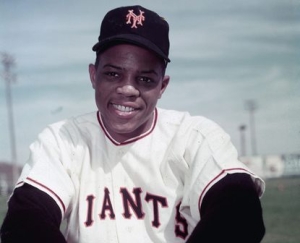
In discussions concerning the highest attainable level of human athletic achievement, baseball analysts often categorize performance into five distinct tools: batting for average, power hitting, speed on the bases, defensive glove work, and arm strength. While numerous distinguished players excel in two or three of these areas, Willie Mays not only possessed all five attributes but also demonstrated them with transcendent, high-velocity artistry that permanently expanded the boundaries of what is considered possible in the sport. Prior to donning the renowned black-and-orange uniform, the young prodigy from Alabama spent two foundational seasons with the Birmingham Black Barons of the Negro…
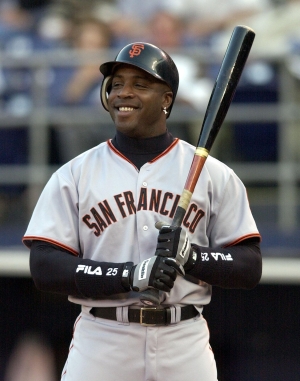
Creating a historical hierarchy for a Major League franchise involves delicately separating pure individual performance from the often polarizing public opinion. This is particularly challenging when evaluating Barry Bonds. When he arrived in Northern California before the 1993 season, he was already a two-time National League MVP and a superstar with the Pittsburgh Pirates. However, what he achieved over the next 15 years under the bay winds goes beyond typical statistics. With an incredibly compact, high-velocity swing and a nearly telepathic sense of the strike zone, Bonds transformed the batter's box into a laboratory of offensive mastery, reaching a peak…
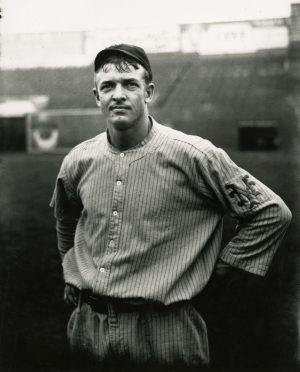
Mastery over a single era is rare in professional sports, but the early 20th-century baseball scene was dominated by Christopher Mathewson's elegant style. As the quintessential modern pitching staff anchor, this right-hander had a legendary, mysterious repertoire centered around his “fadeaway”, a screwball that sharply broke inward against right-handed batters. However, his journey to legendary status nearly faltered before it really began. The New York Giants signed him from the minor leagues in 1900, but a poor initial showing led management to send him back to Norfolk. The Cincinnati Reds quickly claimed him that winter, but the Giants quickly corrected…
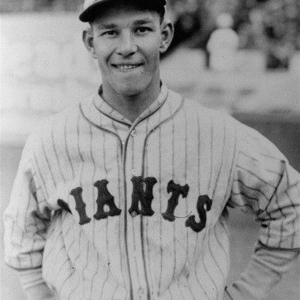
The typical scouting profile for a top-tier major league power hitter in the 1920s called for a large, muscular physique. However, Melvin Thomas Ott, standing only 5 feet 9 inches with a modest build, was overlooked by many talent evaluators. The New York Giants, defying common standards, saw his potential. Legendary manager John McGraw noticed Ott's powerful hip rotation and signed him as a raw 17-year-old in 1926. McGraw kept Ott close, skipping the minor leagues to protect his unique left-handed swing from being altered by farm directors. Ott’s unconventional front-foot lift and perfect timing allowed him to break all…
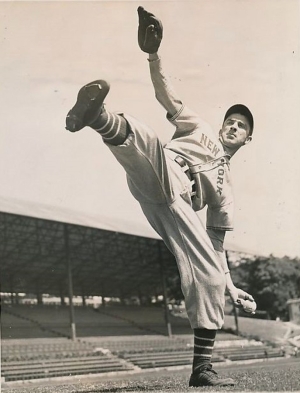
While the blueprint of a major league developmental system aims to cultivate top talent, the Detroit Tigers made a highly shortsighted decision by severing ties with Carl Owen Hubbell. Concerned that the young left-hander relied too much on an unusual, high-stress pitch called the screwball, Detroit's farm directors explicitly ordered him to stop throwing it, fearing the mechanical torque could break his arm. This was a significant mistake. After being acquired by the New York Giants from Beaumont of the Texas League in mid-1928, Hubbell didn’t abandon the pitch; instead, he perfected it with precise, low-variability execution. This transformed him…
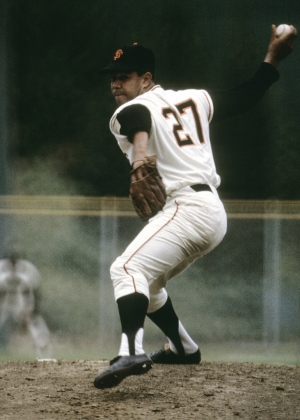
The mid-20th century marked a turning point in professional baseball's geopolitical scene, as the sport gained widespread popularity throughout the Caribbean. This surge in interest made it inevitable that a top-tier ace would emerge from the region. That trailblazer was Juan Marichal, who was scouted in the Dominican Republic and signed by the organization in 1957. The right-hander brought an electrifying, high-velocity style that transformed the aesthetics of pitching in the United States. Marichal’s unique delivery, characterized by a towering leg kick with his left shoe pointed toward the sky before each pitch, obscured his release point and created an…
Before the pitching mound was set at its standard sixty feet and six inches, baseball was profoundly impacted by Amos Wilson Rusie's overwhelming raw velocity. Emerging in the major leagues as a teenager with the short-lived Indianapolis Hoosiers in 1889, this muscular right-hander quickly gained fame as the nineteenth century's quintessential "Wild Thing." After the Indianapolis team folded following his rookie year, its assets were transferred to the New York Giants to bolster the National League's leading team. In Manhattan, Rusie would spend a decade unleashing blazing fastballs, creating a paradoxical pitching style characterized by unprecedented dominance coupled with historic…
Having a marquee figure like Willie Mays at the center field might be enough for many teams, but the San Francisco Giants proved that a truly legendary lineup can include two Willies. Signed as an amateur free agent in 1955, Willie McCovey spent four years in the minors before making a spectacular debut. When he arrived in San Francisco on July 30, 1959, the tall left-handed first baseman dominated National League pitchers in the last two months of the season, hitting .354 with 13 home runs in just 52 games. Despite only 219 plate appearances in a relatively weak rookie…
To get a full handle on the rich tapestry of the Giants franchise, you have to look back at the master contact hitters who dictated the tempo of the early 20th century. Bill Terry did not just occupy first base for the New York Giants; he defined the very upper limit of high-average hitting for an entire generation. Joining the flagship club in 1923, "Memphis Bill" emerged as the ultimate homegrown anchor under the legendary leadership of John McGraw. By the time he claimed the position entirely as his own, the smooth, left-handed swinging star began spinning a narrative of…
Roger Connor played three years with the Troy Trojans, establishing himself as a star on the rise before he signed with the New York Gothams in 1883.  As the team changed its name to the Giants, Connor elevated himself as one of the best players in the game. Connor batted over .300 in his first four years in New York and would have likely been named the league MVP in 1885.  That year, Connor led the NL in Hits (169), Batting Average (.371), and OBP (.435).  As the decade was coming to its end, the Giants were becoming one of the top teams…
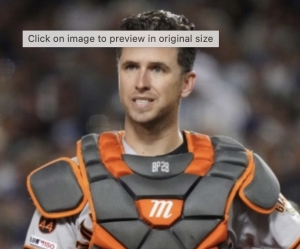
When assessing the top modern figures who led the sport's most competitive era in the 2010s, true greatness goes beyond individual stats; it encompasses the complete transformation of a franchise's winning culture. Buster Posey wasn’t just a catcher for the San Francisco Giants—he was the strategic linchpin, the clubhouse's heartbeat, and the operational genius behind one of the greatest dynasties in Bay Area history. Coming out of Florida State University as a celebrated amateur star, the highly skilled backstop entered the majors with a composed attitude and an advanced baseball IQ that dramatically changed the team’s path, beginning a 12-season…
To truly understand what happened on Manhattan's baseball diamonds during the Gilded Age, we need to look beyond the basic 19th-century box scores. Mickey Welch was not just a part of the rotation; he was a consistent, strong presence that served as the foundation of the entire New York baseball franchise. He first gained fame with the short-lived Troy Trojans, alongside future stars Buck Ewing and Roger Connor, before moving south when the Troy team folded after the 1882 season. He then joined the newly formed New York Gothams (later known as the Giants), where he, affectionately called "Smiling Mickey,”…
The development of professional pitching in the late 19th century was primarily shaped by significant rulebook changes. Only a select few pitchers had the intellectual flexibility to excel across different eras. Timothy John Keefe not only thrived during this experimental period but also led as the foremost, scientifically-minded pitcher of his time. He started his major league career throwing from 45 feet and finished from the current standard of 60 feet, 6 inches, adapting to every rule change. After a successful stint with the Troy Trojans and later with the New York Metropolitans, Keefe permanently joined the New York Giants…
When John McGraw spends a record-breaking amount on an unproven minor leaguer, the baseball world pauses to see the risky move unfold. In June 1907, the legendary Giants manager made a then-unprecedented $4,500 purchase from the Springfield Senators to acquire a charismatic second baseman. This significant investment turned out to be a great deal. Known for his cheerful attitude, earning him the nickname "Laughing Larry," Doyle didn't just fill a vacant infield spot; he became a powerful offensive force for the Giants during the Deadball Era. His career spanned multiple eras, marked by his unwavering love for the game despite…
When a premier prospect enters the major leagues with a seamless, powerful, and aesthetically striking left-handed stroke, it is immediately compared to exquisite royalty. Will Clark was selected as the second overall pick in the 1985 draft from Mississippi State, bearing a substantial level of public anticipation that reached a peak when he hit a home run off future Hall of Famer Nolan Ryan during his very first major league plate appearance in 1986. Universally referred to as "The Thrill,” a nickname that encapsulated his fierce, intense competitive presence, Clark not only established a formidable presence on the field but…
Mike Tiernan did not have the flamboyant, attention-grabbing style of his Hall of Fame peers, such as Buck Ewing or King Kelly. Known as "Silent Mike" because he avoided the press, seldom argued strikes, and quietly focused on his game, this left-handed slugger played right field at the Polo Grounds with remarkable accuracy. Throughout his 13-year major-league career, all with a single team in New York, Tiernan was among the most efficient offensive players of the 1890s, establishing a record that ranks alongside those of the best hitters of his era. His rookie season in 1887 was truly impressive, showcasing…
When a top-tier baseball organization aims to create a winning culture that wins multiple world championships, they often depend on a fierce, unwavering competitive spirit to lead the team. Madison Kyle Bumgarner not only played a key role on the San Francisco Giants’ starting lineup; he became the perfect symbol of October resilience—a true champion of big moments whose legendary performances have forever changed what it means to shine in the postseason. Drafted tenth overall in 2007 from North Carolina high school baseball, this sturdy, cross-throwing left-hander brought with him a clear sense of strength and durability. Over an impressive…

2026 SEATTLE MARINERS FLEX MEMBERSHIPS

Jan 01, 1970

Buy your Tickets to see 2026 Seattle Mariners Flex Memberships HERE!

BALTIMORE ORIOLES VS. LOS ANGELES ANGELS

Aug 04, 2026

Buy your Tickets to see Baltimore Orioles vs. Los Angeles Angels HERE!

PHILADELPHIA PHILLIES VS. WASHINGTON NATIONALS

Aug 04, 2026

Buy your Tickets to see Philadelphia Phillies vs. Washington Nationals HERE!

CINCINNATI REDS VS. ATHLETICS

Aug 04, 2026

Buy your Tickets to see Cincinnati Reds vs. Athletics HERE!
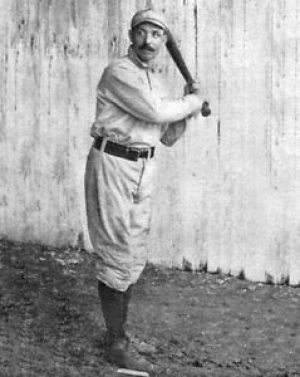
 
Tracing the foundational pillars of the San Francisco franchise back to its origins in Manhattan reveals that discerning historians focus on the rare, multi-dimensional catalysts who effortlessly dominated the sport during its initial significant structural transition. George Stacey Davis did not merely excel in defensive play across the diamond; he operated as one of the most formidable, high-efficiency switch-hitters of the 19th century. Acquired from the Cleveland Spiders through a strategic pre-season trade in March 1893, this exceptionally cerebral infielder arrived in New York at a pivotal moment when the sport underwent a radical transformation in its dimensions. When the…
Evaluating the dynamic defensive architecture of the early 20th-century New York Giants necessitates immersing oneself in a historical context akin to a sensory time capsule. During this period, infielders played on rocky and unpredictable dirt surfaces, utilizing gloves that were no thicker than winter mittens. Travis Calvin Jackson not only endured this challenging environment but also excelled within it, displaying a predatory athletic instinct that fundamentally redefined the shortstop position of his era. Selected by manager John McGraw to succeed the legendary Dave Bancroft in 1924, this graceful and highly reliable native of Arkansas commenced a distinguished 15-season career, exclusively…