

7. Amos Rusie
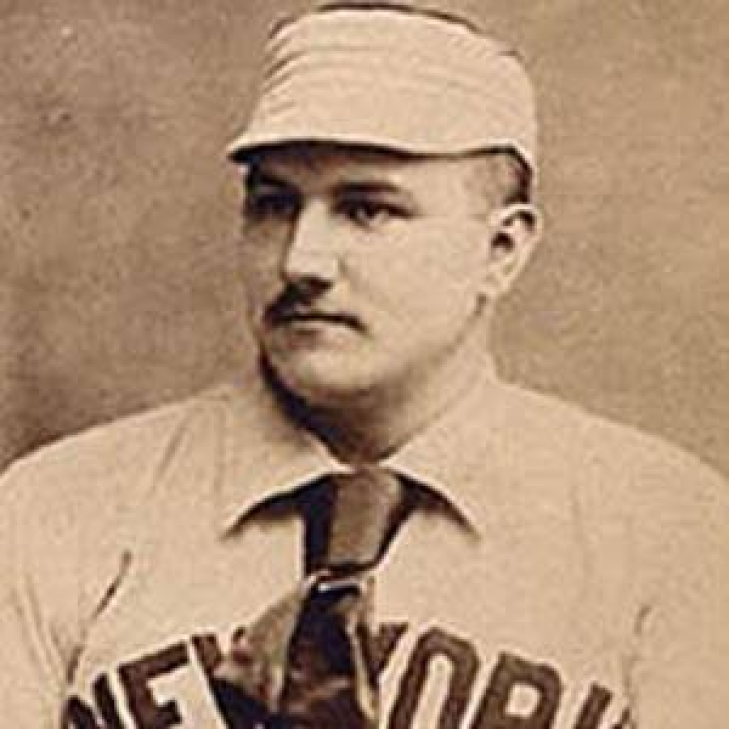
Before the pitching mound was set at its standard sixty feet and six inches, baseball was profoundly impacted by Amos Wilson Rusie's overwhelming raw velocity. Emerging in the major leagues as a teenager with the short-lived Indianapolis Hoosiers in 1889, this muscular right-hander quickly gained fame as the nineteenth century's quintessential "Wild Thing." After the Indianapolis team folded following his rookie year, its assets were transferred to the New York Giants to bolster the National League's leading team. In Manhattan, Rusie would spend a decade unleashing blazing fastballs, creating a paradoxical pitching style characterized by unprecedented dominance coupled with historic unpredictability that left batters completely helpless.
During an era when pitchers threw from just fifty feet away, Rusie's velocity was so overwhelming that it often bypassed opposing batters’ reflexes—and sometimes even his own catchers’. He walked an astonishing number of hitters, leading the National League in bases on balls for five straight seasons from 1890 to 1894. Despite this wildness, he managed to excel by dominating the league's miss-rate metrics. Rusie earned five strikeout titles during those same five years and kept contact to a minimum, leading the league in fewest hits per nine innings four times.
His aggressive throwing style caused significant concern among executives, leading to the league's 1893 decision to increase the pitching distance by ten feet and six inches to the current measurement. The added space did little to reduce his danger; in 1897, Rusie famously hit Baltimore star Hughie Jennings so hard that Jennings was in a coma for four days.
His formidable right arm created a remarkable chapter in New York's baseball history. On July 31, 1891, he threw the first no-hitter in Giants franchise history, defeating the Brooklyn Grooms. His career reached its zenith in 1894 with an outstanding season, during which he won the National League Pitching Triple Crown. Rusie systematically decimated the league by winning a staggering 36 games, posting a microscopic 2.78 ERA, and fanning 208 batters over a grueling, volume-dense 444 innings pitched.
Beyond the field, Rusie's competitive nature also shaped his dealings with team management. After a typical 1895 season, he clashed openly with the Giants'volatile owner, Andrew Freedman. When Freedman fined him $200 for perceived indifference, Rusie refused to accept it, leading him to sit out the entire 1896 season in a bold protest. Worrying about setting a dangerous legal precedent that could threaten the reserve clause, other National League owners chipped in to pay Rusie's fine. He returned to pitching in 1947 and earned his second ERA title with an impressive 2.54 ERA.
Recognizing that his physical tools were exhausted, the Giants’ front office executed what would become the premier heist of the century. In December of 1900, they traded the inactive veteran to the Cincinnati Reds straight up for a young, unproven prospect named Christy Mathewson. Rusie would pitch just three final games in Cincinnati before retiring, while Mathewson blossomed into one of the most transcendent legends the sport would ever know.
Even with that lopsided final trade, Rusie left behind a monumental, multi-dimensional legacy. Over his nine active seasons in New York, he compiled a fantastic 234–163 record with a 2.89 ERA and 1,835 strikeouts, while adding real value with his bat by hitting a robust .253 with 410 hits.
He entered the Baseball Hall of Fame in 1977 via the Veterans Committee.
