gold star for USAHOF

Top 50 San Francisco Giants

You have to go far back to look at the origin of the San Francisco Giants.

The franchise began in 1883 as the New York Gothams, changing their name to the Giants shortly after.  In the pre-modern World Series era, New York won the 1888 and 1889 Pennants, and in 1905, they captured their first World Series.  The Giants won the World Series again in 1921, 1922, 1933, and 1954, but like the Brooklyn Dodgers, the Giants were not going to be the top dog in NYC, and they moved to San Francisco in 1956.

Even though they had Willie Mays in tow, it would take long after he left until the turn of the century for the Giants to win another title.  San Francisco won the 2010, 2012 & 2014 World Series, giving them eight in total.

This list is up to the end of the 2025 regular season.

Note: Baseball lists are based on an amalgamation of tenure, traditional statistics, advanced statistics, playoff statistics, and post-season accolades.
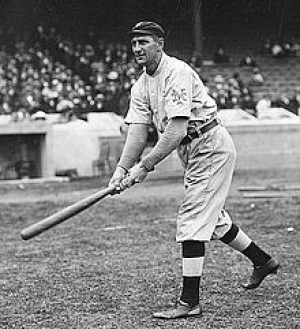
Art Devlin was an excellent defensive Third Baseman in the dead-ball era, finishing four times in the top ten in Defensive bWAR, and three times was the leader in Assists by a Third Baseman.   Devlin was not the best hitter in the National League, but he was competent, collecting at least 120 Hits in his first seven seasons and using his speed to swipe at least 20 Bases in six of those years, including a league-leading 59 in 1905.  That was the year that he helped New York win the World Series. A Giant for eight years before he was sold…
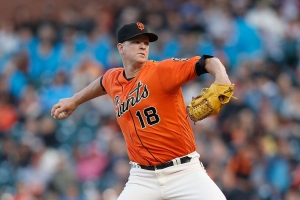
Matt Cain's story exemplifies why a pitcher’s worth isn't solely reflected in their win-loss record. Drafted in the first round by the San Francisco Giants in 2002, he reached the majors quickly, debuting by August 2005. He became a staple in the starting rotation, known for his broad shoulders and a fastball that could explode past hitters. Early in his career, Cain endured notably poor run support—so much so that his teammates affectionately called him "The Horse" because he would often pitch seven scoreless innings but still receive a tough 1-0 loss, highlighting the unfairness of relying only on wins…
Jack Clark made a lot of progress in quick fashion, first tasting Major League action in 1975, two years after he was taken deep in the 13th Round.  Two years later, he was a starter in Rightfield for the Giants, but it was not until the year after that he broke out. Clark's 1977 was a 25 Home Run year with a .306 Batting Average.  Jack "The Ripper" went to his first All-Star Game and was fifth in MVP voting.  An All-Star again the following year, he belted over 20 Home Runs (26) and would break that mark the third year in a row…
The legendary radio call from Russ Hodges remains frozen in time, an iconic burst of pure audio joy that will echo through the annals of sports history as long as the game is played. On October 3, 1951, Bobby Thomson stepped to the plate at the Polo Grounds in the bottom of the ninth inning of a deciding Game 3 tie-breaker, staring down Brooklyn Dodgers reliever Ralph Branca as his team trailed by two. With one violent, compact swing, the "Statten Island Scot" launched a line-drive home run into the left-field stands, authoring the walk-off "Shot Heard 'Round the World."…
When the San Francisco Giants acquired Jason Schmidt from the Pittsburgh Pirates at the July 2001 trade deadline, few in baseball expected him to become a dominant, front-line pitcher. Up until then, the right-hander had been drifting through the Atlanta and Pittsburgh organizations during his twenties, often showing flashes of high velocity but not quite reaching the consistent success like posting a sub-4.00 ERA or winning 14 or more games in a season. However, the change of scenery truly unlocked his potential. Under the support of manager Dusty Baker and pitching coach Dave Righetti, Schmidt quickly found his rhythm and…
Sal Maglie's rise to major-league stardom was one of the most unpredictable and unusual stories of his time. It wasn't until he was 28 that he reached the big leagues, posting a solid 5–4 record with a 2.35 ERA for the New York Giants in the wartime 1945 season. Driven by a need for financial stability, Maglie took a risky move in 1946 by joining the Mexican League for a higher paycheck. This decision led to an immediate and strict ban from Commissioner Happy Chandler, effectively banning him from organized baseball. To make matters worse, his Mexican team soon went…
Hooks Wiltse didn’t just throw a curveball; he weaponized it. In an era dominated by blazing fastballs and deceptive spitballs, the crafty southpaw possessed a sharp, sweeping breaking ball that was universally recognized as far more lethal than his heater—a rarity for the Deadball Era that quickly earned him his iconic nickname. Joining John McGraw’s powerhouse New York Giants in 1904, Wiltse made the most explosive first impression in major-league history by winning his first 12 consecutive decisions, a legendary rookie record that stood unmatched for 70 years. Wiltse quickly became the ideal left-handed counterpart to the legendary Christy Mathewson.…
The story of George "High Pockets" Kelly is a fascinating study in baseball eras. Standing a towering 6'4" in a time when the average player was considerably shorter, the long-limbed first baseman became a premier run producer of the early live-ball era. Yet, playing in Manhattan at the exact same moment Babe Ruth was completely rewriting the sport's offensive playbook across the river meant that Kelly’s prodigious output was routinely overshadowed by the Bambino’s historic long-ball explosions. Kelly’s road to stability in New York was anything but linear. He made brief cameos for John McGraw’s club in 1915 and 1916,…

2026 SEATTLE MARINERS FLEX MEMBERSHIPS

Jan 01, 1970

Buy your Tickets to see 2026 Seattle Mariners Flex Memberships HERE!

BALTIMORE ORIOLES VS. LOS ANGELES ANGELS

Aug 04, 2026

Buy your Tickets to see Baltimore Orioles vs. Los Angeles Angels HERE!

PHILADELPHIA PHILLIES VS. WASHINGTON NATIONALS

Aug 04, 2026

Buy your Tickets to see Philadelphia Phillies vs. Washington Nationals HERE!

CINCINNATI REDS VS. ATHLETICS

Aug 04, 2026

Buy your Tickets to see Cincinnati Reds vs. Athletics HERE!
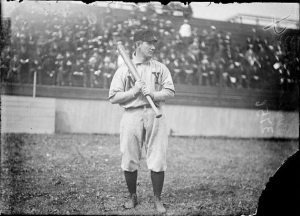
 
The evolution of the catcher position from a defensive afterthought into a strategic weapon can be traced to Roger Bresnahan. Originally a pitcher, Bresnahan became a versatile player for the Baltimore Orioles in 1901. When the Orioles faced financial troubles in 1902, he was released and joined the New York Giants with manager John McGraw. At the Polo Grounds, Bresnahan would permanently redefine the modern catcher. Bresnahan’s remarkable individual achievement was realized during his inaugural full summer in Manhattan in 1903. Demonstrating a remarkably versatile skill set for a player of the dead-ball era, he transcended the conventional stereotype of…
The modern pitching "workhorse' concept finds its true origin in an unorthodox yet formidable right-hander from Indiana. Freddie Fitzsimmons, not resembling the typical athletic star with his heavy frame—earning him the nickname "Fat Freddie"—mastered one of the most powerful, knee-buckling knuckle-curves in the game. Picked up from the Indianapolis Indians in 1925, he employed a distinctive, spinning delivery, turning his back completely to the batter before releasing his pitches. Once he secured a spot under John McGraw at the Polo Grounds, Fitzsimmons became the dependable, relentless force in the New York pitching staff. Fitzsimmons was best known for his extraordinary…
Few players in the modern history of the San Francisco Giants have exhibited a more remarkable and electrifying display of offensive prowess than Kevin Mitchell. Originally signed by the New York Mets as an undrafted free agent from San Diego, this versatile athlete established a reputation as a highly valuable utility player, notably scoring a decisive run in the tenth inning of Game 6 to secure the Mets’ victory in the 1986 World Series. Nonetheless, his early career was characterized by frequent transitions, as front offices struggled to establish a consistent defensive position for his dynamic raw talent. This situation…