gold star for USAHOF

Top 50 Baltimore Orioles

While it would seem to many that the Baltimore Orioles were a charter American League team, that was far from the case. 

An inaugural team of the American League in 1901, the organization was initially known as the Milwaukee Brewers (no, not those Brewers).  The association in Wisconsin lasted for only one season, as they relocated to St. Louis, and would be renamed as the Browns.

This change of scenery would last for over 50 years, but the Browns were not a powerhouse in the AL.  They would only win the Pennant once in 1944, but they would not be able to win it all. 

The competition with the St. Louis Cardinals of the National League would finally be their undoing, and they would move to Baltimore in 1954.  The first few seasons were the same as they had been in St. Louis, but they methodically built a defensive gem of a team.  The turning point would be a trade with the Cincinnati Reds, that netted them, Frank Robinson.  Baltimore would win their first World Series in 1966, and secured their second title in 1970. 

Baltimore would win their third World Series Championship in 1983.

This list is up to the end of the 2025 regular season.

Note: Baseball lists are based on an amalgamation of tenure, traditional statistics, advanced statistics, playoff statistics, and post-season accolades.
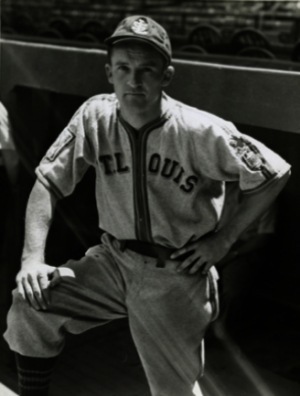
George McQuinn arrived in St. Louis as a diamond in the rough, plucked from the powerhouse Yankees organization in the 1937 Rule 5 Draft. It proved to be a franchise-altering acquisition. Over the next eight seasons, McQuinn established himself as the premier first baseman in the American League, providing a rare blend of defensive grace and consistent left-handed power. McQuinn’s peak years in St. Louis were defined by elite consistency. He was a four-time All-Star with the Browns, batting over .300 in each of his first two seasons (1938–1939) and recording three consecutive years with at least 15 home runs.…
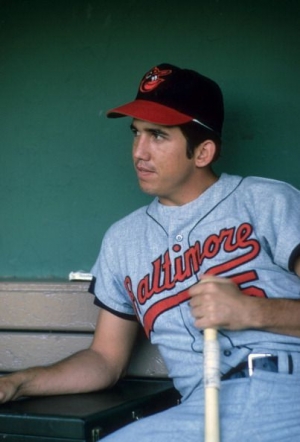
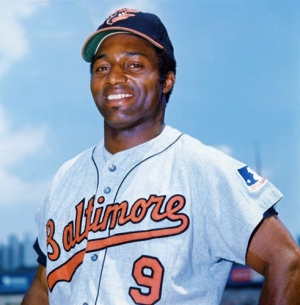
Davey Johnson arrived in Baltimore in 1965 as part of a wave of young talent that would eventually define the "Oriole Way." Though he would later be remembered as a tactical genius in the dugout, his playing career in Baltimore was marked by the same cerebral approach and defensive mastery. Alongside Brooks Robinson and Mark Belanger, Johnson formed one-third of perhaps the greatest defensive infield in baseball history. Johnson’s impact was immediate; he finished third in the 1966 Rookie of the Year voting, proving to be the missing piece at second base for the franchise's first World Series title. While…
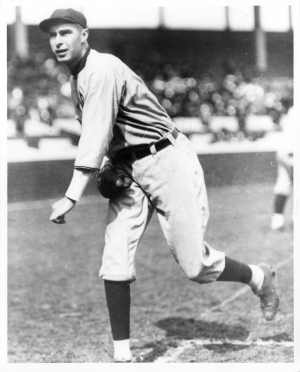
Standing a towering 6’5” in an era when the average pitcher barely cleared 5’9”, Carl Weilman was a literal and figurative giant for the St. Louis Browns. A "Lifer" who spent his entire eight-season career with the franchise, Weilman used his unique leverage and left-handed delivery to become one of the most effective, albeit overlooked, starters of the Deadball Era. Weilman’s peak from 1914 to 1916 was a masterclass in efficiency. During this three-year stretch, he won at least 17 games annually while maintaining a microscopic sub-2.40 ERA. More impressively, he was a fixture on the American League leaderboards, consistently…
Nels Potter arrived in St. Louis as a 31-year-old journeyman, a screwball specialist who had struggled to find consistency until the Browns plucked him from the Red Sox organization in the 1942 Rule 5 Draft. In the high-pressure environment of wartime baseball, Potter didn't just find a home; he became the statistical engine that drove the Browns to their greatest heights. Potter’s 1944 campaign remains a landmark in franchise history. As the Browns battled for their first American League Pennant, Potter delivered a 19–7 record and a career-best 5.7 bWAR, finishing ninth in the MVP voting. Though he was famously…
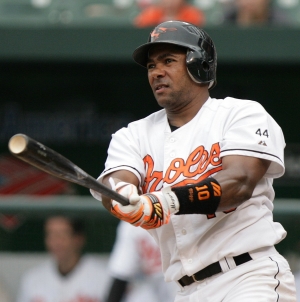
Miguel Tejada arrived in Baltimore in 2004 with the pedigree of a superstar, having already secured an AL MVP award in Oakland. As the centerpiece of a high-profile free-agent class, "Miggi" immediately transformed the Orioles' lineup, providing a level of offensive production from the shortstop position that the franchise had rarely seen since the prime of Cal Ripken Jr. Tejada’s first season in Maryland was nothing short of historic. In 2004, he shattered expectations by leading the American League with a career-high 150 RBIs—a staggering total for a middle infielder. He tied his personal best with 34 home runs that…
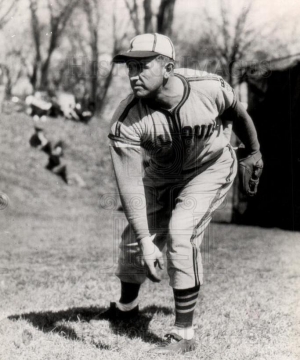
Walter Cleveland Stewart, known simply as "Lefty," was a durable left-handed mainstay who provided the St. Louis Browns with high-level stability during a period of league-wide offensive volatility. While he spent six seasons in the Browns' rotation (1927–1932), it was his final three years in St. Louis that cemented his legacy as one of the franchise's premier arms of the Depression Era. Stewart’s 1930 campaign remains one of the most underrated individual seasons in Browns history. In a year where the league-wide ERA was sky-high, Stewart defied the trend by winning 20 games and posting a 3.45 ERA, which ranked…
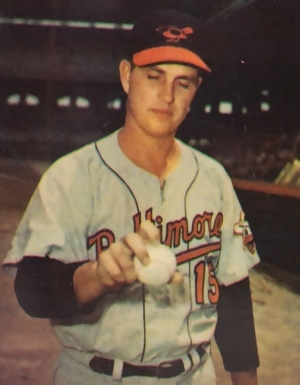
Mike Boddicker didn't overpower hitters with velocity; he dismantled them with a "fosh" ball and what legend Rod Carew dismissively called "Little League slop." However, by varying his arm angles and mastering a strange, tumbling change-up, Boddicker proved that deception could be just as lethal as a 95-mph fastball. After debuting in 1980, he emerged in 1983 as the unlikely hero who would help anchor a world championship rotation. Boddicker’s 1983 season is etched in Baltimore lore. After becoming a permanent fixture in the rotation, he led the American League with five shutouts and went 16–8. He truly ascended during…
Stepping into the vacuum left by the retirement of Brooks Robinson was a task many deemed impossible, yet Doug DeCinces handled the transition with a blend of power and defensive poise that defined the Orioles' infield for nine seasons. While he spent years playing in the shadow of a legend, DeCinces emerged as one of the most productive third basemen in the American League during the late 1970s. While traditional Gold Glove voters often overlooked him, modern advanced metrics reveal DeCinces was an elite defensive anchor.  His Total Zone and dWAR figures during his Baltimore tenure confirm he was a…
In the gritty, swing-at-everything culture of the 1910s, Burt Shotton was a tactical outlier. Serving as the catalyst for the St. Louis Browns for seven seasons, Shotton weaponized a rare brand of plate discipline that made him one of the most difficult outs in the American League. While he never hit for the high averages of a Ty Cobb, his ability to manipulate the strike zone made him a premier table-setter for the era. He led the American League in Walks twice and posted an incredible On-Base Percentage over .390 on four separate occasions. At a time when slugging was…
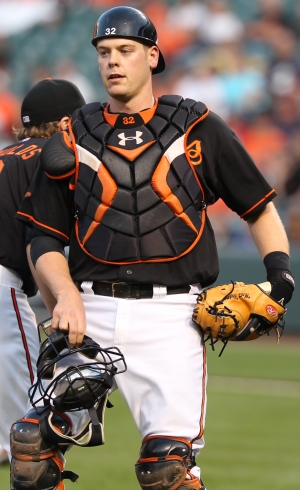
Drafted fifth overall in 2007 out of Georgia Tech, Matt Wieters arrived in Baltimore carrying some of the highest expectations in franchise history. Billed as a "transformational talent," Wieters didn't just meet the defensive standard—he set it. From his debut in 2009 through the club's return to postseason relevance, he served as the cerebral anchor of the Orioles' pitching staff and the primary voice in the clubhouse. Wieters was a defensive juggernaut during his peak, winning back-to-back Gold Gloves in 2011 and 2012. His ability to shut down the running game and navigate high-leverage situations was central to the team's…
Hoyt Wilhelm was only with the Baltimore Orioles for four and half seasons, but he was an All-Star in three of them, and it was his stint there that would later propel him into Cooperstown.
Don Buford arrived in Baltimore in 1968 under the heavy pressure of a blockbuster trade that sent Hall of Famer Luis Aparicio back to Chicago. It didn't take long for Buford to prove he was the missing ingredient for a championship formula. As the leadoff hitter for the greatest era in Orioles history, Buford’s combination of speed, patience, and unexpected power made him the engine that powered three consecutive World Series appearances (1969–1971). Buford’s 1971 campaign stands as a masterpiece of efficiency. During that All-Star season, he led the American League in Runs Scored (99) and posted a stellar .413…