

26. Doug DeCinces
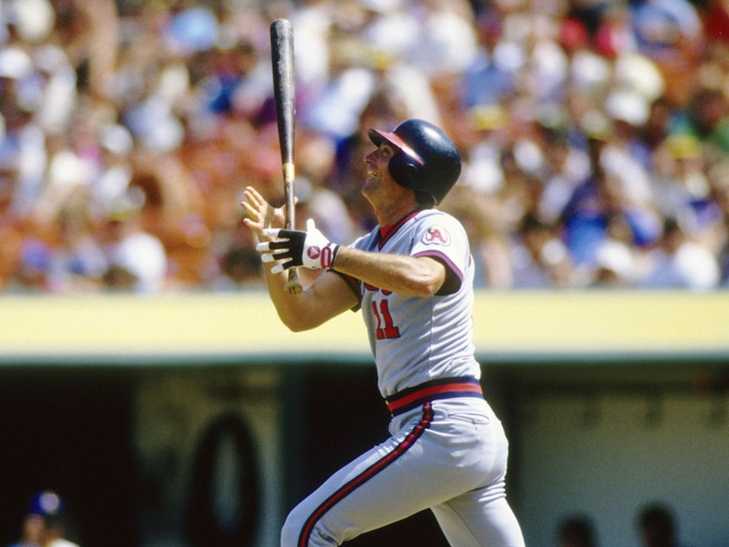
Doug DeCinces arrived in the California organization via a January 1982 trade with the Baltimore Orioles, a move that finally allowed him to step out from the massive shadow of Brooks Robinson. While his time in Baltimore was defined by the impossible task of following a legend, his transition to the West Coast sparked an immediate offensive renaissance.
DeCinces had his best season in baseball in 1982, belting a career-high 30 home runs and recording his only career .300 season. He led the club to an American League West title and finished third in the AL MVP voting behind future Hall of Famers Robin Yount and Eddie Murray. The regular season was punctuated by a historic week in August, where he hit three home runs in a single game twice within a five-day span, earning him the 1982 Silver Slugger Award.
The 1983 campaign saw DeCinces maintain his status as one of the premier third basemen in the junior circuit, earning his lone career All-Star selection. While a mid-season injury limited his total games, he remained a model of consistent power throughout the mid-eighties, smacking at least 20 home runs in three consecutive seasons from 1984 to 1986, the last of which he recorded 26 home runs and 96 RBIs while finishing 11th in the MVP race and helping the Angels reach the ALCS.
DeCinces’s play tailed off in 1987, and he was released late in the season. With California, he had 130 home runs and a .277 average
46. Doug DeCinces
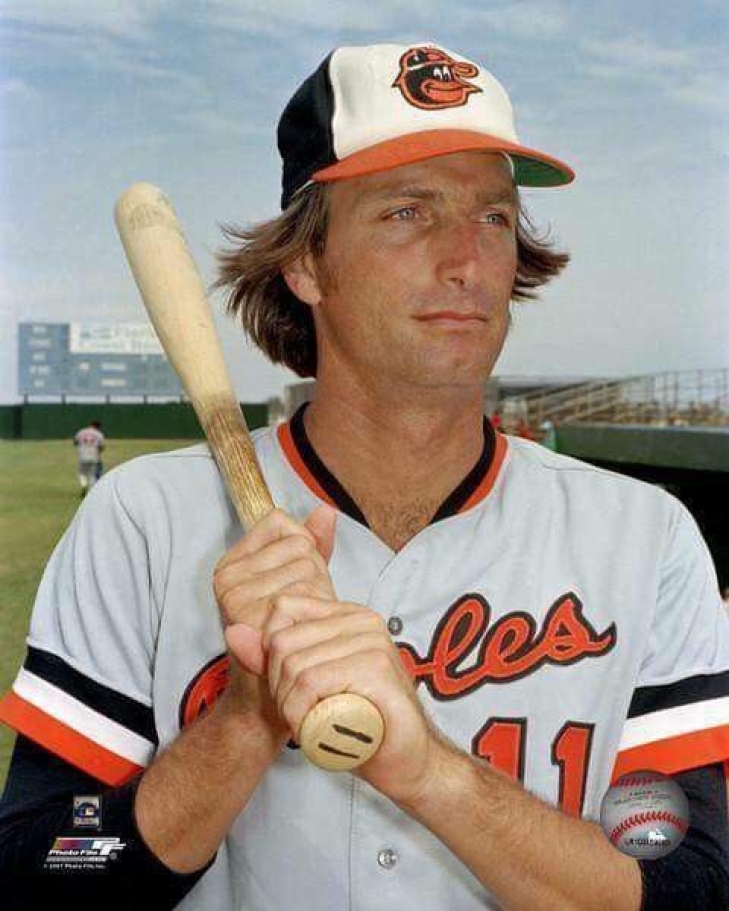
Stepping into the vacuum left by the retirement of Brooks Robinson was a task many deemed impossible, yet Doug DeCinces handled the transition with a blend of power and defensive poise that defined the Orioles' infield for nine seasons. While he spent years playing in the shadow of a legend, DeCinces emerged as one of the most productive third basemen in the American League during the late 1970s.
While traditional Gold Glove voters often overlooked him, modern advanced metrics reveal DeCinces was an elite defensive anchor. His Total Zone and dWAR figures during his Baltimore tenure confirm he was a legitimate defensive presence, often rivaling his peers in range and sure-handedness. Offensively, he provided a significant power upgrade at the position, reeled off four seasons of 16 or more home runs in Baltimore, and served as a key run-producer for the 1979 American League Champions.
His most iconic moment came in June 1979, the famous "Night of the Magic”, when his walk-off home run against Detroit ignited the phrase "Oriole Magic." Although his only All-Star appearance came later with the Angels, his foundational years in Baltimore were essential to the club's success. He left the Orioles with 738 hits, 107 home runs, and a robust .428 slugging percentage.
He was Inducted into the Orioles Hall of Fame in 2005.
