gold star for USAHOF

Top 50 Baltimore Orioles

While it would seem to many that the Baltimore Orioles were a charter American League team, that was far from the case. 

An inaugural team of the American League in 1901, the organization was initially known as the Milwaukee Brewers (no, not those Brewers).  The association in Wisconsin lasted for only one season, as they relocated to St. Louis, and would be renamed as the Browns.

This change of scenery would last for over 50 years, but the Browns were not a powerhouse in the AL.  They would only win the Pennant once in 1944, but they would not be able to win it all. 

The competition with the St. Louis Cardinals of the National League would finally be their undoing, and they would move to Baltimore in 1954.  The first few seasons were the same as they had been in St. Louis, but they methodically built a defensive gem of a team.  The turning point would be a trade with the Cincinnati Reds, that netted them, Frank Robinson.  Baltimore would win their first World Series in 1966, and secured their second title in 1970. 

Baltimore would win their third World Series Championship in 1983.

This list is up to the end of the 2025 regular season.

Note: Baseball lists are based on an amalgamation of tenure, traditional statistics, advanced statistics, playoff statistics, and post-season accolades.
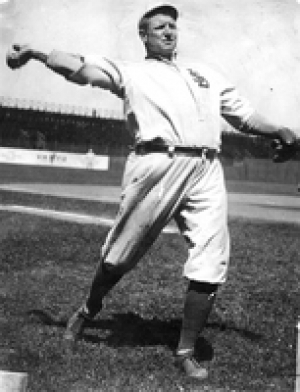
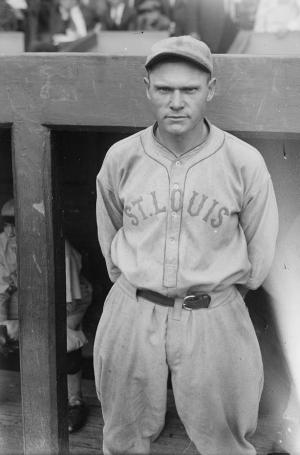
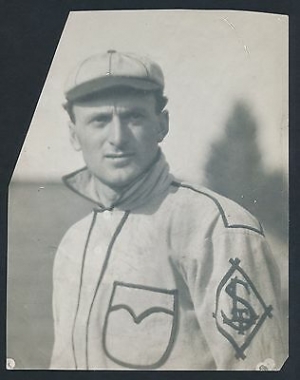
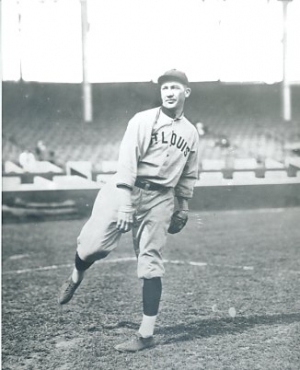
Jack Powell was a pillar of the St. Louis Browns' rotation for ten seasons across two separate stints, serving as the reliable engine of a team that often struggled to provide him with run support. While his 117–143 record with the Browns might suggest a mid-level starter, the underlying metrics reveal a pitcher who was consistently more effective than the teams behind him. Powell lacked the dazzling velocity of the era’s "fireballers," instead relying on a unique, deceptive sideline delivery. What he lacked in arm speed, he made up for with craftiness and elite command. He joined the Browns during…
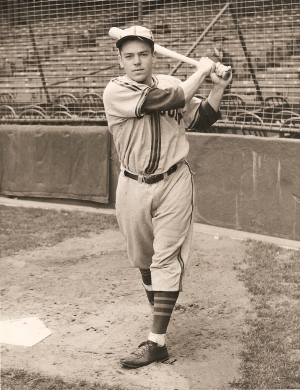
Vern Stephens arrived in St. Louis in 1941, quickly establishing himself as one of the most dynamic young talents in the American League. While many of his contemporaries departed for military service during World War II, Stephens remained a fixture in the Browns' lineup, producing a standard of offense rarely seen from the shortstop position in that era. His impact was immediate. In his first full season in 1942, Stephens batted .294 and slugged 14 home runs, finishing an incredible fourth in the American League MVP voting. From 1943 to 1945, he reeled off three consecutive All-Star selections and three…
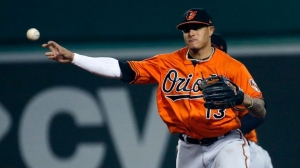
Drafted third overall in 2010, Manny Machado arrived in Baltimore as a 20-year-old phenom in 2012, sparking a mid-season surge that helped the Orioles return to the postseason for the first time in 15 years. While he played just 51 games in his debut, he took over third base full-time in 2013 and immediately authored one of the greatest defensive seasons in franchise history. That year, Machado became a national sensation, capturing the Gold Glove, the Platinum Glove (as the best overall fielder in the AL), and leading the league in Defensive bWAR. Offensively, he proved just as dangerous, leading…
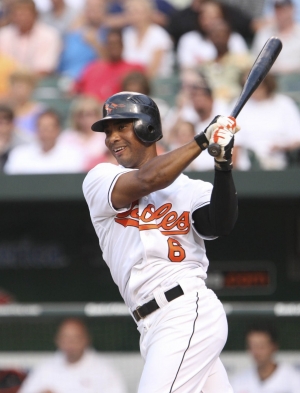
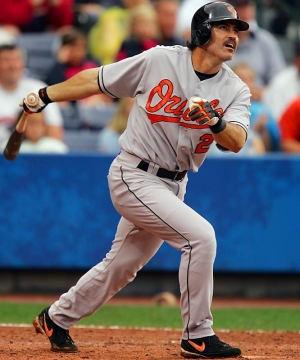
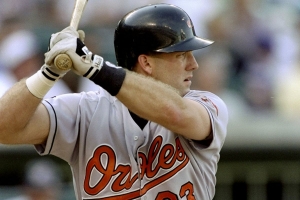
Melvin Mora arrived in Baltimore during the 2000 season via trade with the New York Mets, initially serving as a super-utility player before settling into center field. However, it was his 2004 transition to third base that unlocked his true potential, transforming him into one of the American League’s premier offensive forces. The 2004 campaign remains a statistical masterpiece in Orioles history. That season, Mora didn't just play third base; he dominated the league, capturing the American League On-Base Percentage Title with a staggering .419 mark. He finished second only to Ichiro Suzuki in the AL batting race with a…
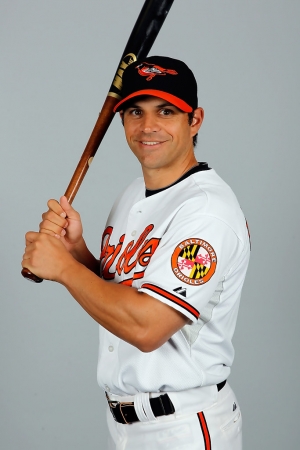
For the first 13 seasons of his career, Brian Roberts served as the high-octane engine of the Baltimore Orioles' offense. Making his debut in 2001, Roberts solidified his place as the starting second baseman by 2003, quickly evolving into one of the most dynamic lead-off hitters in the American League. Roberts’ game was built on a rare combination of elite speed and gap-to-gap power. He was a perennial "doubles machine," leading the American League in two-baggers in both 2004 and 2009—the latter of which saw him set a franchise record with 56 doubles. His base-running was equally lethal; from 2003…
Standing 6' 3" and weighing over 210 pounds, William "Baby Doll" Jacobson was a towering figure in an era of smaller men, casting a long shadow over the St. Louis Browns’ outfield for the better part of a decade. His nickname—legendarily bestowed by a fan in the minors who shouted, "You must be that beautiful doll!" after a leadoff home run—belied a player of immense strength and surprising agility. Jacobson’s journey was defined by perseverance. After a brief 1915 debut and a return to the minors, he secured a starting role in 1917, only to sacrifice his 1918 season to…
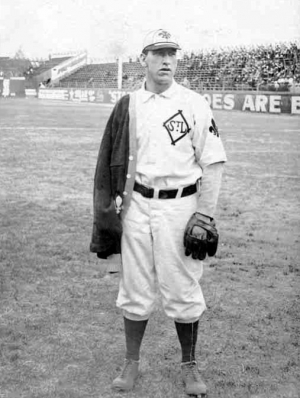
While many stars of the Deadball Era have been immortalized in bronze, George Stone remains one of baseball’s most overlooked offensive giants. A late bloomer who didn't find a permanent home in the Majors until age 28, Stone made up for lost time the moment he arrived in St. Louis. In 1905, his rookie campaign with the Browns, he immediately signaled his arrival by leading the American League with 187 hits. However, it was his 1906 season that etched his name into the record books—even if history has been slow to remember it. In an era dominated by legends like…
Mike Flanagan was the quintessential left-handed workhorse of the Baltimore rotation, a pitcher defined by his intelligence, durability, and a knack for finding the win column. Debuting in 1975, Flanagan became a staple of the Orioles' staff for over a decade, accumulating 141 wins—a total that ranks him among the most successful pitchers in the history of the franchise. While his career was built on steady volume, his 1979 campaign was a masterpiece of "Peak Performance." That year, Flanagan anchored a pitching staff that led Baltimore to the American League Pennant, winning a league-leading 23 games and capturing the American…
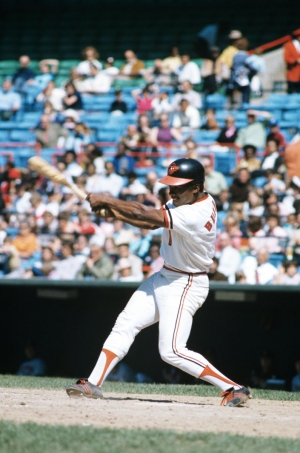
Al Bumbry spent nearly his entire 14-year career in a Baltimore uniform, serving as the swift, left-handed catalyst at the top of the Orioles' lineup. A decorated Vietnam War veteran before his MLB arrival, Bumbry made an immediate impact in 1973, capturing the American League Rookie of the Year award. That season, he showcased his elite speed by leading the league with 11 triples while posting a blistering .337 batting average. Though his production fluctuated in the mid-70s, Bumbry’s resilience became his trademark. He engineered a massive "bounce-back" campaign in 1977, hitting .317, and reached his statistical zenith in 1980.…
Drafted seventh overall in 2003, Nick Markakis arrived in Baltimore with high expectations and immediately proved he belonged. Debuting in 2006, he authored a stellar rookie campaign, finishing sixth in the AL Rookie of the Year voting after showcasing a rare combination of power, plate discipline, and a high batting average. It was the start of a nine-year tenure defined by quiet, unwavering professionalism. While Markakis was famously overlooked for All-Star honors during his time in Maryland, his statistical output told the story of an elite everyday outfielder. He reeled off back-to-back 20-home run seasons in 2007 and 2008, batting…
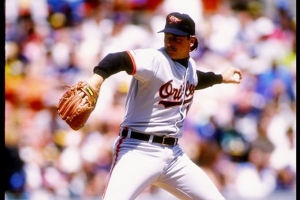
A "Lifer" who spent his entire thirteen-year Major League career in Baltimore, Scott McGregor was the tactical backbone of the Orioles' rotation. While he may not have had a blistering fastball, he embodied the "Oriole Way" through impeccable control, varied speeds, and a competitive grit that made him a premier second- or third-starter for over a decade. After a 15-win breakout in 1978, McGregor entered a period of sustained excellence. From that season through 1985, he never posted a losing record, a feat that culminated in an All-Star selection in 1981 and a 20-win season in 1980. However, his 1979…
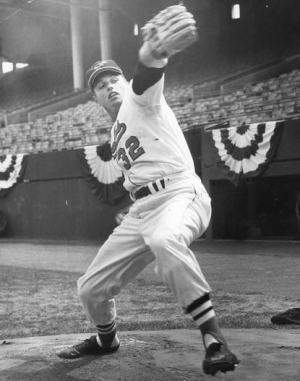
Ned Garver was the definition of a "hard-luck" ace, a premier talent tasked with anchoring the St. Louis Browns during their most difficult years. Joining the club in 1948, Garver quickly established himself as a durable workhorse, though the lack of offensive support often left him with a lopsided win-loss record that belied his true dominance on the mound. The early 1950s saw Garver reach a level of individual brilliance that defied his surroundings. In 1950, despite leading the league with 18 losses, he paced the American League with 22 complete games and a respectable 3.39 ERA. However, it was…
Mike Cuellar arrived in Baltimore at age 32, a veteran traveler who many thought had already seen his best days. Instead, the native of Las Villas, Cuba, embarked on the most dominant stretch of his career, becoming the finesse anchor of the greatest pitching staff in Orioles history. Armed with a devastating screwball and a deliberate, tactical approach, Cuellar transformed from a journeyman into a perennial 20-game winner. His debut season in 1969 was a revelation. Cuellar posted a 23–11 record with a microscopic 1.005 WHIP, becoming the first Oriole to win the American League Cy Young Award (shared with…
Rafael Palmeiro arrived in Baltimore in 1994 as a finished product—a smooth-swinging first baseman with a surgical approach to the plate. Despite playing in an era crowded with legendary power hitters, Palmeiro’s five-season run in the 1990s stands as one of the most consistently productive offensive stretches in Orioles history. From 1994 to 1998, Palmeiro was a fixture in the American League leaderboards. He finished in the top ten in home runs every single year of his first Baltimore stint, providing the thunder for the 1996 and 1997 postseason teams. His 1996 campaign was a statistical peak, during which he…
Had the Rookie of the Year award existed during the Deadball Era, Pratt likely would have walked away with the hardware. He burst onto the scene with a .302 average and 172 hits, following it up in 1913 with nearly identical production. It was a rare display of immediate, high-level consistency for a young player in the early 20th century. While his batting average eventually settled into the high.  In the 200s, in 1916, he achieved a historic milestone by leading the American League with 103 RBIs—a staggering feat for a middle infielder in an era of limited run scoring.…
Acquired from the New York Highlanders in 1904, Harry "Handsome Harry" Howell quickly established himself as the premier arm of a struggling St. Louis Browns rotation. Armed with one of the most effective—and dampest—spitballs in the history of the game, Howell embarked on a five-year run of dominance that statistical leaderboards often obscure due to his team's lack of offensive support. Howell’s consistency was nothing short of elite. From 1904 to 1908, he was a fixture in the American League's top ten for ERA, recording three seasons with a microscopic mark under 2.00. In 1905, he led the league with…
Milt Pappas arrived in Baltimore as a high school sensation in 1957, making his Major League debut as a teenager against the powerhouse Yankees. While most players his age were still navigating the minors, Pappas was quickly ascending the ranks of the Orioles' rotation, becoming the staff ace before he was old enough to rent a car. Pappas’s tenure in Baltimore was a masterclass in durable, high-level consistency. A three-time All-Star (including both games in 1962 and starting the 1965 classic), he served as the bridge between the "Baby Birds" era and the championship years. He famously never posted a…
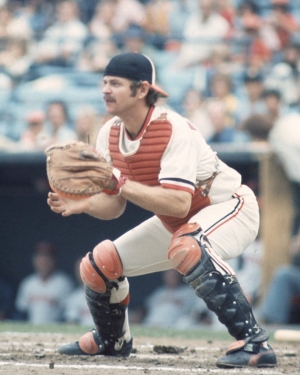
Acquired from the New York Yankees in a blockbuster 10-player swap in 1976, Rick Dempsey didn't just find more playing time in Baltimore—he found his identity. Known affectionately as "The General," Dempsey became the defensive heartbeat of the Orioles for over a decade, setting a franchise record by catching 1,230 games. Dempsey’s value was rooted in his absolute mastery of the tools of ignorance. A premier handler of pitchers, he caught ten different 20-game winners during his career and was a terror for opposing baserunners. He led the American League in Caught Stealing Percentage twice and twice topped the league…
A "Lifer" who spent his entire ten-year Major League career in Baltimore, Chris Hoiles was the steady, powerful bridge between the "Oriole Magic" of the late 80s and the postseason runs of the mid-90s. While he was lauded by his pitching staff for his game-calling and veteran leadership, his statistical profile reveals him to be one of the most productive offensive catchers of his generation. Defensively, Hoiles was the gold standard of reliability, remarkably posting a perfect 1.000 fielding percentage on four separate occasions. Offensively, he was a master of the "long ball" and plate discipline. Though he never sought…