

15. Julio Lugo
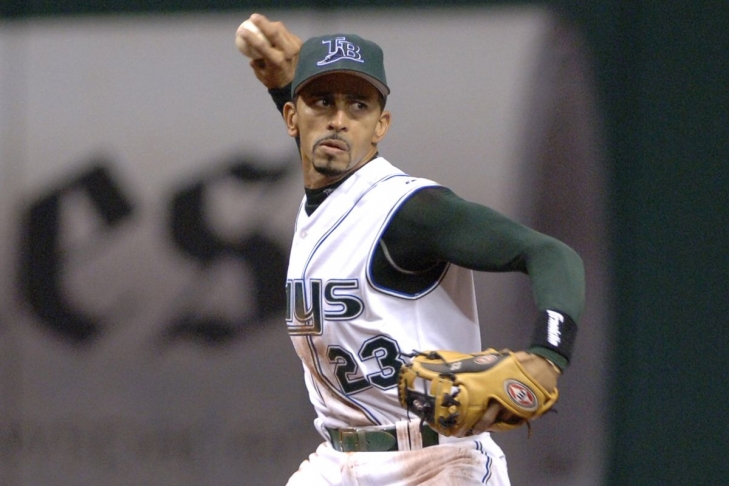
The signing of Julio Lugo in spring 2003 stands out as one of the most savvy and opportunistic moves by the Devil Rays’ front office during their early years. Released by the Houston Astros early in the season after an off-field arrest, the Dominican infielder was placed on waivers as a troubled player. With limited finances and a pressing need for stability at middle infield, the Rays took a calculated risk on his potential. This move quickly paid off for both Lugo and the franchise, as he immediately filled the shortstop position and maintained the starting role for over three and a half seasons.
Lugo’s impact on a perennially struggling defense was instantaneous and profound. During that initial 2003 campaign, he completely reconfigured the left side of the Tampa Bay infield with his exceptional lateral mobility and quick release. He finished the year leading all American League shortstops in Range Factor per Game—a metric reflecting his uncanny ability to get to balls that average defenders simply watched bleed into the outfield. He paired that elite defensive coverage with a highly respectable offensive baseline, swatting 15 home runs and hitting .275.
The 2004 season was a near-mirror image of consistency, as Lugo once again anchored the infield dirt while turning in identical offensive metrics. He proved that his first year in St. Pete was no fluke, giving manager Lou Piniella a reliable, high-energy catalyst who could slide into multiple spots in the batting order. While the Devil Rays as a whole were still mired in the American League East cellar, Lugo’s presence ensured that the shortstop position was an undeniable area of strength rather than a liability.
Lugo saved his absolute best individual performance for the 2005 campaign, putting together a definitive breakout year at the plate. He raised his batting average to a blistering .295 and collected a career-high 182 hits, showing an evolved approach that featured better gap-to-gap spray and sharper situational hitting. Meanwhile, his defensive wizardry remained fully intact, as he once again outpaced his junior circuit peers to finish first among AL shortstops in Range Factor per Game, cementing himself as one of the most complete players at his position in the league.
By the time the 2006 trade deadline approached, Lugo was playing the best baseball of his career, carrying a stellar .308 batting average and drawing immense interest from contenders looking for a postseason spark. Recognizing that the impending free agent was at the peak of his trade value, the Rays dealt him to the Los Angeles Dodgers in late July. He departed St. Petersburg with 550 hits and a sharp .287 batting average across 505 games, leaving behind a legacy as arguably the first truly elite defensive shortstop in the history of the young organization.
After his stint in Los Angeles, Lugo would parlay his success into a lucrative free-agent contract with the Boston Red Sox, where he would secure a World Series ring as their starting shortstop in 2007.
14. Aubrey Huff
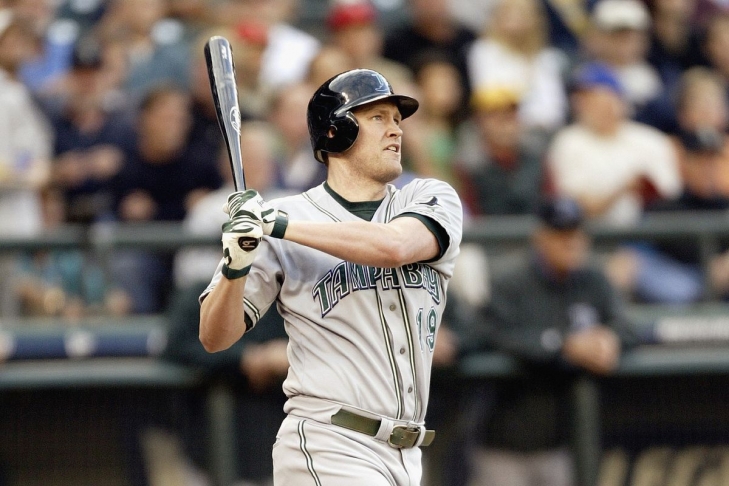
In the early years, the Tampa Bay Devil Rays faced low attendance, many triple-digit loss seasons, and a struggle for a stable homegrown player core. During this challenging period, Aubrey Huff rose from the minor leagues to become the franchise’s first true middle-of-the-order hitter. Debuting in the summer of 2000, this left-handed infielder gained recognition for his smooth, natural swing, which allowed him to excel against major league pitching more effectively than most of his teammates at the time.
By 2002, Huff had emerged as the key player in the Tampa Bay offense. He had a remarkable season, hitting 23 home runs and achieving a career-best .313 batting average, demonstrating his place among top hitters. The following summer, he surpassed these achievements, delivering his most outstanding performance in a Devil Rays uniform. In the 2003 season, Huff was immensely effective at the plate, smashing 34 home runs, driving in 107 RBIs, and maintaining a superb .311 batting average—a bright spot in a year that saw the team lose 99 games.
Despite Huff’s continued offensive productivity with two consecutive 20-home run seasons over the next two years, his overall value was often diminished by his defensive shortcomings. The coaching staff frequently moved him around the field, trying him at third base, first base, and right field. However, he lacked the range, agility, and glove skills necessary to be effective at any of these positions, making him a significant defensive liability whose glove often cost him runs that his bat helped generate.
Beyond just his defensive stats, Huff’s time in St. Petersburg grew marked by a difficult and prickly attitude that began to strain the team. While his reputation as a toxic locker room presence would become more evident later, the signs of discord with teammates and management appeared during his final years in Tampa. As the franchise aimed to build a younger, more disciplined culture, Huff's leadership style and attitude increasingly conflicted with the front office’s long-term goals.
In July 2006, Huff, nearing his fifth consecutive 20-home run season and batting .283 with 128 home runs over six seasons, was traded by the Devil Rays to the Houston Astros for prospect Ben Zobrist. The deal signaled a major shift in Tampa Bay's philosophy as Huff left, leaving his mark on the franchise's early leaderboards.
After leaving the Gulf Coast, Huff would wander through several organizations as a mercenary bat before eventually finding late-career redemption as a key contributor to two World Series championships with the San Francisco Giants.
7. Carlos Pena
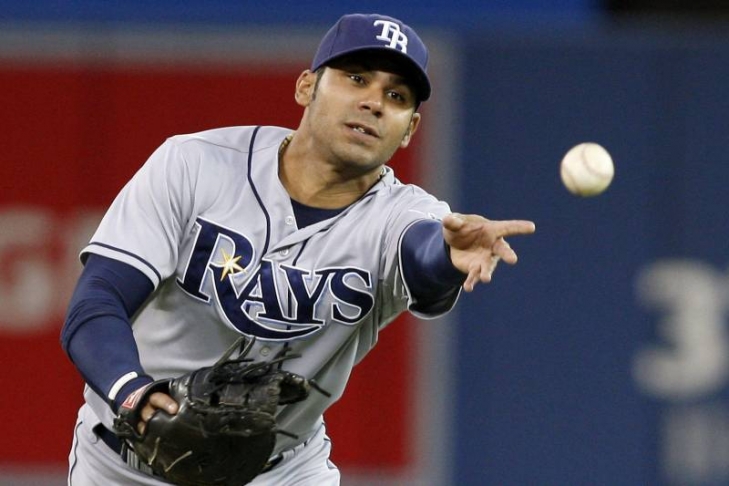
When a player's career seems abandoned by the league, choosing the right environment can ignite a remarkable comeback. Carlos Peña arrived in St. Petersburg before the 2007 season on a small minor league contract, largely seen as a former top prospect whose prime was lost in a rough patch with Detroit and Boston. What happened next defied baseball experts' expectations and changed the entire dynamic of the American League East. With a powerful, clutch left-handed swing and excellent plate discipline, this charismatic first baseman not only revived his career but also became Tampa Bay's key power hitter and emotional leader during their historic rise to relevance.
His initial 2007 season in Tampa was truly impressive. After securing a spot on the roster during spring training, Peña made it a habit to hit towering baseballs deep into the Florida night every single game. He expertly took down opposing pitchers, shattering the franchise record books with a career-high 46 home runs and 121 RBIs. His remarkable efficiency powered the entire offense, blending a solid .282 batting average with an outstanding .411 on-base percentage and an impressive .627 slugging percentage. This exceptional performance earned him the American League Comeback Player of the Year award, a Silver Slugger, and a notable ninth-place finish in the AL Most Valuable Player voting.
Peña showed that his powerful skills weren't just a one-time thing; he was a key part of the team during the amazing 2008 season when they went from worst to first. That summer, he hit 31 home runs and drove in 102 runs, impressing everyone with his strong batting and excellent defense. In fact, he became the first player in Tampa Bay history to win a Gold Glove Award. He continued his incredible performance in 2009, leading the American League with 39 home runs during the All-Star season, completing a remarkable three-year streak of hitting over 100 RBIs each year.
With all of that being said, Peña was the ultimate precursor to the modern three-true-outcome era; he was an inherently high-volume strikeout hitter who struggled heavily with contact as his career advanced. His batting average slid to .196 in 2010, and after a brief free-agent year with the Chicago Cubs, his 2012 return to the Trop yielded a tough .197 mark over 160 games.
While those significant contact leaks limited his traditional metrics, his exceptional ability to draw walks—leading the league with 87 bases on balls in 2012—regularly protected his on-base percentage and enhanced his overall lineup contribution. Following his final departure from the organization at the end of the 2012 calendar year, he left behind a remarkable statistical record founded on pure power. Throughout his two tenures totaling five seasons with the franchise, Peña amassed precisely 559 hits, 113 doubles, 163 home runs, and 468 runs batted in, with a career batting average of .230 with the club.
6. James Shields
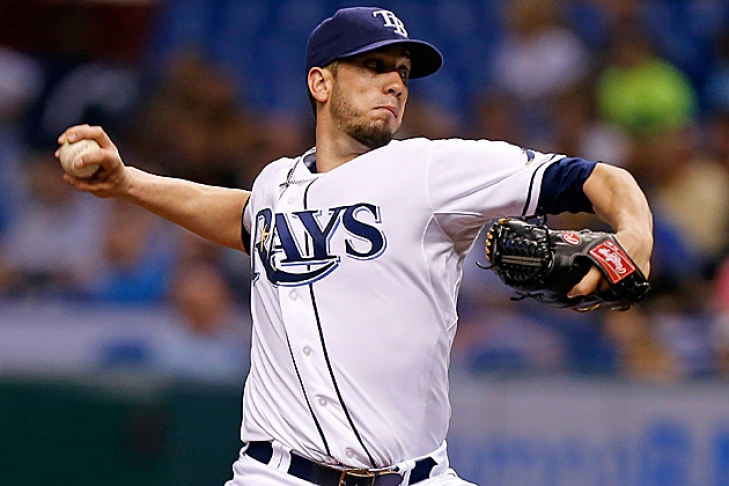
When tracing the journey of a pitching staff from a humble beginning to a strong, perennial American League contender, it becomes clear that a highly efficient bullpen needs a rock-solid foundation. Before the Tampa Bay front office gained international recognition for its innovative opener strategies and careful pitcher management, they relied on a fierce, resilient right-hander who saw the idea of a bullpen game as a personal challenge. When James Shields made his major league debut in the summer of 2006, he didn't just secure his spot in the rotation; he became the dependable workhorse of the team, setting a high standard of durability and earning the caring clubhouse nickname “Big Game James.”
His early days in St. Petersburg saw him quickly refine his signature pitch, the tumbling changeup, establishing his dominance at the front of the rotation. During the historic 2008 season, when the rebranded Rays amazed the baseball world by winning their first American League pennant, Shields was the cornerstone of the pitching staff. He made recording deep outings a daily ritual, pitching 215.0 innings in 33 starts and finishing with a solid 14–8 record. He also played a key role in leading the team to its first World Series victory, delivering an outstanding, commanding performance in Game 5 of the Fall Classic against the Philadelphia Phillies.
Shields displayed remarkable consistency, pitching at least 200 innings for six straight summers from 2007 to 2012. He consistently overwhelmed batters with numerous empty swings and ranked among the top six in innings pitched in the American League four times.
His legendary 2011 season truly marked the pinnacle of his durability and skill. That year, Shields delivered an extraordinary performance, showcasing a toughness that defied modern standards. He dominated Major League hitters with a remarkable 16 wins, only 12 losses, and a sleek 2.82 ERA across 33 starts. His incredible stamina was highlighted by leading the league with 11 complete games, including four shutouts, and pitching an impressive 249.1 innings with 225 strikeouts. This outstanding achievement earned him his first All-Star nod and a third-place finish in the American League Cy Young Award voting. He continued his impressive streak in 2012, striking out 223 batters and ranking third in the league for the second year in a row.
With his free-agent timeline rapidly approaching and the small-market franchise seeking to maximize his market value, the inevitable business exit arrived in December 2012. The front office engineered a blockbuster trade, shipping Shields to the Kansas City Royals in a franchise-altering transaction that netted the organization future pillars Wil Myers and Jake Odorizzi, drawing a definitive curtain on his historic residency in Florida.
Across his 218 total appearances representing Tampa Bay, he accumulated exactly 87 wins against 73 losses, a 3.89 ERA, and 19 complete games over 1,454.2 innings of work.
13. B.J. Upton Jr.
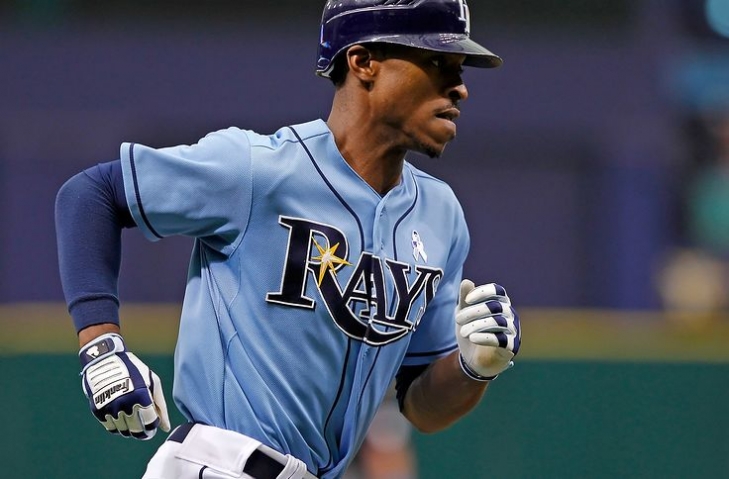
Melvin Upton Jr., widely known as B.J. during his time in St. Petersburg, stepped into the spotlight with high hopes that come with being the second overall pick. Drafted in 2002 from a Virginia high school, his rapid rise through the ranks meant he was in the big leagues by 2004 as a teenager. His debut was a challenging experience, with him switching between shortstop and third base as he tried to find his place on a team still discovering its direction.
In the summer of 2007, the organization finally moved Upton to center field, a change that truly unlocked his potential. Out in the wide-outfield of Tropicana Field, his long, smooth strides made it look easy for him to cover ground. This move helped steady his defense and let his natural batting instincts shine through, making him a key player for a team on the verge of something special.
Once integrated into the lineup, Upton leveraged a rare combination of exceptional athleticism that continually kept opposing pitchers in a state of uncertainty. He emerged as a formidable threat on the basepaths, achieving five consecutive seasons with 30 or more stolen bases, including an impressive 44 stolen bases during the 2008 season. This elite speed, complemented by a swift-wristed swing that produced unexpected leverage, provided the Rays with an extraordinarily dynamic asset at the top of the batting order.
Although his high strikeout rate and occasional passivity at the plate frustrated old-school traditionalists, his ceiling was clearly high. Upton combined his aggressive base-stealing with legitimate power, hitting 20 or more home runs in three different seasons while with Tampa Bay. His capacity to influence various parts of the game kept him a key focus on scouting reports, even when his batting average wasn't his strength.
Nothing cemented his legacy in St. Pete quite like the magical autumn of 2008. During the Rays' historic march to their first American League pennant, Upton caught absolute fire, turning October into a personal showcase. He belted 7 home runs and drove in 16 runs over the course of just 16 postseason games, carrying the offense through high-leverage moments and providing a young fan base with some of the most iconic snapshots in franchise history.
By the time he reached free agency following a career-high 28-home run season in 2012, Upton had logged nearly a thousand games with the club. He walked away with a Tampa Bay body of work featuring 910 hits, 119 home runs, and 232 stolen bases.
36. Alex Colomé
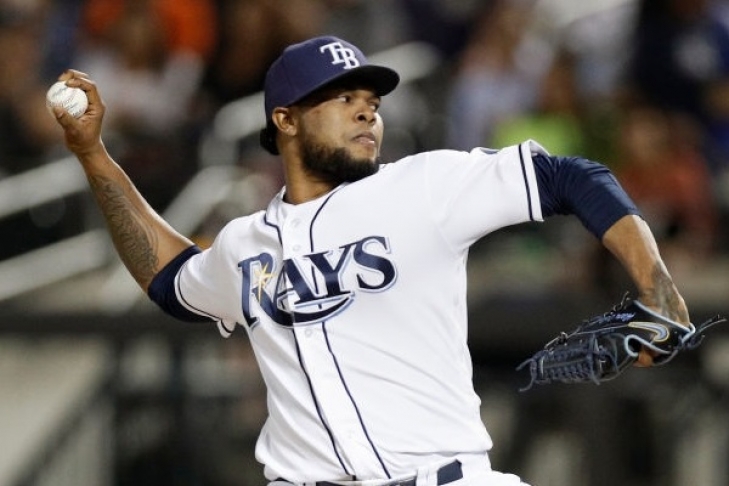
Alex Colomé’s progression within the Tampa Bay organization exemplifies exemplary organizational adaptability. Signed from the Dominican Republic as an 18-year-old amateur free agent in 2007, the right-handed power pitcher was extensively trained as a conventional starting pitcher. When he ultimately secured spots on the major league roster for brief trials in 2013 and 2014, he did so as a central pitcher, demonstrating a high-velocity fastball that suggested a promising future, despite his precise role remaining uncertain.
That significant breakthrough occurred in 2015 when the front office employed him as a versatile swingman. Colomé pitched a total of 109.2 innings over 43 appearances, including 13 starts, achieving a record of 8–5. While his performance in this role was adequate, an injury to closer Brad Boxberger during spring training prior to the 2016 season compelled Kevin Cash to adapt. Colomé was consequently positioned into the ninth-inning role, where he immediately altered the entire dynamic of the Tampa Bay bullpen.
Utilizing a formidable and incisive cutter, Colomé established himself as an exceptional force in the closing role. Throughout the 2016 season, he demonstrated dominance over American League batters, securing 37 saves with an outstanding 1.91 ERA and earning his inaugural selection to the All-Star Game. His significant breakout was reaffirmed in 2017 when he resumed his role as a reliable bullpen staple. Although his ERA increased modestly to a solid 3.24, his consistency in high-pressure situations reached its zenith as he successfully closed the game 47 times, leading Major League Baseball and setting a franchise record as the first pitcher to claim the title of Major League saves leader.
As his salary escalated in arbitration, the hyper-efficient Rays front office capitalized on his massive market value, trading the veteran closer to the Seattle Mariners in May 2018. With the Rays, Colomé appeared in 191 games (19 starts). He compiled a 17–15 record with 95 saves, a 3.14 ERA, and a 1.22 WHIP, registering 255 strikeouts over 273 innings pitched.
30. Logan Forsythe
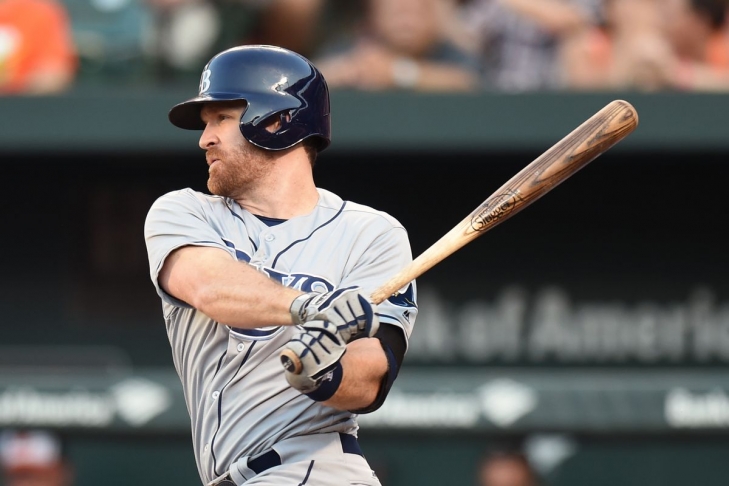
When the Tampa Bay Rays acquired Logan Forsythe from San Diego ahead of the 2014 season, they weren't searching for a conventional, single-position starter. They were looking for structural fluidity. Forsythe delivered exactly that in his initial year in St. Petersburg, appearing in at least one game at first base, second base, third base, shortstop, left field, and designated hitter. What distinguished Forsythe from standard utility players of the era, however, was that this defensive wandering wasn't a mechanism to hide a weak glove. He was fundamentally sound everywhere Kevin Cash plugged him in, never once logging a negative defensive bWAR season during his tenure with the Rays.
That rare defensive flexibility set the stage for a staggering, out-of-nowhere offensive explosion in 2015. Stepping into a full-time role primarily at second base, Forsythe put together an absolute masterpiece of a breakout campaign. He racked up 152 hits, 33 doubles, and a career-high 17 home runs while batting a robust .281. The true depth of his impact was fully illuminated by the advanced metrics: Forsythe compiled a massive 4.6 bWAR, a top-ten mark among all American League position players that summer. He had transformed from a trusted depth piece into the literal offensive engine of the ballclub.
He proved that breakout year wasn't an isolated fluke by returning in 2016 to anchor the top of the Tampa Bay lineup. Serving as the everyday leadoff hitter, Forsythe showcased even greater over-the-fence power, blasting a career-high 20 home runs across 127 games. While his pure batting average dipped slightly to .264, his disciplined eye and steady presence in the middle of the diamond kept his market value sky-high.
Recognizing that his trade value had crested and entering the final guaranteed year of his contract, the Rays front office adhered to their signature long-term playbook. That winter, they traded the veteran infielder to the Los Angeles Dodgers in exchange for top pitching prospect José De León. With the Rays, Forsythe appeared in 390 games, accumulating 354 hits, 43 home runs, and 146 RBIs.
20. Alex Cobb
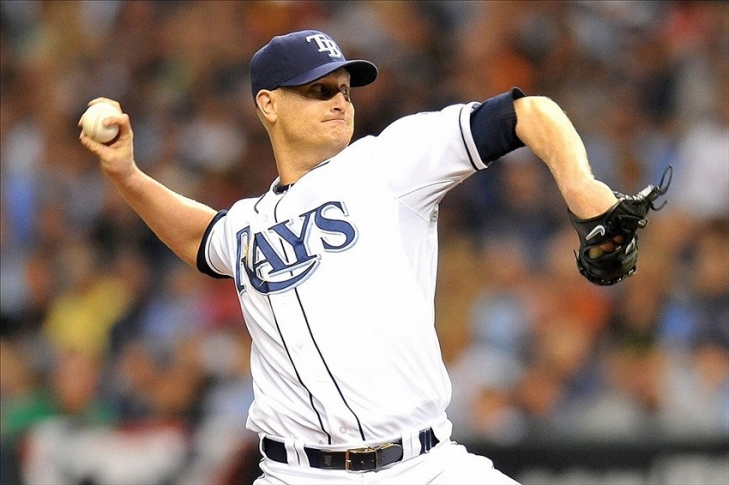
Alex Cobb’s progression through Tampa Bay highlights the organization's talent for spotting and developing overlooked pitching prospects. Drafted in the fourth round of 2006 out of Vero Beach High School, he carefully developed his skills over five minor-league seasons before making a nine-start stint in 2011. Demonstrating he could compete against major-league hitters with composure, Cobb secured a permanent spot in Joe Madden's starting rotation by early 2012, paving the way for a sustained, effective presence as a top pitcher in the American League East.
Cobb proved his status as a key player by recording 11 wins in 2012, a feat he matched in a standout 2013 season. Using a high-spin sinker and a deadly changeup, he completely shut down opposing batters, posting a career-low 2.76 ERA—the best single-season ERA of his major-league career. He continued this excellence in 2014, making 27 starts and going 10–9 with an impressive 2.87 ERA. Although his total wins were affected by limited run support, advanced stats highlighted his dominance, ranking sixth in ERA and tenth in WHIP (1.136) in the American League, showing he could consistently compete with division’s top pitchers.
Just as Cobb positioned himself as a key player, he faced a major setback in Spring Training before the 2015 season. An ulnar collateral ligament tear mandated Tommy John surgery, ending his 2015 season entirely and restricting him to a short, five-start rehabilitation appearance late in 2016.
Displaying remarkable competitive determination, Cobb made a highly successful comeback in the 2017 season by completely changing his pitching approach. He reduced some of his pre-surgery velocity and depended heavily on a new, sharp split-finger fastball to keep hitters off-balance. The change proved very effective; Cobb became the reliable workhorse of the team, pitching a career-high 179.1 innings over 29 starts and ending with a 12–10 record and a 3.66 ERA. This resilient performance also marked the end of his time in St. Petersburg, as the small-market front office allowed him to explore free agency that winter, leading to a four-year contract with division rivals, the Baltimore Orioles.
With Tampa, Cobb went 48-35 over 700 innings and had an ERA of 3.50 with 570 strikeouts.
23. Jason Bartlett
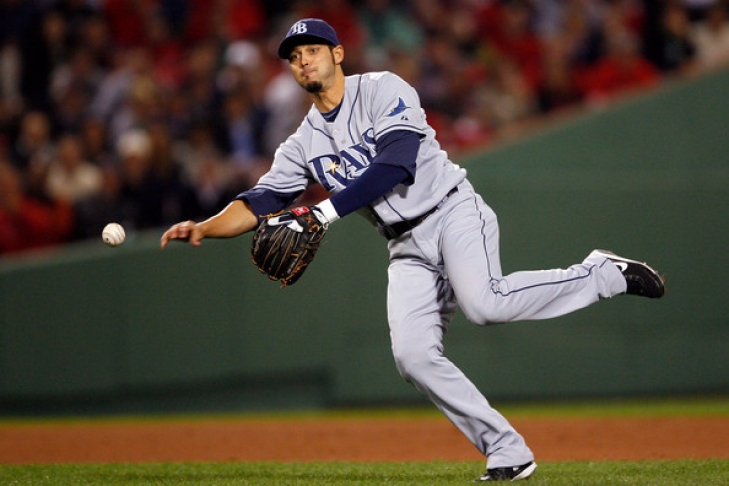
When Jason Bartlett joined St. Petersburg before the 2008 season, his goal was to stabilize an infield known for defensive errors. Traded from Minnesota in a high-profile multi-player deal that also included Matt Garza, the reliable shortstop quickly transformed the middle of the field. His arrival brought a combination of solid defense and subtle leadership that contributed to the franchise's remarkable turnaround from worst to first.
His first year in Tampa Bay showcased consistent reliability under pressure. Bartlett solidified the infield defense and maintained a .286 batting average, leveraging his smart baserunning to energize the lower part of the lineup. This helped the Rays surprise the sports world by winning the 2008 American League pennant.
That outstanding team achievement paved the way for the pinnacle of his career in 2009. Everything aligned perfectly for Bartlett as he crafted an exceptional individual season that earned him his only selection to the American League All-Star team. He dominated opposing pitchers by setting personal bests in various stats, including 160 hits, 14 home runs, and 30 stolen bases. He combined this newfound power with an elite .320/.389/490 slash line, leveraging his speed to score 90 runs and finishing 23rd in the AL MVP voting.
In 2010, the team's offensive output stabilized at a more typical level, yet he remained a resilient, intelligent playmaker, contributing to a team that won 96 games and secured another AL East division title. Seeing potential in a rich supply of young middle-infield prospects, the front office took advantage of his high market value that winter by trading Bartlett to the San Diego Padres.
With Tampa Bay, Bartlett played 413 games with 409 hits, 23 home runs, and 155 RBIs, posting a .288/.358/407 slash line.
26. Fred McGriff

When the Tampa Bay Devil Rays launched their first season in 1998, they needed more than just capable players; they required immediate credibility and star appeal. They achieved this by bringing Fred McGriff, a hometown favorite, back to the team. Left unprotected by Atlanta after 1997, the first baseman quickly gave the young franchise a clear identity. For fans who watched "The Crime Dog" unleash his memorable follow-through at Tropicana Field, his presence became a vital link that helped establish Major League Baseball's legitimacy in the region.
McGriff quickly established himself as a power hitter, providing crucial middle-of-the-order production. In 1998, he hit 19 home runs during the franchise's challenging debut season, setting the stage for an outstanding 1999. That year, he showcased his offensive prowess with a impressive .310/.405/552 batting line, hitting 32 home runs and driving in 104 RBIs. His consistency continued into the next season with another 27 home runs and 106 RBIs. This performance earned him his fifth and final All-Star appearance, making him the first player from the franchise to be selected for the Midsummer Classic.
By mid-2001, the front office realized his market value was at its highest point. Since the rebuilding team was no longer contending, they traded the veteran slugger to the Chicago Cubs before the July deadline, even though he had already hit 19 more home runs before the trade.
Assessing McGriff within this framework involves recognizing his distinctive contribution. Although his tenure in St. Petersburg lasted just under four full active seasons—resulting in a lower total playtime compared to the franchise's long-standing core—his concentrated impact during the early days of the franchise is significant. He provided an expansion team with a powerful, disciplined hitter who amassed 99 home runs and maintained an impressive .380 on-base percentage, serving as a reliable and stabilizing presence that helped establish the young team's foundation.
As a Ray, McGriff blasted 99 home runs with a slash line of .291/.380/.484. In 2023, he was elected to the Baseball Hall of Fame by the Veterans Committee.
32. Matt Garza
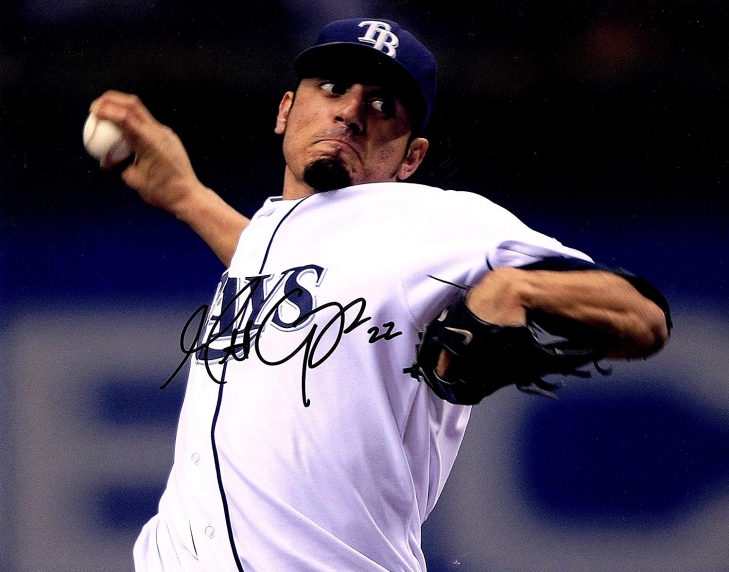
When Matt Garza arrived in St. Petersburg ahead of the 2008 season, he was a highly touted but raw piece in a multi-player trade with Minnesota. Paired with shortstop Jason Bartlett, Garza was brought in to inject fearless energy into the young rotation. He immediately delivered on that promise, grinding out 11 regular-season wins and serving as the emotional spark plug for an organization on the precipice of its first taste of October glory.
That debut season culminated in a performance that permanently etched his name into franchise lore. Facing the defending champion Boston Red Sox in a high-stakes American League Championship Series, Garza delivered an absolute masterpiece. He took the ball in two critical starts, overpowering a formidable Boston lineup to go 2–0 with a microscopic 1.38 ERA. His crowning achievement came in the decisive Game 7 at Tropicana Field, where he outdueled Jon Lester to capture the ALCS MVP and punch the Rays' historic first ticket to the World Series.
He followed that iconic postseason run by establishing himself as the staff's undisputed workhorse. Over the next two summers, Garza consistently took the ball, surpassing 200 innings in both 2009 and 2010. With a hard four-seam heater and a sharp slider, he reached an individual peak in 2010, anchoring the rotation with a career-high 15 victories.
Beyond the steady volume, that 2010 campaign featured an unforgettable milestone. On July 26th against the Detroit Tigers, Garza threw the first no-hitter in Tampa Bay franchise history. He was flawless, facing the minimum 27 batters and needing just 120 pitches to rewrite the organization's record books.
With his arbitration value soaring, the front office followed its established blueprint and traded the veteran right-hander to the Chicago Cubs that winter, leaving town with a 34–31 regular-season record and 467 strikeouts.
25. Rocco Baldelli
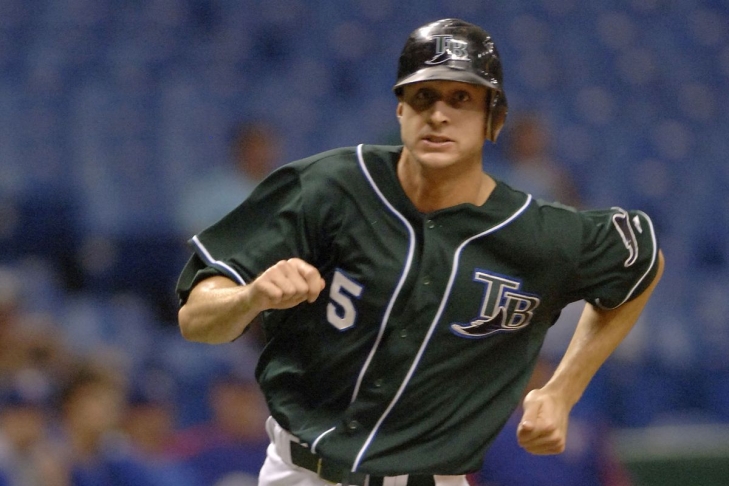
Rocco Baldelli, nicknamed the "Woonsocket Rocket," was one of the most promising early players for the Tampa Bay franchise with his five-tool talent. Making his debut in 2003, he quickly appeared to be a future star and made an immediate impact as a rookie. Baldelli excelled in his first year, accumulating 184 hits, a .289 batting average, and 27 stolen bases, which made him a formidable presence on the field. His impressive debut earned him third place in the AL Rookie of the Year voting, marking the start of what many hoped would be a remarkable career.
He continued his strong development in 2004, achieving a career-high 16 home runs and 74 RBIs. Beyond his batting power, Baldelli utilized his exceptional speed in the outfield, leading all American League center fielders in assists and range factor per game. He was a versatile player capable of impacting the game with his arm, legs, or bat.
Sadly, his promising start marked the peak of his career. Before the 2005 season, Baldelli tore his ACL, leading to a lengthy and difficult medical journey. He showed remarkable talent in 2006 during his 92-game return, hitting 16 home runs and maintaining a .302 batting average. However, ongoing issues with mysterious muscle fatigue and soft-tissue injuries, later linked to a rare metabolic and muscular disorder, kept him sidelined. Over the next two seasons, he only made occasional appearances, eventually signing with the Boston Red Sox as a free agent. He returned to St. Petersburg for a touching 10-game farewell in 2010, but injuries ultimately forced his retirement at age 29.
He finished his time with the organization having collected 531 hits and a .280 batting average. Baldelli’s sharp baseball mind outlasted his physical limits, leading him from a respected coaching role with the Rays to managing the Twins, where he won the 2019 AL Manager of the Year after a 101-win season.
12. Chris Archer

Chris Archer truly stands out as one of the most exciting and dynamic players to ever lead the Rays. With his lively mid-90s four-seam fastball and a sweeping slider that kept many batters off-balance, he quickly caught everyone's eye as the energetic and charming face of the team. To clarify a little about his early career: Archer was first drafted by Cleveland, then moved to the Chicago Cubs system. Later, he was traded to Tampa Bay in January 2011, regarded as the shining star in the big trade involving Matt Garza.
Once he reached the majors in 2012, his explosive stuff transformed him into an absolute institution. He didn't offer a smooth, predictable path to victory; instead, he established a highly erratic baseline, frequently brilliant and occasionally shellacked, pitching with relentless aggression that made him one of the most coveted arms in the sport. His 2013 full-season debut instantly signaled frontline potential, as he compiled a 9–7 record with a sparkling 3.22 ERA, finishing third in the American League Rookie of the Year voting.
His peak performance of high-volume dominance was exemplified during a distinguished, award-winning 2015 regular-season performance. Archer established himself as the leader of the rotation, transforming the opening of each game into a personal demonstration of skill. That summer, he delivered an exceptional strikeout exhibition, leading the American League with a career-high 34 starts and achieving an impressive 252 strikeouts over 212.0 innings pitched, which earned him his first All-Star selection and a fifth-place ranking in the AL Cy Young Award voting.
He consistently showcased his elite, high-energy pitch profile over the next two summers. Archer dominated junior circuit lineups, recording strikeouts of 233 in 2016 and an impressive 249 in 2017, which earned him his second All-Star appearance. Throughout this intense three-year period, his high strikeout numbers consistently ranked him second, second, and third on the American League leaderboard.
To be fair, his aggressive style involved a notably risky margin for error; his demanding mechanics and frequent home-run leaks often left him vulnerable on last-place rosters, resulting in a deceptive 55–69 local record that does not accurately reflect his true dominance.
Recognizing his peak market value, the front office made a definitive business decision at the 2018 trade deadline. In a move that stands as an absolute masterclass in organizational execution, the Rays dealt their 29-year-old ace to the Pittsburgh Pirates in exchange for an astronomical, talent-dense package featuring Tyler Glasnow, Austin Meadows, and eventual top prospect Shane Baz.
While severe arm injuries and thoracic outlet syndrome later derailed his career—restricting him to a highly nostalgic, short-lived 6-game free-agent return to Tampa in 202—the legacy of that monumental 2018 transaction continues to blossom.
As the calendar rolls into 2026, the legendary "Chris Archer Trade Tree" has organically transformed into the ultimate building block of the franchise's modern depth.
With Tampa, Archer had a 55-69 record, a 3.71 ERA, and 1,167 strikeouts.
40. Jeremy Hellickson
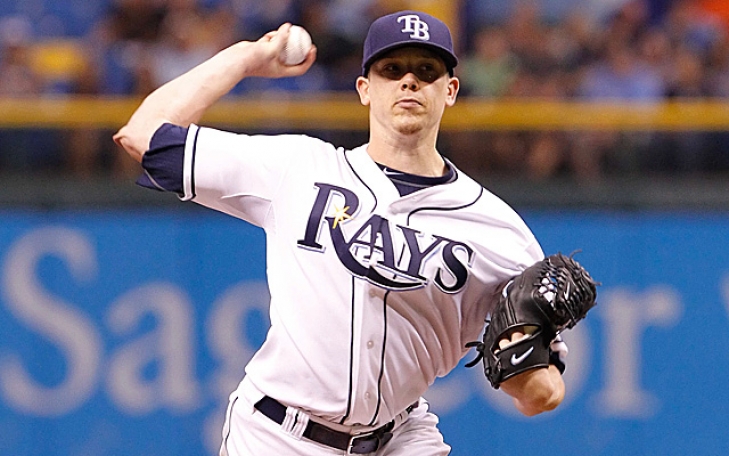
The nickname “Hellboy" suited the pitcher whose arrival in St. Petersburg seemed almost mystical. Drafted in the fourth round of the 2005 amateur draft, Jeremy Hellickson not only met the high expectations of the Rays' pitching development program but may have been its most refined early success story. He initially showcased his talent during a brief 2010 debut, securing all four of his decisions and offering a glimpse of his calm, changeup-oriented pitch style that would soon challenge American League hitters.
His rookie season in 2011 showcased controlled mastery. Unlike some young players who depend on sheer, uncontrolled speed, Hellickson pitched with veteran-like precision. He solidified the team's rotation, finishing with a 13–10 record and a remarkable 2.95 ERA. His performance earned him the American League Jackie Robinson Rookie of the Year Award, making him just the second Ray to receive this honor after Evan Longoria.
Hellickson’s role in the rotation remained pivotal through 2012, when he received a Gold Glove Award for his defensive skills on the mound—highlighting his high baseball IQ. Yet, in 2013, his command noticeably declined, and his ERA increased to 5.17, indicating a tough transition for the once-reliable ace. Injuries then impacted his 2014 season, restricting him to 13 starts, before the organization decided to move on, trading him to the Arizona Diamondbacks that offseason.
With the Rays, Hellickson made 97 appearances (94 starts). He compiled a 40–36 record with a 3.73 ERA and a 1.20 WHIP, logging 540.1 innings and registering 463 strikeouts.
35. Charlie Morton
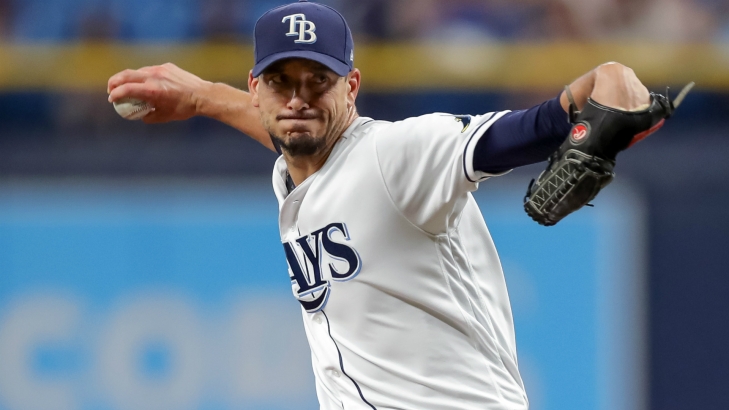
Ranking a starting pitcher based on a mere two-season residency might initially feel unconventional, but our evaluation framework places equal weight on sustained seasonal dominance. When a player anchors a rotation with the kind of high-ceiling impact that fundamentally alters a franchise's trajectory, the brevity of their stay is offset by raw efficiency. Charlie "Uncle Charlie" Morton provided exactly that kind of high-leverage elevation.
Having completed twelve Major League seasons and earned a championship ring with the Houston Astros, the seasoned right-hander joined the Tampa Bay Rays as a free agent prior to the 2019 season. Rather than demonstrating signs of aging, Morton proceeded to craft the pinnacle of his professional career. Equipped with a lethal, high-spin curveball and a mid-90s fastball, he effectively commanded American League lineups to achieve a 16–6 record across 33 starts. He concluded that remarkable summer by finishing third in the American League Cy Young Award voting, ranking third in the league with a 3.05 ERA, and setting a personal best with 240 strikeouts over 194.2 innings pitched. It is highly likely that the Rays would have missed the postseason entirely without his role in stabilizing the front of the rotation, a contribution further demonstrated by winning both of his October appearances.
Although his regular-season statistics were not as remarkable during the pandemic-affected 2020 season, his ability to perform in crucial games continued to be a vital asset. Restricted to nine starts in the regular season due to shoulder inflammation, Morton demonstrated his most exceptional work in the high-pressure environment of October. He emerged as a quintessential postseason closer and starter, achieving a 3–1 record throughout the playoffs, and notably securing two decisive victories in the American League Championship Series against his former team, the Astros, thereby leading the Rays to their second pennant.
The front office let the veteran walk in free agency that winter, leading to his signing with the Atlanta Braves. In his two years with the Rays, Morton compiled an 18–8 record with a 3.33 ERA and a 1.13 WHIP, striking out 282 batters over 232.2 innings pitched.
24. Matt Joyce
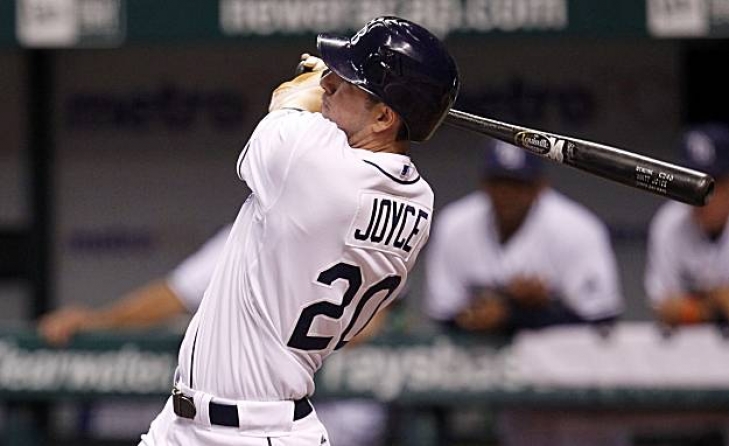
Matt Joyce's move to St. Petersburg before the 2009 season was truly a homecoming. Growing up in Tampa with a single father, he attended Devil Rays games at Tropicana Field and admired Fred McGriff. When Detroit traded him to the Rays for pitcher Edwin Jackson, Joyce realized his dream of playing in Tampa—though his first year mostly involved waiting and improving his swing in Triple-A Durham.
His patience paid off when he secured a starting corner outfield spot in 2010, paving the way for a remarkable, career-best season in 2011. Becoming a dominant force in the first half, Joyce's smooth left-handed swing earned him a spot on the American League All-Star team. Throughout a tense postseason race, he anchored Kevin Cash's lineup, recording 128 hits, 32 doubles, and 19 home runs with a strong batting average of .277.
Although his batting average declined toward his career average over the following summers, Joyce continued to display impressive power and a disciplined eye at the plate. He consistently produced well in the middle of the order, especially against right-handed pitchers, hitting 17 and 18 home runs in 2012 and 2013 respectively. His ability to draw walks and hit deep, clutch drives made him a key figure during a competitive period for the Rays.
Recognizing the escalating cost of arbitration, the front office adhered to its signature blueprint, trading the veteran outfielder to the Los Angeles Angels prior to the 2015 season. As a Ray, Joyce played 633 games, with 484 hits, 75 home runs, and 262 RBIs. He posted a .250/.342/435 slash line and a 118 OPS+.
3. Ben Zobrist
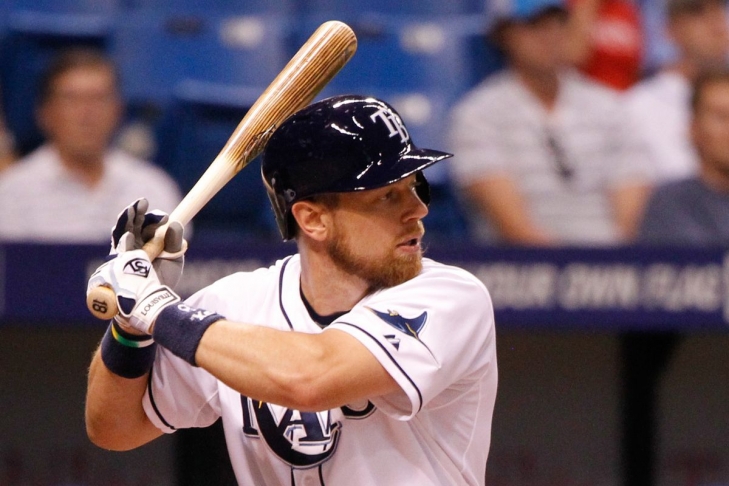
When contemporary baseball executives strategize for organizational planning and emphasize the paramount importance of defensive versatility, a particular name consistently emerges as a quintessential reference point. Ben Zobrist did not merely occupy utility roles for the Tampa Bay Rays; he fundamentally transformed the sport's perspective on positional structures. Signed during an understated trade in July 2006 that dispatched Aubrey Huff to the Houston Astros, this notably astute switch-hitter made his Major League debut later that summer. Following an instructive two-year phase as a versatile role player, the Illinois native secured regular playing time by evolving into an exceptional multi-positional Swiss Army knife, effortlessly transitioning among shortstop, second base, and all three outfield positions, thereby affording manager Joe Maddon a strategic, highly adaptable tactical advantage.
His first season in a Rays uniform involved quiet adjustments, but his 2009 breakout showcased immediate dominance. Zobrist turned working counts and shifting defense into routine. He systematically crushed American League pitching, hitting a career-high 27 home runs, drawing 91 walks, and posting a .405 on-base percentage in 152 games. His efficiency shattered league standards, earning a league-leading 8.6 bWAR, his first All-Star, and finishing eighth in AL MVP voting. His defensive awareness was unmatched; despite moving between second base and the outfield, his run suppression was so elite he likely should have won a Gold Glove.
Zobrist was a steady, high-efficiency player for the organization over five years, consistently high on-base skills. He led the American League in games twice, hit over 15 homers four times, and was key in postseason success. His peak during late residencia in 2013, when his multi-dimensional value earned a second All-Star nod after 36 doubles, 231 times on base, and a 116 OPS+.
In January 2015, they overhauled their roster, trading longtime utility icon to Oakland for John Jaso, ending his nine-season stint in St. Petersburg. He then made his mark as a top big-game player, joining the Kansas City Royals to win the 2015 World Series and later signing with the Chicago Cubs, helping them secure the 2016 championship and World Series MVP.
Over Zobrist’s 1,064 games representing Tampa Bay, he accumulated exactly 1,016 hits, 229 doubles, 114 home runs, and 511 runs batted in, completely validated by a brilliant .264/.354/.429 career slash line.
5. Kevin Kiermaier

When highlighting the elite defensive players in major-league history, you'll sometimes come across a story that sounds almost unbelievable. Take Kevin Kiermaier, for example — the Tampa Bay Rays selected him in the 31st round of the 2010 amateur draft from a small junior college in Illinois. It’s rare for a player starting out in such an unassuming way to achieve a decade of such remarkable success, let alone make a big impact at the major league level. Despite being overlooked by scouts, Kiermaier made up for it with incredible speed and a legendary throwing arm that often left runners frozen in their tracks. During his impressive ten seasons with the Rays at Tropicana Field, this player nicknamed "The Outlaw" did more than just play in center field — he changed the way the game is played, establishing himself as one of the most effective and game-changing defenders in recent history.
His introductory phase featured a remarkable debut as a defensive substitute in the decisive 2013 Wild Card tiebreaker match. Subsequently, his 2014 rookie season served as an enduring caution to the entire league. Kiermaier consistently performed gravity-defying catches, maintained an impressive batting average of .263, and hit 8 triples along with 10 home runs, thereby solidifying his position as a starter.
The paramount achievement in his athletic career occurred during the remarkable 2015 regular season. In that summer, Kiermaier demonstrated exceptional defensive prowess, surpassing contemporary standards and challenging analysts to find new descriptors. Throughout that distinguished season, Kiermaier effectively suppressed offensive opportunities across the American League, recording an extraordinary 42 Defensive Runs Saved (DRS)—the highest single-season figure since the inception of this metric. He achieved an impressive 5.0 defensive bWAR, establishing himself as one of only four players in the history of baseball to attain the significant five-win benchmark solely through defensive performance. This defensively proven excellence earned him an American League Gold Glove, the distinguished Platinum Glove Award for the best overall defender in the league, and a commendable 7.1 total bWAR, ranking him fifth among all players in the league.
Far from a single-season outlier, Kiermaier maintained that premier lockdown status for the rest of his tenure in St. Petersburg, capturing his second Gold Glove in 2016 alongside back-to-back Wilson Defensive Player of the Year honors.
Severe hand fractures, hip ailments, and knee surgeries repeatedly interrupted his momentum, reducing his workload to under 100 games in both 2017 and 2018. Yet, demonstrating the legendary grit that defined his entire identity, he never let his defensive efficiency dip; he remarkably finished every single full season of his Rays career with a defensive bWAR north of 1.5.
While he remained a light contact hitter, he weaponized enough muscle to clear the double-digit home run mark five separate times for the team, while providing crucial veteran poise during the club's run to the 2020 American League pennant.
After the 2021 season, Tampa declined to pick up his option, and he signed with the Toronto Blue Jays. With the Rays, Kiermaier accumulated 756 hits, 121 doubles, 51 triples, 82 home runs, and 112 stolen bases, balanced by 74 Total Zone Runs and a staggering 17.7 defensive bWAR anchor.
1. Evan Longoria
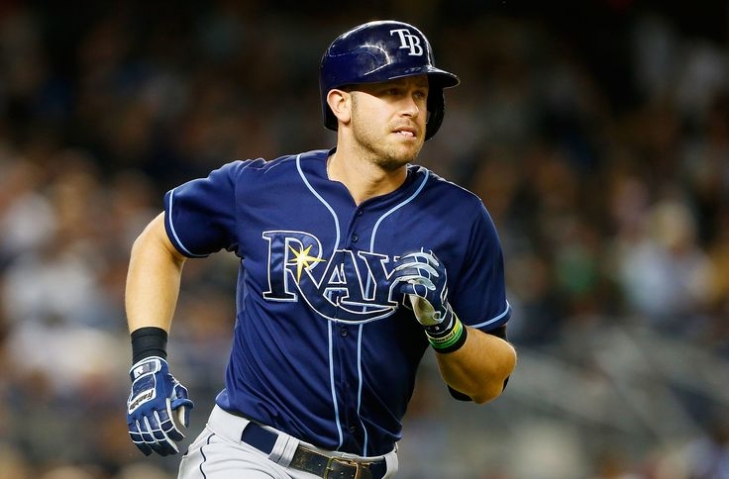
Tracing the complete evolution of the Tampa Bay franchise reveals a pivotal moment when the team shed its "Devil Rays" identity, transforming into a consistent contender. Selected third overall in the 2006 amateur draft from Cal State Long Beach, Evan Longoria took over the starting third base position in St. Petersburg just two summers later. He not only fulfilled expectations but became a star on the big stage, leading an incredible comeback from the worst to the first. During his ten-season tenure at Tropicana Field, the highly skilled third baseman became the franchise's icon, a defensive leader, and the organization’s all-time top run scorer.
His debut in 2008 was truly remarkable, showcasing his immediate impact and strong presence that changed the game for the entire region. Longoria made a habit of producing consistently every day, smashing 31 doubles and 27 home runs, and driving in 85 runs over 122 games. This impressive performance earned him the well-deserved American League Rookie of the Year award and his first All-Star selection. But more than that, his confidence and poise in high-pressure moments helped lift the young team to its first-ever American League pennant and a memorable World Series run against the Philadelphia Phillies.
Longoria established himself firmly among the elite major-league third basemen over the following five years, impressing with his powerful hitting and perfect glove work. He earned back-to-back All-Star selections in 2009 and 2010, using his formidable right-handed swing to win a Silver Slugger Award in 2009 after hitting 33 home runs and amassing a career-high 113 RBIs.
Defensively, he excelled at third-base defense, using quick reflexes and a strong arm to earn consecutive American League Gold Glove Awards. Apart from a limited 74-game season in 2012 due to injury, Longoria consistently hit over 20 home runs each summer, surpassing 30 twice, and finished sixth in AL MVP voting in both 2010 and 2013.
Local fans will forever cherish his iconic moment from the final night of the 2011 regular season—hitting a legendary walk-off home run in the 12th inning against the Yankees, sealing "Game 162" and securing a postseason spot for the Rays. He maintained that prominent presence through the 2017 season, earning his third Gold Glove that summer, before the front office made a decisive move by trading their key player to the San Francisco Giants in December to manage future financial commitments.
Longoria walked away from the Suncoast, leaving behind a monumental statistical fortress that stands as an unassailable foundation of the franchise record books. He remains the all-time, undisputed Rays franchise leader in an astonishing array of categories, including games played (1,435), doubles (338), home runs (261), runs batted in (892), and bases on balls (569).
4. David Price
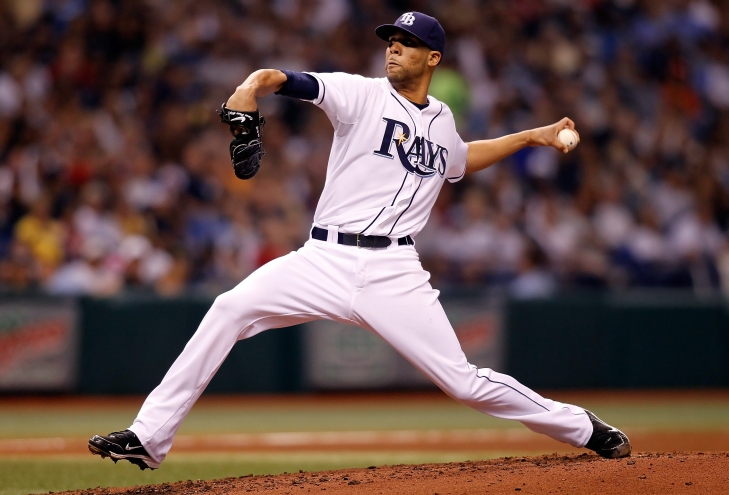
When an organization holds the coveted first overall selection in the draft, the pressure to land a franchise-altering centerpiece is absolute. The Tampa Bay Rays faced that exact milestone in June 2007, selecting Vanderbilt University's electric left-hander to anchor their pitching pipeline. David Taylor Price did not merely arrive with immense, high-velocity hype; he stepped directly into a franchise-altering postseason script. Making his highly anticipated debut in September 2008, the towering southpaw functioned as an immediate high-leverage weapon out of the bullpen, recording the final outs of the American League Championship Series against Boston to push the Rays to their first-ever World Series appearance. That autumn cameo set the stage for an illustrious, hardware-certified residency as the undisputed ace of the rotation.
His introductory 2009 campaign as a full-time starter was a standard learning experience, as he labored through structural adjustments to post a 10–7 record with a 4.42 ERA across 23 assignments.
Following a successful summer in 2011, when he posted 12 wins and struck out 218 batters, his career reached its peak during an incredible 2012 regular season. That Year, Price delivered a remarkable display of skill and dominance, truly showcasing his talent. He consistently overwhelmed opposing lineups, leading the entire league with an impressive 20–5 record and a tiny, league-leading 2.56 ERA across 31 starts. His efficiency was exceptional- pitching 211.0 innings, striking out 205 batters in critical counts, and maintaining a fantastic 1.100 WHIP. These outstanding performances earned him the prestigious 2012 American League Cy Young Award, marking him as a true legend in the organization.
A painful triceps ailment triggered a minor statistical dip during the 2013 schedule; he engineered an absolute masterpiece of workhorse redemption during the first half of the 2014 campaign. Price recaptured his elite velocity to earn his fourth career All-Star nod, pacing all of Major League Baseball with 271 strikeouts and 248.1 innings pitched across the full summer.
However, with the small-market franchise falling out of the immediate postseason hunt and his free-agent timeline looming, the inevitable business exit arrived that July. The front office engineered a blockbuster three-team trade, shipping their long-time ace to the Detroit Tigers for a return centered on Drew Smyly and Willy Adames, drawing a definitive curtain on his historic residency in St. Petersburg. Price would later leverage his elite status to capture ultimate world-championship jewelry with the Boston Red Sox in 2018 before concluding his stellar career with the Los Angeles Dodgers.
With Tampa Bay, Price had a brilliant 82–47 record, a sharp 3.18 ERA, and exactly 1,065 strikeouts in 1,143.2 innings of work across 170 starting assignments.
