

27. Tyler Glasnow
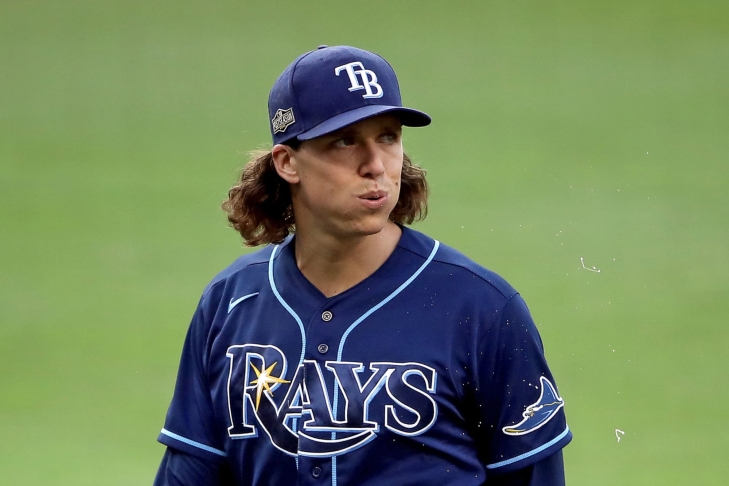
When the Tampa Bay Rays made the high-profile trade to send Chris Archer to Pittsburgh in July 2018, they weren't just rebuilding—they were fundamentally reshaping their pitching future. Austin Meadows and Shane Baz were important parts of the return, but Tyler Glasnow, standing 6-foot-8, had the most exciting potential. Although his first two months in St. Petersburg were challenging, with a 1–5 record and a 4.20 ERA over 11 starts, the front office recognized that his high-velocity, top-tier pitching was a powerful, yet volatile, asset waiting to be unleashed.
That explosion happened the following spring. Glasnow started strong in 2019, earning American League Pitcher of the Month for April. As he was establishing himself as a true ace, a serious forearm strain sidelined him for nearly four months. He came back just in time for the final stretch, ending a shortened regular season with a remarkable 6–1 record and a tiny 1.78 ERA over 12 starts.
The shortened 2020 season was tumultuous for the big right-hander. Despite a 5–1 record and a higher 4.08 ERA in the regular season, his dominant raw stuff continued to be a key asset. He struck out 91 batters in only 57.1 innings and became a key part of the postseason rotation, guiding the franchise to an American League pennant and a World Series appearance.
By 2021, Glasnow appeared unstoppable, boasting a sub-1.00 WHIP, a 5–2 record, and a 2.66 ERA. Sadly, a torn ulnar collateral ligament (UCL) in mid-June abruptly ended his rise. The Tommy John surgery that followed wiped out the rest of that season and nearly all of 2022. Demonstrating his relentless work ethic, he returned in 2023, posting a promising 10–7 record over 21 starts. He also achieved career-highs with 120 innings and 162 strikeouts, reaffirming his status as a top-tier pitcher capable of missing bats.
Facing rising arbitration costs, the Rays traded veteran right-hander Glasnow to the Dodgers before 2024. His time in St. Petersburg is a ‘what-if' due to injuries, but his record of 27–16 and 526 strikeouts over 388.1 innings reflects a peak of high efficiency that contributed to Tampa Bay's golden era.
Our All-Time Top 50 Tampa Bay Rays have been revised
Yes, we know that this is taking a while!
As many of you know, we here at Notinhalloffame.com are slowly generating the 50 of each major North American sports team. That being said, we have existing Top 50 lists out and we always consistently look to update them when we can and based on necessity. As such, we are very happy to present the pre-2021 update of our top 50 Tampa Bay Rays of all-time.
As for all of our top 50 players in baseball we look at the following:
1. Advanced Statistics.
2. Traditional statistics and how they finished in the American League.
3. Playoff accomplishments.
4. Their overall impact on the team and other intangibles not reflected in a stat sheet.
There are three new additions, and one significant jump, but nothing that impacts our top five. As always, we announce our top five immediately, but out full list can be found here.
3. Ben Zobrist
4. David Price
The three new entries are:
Infielder, Joey Wendle, enters at #36. Second Baseman, Brandon Lowecomes in at #40. Outfielder, Austin Meadowsdebuts at #49.
The only significant jump of an active player, Shortstop, Willy Adames, climbed from #36 to #31.
We welcome your input and commentsand as always, we thank you for your support.
22. Joey Wendle
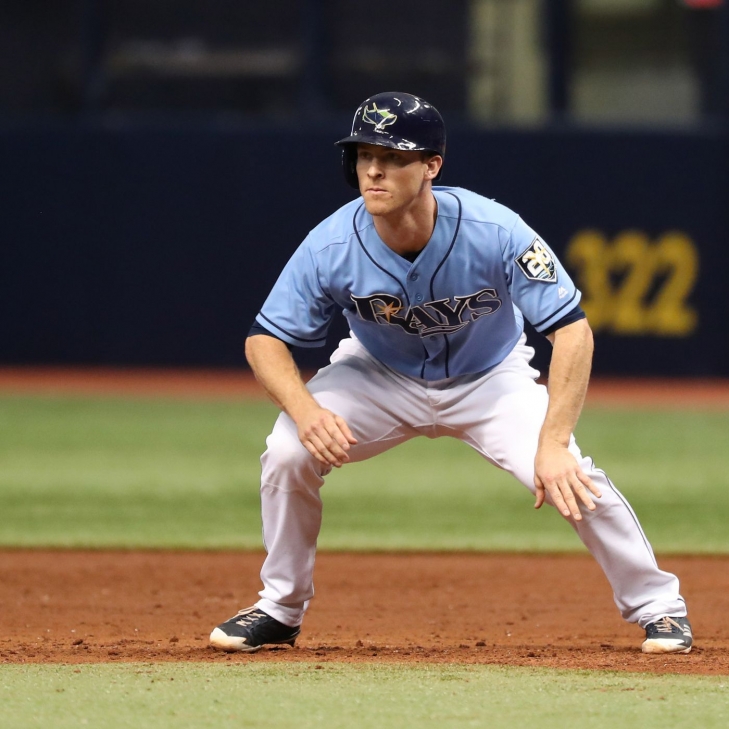
Before stepping onto a big-league field, Joey Wendle made a lasting impression in college baseball by leading the West Chester Golden Rams to the 2012 NCAA Division II National Championship. Turning that tough, gritty college style into a successful major-league career, however, demanded patience. Drafted by Cleveland and later traded to Oakland, Wendle played only 36 games over two seasons with the Athletics before the front office traded him to Tampa Bay before the 2018 season.
The change of scenery was exactly what his career needed. Wendle went into spring training as a non-roster invitee and completely forced the Rays' hand, capturing the starting second base job out of camp. What followed was a stunning breakout rookie season. Weaponizing a compact, line-drive swing and a relentless motor, Wendle punished American League pitching to the tune of an even .300 batting average alongside 33 doubles and 16 stolen bases. His comprehensive value was underscored by a rookie-best 4.7 bWAR, fueling a fourth-place finish in the AL Rookie of the Year voting.
Despite suffering severe wrist and hamstring injuries that sidelined most of his 2019 season, Wendle made a strong comeback in 2020, becoming an indispensable versatile player for the team that won the American League pennant. His greatest contribution to Kevin Cash's team was his rare ability to play multiple infield positions with elite defensive skill. He seamlessly shifted between second base, third base, and shortstop, showcasing a glove that drew comparisons to Brooks Robinson from opponents during the postseason. This dependable performance led to a career-best year in 2021, earning him a well-deserved spot on the American League All-Star team.
Recognizing that his trade value had reached its absolute peak, the hyper-efficient Rays front office traded Wendle across the state to the Miami Marlins following the 2021 season. Wendle appeared in 440 games, racking up 371 hits, 21 home runs, and 151 RBIs.
9. Brandon Lowe
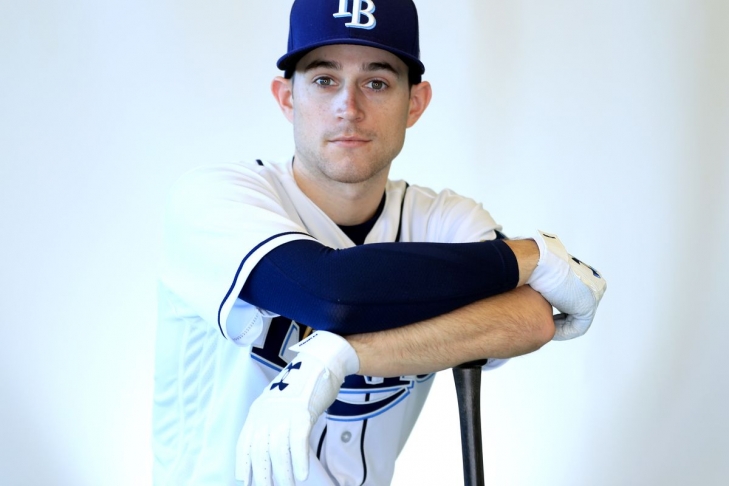
Selected by the front office in the third round of the 2015 draft, Brandon Lowe quickly developed into one of the most feared left-handed power threats at his position. Armed with an explosive, high-effort swing that targeted right-handed pitching, "Bamm-Bamm" overcame immense physical roadblocks to anchor multiple pennant chases under the tropical sun.
His initial phase marked an immediate national breakthrough, earning an award. Debuting late in 2018 and remaining rookie-eligible into 2019, he made checking inside fastballs a key personal habit. Lowe adapted his stance to hit a strong .270 with 17 home runs, earning his only American League All-Star selection and placing third in Rookie of the Year voting. This impressive achievement is notable given that severe shin and quad injuries limited him to only 82 games.
He brilliantly demonstrated that his short peak was no lucky break during the pandemic-shortened 2020 schedule. As the driving force behind an energetic lineup that made it all the way to the World Series, Lowe hit 14 home runs with a fantastic .554 slugging percentage. These achievements earned him a spot on the All-MLB Second Team and an eighth-place finish in the AL Most Valuable Player voting.
Once the season resumed according to the standard calendar, his offensive identity achieved its definitive peak. His 2021 regular-season performance served as a comprehensive demonstration of middle-of-the-order power. Lowe systematically dominated junior circuit pitching staffs, resulting in a remarkable career-high of 39 home runs and 99 runs batted in over 149 games, earning him a well-deserved tenth-place finish in the American League MVP voting.
The subsequent trajectory required confronting a highly frustrating physical crossroads. Across the 2022, 2023, and 2024 schedules, a brutal gauntlet of lower-back inflammation, oblique strains, and a fractured kneecap repeatedly sapped his mobility and mechanical leverage, turning his middle-ground reality into a choppy, injury-plagued stretch in which he struggled to maintain high-volume durability.
Faced with external doubts, Lowe delivered a resilient bounce-back during the 2025 campaign. Playing away from Tropicana Field due to storm damage from Hurricane Milton, his body was fully stabilized. He put on a magnificent offensive showcase, mashing a stellar 31 home runs with 70 runs batted in, highlighted by a career-best 20-game hitting streak that tied a franchise record and his fifth career grand slam to move into a tie for the most in Rays history.
As Lowe enters his final guaranteed season of his contract, Rays president Erik Neander made a major winter trade. In December 2025, the Rays traded Lowe, their veteran second baseman, to the Pittsburgh Pirates for top prospects, including Jacob Melton. During his eight seasons with Tampa Bay, he amassed 598 hits and 157 home runs.
43. Austin Meadows
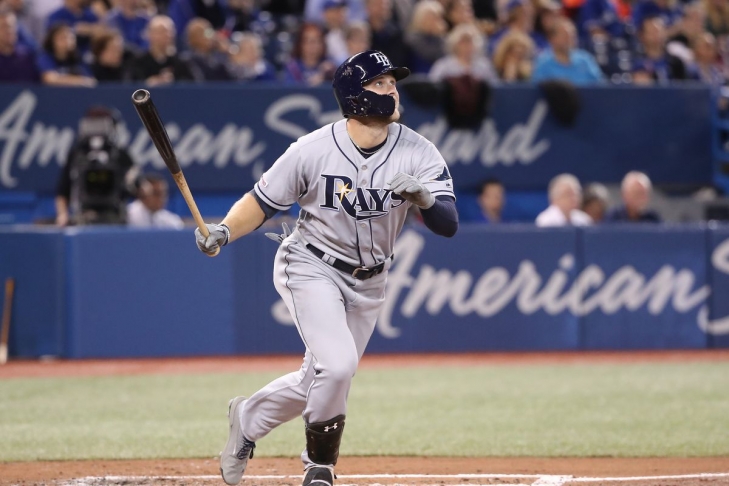
When the Tampa Bay Rays made their trade to send Chris Archer to Pittsburgh at the 2018 deadline, attention turned to how the new players would develop. Tyler Glasnow contributed with his high-velocity pitches, while outfielder Austin Meadows demonstrated the offensive talent that would make him a key part of the trade. Joining the team’s long-term strategy, the left-handed hitter with a smooth swing offered an immediate boost of powerful, run-driving ability to the middle of the lineup.
That star potential was fully realized during an outstanding breakout season in 2019. Meadows overwhelmed American League pitchers, hitting 33 home runs and posting a strong .291/.364/558 slash line. He led the Rays back to October baseball, earned his first All-Star selection, and finished 14th in AL MVP voting. He exemplifies the modern hitter, blending superb bat-to-ball contact with powerful pull-hitting ability.
He served as a key player during the team's 2020 American League Pennant run. By 2021, Meadows refined his approach to boost his run-producing ability, becoming the anchor of the franchise's highest-scoring lineup. Although his batting average fell to .234 and his on-base percentage was .315, his clutch performance was clear. He hit 27 home runs and set a career high with 106 RBIs, including 19 game-winning RBIs, leading the majors and helping the Rays reach the postseason.
However, recognizing an escalating salary in arbitration and possessing a deep stable of young outfield depth, the front office engineered a classic proactive change of scenery. Just days before Opening Day in 2022, the Rays traded the veteran outfielder to the Detroit Tigers in exchange for infielder Isaac Paredes and a competitive balance draft pick. Meadows appeared in 326 games, accumulating 308 hits, 65 home runs, and 212 RBIs with a .256/.334/.492 slash line.
Our All-Time Top 50 Tampa Bay Rays are now up
Yes, we know that this is taking a while!
As many of you know, we here at Notinhalloffame.com are slowly generating the 50 of each major North American sports team. We have a new one to unveil today, that of the Tampa Bay Rays.
Entering the American League as an expansion team in 1998, the Rays were originally the “Devil Rays”, before dropping the demonic portion of their name in 2008. Saddled in the ultra-competitive American League East, Tampa has managed to make the playoffs five times, including an American League Pennant in 2008. They have yet to win the World Series to date.
As for all of our top 50 players in baseball we look at the following:
1. Advanced Statistics.
2. Traditional statistics and how they finished in the American League.
3. Playoff accomplishments.
4. Their overall impact on the team and other intangibles not reflected in a stat sheet.
Remember, this is ONLY based on what a player does on that particular team and not what he accomplished elsewhere and also note that we have placed an increased importance on the first two categories.
This list is updated up until the end of the 2019 Season.
The complete list can be found here, but as always we announce our top five in this article. They are:
3. Ben Zobrist
4. David Price
We will continue our adjustments on our existing lists and will continue developing our new lists.
Look for our All-Time Top 50 Boston Red Sox coming next!
As always we thank you for your support.
50. Tommy Pham
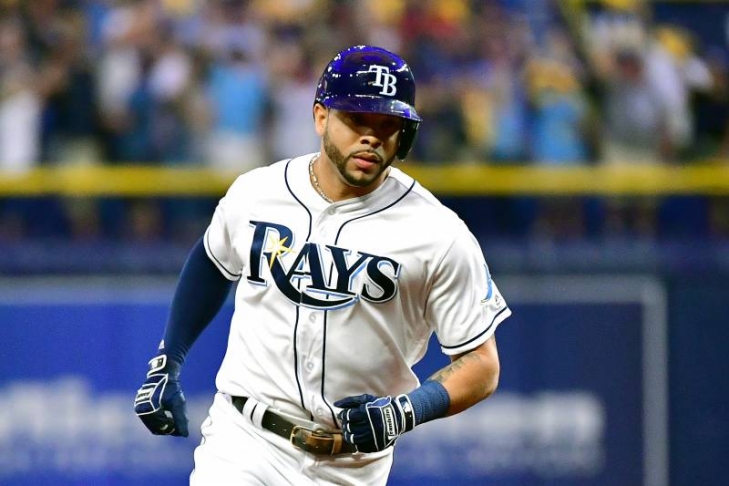
Before he became a nomadic, high-leverage gun-for-hire across both leagues, Tommy Pham delivered a brief yet potent display of offensive skill that revitalized his career. Traded from the St. Louis Cardinals at the July 2018 deadline, this intensely focused outfielder arrived in St. Petersburg during a quiet mid-season slump with a modest .248 batting average. However, true to Tampa Bay’s style, the front office saw a strong analytical profile that was ready to flourish once integrated into the Rays' changing lineup.
What followed was one of the most explosive post-trade periods in franchise history. With a new environment, Pham dominated American League pitchers in the last two months of 2018. He hit an incredible .343 batting average, with a .448 on-base percentage and a .622 slugging percentage over 39 games, transforming the Rays' offense into a more dynamic unit and reshaping their late-season identity.
He carried that relentless, tone-setting baseline into a durable, highly productive 2019 campaign. Serving as the everyday anchor in left field, Pham became the ultimate model of high-leverage consistency, famously reaching base in a franchise-record 48 consecutive games dating back to the previous summer. He blended premium on-base skills with dynamic athleticism, batting .273, blasting 21 home runs, and pilfering 25 stolen bases. His exceptional eye at the plate and textbook contact skills made him a sabermetric darling, while his defensive reliability—posting a flawless 1.000 fielding percentage—helped propel a young, hungry Rays squad to a 96-win season and an ALDS appearance.
Following the 2019 postseason, the cost-conscious front office executed a classic pre-arbitration blockbuster, sending Pham and young Jake Cronenworth to the San Diego Padres in exchange for Hunter Renfroe and prospect Xavier Edwards. Pham appeared in only 184 games in Tampa but still accumulated 197 hits, 28 home runs, 90 RBIs, and 30 stolen bases, posting a premium .287/.385/485 slash line (138 OPS+).
34. Willy Adames
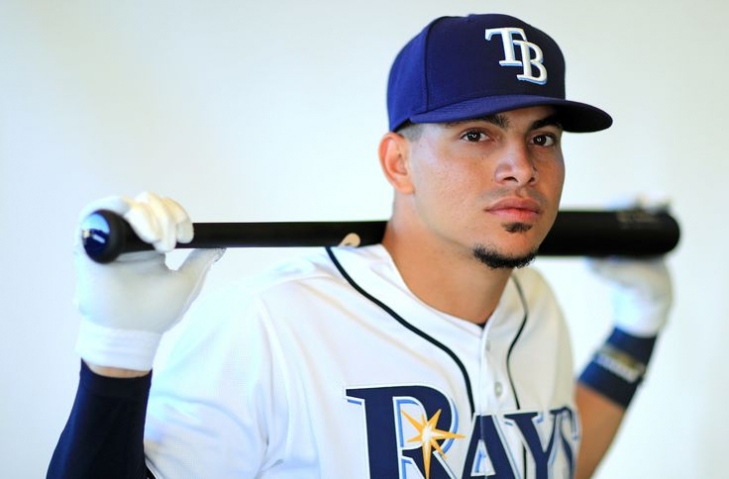
Initially signed as an amateur free agent by Detroit in 2012, Willy Adames was acquired by the Tampa Bay Rays in a significant trade deadline transaction in 2014, prior to making his presence felt in the major leagues. By the time he was formally promoted to St. Petersburg in 2018, it was evident that the franchise had obtained a robust defensive cornerstone.
Adames expeditiously demonstrated his value by compiling an impressive 85-game debut season before ascending to an elite level during his initial full season in 2019. That summer, Adames positioned himself as an exceptional defender on the field, demonstrating effortless range and a strong arm at the shortstop position. He led all American League shortstops with 14 Total Zone runs and was ranked fifth in defensive bWAR. Beyond his defensive prowess, he also exhibited offensive ability by hitting 20 home runs and achieving 135 hits during the season.
His contagious enthusiasm and decisive instincts rapidly established him as a favored figure within the clubhouse, a presence that was instrumental during the abbreviated 2020 season. Adames occupied the central position on the field throughout October, functioning as a crucial catalyst for a Rays team that advanced through the American League bracket to secure the pennant and reach the World Series.
Nevertheless, the Rays' front office is widely recognized for its pragmatic approach to managing their depth charts. Early in the 2021 season, as top prospect Wander Franco was swiftly advancing through the higher levels of minor league baseball, Tampa Bay seized the opportunity presented by Adames' rapidly increasing value by trading him to the Milwaukee Brewers. This was a quintessential example of a proactive strategic move; however, his subsequent offensive surge in the National League prompted many to question whether the front office had parted with him prematurely.
He recorded 289 hits, 43 home runs, 124 RBIs, and a .262/.329/429 slash line.
37. Jake McGee
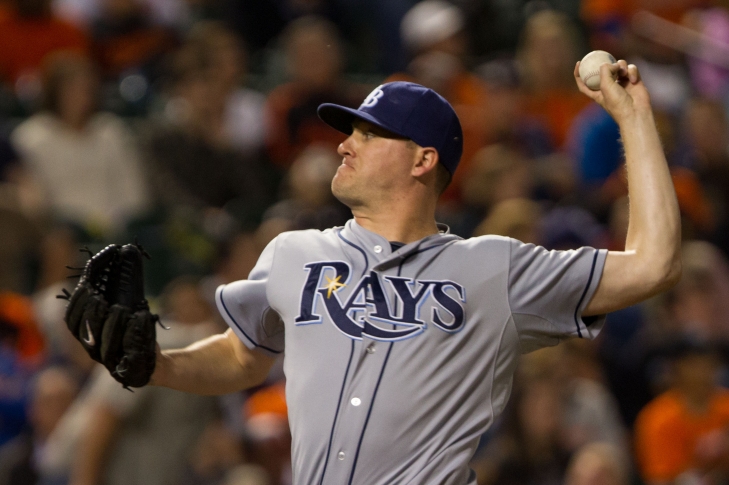
Drafted by the Devil Rays in 2004, southpaw Jake McGee spent a staggering 12 years evolving within the organizational pipeline, transitioning from a highly touted starting prospect into an indispensable late-inning weapon.
When he finally made it onto the major league roster for a brief, eight-game appearance in September 2010, his raw, electrifying talent was immediately evident. Although McGee took on a bigger role in 2011, it wasn’t until 2012 that he secured his spot permanently at the back end of the bullpen. Over the following three seasons, he became an indispensable workhorse for managers Kevin Cash and Joe Maddon, appearing in at least 69 games each summer. His lethal four-seam fastball, which regularly overwhelmed even the top hitters in the American League, propelled him to his peak performance during a remarkable 2014 season. That summer, he assumed the closer role for the final three months, recording 19 saves, a minuscule 1.89 ERA, and striking out 90 batters in just 71.1 innings.
He followed that outstanding stretch with another impressive season in 2015, posting a sub-3.00 ERA and using his deceptive fastball to hold opponents to a.197 batting average. Sensing that his trade value was at its peak ahead of free agency, the front office took advantage of his market desirability that winter, trading McGee to the Colorado Rockies in a major deal that brought outfielder Corey Dickerson to the team.
McGee made 297 appearances (all in relief). He compiled a stellar 21–11 record with 26 saves, a 2.77 ERA, and a premium 1.02 WHIP, striking out 319 batters over 259.2 innings pitched.
45. Fernando Rodney
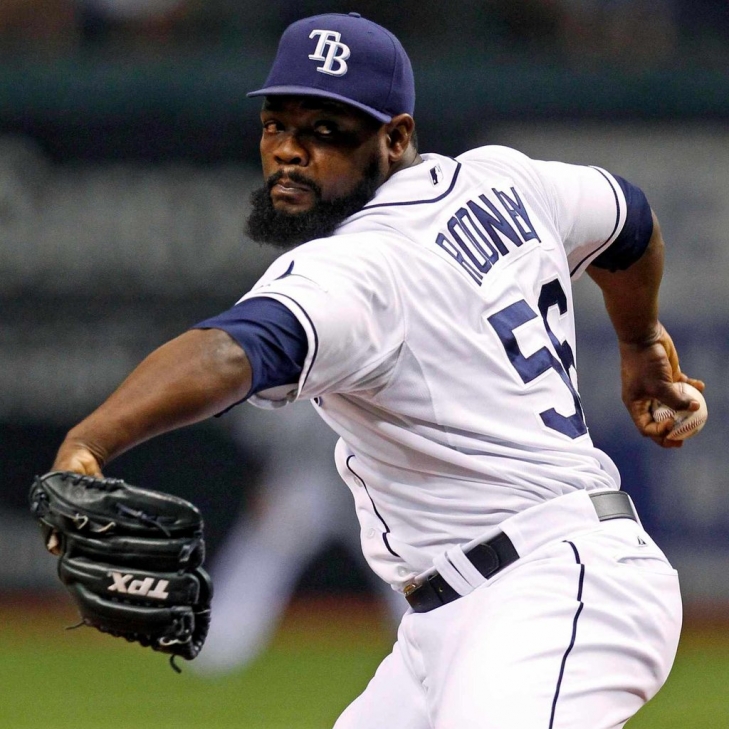
In the wildly unpredictable career of Fernando Rodney, the two-season chapter he spent in St. Petersburg stands as an absolute mountain peak. Signed as an unheralded free agent ahead of the 2012 season after nine years of varying success with Detroit and the Los Angeles Angels, the Dominican right-hander was handed the ninth-inning keys by Joe Maddon. What followed wasn't just a career resurgence—it was one of the most historically dominant relief seasons in baseball history.
Weaponizing a generational, fading changeup that completely locked up opposing hitters, Rodney turned the 2012 campaign into a personal masterpiece. He slammed the door for a franchise-record 48 saves, but it was his pristine efficiency that rewrote the record books: Rodney yielded a microscopic 0.60 ERA over a career-high 74.2 innings, setting a major league record for the lowest single-season ERA by any pitcher with at least 50 innings thrown. The baseball world took notice of the performance—and his signature, tilted-cap style—rewarding him with an All-Star selection, a fifth-place finish in the AL Cy Young voting, and a 13th-place finish in the MVP race. Every time he pulled back his invisible bow and arrow to celebrate a final out, the Rays were securing a win on the back of historically elite run prevention.
While maintaining that mythical level of perfection was impossible, Rodney returned in 2013 to provide the club with another highly productive baseline. He locked down 37 saves across 68 appearances, anchoring a steady bullpen that propelled the Rays right back into the postseason picture.
With his market value thoroughly restored, Rodney hit the open market that winter and signed a lucrative free-agent deal with the Seattle Mariners. Rodney made 144 appearances (all in relief). He compiled a 7–6 record with 85 saves, a spectacular 1.91 ERA, and a 1.03 WHIP, striking out 158 batters over 141.1 innings pitched as a Ray.
39. Matt Moore
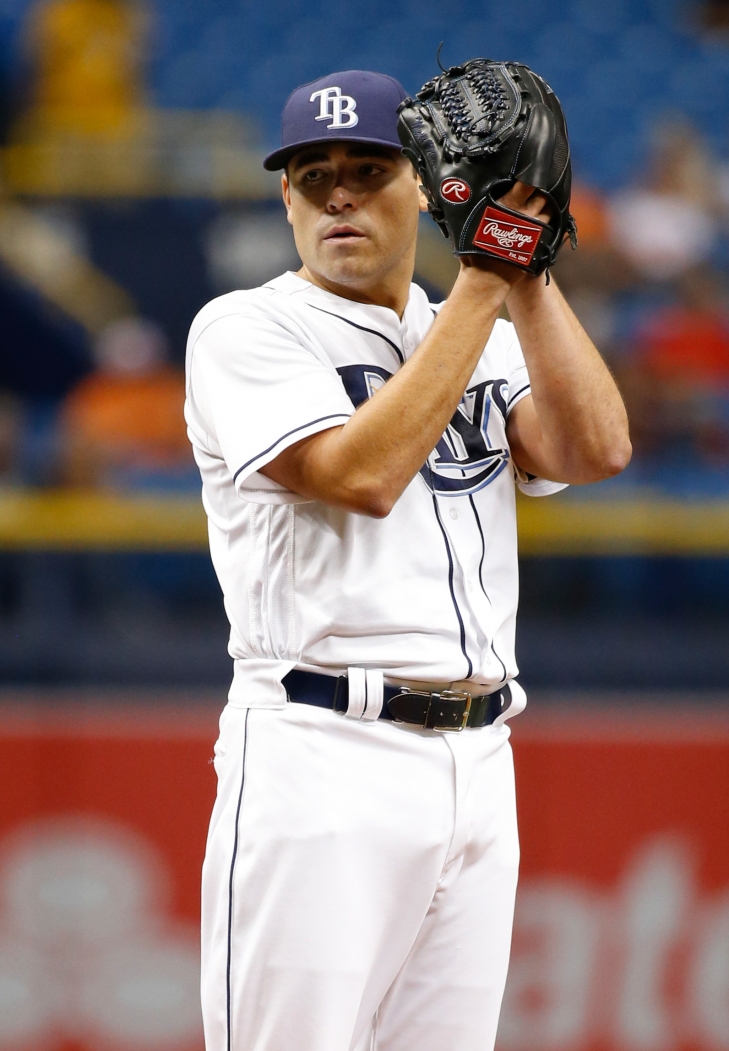
Few young pitchers in Tampa Bay history generated as much anticipation as Matt Moore. Drafted out of a New Mexico high school in the eighth round of the 2007 amateur draft, he spent years in the minors before becoming baseball’s top pitching prospect.
When the front office finally called him up in September 2011, his regular-season debut was limited to a quick, three-game stint. Nonetheless, his dynamic, high-velocity pitching made such a strong impression that manager Joe Maddon boldly included the rookie on the postseason roster. This pivotal decision made Moore a lasting part of October history, as he was entrusted with Game 1 of the American League Division Series against the formidable Texas Rangers. Moore appeared completely unfazed by the spotlight, tossing seven scoreless, two-hit innings to secure a historic playoff win and bolster the belief that a future multiple Cy Young winner had arrived.
With considerable hype trailing him, Moore entered the regular starting rotation in 2012. He adjusted to a full season’s workload, finishing with an 11–11 record in 31 starts. This solid foundation paved the way for a spectacular breakout season in 2013. Everything aligned for the young left-hander as he dominated the American League, going 17–4 with a 3.29 ERA. His impressive performance, aided by a fiery four-seamer and a lethal changeup, earned him his only career All-Star selection and a ninth-place finish in AL Cy Young voting.
Just as he appeared ready to secure a steady spot in the rotation, his progress was halted by the demands of modern power pitching. After only two starts in 2014, a severe elbow injury necessitated Tommy John surgery. His difficult recovery kept him out for over a year, effectively ending that season and much of 2015. When he returned, his usual velocity and pinpoint control were noticeably diminished, as he struggled to regain the consistency that once made him unhittable.
Recognizing the need to restock the roster and maximize Moore’s remaining market value, the front office traded him to the San Francisco Giants before the August 2016 deadline for Matt Duffy and prospects. Moore made 96 appearances, with a 39–28 record, 3.88 ERA, 1.32 WHIP, 540 innings, and 494 strikeouts.
38. Roberto Hernandez
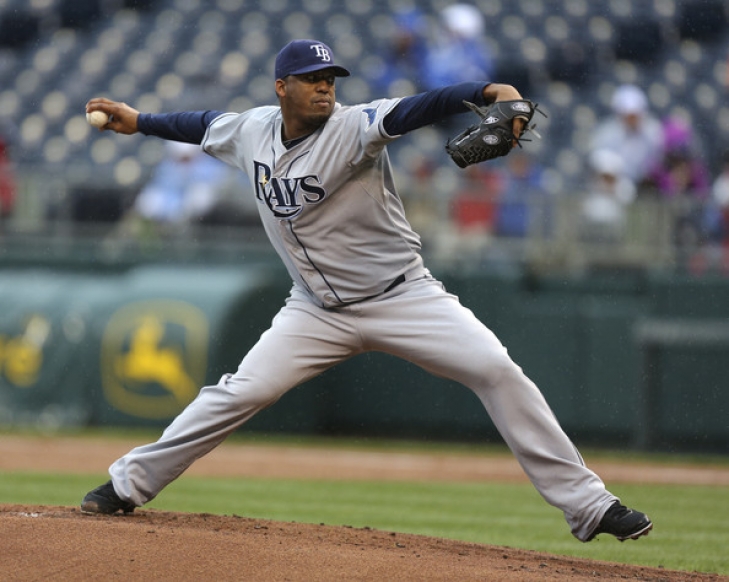
During the Tampa Bay Devil Rays’ initial roster setup before the 1998 season, they sought more than just young prospects; they needed a proven, reliable closer to secure games in the ninth inning. They found their ideal candidate in veteran Roberto Hernández. Although another pitcher with the same name later pitched for St. Petersburg, it was this original, Puerto Rican right-hander—an expert at closing games—who established the initial high standards for the franchise's bullpen.
Hernández entered the league known as one of baseball’s most reliable late-inning pitchers and quickly became a key member of the young team. After a strong debut in 1998, his performance peaked in a remarkable 1999 season. He relied on a heavy sinker in the mid-90s and a sharp forkball to dominate American League batters throughout the summer. His achievements included an All-Star selection, leading the majors with 66 games finished, and setting a career high with 43 saves—second most in the league and a franchise record for over ten years.
Although the expansion team faced typical growing pains of a new franchise, Hernández consistently remained reliable. Throughout his three-year tenure, he effectively covered the ninth inning, offering rare stability and calm leadership to a bullpen that was frequently changing.
Aiming to rebuild their young farm system, the front office traded the veteran closer to the Kansas City Royals before the 2001 season as part of a major three-team deal. His stint in St. Petersburg lasted only three years, limiting his career numbers, but he left with 101 saves and 182 games finished, making Hernández the franchise’s all-time saves leader.
41. Sean Rodriguez
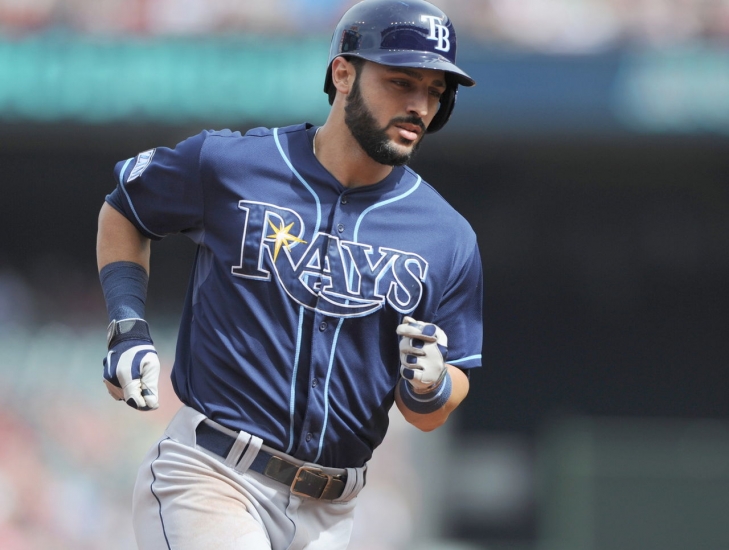
When Sean Rodriguez was traded to St. Petersburg from the Los Angeles Angels before the 2010 season, the Rays aimed to strengthen overall field coverage rather than fill a particular position. Rodriguez quickly proved himself as a true utility player, smoothly moving across the dirt and grass to play second base, third base, shortstop, first base, and all three outfield positions.
His value stemmed from exceptional defensive instincts, evident during his 2010 debut. While he lacked a fixed position, Rodriguez ranked fifth in the American League with a 2.3 defensive bWAR, making the Rays' bench a high-leverage defensive resource. Managers Joe Maddon and Kevin Cash used him as a tactical safety net, confident they could place him anywhere on the field without compromising vital positioning or arm strength.
While his pure offensive output hovered below league average—marked by a low .228 batting average and a tendency to swing through premium velocity—Rodriguez routinely offset his offensive limits with timely, occasional power. He never once eclipsed 400 at-bats in a single summer, yet his durability and defensive baseline made him an indispensable fixture whom the organization kept around for five full seasons. His knack for drawing walks in high-stress spots and pinch-hitting in late-innings double-switches kept him continuously employed as a highly valued depth piece.
After 2014, the front office traded him to the Pittsburgh Pirates. With the Rays, he had 331 hits, 40 home runs, and 172 RBIs.
31. Jake Odorizzi
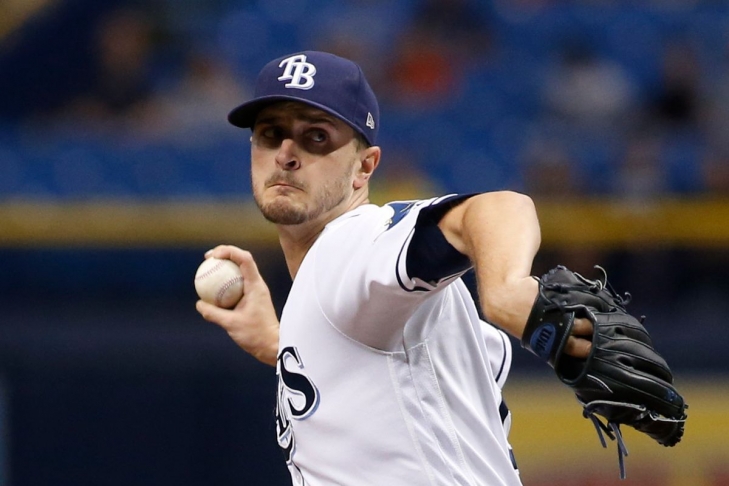
When the Tampa Bay Rays acquired Jake Odorizzi prior to the 2013 season, it was part of a franchise-altering transaction. Shipped from Kansas City alongside Wil Myers in the trade that sent James Shields to the Royals, the right-hander arrived with a pedigree that suggested he was the next great pitching prospect ready to roll off the organization’s developmental line. After spending the bulk of his first year in the state sharpening his pitch mix in Triple-A, Odorizzi grabbed a permanent spot in the rotation in 2014 and didn’t look back.
That 2014 rookie season showcased exactly what made his four-seam fastball such a lethal weapon. Attacking hitters at the top of the zone with an invisible, rising heater, Odorizzi logged an 11–13 record across 31 starts, punching out 174 batters over 168 innings. His high-strikeout style led all major league rookies and earned him an eighth-place finish in the American League Rookie of the Year voting, anchoring a staff transitioning away from its older core.
His evolution into a front-of-the-rotation stalwart reached its peak efficiency in 2015. In what was arguably his finest individual campaign in a Rays uniform, Odorizzi manipulated opposing lineups with an increasingly deceptive split-changeup, finishing with a 9–9 record and a stellar 3.35 ERA. That mark ranked eighth-best in the American League, cementing him as one of the most reliable arms in the junior circuit.
He remained the picture of stability over the next two summers, racking up identical 10-win campaigns in 2016 and 2017 while consistently eating valuable chunks of innings. With his arbitration costs escalating, the Rays executed their signature pivot, trading the veteran right-hander to the Minnesota Twins prior to the 2018 season to jumpstart their next pitching wave.
In Tampa Bay, Odorizzi made 127 appearances (123 starts). He compiled a 40–37 record with a 3.82 ERA and a 1.22 WHIP, throwing 698.1 innings and registering 639 strikeouts.
44. Akinori Iwamura
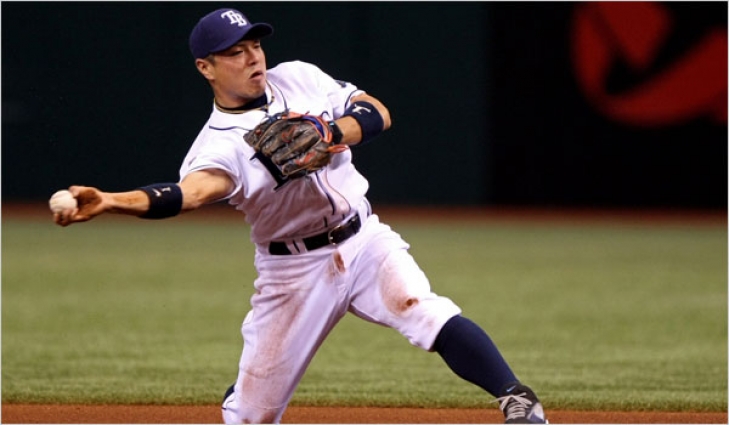
Before winning over baseball fans in St. Petersburg, Akinori Iwamura was already a celebrated star in Japan, recognized as a multi-time All-Star and Gold Glove third baseman for the Tokyo Yakult Swallows. When he signed with the Tampa Bay Devil Rays before the 2007 season, he faced the difficult task of adapting to a new country and style of play. He managed the transition exceptionally well, quickly demonstrating a disciplined, line-drive hitting approach that led to 140 hits and 10 triples in his impressive 2007 rookie season.
In 2008, Iwamura selflessly moved to second base full-time to make room for top prospect Evan Longoria, a position he had rarely played professionally. His transition was highly successful, establishing a benchmark for foreign-born players’ adaptability, while he also served as the everyday leadoff hitter at the top of the batting order. Iwamura delivered an outstanding offensive season, leading the team with a career-high 172 hits, 30 doubles, and 91 runs scored.
The 2008 campaign reached its peak with a memorable moment that forever engraved Iwamura’s name in franchise history. During Game 7 of the American League Championship Series against the defending champion Boston Red Sox, rookie David Price induced a sharp groundball up the middle in the ninth inning. Iwamura quickley moved to his right, caught the ball, and hurried to second base, confidently stepping on the bag for the final out. This electrifying play led to the Rays' first-ever American League pennant and became an iconic image so meaningful that the team later commemorated it with a bronze statue outside Tropicana Field.
With Rampa Bay, Iwamura appeared in 344 games, accumulating exactly 379 hits, 14 home runs, and 104 RBIs.
46. Toby Hall
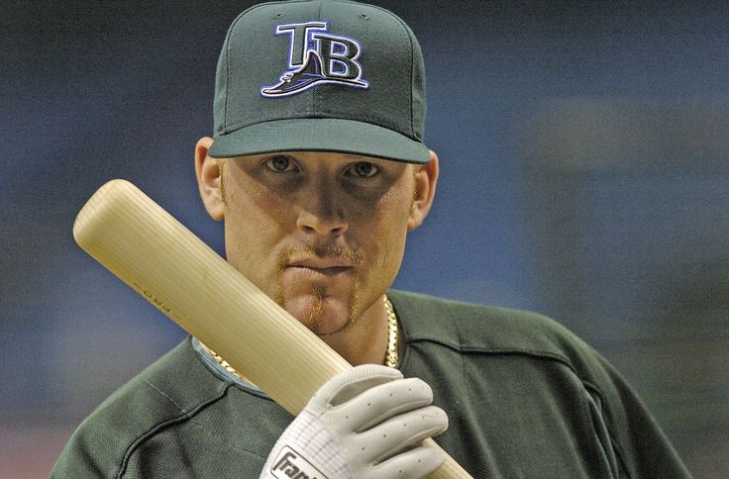
Toby Hall was drafted by the franchise in the ninth round of the 1997 amateur draft. He spent years progressing through the minor leagues and made his major league debut with a four-game stint in September 2000. During a time when the expansion franchise was trying to establish itself and needed a reliable catcher, Hall's consistent development provided a promising, homegrown solution at one of baseball’s most demanding roles.
After two seasons of gradually increasing platoon duties, Hall secured the regular starting role in 2003. Over the next three summers, he established himself as a dependable workhorse, appearing in at least 119 games annually. Offensively, his strategy was hindered by a strong dislike of drawing walks, making it tough to raise his on-base percentage near .300. Despite this, he consistently made solid contact and occasionally hit double-digit home runs, with a career-high batting average of .287 and 124 hits in 2005.
His true value was rooted solely in his exceptional defensive instincts. During a time when the young Devil Rays' pitching staff often struggled, Hall was a top-tier defender against runs. He had a quick release and a strong arm, frequently ranking among the American League leaders in runners caught stealing. His defensive skills peaked in 2003, when he caught 44.3% of base stealers, the highest in the majors, and again in 2005, leading all of Major League Baseball with an outstanding 2.7 defensive bWAR.
Hall's extended stay in St. Petersburg concluded in June 2006 when the front office traded the veteran catcher to the Los Angeles Dodgers, along with pitcher Mark Hendrickson, in exchange for Dioner Navarro and Jae Weong Seo. During his time in Tampa, Hall played in 586 games, achieving 538 hits, 44 home runs, and 229 RBIs.
47. Rolando Arrojo
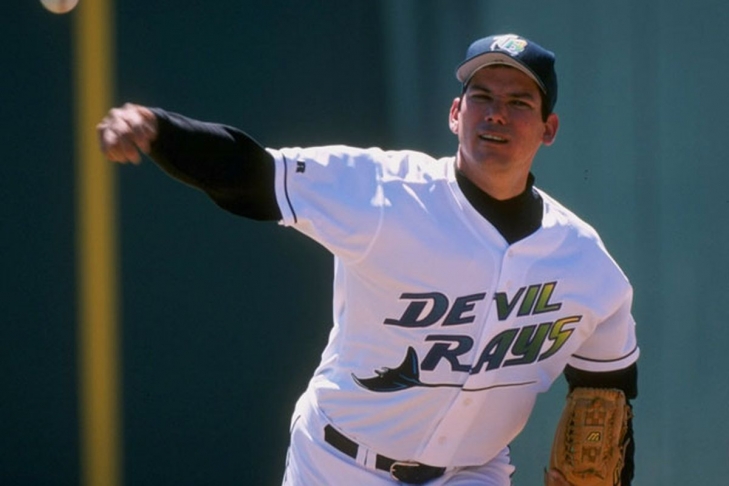
If you look strictly at the back of a baseball card, Rolando Arrojo's major-league trajectory reads like a classic one-year wonder. While that assessment is mathematically accurate, it glosses over a fascinating, high-stakes international backstory. The Cuban right-hander brought a lifetime of elite international experience with him before he ever threw a single official pitch on a big-league mound in the United States.
Arrojo famously defected from the Cuban national team in Georgia just before the 1996 Atlanta Olympics, where he had been slated to be a core pillar of their powerhouse rotation. Seeking a direct path to the major leagues, he signed with the Tampa Bay Devil Rays in early 1997—nearly a full calendar year before the expansion franchise was scheduled to play its historic first game. When the team finally took the field for its inaugural 1998 season, the polished right-hander instantly emerged as the team's chief drawing card and competitive heartbeat on an otherwise struggling roster.
That 1998 rookie campaign was nothing short of sensational. Despite his rookie status, Arrojo displayed seasoned maturity, outdueling elite American League lineups to post a 14–12 record and a crisp 3.56 ERA. He secured the franchise's first regular-season victory, shouldered a heavy 202-innings workload, and became the first All-Star representative in Tampa Bay history. He capped off that magical summer by finishing as the runner-up for the AL Jackie Robinson Rookie of the Year Award to Oakland's Ben Grieve.
Sadly, that brilliant introduction proved both his apex and his practical conclusion in Florida. Already in his early 30s when he debuted, he saw the combination of advanced baseball age, minor hip issues, and heavy usage quickly erode his physical baseline. His command fractured during the 1999 campaign, pushing his ERA to 5.18 over 140.2 innings as the league adjusted to his fading movement. Recognizing the steep decline in his physical tools, the front office pivoted that winter, trading the veteran right-hander to the Colorado Rockies in a multi-player transaction that brought in Vinny Castilla.
With the Rays, Arrojo made 66 appearances (all starts). He compiled a 21–24 record with a 4.23 ERA and a 1.34 WHIP, registering 22 complete games, two shutouts, and 259 strikeouts over 342.2 innings.
16. Desmond Jennings
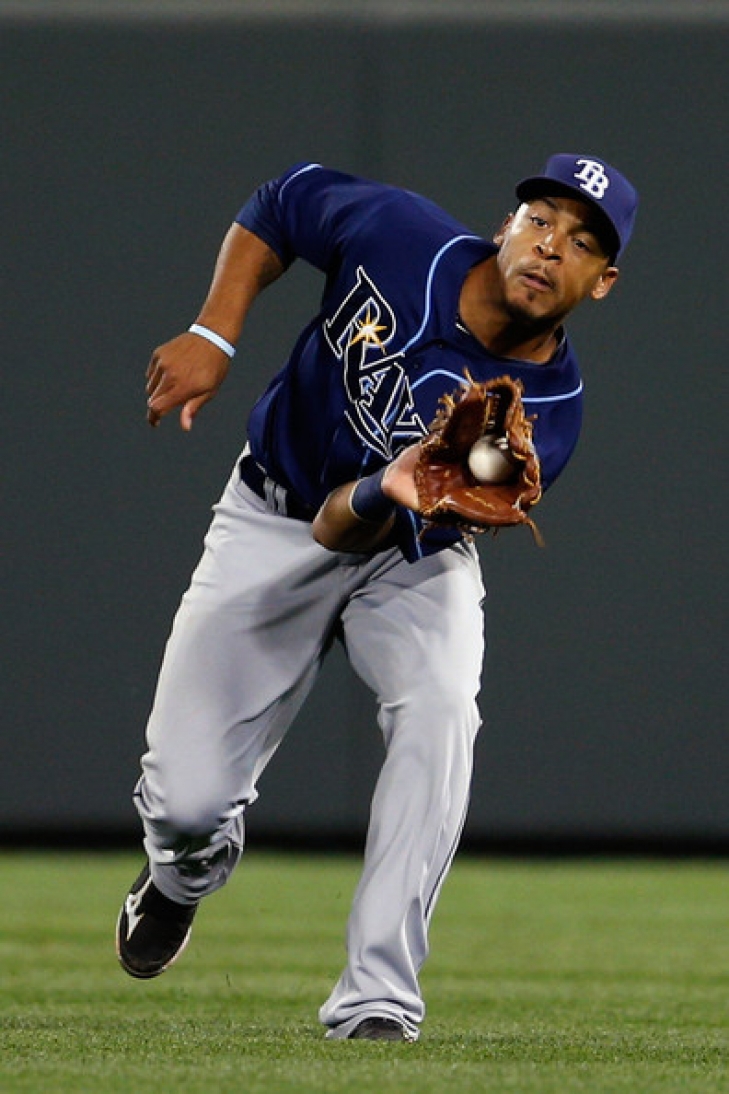
Desmond Jennings entered the Tampa Bay organization burdened by the astronomical expectations that come with being a consensus top-ten prospect in all of baseball. Blessed with breathtaking speed and electric physical tools, he was widely touted by scouts and fans alike as the natural heir apparent to B.J. Upton in center field. When he made his major league debut in the late summer of 2010, the anticipation was palpable, as the front office envisioned Jennings anchoring the premium real estate of the Tropicana Field outfield for the next decade.
The true peak of Jennings’ career materialized across a highly productive three-season window from 2012 through 2014. By 2013, he had firmly secured the everyday starting job in center field, serving as a durable and reliable fixture at the top of Joe Maddon's lineups. During each of those three consecutive campaigns, Jennings eclipsed the 115-hit mark, weaponizing his legs to stretch singles into doubles and turning routine grounders into close plays at first base, providing the Rays with a steady, high-energy presence during a competitive era.
On the defensive side of the ball, Jennings was an asset. While he lacked the theatrical flair of some of his contemporaries, his vast range, exceptional acceleration, and precise route-running allowed him to swallow up fly balls from gap to gap with above-average efficiency. In the cavernous and sometimes unpredictable environment of the Trop, his defensive reliability gave a highly sophisticated Rays pitching staff the ultimate safety net, ensuring that extra-base hits were routinely minimized.
However, while his defense and speed remained elite, Jennings’ overall value was capped by a relatively light bat. He struggled to consistently drive the ball, resulting in an underwhelming career triple-slash line of .245/.322/.393. While he showed occasional pull power, his high strikeout rate and difficulty adjusting to breaking pitches away meant he never truly evolved into the dynamic, top-tier leadoff force the organization had initially projected.
The wheels began to come off physically during the 2015 season, as a frustrating onslaught of knee injuries sapped Jennings of the elite speed that anchored his entire game. Shuffled back and forth from the disabled list, he was never able to recapture his fluid strides or explosive baseline. After a brutal 2016 campaign where his body clearly betrayed him, the cash-conscious Rays made the difficult decision to release him, effectively ending his big-league career at just 29 years old.
Over his career, Jennings collected 508 hits with 95 stolen bases.
11. Scott Kazmir
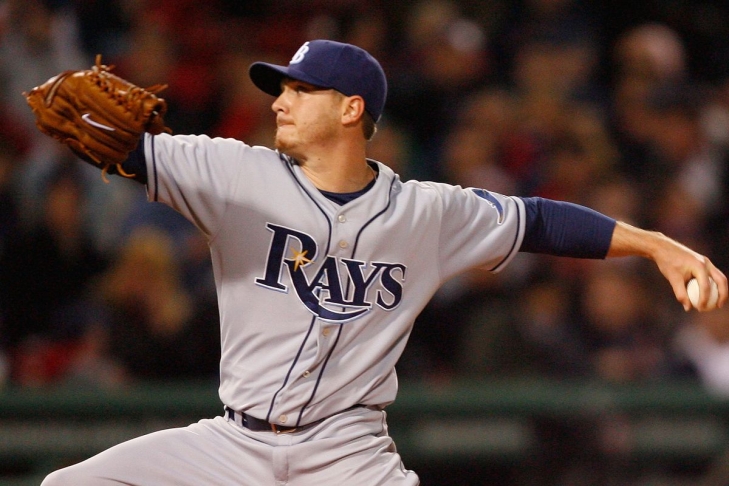
Historians identify the summer of 2004 as the pivotal moment that transformed the Tampa Bay Rays from perennial basement dwellers into a modern powerhouse with impressive coordination. Prior to that, the team was seen mainly as a landing spot for aging veterans. The significant change occurred during the July trade deadline when the front office outwitted the New York Mets, acquiring a talented 20-year-old left-handed pitching prospect in exchange for Victor Zambrano. This deal is still considered one of the most skewed and franchise-changing in major league history.
Armed with a blazing, upper-90s four-seam fastball and a sweeping slider that scouts openly compared to Steve Carlton's, Scott Kazmir instantly injected a terrifying, high-octane strikeout identity into the team's developing core. His brief introductory phase featured seven high-potential starts at the tail end of 2004, setting the stage for a spectacular four-year run where he systematically established himself as the premier young southpaw in the American League.
In 2005, he outperformed expectations despite being on a last-place team, finishing with a determined 10–9 record and striking out 174 batters, which earned him a spot in the top ten for Rookie of the Year voting. His incredible growth continued in 2006, where he improved his efficiency and had an outstanding season, ultimately earning his first Major League All-Star selection thanks to a solid 3.24 ERA.
In 2007, Kazmir put on an unadulterated strikeout clinic, pacing the entire American League with a career-high 34 starts and a spectacular, league-leading 239 strikeouts over 206.2 innings. He carried that electric momentum into a historic 2008 schedule. Despite missing a month due to arm inflammation, his high-pressure pitches remained effective, ending the season with a 12–8 record and a 3.49 ERA, earning his second All-Star appearance. Most importantly, he provided the crucial top-of-the-rotation strength that helped the rebranded Rays reach their first-ever American League pennant, notably pitching 6.0 scoreless, two-hit innings under intense pressure in Game 6 of the ALCS against Boston.
Evaluating his career involves facing a frustrating physical crossroads. His heavy workload at a young age caused mechanical changes and command leaks by 2009. His fastball velocity dropped sharply, reducing his margin for error and lowering his ERA to 5.92.
Recognizing the looming decline and operating under their trademark cost-conscious playbook, the front office initiated a definitive business departure that August, trading the 25-year-old starter to the Los Angeles Angels in exchange for a multi-player package. With Tampa, Kazmir accumulated exactly 55 wins, 140 starts, and a spectacular 874 strikeouts over 758.1 frames—a strikeout total that stood as the franchise record for years.
33. Randy Winn
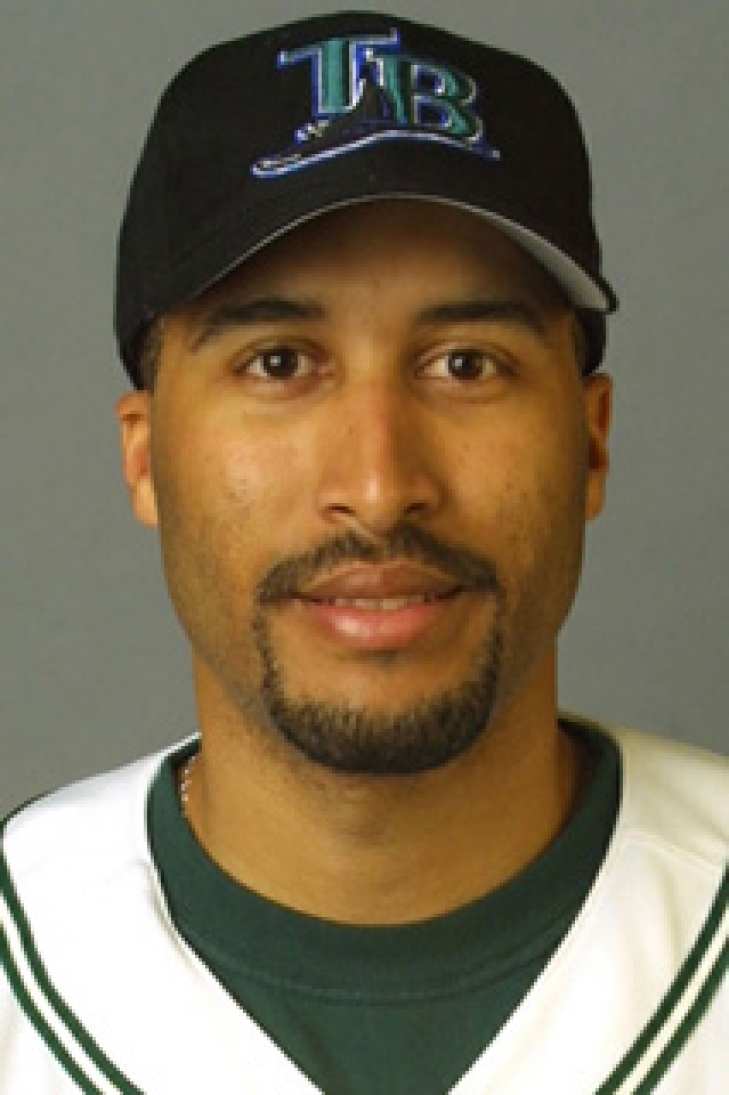
Randy Winn was a switch-hitting Outfielder who was plucked from the Florida Marlins in the Expansion Draft. Winn had yet to break into the Major League level, and his debut at Baseball's highest level occurred in Tampa.
