

 Not in Hall of Fame News
Yes, we know that this is taking a while! As many of…
 Not in Hall of Fame News
Yes, we know that this is taking a while! As many of…
 Not in Hall of Fame News
2002 SEMI-FINAL RESULTS: Thank you for your participation in the Pro Football…
 Not in Hall of Fame News
Yes, we know that this is taking a while! As many of…
 Not in Hall of Fame News
We are diligently working away at Notinhalloffame on revising our Football lists…
 Not in Hall of Fame News
We are diligently working away at Notinhalloffame on revising our Football lists…
 From the Desk of the Chairman
October baseball often turns individual pitching performances into lasting postseason memories. Strikeout…
 From the Desk of the Chairman
For decades, the sports debate ran on gut feeling. Barstool arguments, call-in…
 From the Desk of the Chairman
Introduction to Private Adult Tennis Camps in Prague Adult club players increasingly…
 From the Desk of the Chairman
Unlike in the case of pre-match betting, where you have to pick…
 From the Desk of the Chairman
Kupu178 builds trust with people by using top-end end-to-end encryption. It checks…
 From the Desk of the Chairman
Sports fans thrive on calculating strategy, reading momentum, and maximizing every tactical…
100 Active Potential Football Hall of Famers
-
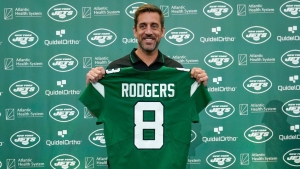 #2 Overall, Aaron Rodgers: Pittsburgh Steelers, #1 Quarterback2025 Pre Season Ranke #1, 2024 Pre-Season Rank #1, 2023 Pre-Season Rank #1, 2022 Pre-Season Rank #2, 2021 Pre-Season Rank #2, 2020 Pre-Season…in Quarterbacks
 -
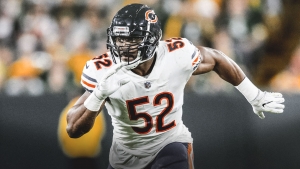 #13 Overall, Khalil Mack: Los Angeles Chargers, #5 Defensive Lineman/Linebacker: Pass Rusher2025 Pre-Season Rank #8, 2024 Pre-Season Rank #12, 2023 Pre-Season Rank #14, 2022 Pre-Season Rank #19, 2021 Pre-Season Rank #26, 2020 Pre-Season Rank…
 -
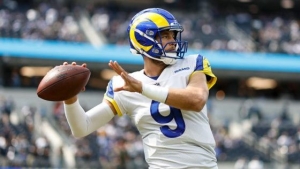 #9 Overall, Matthew Stafford, Los Angeles Rams, #3 Quarterback2025 Pre-Season Rank #26, 2024 Pre-Season Rank #31, 2023 Pre-Season Rank #37, 2022 Pre-Season Rank #37, 2021 Pre-Season Rank #59, 2020 Pre-Season Rank…in Quarterbacks
 -
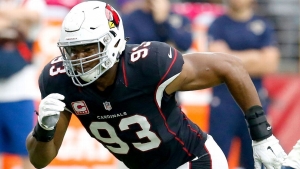 #14 Overall, Calais Campbell, Baltimore Ravens, Defensive End, #6 Defensive Lineman/Linebacker: Pass Rusher2025 Pre-Seasn Rank #14, 2024 Pre-Season Rank #19, 2023 Pre-Season Rank #19, 2022 Pre-Season Rank #26 2021 Pre-Season Rank #28, 2020 Pre-Season Rank…
Visit the Fictitious Halls of Fame!


You May Also Like...
EDITOR’S CHOICE
 DDT's Pop Flies
When the veterans committee (VC), officially convening as the Contemporary Baseball Era…



 Live Music Head
Project/Objectan interview with André Cholmondeleyby Live Music HeadOriginally published at timessquare.com on…

LATEST RANKINGS


MOST POPULAR RANKINGS

Committee Chairman
Our All-Time Top 50 Colorado Rockies have been updated to reflect the 2021 Season

Yes, we know that this is taking a while!
As many of you know, we here at Notinhalloffame.com are slowly generating the 50 of each major North American sports team. That being said, we have existing Top 50 lists out and we always consistently look to update them when we can and based on necessity. As such, we are very happy to present our pre-2022 revision of our top 50 Colorado Rockies.
As for all of our top 50 players in baseball we look at the following:
1. Advanced Statistics.
2. Traditional statistics and how they finished in the National League.
3. Playoff accomplishments.
4. Their overall impact on the team and other intangibles not reflected in a stat sheet.
The Rockies struggled last year, but there have been changes in the top fifty with active Rockies players and one new entry.
As always, we present the top five, which remain unchanged from last year.
1. Todd Helton
2. Larry Walker
You can find the entire list here.
Trevor Story, a two-time All-Star at Shortstop moves up one spot to #8.
Starting Pitchers, German Marquez, climbs from #19 to #15, and Kyle Freeland moves from #21 to #19. Another Pitcher, Jon Gray, who is now with Texas, advances from #30 to #24. Finishing off with hurlers, Antonio Senzatela, moves up to #40 from #47.
The new entry is Third Baseman, Ryan McMahon, who debuts at #43.
The alterations remove Brian Bohanon from the list.
We welcome your input and comments and as always, we thank you for your support.
RIP: John Madden
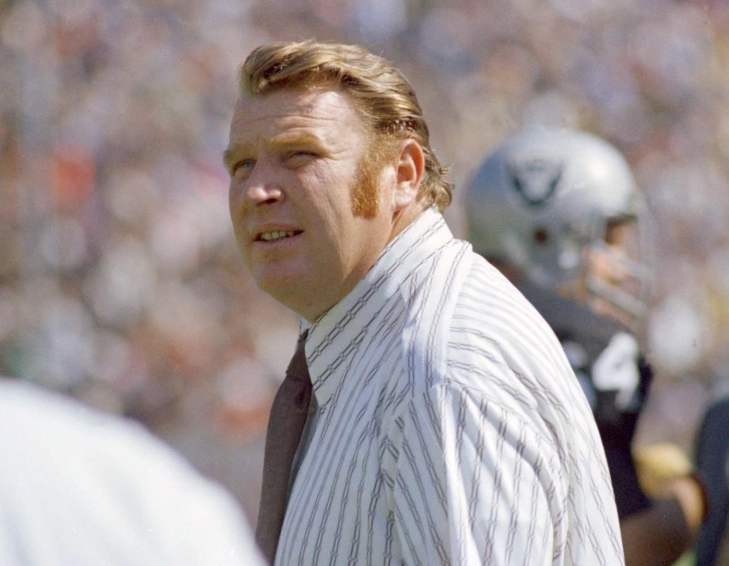
As we were preparing for Notinhalloffame.com Mock Committee to name our HOF Semi-Finalists, it was announced that Hall of Fame Coach, John Madden passed away. He was 85 years old.
Madden worked his way up the coaching ranks, first becoming the Raiders Linebackers Coach in 1967, and ascending to Head Coach two years later. In that capacity, Madden won Super Bowl XI, and had a coaching record of 103-32-7.
Retiring as a coach in 1978, Madden joined the broadcast booth for CBS, eventually teaming with Pat Summerall, where they would be the network’s prime announcers. When CBS lost football to FOX, both he and Summerall would join the new network, where again they were the top pairing. Following Summerall’s retirement, Madden would work for ABC’s Monday Night Football, and he closed his career with three years on NBC’s Sunday Night Football. He would lend his name and voice to the Madden NFL video game series, beginning all the way back in 1988.
Inducted into the Pro Football Hame in 2006, Madden is a part of every modern football fan’s past, and for many of us, the voice of the game.
We here at Notinhalloffame.com would like to offer our condolences to the fans, friends, and family of John Madden.
Awards - HOF? Part Sixty-Two: The NBA Sixth Man of the Year
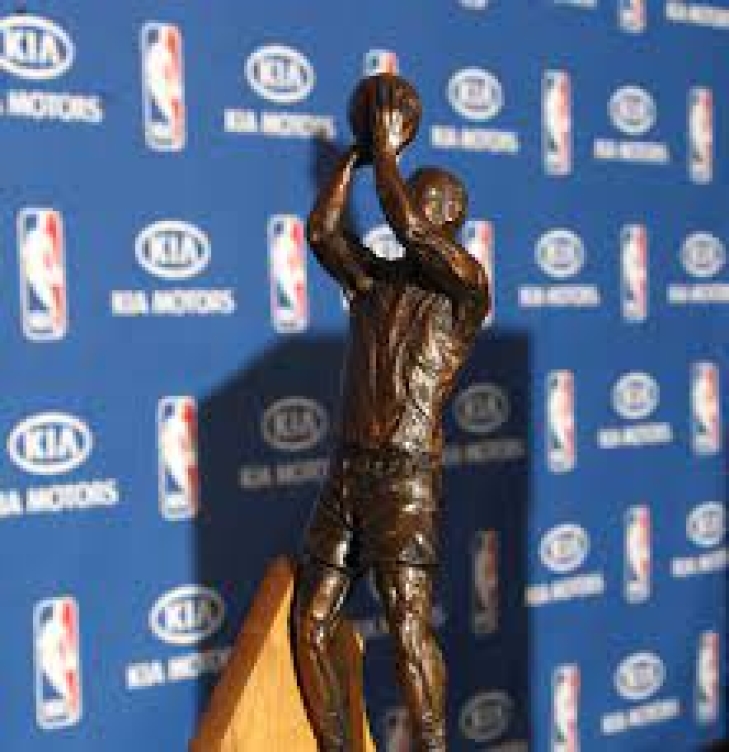
We here at Notinhalloffame.com thought it would be fun to take a look at the major awards in North American team sports and see how it translates into Hall of Fame potential.
Needless to say, different awards in different sports yield hall of fame potential. In basketball, the team sport with the least number of players on a roster, the dividend for greatness much higher. In baseball, it is not as much as a great individual season does not have the same impact.
Last time, we looked at the MLB All-Star Game MVP. This time, we return to Basketball, with the NBA Sixth Man of the Year.
The trophy first came into existence in the 1982-83 Season, honoring the best player to come off the bench.
Let’s find out!
The following are the past players who have won the NBA Sixth Man of the Year who are eligible for the Naismith Basketball Hall of Fame and have been enshrined.
1983: Bobby Jones, Philadelphia 76ers, 23.6 MP, 9.0 PPG, 4.6 RPG, 1.9 APG, 1.1 SPG, 1.2 BPG.
Jones was a previous five-time All-Star, and would be an All-Defensive Player all eleven of his NBA season. He would help the Sixers win the NBA Championship this year.
Inducted into the Hall of Fame in 2019.
1984: Kevin McHale, Boston Celtics, 31.4 MP, 18.4 PPG, 7.4 RPG, 1.3 APG, 0.3 SPG, 1.5 BPG.
This was McHale’s fourth NBA season, and this was also his first All-Star Game year. The Celtics went on to win the NBA Championship this year.
Inducted into the Hall of Fame in 1999.
1985: Kevin McHale, Boston Celtics, 33.5 MP, 19.8 PPG, 9.0 RPG, 1.8 APG, 0.4 SPG, 1.5 BPG. (2)
McHale became the first player to repeat as Sixth Man of the Year, and the first to do so back-to-back. He would become a starter afterward, went to six more All-Star Games, and won a third NBA Title in 1987.
Inducted into the Hall of Fame in 1999.
1986: Bill Walton, Boston Celtics, 19.5 MP, 7.6 PPG, 6.8 RPG, 2.1 APG, 0.5 SPG, 1.3 BPG.
By this time, Walton had already won an NBA Title, was a two-time All-Star, but had missed three full years due to foot issues. He willed himself one last good season, coming off of the bench to help the Celtics win the NBA Title.
Inducted into the Hall of Fame in 1993.
1996: Toni Kukoc, Chicago Bulls, 26.0 MP, 13.1 PPG, 4.0 RPG, 3.5 APG, 0.8 SPG, 0.3 BPG.
Kukoc joined the Bulls in 1994 after being a highly sought-after player in Europe, and this was his third season in the NBA. He helped Chicago win the NBA Title the year before, and was in season 2 of Chicago’s second three-peat. He entered the Hall via the International Committee.
Inducted into the Hall of Fame in 2021.
The following are the players who have won the NBA Sixth Man of the Year who are eligible for the Naismith Basketball Hall of Fame and have not been selected:
1987: Ricky Pierce, Milwaukee Bucks, 31.7 MP, 19.5 PPG, 3.4 RPG, 1.8 APG, 0.8 SPG, 0.3 BPG.
Pierce was in his fifth NBA season, third with Milwaukee, and it was his best season to date. He notably started 31 Games this year.
Eligible Since 2004. Unranked on Notinhalloffame.com.
1988: Roy Tarpley, Dallas Mavericks, 28.5 MP, 13.5 PPG, 11.8 RPG, 1.1 APG, 1.3 SPG, 1.1 BPG.
Tarpley was an NBA sophomore and became the first Sixth Man of the Year to average a double-double. He would later be suspended for two years on two different occasions due to substance abuse and never lived up to his potential.
Eligible Since 2003. Unranked on Notinhalloffame.com.
1989: Eddie Johnson, Phoenix Suns, 29.2 MP, 21.5 PPG, 4.4 RPG, 2.3 APG, 0.7 SPG, 0.1 BPG.
Johnson was in year right of an 18-year career, but this was the last of three years where he averaged over 20 Points per Game. This was the only individual award he won as a pro.
Eligible Since 2005. Unranked on Notinhalloffame.com.
1990: Ricky Pierce, Milwaukee Bucks, 29.0 MP, 23.0 PPG, 2.8 RPG, 2.3 APG, 0.8 SPG, 0.1 BPG. (2)
Pierce would be an All-Star the year after, the same season he was traded to Seattle, but this season would see the Guard post his career-high in Points per Game.
Eligible Since 2004. Unranked on Notinhalloffame.com.
1991: Detlef Schrempf, Indiana Pacers, 32.1 MP, 16.1 PPG, 8.0 RPG, 3.7 APG, 0.7 SPG, 0.3 BPG.
Schrempf became the first non-American to win the Sixth Man of the Year, and this was his sixth season in the NBA.
Eligible Since 2007. Ranked #21 Notinhalloffame.com.
1992: Detlef Schrempf, Indiana Pacers, 32.6 MP, 17.3 PPG, 9.6 RPG, 3.9 APG, 0.8 SPG, 0.5 BPG. (2)
This was Schrempf’s last year coming off the bench, and he was an All-Star the following year. He achieved greater fame when he joined Seattle.
Eligible Since 2007. Ranked #21 Notinhalloffame.com.
1993: Cliff Robinson, Portland Trail Blazers, 31.4 MP, 19.1 PPG, 6.6 RPG, 2.2 APG, 1.2 SPG, 2.0 BPG.
Robinson was in his fourth season of an 18-year career, and was an All-Star the next season.
Eligible Since 2013. Ranked #87 Notinhalloffame.com.
1994: Dell Curry, Charlotte Hornets, 26.5 MP, 16.3 PPG, 3.2 RPG, 2.7 APG, 1.2 SPG, 0.3 BPG.
Curry came off the bench for the majority of his career, and this was his best season, with a career-high 16.3 Points per Game.
Eligible Since 2008. Unranked on Notinhalloffame.com
1995: Anthony Mason, New York Knicks, 32.4 MP, 9.9 PPG, 8.4 RPG, 3.1 APG, 0.9 SPG, 0.3 BPG.
This was Mason’s last season as a non-starter, and he was an All-Star the next year.
Eligible Since 2013. Unranked on Notinhalloffame.com.
1997: John Starks, New York Knicks, 26.5 MP, 13.8 PPG, 2.7 RPG, 2.8 APG, 1.2 SPG, 0.1 BPG.
Starks was an All-Star three years before, and though this was his first year off the bench since 1991/92, he had similar numbers that he did when he was a starter.
Eligible Since 2008. Unranked on Notinhalloffame.com.
1998: Danny Manning, Phoenix Suns, 25.6 MP, 13.5 PPG, 5.6 RPG, 2.0 APG, 1.0 SPG, 0.7 BPG.
An All-Star in 1993 and 1994, Manning was in his ninth NBA season, but also the last where he averaged over 10 Points per Game.
Eligible Since 2008. Ranked #92 Notinhalloffame.com.
1999: Darrell Armstrong, Orlando Magic, 30.0 MP, 16.2 PPG, 3.3 RPG, 6.1 APG, 2.1 SPG, 0.1 BPG.
Armstrong was in his fifth NBA season, and this was his best, with a career-high in Points per Game and PER (22.2). Armstrong also won the most Improved Player of the Year this season.
Eligible Since 2014. Unranked on Notinhalloffame.com
2000: Rodney Rogers, Phoenix Suns, 27.9 MP, 13.8 PPG, 5.5 RPG, 2.1 APG, 1.1 SPG, 0.6 BPG.
This was Rogers’ second year of five straight where he was coming off of the bench, and this was his most effective. Rogers had a career-high PER of 17.1 and Win Shares (2.7).
Eligible Since 2011. Unranked on Notinhalloffame.com
2001: Aaron McKie, Philadelphia 76ers, 31.5 MP, 11.6 PPG, 4.1 RPG, 5.0 APG, 1.4 SPG, 0.1 BPG.
The Sixers made the Finals this year, largely on the back of Allen Iverson. This was one of only three seasons that McKie had at least 10 Points per Game.
Eligible Since 2011. Unranked on Notinhalloffame.com
2002: Corliss Williamson, Detroit Pistons, 21.8 MP, 13.6 PPG, 4.1 RPG, 1.2 APG, 0.6 SPG, 0.3 BPG.
Williamson won his only individual award in the NBA this year, and two years later he would win the NBA Title with the Pistons.
Eligible Since 2013. Unranked on Notinhalloffame.com
2003: Bobby Jackson, Sacramento Kings, 28.4 MP, 15.2 PPG, 3.7 RPG, 3.1 APG, 1.2 SPG, 0.1 BPG.
An All-Rookie in 1998, Jackson won his second and last individual accolade as a pro. Jackson posted career highs in Points per Game, Win Shares (5.5) and VORP (2.1)
Eligible Since 2015. Unranked on Notinhalloffame.com
2004: Antawn Jamison, Dallas Mavericks, 29.0 MP, 14.8 PPG, 6.3 RPG, 0.9 APG, 1.0 SPG, 0.4 BPG.
This was the only year that Jamison was with Dallas, and he made the most of it, setting a career-high in PER (21.2). Jamison would later go to two All-Star Games, both with Washington.
Eligible Since 2018. Ranked #81 on Notinhalloffame.com
2005: Ben Gordon, Chicago Bulls, 24.4 MP, 15.1 PPG, 2.6 RPG, 2.0 APG, 0.6 SPG, 0.1 BPG.
Gordon was also an All-Rookie this year, and he became the first rookie to win the Sixth Man of the Year Award.
Eligible Since 2019. Unranked on Notinhalloffame.com
2006: Mike Miller, Memphis Grizzlies, 30.6 MP, 13.7 PPG, 5.4 RPG, 2.7 APG, 0.7 SPG, 0.4 BPG.
Miller was in his sixth season, with this being the only year in his first ten that he regularly came off of the bench. He later won two NBA Championships with the Heat.
Eligible Since 2021. Unranked on Notinhalloffame.com
2007: Leandro Barbosa, Phoenix Suns, 32.7 MP, 18.1 PPG, 2.7 RPG, 4.0 APG, 1.2 SPG, 0.2 BPG.
Barbosa was in his fourth NBA Season, and set personal bests in Assists and Points per Game, and his 18.4 PER would be his second best.
Eligible Since 2021. Unranked on Notinhalloffame.com
2008: Manu Ginobili, San Antonio Spurs, 31.1 MP, 19.5 PPG, 4.8 RPG, 4.5 APG, 1.5 SPG, 0.4 BPG.
Ginobili played his entire career with the Spurs, and was a two-time All-Star, once prior to this year, and one after. He had a career-high in Points per Game, as well as PER (24.3), Win Shares (11.1) and VORP (6.0). Ginobili won four NBA Championships over his career.
Eligible Since 2022. Ranked #3 on Notinhalloffame.com
2009: Jason Terry, San Antonio Spurs, 33.0 MP, 16.6 PPG, 1.8 RPG, 3.8 APG, 1.2 SPG, 0.2 BPG.
Terry had a long career with this being his 11th Season in the NBA, and he would help Dallas win the NBA Championship.
Eligible Since 2022. Unranked on Notinhalloffame.com
2011: Lamar Odom, Los Angeles Lakers, 32.2 MP, 14.4 PPG, 8.7 RPG, 3.0 APG, 0.6 SPG, 0.7 BPG.
Odom helped the Lakers win the NBA Title the two years before, and this season he posted career bests in Win Shares (10.1) and PER (19.4).
Eligible Since 2019. Ranked #107 on Notinhalloffame.com
Let’s update our tally, shall we?
|
Award in Question |
Percentage of recipients who have entered the HOF |
Percentage of recipients by year who have entered the HOF. |
|
NBA MVP |
100% |
100% |
|
NHL Art Ross |
100% |
100% |
|
NHL Hart Trophy |
93.6% |
96.3% |
|
NBA Finals MVP |
91.3% |
94.9% |
|
NHL Norris |
90.5% |
96.4% |
|
NHL Ted Lindsay Award |
90.0% |
|
|
NBA All-Star Game MVP |
89.5% |
91.7% |
|
NHL Conn Smythe |
74.2% |
85.4% |
|
NFL Bert Bell Award |
73.7% |
71.4% |
|
NFL AP Offensive Player of the Year |
73.1% |
79.4% |
|
NFL AP MVP |
68.3% |
74.0% |
|
NFL Walter Payton Man of the Year |
66.7% |
66.7% |
|
NHL Lady Byng |
63.8% |
76.0% |
|
NFL Defensive Player of the Year |
60.8% |
71.1% |
|
NFL Super Bowl MVP |
60.6% |
64.9% |
|
NHL Mark Messier Leadership Award |
60.0% |
60.0% |
|
NBA Defensive Player of the Year |
58.3% |
56.5% |
|
NHL Vezina |
57.1% |
66.3% |
|
NBA Rookie of the Year |
56.5% |
56.5% |
|
MLB MVP |
55.0% |
60.2% |
|
NFL Pro Bowl MVP |
52.3% |
54.8% |
|
MLB Lou Gehrig Award |
51.9% |
51.9% |
|
MLB Roberto Clemente Award |
47.4% |
47.4% |
|
NHL Calder Trophy |
46.5% |
46.5% |
|
NBA J. Walter Kennedy Citizenship Award |
46.0% |
46.0% |
|
MLB/NL/AL Cy Young Award |
44.4% |
55.4% |
|
MLB All-Star Game MVP |
41.3% |
44.0% |
|
MLB Babe Ruth Award |
37.0% |
39.3% |
|
NHL King Clancy Award |
36.8% |
36.8% |
|
NHL Frank J. Selke Trophy |
33.3% |
36.7% |
|
MLB World Series MVP |
33.3% |
36.8% |
|
MLB Hutch Award |
33.1% |
33.1% |
|
NFL Offensive Rookie of the Year |
28.6% |
28.6% |
|
NHL Bill Masterton Memorial Trophy |
27.9% |
27.9% |
|
MLB Edgar Martinez Award |
26.7% |
17.2% |
|
MLB Delivery Man of the Year |
25.0% |
50.0% |
|
MLB (NL/AL) Silver Slugger (Designated Hitter) |
25.0% |
30.8% |
|
MLB Comeback Player of the Year |
25.0% |
25.0% |
|
MLB (NL/AL) Silver Slugger (Shortstop) |
23.5% |
52.6% |
|
MLB (NL/AL) Gold Glove |
21.7% |
36.8% |
|
NHL William M. Jennings Trophy |
20.7% |
40.4% |
|
NFL Defensive Rookie of the Year |
20.6% |
20.6% |
|
MLB (NL/AL) Silver Slugger (Catcher) |
20.0% |
22.5% |
|
MLB (NL/AL) Gold Glove (Second Base) |
18.8% |
39.8% |
|
MLB Rolaids Reliever of the Year |
18.6% |
33.3% |
|
MLB (NL/AL) Gold Glove (Shortstop) |
18.2% |
35.1% |
|
MLB (NL/AL) Silver Slugger (Pitcher) |
18.2% |
20.1% |
|
MLB (NL/AL) Silver Slugger (Second Base) |
16.7% |
32.7% |
|
MLB (NL/AL) Gold Glove (Outfield) |
16.7% |
30.1% |
|
NBA Sixth Man of the Year |
16.7% |
18.5% |
|
MLB NLCS/ALCS MVP |
16.1% |
15.3% |
|
MLB (NL/AL) Silver Slugger (Outfield) |
15.7% |
25.2% |
|
MLB (NL/AL) Gold Glove (Third Base) |
14.3% |
14.3% |
|
MLB (NL/AL) Silver Slugger (Third Base) |
13.6% |
14.3% |
|
MLB (NL/AL) Silver Slugger (First Base) |
13.6% |
13.3% |
|
MLB (NL/AL) Rookie of the Year |
13.3% |
13.3% |
|
MLB (NL/AL) Gold Glove (Catcher) |
10.3% |
15.2% |
|
MLB Hank Aaron Award |
9.1% |
14.3% |
|
NBA Most Improved Player of the Year |
5.3% |
3.2% |
|
MLB (NL/AL) Gold Glove (First Base) |
3.8% |
3.2% |
|
NFL AP Comeback Player of the Year |
0.0% |
0.0% |
So, who is up next?
The following are the players who have won the NBA Sixth Man of the Year in the NBA who have retired but have not met the mandatory years out of the game to qualify for the Naismith Basketball Hall of Fame:
2010: Jamal Crawford, Atlanta Hawks, 31.1 MP, 18.0 PPG, 2.5 RPG, 3.0 APG, 0.8 SPG, 0.2 BPG.
Jamal Crawford was in his 11th Season in the NBA, but truly his first since he was a sophomore where he settled in as a bench player. He set career highs in PER (18.4), Win Shares (7.3) and VORP (2.7).
Eligible in 2024.
2013: J.R. Smith, New York Knicks, 33.5 MP, 18.1 PPG, 5.3 RPG, 2.7 APG, 1.3 SPG, 0.3 BPG.
This was the best regular season of Smith’s career, as he had career-highs in Rebounds and Points per Game, as well as Win Shares (6.7). He would later win two Titles, one with Cleveland (2016), and the Lakers in his final NBA Season (2020).
Eligible in 2024.
2014: Jamal Crawford, Los Angeles Clippers, 30.3 MP, 18.6 PPG, 2.3 RPG, 3.2 APG, 0.9 SPG, 0.2 BPG. (2)
Crawford became the first player to win the Sixth Man of the Year for two different teams.
Eligible in 2024.
2016: Jamal Crawford, Los Angeles Clippers, 26.9 MP, 14.2 PPG, 1.8 RPG, 2.3 APG, 0.7 SPG, 0.2 BPG. (3)
Crawford made history as the first player to win the Sixth Man of the Year three times.
Eligible in 2024.
The following are the past players who have won the NBA Sixth Man of the Year who are eligible for the Naismith Basketball Hall of Fame and are still active.
2012: James Harden, Oklahoma City Thunder, 31.4 MP, 16.8 PPG, 4.1 RPG, 3.7 APG, 1.0 SPG, 0.2 BPG
The Thunder went to the NBA Finals this year, and Harden was shockingly traded to the Rockets after the year. He would later be a three-time Scoring Champion and an MVP winner.
32 Years Old, Playing for the Brooklyn Nets.
2015: Lou Williams, Toronto Raptors, 25.2 MP, 15.5 PPG, 1.9 RPG, 2.1 APG, 1.1 SPG, 0.1 BPG
Williams was in his tenth season in the NBA, and the only one as a Raptor, and his 15.5 PPG, was at that time the highest of his career.
35 Years Old, Playing for the Atlanta Hawks.
2017: Eric Gordon, Houston Rockets, 31.0 MP, 16.2 PPG, 2.7 RPG, 2.5 APG, 0.6 SPG, 0.5 BPG
An All-Rookie Selection in 2009 as a Clipper, Eric Gordon won his next honor eight years later with his third team, Houston
33 Years Old, Playing for the Houston Rockets.
2018: Lou Williams, Los Angeles Clippers, 32.8 MP, 22.6 PPG, 2.5 RPG, 5.3 APG, 1.1 SPG, 0.2 BPG
Williams won his second Sixth Man of the Year, and this was the first year that he cracked over 20 Points per Game, with his 22.6 setting a personal best. His 6.7 Win Shares would also be a career-high.
35 Years Old, Playing for the Atlanta Hawks.
2019: Lou Williams, Los Angeles Clippers, 26.6 MP, 20.0 PPG, 3.0 RPG, 5.4 APG, 0.8 SPG, 0.1 BPG
Williams had his second straight 20 PPG year, and he tied the record with his third Sixth Man of the Year Award.
35 Years Old, Playing for the Atlanta Hawks.
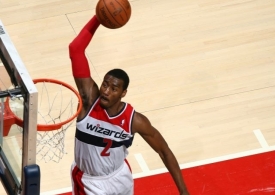
2020: Montrezl Harrell, Los Angeles Clippers, 27.8 MP, 18.6 PPG, 7.1 RPG, 1.7 APG, 0.6 SPG, 1.1 BPG
Harrell was in his fifth season, and final one with the Clippers. His PPG that year is currently his career-high.
28 Years Old, Playing for the Washington Wizards.
2021: Jordan Clarkson, Utah Jazz, 26.7 MP, 18.4 PPG, 4.0 RPG, 2.5 APG, 0.9 SPG, 0.1 BPG
Clarkson won his first individual award in his eighth NBA season since being an All-Rookie.
29 Years Old, Playing for the Utah Jazz.
So, what is up next?
We stay with Basketball, and look at the awards from the defunct ABA.
As always, we thank you for your support, and look for that soon.
How to Deposit and Withdraw Money from Slot Online

Online casinos are popular because they make it easy, fast, and convenient to play your favorite slots and find new online casino games. Essentially, you play for the fun of the game, but nothing beats winning the real money. However, you need to know all about casino deposits and withdrawals to do this.
To begin playing your favorite slot game like judi slot online, you are required to deposit funds. There are some steps involved in depositing at a reputable casino site. Once you are through with this, you can play your game of choice and make withdrawals from your account when your winnings come in. It's easy and fast to do, especially if you have a guide that sets it all out for you.
How to make a casino deposit
Before you begin playing for real cash, you need to consider all the deposit options for your online casino account. Most reputable casino operators will offer one of these options:
- Credit cards
- Debit cards
- E-wallets
- Prepaid cards
- Bank transfer
Now that you are ready to make your first deposit, you can deposit money into your online casino account directly from your bank account or use your preferred method.
Once you have created your casino account, you will be directed to the casino financier or cashier section.
Select your preferred payment method from those listed on-screen
If you hadn't filled out personal details, such as your address, when you created your account, you might be asked to do so now.
Enter the amount you want to deposit and your account pin or password
Click "deposit" or "submit." The money is transferred to your casino bankroll, and you are ready to begin playing games on the site. Although some deposits are instant, other payments such as checks and bank transfers may take longer to process.
How to make a casino withdrawal
Gamblers often search for the fastest withdrawal casinos simply because they don't want to wait too long until they have their winnings at their disposal. However, withdrawing your winnings is easy.
Go to the financier or cashier section. That will show you your total funds and how much of your available balance you can withdraw. If your welcome balance isn't displayed in money available for withdrawal, it might be that you didn't meet the betting requirements.
Select the withdrawal method you want to use
- Fill in the amount you want to withdraw, followed by your account password.
- Hit the "submit" button, and your withdrawal will be processed. Ensure you have your ID since you might be asked to produce it at this point.
- Choosing the proper payment method can mean the difference between an existing or disappointing gambling
Even if this is not the first thing that crosses your mind when looking for a new online casino, you need to spare some minutes to check all the available payment options before making your initial deposit. However, since you now know all about deposits and withdrawals, put yourself in the running to win real money by making the judi slot online your first stop.
