

 Not in Hall of Fame News
Yes, we know that this is taking a while! As many of…
 Not in Hall of Fame News
Yes, we know that this is taking a while! As many of…
 Not in Hall of Fame News
2002 SEMI-FINAL RESULTS: Thank you for your participation in the Pro Football…
 Not in Hall of Fame News
Yes, we know that this is taking a while! As many of…
 Not in Hall of Fame News
We are diligently working away at Notinhalloffame on revising our Football lists…
 Not in Hall of Fame News
We are diligently working away at Notinhalloffame on revising our Football lists…
 From the Desk of the Chairman
October baseball often turns individual pitching performances into lasting postseason memories. Strikeout…
 From the Desk of the Chairman
For decades, the sports debate ran on gut feeling. Barstool arguments, call-in…
 From the Desk of the Chairman
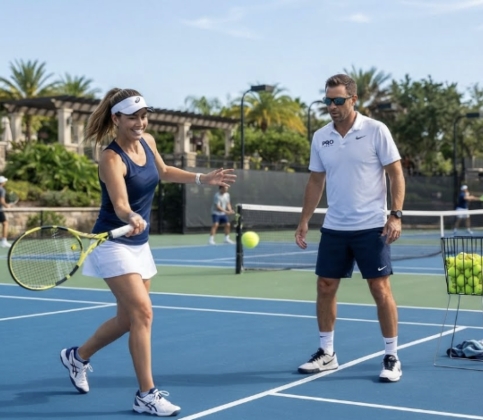
Introduction to Private Adult Tennis Camps in Prague Adult club players increasingly…
 From the Desk of the Chairman
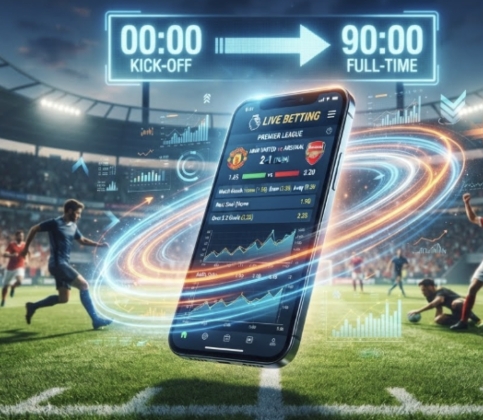
Unlike in the case of pre-match betting, where you have to pick…
 From the Desk of the Chairman
Kupu178 builds trust with people by using top-end end-to-end encryption. It checks…
 From the Desk of the Chairman
Sports fans thrive on calculating strategy, reading momentum, and maximizing every tactical…


100 Active Potential Football Hall of Famers
-
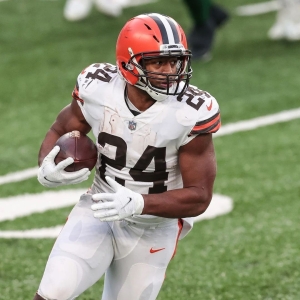 #40 Overall, Justin Jefferson, Minnesota Vikings, #5 Wide Receiver2025 Pre-Season Rank #38, 2024 Pre-Season Rank #50, 2023 Pre-Season Rank #101, 2022 Pre-Season Rank #130. Peak Period: 2020-24 Since he debuted in…
 -
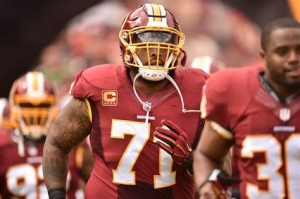 #6 Overall, Trent Williams, San Francisco 49ers, Offensive Tackle, #1 Offensive Lineman2025 Pre-Season Rank #5, 2024 Pre-Season Rank #6, 2023 Pre-Season Rank #6, 2022 Pre-Season Rank #20, 2021 Pre-Season Rank #33, 2020 Pre-Season Rank…
 -
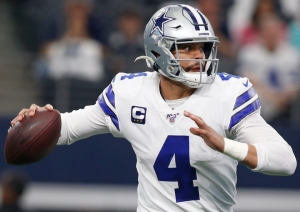 #37 Overall, Dak Prescott, Dallas Cowboys, #7 Quarterback2025 Pre-Season Rank #40, 2024 Pre-Season Rank #32, 2023 Pre-Season Rank #44, 2022 Pre-Season Rank #55, 2021 Pre-Season Rank #63, 2020 Pre-Season Rank…in Quarterbacks
 -
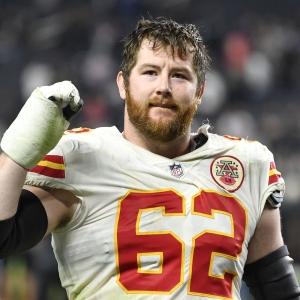 #41 Overall, Joe Thuney, Chicago Bears, Left Guard, #5 Offensive Lineman2025 Pre-Season Rank #64, 2024 Pre-Season Rank #75, 2023 Pre-Season Rank #120, 2022 Pre-Season Rank: #140. Peak Period: 2021-25 Over the last few…
Visit the Fictitious Halls of Fame!

You May Also Like...
EDITOR’S CHOICE
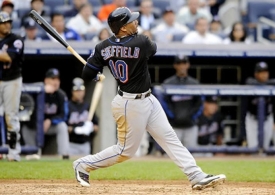 DDT's Pop Flies
When the veterans committee (VC), officially convening as the Contemporary Baseball Era…

 Live Music Head
Project/Objectan interview with André Cholmondeleyby Live Music HeadOriginally published at timessquare.com on…

LATEST RANKINGS
MOST POPULAR RANKINGS





Committee Chairman
Athletes and their greatest financial successes
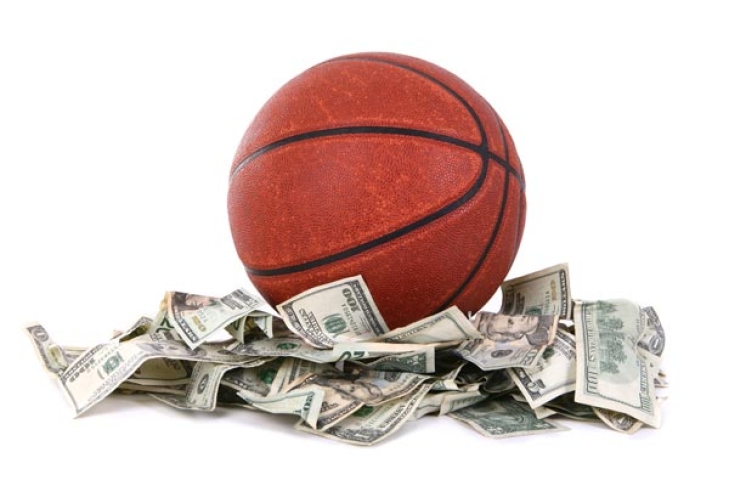
Most athletes do their daily "work" just because they want to. Their profit is fitness and health, perhaps a small amount of fame in their own region and sometimes a little hand money. But we all know that there is quite a small group of sports celebrities that earn a fortune with their talent. Their financial success is partially beyond belief.
Martials arts pay off!
Let's have a look at the highest paid athletes of the world: Who has had the biggest salaries in 2021? The business magazine Forbes presents us a ranking that leaves the ordinary citizen amazed. Not only soccer players are included in this exclusive community, but also basketballers, footballers and MMA pros. In fact, the first place is taken by the Irish martial artist Conor McGregor. He is the first martial arts fighter who leads the famous Forbes list since the ranking began in 1990. For his efforts McGregor in the past twelve months, he received 22 million US Dollars. But that's by far not all! From his advertising partners, among them the whisky brand Proper No. Twelve, 158 million US Dollars are added. That means the fighter earns 180 million Dollars per year.
A story of earning of winning
In total, the top ten highest-paid athletes earned 1.05 billion Dollars in 2021. That is 28 percent more than in 2020. The good news for the average citizen is: You too can profit financially from professional sports – through sport betting. But forget about the millions and billions of the sport celebrities, because all bookmakers have fixed limits for payouts. Ranging approximately from 100,000 per week to 1.16 million per day, depending on your provider's country. On relevant betting sites like arabianbetting.com you can compare the individual portals and chose the one with the best conditions. For example, have a look at the best betting portals of the Middle East and North Africa, compare their bonus systems and gather a lot of useful tips from betting experts. Learn how to play anonymously – and get to your chosen platform within a few minutes. The German soccer player Max Kruse takes advantage of both opportunities: He earns his money at 1. FC Union Berlin – and is a part-time poker player. His live poker winnings currently amount to 133.313 US Dollar.
The income of a superstar
Cristiano Ronaldo, a superstar among the soccer players, also lost his heart at the poker table. Not because he earns to little, no, just for the fun of it. Concerning his income, he just dethroned Messe as the highest-played soccer player of the world! Currently he is working at as an attacker for Manchester United. Here the Portuguese earns 70 US Dollars a year, just as he formerly did at Juventus Turin. Besides there are about 349 million people following him on Instagram. As one of the most successful influencers of the world, Ronaldo is requested by numerous companies as an advertising medium. His advertiser deals flush another 55 million Dollars into the till. That adds up to an annual income of 125 million Dollars. Not bad for a man who just kicks a ball across the green lawn!
The earnings of another superstar
Lionel Messi has to be satisfied with the 3rd place of the Forbes ranking this year. The Argentine professional soccer player moved to Paris Saint-Germain and lost a bit of this income there. FC Barcelona payed him 97 million Dollars per year, the French transfer to him only 75 million Dollars, but he stays one of the best soccer players of all time. Numerous advertising partners literally stick to him, among them MasterCard, Pepsi and Adidas. That brings him an additional 35 million, so his income is about 110 million Dollars per year. Enough to have a relaxed lifestyle without worries about the future.
Football is worthwhile, too
On the fourth place we meet the football player Dak Prescott, working for the Dallas Cowboys in the NFL. According to the Forbes ranking 2021, the famous quarterback was paid around 97,5 million Dollars last year. Plus, he had a 66-million-dollar signing bonus in this new four-year-contract, so it all adds up to more than 100 million dollars within twelve months.
Ryan Zimmerman Retires
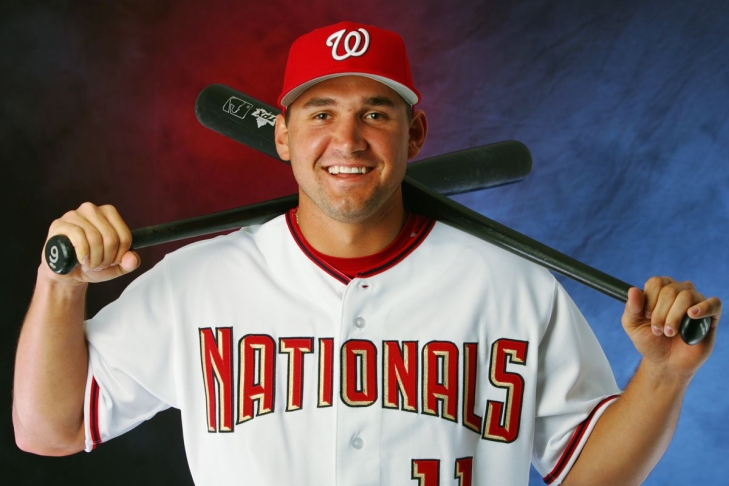
As was expected, one of the all-time Washington Nationals greats, Ryan Zimmerman, announced today that he is retiring from Baseball.
Drafted in the First Round in 2005, Zimmerman made the big leagues that year, and remained with the Nationals for all of his sixteen seasons.
An All-Star in 2009 and 2017, Zimmerman was a solid power hitter, who had seven 20-Home Run years with a pair of Silver Sluggers (2009 & 2010). Batting .277 lifetime for Washington, Zimmerman was a veteran presence on the 2019 team that won the World Series, the first for the organization.
Zimmerman was a member of the Washington Nationals 2019 World Series Championship Team, and is at present the all-time franchise leader in Games Played (1,799), Runs Scored (964), Hits (1,846), Doubles (417), Home Runs (284) and RBIs (1,061).
Zimmerman is Hall of Fame eligible in 2027, though is unlikely to make it past the first ballot, though he is a prime candidate to be honored by the Nationals in the future.
We here at Notinhalloffame.com would like to wish Ryan Zimmerman the best in his post-playing career.
Samoa Joe Named to the ROH Hall of Fame
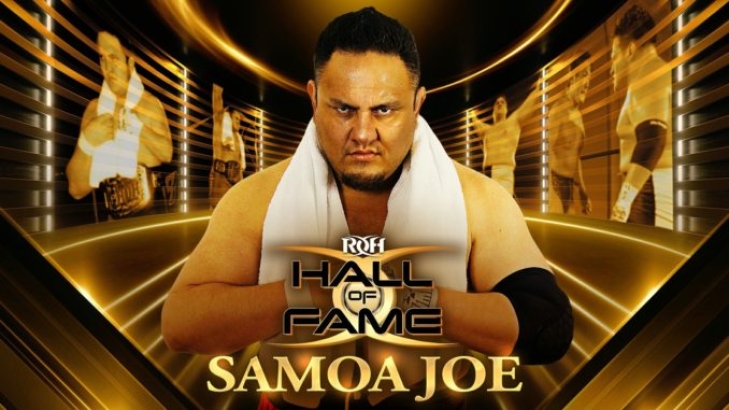
Ring of Honor announced that former Champion, Samoa Joe, will join The Briscoe Brothers and Bryan Danielson as part of the first Hall of Fame Class.
Joe debuted for ROH in their inaugural year, 2002, and he climbed up the ladder quickly, defeating Xavier for the ROH World Title. Holding the belt for 21 months, he had classic title defenses against CM Punk, which were considered some of the best wrestling in North America at the time. Following his title loss to Austin Aries, he would defeat Jay Lethal for the Pure Championship. Joe also had another legendary match for the promotion against Japanese legend, Kenta Kobashi.
We here at Notinhalloffame.com would like to congratulate Samoa Joe for this impending honor.
Becky Hammon headlines the Women's Basketball HOF Class of 2022
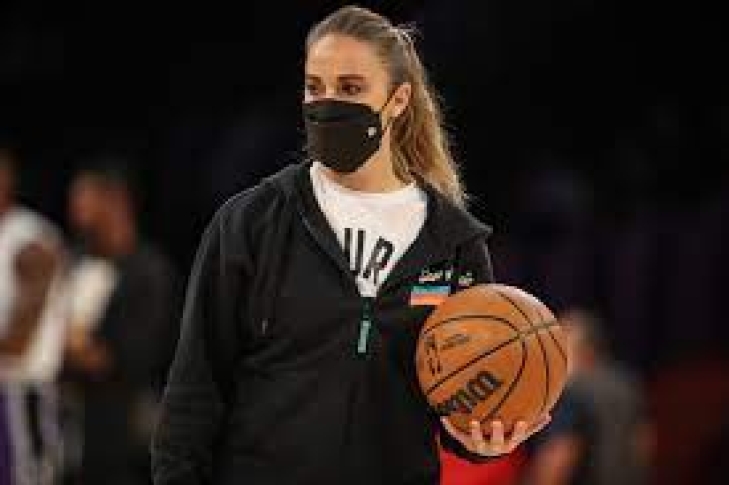
The Women’s Basketball Hall of Fame announced the eight-person Class of 2022, pared down from 12 Finalists announced last month.
The Hall of Fame ceremony will take place on June 11.
The Class of 2022 are::
Debbie Antonelli (Broadcaster). Antonelli has been a broadcaster for 34 years and has worked for ESPN, CNS, FOX, Westwood One and the Big Ten Network.
Alice “Cookie” Barron (Player). Barron played for the Waylon Baptist Flying Queens and helped them win three National Championships. She also helped take the United States to Gold in the 1957 FIBA World Championship.
Doug Bruno (Coach). Bruno has been the Head Coach at DePaul since 1986, and as of this writing has a record of 731-357 and has won five Big East Tournaments. He also won two Olympic Gold Medals for the United States as an Assistant Coach for the United States (2012 & 2016).
Becky Hammon (Player). Hammon is easily the biggest name on this list, and six-time WNBA All-Star and two-time First Team All-WNBA Selection. Hammon played pro for the New York Liberty and San Antonio Stars, and would later become an Assistant Coach for the San Antonio Spurs of the NBA. Currently the Head Coach of the Las Vegas Aces, Hammon was named to the WNBA 15th, 20th and 25th Anniversary Team, and Internationally won an Olympic Bronze Medal for Russia in 2008.
DeLisha Milton-Jones (Player). Milton-Jones was the 1997 SEC Player of the Year, and the Florida Gator would later be drafted fourth overall by the Los Angeles Sparks in 1999, and helped them win two Titles (2001 & 2002). She also played for the Washington Mystics, New York, and Atlanta Dream and was a three-time WNBA All-Star. Milton is currently the Head Coach at Old Dominion.
Paul Sanderford (Coach). Sanderford took Western Kentucky to three Final Fours.
Bob Schneider (Coach). Schneider won five State (Texas) High School Titles and 634 Wins in Division II.
Penny Taylor (Player). From Australia, Taylor played nineteen professionally years, most notably for the Phoenix Mercury where she won three WNBA Championships. A three-time WNBA All-Star and one-time First Team WNBA Selection, Taylor won two Silver Medals and a FIBA World Championship for the Aussies.
We here at Notinhalloffame.com would like to congratulate the newest members of the Women’s Basketball Hall of Fame.
