

 Not in Hall of Fame News
Yes, we know that this is taking a while! As many of…
 Not in Hall of Fame News
Yes, we know that this is taking a while! As many of…
 Not in Hall of Fame News
2002 SEMI-FINAL RESULTS: Thank you for your participation in the Pro Football…
 Not in Hall of Fame News
Yes, we know that this is taking a while! As many of…
 Not in Hall of Fame News
We are diligently working away at Notinhalloffame on revising our Football lists…
 Not in Hall of Fame News
We are diligently working away at Notinhalloffame on revising our Football lists…
 From the Desk of the Chairman
Unlike in the case of pre-match betting, where you have to pick…
 From the Desk of the Chairman
Kupu178 builds trust with people by using top-end end-to-end encryption. It checks…
 From the Desk of the Chairman
Sports fans thrive on calculating strategy, reading momentum, and maximizing every tactical…
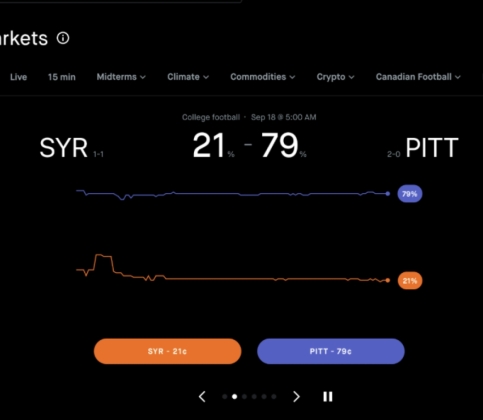 From the Desk of the Chairman
The 2026 NFL season is two weeks old and the division races…
 From the Desk of the Chairman
Sports communities are often built around things that have nothing to do…
 From the Desk of the Chairman
Every hall of fame eventually faces the same problem. The selection process…




100 Active Potential Football Hall of Famers
-
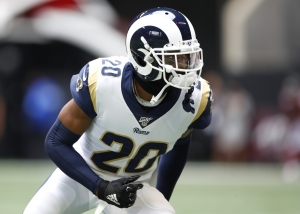 #23 Overall, Jalen Ramsey, Pittsburgh Steelers, #1 Cornerback2025 Pre-Season Rank #20, 2024 Pre-Season Rank #20, 2023 Pre-Season Rank #23, 2022 Pre-Season Rank #35, 2021 Pre-Season Rank #54, 2020 Pre-Season Rank…in Cornerbacks
 -
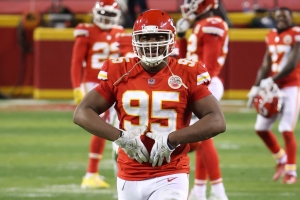 #19 Overall, Chris Jones, Kansas City Chiefs, Defensive Tackle, #8 Defensive Lineman/Linebacker: Pass Rusher2025 Pre-Season Rank #15, 2024 Pre-Season Rank #15, 2023 Pre-Season Rank #58, 2022 Pre-Season Rank #100. Peak Period 2020-24. When you think of…
 -
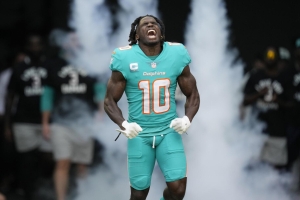 #25 Overall, Tyreek Hill, Free Agent, #3 Wide Receiver2025 Pre-Season Rank #18, 2024 Pre-Season Rank #8, 2023 Pre-Season Rank #28, 2022 Pre-Season Rank #35, 2021 Pre-Season Rank #53. Peak Period: 2019-23…
 -
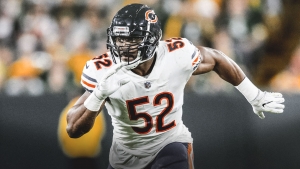 #13 Overall, Khalil Mack: Los Angeles Chargers, #5 Defensive Lineman/Linebacker: Pass Rusher2025 Pre-Season Rank #8, 2024 Pre-Season Rank #12, 2023 Pre-Season Rank #14, 2022 Pre-Season Rank #19, 2021 Pre-Season Rank #26, 2020 Pre-Season Rank…
Visit the Fictitious Halls of Fame!

You May Also Like...
EDITOR’S CHOICE
 DDT's Pop Flies
When the veterans committee (VC), officially convening as the Contemporary Baseball Era…


 Live Music Head
Project/Objectan interview with André Cholmondeleyby Live Music HeadOriginally published at timessquare.com on…
LATEST RANKINGS

MOST POPULAR RANKINGS


Committee Chairman
18. John Olerud
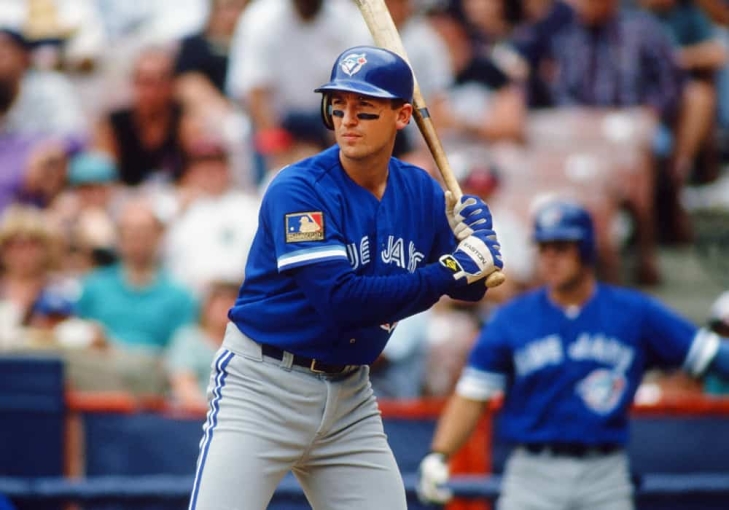
When the Toronto Blue Jays selected John Olerud in the third round of the 1989 amateur draft, they recognized that they were acquiring a highly skilled, smooth-swinging left-handed hitter from Washington State. What was unforeseen was the rapidity with which he would bypass the conventional development pathway. Olerud transitioned directly from collegiate baseball to the major leagues in September, becoming one of a select few modern players to experience the major leagues without any prior participation in minor league games.
His introductory months in late 1989 transitioned into a semi-regular platoon role throughout the 1990 and 1991 seasons. Initially sharing time at first base, Olerud promptly demonstrated that his fluid, line-drive swing coupled with advanced pitch recognition were adequately developed for a full-time position. By 1992, he had secured the regular starting role, providing consistent middle-of-the-order offensive output and dependable defense, thereby contributing significantly to Toronto’s historic first World Series championship.
That solid baseline set the stage for a spectacular, historic 1993 masterpiece that remains one of the greatest individual offensive seasons in modern baseball history. Flirting with the mythical .400 threshold well into August, Olerud utterly paralyzed American League pitchers all summer. He cruised to the AL Batting Title with a magnificent .363 average while pacing the junior circuit in doubles (54), on-base percentage (.473), OPS (1.072), and OPS+ (186). Backed by a remarkably patient eye that yielded 114 walks, he earned his first career All-Star selection and a close third-place finish in the AL MVP race, serving as the primary offensive engine for Toronto’s back-to-back world championship repeat.
He remained a productive hitter over three seasons, but his 1993 offensive peak declined as the team aged and underwent payroll changes. His time in Ontario ended in December 1996 when the Blue Jays traded him to the Mets for RHP Robert Person.
In Toronto, Olerud accumulated 910 hits, 109 home runs, and 471 RBIs while authoring an exceptional .293/.395/.471 slash line (130 OPS+). He was also inducted into the Canadian Baseball Hall of Fame in 2020.
16. Josh Donaldson
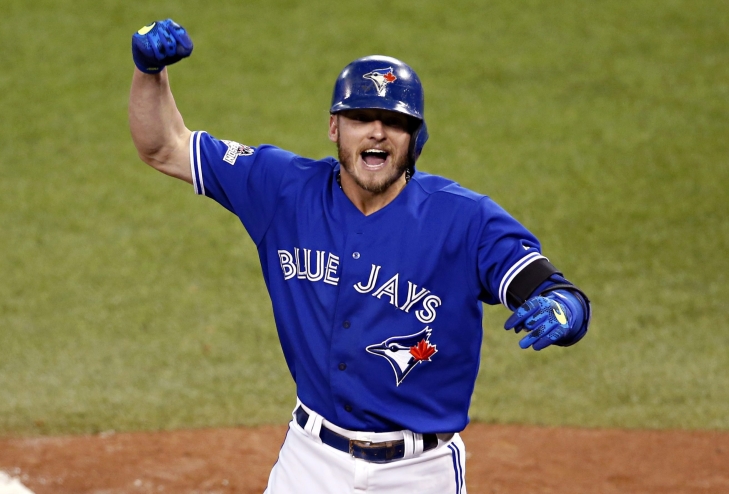
When the Oakland Athletics traded a rising star before the 2015 season, their attempt to sidestep rising arbitration costs led to one of the biggest cons in recent baseball history. The Toronto Blue Jays, believing they were one key player short of a historic breakthrough, went all out to acquire Josh Donaldson. Over the next four summers, the passionate and competitive third baseman didn't just secure the hot corner—he brought a bold, confident attitude that transformed the franchise.
"The Bringer of Rain" delivered an extraordinary, historic 2015 season right away. Leading a formidable Toronto lineup, Donaldson dominated the American League with 41 home runs, 122 runs scored, and 123 RBIs. His powerful offense was complemented by stellar, body-consuming defense at third base, earning an 8.5 bWAR season that thrilled fans. His outstanding regular-season performance earned him a Silver Slugger Award and the 2015 AL MVP—making him only the second Blue Jay to win this honor—breaking the franchise's 22-year postseason drought and guiding Toronto to the ALCS.
In 2016, Donaldson solidified his status as a dominant player, showing his MVP performance was consistent rather than exceptional. He earned his third straight All-Star selection, hit 37 home runs, set a personal best with 109 walks, and achieved a.404 on-base percentage. He concluded the summer with another Silver Slugger award and finished fourth in MVP voting. Notably, he made a dramatic dash from third base to score the game-winning run on a walk-off error in the ALDS, helping Toronto reach a second straight ALCS.
He maintained an elite level of run production into 2017, despite calf injuries, and still managed 33 home runs in just 113 games with his powerful right-handed swing. By 2018, the team’s championship hopes had faded. With an aging roster in decline and Donaldson hampered by ongoing calf issues, the front office decided to make a change. In August 2018, they traded their former MVP to Cleveland for a player to be named later, marking the quiet end of a significant era in Toronto baseball.
Over his four seasons in a Blue Jays uniform, Donaldson had 492 hits, 116 home runs, and 316 RBIs while generating a stellar .281/.383/.548 slash line (148 OPS+).
17. Lloyd Moseby
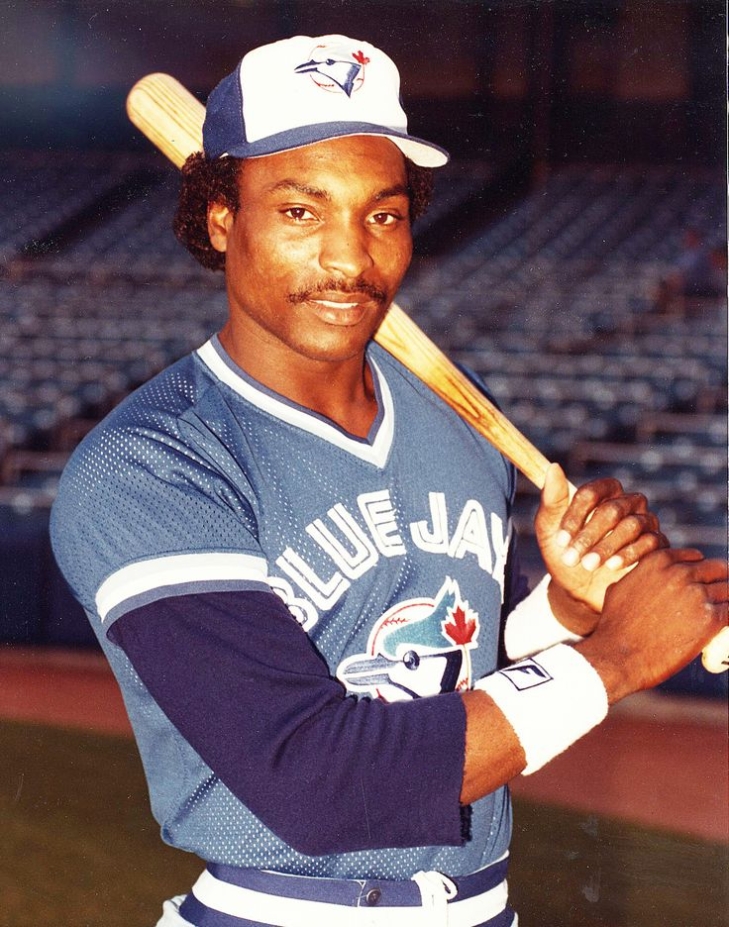
When the Toronto Blue Jays chose Lloyd Moseby with the second overall pick in the 1978 amateur draft, they weren't just selecting a promising baseball player—they were also winning a competitive race against other sports, especially basketball. This talented athlete from Oakland High School had options on the basketball court too, with over 50 college scholarships to consider. But he decided to follow his passion for baseball, and "Shaker" proved he made the right choice. He quickly rose through the minor leagues, making his major league debut in May 1980, and soon established himself as the team's reliable and talented center fielder.
As the expansion franchise gradually evolved from an American League afterthought into a genuine powerhouse, Moseby emerged as the athletic cornerstone of what many Canadians still regard as the most comprehensive and formidable starting outfield of the 1980s. Positioned alongside George Bell in left field and Jesse Barfield in right field, Moseby employed his exceptional speed and extensive lateral coverage to secure the expansive spaces of Exhibition Stadium. He complemented this defensive proficiency with a dynamic, top-tier offensive skill set, leveraging his left-handed swing to lead the junior circuit with a remarkable 15 triples in 1984, while cultivating a reputation as a highly aggressive baserunner.
His individual performance reached a remarkable peak during the competitive surge of the mid-1980s. Moseby served as a key offensive catalyst during the historic 1985 campaign, hitting 30 doubles and stealing 37 bases to lead Toronto to its first-ever AL East division title. He maintained that momentum into 1986, hitting 21 home runs and driving in 86 runs, earning his only career All-Star selection. Although his batting demonstrated considerable power—evidenced by a personal best of 26 home runs in 1987—his principal distinguishing feature was his prolific baserunning, with 255 stolen bases over his decade-long tenure, establishing a franchise record that endured for years.
As the decade ended, patrolling center field on synthetic turf took a toll, reducing his offensive skills and on-base percentage over his last two seasons. With the team's restructuring, Moseby finished his contract after 1989 and signed a multi-year deal with the Detroit Tigers, a division rival.
He amassed 1,319 hits, 149 home runs, 651 RBIs, and a franchise-leading 255 stolen bases, posting a .257/.333/.415 line, and was inducted into the Canadian Baseball Hall of Fame in 2018.
19. Juan Guzman
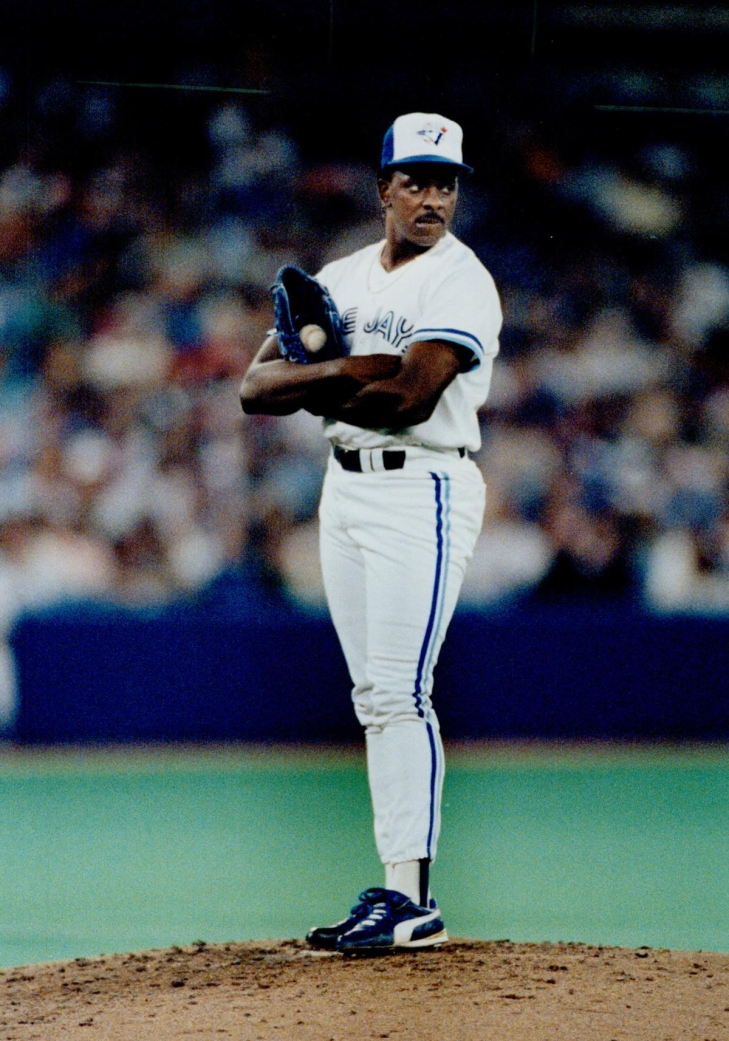
The Los Angeles Dodgers first signed a young Juan Guzmán from the Dominican Republic in 1985, seeing a raw, unrefined arm still years from maturity. Recognizing his potential, the Toronto Blue Jays acquired him in a minor league trade two years later. After developing through the farm system, the dynamic right-hander made a major breakthrough in June 1991. With a blazing fastball in the high-90s and an effective slider, Guzmán delivered a remarkable 10–3 rookie season, finishing as a close runner-up for the AL Rookie of the Year Award and quickly becoming a key member of a championship-caliber rotation.
His remarkable debut marked the start of an impressive two-year peak that aligned perfectly with the franchise's golden era. During the 1992 and 1993 seasons, Guzmán emerged as the key player in high-stakes games for a dominant team, destroying opposing lineups and achieving an outstanding 30–8 record in the regular season. He combined this with an exceptional postseason record, losing no games in the playoffs during the team’s consecutive championship runs, going 5–0 in both October series to help secure back-to-back World Series titles. After finishing seventh in the 1992 Cy Young Award voting, he seemed ready to establish himself as the junior circuit's next top ace.
Surprisingly, that elite velocity soon collided with severe mechanical and physical inconsistencies. Guzmán experienced a catastrophic drop-off over the next two summers, looking completely lost during the strike-shortened 1994 and 1995 campaigns. He battled rampant walks and persistent injuries, watching his ERA balloon to a disastrous 5.68 and 6.32 while his WHIP spiked past 1.60.
Just when it seemed Guzmán’s career was over, he staged an extraordinary comeback in 1996. Confusing American League hitters with a completely revamped approach, he led the league with a 2.93 ERA. His resurgence was also evident as he topped the junior circuit in ERA+ (171), WHIP (1.124), and hits allowed per nine innings (7.6). However, in a surprising turn of events typical in high-scoring eras, he received no votes for the Cy Young Award.
Unfortunately, that spectacular rebound proved to be a final, isolated flash of his peak form. The mechanical issues returned to derail him in 1997, and with his contract winding down on a struggling Toronto team, the front office elected to maximize his remaining market value. In July 1998, the Blue Jays traded their former postseason hero to the Baltimore Orioles, bringing a highly volatile, thrilling chapter to a sudden close.
With the Jays, Guzmán made 218 appearances (214 starts). He compiled a 76–62 record with a 4.07 ERA and a 1.36 WHIP, logging 1,321.2 innings and 1,030 strikeouts.
