

 Not in Hall of Fame News
Yes, we know that this is taking a while! As many of…
 Not in Hall of Fame News
Yes, we know that this is taking a while! As many of…
 Not in Hall of Fame News
2002 SEMI-FINAL RESULTS: Thank you for your participation in the Pro Football…
 Not in Hall of Fame News
Yes, we know that this is taking a while! As many of…
 Not in Hall of Fame News
We are diligently working away at Notinhalloffame on revising our Football lists…
 Not in Hall of Fame News
We are diligently working away at Notinhalloffame on revising our Football lists…
 From the Desk of the Chairman
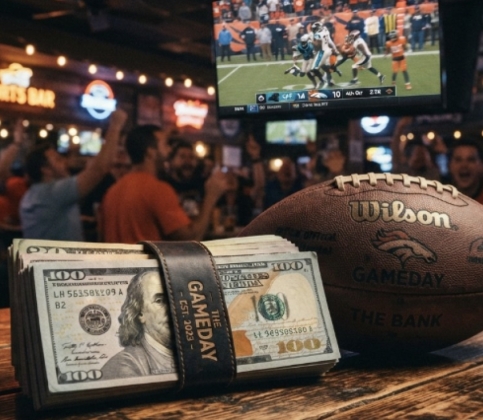
Sports fans thrive on calculating strategy, reading momentum, and maximizing every tactical…
 From the Desk of the Chairman
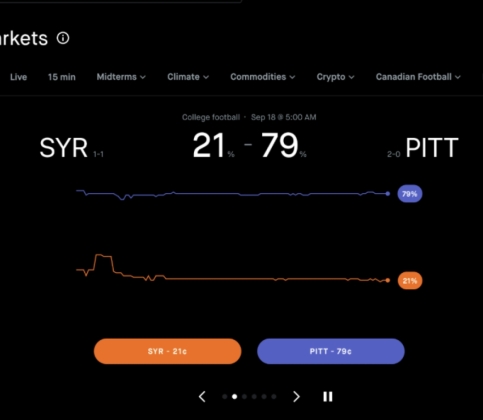
The 2026 NFL season is two weeks old and the division races…
 From the Desk of the Chairman
Sports communities are often built around things that have nothing to do…
 From the Desk of the Chairman
Every hall of fame eventually faces the same problem. The selection process…
 From the Desk of the Chairman
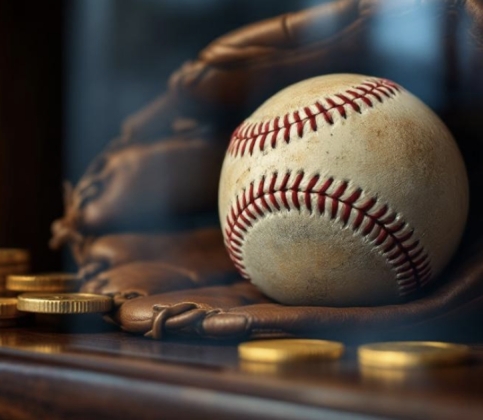
Pete Rose died in 2024. On May 13, 2025, Commissioner Rob Manfred…
 From the Desk of the Chairman
For NFL fans, game day offers much more than three hours of…
100 Active Potential Football Hall of Famers
-
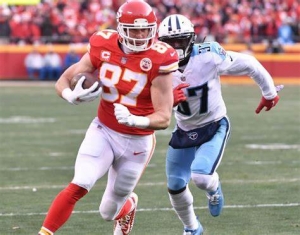 #5 Overall, Travis Kelce: Kansas City Chiefs, #1 Tight End2025 Pre-Season Rank #4, 2024 Pre-Season Rank #5, 2023 Pre-Season Rank #7, 2022 Pre-Season Rank #12, 2021 Pre-Season Rank: #20, 2020 Pre-Season Rank…in Tight Ends
 -
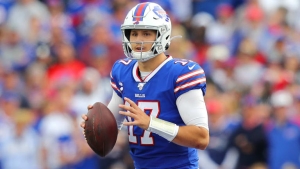 #16 Overall, Josh Allen, Buffalo Bills, #5 Quarterback2025 Pre-Season Rank #17, 2024 Pre-Season Rank #39, 2023 Pre-Season Rank #69, 2022 Pre-Season Rank #98, 2021 Pre-Season Rank #117. Peak Period: 2020-24.…in Quarterbacks
 -
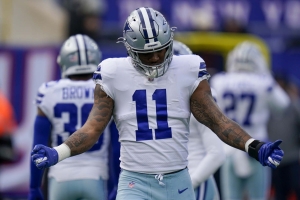 #29 Overall, Micah Parsons, Green Bay Packers, Linebacker, #10 Defensive Lineman/Linebacker: Pass Rusher2025 Pre-Season Rank #54, 2024 Pre-Season Rank #79, 2023: Pre-Season Rank #102. Peak Period: 2021-25 Here is what we wrote about Micah Parsons…
 -
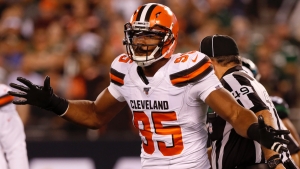 #7 Overall, Myles Garrett, Los Angeles Rams, Defensive End, #2 Defensive Lineman/Linebackers: Pass Rushers2025 Pre-Season Rank #9, 2024 Pre-Season Rank #17, 2023 Pre-Season Rank #34, 2022 Pre-Season Rank #53, 2021 Pre-Season Rank #99, 2020 Pre-Season Rank…
Visit the Fictitious Halls of Fame!


You May Also Like...
EDITOR’S CHOICE
 DDT's Pop Flies
When the veterans committee (VC), officially convening as the Contemporary Baseball Era…

 Live Music Head
Project/Objectan interview with André Cholmondeleyby Live Music HeadOriginally published at timessquare.com on…

LATEST RANKINGS

MOST POPULAR RANKINGS


Committee Chairman
Notinhalloffame NBA Cup Standings Update (240)
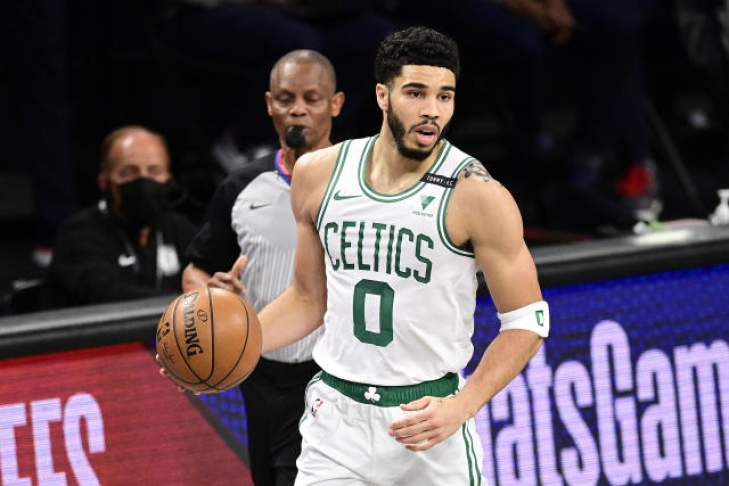
If you are a regular visitor at Notinhalloffame.com, you know that we created the Notinhalloffame NBA Cup, where in every regular season game, we award points (5-4-3-2-1) to the top five performers. This is the third year that we have done this, and Denver’s Nikola Jokic won the first two.
To keep everyone regularly in the loop this time, we have decided to give regular updates, starting at when the first player cracked 100 Points, and tell all of you the top ten. We will this going forward with every update as the first player breaches the elevated ten-point threshold afterward.
Here is the current top ten, based on the first player to breach 240 Notinhalloffame Cup Points:
1. Nikola Jokic, Denver Nuggets, 241 Cup Points: 60 Games, 24.7 PPG, 12.0 RPG, 10.0 APG, 1.3 SPG, 0.7 BPG, 31.6 PER, 13.2 WS. (#1 on last ranking)
The two-time defending MVP (and NIHOF Cup Champion) remains at the top, despite the pleas of Kendrick Perkins. Jokic is leading the league in PER (31.6), Win Shares (13.2), VORP (7.7) and Box Plus/Minus (13.0). He is also averaging a triple-double, leading the NBA in that stat, and is third in Rebounds per Game.
2. Joel Embiid, Philadelphia 76ers, 225 Cup Points: 52 Games, 33.3 PPG, 10.1 RPG, 4.1 APG, 1.1 SPG, 1.6 BPG, 30.8 PER, 9.4 WS. (#5 on last ranking)
Embiid is now in the number two hole, and is a bona fide MVP contender, and in a dogfight with Jokic. He is currently the scoring leader (33.3) and is second in PER (30.8). Embiid is also in the top five in Wins Shares, VORP and Box Plus/Minus. Could this be the season he takes Philadelphia all the way
3. Jayson Tatum, Boston Celtics, 230 Cup Points: 63 Games, 30.4 PPG, 8.9 RPG, 4.7 APG, 1.0 SPG, 0.8 BPG, 23.8 PER, 8.8 WS. (#3 on last ranking)
Tatum climbed back into the top three. He is still a huge threat to win this award, as well as the MVP, though some of his advanced statistics are lacking. He should finish over 30 Points per Game (he is currently sixth).
4. Luka Doncic, Dallas Mavericks, 227 Cup Points: 57 Games, 33.0 PPG, 8.6 RPG, 8.0 APG, 1.5 SPG, 0.5 BPG, 29.6 PER, 9.4 WS. (#2 on last ranking)
Doncic dropped two spots to #4, which was due mostly to a thigh injury, and inactivity since the last update. He is second in scoring (33.0), VORP (6.0) and Box Plus/Minus (9.5) while currently placing third in PER (29.6) and fourth in Win Shares (9.4). He was an early MVP contender, but that is not be the case anymore.
5. Giannis Antetokounmpo, Milwaukee Bucks, 219 Cup Points: 52 Games, 31.2 PPG, 11.9 RPG, 5.5 APG, 0.7 SPG, 0.8 BPG, 28.5 PER, 7.1 WS. (#5 on last ranking)
The two-time MVP would have probably been on the top had he not missed a series of Games earlier in the season, and he is now dealing with another ailment, which continues to cost him. He is now a six-time All-Star, and is in the top five in both Points and Rebounds per Game.
6. Julius Randle, New York Knicks, 216 Cup Points: 70 Games, 25.3 PPG, 10.3 RPG, 4.1 APG, 0.6 SPG, 0.3 BPG, 20.7 PER, 7.8 WS. (#6 on last ranking)
Randle continues to climb the list, and currently has a higher PPG (25.3), than his first All-Star year two years ago (24.1).
7. Shai Gilgeous-Alexander, Oklahoma City Thunder, 213 Cup Points: 57 Games, 31.2 PPG, 4.8 RPG, 5.7 APG, 1.6 SPG, 1.1 BPG, 27.3 PER, 9.4 WS. (#7 on last ranking)
Gilgeous-Alexander went to his first All-Star Game, and is shattering last year’s averages, which were already good. He is currently dealing with some nagging injuries, but you have to imagine just how pathetic the Thunder would be without SGA.
8. Trae Young, Atlanta Hawks, 198 Cup Points: 61 Games, 26.8 PPG, 3.0 RPG, 10.1 APG, 1.2 SPG, 0.2 BPG, 22.5 PER, 5.8 WS. (#9 on last ranking)
Young is the face of an intriguing Hawks squad, but was unable to make the NBA All-Star Team.
9. Ja Morant, Memphis Grizzlies, 205 Cup Points: 53 Games, 27.1 PPG, 6.0 RPG, 8.2 APG, 1.0 SPG, 0.3 BPG, 23.8 PER, 5.6 WS. (#8 on last ranking)
The last two weeks of Morant’s life has been a disaster, with a bevy of poor personal decisions that has led to a suspension. Currently away from the Grizzlies, he has dropped two spots in Cup Point standings from the last update. This is a man with serious growing up to do.
10. Lauri Markkanen, Utah Jazz, 194 Cup Points: 60 Games, 25.3 PPG, 8.5 RPG, 1.8 APG, 0.6 SPG, 0.6 BPG, 22.5 PER, 7.8 WS. (#10 on last ranking)
Markkanen is now the first player from Finland to be an All-Star and after two months, he returns to the top ten in Cup Points. This the year of his life.
Our next update will happen after the first player breaches 240 Cup Points.
Our All-Time Top 50 Cincinnati Reds have been updated to reflect the 2022 Season

Yes, we know that this is taking a while!
As many of you know, we here at Notinhalloffame.com are slowly generating the 50 of each major North American sports team. That being said, we have existing Top 50 lists out and we always consistently look to update them when we can and based on necessity. As such, we are very happy to present our post 2022 revision of our top Cincinnati Reds.
As for all of our top 50 players in baseball we look at the following:
1. Advanced Statistics.
2. Traditional statistics and how they finished in the National League.
3. Playoff accomplishments.
4. Their overall impact on the team and other intangibles not reflected in a stat sheet.
Last year, the Reds had a terrible season, and they were no changes on the list, but we need to present it all lists with an update; whether there is a change in it or not.
As always, we present our top five, which was not affected by the last season:
1. Pete Rose
2. Johnny Bench
4. Joe Morgan
5. Joey Votto
You can find the entire list here.
Votto, who is active, did not do enough to supplant Morgan for fourth, but that could happen this year.
We welcome your input and comments and as always, we thank you for your support.
Our All-Time Top 50 New York Yankees have been updated to reflect the 2023 Season
Yes, we know that this is taking a while!
As many of you know, we here at Notinhalloffame.com are slowly generating the 50 of each major North American sports team. That being said, we have existing Top 50 lists out and we always consistently look to update them when we can and based on necessity. As such, we are very happy to present our post 2022 revision of our top New York Yankees.
As for all of our top 50 players in baseball we look at the following:
1. Advanced Statistics.
2. Traditional statistics and how they finished in the American League.
3. Playoff accomplishments.
4. Their overall impact on the team and other intangibles not reflected in a stat sheet.
Last year, New York made it to the American League Championship Series, but fell to the eventual World Series Champion, Houston. On a team as celebrated as the Yankees, it is very hard to make this list, but one player vaulted over 20 spots. We bet you know who!
As always, we present our top five, which was not affected by the last season:
1. Babe Ruth
2. Lou Gehrig
4. Joe DiMaggio
5. Derek Jeter
You can find the entire list here.
The only change was Aaron Judge, won the 2022 MVP and set the new single season Yankee Home Run record with 62. He vaults from #49 to #26.
We welcome your input and comments and as always, we thank you for your support.
Our All-Time Top 50 Minnesota Twins have been revised to reflect the 2022 Season

Yes, we know that this is taking a while!
As many of you know, we here at Notinhalloffame.com are slowly generating the 50 of each major North American sports team. That being said, we have existing Top 50 lists out and we always consistently look to update them when we can and based on necessity. As such, we are very happy to present our post 2022 revision of our top 50 Minnesota Twins.
As for all of our top 50 players in baseball we look at the following:
1. Advanced Statistics.
2. Traditional statistics and how they finished in the American League.
3. Playoff accomplishments.
4. Their overall impact on the team and other intangibles not reflected in a stat sheet.
Last year, Minnesota had a decent year, though was mildly disappointing. There is one new entrant into the top 50, with no other fluctuation.
As always, we present our top five, which had no changes.
2. Rod Carew
5. Joe Mauer
You can find the entire list here.
The only new entry is Outfielder, Byron Buxton, who enters at #47, who knocks out Bump Hadley from the Top 50. Notably, Max Kepler and Jorge Polanco almost made this portion of the list.
We welcome your input and comments and as always, we thank you for your support.
