

 Not in Hall of Fame News
Yes, we know that this is taking a while! As many of…
 Not in Hall of Fame News
Yes, we know that this is taking a while! As many of…
 Not in Hall of Fame News
2002 SEMI-FINAL RESULTS: Thank you for your participation in the Pro Football…
 Not in Hall of Fame News
Yes, we know that this is taking a while! As many of…
 Not in Hall of Fame News
We are diligently working away at Notinhalloffame on revising our Football lists…
 Not in Hall of Fame News
We are diligently working away at Notinhalloffame on revising our Football lists…
 From the Desk of the Chairman
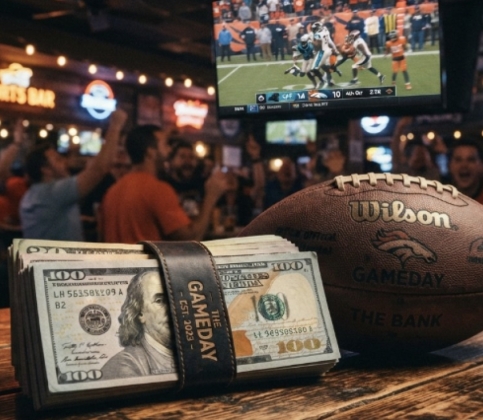
Sports fans thrive on calculating strategy, reading momentum, and maximizing every tactical…
 From the Desk of the Chairman
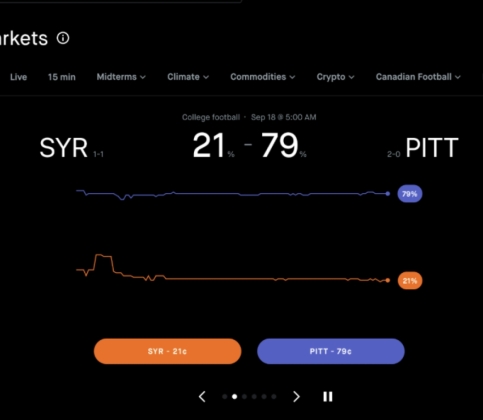
The 2026 NFL season is two weeks old and the division races…
 From the Desk of the Chairman
Sports communities are often built around things that have nothing to do…
 From the Desk of the Chairman
Every hall of fame eventually faces the same problem. The selection process…
 From the Desk of the Chairman
Pete Rose died in 2024. On May 13, 2025, Commissioner Rob Manfred…
 From the Desk of the Chairman
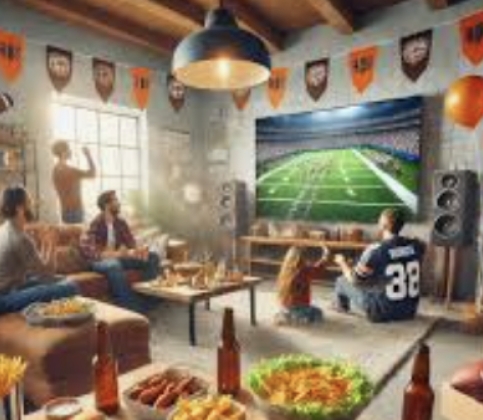
For NFL fans, game day offers much more than three hours of…

100 Active Potential Football Hall of Famers
-
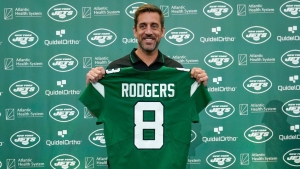 #2 Overall, Aaron Rodgers: Pittsburgh Steelers, #1 Quarterback2025 Pre Season Ranke #1, 2024 Pre-Season Rank #1, 2023 Pre-Season Rank #1, 2022 Pre-Season Rank #2, 2021 Pre-Season Rank #2, 2020 Pre-Season…in Quarterbacks
 -
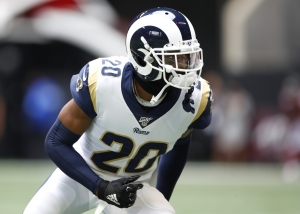 #23 Overall, Jalen Ramsey, Pittsburgh Steelers, #1 Cornerback2025 Pre-Season Rank #20, 2024 Pre-Season Rank #20, 2023 Pre-Season Rank #23, 2022 Pre-Season Rank #35, 2021 Pre-Season Rank #54, 2020 Pre-Season Rank…in Cornerbacks
 -
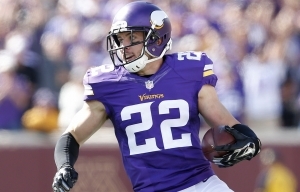 #28 Overall, Harrison Smith, Minnesota Vikings, Strong Safety, #2 Safety2025 Pre-Season Rank #38, 2024 Pre-Season Rank #50, 2023 Pre-Season Rank #72, 2022 Pre-Season Rank #79, 2021 Pre-Season Rank #90, 2020 Pre-Season Rank…in Safeties
 -
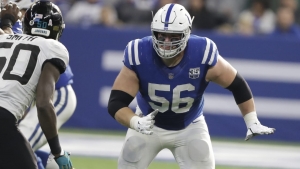 #22 Overall, Quenton Nelson, Indianapolis Colts, Left Guard, #2 Offensive Lineman2025 Pre-Season Rank #2025, 2024 Pre-Season Rank #29, 2023 Pre-Season Rank #42, 2022 Pre-Season Rank #51, 2021 Pre-Season Rank #78, 2020 Pre-Season Rank…
Visit the Fictitious Halls of Fame!


You May Also Like...
EDITOR’S CHOICE
 DDT's Pop Flies
When the veterans committee (VC), officially convening as the Contemporary Baseball Era…

 Live Music Head
Project/Objectan interview with André Cholmondeleyby Live Music HeadOriginally published at timessquare.com on…

LATEST RANKINGS


MOST POPULAR RANKINGS







Committee Chairman
NFL Picks 2023: Navigating the Gridiron Maze

With the 2023 NFL season finally upon us, football aficionados are once again immersed in the exhilarating task of making their picks, seeking to decipher the complex puzzle of professional football. In a league known for its constant flux, making accurate NFL picks resembles a journey through a labyrinth, where every corner turned reveals new surprises.
This year's season promises to be a tapestry of drama, laden with twists and turns, making it a challenge and delight for pick enthusiasts.
The Thrill of NFL Picks
In the grand tapestry of NFL picks, they transcend mere predictions of triumph and defeat; they become an odyssey through the very soul of America's most cherished sport. It's a voyage that plunges you into the profound passion of each game, allowing you to witness the evolution of beloved athletes and forging connections with fellow enthusiasts that extend beyond mere fandom.
Whether you're immersed in the intricate strategies of a fantasy football league or simply relishing the thrill of forecasting outcomes among friends, the NFL season unfurls before you as a boundless voyage, teeming with moments of exhilaration that etch themselves into the annals of football history.
The NFL's Enigmatic Nature
The cardinal rule of NFL picks: embrace the unpredictability. The NFL is a realm where the line between victory and defeat is often razor-thin. Underdogs defy the odds, giant killers emerge, and unforeseen variables shift the balance of power.
Those who excel at NFL picks are those who appreciate the league's enigmatic essence, recognizing that anything can happen on game day.
Quarterbacks: Youth vs. Experience
Within the captivating drama of NFL picks, the spotlight invariably gravitates toward the quarterback position. As the 2023 season unfolds, you find yourselves amidst an enthralling clash between the raw energy of youth and the seasoned wisdom of veterans.
Emerging luminaries such as Joe Burrow, leading the charge for the Cincinnati Bengals and Justin Herbert, the guiding force of the Los Angeles Chargers, beckon pick-makers with the allure of untapped potential, their promise akin to a canvas awaiting the artist's touch. In juxtaposition, stalwart titans of the game, including Aaron Rodgers of the Green Bay Packers and Russell Wilson of the Seattle Seahawks, endure as unwavering pillars of reliability, their extensive experience and masterful command rendering them perennial darlings in the realm of NFL picks.
The Defensive Chessboard
While NFL picks often revolve around offensive prowess, shrewd pick-makers understand the importance of defensive fortitude. Teams like the Pittsburgh Steelers, renowned for their relentless pass rush, and the New England Patriots, masters of defensive strategy, can disrupt the best-laid offensive plans.
Savvy pick-makers always consider a team's defensive capabilities when crafting their predictions.
What to Expect from the NFL Picks 2023 Journey
As the 2023 NFL season unfolds, brace yourself for an extraordinary journey laden with high-octane games, unexpected plot twists, and breakout sensations. Crafting NFL picks may be a challenge given the league's unpredictable nature, but it's precisely this uncertainty that makes every touchdown, interception, and upset all the more enthralling.
So, gear up for a season of unparalleled excitement and anticipation, and may your NFL picks lead you to triumph and endless enjoyment throughout the year.
Andre Iguodala Retires
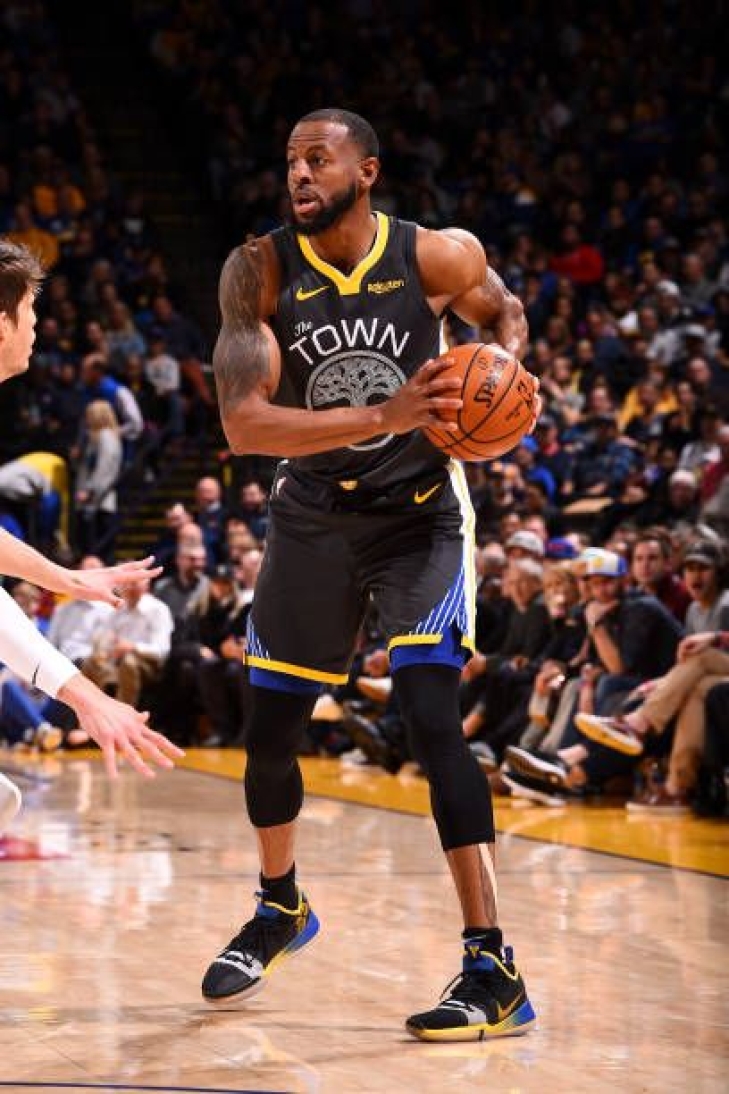
Days before the 2023-24 NBA Season is set to begin, it will have to do so without Andre Iguodala, who announced his retirement.
Taken ninth overall in the 2004 by the Philadelphia 76ers, Iguodala had a good run there, where he was an All-Star in 2011-12, and had a four-year streak where he averaged at least 17 Points per Game. After his All-Star year, Iguodala was traded to Denver, and a season after he was dealt to Golden State, where he had his greatest team success.
After his second season with the Warriors, Iguodala was moved to the bench, but it was a great fit on a team that was loaded with young superstars like Steph Curry, Draymond Green and Klay Thompson. Iguodala helped the Dubs win four Championships, with Iguodala making history as the first (and only) player to win the Finals MVP (2015) as a non-starter.
Iguodala is unlikely to enter the Naismith Basketball Hall of Fame (he is now eligible in 2027), but we expect him to be ranked on our Notinhalloffame.com Basketball list of those to consider for the Hall once his eligibility year comes up.
We here at Notinhalloffame.com wish Andre Iguodala the best in his post-playing career.
The St. Louis Blues will induct Pavol Demitra, Mike Liut and Keith Tkachuk to their Hall of Fame

Regular visitors of Notinhalloffame.com know that we are slowly working on the top 50 of every major team in the NHL, NBA, NFL and MLB. Once that is done, we intend to look at how each team honor their past players, coaches and executives. As such, it is important to us that the
St. Louis Blues have announced that Pavol Demetria, Mike Liut and Keith Tkachuk will comprise their second full class.
Pavol Demetria was traded from the Ottawa Senators in 1996 and the Slovak would blossom two years later with an 89-Point season. Demetria continued to be a point-per-game player with St. Louis, and would win the Lady Byng in the 1999-00 Season and played in three All-Star Games. He signed with the Los Angeles Kings in 2005 after scoring 493 Points in 494 Games. Tragically, this is a posthumous induction, as he was one of the players killed in the Lokomotiv Yarozlavl plane crash in 2011.
Mike Liut played his first two seasons of pro hockey with the Cincinnati Stingers of the WHA, and when that league folded, he joined the St. Louis Blues, who owned his NHL rights. Liut immediately took over as the Blues primary Goalie, and held that for five-and-a-half years before he was traded to Hartford. Liut’s first three seasons in St. Louis were excellent, peaking in the 1980-81 Season where he was the runner-up for the Hart, and the Lester B. Pearson winner. He had a 151-139-52 record with a 3.59 GAA for the team.
Traded from the Phoenix Coyotes during the 2000-01 Season, Keith Tkachuk spent the second half of his career (save for 13 Games in Atlanta) with the Blues where he scored 427 Points. He was an All-Star twice as a Blue.
The Blues Hall of Fame was incorporated last year with a large class that comprised Red Berenson, Scotty Bowman, Berne Federko, Bob Gassoff, Glenn Hall, Brett Hull, Dan Kelly, Al MacInnis, Barclay Plager, Bob Plager, Chris Pronger, the Solomons, Brent Sutter and Garry Unger
The team will honor the three during their home game on January 20 against the Washington Capitals.
We here at Notinhalloffame.com would like to congratulate the impending members of the St. Louis Blues Hall of Fame.
The Contemporary Era Baseball Committee names their Finalists
Hall of Fame season continues with the Baseball Hall’s announcement of the eight names on the Contemporary Baseball Era Committee for Managers/Executives/Umpires. The Committee will meet on December 3 at the Winter Meetings in Nashville, and the results will be shared that night at 7:30 on MLB Tonight on the MLB Network.
To enter the Hall, the candidate must receive 75 percent of the 16-person group.
Here are the nominees:
Cito Gaston: Gaston managed the Toronto Blue Jays for 12 seasons, and he helmed to back-to-back World Series wins in 1992 and 1993. Making history as the first African-American Manager to win a World Series, Gaston has a career record of 894-837, and is a member of the Toronto Blue Jays Level of Excellence.
Davey Johnson: Johnson managed 17 seasons in the Majors, with his career-highlight leading the New York Mets to a 1986 World Series Championship. Johnson won two Manager of the Year Awards (1997 & 2012) and had a record of 1,372-1,071.
Jim Leyland: Leyland is a three-time Manager of the Year (1990, 1992 & 2006), and led the Florida Marlins to their improbable 1997 World Series title. With a career record of 1,769-1,728 and helmed the United States to victory in the 2017 World Baseball Classic.
Ed Montague: Montague served as an Umpire from 1974 to 2009 and was the Crew Chief in four World Series.
Hank Peters: Peters worked 42 years as a Baseball Executive, first becoming a General Manager with the Kansas City Athletics helping them build their dynasty. He would later serve as the GM in Baltimore, where he constructed their 1983 Championship squad. He later rebuilt the Cleveland Indians into a power in the 90s.
Lou Piniella: A 23-year veteran as a Manager, Piniella brought Cincinnati a World Series in 1990, and was a three-time Manager of the Year (1995, 2001 & 2008). He had a lifetime record of 1,835-1,712.
Joe West: West umpired from 1976 to 2021, officiating a record 43 years and 5,460 Games. He worked six World Series and ten League Championship Series.
Bill White: White was the first African American President of a League, having served in that capacity in the NL from 1989 to 1994.
You know that we will be paying attention December 3!
