

 Not in Hall of Fame News
Would you like to know what we love the most about the…
 Not in Hall of Fame News
1993 SEMI-FINAL RESULTS: Thank you for your participation in the Pro Football…
 Not in Hall of Fame News
Regular visitors of Notinhalloffame.com know that we are slowly working on the…
 Not in Hall of Fame News
Last January, the Baseball Hall of Fame announced the Class of 2026,…
 Not in Hall of Fame News
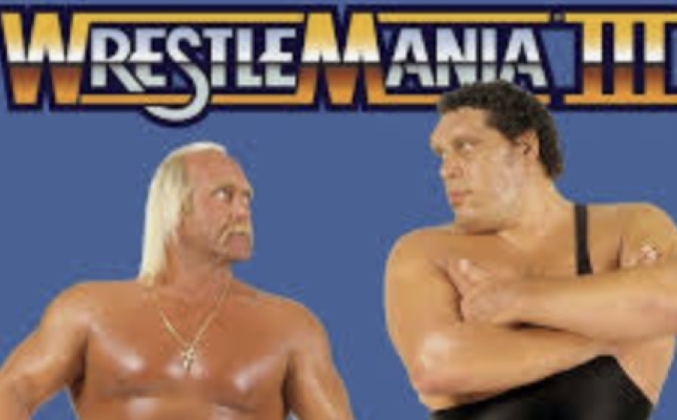
The WWE Hall of Fame announced that the Hulk Hogan vs Andre…
 Not in Hall of Fame News
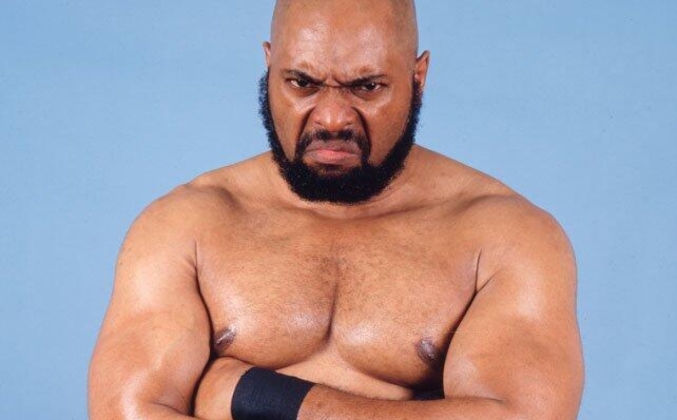
It was announced that Bad News Brown will be inducted into the…
 From the Desk of the Chairman
Synthetic turf has become an increasingly familiar surface in the sports world.…
 From the Desk of the Chairman
Athletic performance is shaped by discipline, training, and resilience, but motivation often…
 From the Desk of the Chairman
The first month of the MLB season always feels a bit unsettled.…
 From the Desk of the Chairman
Sports and regular physical activity are widely celebrated for building strength, improving…
 The Buck Stops Here
The wait is over! Join the NotInHallOfFame.com crew—Kirk Buchner, Evan Nolan, and…
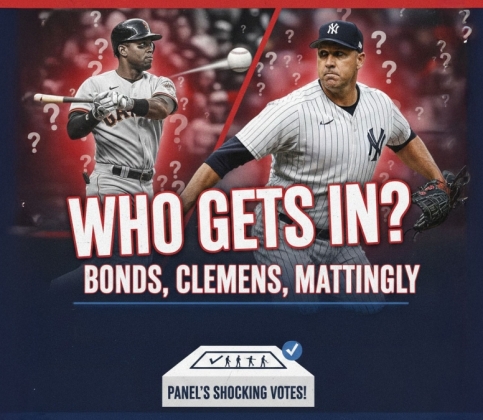 The Buck Stops Here
Join Kirk Buchner and Evan Nolan from NotInHallOfFame.com for a special roundtable…

100 Active Potential Football Hall of Famers
-
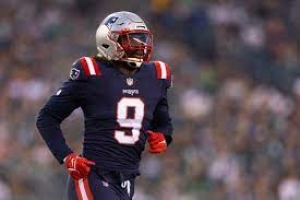 #80 Overall, Matt Judon, Miami Dolphins, Defensive End, #17 Defensive Lineman/Linebacker: Pass Rusher2024 Pre-Season Rank #80, 2023 Pre-Season Rank #75, 2022 Pre-Season Rank #112. Peak Period: 2018-22 Matt Judon’s four-year streak of Pro Bowl appearances…
 -
 #8 Overall, Khalil Mack: Los Angeles Chargers, #3 Defensive Lineman/Linebacker: Pass Rusher2024 Pre-Season Rank #12, 2023 Pre-Season Rank #14, 2022 Pre-Season Rank #19, 2021 Pre-Season Rank #26, 2020 Pre-Season Rank #29. Peak Period: 2015-19.…
 -
 #91 Overall, Creed Humphrey, Kansas City Chiefs, Center, #13 Offensive Lineman2024 Pre-Season Rank #124. Peak Period: 2021-24* Last season, we said that Creed Humphrey was one of the best Centers going into the…
 -
 #100 Overall, Chris Lindstrom, Atlanta Falcons, Right Guard, #15 Offensive Lineman2024 2023 Pre-Season Rank #149. Peak Period: 2020-24 Chris Lindstrom has slowly turned into one of the best Guards in football and is…
Visit the Fictitious Halls of Fame!


You May Also Like...
EDITOR’S CHOICE
 DDT's Pop Flies
When the veterans committee (VC), officially convening as the Contemporary Baseball Era…


 Live Music Head
Project/Objectan interview with André Cholmondeleyby Live Music HeadOriginally published at timessquare.com on…

LATEST RANKINGS



MOST POPULAR RANKINGS

Site Admin
7. Frank Robinson
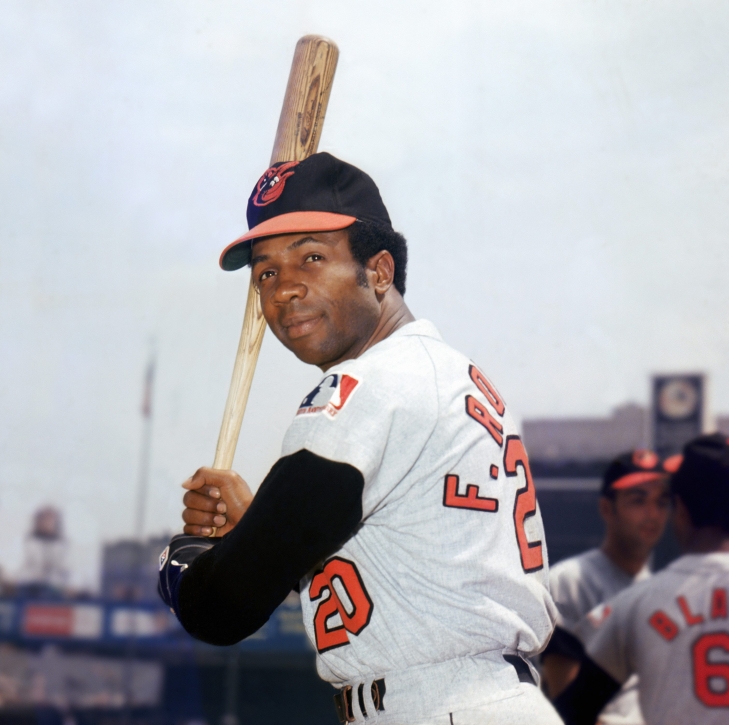
Prior to the 1966 season, the Baltimore Orioles pulled off what remains arguably the most lopsided trade in baseball history. Frank Robinson, a former Rookie of the Year and MVP with Cincinnati, was sent to Baltimore in exchange for Jack Baldschun, Milt Pappas, and Dick Simpson. Defending the move, Reds owner Bill DeWitt infamously labeled Robinson an "old 30." The legendary outfielder responded by authoring the greatest season of his career, instantly transforming the Orioles into a global baseball powerhouse.
In that 1966 debut, Robinson delivered a season for the ages, capturing the American League Triple Crown and becoming the first player to win the MVP award in both leagues. He led the AL in runs (122), home runs (49), and RBIs (122), while posting a devastating slash line of .316/.410/.637. Most importantly, he led Baltimore to its first World Series title, punctuated by his own World Series MVP performance.
Robinson’s arrival signaled the dawn of a dynasty. A five-time All-Star in Baltimore, he proceeded to record three more .300+ seasons and twice more eclipsed the 30-home run mark. He was the veteran heartbeat of the squad that secured the 1970 World Series championship before departing for the Dodgers in 1971. In just six seasons in Baltimore, Robinson maintained a remarkable .300/.401/.543 slash line, accumulating 882 hits and 179 home runs.
His legacy was cemented in 1982 with a first-ballot induction into the National Baseball Hall of Fame. The Orioles retired his iconic #20 and made him—alongside Brooks Robinson—a charter member of the Baltimore Orioles Hall of Fame. To this day, Robinson remains the standard-bearer for peak performance in the history of the franchise.
6. Mike Mussina
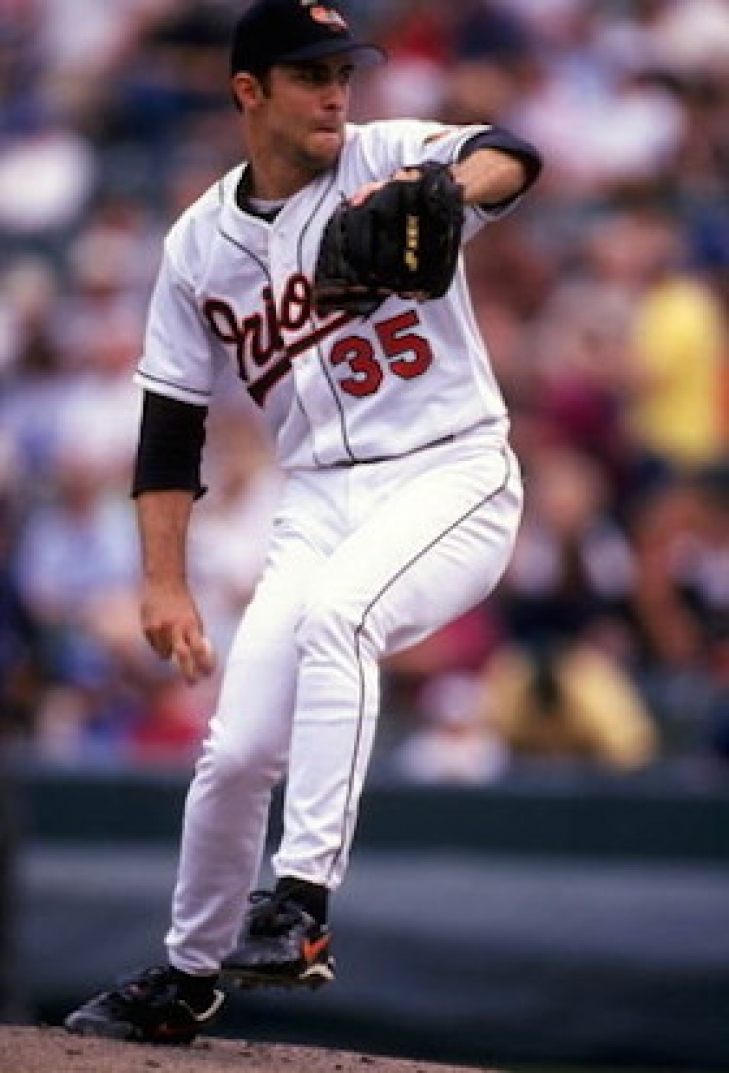
Mike Mussina anchored the Baltimore rotation for a decade (1991–2000), evolving almost instantly from a standout USC Trojan into one of the most sophisticated arms in the American League. By just his second season, "Moose" had established himself as an elite top-of-the-rotation force, combining a lethal knuckle-curve with a cerebral approach that made him a master of the in-game adjustment.
Selected to five All-Star Games during his Baltimore tenure, Mussina was the definitive model of consistent efficiency. From 1992 through 2000—every season he served as a full-time starter for the Orioles—he ranked among the top eight in the league for walks per nine innings (BB/9), even leading the AL in that category in 1995. His command was matched only by his ability to suppress base runners; he finished as the AL runner-up in WHIP three times and placed in the top five for ERA on five separate occasions in Baltimore. While the Cy Young Award proved elusive, Mussina was a perennial finalist, securing six top-six finishes as an Oriole, highlighted by a runner-up performance in 1999.
Mussina was equally dominant with his glove, securing four consecutive Gold Gloves (1996–1999) and reinforcing his reputation as one of the finest-fielding pitchers to ever play the game. Though he eventually departed for New York, he left Charm City with a towering legacy: a 147–81 record and 1,535 strikeouts in an Orioles uniform.
His journey culminated in a 2019 induction into the National Baseball Hall of Fame. In a characteristic display of poise, Mussina elected to have no logo on his plaque’s cap, honoring both franchises that defined his 18-year career. The Orioles, however, had long since claimed him as their own, inducting the right-hander into the Baltimore Orioles Hall of Fame in 2012.
4. Eddie Murray
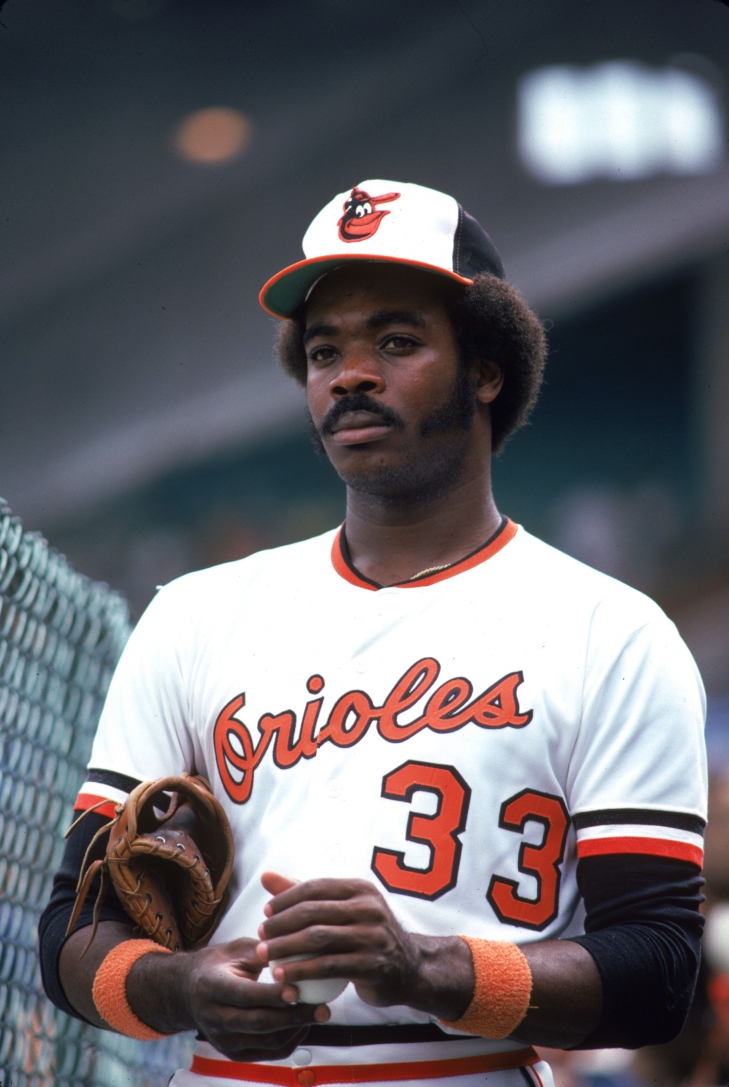
It takes a special kind of player to hit 3,000 Hits and 500 Home Runs over a career. Eddie Murray was just that.
Murray debuted in the Majors in 1977 with the Orioles, where he had 27 Home Runs in a Rookie of the Year-winning season. Power and hits would become the First Baseman’s calling card, and from 1977 to 1985, he would have at least 20 or more Home Runs, with three of those years seeing him exceed 30. He would win the Home Run title with 22 in the strike-shortened year in 1981, and he also won the RBI title.
The first half of the 1980s was the best half-decade of his career. In that period, he finished in the top five in MVP voting each year (second in both 1983 and 1984) and was an All-Star annually from '81 to '86. Murray was also recognized for his defensive prowess, capturing Gold Gloves in 1982, 1983 & 1984. Also earning two Silver Sluggers, Murray was the power man in Baltimore's third World Series win in 1983.
He would play with Baltimore until he was traded after the 1987 season to the Dodgers.
Overall with the Orioles, Murray accrued 2,080 Hits, 343 Home Runs, and 1,224 RBIs, with a .498 Slugging Percentage. He played 11 more years with stops in L.A., the Mets, Cleveland, and Anaheim, with one return year in 1996. The first half of his career as an Oriole is what got him into Cooperstown.
Murray’s number 33 was retired in 1998, and he was inducted into the Baseball Hall of Fame in 2003 in his first year of eligibility. As for the Orioles, they retired Murray's number 33 in 1998, and he was inducted into the Orioles Hall of Fame the year after.
5. George Sisler
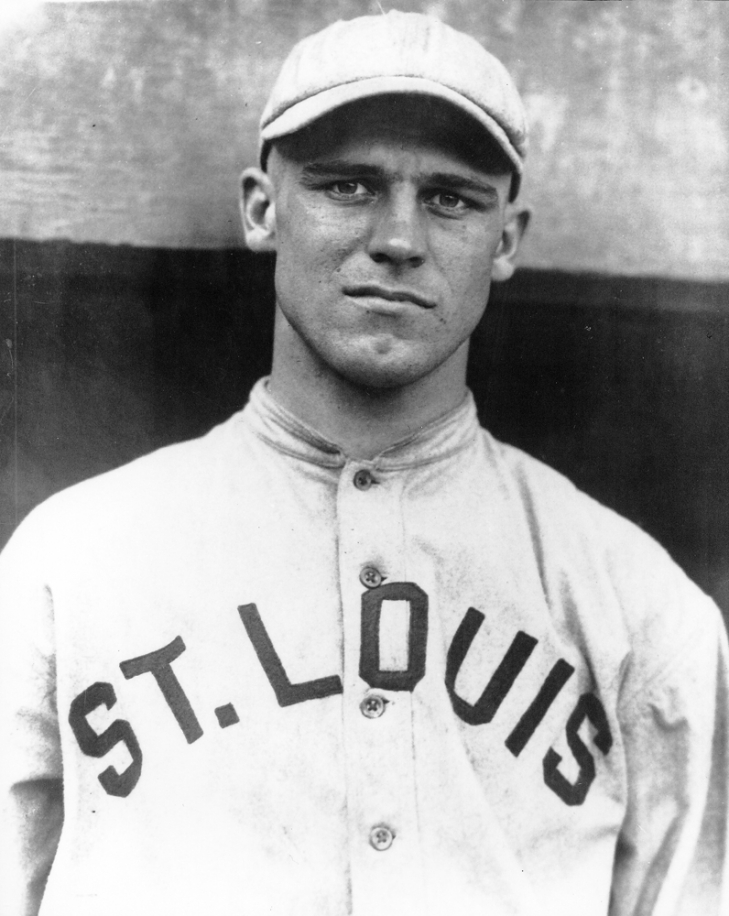
When we eventually pivot to the greatest players from defunct or relocated franchises, the conversation for the St. Louis Browns begins and ends with George Sisler. As the Browns relocated to Baltimore to become the Orioles, Sisler remains the spiritual anchor of the franchise—a legend who defined a city’s baseball identity without ever donning the orange and black of Baltimore.
Signing as a free agent in 1915, Sisler arrived in the majors as a southpaw pitching phenom. While he was immediately effective on the mound—famously outdueling Walter Johnson twice—Browns manager Branch Rickey recognized that Sisler’s bat was far too lethal to languish on the bench every four days. His conversion to first base birthed one of the purest hitting machines in baseball history.
In 1916, Sisler batted .305; incredibly, that would be the second-lowest average of his entire Browns career. Over the next six seasons, he never dipped below .341, capturing two Batting Titles in the process. His 1920 campaign was a statistical marvel, featuring a modern-record 257 hits and a .407 average, but his 1922 encore was his masterpiece. That season, Sisler batted a staggering .420, authored a then-American League record 41-game hitting streak, and led the league in runs, hits, triples, and stolen bases. For his efforts, he was named the inaugural American League MVP.
The trajectory of his career was permanently altered in 1923. A severe bout of sinusitis resulted in chronic double vision, forcing Sisler to miss the entire season at the peak of his powers. Though he returned in 1924 and remained an elite talent—batting over .300 in three of his final four years in St. Louis and leading the league in steals for a fourth time in 1927—he often admitted he was never quite the same.
By the time his contract was sold to the Washington Senators in 1928, Sisler had accumulated 2,295 hits, 351 stolen bases, and a career Browns slash line of .344/.384/.481. Inducted into the Baseball Hall of Fame in 1939, George Sisler remains, without question, the greatest player to ever wear the St. Louis Browns uniform.