

 Not in Hall of Fame News
Yes, we know that this is taking a while! As many of…
 Not in Hall of Fame News
On this evening’s American Idol, the Rock and Roll Hall of Fame…
 Not in Hall of Fame News
Last January, the Baseball Hall of Fame announced the Class of 2026,…
 Not in Hall of Fame News
Yes, we know that this is taking a while! As many of…
 Not in Hall of Fame News
1993 Pro Football Hall of Fame Revisited Project Class. Here we are! …
 Not in Hall of Fame News
Afrika Bambaataa, the legendary DJ, producer, and widely recognized "Godfather" of hip-hop…
 The Buck Stops Here
Kirk Buchner and Chris Mouradian dive into the massive list of over…
 The Buck Stops Here
Welcome to Season 6, Episode 16 of The Hall of Fame Show…
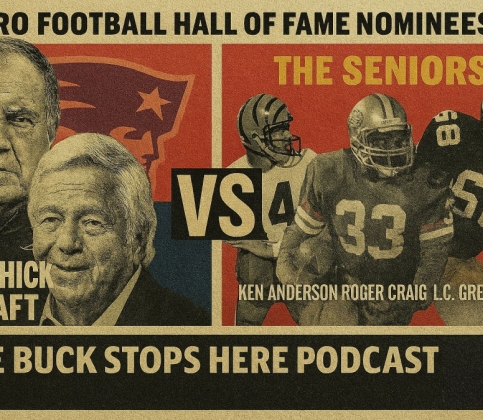 The Buck Stops Here
Bill Belichick & Robert Kraft vs. The Seniors: Analyzing the ProFootball Hall of Fame Class Nominees
The Pro Football Hall of Fame voting process is more complicated than…
 From the Desk of the Chairman
Recreational cannabis laws have changed how adults can buy cannabis in many…
 From the Desk of the Chairman
Synthetic turf has become an increasingly familiar surface in the sports world.…
 From the Desk of the Chairman
Athletic performance is shaped by discipline, training, and resilience, but motivation often…



 The Buck Stops Here
Bill Belichick & Robert Kraft vs. The Seniors: Analyzing the ProFootball Hall of Fame Class Nominees
The Pro Football Hall of Fame voting process is more…
100 Active Potential Football Hall of Famers
-
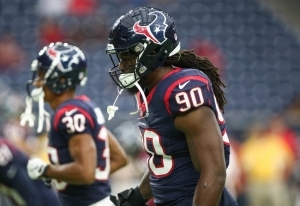 #86 Overall, Jedeveon Clowney, Free Agent, Defensive End, #19 Defensive Linemann/Linebackers: Pass Rushers2024 Pre-Season Rank #92,2023 Pre-Season Rank #89, 2022 Pre-Season Rank #87, 2021 Pre-Season Rank #89, 2020 Pre-Season Rank #85. Peak Period: 2015-19.More of a…
 -
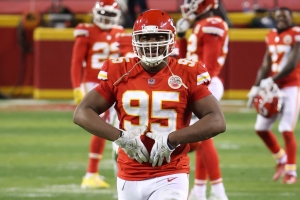 #15 Overall, Chris Jones, Kansas City Chiefs, Defensive Tackle, #7 Defensive Lineman/Linebacker: Pass Rusher2024 Pre-Season Rank #15, 2023 Pre-Season Rank #58, 2022 Pre-Season Rank #100. Peak Period 2020-24. When you think of the recent success of…
 -
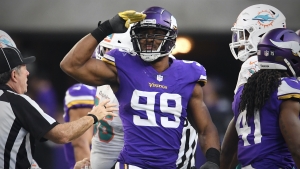 #44 Overall, Danielle Hunter, Houston Texans, #10 Defensive End: Defensive Linemen/Linebackers: Pass Rushers2024 Pre-Season Rank #57, 2023 Pre-Season Rank #87, 2022 Pre-Season Rank #102 2021 Pre-Season Rank #102, 2020 Pre-Season Rank #90. Peak Period: 2018-19/2022-24…
 -
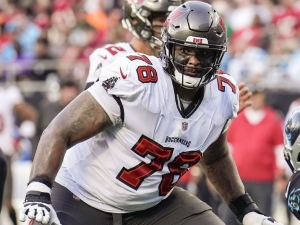 #67 Overall, Tristan Wirfs, Tampa Bay Buccaneers, Right Tackle, #9 Offensive Lineman2024 Pre-Season Rank #94, 2023 Pre-Season Rank #105, 2022 Pre-Season Rank #119. Peak Period: 2020-24 Wirfs was the highest-drafted offensive lineman in the…
Visit the Fictitious Halls of Fame!


You May Also Like...
EDITOR’S CHOICE
 DDT's Pop Flies
When the veterans committee (VC), officially convening as the Contemporary Baseball Era…



 Live Music Head
Project/Objectan interview with André Cholmondeleyby Live Music HeadOriginally published at timessquare.com on…
LATEST RANKINGS


MOST POPULAR RANKINGS



Site Admin
12. Dante Bichette
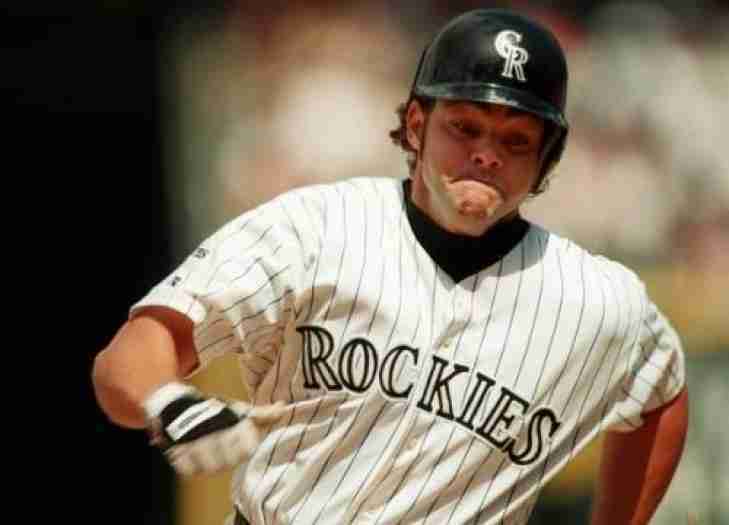
Dante Bichette’s path to Colorado was a stroke of expansion-era genius, acquired from the Brewers in exchange for Kevin Reimer just as the Rockies were coming to life. He surfaced as an instant legend, etching his name into the record books by launching the first home run in franchise history during the club’s inaugural game in 1993. He matured into a premier offensive catalyst, authoring a sensational 1995 campaign where he nearly secured the Triple Crown. That summer, he led the National League in hits, home runs, RBIs, and slugging percentage, finishing as the narrow runner-up for the MVP award in a race that captivated the Mountain West.
The most extraordinary aspect of his tenure was the sheer volume of runs he produced throughout the decade. Bichette was a master of the "big hit," a technician of the long ball who reached a remarkable level of consistency by driving in at least 100 runs in five consecutive summers. He reached a statistical summit in 1996, joining the elite 30-30 club with 31 homers and 31 stolen bases, proving that his athleticism extended well beyond the batter's box. He was a model of specialized hitting acumen, serving as a four-time All-Star for the club and maintaining a near-elite .316 batting average over his seven-year stay in the purple pinstripes.
His presence was defined by a charismatic, crowd-pleasing style and a physical approach at the plate that made him a nightmare for opposing rotations. However, the narrative of his career is uniquely balanced by defensive struggles that became legendary in their own right. While he possessed a specialized "cannon" for an arm in right field, his overall range and efficiency were frequently criticized, often resulting in advanced metrics that devalued his massive offensive contributions.
Bichette was traded to Cincinnati in 1999, but he left the organization as a pillar of its formative years. He departed Colorado with 201 home runs and 826 RBIs, benchmarks that solidified his status as one of the most prolific and beloved figures in the history of the franchise.
16. Ellis Burks
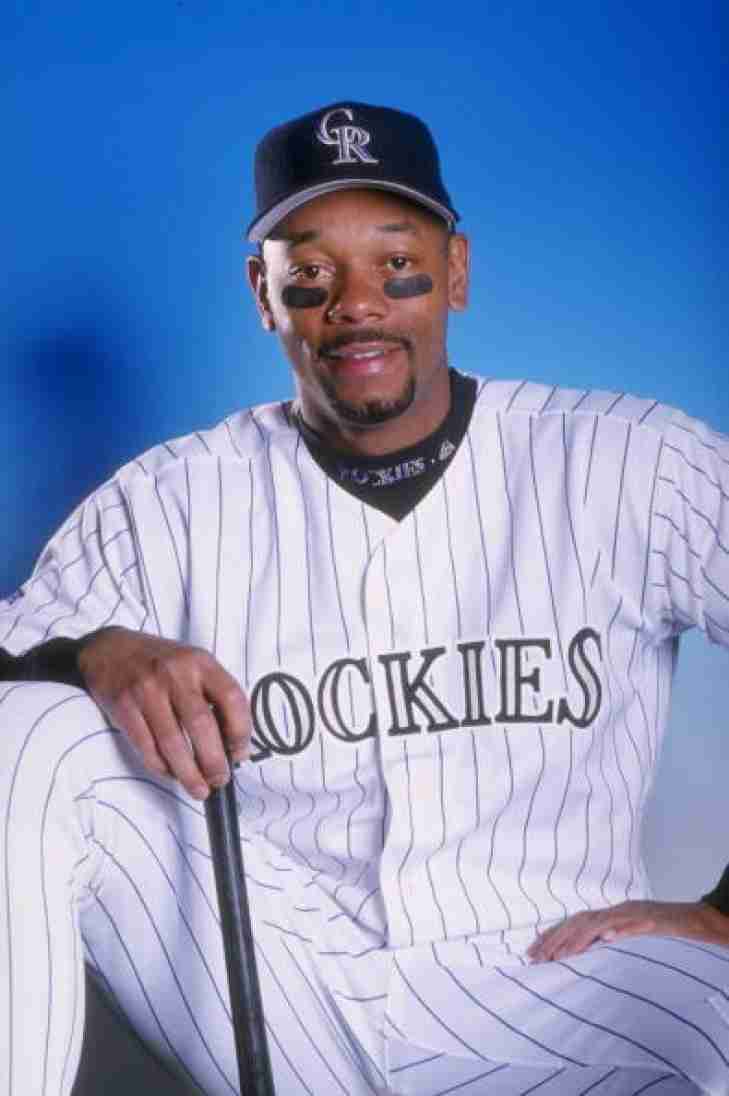
The Colorado Rockies signed Ellis Burks as a high-profile free agent to stabilize their young lineup in 1994. Though his tenure was sometimes interrupted by the physical toll of high-altitude conditions on his knees, his craftsmanship reached a level of pure dominance during a historic 1996 campaign. That summer, he authored a masterpiece of hitting, launching 40 home runs and lacing 211 hits while maintaining a staggering .344 average. He wasn't just a power threat; he was a model of specialized efficiency, leading the National League in runs scored (142) and total bases (392).
The most impressive aspect of his time in Denver was how he refined his approach to maximize the park's unique geometry. Burks was a master of the "extra-base" mindset, becoming a member of the elite 30-30 club in 1996 by pairing his 40 homers with 32 stolen bases. This performance earned him a Silver Slugger, an All-Star nod, and a third-place finish in the MVP voting, the highest of his eighteen-year career. He served as the tactical link between the raw power of Bichette and Galarraga and the speed of the leadoff spot, providing the high-leverage at-bats that defined the most feared offensive unit of the mid-90s.
Burks was traded to the San Francisco Giants in 1998, but he left the organization as a statistical titan of its formative decade. He departed Colorado with a career .306 average and an OPS just shy of 1.000, having established an offensive standard for veteran acquisitions that has rarely been equaled.
13. Ubaldo Jimenez
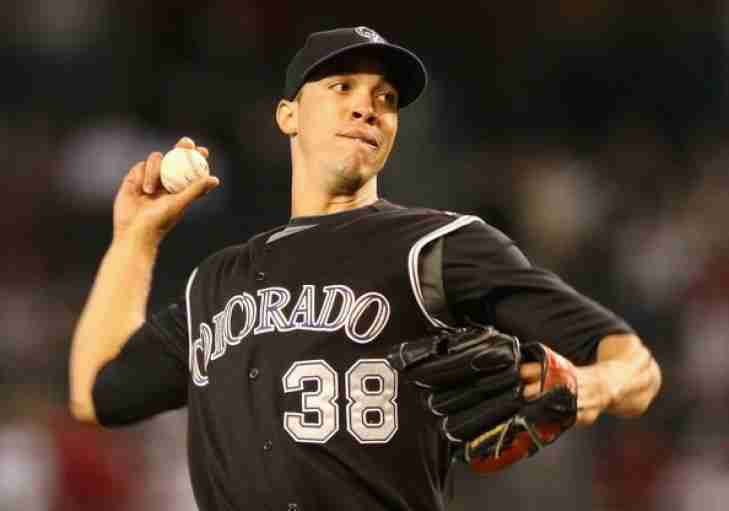
Ubaldo Jiménez surfaced as a homegrown prospect and matured instantly into the staff's undisputed anchor, navigating the atmospheric challenges of Coors Field with a specialized "heavy" fastball that regularly touched triple digits. He reached a statistical plateau of excellence in 2010 that began with a moment of pure immortality. On April 17, he traveled to Atlanta and hurled the first, and as of today, only, no-hitter in the history of the Colorado Rockies. It was a masterpiece of grit and velocity; despite battling his command early and issuing six walks, he used his world-class stuff to baffle the Braves, punctuated by a 98 mph heater on his 126th pitch of the night.
The true magnitude of his dominance that year was found in a first half that defied all historical precedent for a Colorado pitcher. By the All-Star break, Jiménez stood as a statistical titan with a 15-1 record and a sub-1.00 ERA, earning him the starting nod for the National League in the Midsummer Classic. He was a model of specialized durability, finishing the campaign with a career-high 19 wins and placing third in the Cy Young voting. He served as the tactical engine of a rotation that relied on his ability to eat innings and strike out hitters at a high-frequency clip, concluding that remarkable summer with 214 strikeouts and a 2.88 ERA.
His presence was defined by a quiet, professional resilience and a unique delivery that made his 96-mph sinker nearly impossible to barrel. Jiménez remained the heart of the Rockies' staff through their 2007 World Series run and the 2009 postseason, proving that his game was built on a rare combination of raw power and high-leverage mental toughness.
In July 2011, Jiminez was sent to the Cleveland Indians in a blockbuster trade for a package of four prospects, including two former first-round picks. He left the organization with 56 wins and 773 strikeouts, establishing the standard for what a front-line starter could achieve at high altitude.
10. Vinny Castilla
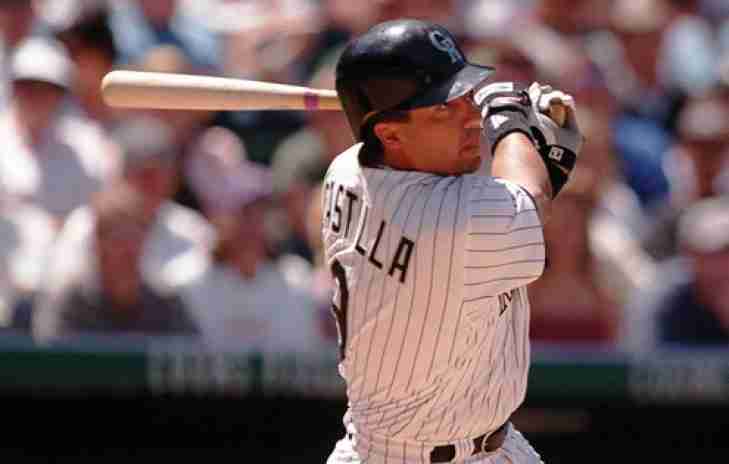
Castilla surfaced as a regular in the Rockies' lineup during the mid-90s and matured instantly into a premier slugger. He emerged with a lightning-fast pull swing that seemed perfectly calibrated for the gaps at Coors Field, beginning a remarkable five-year run where he eclipsed the 30-home run mark every single summer. He was a model of consistency at the "hot corner," a technical standout who balanced his offensive production with a vacuum-like glove. He wasn't just a byproduct of his environment; he was a sophisticated hitter who anchored a lineup that led the young franchise to its first postseason appearance in 1995.
The absolute high-water mark of his offensive production stretched across a decade of various tenures in purple and black. Castilla was a master of the RBI, a trait he showcased most prominently during his 2004 return to the club, where he led the entire National League with 121 runs batted in. Throughout his primary years in Colorado, he earned two All-Star selections and three Silver Slugger Awards, demonstrating a sustained excellence that few contemporaries at his position could match. He concluded his time with the club as a statistical giant, amassing over 1,200 hits and proving that his ability to drive the ball was a permanent fixture of his game.
His legacy was defined by a deep, reciprocal loyalty to the Colorado fans and a professional poise that made him a natural leader in the clubhouse. Castilla remained a fixture of the organization long after his most productive seasons, returning for a final playing stint before transitioning into a key role within the front office. Whether he was launching a moonshot into the left-field bleachers or mentoring the next generation of Rockies stars, he competed with a passion that solidified his status as a local icon. He proved that a player could become the face of a franchise through a rare blend of longevity and explosive talent.
As a member of the Rockies, Castilla compiled 1,206 hits, 239 home runs, and 745 RBIs with a .294 batting average.