

 Not in Hall of Fame News
Yes, we know that this is taking a while! As many of…
 Not in Hall of Fame News
On this evening’s American Idol, the Rock and Roll Hall of Fame…
 Not in Hall of Fame News
Last January, the Baseball Hall of Fame announced the Class of 2026,…
 Not in Hall of Fame News
Yes, we know that this is taking a while! As many of…
 Not in Hall of Fame News
1993 Pro Football Hall of Fame Revisited Project Class. Here we are! …
 Not in Hall of Fame News
Afrika Bambaataa, the legendary DJ, producer, and widely recognized "Godfather" of hip-hop…
 The Buck Stops Here
Kirk Buchner and Chris Mouradian dive into the massive list of over…
 The Buck Stops Here
Welcome to Season 6, Episode 16 of The Hall of Fame Show…
 The Buck Stops Here
Bill Belichick & Robert Kraft vs. The Seniors: Analyzing the ProFootball Hall of Fame Class Nominees
The Pro Football Hall of Fame voting process is more complicated than…
 From the Desk of the Chairman
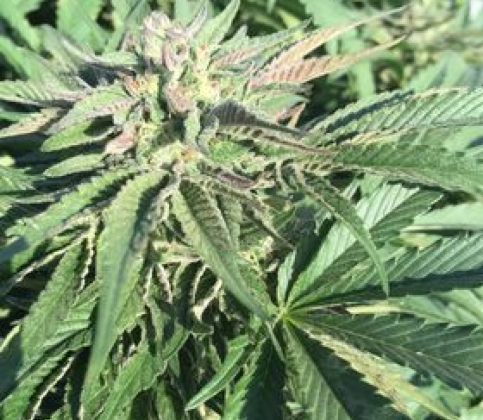
Recreational cannabis laws have changed how adults can buy cannabis in many…
 From the Desk of the Chairman
Synthetic turf has become an increasingly familiar surface in the sports world.…
 From the Desk of the Chairman
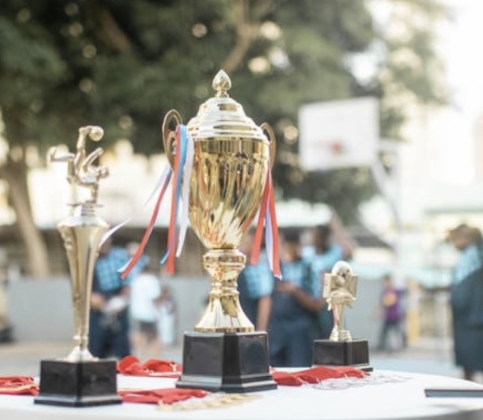
Athletic performance is shaped by discipline, training, and resilience, but motivation often…



 The Buck Stops Here
Bill Belichick & Robert Kraft vs. The Seniors: Analyzing the ProFootball Hall of Fame Class Nominees
The Pro Football Hall of Fame voting process is more…
100 Active Potential Football Hall of Famers
-
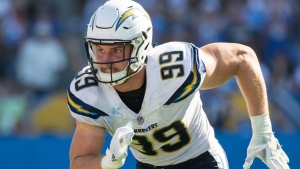 #63 Overall, Joey Bosa, Buffalo Bills, Defensive End, #14 Defensive Lineman/Linebackers: Pass Rushers2024 Pre-Season Rank #71, 2023 Pre-Season Rank #51, 2022 Pre-Season Rank #60, 2021 Pre-Season Rank #82, 2021 Pre-Season Rank #97. Peak Period: 2017-21…
 -
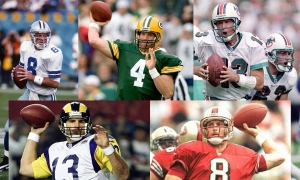 Modern Positional AverageQuarterbacks: Troy Aikman (2006), Brett Favre (2016), Peyton Manning (2021) Dan Marino (2005), Kurt Warner (2017), Steve Young (2005). Ah, the Quarterback. As…in Quarterbacks
 -
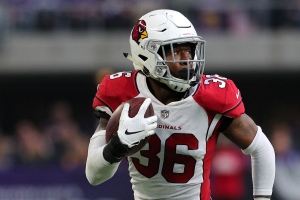 #28 Overall, Budda Baker, Arizona Cardinals, Free Safety, #1 Safety2024 Pre-Season Rank #43, 2023 Pre-Season Rank #78, 2022 Pre-Season Rank #86, 2021 Pre-Season Rank #113, 2020 Pre-Season Rank #147. Peak Period: 2020-24.…in Safeties
 -
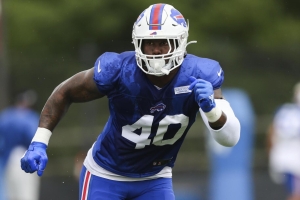 #6 Overall, Von Miller, Washington Commanders, #1 Defensive Lineman/Linebackers: Pass Rushers2024 Pre-Season Rank #7, 2023 Pre-Season Rank #4, 2022 Pre-Season Rank #7, 2021 Pre-Season Rank #8, 2020 Pre-Season Rank #10. Peak Period: 2011-12/2014-16.As…
Visit the Fictitious Halls of Fame!


You May Also Like...
EDITOR’S CHOICE
 DDT's Pop Flies
When the veterans committee (VC), officially convening as the Contemporary Baseball Era…



 Live Music Head
Project/Objectan interview with André Cholmondeleyby Live Music HeadOriginally published at timessquare.com on…

LATEST RANKINGS


MOST POPULAR RANKINGS



Site Admin
21. Steve Reed
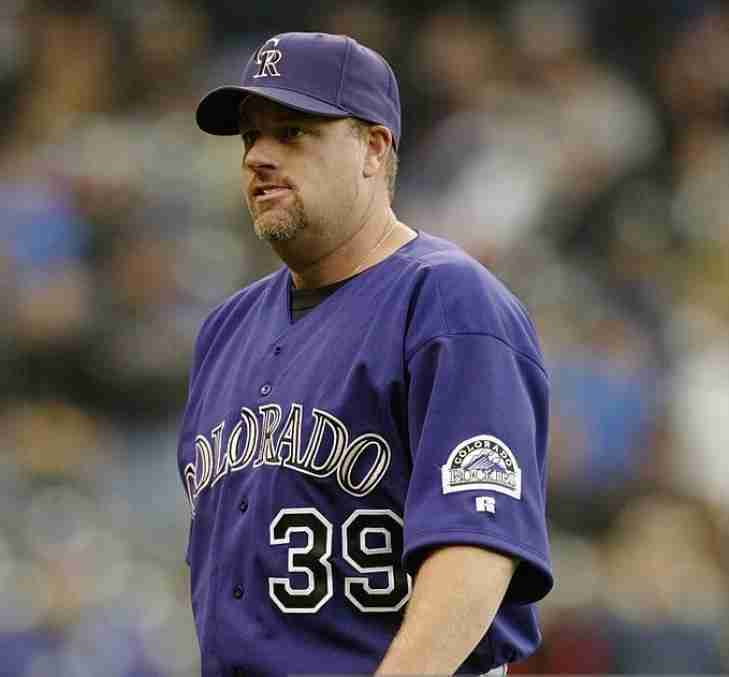
A side-arming right-hander with a specialized sinker, Reed arrived as an original member of the franchise via the 1992 Expansion Draft and proceeded to become the gold standard for bullpen durability in the thin air. For most of the 1990s, he was the man the Rockies turned to when the lead was slim, and the altitude was threatening to turn a routine fly ball into a disaster.
Reed’s tenure in Denver was defined by remarkable professional resilience, as he took the ball more often than any of his peers. He established a level-headed consistency that was rare for a pitcher navigating the pre-humidor era of Colorado baseball, specializing in inducing the ground balls necessary to survive at altitude. He reached a statistical peak in durability during the 1994 campaign, leading the National League with 61 games pitched and serving as the primary tactical engine of the Rockies' relief corps. He possessed a deceptive, low-slot delivery that neutralized both right and left-handed hitters, providing the high-leverage stability required to bridge the gap to the ninth inning.
The most profound aspect of his craftsmanship was his sheer volume of work. Reed appeared in a franchise-record 461 games across two separate stints in a Rockies uniform, a total that reflects a decade of being the organization's most trusted middle-relief option. He was a model of high-frequency efficiency, appearing in over 60 games across four seasons for Colorado and maintaining a respectable ERA despite the era’s extreme offensive environment. He proved that a player could become a franchise pillar by mastering the specialized, often-overlooked art of the "bridge" reliever, showing a workmanlike approach that allowed him to log over 500 innings for the club.
With the Rockies, Reed compiled 461 appearances and 544.1 innings.
25. Eric Young

The history of the Colorado Rockies effectively began with a single swing from Eric Young. As an original member of the 1993 expansion squad, "E.Y." provided the first iconic moment in franchise history by launching a leadoff home run in the club's inaugural home opener at Mile High Stadium.
Young’s stay in Colorado was defined by an elite, high-frequency approach to baserunning that remains the gold standard for the organization. He reached a personal best in steals during the 1996 campaign, a summer in which he led the National League with 53 stolen bases and earned both an All-Star selection and a Silver Slugger award. This followed a remarkable 1995 season where he paced the circuit with nine triples while batting a career-high .317. He was a model of specialized efficiency, utilizing the vast gaps of Coors Field to turn routine singles into extra-base hits and providing the table-setting patience required to ignite a lineup of power hitters.
On June 30, 1996. In a single game against the Dodgers, Young tied a modern major league record by swiping six bases—including a spectacular sequence where he stole second, third, and home in the same inning. He possessed a professional resilience that saw him transition between second base and the outfield to keep his high-leverage speed in the lineup, eventually amassing a franchise-record 180 stolen bases.
In 1997, he was traded to the Los Angeles Dodgers, thus ending his run in Mile High. With the Rockies, Young compiled 626 hits and 180 stolen bases while securing the 1996 NL Stolen Base title and a Silver Slugger.
The organization provided the final punctuation on his legacy by inviting him back as a coach and honoring his status as an original "Blake Street" icon.
22. Jhoulys Chacin

The career of Jhoulys Chacín in Colorado was a study in high-altitude survival, defined by a heavy sinker and a professional resilience that allowed him to bridge two very different eras of Rockies baseball. While his journey was often a tug-of-war with inconsistency and injury, the Venezuelan right-hander established himself as one of the most statistically significant hurlers to ever navigate the thin air of Coors Field. Whether he was acting as the young, frontline ace of the rotation or returning a decade later as a veteran presence in the bullpen, Chacín provided a steady-state reliability that often belied the difficulty of his environment.
Chacín’s initial stay in Denver began with a high-velocity entrance in 2009, but it was his 2010 rookie campaign that signaled the arrival of a major tactical force. He led all National League rookies in strikeouts that season, utilizing a specialized sinking fastball and a deceptive changeup to neutralize hitters. He possessed a rare ability to induce ground balls at a high-frequency rate, a craftsmanship that was essential for any pitcher looking to find sustained success at 5,280 feet. By 2011, he had evolved into the staff’s workhorse, logging 194 innings and proving that his poise was well beyond his years.
In 2013, while rebounding from a pectoral injury, Chacín authored one of the best individual pitching seasons in franchise history, finishing 14-10 with a 3.47 ERA. His value was underscored by a 5.8 bWAR, ranking him fifth among all National League pitchers. He served as the primary engine for a rotation that desperately needed a high-leverage anchor. He was a model of specialized durability, famously allowing only 11 home runs all season despite calling the most hitter-friendly park in the majors his home.
His presence was defined by a workmanlike approach that remained intact even as shoulder inflammation began to sap his velocity in 2014. After a six-year odyssey that saw him suit up for six different organizations, Chacín returned to the Rockies in 2021, but this time in a specialized relief role.
Chacín’s time in Colorado ended after the 2022 Season with 45 wins and 636 strikeouts.
19. Brian Fuentes
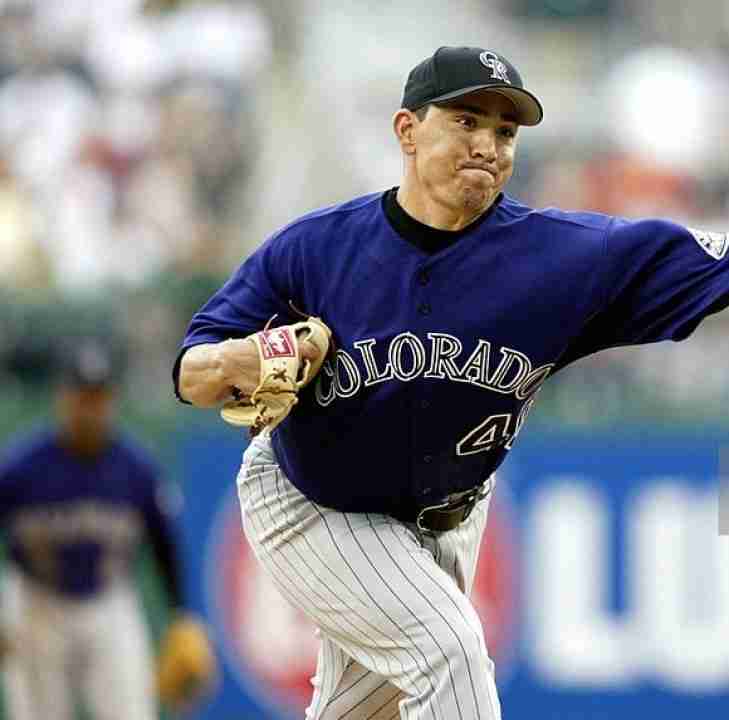
Brian Fuentes’ path to dominance was a study in finding the right tactical niche. After arriving from Seattle in 2002, he gradually established himself as a vital bullpen engine, but he truly came into his own in 2005. That summer, he seized the closer’s role and matured into a premier shut-down specialist, rattling off three consecutive seasons with at least 30 saves. He possessed a specialized, deceptive motion that allowed him to hide the ball until the last possible second, a craftsmanship that earned him three All-Star selections in a purple uniform, a rare feat for any hurler calling Coors Field home.
The most impressive aspect of his tenure was the consistency he maintained in an environment notorious for inflating ERAs and shattering confidence. Fuentes was a master of the "save" in its most difficult form, providing the tactical stability required to anchor the bullpen during the club's historic "Rocktober" run to the 2007 World Series. He was a model of specialized efficiency, racking up 115 saves for the organization and establishing a franchise benchmark for reliability.
Fuentes remained the heartbeat of the Colorado relief corps through 2008, utilizing his veteran poise to navigate 395 appearances for the club. Whether he was striking out the side to preserve a one-run lead or mentoring the next generation of relievers, he competed with a focused intensity that solidified his status as the gold standard for Rockies closers. He proved that a player could become a franchise pillar by simply being the most
Fuentes departed for the Angels in 2009, but with the Rockies, Fuentes compiled 115 saves and 470 strikeouts while earning three All-Star nods across 7 seasons.