


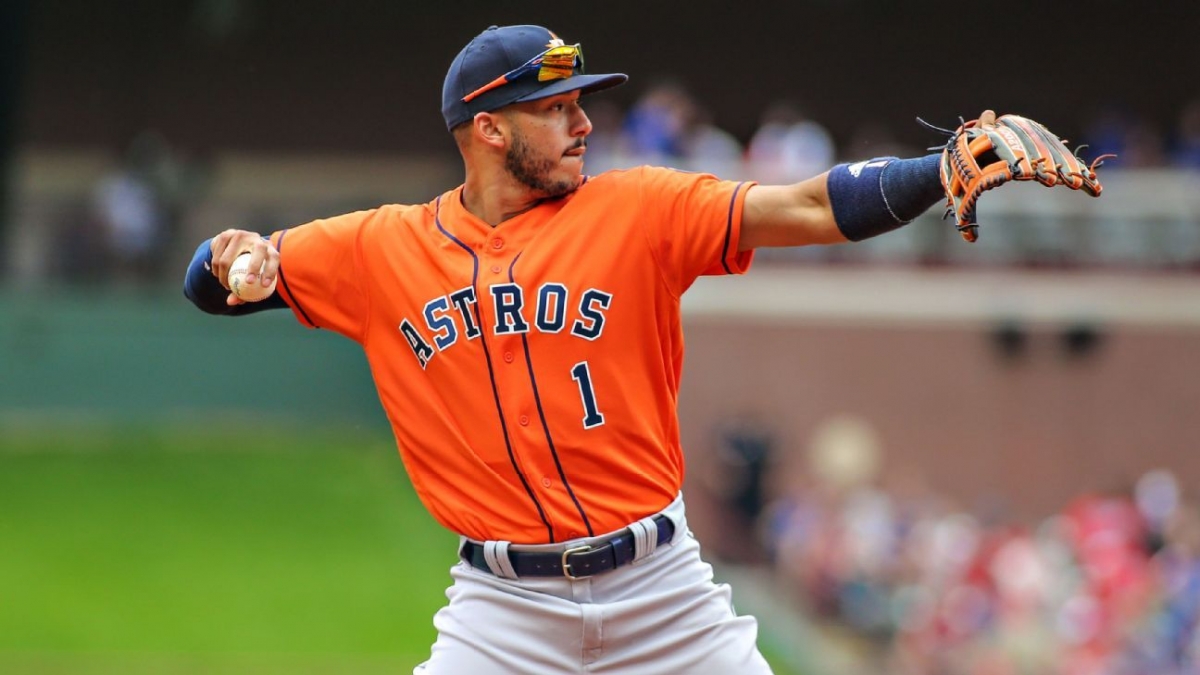

Carlos Correa arrived in Houston as the ultimate symbol of a rebuilding era, carrying the weight of being the first overall pick in 2012. He didn't just meet those expectations; he shattered them with a professional poise that suggested he was born for the high-leverage moments of October. For seven seasons, Correa was the defensive and emotional heartbeat of the most successful run in franchise history, a specialized talent whose combination of range, arm strength, and middle-order power turned the shortstop position into a source of constant advantage for the Astros.
Correa’s ascent began with an immediate high-frequency impact in 2015. After being called up in June, he sprinted to the AL Rookie of the Year award, launching 22 home runs and signaling a transition from a prospect to a franchise pillar in just 99 games. He followed this with a relentless run of production, hitting 20 or more homers in each of the next two seasons while maintaining a batting average over .275. In 2017, Correa batted a career-high .315 and earned an All-Star nod while serving as the emotional engine of the Astros' first World Series championship.
The middle chapters of his residency were marked by a frustrating series of physical setbacks, as back and rib injuries led to a declining plateau in availability between 2018 and 2020. However, in 2021, his final year before reaching free agency. That season, he provided a masterclass in two-way dominance, hitting 26 home runs and leading the entire American League in defensive bWAR (2.9). He finished fifth in the MVP voting and secured both a Gold Glove and a Platinum Glove, proving that when healthy, his craftsmanship in the field was the gold standard of the game.
The story in Houston took a dramatic turn after the 2021 season when Correa’s talents traveled north to Minnesota in free agency. While many assumed the chapter was closed, the reality of the 2025 season brought a stunning homecoming. With the Astros looking to solidify their infield for another championship run, they orchestrated a high-leverage trade to bring Correa back to the Lone Star State. He arrived mid-season to a hero’s welcome, immediately reclaiming his spot at shortstop and helping the club navigate a pressurized playoff race.
As the 2026 season begins, Correa stands as a veteran-like bridge between the championship runs of his youth and the franchise’s current aspirations. He has returned to the city where his legacy began, proving that a player’s connection to a fanbase can survive even a multi-year absence. He showed the organization that when you have the heart of a competitor and the discipline of an elite athlete, you don't just fill a position—you anchor a culture.

Comments powered by CComment