

29. Don Macek

The Chargers selected Don Macek out of Boston College in the second round of the 1976 draft, and the guard-turned-center became one of the franchise's most quietly valuable picks. As a rookie, he earned All-Rookie honors while starting at right guard, then shifted to center in 1979 and stayed there for the rest of his career. At 6-foot-3 and about 260 pounds, he was a durable, technically sound blocker who could handle the constant collisions in the middle of the line and still get out to the second level when the play called for it. He started 150 of his 162 games in San Diego, missing only a handful of starts across 14 seasons.
Most of those years lined up with Dan Fouts and the Air Coryell offense. Macek snapped the ball and helped anchor a line that allowed the fewest sacks per pass attempt in the NFL from 1981 to 1983, giving Fouts the time to lead the league in passing yards for four straight seasons. The Chargers won three consecutive AFC West titles from 1979 to 1981 and reached the AFC Championship Game twice during that stretch. Teammates such as Ed White lined up next to him for years, and the unit’s ability to keep the pocket clean helped the offense stretch the field the way it did. Macek never made a Pro Bowl, but he was the steady, understated presence who started nearly every snap for more than a decade.
He retired after the 1989 season. Throughout his career with the Chargers, he was the long-term center who helped protect one of the most prolific passing attacks the franchise has ever had.
The team later inducted him into its Hall of Fame in 2004 alongside Ed White, recognizing the durable center who spent 14 years at center during the Air Coryell era.
45. Dave Kocourek

Dave Kocourek’s pro career began in 1959 with a brief stop in the CFL with the Winnipeg Blue Bombers before he landed with the Los Angeles Chargers in the AFL’s first year. He quickly became one of the more productive offensive pieces on Sid Gillman’s early teams, lining up as a flanker and later settling in at tight end. He was a reliable target who could stretch the field and also contribute as a blocker, and from 1961 through 1964 he earned AFL All-Star recognition each season. In 1961, he led the team with 55 catches for 1,055 yards, and he remained a consistent option in the passing game even as the Chargers moved to San Diego and built one of the more explosive offenses in the league.
He was part of the 1963 squad that won the AFL Championship, and he collected four Second-Team All-AFL selections across his time with the team. Kocourek’s size and receiving ability made him a difficult matchup in an era when tight ends were still evolving into more than blockers, and he held up as a starter through the Chargers’ strongest early years.
After the 1965 season, he joined the Miami Dolphins, although his most productive years were already behind him. During his six seasons with the Chargers, he recorded approximately 3,720 receiving yards and 21 touchdowns. He later played briefly for the Raiders, earning a second championship ring, but most of his contributions came in San Diego. He was named to the AFL All-Time Second Team and is remembered as one of the early Chargers who helped establish the franchise’s offensive identity in the 1960s.
38. Melvin Ingram

Melvin Ingram arrived in San Diego as a first-round pick out of South Carolina in 2012 and spent his rookie season mostly as a backup linebacker and special-teams contributor. A torn ACL in his second training camp wiped out nearly all of 2013, but he returned late that year and helped the Chargers reach the playoffs for the first time since 2009. From there, he steadily worked his way into a starting role on the edge. He was a versatile, athletic rusher who could line up as a stand-up linebacker or with his hand in the dirt, using speed, spin moves, and quick hands to get around tackles or work inside on stunts.
His breakout came in 2015, when he posted 10.5 sacks, 19 tackles for loss, and four forced fumbles while starting every game. He matched that sack total in 2017, earned AFC Defensive Player of the Month honors for September, and made his first Pro Bowl. That started a three-year run of Pro Bowl selections from 2017 through 2019, during which he formed a productive edge tandem with Joey Bosa. He finished 2017 with another 10.5 sacks and added a 39-yard scoop-and-score touchdown, and he remained a consistent pressure generator through 2018 and 2019 even as the Chargers’ defensive line evolved. He was the kind of player who could win with pure speed off the edge one snap, then counter with a spin or bull rush the next, forcing quarterbacks to hurry throws and creating opportunities for the rest of the front. After the 2020 season, Ingram left for the Pittsburgh Steelers.
In his nine years with the Chargers, he finished just shy of 50 sacks and ranked among the franchise's more productive edge defenders during that stretch.
He never quite reached the same individual heights after leaving San Diego, but his multi-year stretch of Pro Bowls and double-digit sack seasons with the Chargers marked him as one of the more reliable pass rushers the team has had in the modern era.
44. Quentin Jammer

When the Chargers took Quentin Jammer fifth overall out of Texas in the 2002 draft, they made him the highest-selected defensive back in the class, banking on a physical, long-armed corner who had locked down receivers in college. Other players taken later (including Ed Reed) earned bigger individual hardware, but Jammer gave San Diego a durable starter who rarely came off the field. He earned All-Rookie recognition and settled in as the starting left cornerback for most of his time with the team, using his size and physicality at the line to disrupt routes even as the rules of the era limited how much contact corners could make downfield.
He was never a pure ball-hawk—interceptions came in modest bunches rather than in bunches of six or seven—but he was consistently around the football and rarely missed games. He was particularly effective in run support and against shorter routes, where his willingness to come up and hit made him more than a pure cover corner. Quarterbacks did not always avoid him, but he held up well enough over a long stretch that the Chargers kept him as a foundational piece of the secondary through multiple coaching staffs.
After the 2012 season he left for the Denver Broncos, where he played one final year. In his 11 seasons with the Chargers, he played in 172 games, starting 161, and recorded 21 interceptions and roughly 720 combined tackles. He never earned a Pro Bowl nod, but his availability and steady production made him one of the more reliable cornerbacks the franchise had in the 2000s.
He was later named to the Chargers’ 50th-anniversary team, a nod to the fifth-overall pick who held down left corner for more than a decade and gave the defense a physical, durable presence on the outside.
22. Jamal Williams

Jamal Williams arrived in San Diego as a second-round pick in the 1998 supplemental draft out of Oklahoma State, and it took him a little while to lock down a full-time role. He started only a couple of games in his first two seasons, then finally became the regular left defensive tackle in 2000. An injury knocked him out after just three weeks in 2001, but he worked his way back the next year and was starting again. When the Chargers switched to a 3-4 defense, they slid him to nose tackle, and that move turned out to be perfect.
At nose tackle, Williams became one of the best in the league. From 2005 through 2007, he earned three straight Pro Bowls, with First-Team All-Pro honors in 2005 and 2006. He was the big, sturdy anchor who occupied blockers, clogged running lanes, and let the linebackers and edge rushers fly around. The Chargers named him their Defensive Player of the Year three times during that stretch, and he was a big reason the defense ranked near the top of the league against the run in several of those seasons.
A triceps injury sidelined him early in 2009, and the Chargers released him shortly afterward. Across his dozen years in San Diego, he appeared in 148 games with 122 starts, finishing with 396 tackles, 13 sacks, four forced fumbles, three fumble recoveries, and one interception returned for a touchdown.
The franchise later inducted him into its Hall of Fame and added him to the 50th Anniversary Team, recognizing the guy who spent more than a decade making the Chargers’ defense harder to run on.
21. Nick Hardwick

Nick Hardwick showed up in San Diego as a third-round pick out of Purdue in 2004 and stepped right into the starting lineup at center. He didn’t ease into the job—he just started every game he played for the Chargers, all 136 of them, and stayed there for more than a decade. From day one, he snapped the ball to Philip Rivers, called protections, and kept the middle of the line intact while LaDainian Tomlinson ran behind it.
His best year came in 2006. Hardwick started all 16 games, earned a Pro Bowl nod, and helped an offensive line open holes for Tomlinson’s monster season (1,815 rushing yards and a record 31 total touchdowns) as the Chargers rolled to a 14-2 record. He kept grinding through the years after that, dealing with foot and ankle issues that cost him time in 2007–2009, then coming back to start every game from 2010 through 2013. Teammates and coaches talked about his toughness and dependability—the kind of center who rarely missed assignments and made the whole line feel more stable.
A neck injury ended his 2014 season after just one game, and he retired the following spring. Across those eleven seasons in San Diego, he had started every single one of the 136 games he played, protected Rivers for most of that stretch, and left a reputation as one of the most reliable centers the franchise had ever had.
The Chargers later put him on their 50th Anniversary Team, a nod to the long, steady run of a guy who simply showed up and started every week.
49. Chuck Muncie

Chuck Muncie was already a proven runner when the Saints traded him to the Chargers four games into the 1980 season, but off-field issues had made him expendable in New Orleans. He finished that year strong in San Diego with 659 rushing yards in 11 games, then had the best season of his career in 1981 under Don Coryell. Muncie ran for 1,144 yards and tied the then-NFL record with 19 rushing touchdowns while adding 43 catches for 362 yards, finishing with more than 1,500 yards from scrimmage and earning a Pro Bowl nod.
He was a big, powerful back with surprising agility who thrived in the Air Coryell scheme—defenses had to respect the deep passing game of Dan Fouts, Kellen Winslow, and Charlie Joiner, and he punished them underneath and between the tackles, often lining up in the single-back sets that defined the offense. That postseason he added 120 yards and a touchdown in the Epic in Miami overtime win over the Dolphins and another 94 in the Freezer Bowl loss to Cincinnati, helping the Chargers reach the AFC title game for the second straight year.
He made the Pro Bowl again in the strike-shortened 1982 season (569 rushing yards and eight touchdowns in nine games) and followed it with another productive year in 1983 (886 rushing yards, 12 touchdowns, and 42 catches). The production was real while it lasted, but the same issues that had followed him from New Orleans eventually caught up. Early in the 1984 season the Chargers tried to trade him to Miami; the deal fell through after he failed a drug test. San Diego released him, the league suspended him, and he never played in the NFL again.
In San Diego, he finished with y 4,546 yards from scrimmage and 45 touchdowns in only 51 games. The numbers were impressive for the stretch he was available, even if the career ended earlier than it should have.
He was later named to the Chargers’ 50th-anniversary team, recognizing the running back who gave the Air Coryell offense a legitimate ground threat for a few seasons before everything else got in the way.
31. Rodney Harrison

Rodney Harrison came out of Western Illinois as a fifth-round pick in 1994 and spent his rookie year mostly on special teams while the Chargers made their Super Bowl run. By his third season, he had locked down the starting strong-safety job, and from there the hits started landing with a little more force than the rulebook preferred. At 6-foot-1 and around 220 pounds, he played the position like a linebacker who had wandered into the secondary—blitzing, filling alleys, and finishing tackles in a way that made receivers think twice about cutting across the middle. He picked up the nickname “The Hitman,” and while he would later insist he was just a passionate, old-school player, the fines and the “dirtiest player” votes that followed suggested opponents saw it a bit differently.
Once he was a full-time starter, the production came in bunches. From 1996 through 1998, he piled up well over 100 tackles a season, and in 1998 he earned First-Team All-Pro and Pro Bowl honors with 114 tackles, three interceptions, and four sacks. After missing most of 1999 with an injury, he bounced back with more 100-plus tackle seasons, including a career-high 127 tackles and six interceptions in 2000, then made the Pro Bowl again in 2001. Teammates voted him the Chargers’ Defensive Player of the Year four times during his run in San Diego. He was the rare safety who could cover deep, come downhill and stuff the run, and still generate pressure when the defense dialed up a blitz—21.5 of his career sacks came while he wore the lightning bolt.
The Chargers released him after the 2002 season. In nine years with the franchise, he finished with 26 interceptions, 21.5 sacks, and 760 combined tackles, numbers that still rank among the best for a safety in team history.
He later found a home in New England, added a couple of Super Bowl rings, and in 2025 the Chargers inducted him into their Hall of Fame, finally giving the hard-hitting safety the franchise recognition that matched the reputation he built during those nine seasons in San Diego.
19. Eric Weddle

Eric Weddle landed in San Diego as a second-round pick out of Utah in 2007, and it took him a minute to settle in. He didn’t start as a rookie, playing mostly in nickel packages and on special teams, but by 2008 he was the full-time free safety and immediately looked like he belonged. That year he piled up a career-high 127 combined tackles and returned a fumble 86 yards for a touchdown, the kind of play that made it clear the Chargers had found a guy who could cover ground, hit, and occasionally change a game with one big moment.
Things really clicked in 2011 after the Chargers locked him up with a five-year, $40 million deal. Weddle led the NFL with seven interceptions, earned his first Pro Bowl nod, and made First-Team All-Pro while also getting named the Chargers’ Defensive Player of the Year. He had a couple of late-game picks that sealed early wins—one of them a fourth-quarter interception against the Chiefs that ended a potential game-winning drive after he diagnosed a screen and jumped the route—and he even grabbed two more in the Pro Bowl itself. From there he kept stacking solid seasons: two more Pro Bowls in 2013 and 2014, both of them 100-tackle years (115 in 2013, 114 in 2014), plus another First-Team All-Pro in 2014. He wasn’t flashy like some of the big-name safeties, but he was smart, rangy, and reliable—the guy who rarely got beat deep, always seemed to be around the ball, and made the whole secondary look more organized by calling things out and covering a ton of ground.
Weddle left the Chargers after the 2015 season and signed with the Baltimore Ravens. Across nine years in San Diego he had turned into one of the steadiest defensive backs the franchise had seen, finishing his Chargers run with 19 interceptions and more than 850 tackles while starting 122 games.
Later he was named to the 2010s All-Decade Team, a nice cap on a Chargers stretch that had produced three Pro Bowls and two First-Team All-Pro seasons.
18. Kris Dielman

Kris Dielman showed up in San Diego in 2003 as an undrafted free agent out of Indiana and somehow stuck around. The Chargers signed him, cut him at the end of camp, then brought him back to the practice squad. With six games left, they called him up as a reserve, and he spent the next year mostly on the bench before the team finally handed him the starting left-guard job in 2005.
Once he got the job, he played like he had something to prove. Teammates called him the enforcer and the battering ram—the guy who loved to finish blocks and kept the scuff marks on his helmet so everyone could see how hard he hit. In 2007, he went an entire season without allowing a sack and earned the first of four straight Pro Bowls. The next two years he was even better: Second-Team All-Pro in both 2008 and 2009, with an Approximate Value of at least 15 each time, while the Chargers kept stacking division titles and LaDainian Tomlinson ran behind a line that felt like it could move anybody.
Everything changed in 2011. Dielman took a nasty shot against the Jets in Week 6, staggered around, stayed in the game anyway, then suffered a seizure on the flight home. The Chargers put him on injured reserve, and the concussion issues lingered. He retired the following spring, deciding the risk wasn’t worth it.
By the time he walked away, he had started 97 games in a Chargers uniform, earned four Pro Bowls, and left a reputation as one of the nastiest, most reliable guards the franchise had seen in years—the kind of player who made the whole line feel tougher just by lining up next to him.
17. Gary Garrison
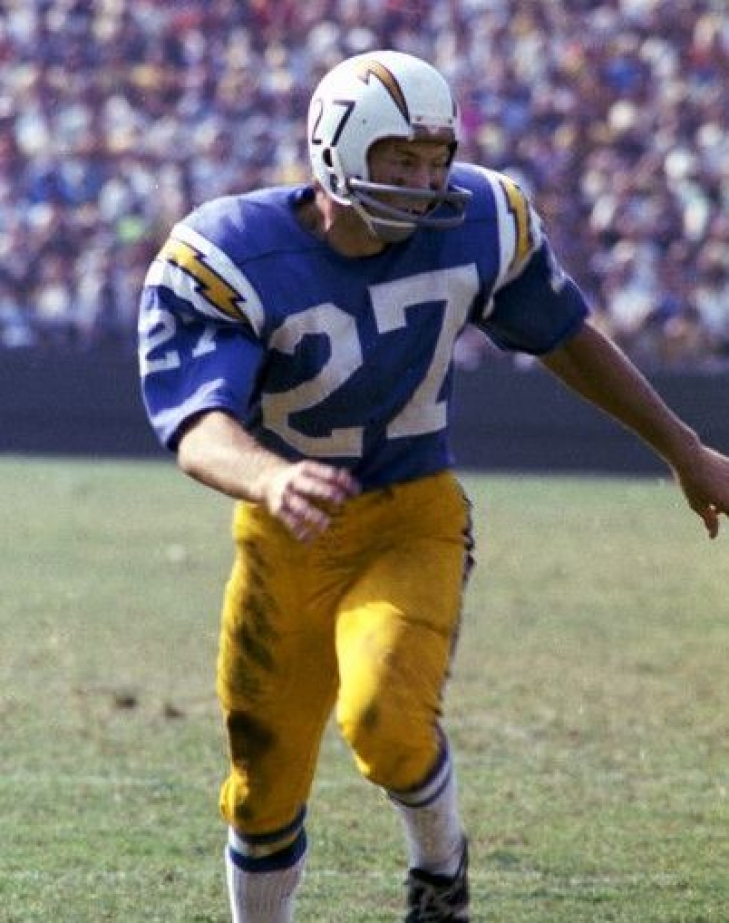
Gary Garrison stayed close to home after starring at San Diego State, choosing the local Chargers over the Philadelphia Eagles after being selected in both the AFL and NFL drafts. He joined the team for the 1966 season and immediately carved out a role as a serious threat in Sid Gillman’s innovative passing attack, catching 46 passes for 642 yards as a rookie.
Over the next decade, he became one of the Chargers’ steadiest receivers, finishing among the league’s top ten in receiving yards in seven different seasons and posting two 1,000-yard campaigns. His best years came in 1968 (1,103 yards and 10 touchdowns) and 1970 (1,006 yards and 12 scores). Nicknamed “The Ghost” for the way he slipped into open spaces and ran precise routes, Garrison averaged nearly 19 yards per catch across his Chargers career. Gillman praised his work ethic, acceleration, and ability to create separation, calling him one of the finest receivers he had coached.
Garrison’s time in San Diego ended after the 1976 season, and he tallied 404 receptions for 7,533 yards and 58 touchdowns. He earned an AFL All-Star selection and four Pro Bowl nods (1968, 1970–1972), serving as a reliable complement to stars like Lance Alworth before becoming a primary target himself. Even as the offense evolved in the early 1970s, he continued producing big plays until injuries and age slowed him in his final years with the club.
The franchise later inducted him into its Hall of Fame in 1985, recognizing his long stretch of consistent production as a local product who helped define the Chargers’ passing game for more than a decade.
15. Doug Wilkerson
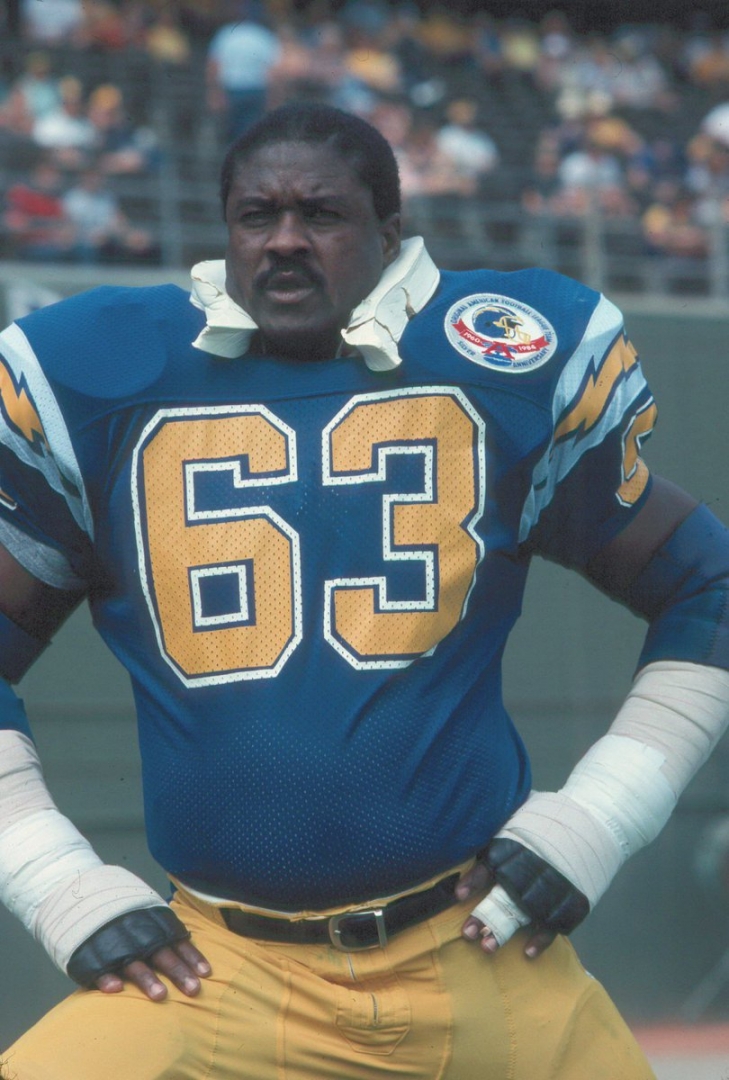
Doug Wilkerson arrived in San Diego before the 1971 season via a trade from the Houston Oilers, sent in exchange for tight end Willie Frazier. Frazier had been a two-time AFL All-Star for the Chargers, but his best years were behind him. Wilkerson, who had spent his rookie year mostly as a defensive end and backup, settled in as the starting left guard and quickly became a fixture.
For the next fourteen seasons, he anchored the interior of the line and rarely missed a game. He started all 195 of his appearances with the Chargers, missing only a handful of contests across the entire stretch. Athletic and mobile for a 6-foot-3, 250-pound guard—he had been timed at 9.8 in the 100 as a college player—Wilkerson excelled at pulling on sweeps, sustaining blocks at the second level, and providing the pocket stability that let Dan Fouts operate. Once Don Coryell’s high-powered passing attack took hold in the late 1970s, Wilkerson’s combination of quickness, leverage, and intensity helped protect one of the league’s most prolific offenses while still contributing to a strong running game.
His peak recognition came from 1980 through 1982, when he earned three straight Pro Bowl selections and a First-Team All-Pro honor in 1982. He served as a team captain for five years and was frequently named the Chargers’ Lineman of the Year. During that stretch, the offense ranked among the league’s best in scoring, and Wilkerson’s reliability was a constant as San Diego made multiple playoff runs and reached back-to-back AFC Championship Games.
Wilkerson retired after the 1984 season. The franchise later inducted him into its Hall of Fame in 2000 and placed him on both the 40th and 50th Anniversary Teams, recognizing the long, steady tenure of a guard who had helped define the Air Coryell era from the inside.
43. Billy Shields

Billy Shields spent most of his NFL career with the San Diego Chargers after they selected the Georgia Tech tackle in the sixth round of the 1975 draft. He played mostly as a backup as a rookie, then won the starting left tackle job the following year and held it through the prime of the Air Coryell era. From 1976 through 1983, he was the consistent presence on Dan Fouts’ blind side, giving the quarterback the time he needed to survey the field and launch the deep throws that defined those offenses. He never made a Pro Bowl, but he posted three seasons with an Approximate Value of at least 10 and rarely missed games, anchoring an offensive line that helped the Chargers become one of the league’s most productive passing attacks.
He was a tall, long-armed tackle who relied more on technique and positioning than pure athleticism, and he held up well enough against the pass rushers of the era to keep Fouts upright through the team’s most explosive seasons. The Chargers reached the playoffs multiple times during his run, and Shields helped protect the franchise’s signature air attack. He remained a starter through the 1983 season before a contract dispute led to his departure.
After leaving San Diego, he played brief stints with the 49ers, Chiefs, and Jets in 1984 and 1985. Over his nine years with the Chargers, he started most of his games and provided the steady left-tackle play that let Fouts and the rest of the offense operate at a high level for nearly a decade.
He was later inducted into the Georgia Tech Hall of Fame, but he never received the same recognition from the Chargers. Still, the sixth-round pick who locked down left tackle for most of the Air Coryell years remains one of the more durable and reliable offensive linemen the franchise had in that era.
8. Antonio Gates
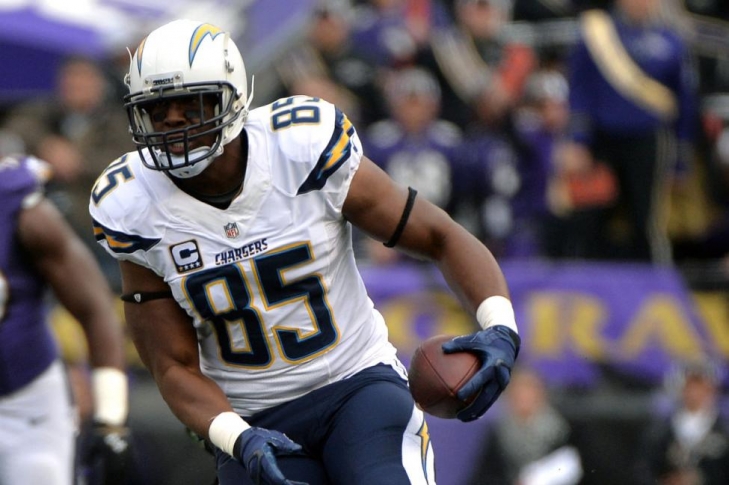
Antonio Gates had a good career a Kent State, but it did not result in any NFL team drafting him in 2003. The San Diego Chargers signed him, and he would wear the lightning bolt on his helmet for the entirety of his 16-year career.
27. Wes Chandler

Wes Chandler joined the Chargers early in the 1981 season via a trade from the New Orleans Saints and quickly fit into the high-powered offense. In his final 12 games that year he caught 52 passes for 857 yards and five touchdowns, showing the speed and route-running that would make him a dangerous deep threat alongside Dan Fouts. He also made an immediate splash in the playoffs, including a 56-yard punt return for a touchdown in the famous “Epic in Miami” win over the Dolphins.
The following year, even though a strike cut the season to nine games, Chandler went off. In eight contests he led the NFL with 1,032 receiving yards and nine touchdowns, averaging a still-standing record 129 yards per game, and he earned First-Team All-Pro and Pro Bowl honors. One of the signature performances came against Cincinnati, when he hauled in 10 catches for 260 yards and two scores in a 50-34 shootout. He returned to the Pro Bowl in 1983, then had another big year in 1985 with career highs of 1,199 receiving yards and 10 touchdowns while earning a third Pro Bowl nod with the Chargers. He was the kind of receiver who could stretch the field vertically and still make tough catches over the middle when the defense tightened up.
After the 1987 season the Chargers dealt him to the San Francisco 49ers, where he played just four games before retiring. Across his seven years in San Diego he finished with 373 receptions for 6,132 yards and 41 touchdowns, production that placed him among the franchise’s all-time leaders in receiving.
The Chargers later inducted him into their Hall of Fame in 2001, recognizing the explosive wideout who had helped power the Air Coryell attack during some of its most productive seasons.
23. Gill Byrd

Gill Byrd arrived in San Diego as a first-round pick out of San Jose State in 1983 and spent his entire ten-year career with the Chargers. He started 146 of the 149 games he played, and the team moved him around the secondary like few other defensive backs of his era—he began as the starting left cornerback, shifted to strong safety in 1985, free safety in 1986, and right cornerback in 1987 before settling back on the left side in 1989. That kind of positional flexibility made him one of the most versatile defensive backs the franchise has ever had.
That final stretch turned out to be his best. From 1989 through 1992, he was a steady ballhawk, earning Pro Bowl nods in 1991 and 1992 and a Second-Team All-Pro selection in his last season. In 1989, he led all NFL cornerbacks with seven interceptions, and he posted seven picks again in 1990 before following it with six in 1991 and four more in 1992. Those four seasons alone accounted for 24 of his career interceptions, and he finished with double-digit Approximate Value in each of his final two years.
Byrd retired after the 1992 season. Across those ten years in San Diego, he finished with 42 interceptions and 546 return yards (including two touchdowns), both still franchise records, along with four fumble recoveries.
The Chargers later inducted him into their Hall of Fame in 1998, recognizing the defensive back who spent a decade covering every spot in the secondary and left as the franchise’s all-time interception leader.
5. Philip Rivers
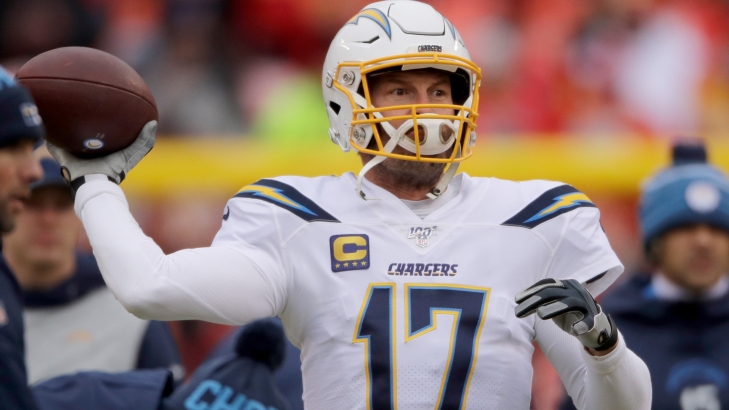
Philip Rivers was not the quarterback the San Diego Chargers originally set out to acquire. Holding the first overall pick in the 2004 NFL Draft, the franchise desperately wanted Eli Manning out of Ole Miss, but Peyton's younger brother made it clear he wouldn’t sign if the Bolts selected him. The situation ultimately became a massive win for San Diego: the front office orchestrated a draft-day trade with the New York Giants, acquiring North Carolina State's fiery star Philip Rivers—selected fourth overall—along with a draft-capital haul that helped lay the foundation for a dominant roster.
After spending his first two professional seasons learning from the sideline as Drew Brees’ backup, Rivers took over as the full-time starting quarterback in 2006 when Brees was allowed to sign with New Orleans. While Rivers may not have always commanded the same media spotlight as high-profile contemporaries like Tom Brady or Peyton Manning, he established himself as one of the league’s elite and most fiercely competitive signal-callers, proving to be a model of ironclad durability and consistent execution.
From the moment he earned the starting job in 2006 until his final season with the franchise in 2019, Rivers launched an incredible 14-year run of stability, earning eight Pro Bowl selections and topping the 4,000-yard passing mark in 11 different seasons. What made Rivers so remarkably dynamic in Southern California was his ability to lead the NFL in entirely different passing categories across different years—topping the league in touchdown passes in 2008 (34), passing yards in 2010 (4,710), and completions in 2015 (437).
When he was not leading the league outright, Rivers was virtually guaranteed to sit among the top five at his position across almost every efficiency and volume metric. Over his iconic run with the Bolts, he compiled:
- Six top-five seasons in completions
- Seven top-five seasons in passing yards
- Five top-five seasons in passing touchdowns
- Five top-five seasons in passer rating
Rivers steadily surpassed every major franchise passing record previously held by Hall of Famer Dan Fouts, including career completions, passing yards, and passing touchdowns. Though he was never able to deliver that elusive Super Bowl appearance to the fan base—often falling short in heartbreaking postseason battles—the faithful in San Diego and Los Angeles always knew the position was in elite, capable hands every single Sunday.
Rivers concluded his legendary Chargers tenure following the 2019 season, leaving behind a 123–101 regular-season starting record, 59,271 passing yards, and an exceptional 397-to-198 touchdown-to-interception ratio. While Dan Fouts holds a slightly higher legendary status in team history on many lists, the case for Rivers as the greatest quarterback in franchise history is undeniable—and one that was nearly made right here!
With the Bolts, Rivers had a 64.4% completion percentage, 59,271 passing yards, 397 passing touchdowns, and 198 interceptions.
3. Lance Alworth
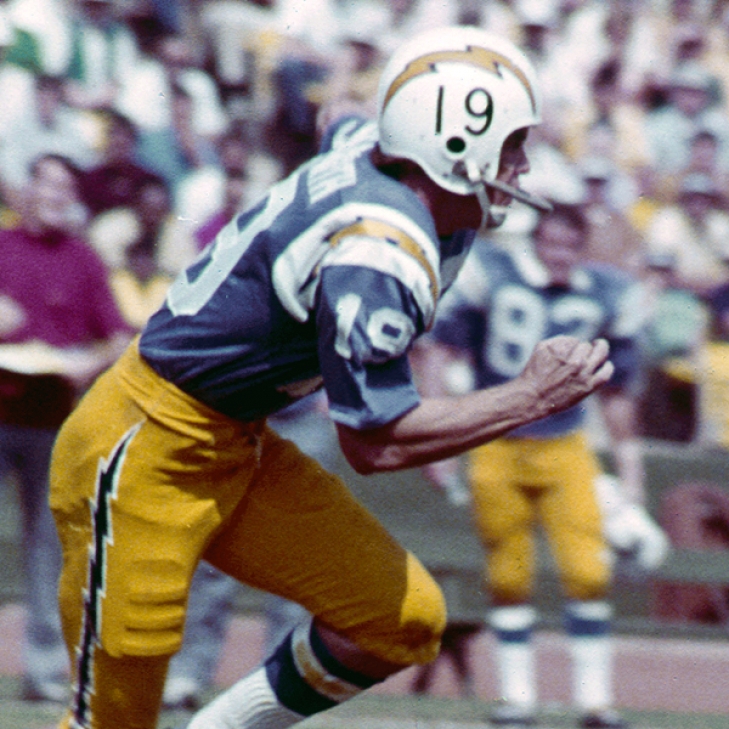
Selected in the first round of both the 1962 NFL Draft (8th overall by the San Francisco 49ers) and the 1962 AFL Draft (9th overall by the Oakland Raiders) out of Arkansas, Lance Alworth became the prize of a fierce cross-league bidding war. When the San Diego Chargers acquired his AFL rights in a trade that sent three players to Oakland, head coach Sid Gillman unlocked the ideal deep threat for his revolutionizing, vertical passing offense. Blessed with leap-frog verticality, smooth acceleration, and graceful body control, Alworth earned the nickname "Bambi"—a moniker that belied his lethal, game-breaking talent.
Injuries limited Alworth to just four games during his 1962 rookie campaign, but he erupted onto the national scene in 1963 as the centerpiece of Gillman's air attack. Pairing with star quarterback Tobin Rote, Alworth posted 61 receptions for 1,205 yards and 11 touchdowns, earning First-Team All-AFL honors and driving San Diego to the 1963 AFL Championship. In the title game blowout over the Boston Patriots, Alworth set the tone early with a 48-yard touchdown catch, securing the franchise's lone league championship.
That breakout season launched an extraordinary seven-year stretch (1963–1969) during which Alworth gained at least 1,000 receiving yards in every single campaign—a staggering feat in an era dominated by ground attacks. Between 1963 and 1968, he was named a First-Team All-AFL selection in six consecutive seasons. Alworth dominated league leaderboards throughout the decade, topping the AFL in receiving yards three times (1965, 1966, 1968), receiving touchdowns three times (1964, 1965, 1966), and receptions three times (1968, 1969, 1968).
Alworth's explosive downfield efficiency routinely turned short passes into long-distance scoring plays. He twice led the AFL in total yards from scrimmage (1965 and 1968), proving the most terrifying offensive skill player in the league's history. Between September 1962 and November 1969, Alworth caught a pass in 96 consecutive games, setting a professional football record at the time and laying the blueprint for modern wide receiver play.
Before the 1971 season, San Diego traded Alworth to the Dallas Cowboys in a blockbuster deal for three players. He played his final two professional seasons in Texas, providing veteran leadership and scoring a key touchdown in Dallas's Super Bowl VI victory over the Miami Dolphins. When he hung up his cleats following the 1972 season, his status as the AFL's signature aerial icon was firmly secured. He left the Chargers with 9584 yards and 81 touchdowns.
The Chargers legend quickly accumulated individual accolades after his career concluded. Named a consensus choice for the official AFL All-Time Team, Alworth was inducted into the Chargers Hall of Fame in 1977 as part of its second-ever class. In 1978, he made history by becoming the first player inducted into the Pro Football Hall of Fame primarily for his accomplishments in the American Football League. The franchise subsequently retired his iconic No. 19 jersey, and his enduring brilliance was recognized when he was named to both the NFL 75th Anniversary All-Time Team and the NFL 100th Anniversary All-Time Team.
20. Earl Faison
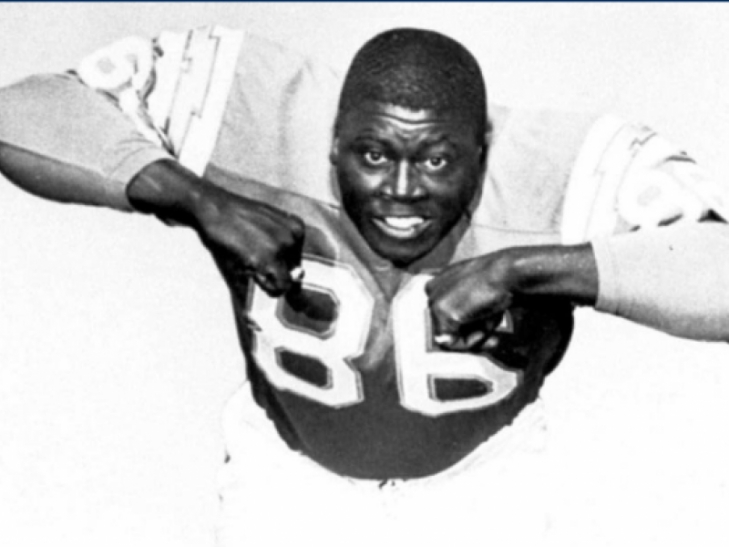
Earl Faison showed up in San Diego as a first-round pick in 1961 after an All-American career at Indiana, and he wasted no time making noise. At 6-foot-5 and around 260 pounds, he was big, strong, and surprisingly quick for the era. He won AFL Rookie of the Year and First-Team All-Pro honors right away, batting down passes, stuffing runs, and giving quarterbacks fits. Sid Gillman and the coaches loved him—Gillman later said there hadn’t been many better.
He spent the next several years as a key piece of the original Fearsome Foursome defensive line alongside guys like Ernie Ladd. The group was massive and disruptive, and Faison was the explosive end who could fight through double-teams and still get to the quarterback. He was an AFL All-Star in each of his five full seasons with the Chargers and earned First-Team All-Pro honors in four. In 1963, the defense helped the Chargers win the AFL Championship, and Faison was even named the defensive MVP of the All-Star Game that year. He also snagged five interceptions in San Diego and returned two for touchdowns—pretty rare for a defensive end.
Back trouble and contract issues piled up, and early in 1966 the Chargers traded him to the Houston Oilers. Across those five-plus seasons in San Diego he racked up roughly 30 unofficial sacks and those five interceptions, numbers that reflected a consistently disruptive presence on one of the AFL’s better defensive fronts.
The franchise later inducted him into its Hall of Fame in 1986, a fitting nod to the big, disruptive defensive end who had helped set the tone for those early Chargers teams.
2. LaDainian Tomlinson
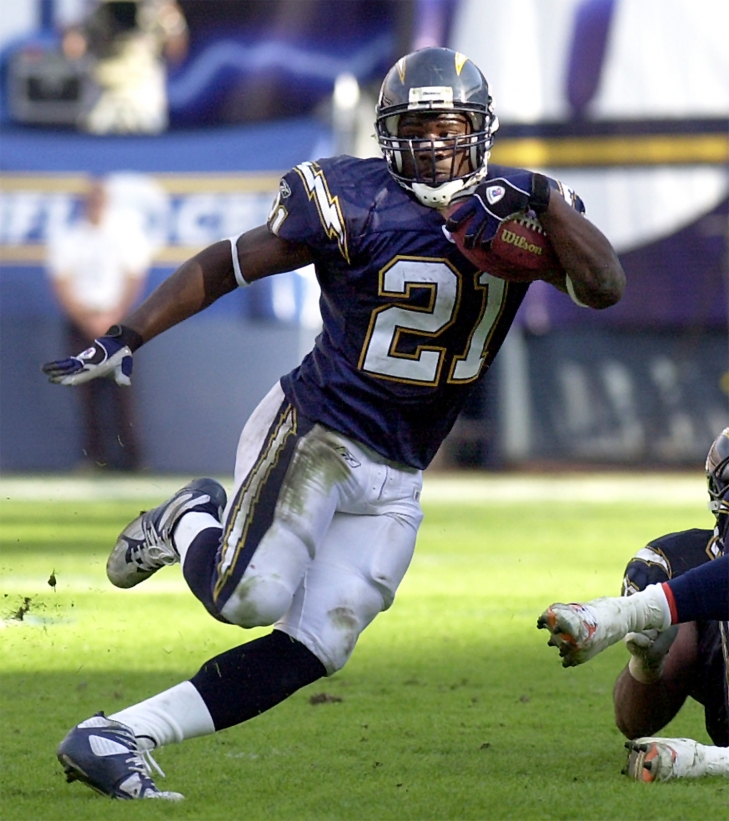
When the San Diego Chargers selected Texas Christian University consensus All-American LaDainian Tomlinson with the fifth overall pick in the 2001 NFL Draft, they were not merely securing a franchise running back; they were acquiring the defining face of the organization for the 21st century. Coming off a collegiate career in which he rushed for 5,263 yards and 54 touchdowns for the Horned Frogs, Tomlinson brought a rare combination of vision, stiff-arm power, lateral quickness, and pass-catching versatility to Southern California, stepping into the starting role as an immediate star.
Tomlinson's rookie campaign signaled the arrival of an elite dual-threat weapon. He finished ninth in the NFL with 1,236 rushing yards and 10 touchdowns on 339 carries, adding 59 receptions for 367 yards to earn PFWA All-Rookie Team honors. His seamless ability to contribute as both a downhill runner and a safety valve out of the backfield gave quarterback Doug Flutie and head coach Marty Schottenheimer a foundational cornerstone around which to build an offensive identity.
That impressive debut launched an unprecedented multi-year run of elite production. Tomlinson exploded for back-to-back 1,600-yard rushing seasons in 2002 and 2003, topping 2,100 yards from scrimmage in both campaigns. His 2003 season stood out as a masterclass in versatility: he rushed for 1,645 yards and 13 scores while hauling in a career-high 100 receptions for 725 yards and four touchdowns. That year, he led the NFL with 2,370 total yards from scrimmage, becoming the first player in league history to record 1,000 rushing yards and 100 catches in a single season.
As opposing defenses adjusted to his open-field threat, Tomlinson evolved into an unstoppable goal-line hammer. Although his pure rushing yardage totals dipped slightly to 1,335 in 2004 and 1,462 in 2005, his nose for the end zone surged. He led the NFL with 17 rushing touchdowns in 2004 and topped that with 18 in 2005, paired with another 1,832 yards from scrimmage. Across his first five professional seasons, Tomlinson proved impossible to neutralize, setting a floor of excellence that few backs in league history have ever matched.
The 2006 campaign elevated Tomlinson from an All-Pro contributor into the realm of single-season lore. In a year for the record books, he led the league with 1,815 rushing yards and set NFL single-season records with 28 rushing touchdowns and 31 total touchdowns from scrimmage (plus 186 total points scored). Behind his relentless scoring pace, San Diego stormed to a franchise-best 14–2 record. Tomlinson was rewarded with a sweep of the league's top individual hardware, capturing the NFL Most Valuable Player Award, AP Offensive Player of the Year, and the Bert Bell Award.
Simultaneously, Tomlinson's impact extended well beyond his stat lines and highlight-reel stiff-arms. Off the gridiron, his extensive philanthropic work through the Tomlinson's Touching Lives Foundation—supporting vulnerable families, education initiatives, and youth programs across San Diego and Texas—earned him the prestigious 2006 Walter Payton NFL Man of the Year Award (co-honored with Drew Brees). His character and athletic brilliance made him one of professional sports' most universally respected figures.
Though operating with an immense workload, Tomlinson maintained his crown as the league's top back in 2007. He captured his second consecutive NFL rushing title with 1,476 yards and once again led the league with 15 rushing touchdowns, powering San Diego to the AFC Championship Game. Over his final two seasons in navy and gold (2008–2009), he added another 1,840 rushing yards and 23 rushing touchdowns to his ledger before concluding his playing career with a two-year stint with the New York Jets.
Retiring after the 2011 season, Tomlinson was named to the NFL 2000s All-Decade Team as a top offensive player of his era. The Chargers honored him in November 2015 by inducting him into the Chargers Hall of Fame and retiring his No. 21 jersey. He was inducted into the Pro Football Hall of Fame in 2017 and later named to the NFL 100th Anniversary All-Time Team.
As a Charger, Tomlinson had 2,880 carries for 12,490 rushing yards, 138 rushing touchdowns, 530 receptions for 3,955 receiving yards, 15 receiving touchdowns, 16,445 yards from scrimmage, 153 total touchdowns, and seven passing touchdowns (on 8-of-12 passing).
