

12. Gil Hodges
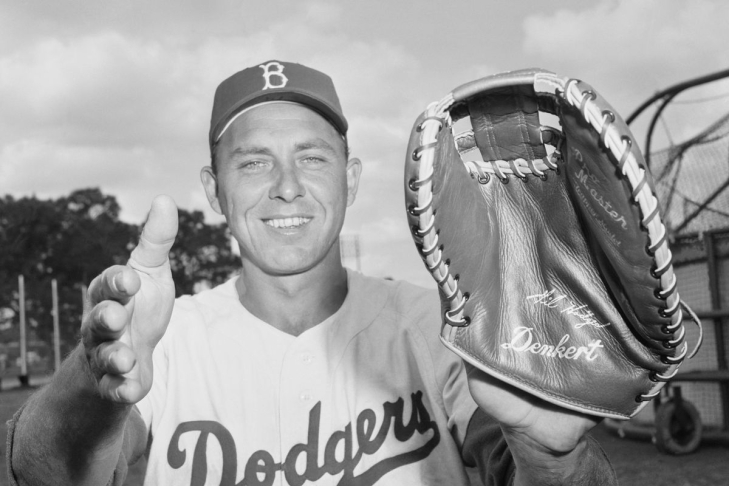
The beginning of Gil Hodges’s career was in Brooklyn in 1943 as a raw, talented catcher, but his journey was immediately interrupted by a two-year commitment to the U.S. Marine Corps during World War II. Returning in 1947, the same historic season Jackie Robinson broke the color barrier, Hodges eventually shifted from behind the plate to first base, a tactical move that solidified the "Boys of Summer" infield.
Hodges enjoyed a rapid evolution from a utility player to a premier specialized slugger. By 1949, Hodges demonstrated a high-frequency ability to drive in runs, beginning a staggering run of seven consecutive 100-RBI seasons. He was a high-stakes contributor during the most competitive era of the Brooklyn-Yankees rivalry, providing a high-quality floor of protection for Robinson and Duke Snider.
During the early 1950s, he authored two seasons with at least 40 home runs in 1951 and 1954. He showcased mastery of first base, becoming a defensive standard for his generation. When the Gold Glove was created in 1957, Hodges earned the first three ever awarded to a National League first baseman, highlighting high-quality efficiency ahead of its time. At his peak, he was a perennial All-Star and MVP contender, receiving votes in nine seasons.
In the 1955 World Series, after years of heartbreak against the Yankees, Hodges provided the specialized heroics the borough had been praying for. In the deciding Game 7, he drove in both runs of a 2-0 victory and squeezed the final out at first base to secure the only championship in Brooklyn history.
The 1958 move to Los Angeles saw Hodges remain a high-stakes veteran leader for a young, West Coast squad. He showed a specialized brand of longevity by helping the Dodgers capture the 1959 World Series title, batting a staggering .391 against the White Sox. While his power numbers began to dip in his final years, he remained a professional mainstay until he was taken by the New York Mets in the 1962 expansion draft. He left behind a statistical footprint as the Dodgers' all-time leader in several categories at the time, finishing his run in Blue with 361 home runs and 1,254 RBIs.
Hodges was finally inducted into the Baseball Hall of Fame in 2022. The Dodgers subsequently retired his number 14, a final punctuation on a legacy that had seen him receive over 50 percent of the Hall of Fame ballot for eleven different years.
Major Update: Our Notinhalloffame Baseball List has been revised
A few weeks ago, the Baseball Hall of Fame announced their 2020 Baseball Hall of Fame Class. The result was that Derek Jeter (on his first ballot), and Larry Walker (on his tenth and final) were chosen to enter Cooperstown. The two will join former Catcher, Ted Simmons, who was elected by the Veteran’s Committee. All three of those former players were ranked in the top ten, and have been removed from the list.
For the first time since we began this list in 2010, there is no new entry in our top 15. Actually, there is no new entry in the top 50. This should assist in clearing any existing backlog.
The new top ten is:
1A. Pete Rose. Following the bombshell that was the Astros sign-stealing scandal, Rose again lobbied for reinstatement in the Majors. His reasoning was that since no Astros player was punished, that logic should transfer to his own situation. That likely won’t happen, but he did remain in the news as President Trump also said he should be in the Hall of Fame. Since he is ineligible, he has the “1A” designation.
1B. “Shoeless” Joe Jackson. Like Rose, Jackson was banned from baseball, which is now 100 years old. Jackson was banned for his (alleged) participation in the 1919 Black Sox scandal where players were paid by gamblers to throw games in the World Series to the Cincinnati Reds. Jackson was a Hall of Fame worthy player, but as such his estate has to settle for his “1B” rank.
1C. Roger Clemens. Unlike Rose and Jackson, Clemens is Hall of Fame eligible, but the PED stain has kept him out thus far. He has two more years left and a big mountain to climb, but what looked impossible a few years ago, could be attainable.
2. Barry Bonds. Ditto for Bonds, and the only reason he is behind the “Rocket”, is because he has a slightly lower vote total than anyone than Clemens. The all-time Home Run king is in the same boat as Clemens, as they both are in the low 60s in voting with two years left of eligibility.
3. Lou Whitaker. Playing his entire career with the Detroit Tigers, Lou Whitaker was only on the Hall of Fame ballot for one year, but has appeared on the Veteran’s Committee Ballot. There is still a good chance that he could enter via that route and join his double play partner, Alan Trammell, who also had to wait for a Veteran’s Committee admission to Cooperstown.
4. Bill Dahlen. “Bad” Bill Dahlen has been a Veteran’s Committee Nominee before, and could be again. The surly Shortstop was a defensive gem, a World Series Champion with the Giants in 1905, and is still in the top 50 in bWAR for Position Players.
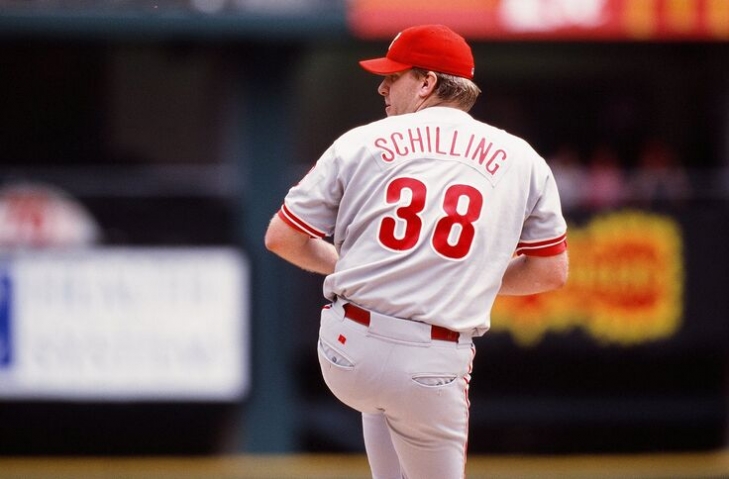
5. Curt Schilling. Had it not been for the mouth, political views and Twitter account of Curt Schilling, he would likely already have been inducted by now. As it stands, he is close with a recent tally of 70% on his eight ballot. Schilling has been on his best behavior in the last year, and with the weakest ballot in memory, he will enter Cooperstown in 2021 if he keeps his nose clean.
6. Manny Ramirez. Unlike Barry Bonds and Roger Clemens, Manny Ramirez WAS caught using PEDs and did so when the Baseball Player’s Union had an agreement with Major League Baseball. Ramirez has approached 30% in the last ballot, and statistically he belongs, but induction is unlikely as of this writing.
7. Todd Helton. Helton could follow Larry Walker into the Baseball Hall of Fame, and his Hall of Fame support approached nearly 30% on his second year on the ballot. Helton is definitely on the right trajectory.
8. Gil Hodges. This might surprise you, but one of the most debated players on our baseball list is Hodges. This is the player who has the most accumulated votes that never got inducted, and his name is synonymous with Dodgers lore.
9. Tommy John. Tommy John Surgery is actually represented in the Baseball Hall of Fame, but John himself is not. He has 288 Wins and 2,245 Strikeouts and he will definitely appear in a future Veteran’s Committee ballot.
10. Scott Rolen. Rolen jumped from 17.2% to 35.3% on his third year of eligibility, and while he was not a Colorado Rockie like Todd Helton, he is the one called the “New Larry Walker” based on belief that he will methodically work his way into Cooperstown. We agree with that assessment.
As you can see, there are no new entries in the top ten. There are actually, nobody new in the top fifty. The only two new entries are Mark Buehrle at #74, and Tim Hudson at #101.
This brings a unique opportunity for those who are on the 2021 ballot as the returning nominees will not be looking to be “slotted” below anyone new.
We are in the preliminary process of expanding our list to 300.
You know what we want you to do!
Take a look, and if you haven’t done so already, cast your vote and offer your opinion!
Awards = HOF? Part Twenty-Four: Gold Glove First Base
Needless to say, different awards in different sports yield hall of fame potential. In basketball, the team sport with the least amount of players on a roster, the dividend for greatness much higher. In baseball, it is not as much as a great individual season does not have the same impact.
We are now taking a look at the Gold Glove Award, given annually to the best defensive player in MLB in each respective position.
