


Committee Chairman
The University of Louisville announces the 2021 HOF Class
Regular visitors of Notinhalloffame.com know that we are slowly working on the top 50 of every major team in the NHL, NBA, NFL and MLB. Once that is done, we intend to look at how each team honor their past players, coaches and executives. As such, it is news to us that the University of Louisville has announced their Athletic Hall of Fame Class of 2021.
There are six new members of the UL HOF Class, who are slated to be inducted on October 22.
Harry Douglas, Football: 2004-07: Playing at Wide Receiver, Douglas is second all-time in Cardinals history in Receiving Yards (2,924). He would later play nine years in the NFL with Atlanta and Tennessee.
Elvis Dumervil, Football: 2002-05: Dumerville is second all-time in school history in Sacks (32), and he won the Bronco Nagurski Award and Ted Hendricks Award in 2005. He would go on to play for the Denver Broncos, where he went to four Pro Bowls.
Bergan Foley, Women’s Lacrosse: 2008-11. Foley holds the Cardinal record for Goals in a single season (78), and her 265 places her second all-time.
Joanna Haig, Women’s Soccer: 2006-07. Haig has a GAA of .48 with 20 Shutouts as the Louisville Goalie.
Logan Johnson, Baseball: 2004-07. Johnson played at Second Base, and he is the school leader in Doubles. He helped bring the Cardinals to their first College World Series.
Melissa Roth. Softball: 2007-10. Roth played at Catcher, and her squad won 157 Games while she played. Roth brought Louisville to four Regional Appearances, and she was the 2009 Big East Player of the Year.
We here at Notinhalloffame.com would like to congratulate the impending members of the University of Louisville Athletic Class of 2021.
23. Kathy Mattea
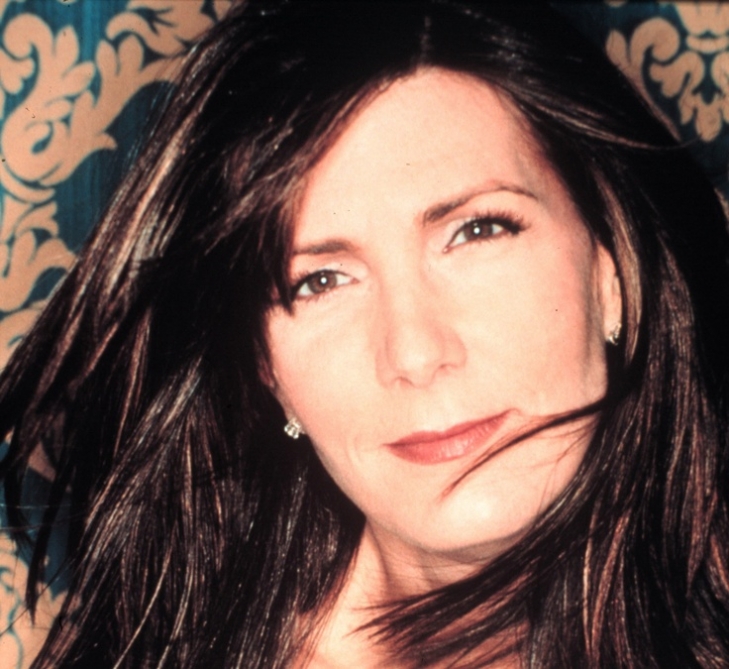
As with a lot of other people on this list, Kathy began singing by being a part of her parents’ church choir. She joined a bluegrass band while in University, which she says helped to shape her sound and roots as an artist. After dropping out of school, she moved to Nashville. She took odd jobs while trying to make her way in the business: waitress, secretary, and tour guide at the Hall Of Fame itself. Signing her record contract in 1983, it took a few years for her radio singles to start taking off. Throughout her song catalogue, she enjoyed trying out some different sounds like honky-tonk, country-pop, bluegrass, and even Celtic ballads. Being loved by fans and critics alike, she was able to have a decade of radio hits, get 15 CMA nominations/8 Grammy nominations, and continues to record music today. After working at the Hall Of Fame, could she eventually get a plaque on the wall someday?
14. Darnell Nurse

After the Edmonton Oilers used their First Round (7th Overall) Pick in 2013, the squad allowed their highly touted Defenseman, Darnell Nurse, to stay in the OHL with Sault Ste. Marie. After a year in the AHL, Nurse was ready to be promoted to the NHL.
The Oilers “nursed” the Defenseman along, limiting his playing time, but keeping him on the roster to gain experience. With imposing size and speed, Nurse’s early years were focused on the defensive side, but each year his offensive skill set improved.
In 2020/21, Nurse had his breakout campaign, though it was vastly underreported. Finishing seventh in Norris voting, Nurse posted 36 Points, his third consecutive 30-plus season, but he lit the lamp 16 times, 15 of which were on even strength. Nurse led the NHL in Defensive Point Shares and had a stellar Plus/Minus of +27. In 2022-23, Nurse had his best offensive year, with a personal best of 43 Points, and since then, he has been a defensive anchor on an Oilers squad that has gone to two straight Stanley Cup Finals.
Nurse is poised to rise even higher on this list, as his potential has now been realized.
26. Mary Chapin Carpenter
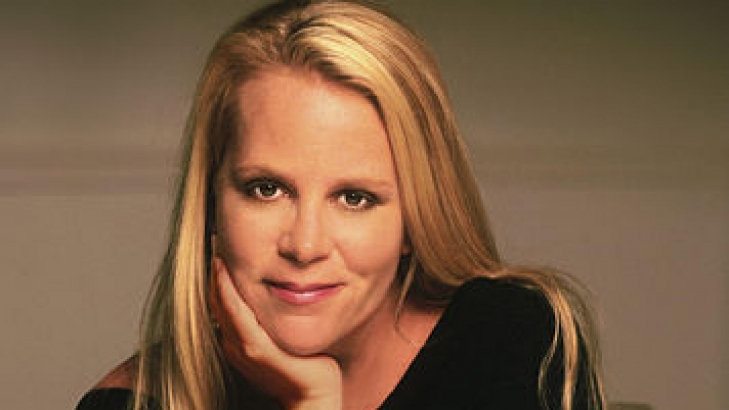
After being born in New Jersey and living in Japan for a couple years, her family settled in Washington D.C. and Mary had a regular suburban high school experience there. Although she enjoyed playing music, she never considered it as a career option. She would just play a couple gigs around her area and got a University degree in American Civilization. Once she got more involved in the Washington music scene, she met John Jennings (who would go on to be a friend and producer for her). Once John convinced her to play her original songs instead of covers, it would only be a couple years until she got a recording contract with Columbia. Her first album got some play on small college stations, but once Columbia advertised her as a country artist, that is when popularity came for her. She enjoyed a run of successful songs, in which she incorporated various sounds and unique lyrics. Once her radio career winded-down, she switched her musical style from radio-friendly tunes to a more calm and political direction. Her variety of work has gained her 5 Grammy awards and 17 Grammy nominations, as well as 2 ACM award wins and 2 CMA award wins.
