


Committee Chairman
2. Crystal Gayle
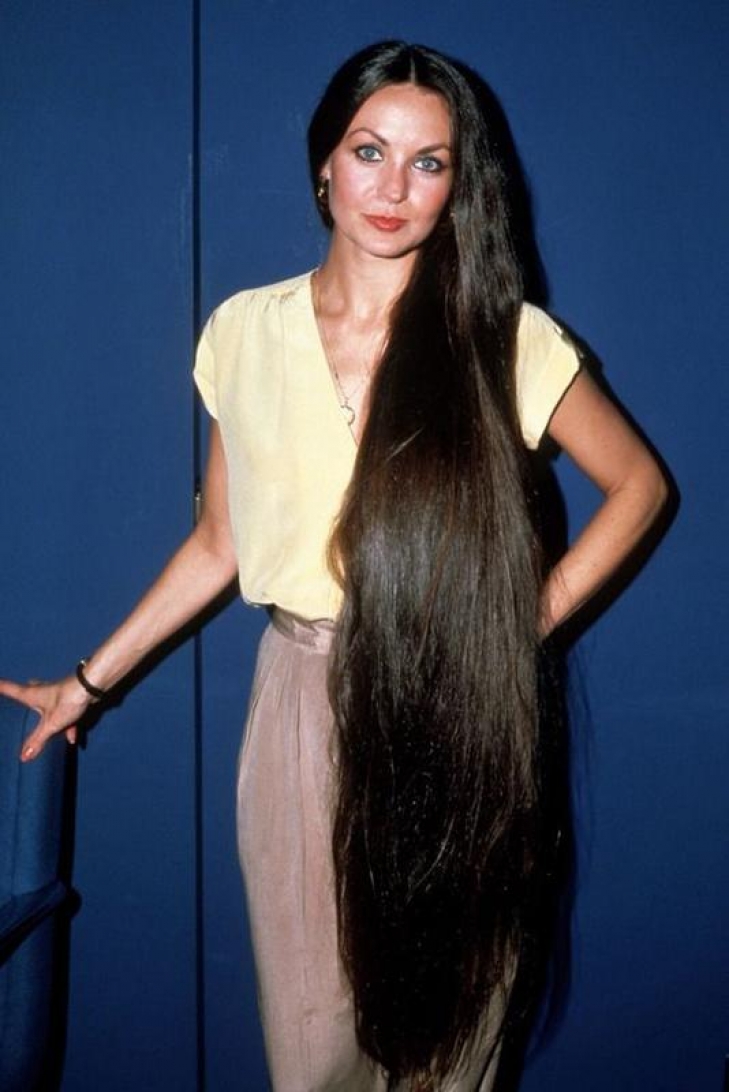
Crystal got her musical inspiration very early in life, since she is one of the many younger siblings of the legendary Loretta Lynn. She began her singing career in the 1960’s as a background singer in Loretta’s band, and even got to replace her sister for one performance at the Grand Ole Opry when Loretta got sick. Once Crystal graduated high school in 1970, she was signed to Decca records, the label her sister was on. Crystal had some small success on the label by sounding very similar to Loretta, but not enough success to make a dent. Wanting to try something new, she signed a new contract and went off in a different musical direction. This decision allowed her to become one of the most successful country-pop crossover artists in history. In 1977, Crystal released what would become her signature song “Don’t It Make My Brown Eyes Blue”. It became a worldwide smash single, it won Crystal a Grammy award, it helped it’s album go platinum and was recognized as one of the top ten most played songs of the 20th century. After success like that, Crystal continued to have hits until the late 1980’s. Once her radio career wrapped up, Crystal had been having hits for over a decade, she was nominated for 11 Grammy awards, and is one of the most successful female artists in the history of country music.
11. Linda Ronstadt
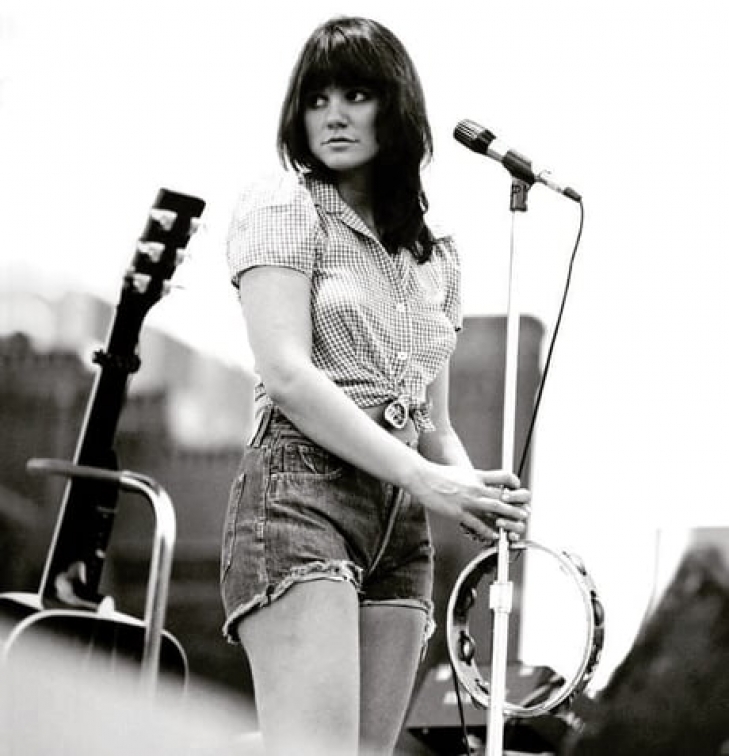
Like various other artists on this list, Linda was known for recording in multiple different genres and multiple different styles across her prolific career. But she did so much within the country genre that she would be very deserving to get an induction in the Country Music Hall Of Fame. Growing up in Tucson where her parents surrounded her with a variety of music sounds in their house, she moved to Los Angeles in 1964 with two of her friends. The three of them created a folk-rock band called The Stone Poneys which was signed to Capitol Records. After their trio broke up, she released her first solo album, which has been called the first alt-country album by a female recording artist. Even though she was firmly in the L.A. folk-rock scene, touring with acts like Neil Young and The Doors, it still took a couple of years before she began getting a string of hits. In 1974, she released what is considered to be a masterpiece album; “Heart Like A Wheel”. She got a couple pop hits and a couple country hits off of it. From there, she would firmly stay in the pop realm for more than a decade. On the country side, she would get a handful of more hit songs, especially when she teamed up with Emmylou Harris and Dolly Parton (two legendary ladies already in the Country Music Hall Of Fame) in the 1980’s to create “Trio”, a super-group of talent. Add these accomplishments on top of the millions of records she was selling, the country music scene that she was opening to a mainstream audience, and the underappreciated songwriters that she was helping to showcase, and you begin to see why Linda Ronstadt deserves a spot in the Hall.
6. Maddox Brothers & Rose
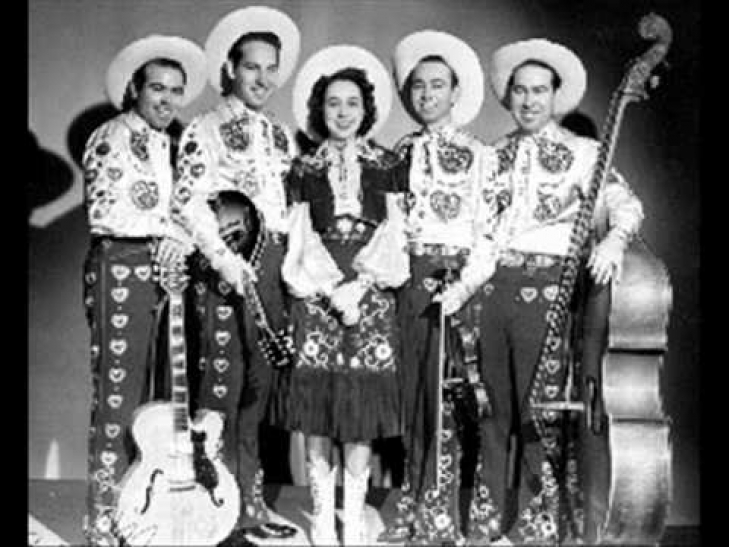
In the mid-1930s, Fred Maddox got tired of picking fruit in the migrant camps and gathered four of his six siblings together (brothers Cliff, Cal, and Don and 11-year-old sister Rose) to form a musical group. After Fred was able to get a radio spot for the group, they began traveling around California’s barns and festivals using the slogan “America’s Most Colorful Hillbilly Band”. The slogan referred to their high-energy shows and sometimes risqué lyrics. Their popularity was beginning to pick up in the California area when a majority of the band got drafted to fight in World War 2. Once the war was completed, the five siblings got back together and things continued to heat up. They made their first record label recordings in 1946. Using electric mandolin and stand-up bass, combined with their high energy performances means that they were possibly the originators of the rockabilly sub-genre. Rose Maddox is also considered the first woman to sing country boogie. Continuing their hot streak, they signed with Columbia records in 1951. They were also a big touring act at that point, hitting up locations like the Louisiana Hayride and the Grand Ole Opry. By 1956, Rose made the decision to go solo and the rest of the group slowly faded away. With them having helped originate a huge sub-genre in country music history on top of their many other accomplishments, it would be a celebrated moment if they were chosen to the Country Music Hall Of Fame.
Our All-Time Top 50 Edmonton Oilers have been revised to reflect the last two seasons

Yes, we know that this is taking a while!
As many of you know, we here at Notinhalloffame.com are slowly generating the 50 of each major North American sports team. That being said, we have existing Top 50 lists out and we always consistently look to update them when we can and based on necessity. As such, we are very happy to present our pre-2021-22 revision of our top 50 Edmonton Oilers.
As for all of our top 50 players in hockey we look at the following:
1. Advanced Statistics.
2. Traditional statistics and how they finished in the NHL.
3. Playoff accomplishments.
4. Their overall impact on the team and other intangibles not reflected in a stat sheet.
Please note, that this is our first revision in in the last two years, and it has generated one new entry, and four elevations.
As always, we present our top five immediately, although there are no changes from our last list:
2. Mark Messier
3. Jari Kurri
4. Paul Coffey
5. Grant Fuhr
You can find the entire list here.
Connor McDavid, who won the Hart Trophy and Art Ross Trophy in 2021, moves from #11 to #6. He will likely overtake Fuhr and enter the top five soon.
Fellow Hart Trophy and Art Ross winner (2020), Leon Draisitl, rocketed from #20 to #9.
Center, Ryan Nugent-Hopkins, moved up from #22 to #19.
Defenseman, Darnell Nurse, debuts at #27.
Defenseman, Oscar Klefbom, climbed to #47 from #50.
We welcome your input and comments and as always, we thank you for your support.
