


Committee Chairman
The Hockey Hall of Fame selects six names for the Class of 2022
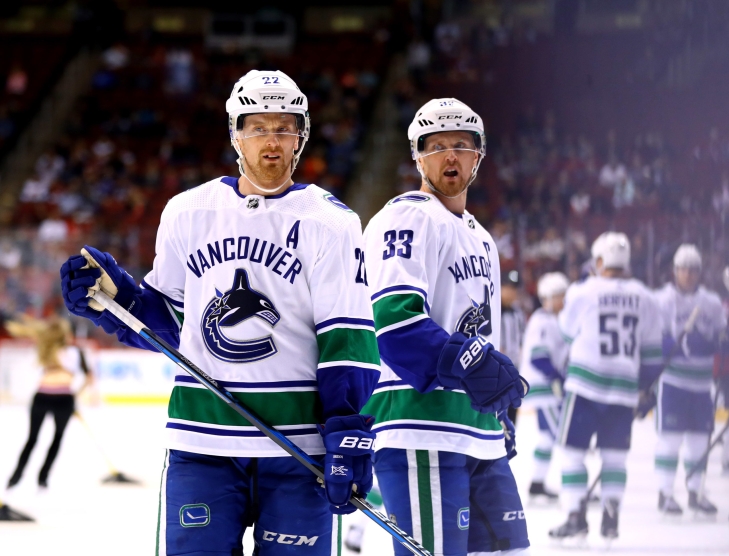
It is a huge day for us at Notinhalloffame.com, as the Hockey Hall of Fame has announced the Class of 2022.
It is especially welcoming, as the Hockey Hall elected to select nobody last year, due to the inability to have a proper ceremony due to COVID-19.
Let’s get right to it!
As we expected, the Sedin twins, Daniel and Henrik have been chosen for the Hockey Hall of Fame. From Sweden, and playing the entirety of their career with the Vancouver Canucks, both brothers may not have won a Stanley Cup, but they did not conclude their career with empty trophy cases.
Playing at Left Wing, Daniel Sedin won the 2011 Ted Lindsay Award and Art Ross Trophy, scoring 1,041 Points over his career. Henrik, who played at Center, also won the Art Ross (2010), while winning the coveted Hart Trophy the same year.
Internationally, the Sedins also led Sweden to Gold in the 2006 Olympics and secured Silver in 2014.
The Canucks are very well represented with this class, as their long time Goalie, Roberto Luongo, enters Toronto on their first year of the ballot. The winner of 489 Games (fourth overall) may not have won the Vezina, but was a Finalist three times. Internationally, Luongo was part of two Olympic Gold Medalist teams.
After five years of eligibility Daniel Alfredsson was chosen. The greatest player in Ottawa Senators history, Alfredsson won the 1995/96 Calder Trophy and would also capture the King Clancy and Mark Messier Leadership Award late in his career. He left the game with 1,157 Points, and also had Olympic Gold (2006) and Silver (2014).
The Hockey Hall inducted another female to their midst, with Riikka Sallinen, the first non-North American woman to be chosen. Representing Finland, Sallinen led Finland to three European Gold Medals, Silver in the Worlds, and had two Olympic Bronze Medals and six World Championship Bronze Medals.
Inducted as a builder is Herb Carnegie, who was one of the first black hockey players. Predating Willie O’Ree, it was alleged that Carnegie had the skills to play in the NHL in the 1940s and 1950s, but his race kept him from the opportunity.
What comes next?
We revise our Notinhalloffame Hockey List, based on your votes, eliminating those who have been chosen, those who become eligible in 2023 and adjust based on your votes and comments.
We here at Notinhalloffame.com would like to congratulate the newest members of the Hockey Hall of Fame.
RIP: High McElhenny
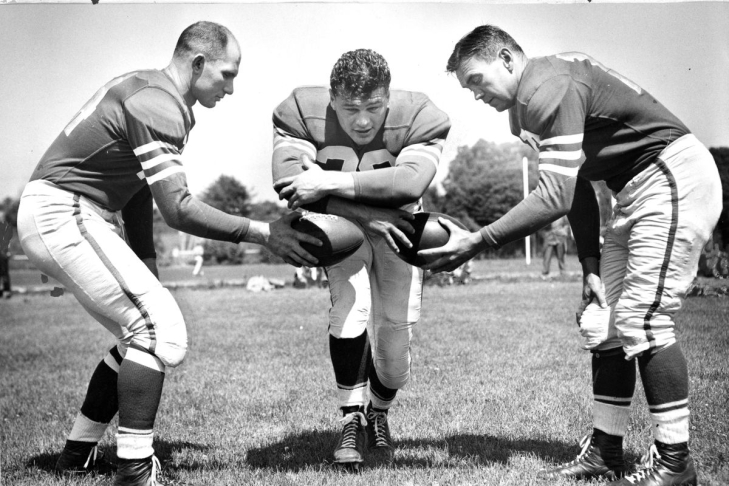
Pro Football lost a legend today.
Former San Francisco 49ers Halfback, Hugh McElhenny, passed away today at the age of 93 from natural causes.
A First Round Pick from Washington, McElhenny and he was the starting Right Halfback as a rookie. That season, and the one after, were First Team All-Pro and Pro Bowl worthy, and as he was also used as a returner, he led the NFL in All-Purpose Yards (1,731).
While McElhenny's rookie season was not duplicated, he had two other 1,400 APY years with San Francisco, and was a Pro Bowler on three different occasions, giving him five in total as a 49er. McElhenny's run with San Francisco ended after the 1960 season when the Minnesota Vikings chose him in the Expansion Draft. He added a sixth Pro Bowl in 1961 as a Viking, and he finished up his career in 1964 after also playing for the New York Giants and Detroit.
He had 8,528 Yards From Scrimmage with 58 Touchdowns over his 13-Year career.
McElhenny was named to the Pro Football Hall of Fame in 1970, was part of the first Niners Hall of Fame class in 2009. San Francisco also retired his number 39.
We here at Notinhalloffame.com would like to offer our condolences to the fans, friends and family of Hugh McElhenny.
Is Brenden Aaronson’s Leeds Move Good News for the USMNT?
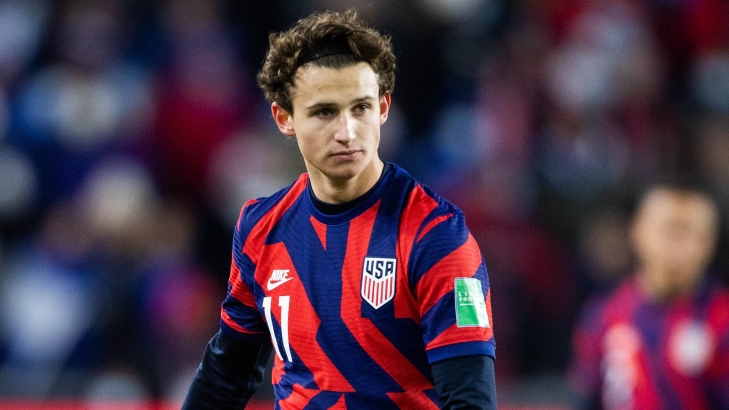
As soon as Leeds United secured Premier League safety on a dramatic final day of the soccer season, the West Yorkshire club announced the signing of long-term target Brenden Aaronson. The 21-year-old is expected to slot straight into the first team and breath some life into a misfiring attack.
This is not only a good move for the player, but it’s also a promising sign for the USA men’s national team. There are various new players gaining vital experience in Europe now, and this will help the side’s chances in the upcoming World Cup in Qatar.
The Latest USA Player to Grace the Premier League
There have been 48 USA internationals in the Premier League up to now, but it’s hard to think of many names that have set the division alight. The most notable player in recent years is Christian Pulisic, but his time with Chelsea has been plagued with injuries. When fit, however, he’s usually one of the first names on the team sheet under Thomas Tuchel.
Tim Howard and Brad Friedel are the most familiar faces to English soccer fans, and both spent over a decade in the English top tier. There’s also Clint Dempsey, who scored 50 goals for Fulham in 189 league appearances.
Aaronson is one of the latest players to cut their teeth in the MLS and then move to Europe to gain more experience. The Medford-born player spent a season and a half at Red Bull Salzburg, establishing himself as a first-team regular and cropping up with vital goals and assists in the Austrian Bundesliga and Champions League.
The promising soccer player drew the attention of Leeds because of his intense work rate and high-pressing style. His attributes were identified by former manager Marcelo Bielsa, and he also fits perfectly into Jesse Marsch’s system. He appears to be an upgrade on all the players that Leeds currently have in his position and he could have an extremely bright future ahead of him.
Aaronson’s Signing Likely to Allure More American Fans to Leeds
Aaronson’s move is likely to be beneficial from a commercial standpoint for Leeds and the USMNT. There’s no doubt that his and Marsch’s presence will draw more American fans to support Leeds. That will also be helped by the interest of the San Francisco 49ers, who currently own a 44 percent stake in the Elland Road club.
American soccer fans can already place outright bets on United’s fortunes in the upcoming season and can speculate over whether Aaronson’s arrival will help push them up the table. At the time of writing, Leeds can be found at around 4/1 to finish in the top half. Obviously, American odds in the moneyline format are preferred by American bettors, where they’d be transcribed as +400. This is arguably easier to understand, as they are written with a plus or a minus symbol. This indicates the amount you need to wager to win $100 or the amount you would win for every $100 staked. For example, if it’s +400 you win $400 if you stake $100. For gamers who are interested, the website explains this betting method and others.
Along with bringing more American eyes to Leeds and the Premier League, Aaronson’s move will increase interest in the USMNT among the West Yorkshire fanbase. These supporters didn’t have a reason to watch American soccer before but may now show a keener interest in the fortunes of their new player and his teammates.
Other American Players Making Waves in Europe
The great news for American soccer is that Aaronson isn’t the only up-and-coming player who is gaining vital experience in the top leagues of Europe. In the past, the USMNT was mainly made up of MLS stars. With the North American league notoriously being of a lower standard than European divisions, this has been detrimental to progress on the world stage. This could be set to change, though.
Tyler Adams is another well-known name in Europe, and the defensive midfielder has become a mainstay in the center of the park for RB Leipzig. Timothy Weah is one of the most exciting prospects for the future of American soccer, and he’s currently plying his trade for Lille in Ligue 1. There are plenty of others on different teams and top divisions too.
Leeds fans will be excited to see their new $30 million signing terrorizing defenses in the English top flight. If Aaronson can hit the ground running, he could usher in a new era at Elland Road and have the Whites looking up the league table. The player will also gain vital skills that he can bring to the world stage for the USMNT.
Rób Gronkowski Retires...Again
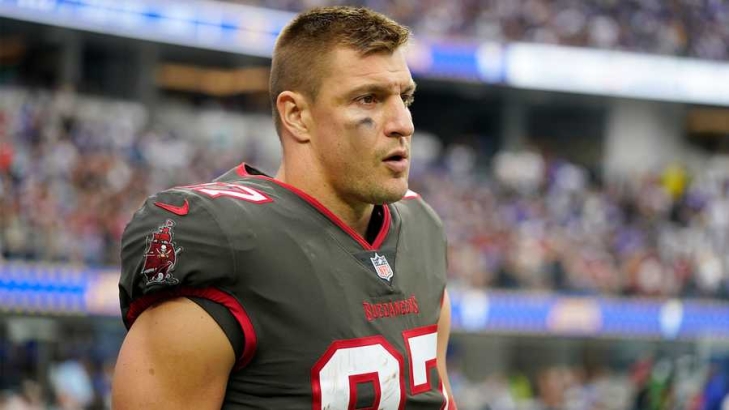
This is what we said three years ago
“Hmmmm.
This is not the first word that we would normally use in an article in regards to an NFL retirement but we are not positive that this one will stick.
New England Patriots Tight End Rob Gronkowski has announced that he is walking away from football after a nine-year career where he was one of the most popular players in the game.”
We were right as Gronkowski returned a year later to join his long-time friend and Quarterback, Tom Brady in Tampa Bay, where they continued to make history.
Drafted in the 2ndround out of the University of Arizona in 2010, Gronkowski had a good rookie season highlighted by a three-touchdown game against Pittsburgh. 2011 would see him named to the First Team All Pro roster where he led the NFL in Touchdown Receptions with a 1,327 Yard season. A Pro Bowl selection again in 2012 Gronk was injured for most of the 2013 campaign but returned with a vengeance in 2014 returning to the Pro Bowl, First Team All Pro roster and a 1,000 Yard plus season, which was punctuated by his first Super Bowl win. 2015 and 2107 would also see him named a First Team All Pro, and he captured two more Super Bowls with the Pats.
When he rejoined Brady, he secured his fourth Super Bowl, cementing him as one of the greatest Tight Ends of all-time. If you did not believe that, remember also that he was named to the NFL 100th Anniversary Team.
Gronkowski retires as a four-time Super Bowl Champion, five-time Pro Bowl and four-time First Team All Pro Selection. He had 621 Receptions for 9,286 Yards and 92 Touchdowns. Notably in the post season he had 98 Receptions for 1,389 Yards and 15 TDs.
His stats tell a large part of the story but it does not reflect that he was also one of the best blocking Tight Ends, which made him invaluable to the Patriots offense.
Gronkowski will be eligible for the Pro Football Hall of Fame in 2027 and he is a lock to enter on his first attempt.
We here at Notinhalloffame.com would like to thank “Gronk” for all of the football memories and we are confident that he will give us many off-field moments in the future.
