


Committee Chairman
NFL Futures: Super Bowl 57 Odds For 2023
Rosters for the upcoming 2022 season are set after the NFL Draft is over. Is there a favorite for Super Bowl 57 that has improved the most this offseason?
What are the chances of the Bengals or Rams returning to the Super Bowl next year? Would a return to the Super Bowl be possible for the Bills? We will share the odds and things to know for betting on the Super Bowl 57 futures in 2023.
NFL betting odds for the 2022-23 season are as follows.
How Do The 32 NFL Teams Fare Against Each Other In Super Bowl 57?
Since the NFL Draft has passed, it's easier to tell which teams will make a serious run in 2022. What teams are expected to win the big game this summer, and which squads could be sleepers?
Based on the odds provided by sportsbooks, here are the entire (average) odds for Super Bowl 57.
|
NFL Team |
Super Bowl 57 Odds |
|
Buffalo Bills |
+650 |
|
Tampa Bay Buccaneers |
+700 |
|
Los Angeles Rams |
+1000 |
|
Kansas City Chiefs |
+1000 |
|
Green Bay Packers |
+1000 |
|
San Francisco 49ers |
+1400 |
|
Denver Broncos |
+1600 |
|
Los Angeles Chargers |
+1600 |
|
Cleveland Browns |
+1700 |
|
Dallas Cowboys |
+1700 |
|
Cincinnati Bengals |
+1800 |
|
Baltimore Ravens |
+2200 |
|
Indianapolis Colts |
+2200 |
|
Arizona Cardinals |
+2500 |
|
Tennessee Titans |
+3000 |
|
Philadelphia Eagles |
+3500 |
|
Las Vegas Raiders |
+3500 |
|
Miami Dolphins |
+3500 |
|
New England Patriots |
+4000 |
|
Minnesota Vikings |
+4500 |
|
New Orleans Saints |
+5000 |
|
Washington Commanders |
+6500 |
|
Pittsburgh Steelers |
+6500 |
|
New York Giants |
+10000 |
|
New York Jets |
+10000 |
|
Chicago Bears |
+10000 |
|
Seattle Seahawks |
+10000 |
|
Carolina Panthers |
+10000 |
|
Jacksonville Jaguars |
+13000 |
|
Detroit Lions |
+15000 |
|
Atlanta Falcons |
+15000 |
|
Houston Texans |
+20000 |
How To Bet On The Super Bowl Futures
Which team will win the Super Bowl? It remains a big question for anyone and everyone who bets on the NFL, especially American online bettors. There is no simple answer to that question, but you can place a bet on NFL Future odds every Saturday and Sunday.
We'll walk you through how to bet on NFL futures.
- Create an account with your favorite online sportsbook.
- Select a bet: There are plenty to choose from year-round on the opening market: the oddsmakers set it after the previous season ends in January or even before.
- Make your bet. In the initial betting lines, you can find real value according to how the team was perceived after the recent season.
Super Bowl Odds
There are many Future Odds tickets associated with the Super Bowl, especially bets placed on the game's outcome on the first Sunday in February. Since future tickets are made official after the last game, the Super Bowl has become the most popular future betting market. Future markets include:
Coach of the Year
- MVP
- NFL Draft and plenty more.
Future bets are common throughout the season and get more challenging to find as the season goes, but there is always NFL betting action available.
The Super Bowl Odds market remains consistent after the starting odds are announced in late January or early February into the spring or second quarter of the year. During that time, the NFL holds the Draft, in which teams pick outstanding college football players.
While it's uncommon for newcomers to impact clubs instantly, fan confidence can lead to future wagers. The NFL Free Agency period begins concurrently with the draft, allowing players to switch teams under new contracts. These deals are pretty unpredictable on the Super Bowl betting market, and bettors frequently place wagers on clubs, mainly if they acquire a top position player such as a quarterback.
Following the spring and summer, the most Super Bowl Odds tickets are sold in August, right before the regular season begins. Most bettors have researched players, coaches, schedules, and so on by that point. Betting research is critical in analyzing NFL Future bets.
Our All-Time Top 50 Detroit Lions have been revised to reflect the 2021 Season.
Yes, we know that this is taking a while!
As many of you know, we here at Notinhalloffame.com are slowly generating the 50 of each major North American sports team. That being said, we have existing Top 50 lists out and we always consistently look to update them when we can and based on necessity. As such, we are very happy to present our post-2021 revision of our top 50 Detroit Lions.
As for all of our top 50 players in football we look at the following:
1. Advanced Statistics.
2. Traditional statistics and how they finished in the National Football League.
3. Playoff accomplishments.
4. Their overall impact on the team and other intangibles not reflected in a stat sheet.
Last year, the Lions again failed to make the playoffs and their poor 2021 led to zero changes in our top 50, nevertheless, the year is now factored in to the rankings.
As always, we present our top five:
1. Barry Sanders
2. Joe Schmidt
3. Bobby Layne
4. Dutch Clark
5. Lem Barney
You can find the entire list here.
We welcome your input and comments and as always, we thank you for your support.
10 NFL Hall Of Fame Coaches Of All Time
American football is a globally adored sport that is constantly bet on. You only have to look at NFL betting odds to verify this.
The Pro Football Hall of Fame is an elite club that only permits coaches and players who have best contributed to the game. There are many top-billed names to familiarize yourself with. Fortunately, we’ve narrowed down the most renowned coaches in NFL history on your behalf.
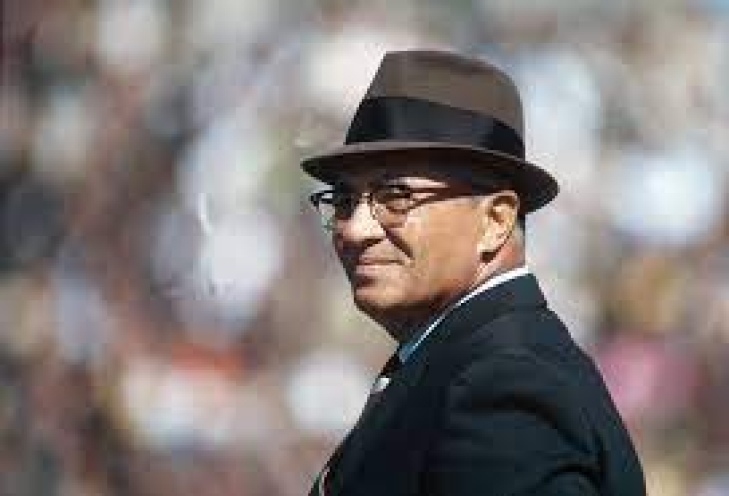
1. Vince Lombardi
Lombardi was a legendary five-time NFL champion best known for his incredible head coaching career as offensive coordinator for the New York Giants and head coach for the Washington Redskins (1969-1970) and the Green Day Packers between 1959 and 1967.
The Super Bowl “Vince Lombardi Trophy” is named in his honor. Lombardi was also a Hall of Fame inductee in 1971.
2. George Halas
Football would not be the same without “Papa Bear”. Halas was one of the co-founders of the NFL and was one of 17 initial inductees into the Pro Football Hall of Fame in 1963.
He also coached the Chicago Bears (originally the “Chicago Staleys”) from their debut in 1920 up until he died in 1983, helping them achieve 324 wins, two undefeated regular seasons, and six NFL titles.
3. Bill Belichick
Belichick rose to fame as the defensive coordinator of the New York Giants and as the Cleveland Browns’ head coach. However, it was his 2000 move to become the New England Patriots head coach that marked the golden age of his career.
He achieved an overall 105-40 record and managed to lead the Patriots to their first Super Bowl victory – with many others following soon after.
4. Bill WalshBill Walsh began his career coaching high school football but quickly climbed the ranks and made it to the NFL. Walsh was originally the San Diego Chargers’ quarterbacks’ coach, then moved to Stanford for two years, before taking over as San Francisco 49ers head coach in 1979.
Walsh took the 49ers to new heights throughout his time with the team, helping them to reach 102 wins, three NFC titles, and three Super Bowl championships. In 1993, he was inducted into the Hall of Fame thanks to his incredible service to the world of football.
5. Don Shula
Don Shula was an NFL coach for over three decades. He coached the Baltimore Colts but is most well-known for his role as Miami Dolphins head coach. Shula famously led the Dolphins to the single most perfect season in the history of the NFL, culminating in a victory at the 1972 Super Bowl.
Shula was admitted into the Pro Football Hall of Fame in 1997. This isn’t surprising considering his incredible career achievements including six ties, 328 wins, and 173 losses.
6. Paul Brown
Paul Brown coached the team at Ohio State University before he secured a role coaching Cleveland’s professional team, the Browns. He was inducted into the Hall of Fame in 1967.
Thanks to his coaching success in the All-American Football Conference, Paul Brown led his team to the NFL. The Browns were named after Brown himself and he went on to lead them to an amazing championship victory in their first season.
7. Joe Gibbs
Joe Gibbs served as a college and professional football assistant for 15 seasons before scoring his first job as head coach with the 1981 Washington Redskins.
He is the only head coach to have won three Super Bowls with different quarterbacks. Essentially, no coach in the Super Bowl era of the NFL has achieved more with less. The 1996 Pro Football Hall of Fame inductee deserves more recognition than he gets.
8. Tom LandryLandry was the founding head coach of the Dallas Cowboys during their first NFL season in 1960. During his 29-season tenure, he made the team into an NFL powerhouse, achieving 20 consecutive winning seasons and two Super Bowl victories.
Behind George Halas and Don Shula, Landry is one of the most decorated head coaches in NFL history. He was elected to the Hall of Fame in 1990.
9. Chuck NollInducted in 1993, Chuck Noll is regarded as one of the NFL’s greatest Hall of Fame coaches of all time. In the 1970s, Noll presided over the corpse of a franchise that was the Pittsburgh Steelers, and turned it into something with unmatched success.
Achieving four Super Bowl wins in six seasons, Noll restored pride to the team and also fathered what is now known as the Steelers Nation.
10. Bill Parcells
Parcells, or “the Big Tuna,” won two Super Bowls and made the NFL playoffs with multiple different teams throughout his 30-year career as a coach. This includes the New York Giants, New England Patriots, New York Jets, and the Dallas Cowboys.
He finished his career as vice president of operations for the Miami Dolphins. Parcells was enshrined in the Pro Football Hall of Fame in 2013 once his coaching career ended.
Summary
These are the top NFL Hall of Fame coaches of all time. There will likely be many more names added to this list as time goes on but the legacy these men have left in the sporting world is indisputable.
Our All-Time Top 50 Green Bay Packers have been revised to reflect the 2021 Season.
Yes, we know that this is taking a while!
As many of you know, we here at Notinhalloffame.com are slowly generating the 50 of each major North American sports team. That being said, we have existing Top 50 lists out and we always consistently look to update them when we can and based on necessity. As such, we are very happy to present our post-2021 revision of our top 50 Green Bay Packers.
As for all of our top 50 players in football we look at the following:
1. Advanced Statistics.
2. Traditional statistics and how they finished in the National Football League.
3. Playoff accomplishments.
4. Their overall impact on the team and other intangibles not reflected in a stat sheet.
Last year, Green Bay entered the playoffs as the top seed in the NFC, but were bounced in their first game.
As a result of last year, we have one elevation, and one new entry.
As always, we present our top five, which saw one significant change.
1. Brett Favre
3. Don Hutson
5. Bart Starr
You can find the entire list here.
Aaron Rodgers captured his fourth MVP, and while he did not win a second Super Bowl in 2021, he had an outstanding season, statistically positioning himself as the Quarterback who will eclipse Brett Favre. He moved from #3 to #2, overtaking first ballot Hall of Famer, Don Hutson.
Wide Receiver, Davante Adams, who was traded to Las Vegas in the off-season, debuts at #40, following his second straight First Team All-Pro.
We welcome your input and comments and as always, we thank you for your support.
