

Committee Chairman
8. Antonio Gates
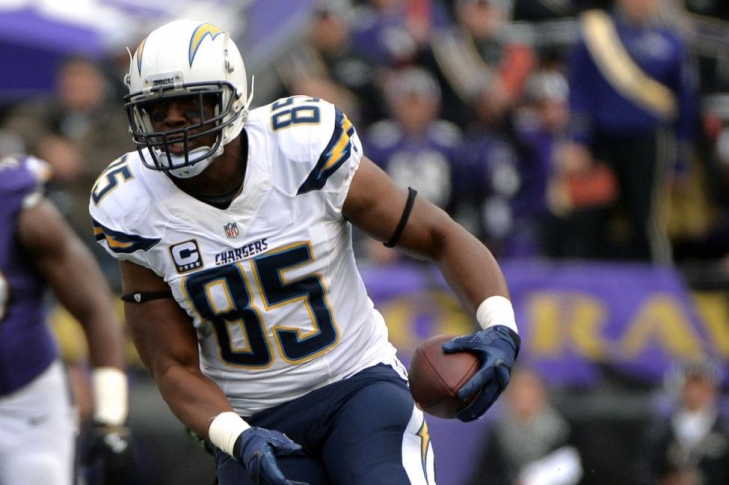
Antonio Gates had a good career a Kent State, but it did not result in any NFL team drafting him in 2003. The San Diego Chargers signed him, and he would wear the lightning bolt on his helmet for the entirety of his 16-year career.
7. Ron Mix
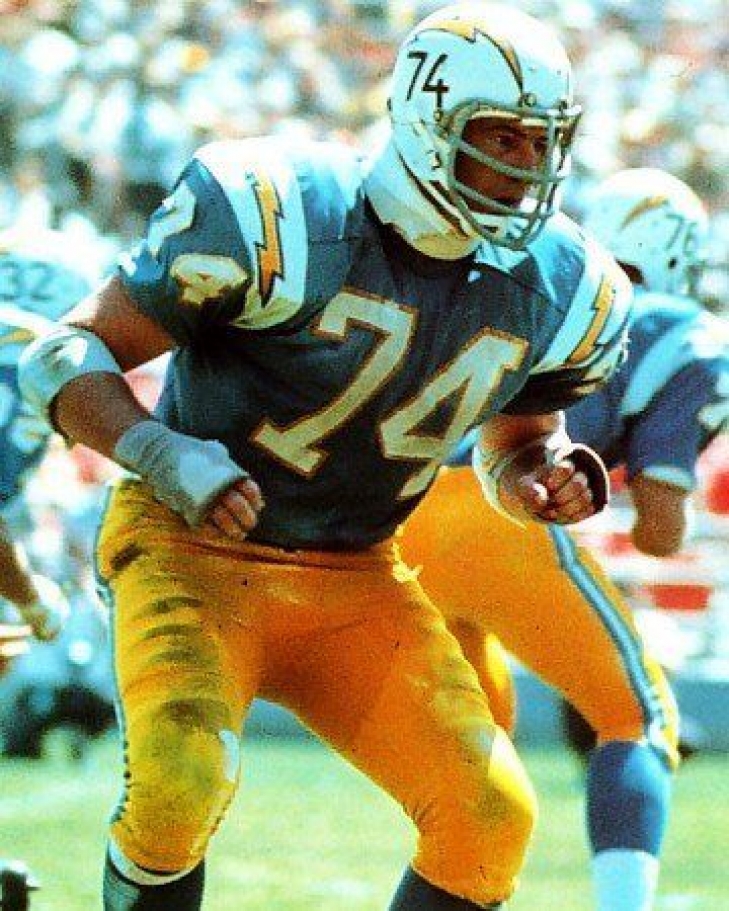
After a stellar collegiate career at USC, Ron Mix was an obvious first-round talent in the 1960 professional drafts. The NFL's Baltimore Colts selected the Los Angeles native tenth overall, but Mix preferred to remain on the West Coast close to home. Though the Boston Patriots originally held his AFL rights, a trade sent him to the newly formed Los Angeles Chargers, instantly establishing him as the cornerstone of the franchise's offensive line.
The move proved transformative for both player and franchise, as Mix built a case as the greatest offensive lineman in American Football League history. Primarily lining up at right tackle, Mix was named a First-Team All-AFL selection in each of his first nine professional seasons (1960–1968) and earned eight AFL All-Star nods. Renowned for his technique, mobility, and leverage, Mix protected his quarterbacks and opened running lanes with unmatched discipline—famously being penalized for holding only twice across his decade in San Diego.
Mix’s impact extended beyond his elite play on the field into the broader cultural landscape of the era. Prior to the 1965 AFL All-Star Game scheduled for New Orleans, he became the first white player to join Black teammates in a boycott of the host city, standing in firm solidarity against civil rights abuses, systemic discrimination, and segregation. His principled leadership helped force the AFL to relocate the game to Houston, marking a landmark moment in professional sports history.
After struggling through an injury-plagued 1969 campaign—his only subpar year in a Chargers uniform—Mix initially announced his retirement from football. He subsequently returned for one final professional season in 1971 with the rival Oakland Raiders, bringing his decorated 11-year playing career to a close after appearing in 12 games for Oakland.
Recognized as a top blocking force of his generation, Mix was named to the AFL All-Time Team and inducted into the Chargers Hall of Fame in 1978. In 1979, he reached gridiron immortality by being enshrined in the Pro Football Hall of Fame in Canton, becoming the second player mainly linked to the AFL to be inducted.
5. Philip Rivers
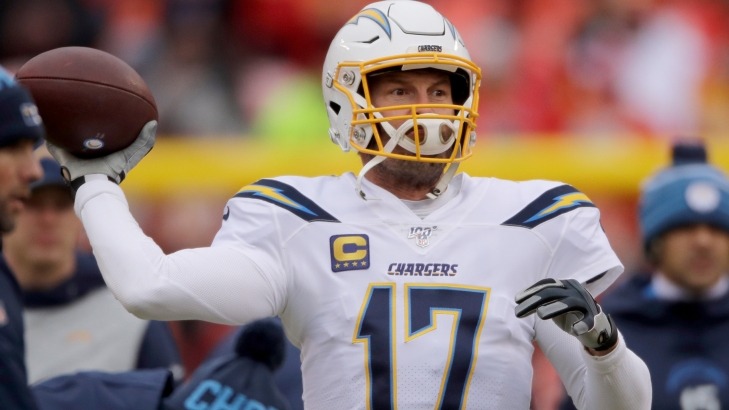
Philip Rivers was not the quarterback the San Diego Chargers originally set out to acquire. Holding the first overall pick in the 2004 NFL Draft, the franchise desperately wanted Eli Manning out of Ole Miss, but Peyton's younger brother made it clear he wouldn’t sign if the Bolts selected him. The situation ultimately became a massive win for San Diego: the front office orchestrated a draft-day trade with the New York Giants, acquiring North Carolina State's fiery star Philip Rivers—selected fourth overall—along with a draft-capital haul that helped lay the foundation for a dominant roster.
After spending his first two professional seasons learning from the sideline as Drew Brees’ backup, Rivers took over as the full-time starting quarterback in 2006 when Brees was allowed to sign with New Orleans. While Rivers may not have always commanded the same media spotlight as high-profile contemporaries like Tom Brady or Peyton Manning, he established himself as one of the league’s elite and most fiercely competitive signal-callers, proving to be a model of ironclad durability and consistent execution.
From the moment he earned the starting job in 2006 until his final season with the franchise in 2019, Rivers launched an incredible 14-year run of stability, earning eight Pro Bowl selections and topping the 4,000-yard passing mark in 11 different seasons. What made Rivers so remarkably dynamic in Southern California was his ability to lead the NFL in entirely different passing categories across different years—topping the league in touchdown passes in 2008 (34), passing yards in 2010 (4,710), and completions in 2015 (437).
When he was not leading the league outright, Rivers was virtually guaranteed to sit among the top five at his position across almost every efficiency and volume metric. Over his iconic run with the Bolts, he compiled:
- Six top-five seasons in completions
- Seven top-five seasons in passing yards
- Five top-five seasons in passing touchdowns
- Five top-five seasons in passer rating
Rivers steadily surpassed every major franchise passing record previously held by Hall of Famer Dan Fouts, including career completions, passing yards, and passing touchdowns. Though he was never able to deliver that elusive Super Bowl appearance to the fan base—often falling short in heartbreaking postseason battles—the faithful in San Diego and Los Angeles always knew the position was in elite, capable hands every single Sunday.
Rivers concluded his legendary Chargers tenure following the 2019 season, leaving behind a 123–101 regular-season starting record, 59,271 passing yards, and an exceptional 397-to-198 touchdown-to-interception ratio. While Dan Fouts holds a slightly higher legendary status in team history on many lists, the case for Rivers as the greatest quarterback in franchise history is undeniable—and one that was nearly made right here!
With the Bolts, Rivers had a 64.4% completion percentage, 59,271 passing yards, 397 passing touchdowns, and 198 interceptions.
4. Dan Fouts
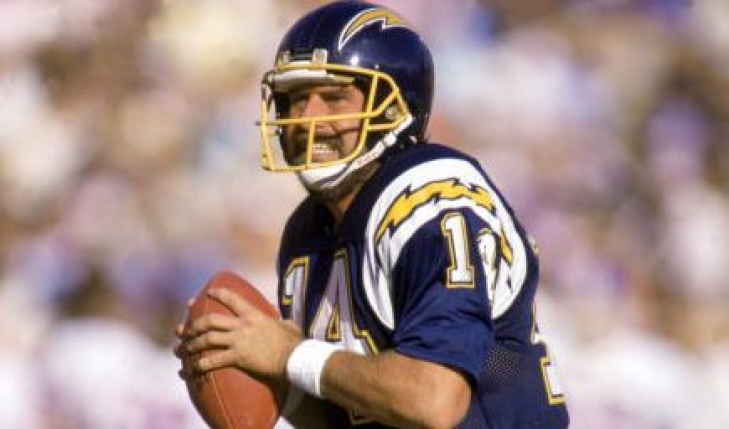
Selected in the third round (64th overall) out of Oregon in the 1973 NFL Draft, Dan Fouts stepped into a San Diego Chargers franchise struggling to establish a modern offensive identity. Through his first five seasons in Southern California, Fouts produced steady if unspectacular results while adjusting to the harsh realities of professional defenses. However, everything changed in 1978 when the franchise hired visionary head coach Don Coryell, setting the stage for a tactical revolution that would reshape the modern NFL passing game.
Under Coryell’s high-octane "Air Coryell" architecture, Fouts was given complete freedom to unleash his quick release, fearless pocket presence, and pinpoint downfield ball placement. Operating with weapons like Kellen Winslow, Charlie Joiner, and John Jefferson, Fouts transformed the position. Between 1979 and 1982, he embarked on the most prolific passing stretch in football history up to that point, leading the NFL in passing yards in four consecutive seasons.
Fouts shattered conventional passing limits, becoming the first player in NFL history to throw for over 4,000 yards in three consecutive seasons. In 1979, he broke the NFL single-season record with 4,082 passing yards and 24 touchdowns, carrying San Diego to its first playoff spot in 14 years. He erased his own mark the very next season in 1980 by throwing for 4,715 yards and 30 touchdowns, leading the Chargers to the AFC Championship Game.
In 1981, Fouts set the record for a third straight year with an astounding 4,802 passing yards and 33 touchdowns, driving San Diego back to the AFC Title Game after orchestrating a 41–38 overtime classic against Miami in the "Epic in Miami." His peak individual brilliance came during the strike-shortened 1982 campaign: in just nine regular-season games, Fouts threw for 2,883 yards (an incredible 320.3 yards per game) and 17 touchdowns, earning both the PFWA NFL Most Valuable Player Award and AP Offensive Player of the Year honors while posting a staggering 22 Approximate Value.
Even as age and injuries began to take their toll in the mid-1980s, Fouts remained an elite downfield distributor. He earned his sixth Pro Bowl selection in 1985 after throwing for 3,638 yards and 27 touchdowns, and he led the NFL in passing yards per game for a sixth and final time in 1986 (262.2 yards per game). Across his eight seasons operating the Air Coryell offense from 1978 through 1985, Fouts averaged over 3,800 passing yards per 16 games, establishing a standard for aerial volume that was decades ahead of its era.
Retiring following the 1987 season, Fouts spent his entire 15-year career in a San Diego uniform, setting every major franchise passing record. When he hung up his helmet, his 43,040 career passing yards ranked second in NFL history behind only Fran Tarkenton. He also threw for 254 touchdowns.
