


Committee Chairman
Super Bowl Betting Ultimate Guide in 2022- What You Need to Know
Every year, Super Bowl betting outnumbers all other sporting events in terms of volume, with billions of dollars wagered on the game, attracting sports bettors from all over the world.
The Super Bowl's competitive nature is amplified by large incentives, gorgeous championship rings, and lucrative endorsement deals, making it one of the most exciting sporting events of the year.
Is Betting on the Super Bowl Legal?
There's no federal regulation that prohibits sports bettors from wagering on the Super Bowl, thanks to the repeal of the Professional and Amateur Sports Protection Act, often known as PASPA. In any of the states with betting regulations, you can legally bet on the Super Bowl.
Even if your state is yet to enact sports betting legislation, overseas sportsbooks operate in such jurisdictions. So, residents can register on these sportsbooks and place Super Bowl LVI wagers.
Where Can I Bet on the Super Bowl In My State?
You can bet on the Super Bowl from anywhere in the United States. Depending on your jurisdiction, you can use land-based sportsbooks or an online sportsbook. Looking for great options? Bet on the Super Bowl at FanDuel to find NFL futures and get your first bet up to $1000 risk-free.
If your state is yet to enact betting legislation, consider using a legitimate offshore sportsbook.
Betting Strategies for the Super Bowl
While there's no foolproof gambling strategy, it's helpful to have a strategy in place when you're ready to gamble.
To get you started, we'll go through the three most basic betting types: betting the spread, taking the over/under, and selecting the money line.
Point Spread - The point spread is a set number of points assigned to each side that tells the bettor how much they are expected to win or lose by. To cover, a team must win by more than the point spread or lose by less than the point spread. As points are awarded to underdogs, they are recorded in the positive column, while favored clubs are shown in the negative column.
Money Line - If you just want to bet on the winner of the game and nothing else, money line bets on the Super Bowl are the way to go. Each team will have three-digit Super Bowl odds in the positive or negative, indicating their chances of winning or losing as well as the amount of money that can be won vs the amount of money that can be lost.
Over/Under - This statistic is often shown on the far right of Super Bowl betting lines, and it denotes the total number of points that bookmakers believe both teams will score. Bettors must wager on whether the final point total will be more than or lower than the line. It simply asks the bettor to predict whether the combined score of both teams will be higher or lower than the specified point total.
Other Legal Super Bowl Betting Options
Prop betting is perhaps the most well-known kind of betting during Super Bowl season. For the Super Bowl, both online and land-based sportsbooks will provide various options — whether you're betting on the team or on player prop bets.
Offshore betting sites will provide more alternatives, but it's up to you to decide what you want to achieve.
Prop betting is similar to the three strategies discussed above, but it focuses only on one aspect of the game. Instead of choosing a winner or the number of points scored, you may choose how many yards the quarterback will throw, how many touchdowns will be allowed, if a fumble will be allowed, how far the longest field goal will be, how long the longest completed pass will be, and so on.
Because there are so many options, do your study ahead of time before trying to lock in a prop bet. Although the majority of these are simple yes/no questions with a standard fee, some may be more difficult to answer.
Awards - HOF? Part Sixty-Five The ABA All-Star Game MVP
We here at Notinhalloffame.com thought it would be fun to take a look at the major awards in North American team sports and see how it translates into Hall of Fame potential.
Needless to say, different awards in different sports yield hall of fame potential. In basketball, the team sport with the least number of players on a roster, the dividend for greatness much higher. In baseball, it is not as much as a great individual season does not have the same impact.
Last time, we looked at the ABA Rookie of the Year. This time, we look at the ABA All-Star Game MVP.
The trophy was awarded every year of the league’s existence, beginning in 1968 and concluding in 1976.
How many ABA All-Star Game MVPs made the Naismith Basketball Hall of Fame?
Let’s find out!
The following are the past players who have won the ABA All-Star Game MVP who are eligible for the Naismith Basketball Hall of Fame and have been enshrined.
1970: Spencer Haywood, Denver Nuggets, 39 MIN, 23 PTS, 19 RB, 2 AST, N/A STL, N/A BLK
Opting to turn pro after his sophomore year in college, Spencer Haywood’s only option was the ABA, as the NBA then had a rule that a player could not turn professional until his class graduated. Haywood then played one year with Denver of the ABA, winning both the MVP and Rookie of the Year, becoming the only player to do so. He also led the league in Minutes and Rebounds and Points per Game. Following this season, Haywood joined the NBA with Seattle, and successfully challenged to join the league in a case that went to the Supreme Court. Haywood later would be a four-time NBA All-Star, and won an NBA Title with the Lakers.
Inducted into the Hall of Fame in 2015.
1971: Mel Daniels, Indiana Pacers, 30 MIN, 29 PTS, 13 RB, 3 AST, N/A STL, N/A BLK
Daniels was one of the top players in ABA history, winning two ABA MVPs, with this year being his second win. An All-Time ABA Selection, Daniels led Indiana to three ABA Titles.
Inducted into the Hall of Fame in 2012.
1972: Dan Issel, Kentucky Colonels, 23 MIN, 21 PTS, 9 RB, 5 AST, N/A STL, N/A BLK
Issel went to the All-Star Game in his first seven years; six in the ABA with the first five as a Colonel.
Inducted into the Hall of Fame in 1993.
1974: Artis Gilmore, Kentucky Colonels, 27 MIN, 18 PTS, 13 RB, 1 AST, 1 STL, 4 BLK
Gilmore was an 11-time All-Star, five of which in the ABA, which coincided with the amount of years he played there. Gilmore was also an ABA MVP (1972), and ABA Champion with the Colonels the following year.
Inducted into the Hall of Fame in 2011.
1976: David Thompson, Denver Nuggets, 34 MP, 29 PTS, 8 RB, 2 AST, 0 S, 1.2 BPG, 12.4 WS.
Taken number one by the Atlanta Hawks, David Thompson instead opted to play for Denver of the ABA, in what would be the last year of the ABA. An All-Star this year, Thompson remained with the Nuggets when the leagues merged. He would later go to four more All-Star Games in the NBA, three with Denver and one with Seattle.
Inducted into the Hall of Fame in 1996.
The following are the players who have won the ABA All-Star Game MVP who are eligible for the Naismith Basketball Hall of Fame and have not been selected:
1968: Larry Brown, New Orleans Buccaneers, 22 MIN, 17 PTS, 3 RB, 5 AST, N/A STL, N/A BLK
Larry Brown entered the Naismith Basketball Hall of Fame as a Coach in 2002, but in Springfield, you can enter multiple times in varying capacities. Brown was one of the many players who benefited from the ABA to be a pro, and he made the most of it as a three-time ABA All-Star., and ABA Champion with Oakland in 1969.
Eligible Since 1978.
1969: John Beasley, Dallas Chapparals, 29 MIN, 19 PTS, 14 RB, 2 AST, N/A STL, N/A BLK
Beasley was a three-time ABA All-Star in his first three seasons in the league. He never played in the ABA, also playing for Utah.
Eligible Since 1980.
1973: Warren Jabali, Denver Nuggets, 31 MIN, 16 PTS, 4 RB, 7 AST, 3 STL, 0 BLK
Jabali won the Rookie of the Year and ABA Championship for Oakland in 1969, and this season was his third of four ABA All-Star Games. Jabali never played in the NBA, and also competed for Washington, Indiana, Florida and San Diego.
Eligible Since 1981.
1975: Freddie Lewis, Spirits of St. Louis, 33 MIN, 26 PTS, 5 RB, 10 AST, 2 STL, 0 BLK
Lewis was traded from Memphis after six Games this year, and was an overall three-time ABA All-Star, with this season being his last. He previously won three ABA Titles with Indiana.
Eligible Since 1983.
Let’s update our tally, shall we?
|
Award in Question |
Percentage of recipients who have entered the HOF |
Percentage of recipients by year who have entered the HOF. |
|
NBA MVP |
100% |
100% |
|
NHL Art Ross |
100% |
100% |
|
ABA MVP |
100% |
100% |
|
NHL Hart Trophy |
93.6% |
96.3% |
|
NBA Finals MVP |
91.3% |
94.9% |
|
NHL Norris |
90.5% |
96.4% |
|
NHL Ted Lindsay Award |
90.0% |
|
|
NBA All-Star Game MVP |
89.5% |
91.7% |
|
NHL Conn Smythe |
74.2% |
85.4% |
|
NFL Bert Bell Award |
73.7% |
71.4% |
|
NFL AP Offensive Player of the Year |
73.1% |
79.4% |
|
NFL AP MVP |
68.3% |
74.0% |
|
NFL Walter Payton Man of the Year |
66.7% |
66.7% |
|
NHL Lady Byng |
63.8% |
76.0% |
|
NFL Defensive Player of the Year |
60.8% |
71.1% |
|
NFL Super Bowl MVP |
60.6% |
64.9% |
|
NHL Mark Messier Leadership Award |
60.0% |
60.0% |
|
ABA Rookie of the Year |
60.0% |
60.0% |
|
NBA Defensive Player of the Year |
58.3% |
56.5% |
|
NHL Vezina |
57.1% |
66.3% |
|
NBA Rookie of the Year |
56.5% |
56.5% |
|
ABA All-Star Game MVP |
55.5% |
55.5% |
|
MLB MVP |
55.0% |
60.2% |
|
NFL Pro Bowl MVP |
52.3% |
54.8% |
|
MLB Lou Gehrig Award |
51.9% |
51.9% |
|
MLB Roberto Clemente Award |
47.4% |
47.4% |
|
NHL Calder Trophy |
46.5% |
46.5% |
|
NBA J. Walter Kennedy Citizenship Award |
46.0% |
46.0% |
|
MLB/NL/AL Cy Young Award |
44.4% |
55.4% |
|
MLB All-Star Game MVP |
41.3% |
44.0% |
|
MLB Babe Ruth Award |
37.0% |
39.3% |
|
NHL King Clancy Award |
36.8% |
36.8% |
|
NHL Frank J. Selke Trophy |
33.3% |
36.7% |
|
MLB World Series MVP |
33.3% |
36.8% |
|
MLB Hutch Award |
33.1% |
33.1% |
|
NFL Offensive Rookie of the Year |
28.6% |
28.6% |
|
NHL Bill Masterton Memorial Trophy |
27.9% |
27.9% |
|
MLB Edgar Martinez Award |
26.7% |
17.2% |
|
MLB Delivery Man of the Year |
25.0% |
50.0% |
|
MLB (NL/AL) Silver Slugger (Designated Hitter) |
25.0% |
30.8% |
|
MLB Comeback Player of the Year |
25.0% |
25.0% |
|
MLB (NL/AL) Silver Slugger (Shortstop) |
23.5% |
52.6% |
|
MLB (NL/AL) Gold Glove |
21.7% |
36.8% |
|
NHL William M. Jennings Trophy |
20.7% |
40.4% |
|
NFL Defensive Rookie of the Year |
20.6% |
20.6% |
|
MLB (NL/AL) Silver Slugger (Catcher) |
20.0% |
22.5% |
|
MLB (NL/AL) Gold Glove (Second Base) |
18.8% |
39.8% |
|
MLB Rolaids Reliever of the Year |
18.6% |
33.3% |
|
MLB (NL/AL) Gold Glove (Shortstop) |
18.2% |
35.1% |
|
MLB (NL/AL) Silver Slugger (Pitcher) |
18.2% |
20.1% |
|
MLB (NL/AL) Silver Slugger (Second Base) |
16.7% |
32.7% |
|
MLB (NL/AL) Gold Glove (Outfield) |
16.7% |
30.1% |
|
NBA Sixth Man of the Year |
16.7% |
18.5% |
|
MLB NLCS/ALCS MVP |
16.1% |
15.3% |
|
MLB (NL/AL) Silver Slugger (Outfield) |
15.7% |
25.2% |
|
MLB (NL/AL) Gold Glove (Third Base) |
14.3% |
14.3% |
|
MLB (NL/AL) Silver Slugger (Third Base) |
13.6% |
14.3% |
|
MLB (NL/AL) Silver Slugger (First Base) |
13.6% |
13.3% |
|
MLB (NL/AL) Rookie of the Year |
13.3% |
13.3% |
|
MLB (NL/AL) Gold Glove (Catcher) |
10.3% |
15.2% |
|
MLB Hank Aaron Award |
9.1% |
14.3% |
|
NBA Most Improved Player of the Year |
5.3% |
3.2% |
|
MLB (NL/AL) Gold Glove (First Base) |
3.8% |
3.2% |
|
NFL AP Comeback Player of the Year |
0.0% |
0.0% |
So, who is up next?
The following are the players who have won the ABA Rookie of the Year who have retired but have not met the mandatory years out of the game to qualify for the Naismith Basketball Hall of Fame:
None.
The following are the past players who have won the ABA Rookie of the Year are eligible for the Naismith Basketball Hall of Fame and are still active.
None.
Nothing will change in this going forward as none of the ABA All-Star Game MVP who have not been inducted feel like they have Hall of Fame potential. As this is now a defunct category, this feels like more than a footnote going forward.
So, what is up next?
We return to Baseball with the Major League Player of the Year from The Sporting News.
As always, we thank you for your support, and look for that soon.
Our All-Time Top 50 Kansas City Royals have been updated to reflect the 2021 Season
Yes, we know that this is taking a while!
As many of you know, we here at Notinhalloffame.com are slowly generating the 50 of each major North American sports team. That being said, we have existing Top 50 lists out and we always consistently look to update them when we can and based on necessity. As such, we are very happy to present our pre-2022 revision of our top 50 Kansas City Royals.
As for all of our top 50 players in baseball we look at the following:
1. Advanced Statistics.
2. Traditional statistics and how they finished in the American League.
3. Playoff accomplishments.
4. Their overall impact on the team and other intangibles not reflected in a stat sheet.
The Royals did not make the 2021 Playoffs, nor did anyone crack the top 50, however there was movement among active Royals players.
As always, we present our top five.
1. George Brett
4. Kevin Appier
5. Amos Otis
You can find the entire list here.
Multi-time All-Star Catcher, Salvador Perez moved up to #10 from #13.
Second Baseman, and two-time All-Star, Whit Merrifield climbed to #24 from #27.
Pitcher, Danny Duffy, moved up one spot to #30, as did fellow hurler, Greg Holland to #33.
We welcome your input and comments and as always, we thank you for your support.
RIP: Clark Gillies
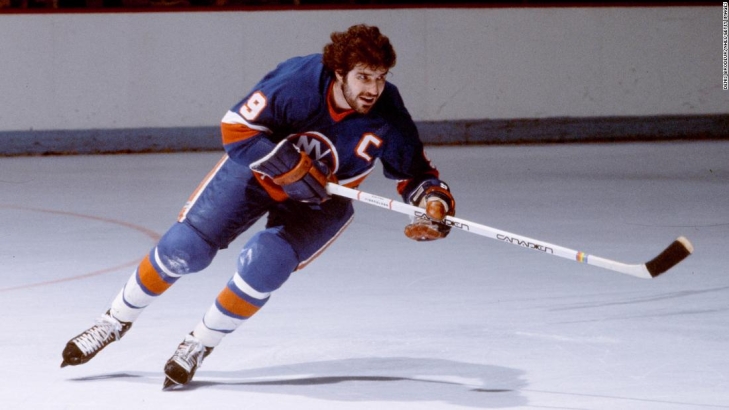
The Islanders lost one of their great ones.
Last night, Clark Gillies passed away. He was 67 Years old.
Gillies played most of his with the New York Islanders, first debuting in the 1974/75 Season, where he would be a two-time First Team All-Star and four-time Stanley Cup Champion. A former captain for the Isles, Gillies was a do-it-all player, who scored, playmaked, and grinded, selflessly opened the ice for his other skill playing teammates.
Finishing his career with the Buffalo Sabres, the Left Wing had 697 career NHL Points.
Internationally, he represented Canada in the 1981 Canada Cup.
Gillies entered the Hockey Hall of Fame in 2002.
We here at Notinhalloffame.com would like to extend our condolences o the fans, friends and family of Clark Gillies.
