

28. John Alt
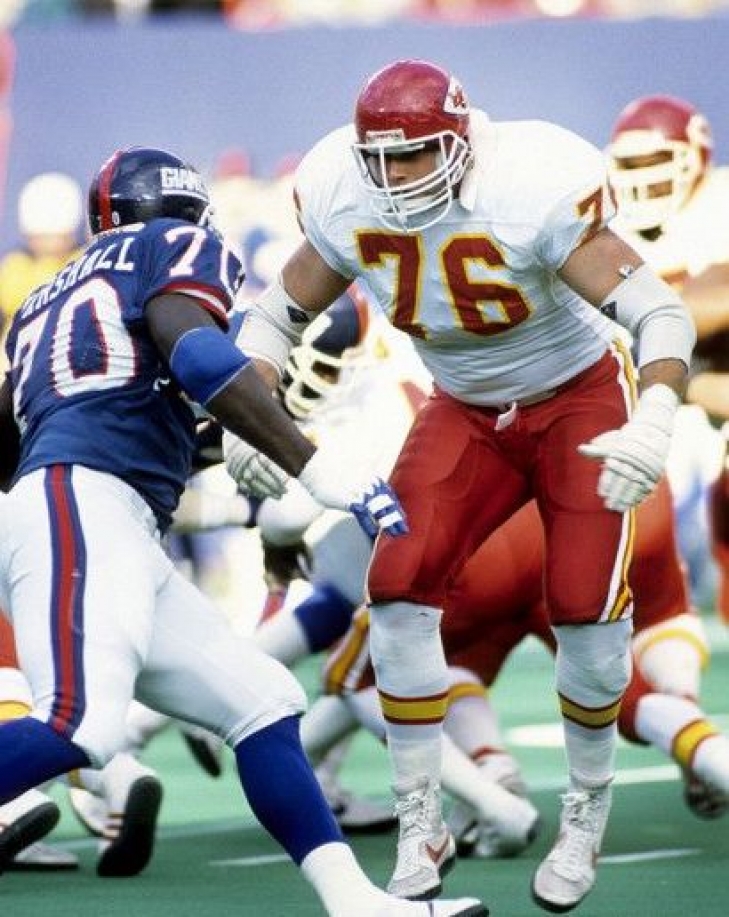
24. Art Still
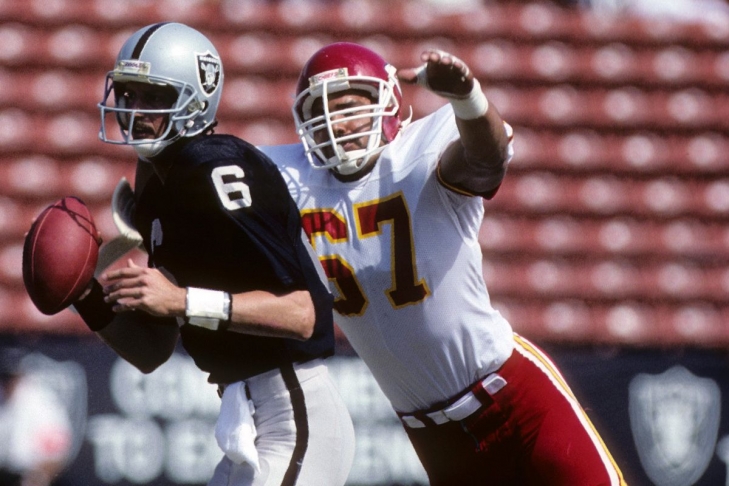
15. Ed Budde
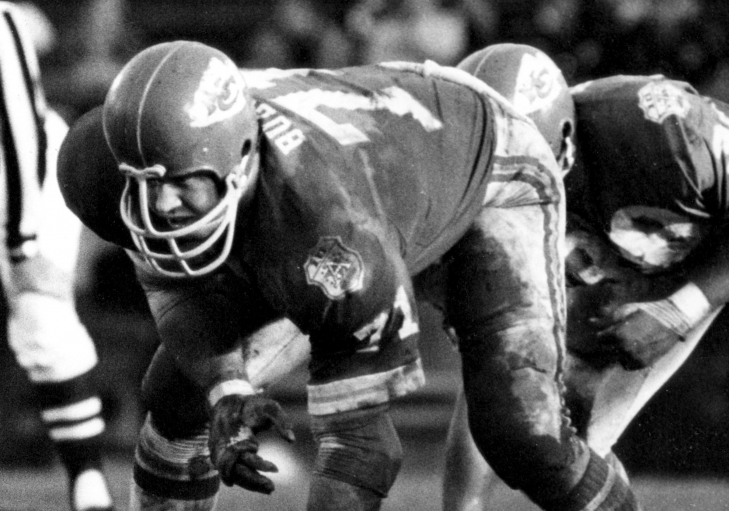
A first-round draft choice (4th overall) out of Michigan State in the 1963 AFL Draft, Ed Budde arrived in Kansas City as a ready-made, imposing physical presence at 6-foot-5 and 260 pounds. Head coach Hank Stram immediately plugged the physical rookie into the starting left guard spot, where his rare blend of explosive lower-body power and tight leverage made him an indispensable anchor for the franchise’s interior offensive line for over a decade.
Budde established an extraordinary standard of durability, starting all 126 regular-season games for the franchise between 1963 and 1971. Operating alongside tackle Jim Tyrer on the left side of the formation, Budde formed one half of the era’s most formidable, physical blocking tandems. His explosive pulling ability in space and relentless drive-blocking inside paved the way for tailbacks Mike Garrett and Otis Taylor, powering Kansas City to two AFL Championships (1966, 1969) and appearances in Super Bowls I and IV.
His finest individual hour arrived on the game's grandest stage in Super Bowl IV against the Minnesota Vikings. Tasked with neutralizing Minnesota's terrifying, Hall of Fame defensive tackle Alan Page, Budde put on an absolute clinic in technical leverage and physical dominance. He completely erased Page from the stat sheet, giving quarterback Len Dawson pristine pockets to operate within and opening wide lanes for a 151-yard rushing performance in Kansas City's decisive 23–7 upset victory.
Individual accolades followed his stellar output throughout his 14-year career. Budde was named an AFL All-Star five times (1966–1969) and earned two post-merger NFL Pro Bowl nods (1970, 1971). He garnered First-Team All-AFL recognition twice (1966, 1969) and became the first offensive lineman ever named the AFL Player of the Week for his suffocating performance against the Oakland Raiders in 1968. Recognized as one of the premier interior blockers of his generation, he was named to the official AFL All-Time Team and inducted into the Kansas City Chiefs Hall of Fame in 1984.
17. Tamba Hali
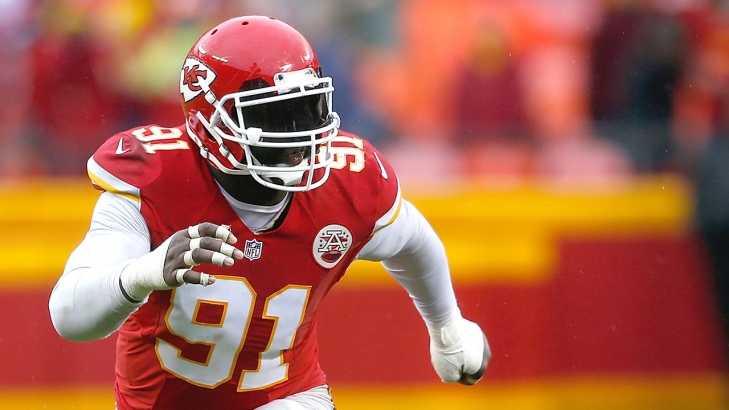
Tamba Hali was selected 20th overall in the 2006 NFL Draft from Penn State, bringing with him an inspiring personal story to Kansas City. He came to the United States at age 10, fleeing civil war in Liberia, and quickly found his passion for American football. His talent shone brightly as he earned unanimous All-American honors with the Nittany Lions and made an impressive direct jump into the Chiefs' starting defense as a rookie.
Hali spent his first three seasons as a 4-3 defensive end, quickly displaying the relentless motor and hand-fighting techniques that would define his career. He posted 8.0 sacks as a rookie to earn PFWA All-Rookie Team honors and logged 18.5 total sacks over his initial three-year stretch on the defensive line. However, his game reached an elite level when Kansas City transitioned to a 3-4 defense in 2009, moving Hali to right outside linebacker.
The position swap paid immediate dividends, unleashing Hali as one of the most feared edge rushers in professional football. In 2010, he racked up a career-high 14.5 sacks to lead the AFC, earning his first Pro Bowl selection. He backed it up with 12.0 sacks in 2011 and 11.0 sacks in 2013, anchoring a fierce Chiefs pass rush alongside Justin Houston. That dominance kicked off an impressive five-year Pro Bowl streak (2011 through 2015, with six total Pro Bowl nods in his career), along with Second-Team AP All-Pro selections in 2011 and 2013.
Beyond his sack totals, Hali's defining trait was his mastery of punching the ball loose at the apex of his rush. Practicing martial arts like Jiu-Jitsu to refine his hand placement and chop moves, he forced 33 fumbles during his tenure in Kansas City—a mark that sits second only to Derrick Thomas in franchise history.
Hali left football after 2017, ranking second in Kansas City's all-time sacks with 89.5, just behind Derrick Thomas. He was inducted into the Chiefs Hall of Fame in 2024 as the 52nd member.
16. Derrick Johnson
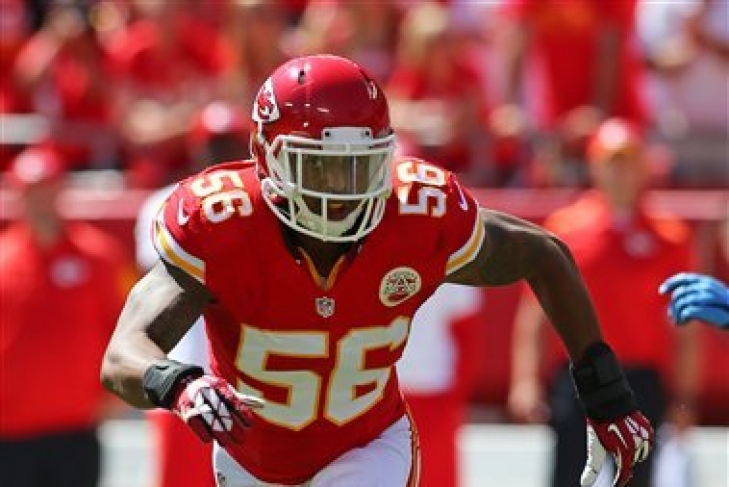
Taken 15th overall in the 2005 NFL Draft out of Texas, Derrick Johnson arrived in Arrowhead Stadium carrying massive expectations as a Dick Butkus Award and Bronko Nagurski Trophy winner. Initially lining up at outside linebacker under Dick Vermeil and Herm Edwards, Johnson proved to be a reliable, highly active force, racking up 95-plus tackles in three of his first four seasons. However, his career arc changed completely when he made the permanent shift inside to middle linebacker in 2010.
That position swap unlocked a decade-defining stretch of elite playmaking. Operating as the heart and soul of Kansas City's defense, Johnson strung together four consecutive 100-tackle campaigns from 2010 through 2013. His breakout high-water mark arrived in 2011, when he set a single-season franchise record with 179 combined tackles (131 solo), earning his first career Pro Bowl selection and First-Team AP All-Pro honors.
Combining baseline sideline-to-sideline range with lightning-fast Diagnostics, Johnson made a living shooting gaps before interior linemen could climb to the second level. He earned back-to-back Pro Bowl nods again in 2012 and 2013, solidifying his standing as one of the premier inside linebackers in the NFL. Even after suffering a torn Achilles in the 2014 season opener, Johnson staged a triumphant return in 2015, posting 116 combined tackles, 4.0 sacks, and earning his fourth career Pro Bowl invitation alongside Comeback Player of the Year consideration.
During the 2016 campaign, Johnson permanently eclipsed Gary Spani to become the all-time leading tackler in Kansas City Chiefs history. Over his 13 seasons in Arrowhead, he anchored multiple playoff rosters across different coaching eras—transitioning seamlessly from the rebuilding late 2000s to the championship-caliber culture built under Andy Reid.
After a brief six-game tenure with Oakland in 2018, Johnson signed a one-day contract in May 2019 to officially retire as a Chief. He later was immortalized locally when he was named the 55th member of the Chiefs Hall of Fame.
With Kansas City, Johnson had 27.5 sacks, 14 interceptions, and 1,154 combined tackles.
13. Jerry Mays

Before ever putting on a helmet for the Dallas Texans, Southern Methodist University standout Jerry Mays turned down a draft offer from the Minnesota Vikings to join Hank Stram's fledgling American Football League franchise in 1961. It turned out to be a franchise-altering decision. A cerebral scholar-athlete with an engineering background, Mays brought unmatched athletic agility and leadership to the front line, stepping into a starting role during his second season and instantly becoming the emotional anchor of the defense.
Mays had remarkable positional versatility, shifting seamlessly between defensive tackle and defensive end depending on the team's scheme. His quickness off the snap made him equally effective as an interior disruptor or an edge rusher. In just his second season, he helped lead the Texans to the 1962 AFL Championship, anchoring a defense that outlasted the Houston Oilers in a grueling double-overtime thriller. When the franchise relocated to Missouri in 1963 to become the Kansas City Chiefs, Mays remained the bedrock of the defensive line, earning two First-Team All-AFL selections (1965, 1966) and securing an AFL All-Star berth in six different seasons.
Respected across the entire organization for his steady leadership, Mays was chosen by his teammates as defensive captain for both Super Bowl I and Super Bowl IV. His leadership proved instrumental in keeping the team composed during the franchise's crowning moment in January 1970, when Kansas City suffocated the Minnesota Vikings 23–7 to capture its first Super Bowl title. After the AFL-NFL merger in 1970, Mays proved his elite standing wasn’t limited to one league, earning a Pro Bowl selection in his final professional season before retiring.
Mays spent his entire 10-year professional career with the franchise, playing in 140 consecutive regular-season games without ever missing a single contest. Named to the official AFL All-Time Team, he was recognized almost immediately following his retirement when he became the third player ever inducted into the Kansas City Chiefs Hall of Fame in 1972. He compiled 65.5 sacks over his career.
18. Deron Cherry
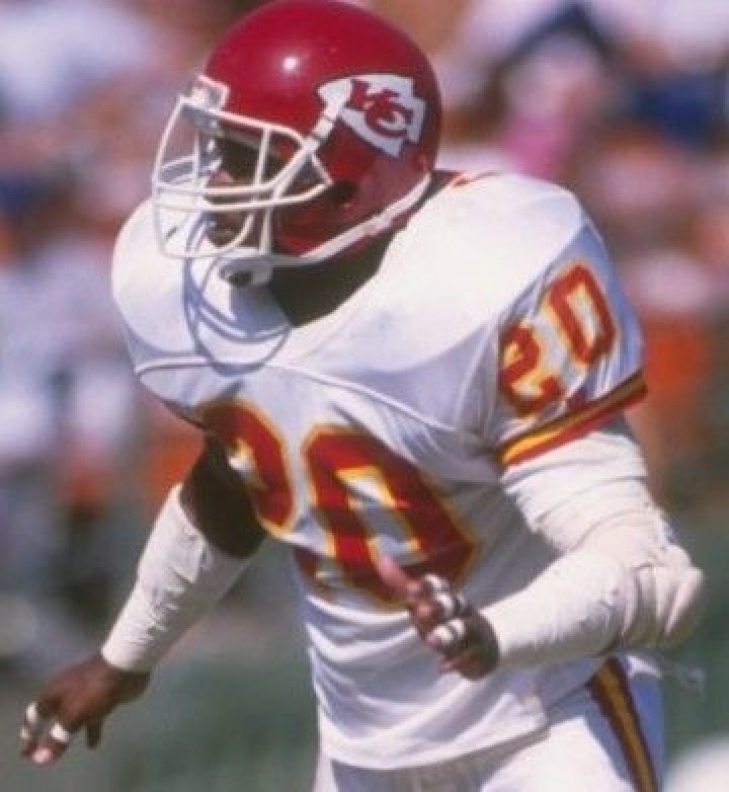
Undrafted in 1981 out of Rutgers—where he starred as a safety and team MVP punter—Deron Cherry initially signed with Kansas City hoping to win the team’s punting job. When that plan fell through, he convinced management to let him audition at defensive back instead. That second chance launched an extraordinary 11-year run as the patrolling center fielder for the Chiefs' defense.
Taking over the starting free safety job in 1983, Cherry immediately transformed into an elite ballhawk. That breakout campaign kicked off a dominant stretch where he earned six consecutive Pro Bowl selections from 1983 through 1988. Over those six years, Cherry earned five AP All-Pro selections (First-Team in 1984, 1986, and 1988; Second-Team in 1983 and 1985). In a legendary 1985 performance against the Seattle Seahawks, he tied an NFL single-game record by picking off four passes in a single afternoon.
Cherry’s instincts and diagnostic skills made him the centerpiece of Kansas City’s secondary throughout the 1980s. In addition to snagging at least seven interceptions in four separate seasons, he proved to be a formidable last line of defense, tallying six 100-tackle seasons. His 50 career interceptions rank third in franchise history, while his 15 career fumble recoveries tie him for the top mark in Chiefs franchise history.
Off the field, Cherry was equally impactful through his extensive philanthropy and community work in the Kansas City region. His selfless leadership earned him the prestigious Byron "Whizzer" White NFL Man of the Year Award in 1988. His place in NFL history was further cemented when he was named to the NFL 1980s All-Decade Team.
After retiring in 1991, Cherry was inducted into the Kansas City Chiefs Hall of Fame in 1996. Cherry had an incredible run, going from undrafted to minority owner of an NFL franchise (Jacksonville).
19. Neil Smith
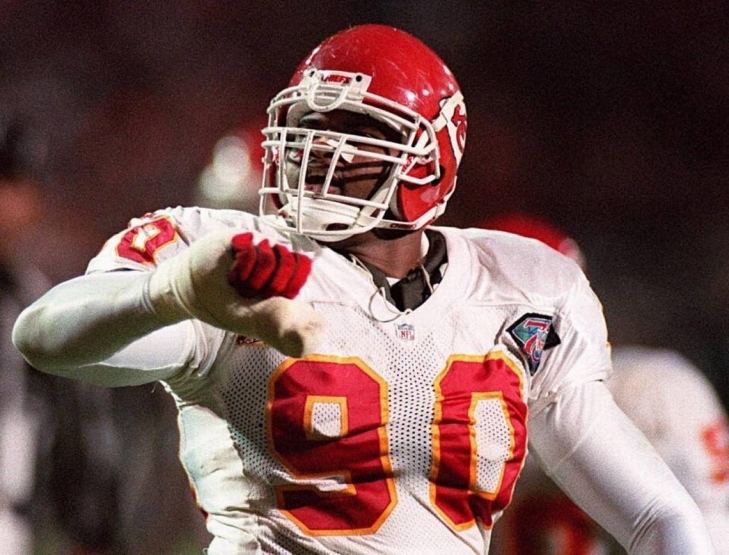
Selected second overall in the 1988 NFL Draft out of the University of Nebraska, Neil Smith stepped onto the turf at Arrowhead Stadium with huge expectations. The All-American defensive end quickly established himself as a physical force off the edge, bringing rare closing speed, immense power, and a signature home-run celebration that made him a fan favorite across Kansas City.
After flashing potential during his first three seasons, Smith exploded into a dominant star as part of Marty Schottenheimer's defensive unit. Teaming up with linebacking legend Derrick Thomas, Smith formed one half of the most feared edge-rushing duos in professional football history. Opposing offensive lines were forced to pick their poison, and Smith made them pay routinely, earning his first Pro Bowl nod in 1991.
The peak of Smith's run in red and gold arrived during a remarkable four-year stretch from 1992 through 1995, where he topped double-digit sacks in four consecutive seasons. His crown-jewel performance came in 1993, when he led the entire NFL with 15.0 sacks while forcing three fumbles, earning First-Team AP All-Pro honors and helping propel the Chiefs to the AFC Championship Game.
Smith's dominant motor earned him five consecutive Pro Bowl selections (1991–1995) in Kansas City, alongside three All-Pro selections. Over his nine seasons with the Chiefs, his ability to collapse the pocket and stop the run anchored one of the league's elite defensive units. By the time he departed after the 1996 campaign, he had racked up 85.5 sacks for the franchise, sitting behind only Derrick Thomas on the team's all-time leaderboard. He also had 32 forced fumbles and 527 combined tackles in Arrowhead.
Following his tenure in Kansas City, Smith joined the rival Denver Broncos in 1997, where he served as an impactful veteran presence and captured back-to-back Super Bowl rings (XXXII and XXXIII). He closed out his 13-year career with the San Diego Chargers in 2000, finishing with over 100 career sacks and earning a spot on the NFL 1990s All-Decade Team.
Despite wearing division-rival colors late in his career, Smith's heart and peak years remained rooted in Kansas City. In 2006, the franchise recognized his legendary contributions by inducting him as the 36th member of the Kansas City Chiefs Hall of Fame.
4. Travis Kelce
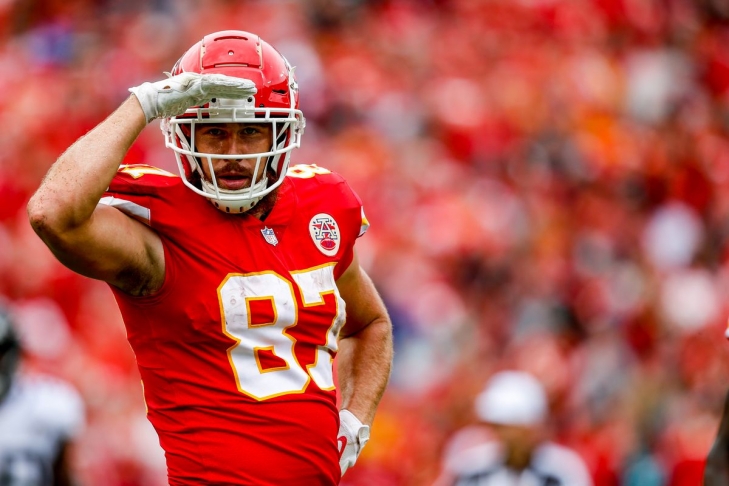
For years, conventional wisdom dictated that any tight end in Kansas City would permanently play second fiddle to Tony Gonzalez. Selected in the third round out of Cincinnati in 2013, Travis Kelce didn't just challenge that narrative—he dismantled it entirely. Combining a receiver's route-running ingenuity with an improvisational flair, Kelce evolved from a fiery young prospect into the most prolific postseason target in NFL history and a global pop-culture phenomenon.
Kelce's career took a major turn after missing nearly all of his 2013 rookie season due to knee surgery. He made a strong comeback with two consecutive 800-yard seasons, culminating in a breakout year in 2016 when he recorded 1,125 receiving yards and earned his first First-Team All-Pro honor. This marked the start of a remarkable period of elite performance. Kelce's unique advantage was his almost telepathic rapport with Patrick Mahomes; he had an exceptional ability to interpret defensive zone coverages instantly, dropping his route stems to find open space as Mahomes exited the pocket on scrambled plays.
Between 2016 and 2022, Kelce made history as the first tight end to achieve seven straight 1,000-yard receiving seasons. His standout year was 2020, when he set the NFL tight end record with 1,416 yards and 11 touchdowns in 15 games. He continued his excellence in 2022 with a career-best 110 receptions, 1,338 yards, and 12 touchdowns, becoming the key player in an offense that won Super Bowl LVII.
Beyond his regular-season stats, Kelce built his ultimate legacy in January and February. Serving as Kansas City's postseason safety valve, he surpassed Jerry Rice for the most career playoff receptions in NFL history and captured three Super Bowl rings (LIV, LVII, LVIII). Whether hauling in clutch touchdown passes in comeback victories or engineering clock-killing drives, Kelce became the Chiefs' defining big-game weapon in their modern dynasty.
Off the field, Kelce’s cultural footprint exploded into unprecedented territory. Hosting Saturday Night Live in 2023 validated his charismatic star power, but his high-profile relationship with music icon Taylor Swift launched him into a tier of global fame rarely seen for an American football player. Yet through the intense media spotlight, Kelce remained intensely focused on his craft, continuing to serve as the emotional heart and vocal leader of Andy Reid’s squad.
Even as age and defensive double-teams began to alter his usage, Kelce’s impact remained vital through the 2024 and 2025 campaigns. Across a challenging 2025 season where the Chiefs navigated team-wide adjustments, he still pulled down 76 passes for 851 yards and five touchdowns, earning his 11th consecutive Pro Bowl nod and officially surpassing Tony Gonzalez as Kansas City's all-time leader in career receiving touchdowns.
Now entering the 2026 season as a senior statesman of the locker room, Kelce stands at the summit of tight end royalty. With his place in Canton long since sealed, every snap he takes only adds polish to a career that has redefined the tight end position for future generations.
Kelce enters this year having already accumulated 113 receptions, 13,157 receiving yards, and 85 receiving touchdowns, all franchise records for touchdowns and catches.
11. Johnny Robinson
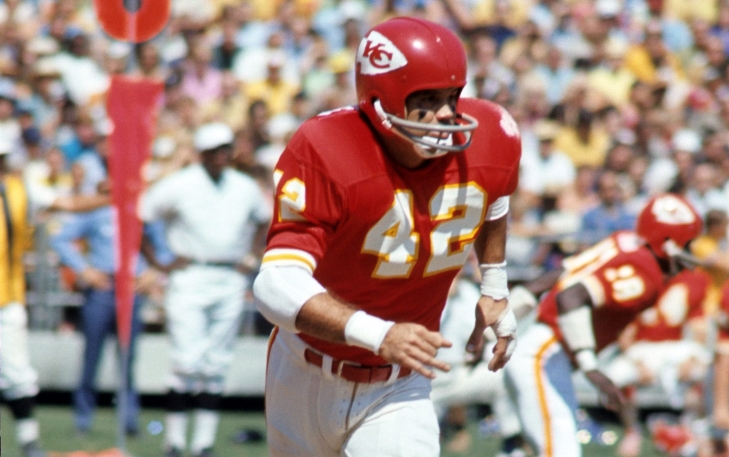
Drafted in the first round (3rd overall) of the 1960 AFL Draft out of LSU, Johnny Robinson arrived in the professional ranks as an offensive weapon. Playing halfback and flanker for the Dallas Texans in his first two seasons, he showcased impressive open-field speed, amassing over 1,800 yards from scrimmage and 15 total touchdowns. But prior to the 1962 season, legendary head coach Hank Stram made a move that altered franchise history, shifting Robinson to safety.
The position change paid immediate dividends. Robinson used his offensive instincts to read opposing quarterbacks, anchoring the secondary as the Texans captured the 1962 AFL Championship. When the franchise relocated to Missouri in 1963 and became the Kansas City Chiefs, Robinson evolved into the ultimate deep-third ballhawk. Between 1965 and 1970, he assembled one of the most dominant individual spans by any defensive back in pro football history, earning six consecutive First-Team All-Pro honors (five AFL, one NFL). He led the AFL with 10 interceptions in 1966 and topped the NFL with 10 more in 1970 following the merger.
Robinson's big-play reputation reached its peak when championship hardware was on the line. Uniquely clutch, he recorded an interception in all three AFL Championship Games he played in (1962, 1966, 1969). His most iconic performance arrived in Super Bowl IV despite playing with three broken ribs. Robinson completely disrupted Minnesota's passing game, recovering a crucial fumble in the first half and picking off a pass in the second to seal Kansas City’s 23–7 victory.
Robinson retired after the 1971 season, and stat-wise, he had 57 interceptions, returned 160 interception yards, scored one pick-six, recovered nine fumbles, and totaled 1,228 rushing yards, 658 receiving yards, and 15 total touchdowns. The organization quickly recognized his contributions, making him one of the earliest Kansas City Chiefs Hall of Fame members in 1974. His Canton induction was delayed for decades, but justice was finally served when the Veterans Committee enshrined him into the Pro Football Hall of Fame in 2019.
10. Jim Tyrer
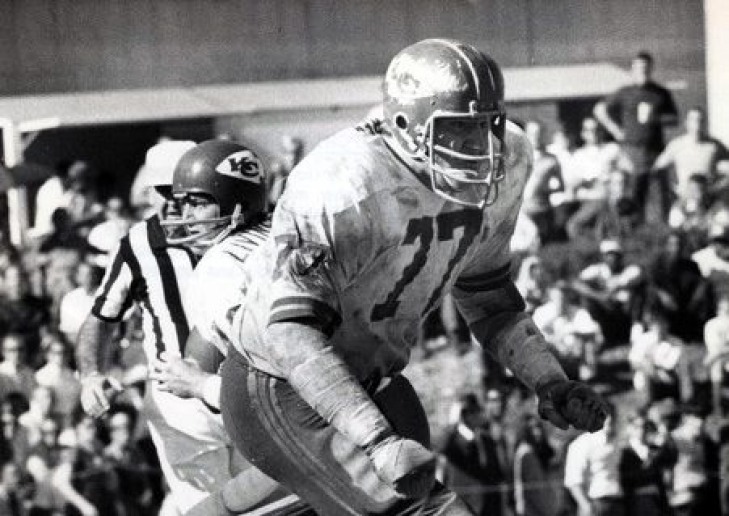
Standing 6-foot-6 and weighing 280 pounds, Ohio State standout Jim Tyrer was an imposing physical marvel who redefined the standards for left tackles throughout the 1960s. Selected in the 1961 AFL Draft by the Dallas Texans before the franchise relocated to Missouri, Tyrer stepped directly into the starting lineup and quickly established himself as an immovable wall protecting Len Dawson’s blind side. His rare combination of massive size, foot quickness, and balance enabled him to neutralize the era's premier edge rushers.
Tyrer operated as the ultimate iron-man anchor for Hank Stram's offense, starting an astonishing 180 consecutive games for the franchise across 13 seasons. His elite edge-blocking powered Kansas City to three AFL Championships and two Super Bowl appearances. The high-water mark of his team success came in Super Bowl IV, where Tyrer and the Kansas City front five completely dominated Minnesota's famed "Purple People Eaters" defensive line, paving the way for 151 rushing yards and granting Dawson ample time to execute a surgical passing attack in a 23–7 upset victory.
Beyond his team achievements, Tyrer built an individual resume that ranked among the best of his generation. He was selected as an AFL All-Star seven times and added two post-merger NFL Pro Bowls, earning a spot on nine total all-star rosters. Tyrer was named a First-Team All-Pro six times (five First-Team All-AFL selections and one First-Team AP All-Pro selection in 1970), including a remarkable streak of five consecutive First-Team selections from 1965 through 1969. His sustained excellence earned him unanimous selection to the AFL All-Time Team as one of the two greatest tackles in the league's decade-long history.
Despite on-field credentials that rivaled the all-time greats in Canton, Tyrer's football legacy remains forever shadowed by tragedy. After retiring following a final season with Washington in 1974, he struggled with severe business failures and deep depression. The tragic arc reached a devastating conclusion in August 1980, when Tyrer committed a murder-suicide, taking his wife Martha's life before ending his own. While that terrible event effectively sealed his exclusion from the Pro Football Hall of Fame, the Chiefs organization recognized his athletic contributions by inducting him into the Kansas City Chiefs Hall of Fame in 1977.
14. Emmitt Thomas
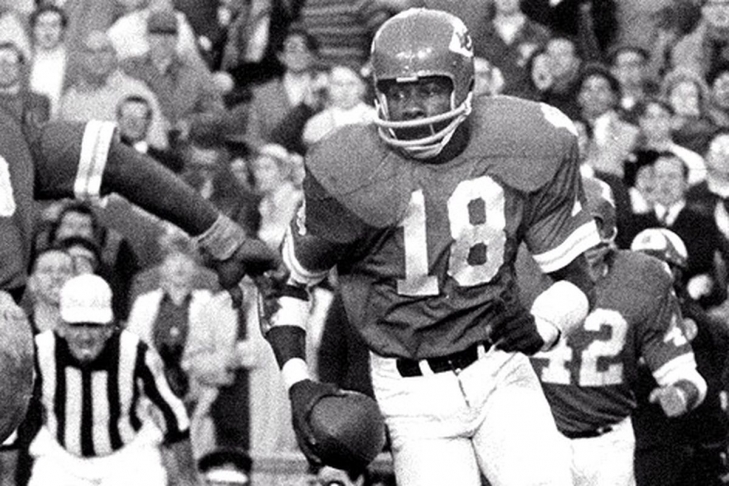
Emmitt Thomas is the franchise leader in Interceptions (58, one more than Johnny Robinson) and was a two-time league leader in that statistic (1969 & 1974). Making a case as the greatest Cornerback in Chiefs history, Thomas played thirteen of his NFL seasons with Kansas City and he was named to the AFL All-Star Team once (’68) and was a four-time Pro Bowl Selection (1971, 1972, 1974 & 1975), the last of which was First Team All-Pro worthy. In that season his league-leading 12 Interceptions was matched by an also league-high 214 Interception Return Yards. Like so many on the upper echelon of this list, Thomas was a member of the Super Bowl IV winning team and was also an AFL Champion in 1966.
9. Willie Lanier
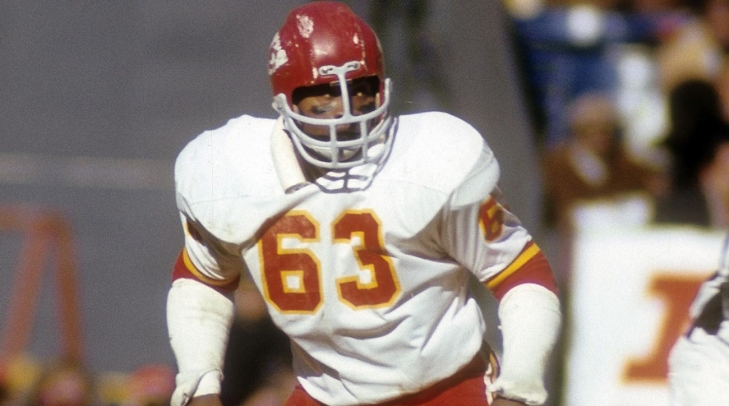
When football historians examine the legendary Kansas City defense of the late 1960s and early 1970s, one man stands squarely at the center of that brutal, championship-caliber unit: Willie Lanier. Selected in the second round (50th overall) out of Morgan State in the 1967 AFL Draft, Lanier made immediate history by becoming the first Black athlete to start at middle linebacker in professional football.
Operating alongside Bobby Bell and Jim Lynch, Lanier formed one-third of arguably the NFL’s most fearsome linebacker trio. Nicknamed "Contact," Lanier played with a ferocious, intimidating style that pushed the physical limits of the era. He attacked ball-carriers headfirst with such staggering, violent force that the Chiefs added extra padding to the outside of his helmet to absorb the impact—a modification meant as much to protect opposing players as to cushion Lanier himself. Beyond his hitting power, Lanier possessed elite instincts and range, diagnosing plays instantly and shutting down opponents’ run games from sideline to sideline.
Lanier's leadership and authority in the middle of the field powered the Chiefs to their crowning achievement in Super Bowl IV. In that iconic 23–7 upset over the Minnesota Vikings, Lanier anchored a defense that stifled Minnesota's offense, recording seven tackles and intercepting a pass from Joe Kapp. His clutch playmaking made him the unquestioned emotional heartbeat of Hank Stram's "Triple-Stack" defense.
The accolades poured in continuously throughout his stellar career. Lanier earned AFL All-Star honors in 1968 and 1969, and once the AFL-NFL merger was finalized, he reeled off six consecutive Pro Bowl selections from 1970 to 1975. A three-time First-Team AP All-Pro (and eight-time total All-Pro choice across both leagues), Lanier was widely regarded as the premier middle linebacker of his generation. Off the field, his character and civic contributions earned him the NFL Walter Payton Man of the Year Award in 1972.
Lanier spent his entire 11-year career in Kansas City, playing in 149 regular-season games before retiring after the 1977 season. He compiled 27 sacks and recovered 18 fumbles. The franchise inducted him into the Chiefs Hall of Fame in 1985 and retired his iconic No. 63 jersey. Enshrined in the Pro Football Hall of Fame in Canton as part of the Class of 1986, Lanier was later selected to both the NFL 75th Anniversary All-Time Team and the NFL 100th Anniversary All-Time Team.
8. Buck Buchanan
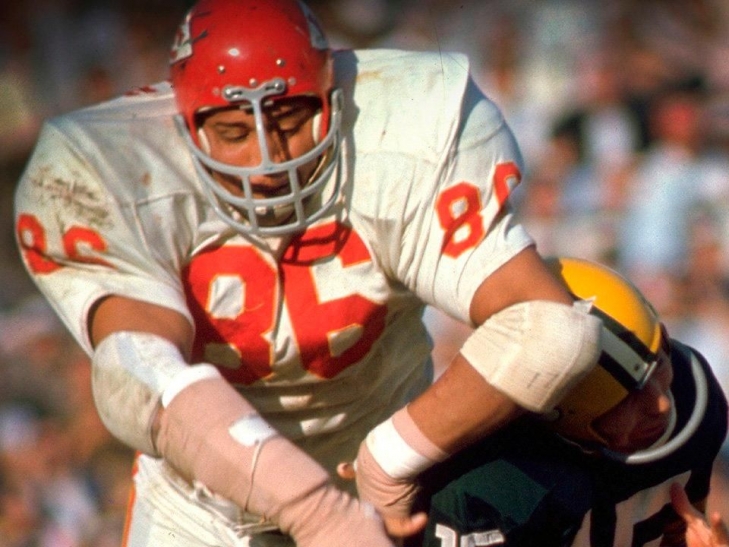
Chosen first overall by the Kansas City Chiefs in the 1963 AFL Draft, Grambling State icon Junious "Buck" Buchanan made history as the first Black player selected with the top overall pick in professional football. While head coach Hank Stram and legendary scout Lloyd Wells recognized Buchanan's exceptional talent, he surpassed all expectations, revolutionizing line play and becoming the formidable force driving Kansas City's defense for more than ten years.
Standing 6-foot-7 and weighing 287 pounds, Buchanan possessed a terrifying blend of size, power, and sprinter-like speed that was unprecedented for a defensive tackle in the 1960s. He used his explosive first step to overwhelm opposing guards and centers, routinely firing into the backfield to blow up plays before they developed. Beyond collapsing pockets, Buchanan used his massive wingspan and leaping ability to swat down passes at the line of scrimmage, highlighted by a staggering 16 batted balls in the 1967 campaign.
Buchanan served as the emotional and physical anchor of Kansas City's famous "Triple-Stack" defense, lining up alongside fellow Hall of Famers Willie Lanier, Bobby Bell, and Emmitt Thomas. His peak performance elevated the franchise onto the game's biggest stages, leading the Chiefs to two AFL Championships and appearances in Super Bowls I and IV. In Super Bowl IV against the heavily favored Minnesota Vikings, Buchanan and the Chiefs’ defense suffocated Minnesota's offense, limiting it to just 67 rushing yards in a decisive 23–7 victory.
His dominance was recognized year in and year out across both leagues. Buchanan was named an AFL All-Star six consecutive times from 1964 through 1969, and following the AFL-NFL merger, he seamlessly continued his elite play by earning Pro Bowl selections in 1970 and 1971. A four-time First-Team All-AFL selection, he was an undeniable selection for the AFL All-Time Team.
In total, Buchanan played 182 regular-season games in red and gold—including a streak of 166 consecutive games—before retiring following the 1975 season. Statistically, Buchanan had 70.5 sacks in his career. His legacy in professional football includes induction into the Kansas City Chiefs Hall of Fame in 1981, the retirement of his No. 86 jersey, enshrinement in the Pro Football Hall of Fame in 1990, and selection to the NFL 100th Anniversary All-Time Team in 2019.
7. Will Shields
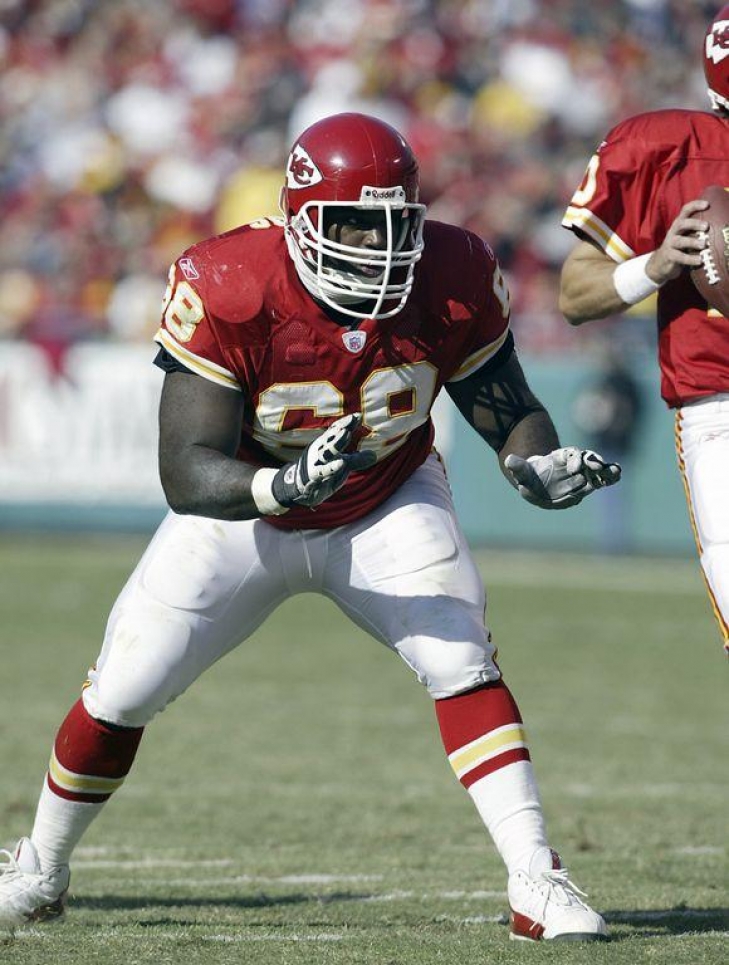
The Kansas City Chiefs boast a rich history of legendary interior linemen, but none ever matched the absolute durability, technical precision, and sustained excellence of Will Shields. Selected in the third round (74th overall) out of Nebraska in the 1993 NFL Draft—where he won the Outland Trophy as the nation's top interior lineman—Shields stepped into the starting lineup in Week 2 of his rookie season and never stepped back out for the next 14 years.
Serving as the unwavering anchor at right guard, Shields constructed one of the most astonishing iron-man streaks in professional sports history. He played in all 224 regular-season games of his NFL career—starting 223 of them—and added another eight postseason starts without ever missing a single game due to injury. That legendary reliability provided the foundation for multiple eras of Chiefs football, bridging the physical offense of Marty Schottenheimer with the explosive high-scoring units of Dick Vermeil.
Mechanically, Shields was an absolute technician whose elite leverage and vice-like hands made him virtually unshakeable in pass protection. Though he had the brute, raw power to root out defensive tackles in tight quarters, his exceptional lateral quickness and football IQ let him pull out in space seamlessly on traps and sweeps.
During the early 2000s, Shields served as the centerpiece of an offensive line widely regarded as one of the greatest ever assembled. Flanked by Willie Roaf, Casey Wiegmann, and Brian Waters, Shields paved the way for tailbacks Marcus Allen, Priest Holmes, and Larry Johnson. His rare combination of explosive power at the point of attack and mobility in space enabled Holmes to set the then-NFL record with 27 rushing touchdowns in 2003, while the offense consistently ranked at the top of the league in total yardage and scoring.
Individual accolades naturally followed his dominant play. Shields earned 12 consecutive Pro Bowl selections from 1995 through 2006, setting a Chiefs franchise record that stands to this day. He earned two First-Team AP All-Pro selections (2002, 2003) and five Second-Team selections, eventually securing a coveted spot on the NFL 2000s All-Decade Team. Off the field, his active commitment to the Kansas City community through his "Will to Succeed" Foundation earned him the prestigious Walter Payton NFL Man of the Year Award in 2003.
Shields retired after 2006, leaving a legacy of durability and leadership. He was inducted into the Kansas City Chiefs Hall of Fame in 2012 and the Pro Football Hall of Fame in 2015. He started all but one of his games.
3. Tony Gonzalez
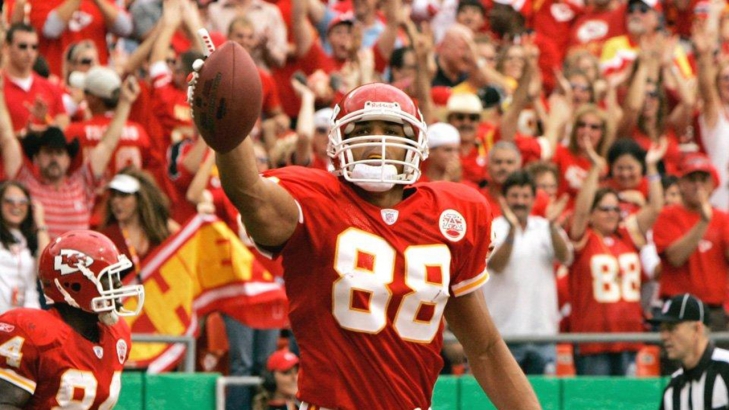
When the Kansas City Chiefs traded up to select Tony Gonzalez 13th overall out of California in 1997, they weren't just picking a tight end—they were securing a two-sport athlete who would fundamentally rewrite the blueprint for offensive football. Armed with a basketball player's footwork, elite aerial body control, and soft hands honed on the hardwood, Gonzalez completely transformed a blocking-centric position into the premier focal point of a modern passing attack.
After showing modest promise as a rookie, Gonzalez demonstrated star potential in 1998 with 59 receptions and fully broke out in 1999. During that third season, he received his first of ten straight Pro Bowl selections in red and gold and earned First-Team All-Pro honors with 76 catches for 849 yards and 11 touchdowns. In 2000, he continued his ascent by recording a remarkable 93 catches for 1,203 yards and nine touchdowns, establishing that a tight end could be the primary receiver for an offense.
Gonzalez showed remarkable consistency despite major roster changes, acting as the key driver for Dick Vermeil's dynamic early-2000s offenses with Trent Green and Priest Holmes. In 2001, he accumulated 917 receiving yards and six touchdowns, caught 63 passes in 2002, and in 2003, he had 71 catches for 916 yards and 10 touchdowns, aiding Kansas City's 13–3 season. His signature dunking of the goal post became a weekly highlight at Arrowhead Stadium, setting a new standard for tight end achievements.
His outstanding statistical achievement occurred during the 2004 season, when he excelled in secondary coverages to top the NFL with 102 receptions, accumulating a career-high 1,258 receiving yards and seven touchdowns. This impressive season set the then-record for single-season catches by a tight end and demonstrated his ability to thoroughly disrupt defensive strategies aimed at limiting him.
Despite the Chiefs entering a tough rebuilding phase later in the decade, Gonzalez remained highly productive. In 2005, he achieved 78 catches for 905 yards, followed by 900 yards in 2006. He then had two strong 1,000-yard seasons in 2007 (99 catches, 1,172 yards) and 2008 (96 catches, 1,058 yards, 10 touchdowns). Over his 12 impressive years with Kansas City, he surpassed 900 receiving yards seven times and exceeded 1,000 yards four times.
Beyond his staggering statistical volume, Gonzalez was an absolute marvel of physical durability. Over 12 seasons in Kansas City, he missed only one game, absorbing thousands of hits over the middle while pioneering dietary and training habits that extended his prime deep into his thirties. He departed Kansas City in 2009 after a trade to Atlanta, leaving behind a legacy as the most prolific pass-catcher in Chiefs history and the standard-bearer for all tight ends who followed.
Enshrined into the Chiefs Hall of Fame in 2018 and entering the Pro Football Hall of Fame on the first ballot in 2019, his career received ultimate national recognition in 2020 when he was named to the prestigious NFL 100th Anniversary All-Time Team as one of the game's immortal figures. Statistically, as a Chief, he had 916 receptions, 10,940 receiving yards, and 76 receiving touchdowns in Kansas City—all franchise records at the time of his departure.
2. Bobby Bell
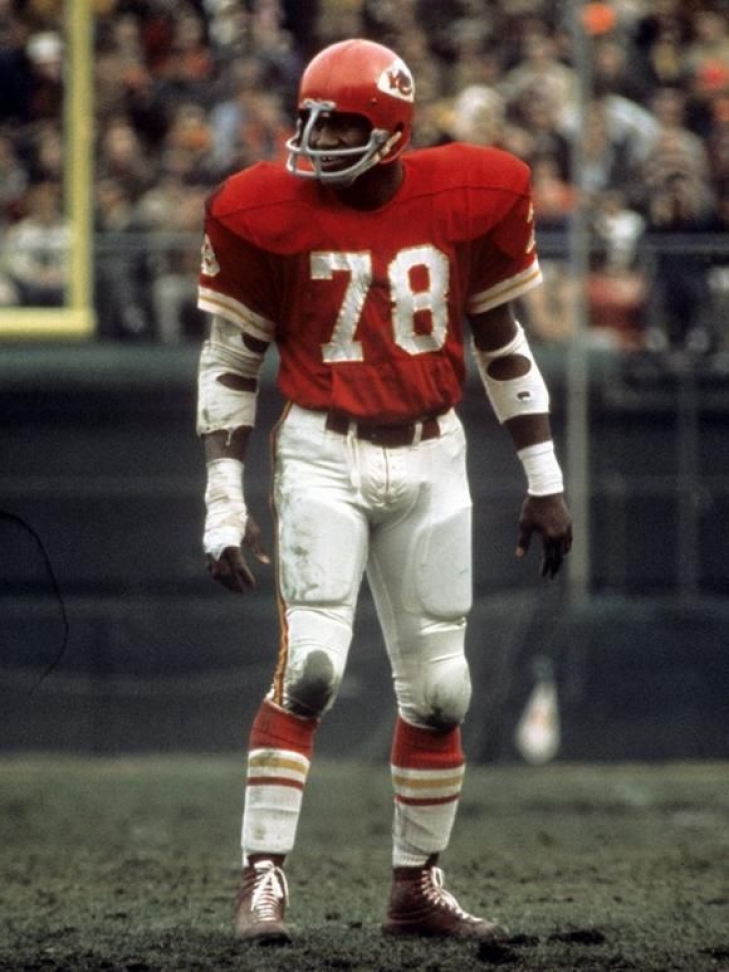
Before modern NFL scouting built templates for hybrid defender archetypes, Bobby Bell was already breaking the mold. Standing 6-foot-4 and 228 pounds with 4.5 track speed, Bell had a freakish athletic profile decades ahead of its time. A high school quarterback and a national champion tackle at the University of Minnesota, he captured the 1962 Outland Trophy as the nation's premier interior college lineman. When the Chiefs scooped him up in the seventh round of the 1963 AFL draft, they secured the ultimate chess piece for head coach Hank Stram.
Stram famously stated that Bell was so talented he could master all 22 positions on a successful football team and perform excellently in each one. Bell initially spent two seasons playing at defensive end, setting the edge, before switching permanently to outside linebacker in Stram's innovative "stack defense." His extraordinary range enabled him to disrupt running plays behind the line of scrimmage, drop back into coverage like a safety, and even take care of long-snapping duties on special teams seamlessly.
His versatility from the start set the stage for a remarkable series of individual awards. After an impressive rookie year, Bell was recognized as an AFL All-Star or NFL Pro Bowler for nine straight seasons from 1964 to 1972, including six consecutive First-Team All-AFL/NFL selections. Acting as the key athletic threat on a star-studded defense with middle linebacker Willie Lanier and tackle Buck Buchanan, Bell provided Kansas City with a solution for every offensive strategy in professional football.
Bell was a defensive force capable of controlling any situation on any down. He was an aggressive, top-tier open-field tackler who almost always completed wraps, tackling ball-carriers in space before they could break to the outside. His constant effort and quick closing speed made him a formidable blitzing option off the edge, enabling him to consistently pressure opposing quarterbacks during his twelve years in Missouri.
Although sacks did not become an official NFL statistic until 1982, internal Chiefs tracking shows Bell amassed 40.0 career quarterback sacks. Combined with his 26 career interceptions, Bell is an unofficial charter member of pro football's elite 20-20 club. More impressively, he converted those turnovers into points, scoring nine career defensive touchdowns—including six pick-sixes, which tied the all-time NFL record for linebackers.
Without Bell anchoring the defense, imagining Kansas City creating the legendary legacy of the 1960s franchise is difficult. His coverage ability and playmaking skills led the Chiefs to three AFL Championships and appearances in Super Bowls I and IV. In Super Bowl IV, where they defeated the Minnesota Vikings, Bell's defense limited Minnesota to just 67 rushing yards, marking one of the most dominant championship performances in professional football history.
Bell spent 12 seasons with the Kansas City Chiefs (1963–1974), playing in 168 games with 159 starts. He recorded 26 interceptions for 479 yards, six interception return touchdowns, 40.0 unofficial sacks, nine fumble recoveries, and nine touchdowns. A Super Bowl IV Champion, two-time AFL Champion, nine-time Pro Bowler, six-time All-Pro, and member of the NFL 1970s All-Decade Team, he entered the Chiefs Hall of Honor in 1980, and in 1983, he was chosen for the Pro Football Hall of Fame. He would earn one more colossal honor when, in 2020, he was named to the NFL 100th Anniversary Team.
6. Derrick Thomas
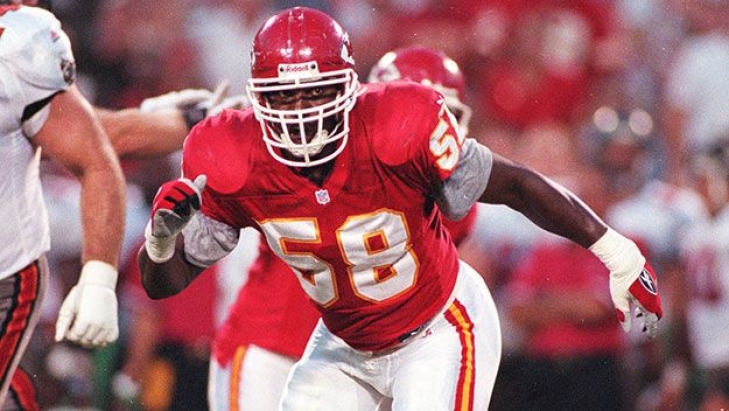
Selected fourth overall out of Alabama in 1989 after capturing the Butkus Award as the nation’s top collegiate linebacker, Derrick Thomas arrived in Kansas City with a first-step acceleration off the edge that instantly altered NFL passing offenses. His twitchy, lightning-fast snap anticipation transformed him into the premier edge rusher of his generation, making him an immediate cornerstone for Marty Schottenheimer's rebuilding Chiefs defense.
Thomas exploded onto the professional scene in 1989, racking up 10.0 sacks and forcing three fumbles to capture NFL Defensive Rookie of the Year honors alongside his first of nine consecutive Pro Bowl selections. Opposing offensive tackles simply could not match his elite dip-and-bend movement along the perimeter. He followed up his rookie campaign with an extraordinary 1990 season, leading the entire NFL with a franchise-record 20.0 sacks to earn First-Team All-Pro honors.
The crown jewel of that 1990 campaign unfolded on Veterans Day against the Seattle Seahawks, when Thomas set an NFL single-game record by sacking quarterback Dave Krieg seven times. He perfected a signature "sack-and-strip" technique, actively chopping at the ball rather than just taking down the passer. That technique yielded 45 career forced fumbles and 19 fumble recoveries, consistently converting defensive pressure into instant turnover points for Kansas City.
Throughout the 1990s, Thomas served as the heartbeat of a feared Chiefs defense alongside Neil Smith and Dan Saleaumua. He earned three First-Team All-Pro selections (1990, 1992, 1996) and topped double-digit sacks in seven different seasons, including a 1998 opener where he dropped Raiders quarterback Jeff Gruden's squad six times in a single afternoon. His presence turned Arrowhead Stadium into a nightmare environment for visiting quarterbacks, establishing an electric atmosphere that defined an era.
Off the field, Thomas was equally impactful, cementing his legacy as a true community hero through his extensive philanthropic work. In 1990, he founded the Third and Long Foundation to help inner-city children learn to read, devoting countless hours to youth literacy programs across the metropolitan area. His unselfish community service earned him the prestigious NFL Man of the Year Award in 1993, making him deeply beloved across the region. By decade’s end, he was an easy pick for the 1990s All-Decade Team.
Tragedy struck the organization and the football world in January 2000. Following a motor vehicle accident on an icy highway while en route to Kansas City International Airport, Thomas suffered chest trauma that left him paralyzed below the chest. Less than a month later, on February 8, 2000, he passed away suddenly at age 33 from a pulmonary embolism, leaving behind a heartbroken fan base and an irreplaceable void in the sport.
His memory remains deeply woven into the fabric of the franchise. The Chiefs inducted Thomas into the Chiefs Hall of Honor in 2001 and officially retired his iconic No. 58 jersey in 2009. That same year, he received ultimate national immortality with his posthumous election into the Pro Football Hall of Fame in Canton. Thomas played in 169 regular-season games with 157 starts. He compiled 126.5 official sacks, 45 forced fumbles, 19 fumble recoveries, 641 tackles, and four defensive touchdowns in red and gold—departing as the franchise’s all-time leader in sacks.
5. Len Dawson
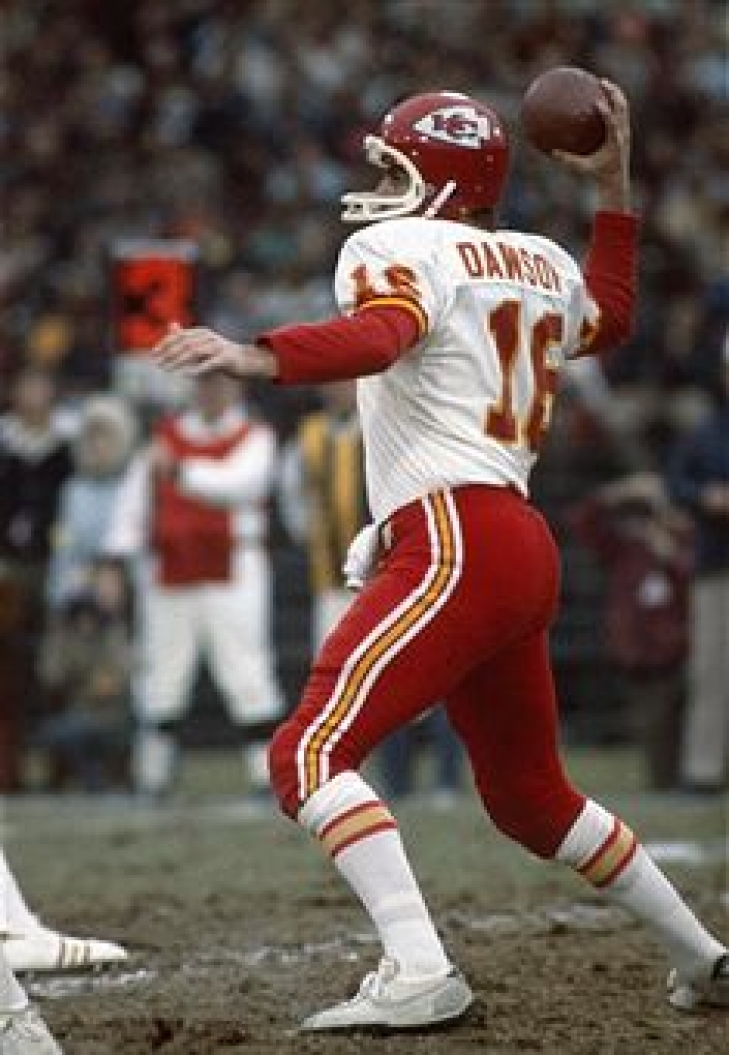
Before he became the undisputed royalty of Kansas City football, Len Dawson looked like a first-round draft bust buried on NFL sidelines. Selected fifth overall by Pittsburgh out of Purdue in 1957, Dawson spent three anonymous seasons underutilized by the Steelers before being shipped to Cleveland, where he languished behind Milt Plum. Released after five NFL seasons with just two career touchdown passes to his name, Dawson’s professional career seemed dead on arrival until former Purdue assistant Hank Stram threw him a lifeline with the AFL’s Dallas Texans in 1962.
Reunited with Stram, Dawson immediately unspooled one of the most remarkable career turnarounds in pro football history. Taking the reins of Stram’s innovative "moving pocket" offense, Dawson brought clinical precision and icy composure to a fledgling league often criticized for chaotic play. Nicknamed "Lenny the Cool" for his unflappable demeanor under pressure, he transformed the Texans into an instant juggernaut, leading the AFL with 29 touchdown passes and a 98.3 passer rating in his very first season as a full-time starter.
The memorable 1962 campaign ended with a double-overtime win against the Houston Oilers in the AFL Championship, earning the franchise its first league title. When Lamar Hunt moved the team north to Missouri to form the Kansas City Chiefs the next year, the team’s location shifted, but Dawson's consistent brilliance did not change. He became the standard for efficiency throughout the decade, consistently leading the AFL in passing.
Dawson’s mastery of Stram’s scheme was unmatched in his era. He won six AFL passer rating titles (1962, 1964–1968)—including five straight seasons on top—and led the league in touchdown passes four times (1962, 1963, 1965, 1966). Unlike opponents who focused on deep vertical throws, Dawson dissected defenses with pinpoint accuracy, leading the league in completion percentage in eight seasons and consistently achieving touchdown-to-interception ratios that were far ahead of his time.
In 1966, Dawson led Kansas City to an 11–2–1 record and a decisive victory over Buffalo in the AFL title game, securing their place in the first AFL-NFL World Championship Game (Super Bowl I). Although the Chiefs ultimately lost to Vince Lombardi’s Green Bay Packers, Dawson impressed many by completing 16 of 27 passes against a renowned NFL defense, demonstrating to skeptical fans across the country that the AFL’s top quarterback had exceptional, world-class skills.
Three years later, Dawson created his career's defining masterpiece in 1969. Although he missed five games due to a knee injury and faced false, sensationalized gambling accusations before Super Bowl IV against the favored Minnesota Vikings, Dawson stayed resilient. His steady leadership kept Kansas City focused as they dominated Minnesota's renowned "Purple People Eaters" defense, winning 23–7. Dawson received Super Bowl MVP honors, confirming the AFL's strength just months prior to the official merger.
Dawson was more than just a champion with his awards; he was a tough physical player who took harsh hits during an era with almost no protective rules for quarterbacks. He led the Chiefs through their integration into the unified NFL, starting until he retired after the 1975 season at age 40. By retirement, he had played 14 seasons in Chiefs red, setting statistical records that stood for nearly 50 years until Patrick Mahomes came along.
His post-playing career further cemented his reputation as a local legend. Dawson smoothly shifted into a popular broadcaster, leading local sports coverage in Kansas City and working for decades as the color commentator for the Chiefs Radio Network, while also hosting HBO's Inside the NFL. His unique ability to earn trust both on the field and at home made him the enduring elder figure in Kansas City sports culture.
With the Chiefs, Dawson compiled 28,507 passing yards, 237 passing touchdowns, and 178 interceptions in red and gold, along with 1,241 rushing yards and nine rushing touchdowns. A Super Bowl IV champion and MVP, three-time AFL Champion (1962, 1966, 1969), six-time AFL All-Star, 1968 Pro Bowler, and 1962 First-Team All-AFL selection, Dawson had his No. 16 jersey retired by the Chiefs and remains a universally revered pillar of football history; he was inducted into the Pro Football Hall of Fame in 2009.
Derrick Johnson Retired
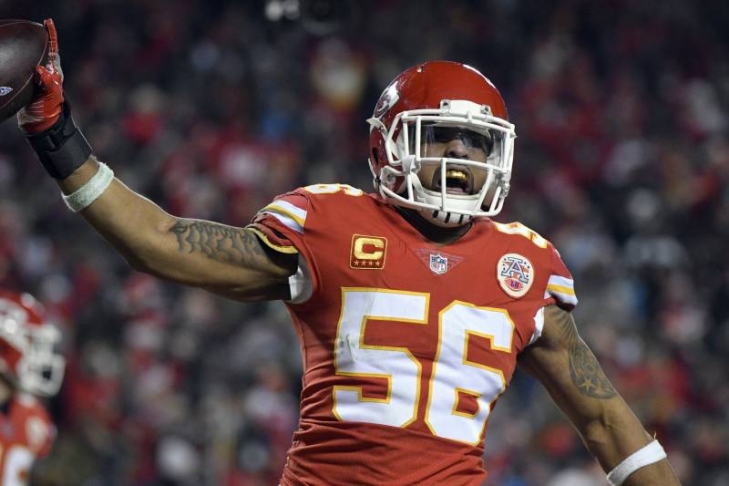
The retirements just keep on coming in the National Football League!
Linebacker, Derrick Johnson just signed a one-day contract with the Kansas City Chiefs so that he could retire at Arrowhead. He had played with the Oakland Raiders last year after playing with Chiefs from 2005 to 2017.
Johnson was drafted 15thoverall from the University of Texas where he was slotted immediately as the team’s Left Outside Linebacker. He would switch to Right Inside Linebacker in 2010 and would go on a four-year streak of 100 or more tackles. He would be named to the Pro Bowl in 2011, 2012, 2013 and 2015 and was a First Team All-Pro in 2011. His career at Kansas City would see him record 27.5 Sacks, 14 Interceptions and 1,151 Tackles.
Coincidentally, we have almost completed our Notinhalloffame.com All-Time Top 50 Kansas City Chiefs and Johnson is currently penciled in at #13.
We here at Notinhalloffae.com would like to wish Derrick Johnson the best in his post-playing career.
