

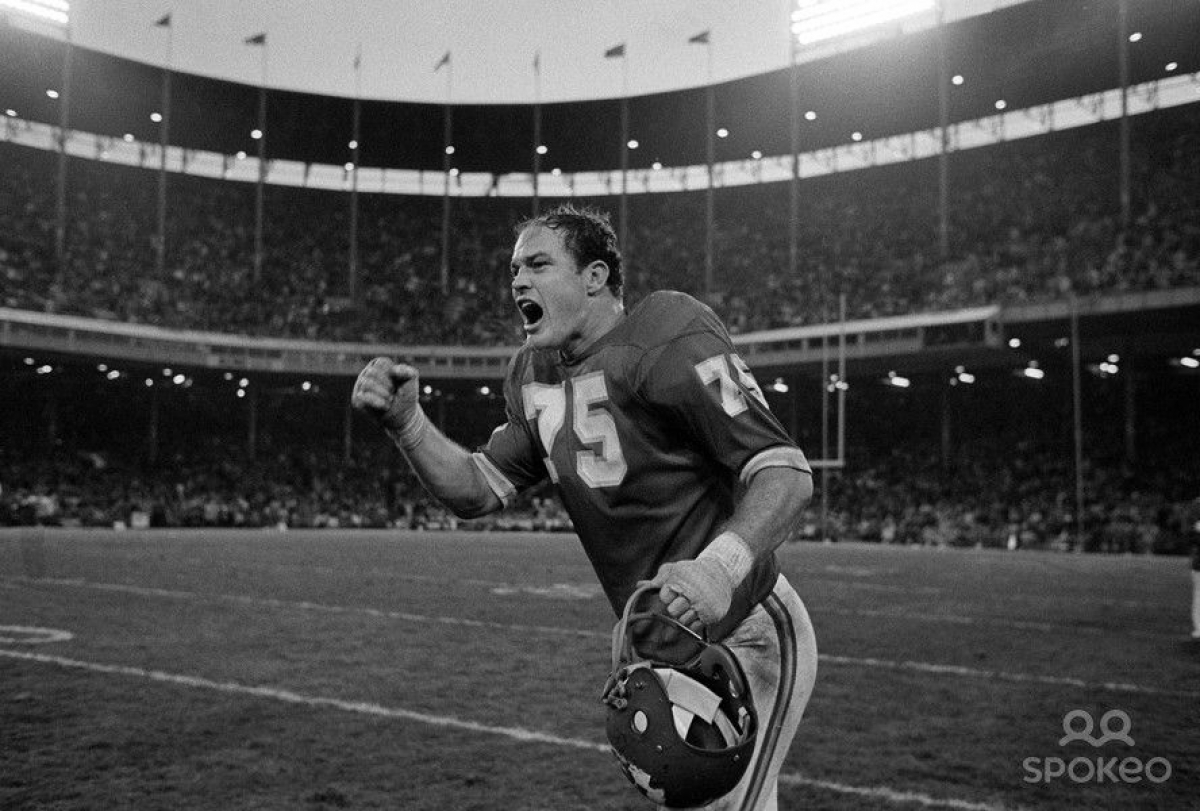
Before ever putting on a helmet for the Dallas Texans, Southern Methodist University standout Jerry Mays turned down a draft offer from the Minnesota Vikings to join Hank Stram's fledgling American Football League franchise in 1961. It turned out to be a franchise-altering decision. A cerebral scholar-athlete with an engineering background, Mays brought unmatched athletic agility and leadership to the front line, stepping into a starting role during his second season and instantly becoming the emotional anchor of the defense.
Mays had remarkable positional versatility, shifting seamlessly between defensive tackle and defensive end depending on the team's scheme. His quickness off the snap made him equally effective as an interior disruptor or an edge rusher. In just his second season, he helped lead the Texans to the 1962 AFL Championship, anchoring a defense that outlasted the Houston Oilers in a grueling double-overtime thriller. When the franchise relocated to Missouri in 1963 to become the Kansas City Chiefs, Mays remained the bedrock of the defensive line, earning two First-Team All-AFL selections (1965, 1966) and securing an AFL All-Star berth in six different seasons.
Respected across the entire organization for his steady leadership, Mays was chosen by his teammates as defensive captain for both Super Bowl I and Super Bowl IV. His leadership proved instrumental in keeping the team composed during the franchise's crowning moment in January 1970, when Kansas City suffocated the Minnesota Vikings 23–7 to capture its first Super Bowl title. After the AFL-NFL merger in 1970, Mays proved his elite standing wasn’t limited to one league, earning a Pro Bowl selection in his final professional season before retiring.
Mays spent his entire 10-year professional career with the franchise, playing in 140 consecutive regular-season games without ever missing a single contest. Named to the official AFL All-Time Team, he was recognized almost immediately following his retirement when he became the third player ever inducted into the Kansas City Chiefs Hall of Fame in 1972. He compiled 65.5 sacks over his career.


Comments powered by CComment