
300. Mel Gray
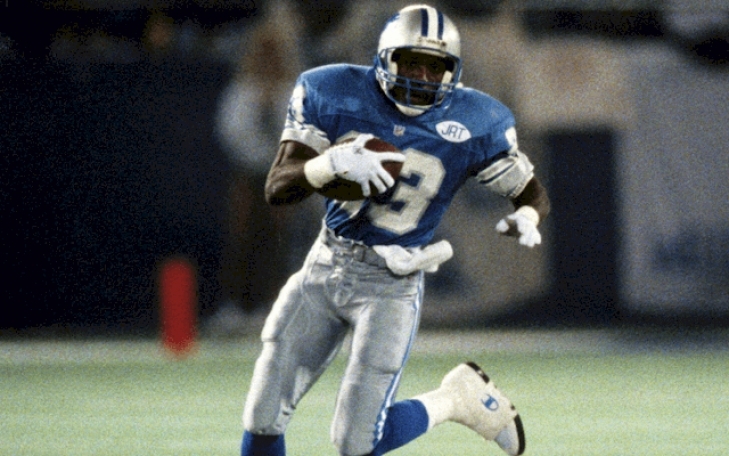
Mel Gray began his career in the USFL for two seasons, and after that league folded, he joined the New Orleans Saints, who had chosen him earlier in a supplemental draft of USFL players. Gray would later join the Detroit Lions, and it was there where he would be named a four-time Pro Bowl Selection and was regarded as one of the best Return Specialists in the NFL. Gray would accumulate 13,003 Return Yards, and was the league leader in that category in the first three seasons of the 1990s. He would also be named a three-time First Team All-Pro.
336. Glenn Presnell
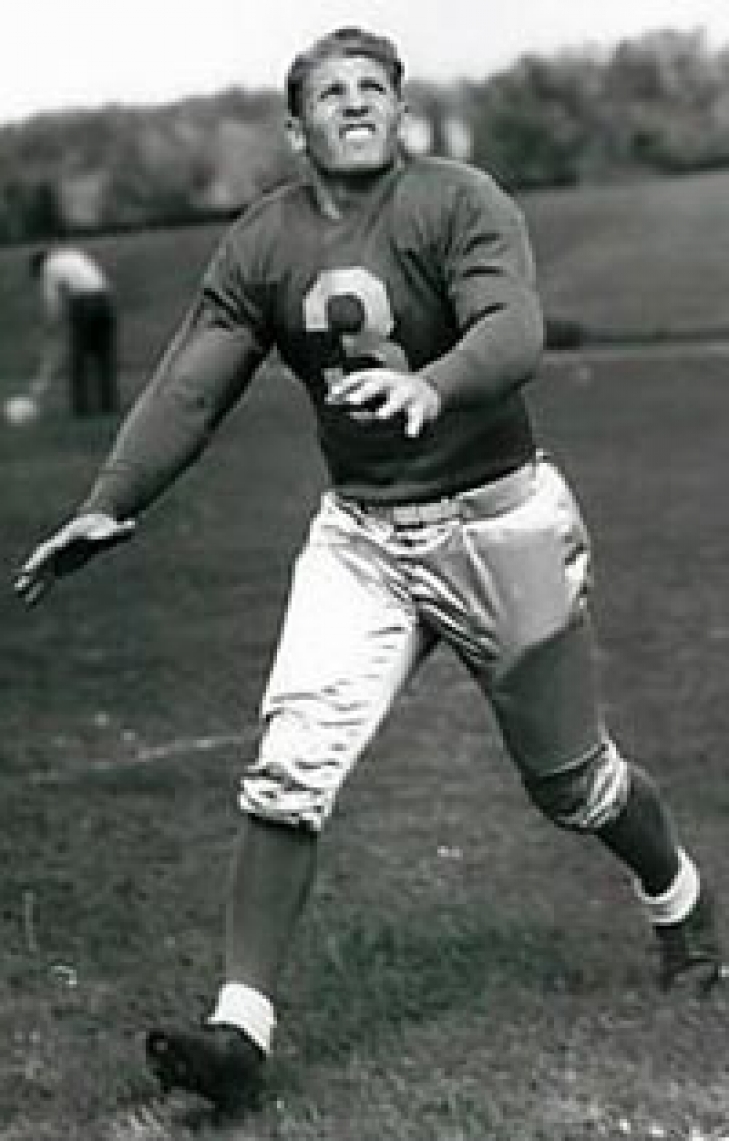
Out of the University of Nebraska, Glenn Presnell first played for the semi-pro Ironton Yanks in 1929. The Yanks were not part of the NFL but would have games against NFL teams where they would sometimes emerge as the victor. Presnell would sing with the NFL's Portsmouth Spartans, where he would be a bona fide triple threat in terms of passing, running and kicking and would be an All-Pro in 1933. Presnell would then join the Detroit Lions and was a key member of their 1935 Championship Team.
133. Lomas Brown
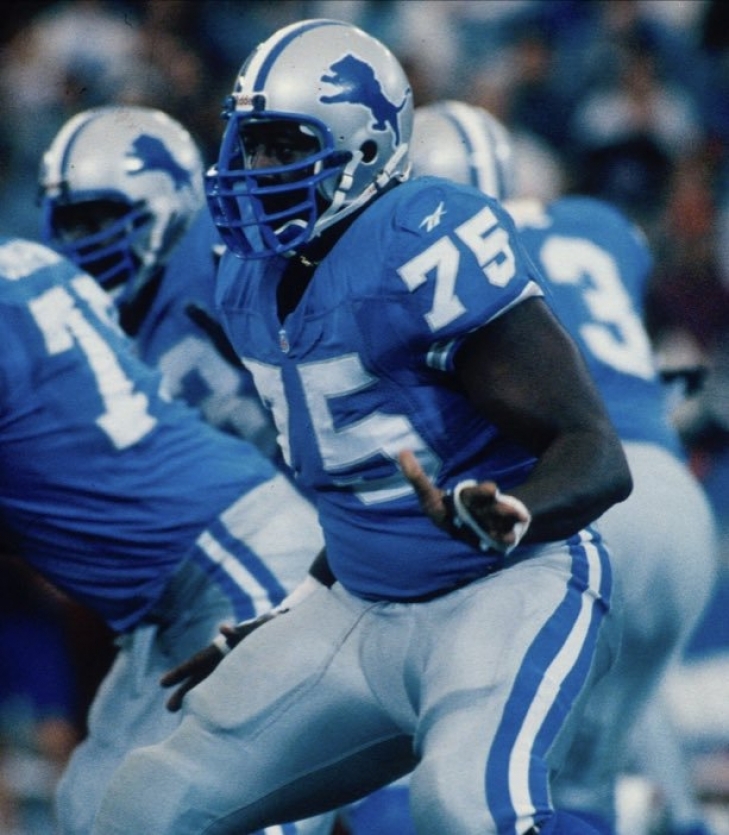
Lomas Brown played his first eleven seasons with the Detroit Lions, where his first six of seven Pro Bowls would take place. The Left Tackle would appear in seven straight Pro Bowls and would start in 251 of his 263 career games.
At the end of his career, he would assist the Tampa Bay Buccaneers in winning their first Super Bowl.
Although he is a seven-time Pro Bowler, Brown did six of those for a Lions team that was average at best and didn't get much national attention. Perhaps that is why he is so under the radar, given his accomplishments.
173. Byron "Whizzer" White
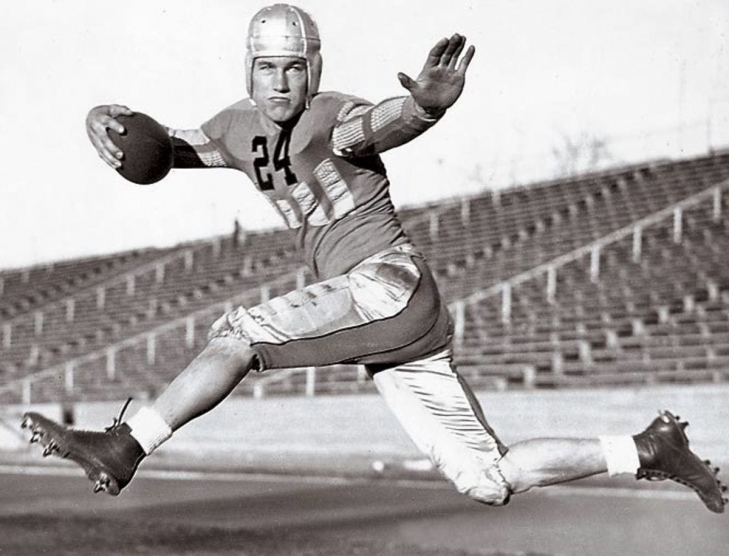
This one might be a little tough to justify, but it wasn't uncommon for players before World War II.
Byron “Whizzer” White was a hot commodity after being a consensus All-American at Colorado, and he was drafted 4th Overall by the Pittsburgh Pirates in 1938. As a rookie, he would lead the NFL in Rushing, but the National Football League was not the only organization that sought his talents. He played there for only one year, deferring his pro career to attend Oxford, but the Rhodes Scholar stayed only one year as he returned to the United States after the outbreak of World War II.
White returned to football and played for the Detroit Lions for two years, where in 1940 he again won the Rushing Title. Like many others, he enlisted in the military when the U.S. joined World War II; he served in the Navy as an officer in Military Intelligence. Although he was more than good enough to play football again after the war, he went into law and politics and became an Associate Justice of the Supreme Court. A great humanitarian, the Whizzer White Award is given annually to the NFL player for his charity work (though this would be changed to the Alan Page Award)
Despite playing only two seasons in the 1940s, he was chosen for the All-Decade Team, but a spot in Canton is hard to earn when you played only three years in total.
136. Tobin Rote
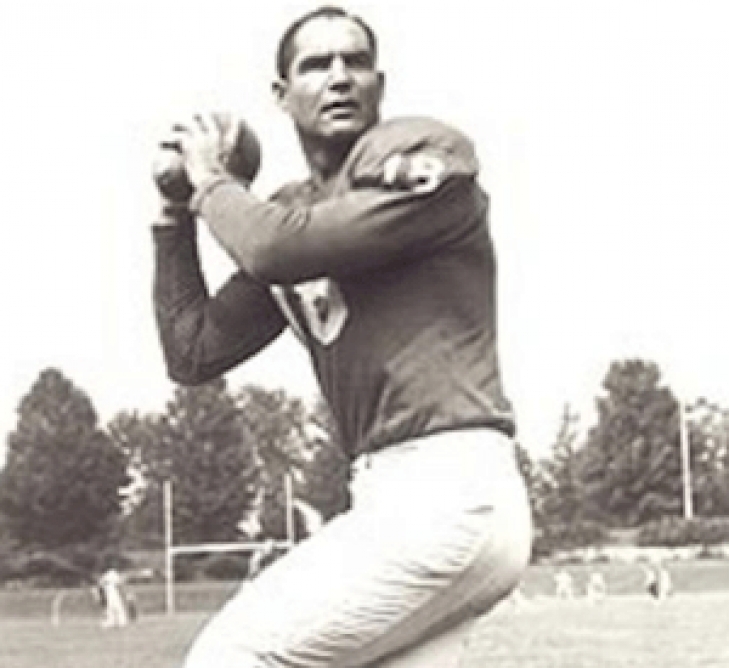
From Rice University, Tobin Rote was drafted by the Green Bay Packers, but in '50 the Pack was not very good, and wouldn't be for years. Green Bay's ineptitude wasn't Rote's fault; he proved to be an excellent QB, but he didn't have many teammates at his level. He was also a solid rusher, especially early in his career. For those who dismissed Rote in 1956, on what was still a mediocre Packers team, he led the NFL in Passing Yards and Completions and threw a then-record 29 Touchdown Passes. Despite that great season, the Packers traded him to Detroit, where he began the season sharing Quarterback duties with Bobby Layne, but he was clearly the main pivot on a team that would win the 1957 NFL Championship.
Sadly, Rote and the Lions had a disastrous 1959 season, and when he was released, he went north to play for the Toronto Argonauts of the Canadian Football League, where he did well, but American football called again, and he joined the San Diego Chargers. At age 35, he had the best season of his life, leading the AFL in Passer Rating (86.7) and taking his new team to a championship while winning the AP MVP. He would play another year in San Diego and a final one in Denver in 1966.
It can't be dismissed that Rote's decision to play in Canada hurt his overall chances, but this is one of the most underrated Quarterbacks not only of his day but of all-time.
18. Ox Emerson
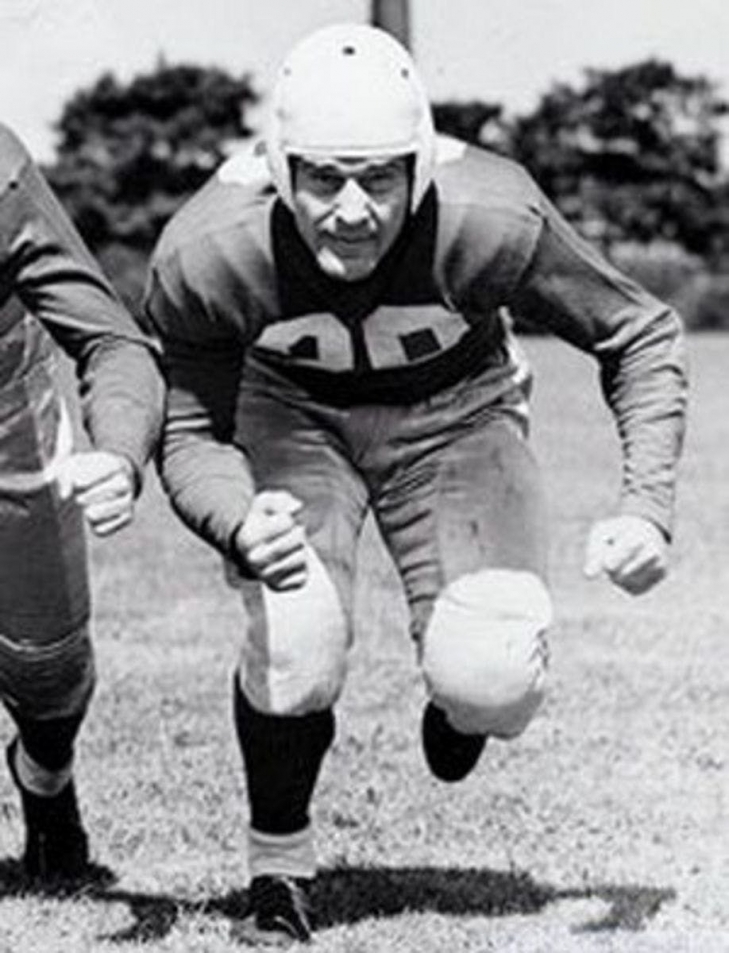
Ox Emerson was a member of the NFL All-Decade 1930's Team. He started his professional football career in 1931 with the Portsmouth Spartans. In his second season, he was selected to his first of five straight First Team All-Pros. Despite being ironically nicknamed due to his height of under six feet and weight of less than 200 pounds, Emerson used his skill and smaller size to his advantage, evading tacklers with his footwork and positioning.
After the Spartans relocated to Detroit, the team was renamed the Lions. Emerson played a crucial role in their 1935 championship win. Throughout his career, his work in the trenches was vital to the team's rushing success, making him one of the best linemen Detroit ever had. Emerson has been a Centennial Slate Hall of Fame Finalist, indicating he may gain entry through a seniors committee in the future, though given the Hall’s recency bias, we would not bet on it.
181. George Christensen
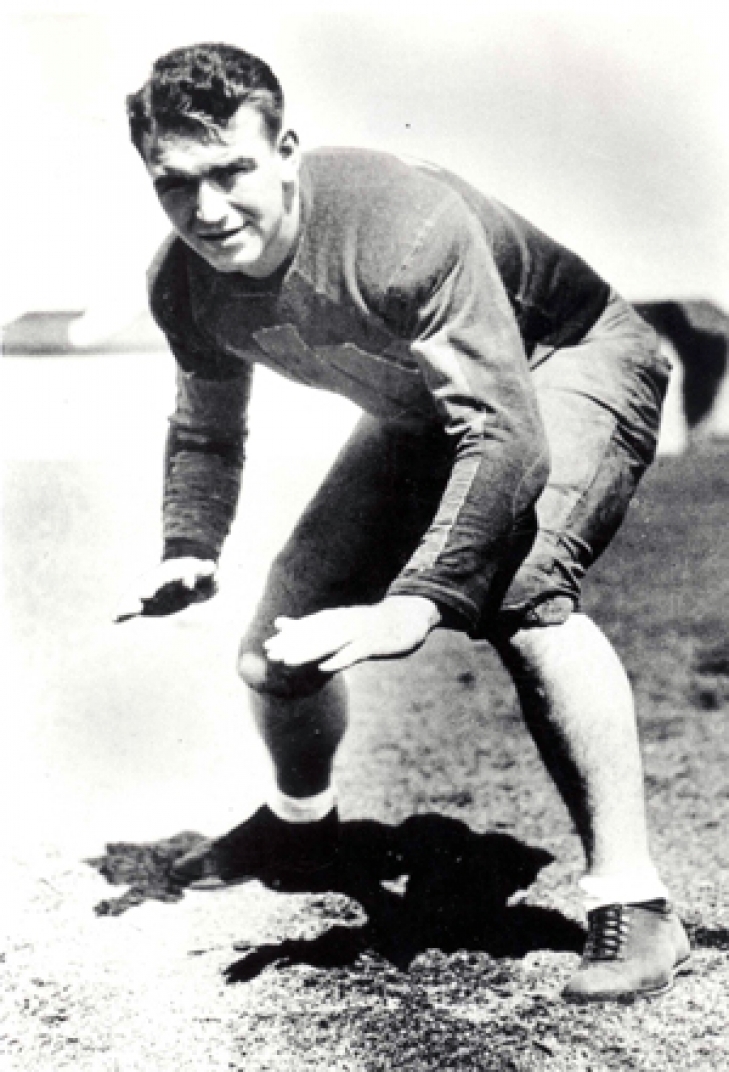
A member of the 1930's All-Decade Team, George Christensen, was one of the better Tackles of the decade (obviously based on the above accolade).
Christensen signed with the Portsmouth Spartans in 1931 and stayed with the team as it relocated to Detroit and became the Lions in 1934. The tackle helped Detroit win the NFL Championship in 1935, and he played his entire career with the organization, spanning 95 Games.
67. Pat Harder
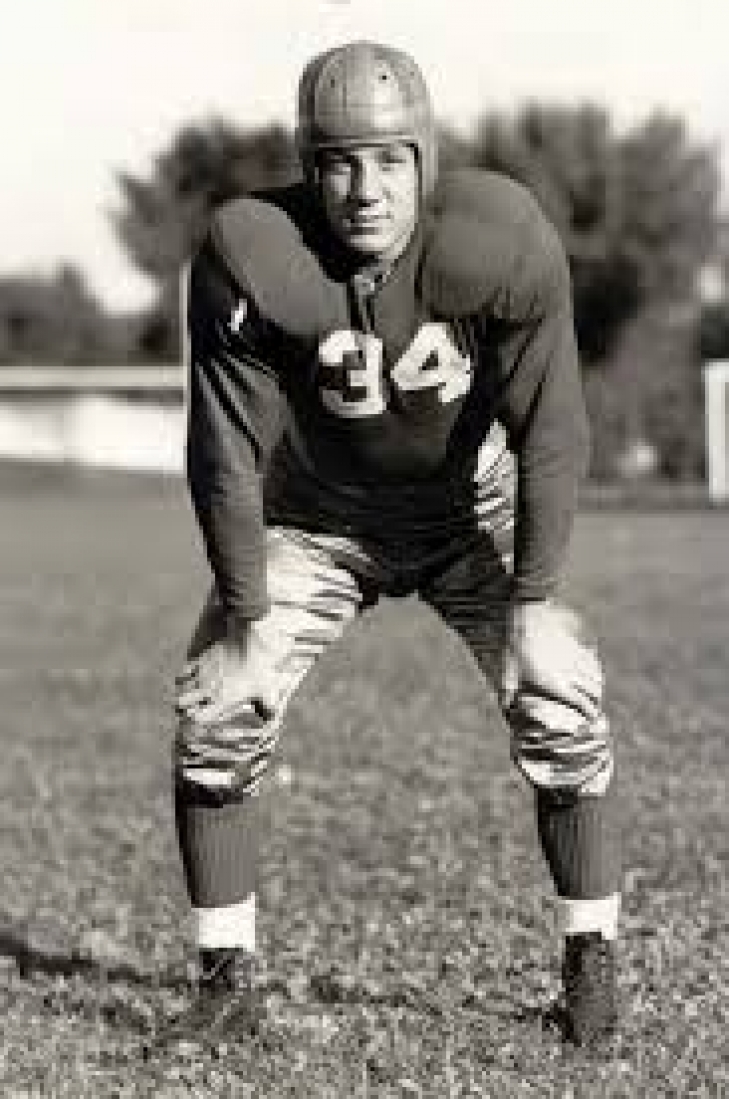
The 1944 2nd Overall Draft Pick from the University of Wisconsin, Pat Harder, lived up to the hype. He helped the Chicago Cardinals win the 1947 NFL Championship and earned First Team All-Pro honors for three consecutive years.
Playing at fullback and also serving as the Cardinals’ placekicker, Harder became the first player in NFL history to exceed 100 points in three straight years (1947-49). Blessed with power and speed, Harder had soft receiving hands and accumulated 3,880 yards from scrimmage over eight seasons, a decent number for his time. UPI named Harder MVP in 1948, and his overall accomplishments earned him a spot on the 1940s All-Decade Team.
Harder's success continued into the 1950s, as he went to the Pro Bowl in 1950. He then joined the Detroit Lions for his final three years, where he helped them win the NFL Championship in both 1952 and 1953 and was a Pro Bowler in the first of those two years.
The Top 50 Detroit Lions of All-Time are now up
We here at Notinhalloffame.com are slowly but surely working our way to give you the Top 50 of every major North American Franchise, and we are ready to present to you another one; this time the NFL’s Detroit Lions.
While many of you view the Lions as this sad sack team over the past few decades, this is a team that does have multiple NFL Championship appearances.
The complete list of our Top 50 Detroit Lions can be found here, but for those who want a preview of the top five, here you are!
1. Barry Sanders
2. Joe Schmidt
3. Bobby Layne
4. Lem Barney
5. Doak Walker
Take a look, give us your opinion and as always we thank you!
Up next, we will return to Motown with the Detroit Tigers.
44. Eddie Murray
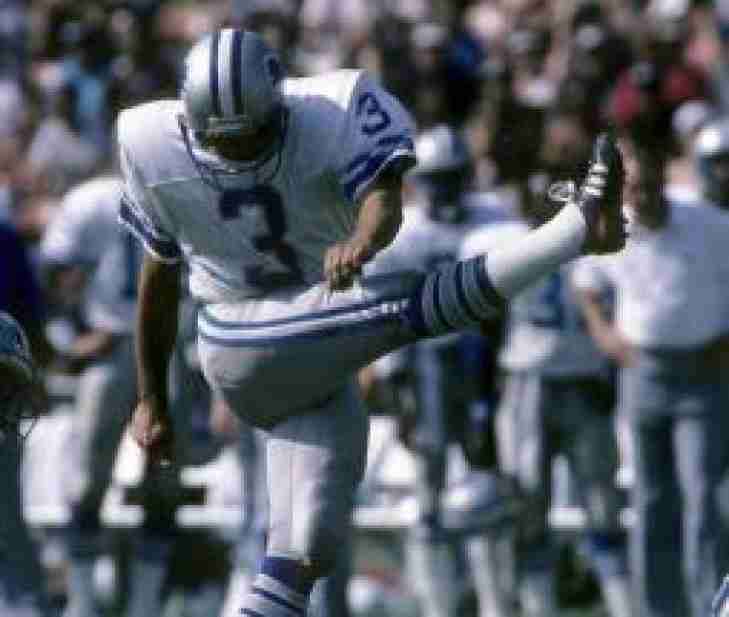
Selected out of Tulane in the seventh round (166th overall) of the 1980 NFL Draft, Eddie Murray faced the immediate pressure of stepping into Detroit’s primary placekicking job. The Canadian-born specialist answered with one of the most remarkable debut campaigns by a kicker in league history. Converting 27 of 42 field goals and scoring 116 points, Murray captured the NFC scoring title, earned a Pro Bowl nod, and took home PFWA All-Rookie Team honors. In the 1981 Pro Bowl, he delivered a five-field-goal clinic—becoming the first and only rookie kicker ever awarded the game’s MVP.
That record-breaking debut set a standard of steady production that defined Motown's special teams unit for over a decade. Under the Pontiac Silverdome roof, Murray had a booming leg paired with exceptional technical composure under pressure. He routinely converted long-range attempts in an era where 50-plus yarders were rare, setting a Lions franchise record in 1983 with a 54-yard strike—which he matched in the postseason that same year.
Murray’s calling card in Detroit was absolute precision. In back-to-back seasons in 1988 and 1989, he reached the absolute peak of kicking efficiency, leading the entire NFL by converting an astounding 95.2% of his field goal attempts in both years (20-of-21 in each campaign). That razor-sharp accuracy earned him his second Pro Bowl invitation following the 1989 season, solidifying his reputation as "Steady Eddie" among teammates and opponents alike.
The curtain fell on Murray's iconic run in Detroit during the spring of 1992. Following the team's run to the 1991 NFC Championship Game, the Lions opted to retool their special teams unit, waiving the 35-year-old veteran on April 29, 1992, after selecting future franchise icon Jason Hanson in the second round of the 1992 draft. While the roster move closed a twelve-year chapter, Murray departed as the Lions' all-time leading scorer with 1,113 points. He went on to play nine more NFL seasons—winning Super Bowl XXVIII with Dallas in 1993—before retiring after a legendary 21-year career.
With the Lions, Murray compiled 244 field goals made on 325 attempts (75.1%), 381 extra points made on 386 attempts (98.7%), for 1,113 points.
47. John Gordy
45. Nick Pietrosante
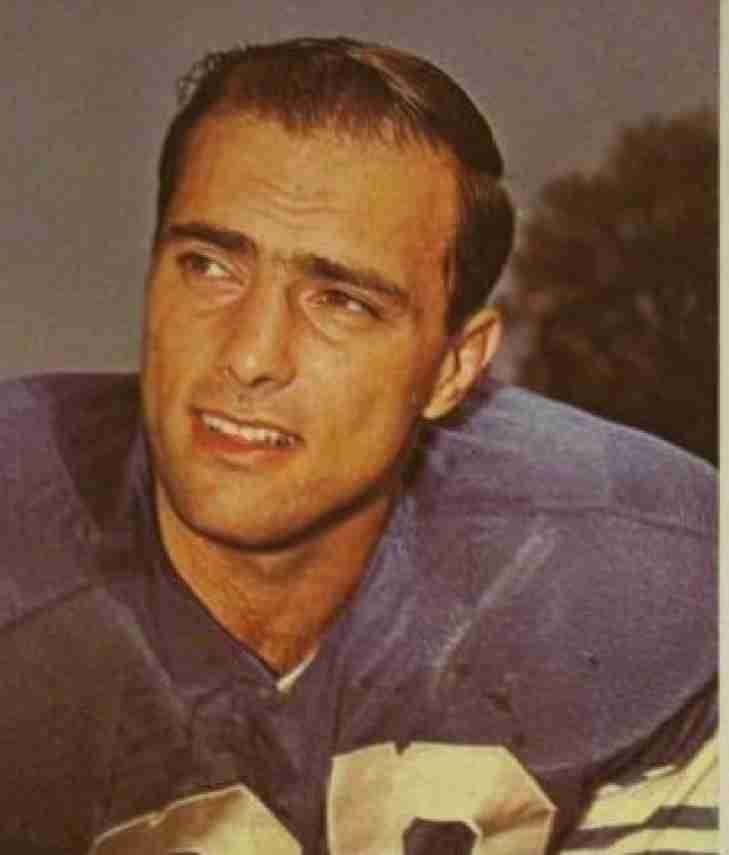
49. Charlie Weaver
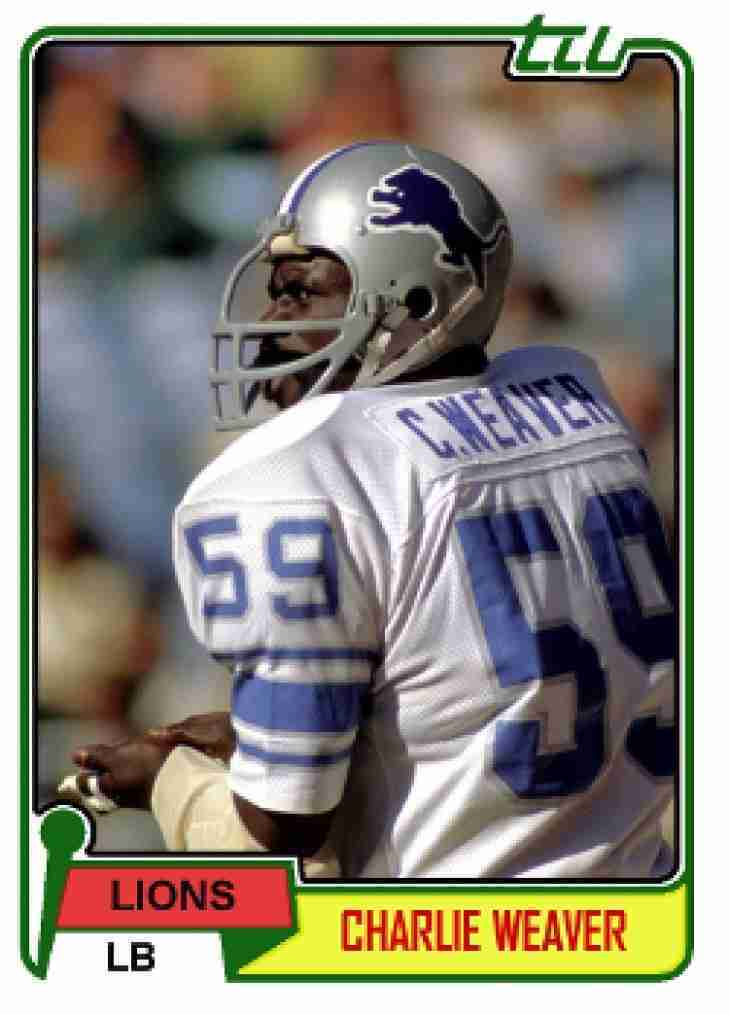
46. Mike Lucci
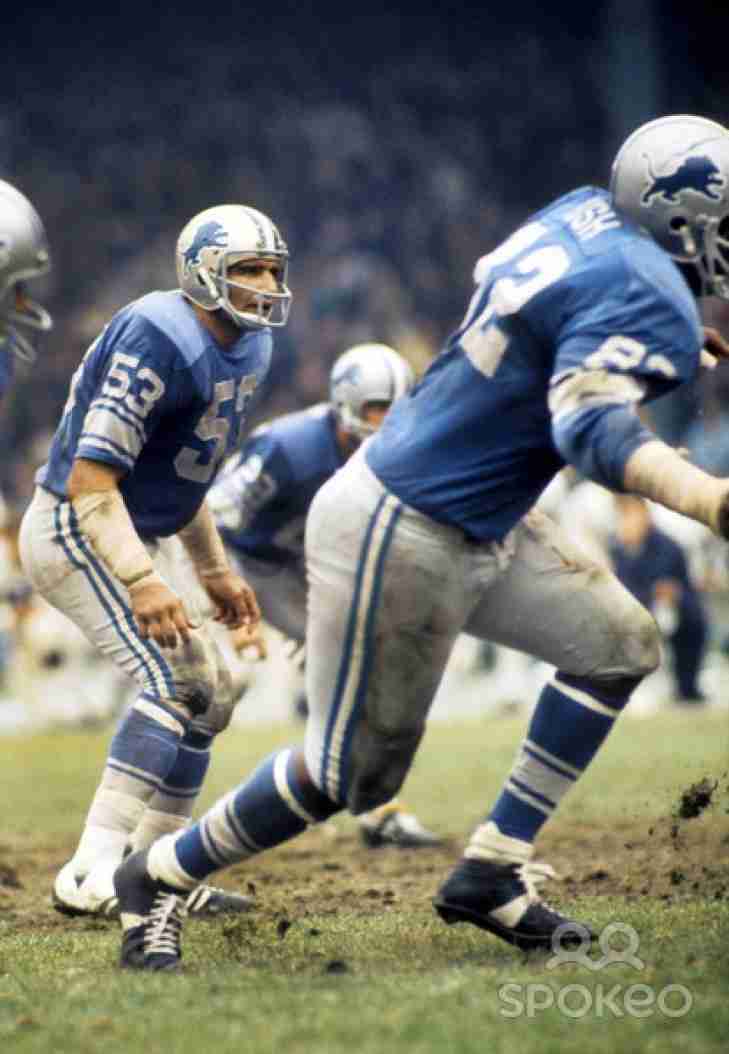
When the Detroit Lions acquired Mike Lucci from the Cleveland Browns before the 1965 season, they sought a physical successor to team legend Joe Schmidt in the middle of their defense. The former Pittsburgh and Tennessee product did more than fill a void; he became the unquestioned emotional heartbeat and vocal captain of Motown’s defense for nine gritty seasons.
Taking over as the starting middle linebacker in 1966, Lucci established a reputation as one of the toughest, most uncompromising interior defenders of his generation. Playing through broken bones, severe sprains, and structural injuries that would have sidelined lesser competitors, he commanded the huddle with an iron will. His exceptional pre-snap diagnostics enabled him to blow up interior running plays while dropping effortlessly into intermediate coverage to neutralize opposing tight ends.
Lucci reached the peak of his leadership between 1969 and 1971, a remarkable three-year stretch where his teammates voted him the Detroit Lions Team Defensive MVP in three consecutive seasons. Head coach Joe Schmidt lauded him as the league's top middle linebacker in 1969, and Lucci backed up that praise by earning Second-Team AP All-Pro honors while helping propel Detroit to a 10–4 record and a playoff berth in 1970.
During the 1971 campaign, Lucci was in the national spotlight, leading a tough defensive front. He intercepted five passes, scoring two touchdowns from those returns, and earned his first Pro Bowl selection. Over his nine seasons in Detroit, ending after 1973, Lucci totaled 21 interceptions — the most among NFL middle linebackers at the time. Four of these were returned for touchdowns.
45. Rocky Freitas
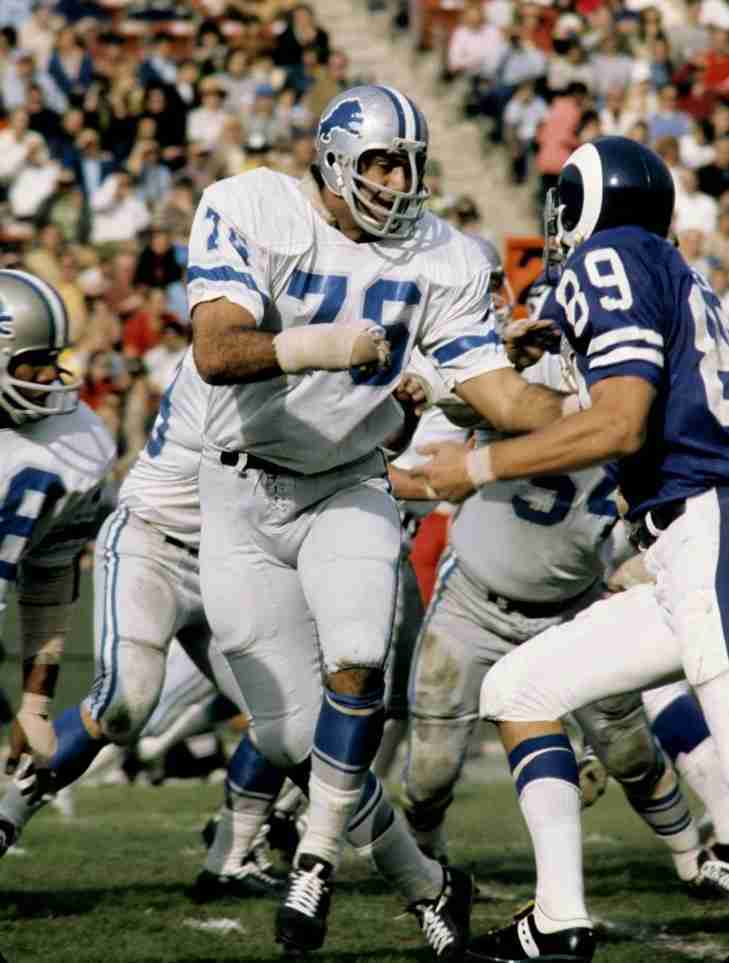
Selected in the third round (73rd overall) of the 1967 NFL Draft by the Pittsburgh Steelers out of Oregon State, Rockne "Rocky" Freitas spent his initial rookie offseason on the move before securing a permanent football home in Motown. Joining the Detroit Lions in 1968, the Kailua, Hawaii native quickly transformed into a bedrock anchor along the right side of the offensive line, leveraging his towering 6-foot-6 frame to overwhelm edge rushers and open massive holes for the ground game.
Taking over as the full-time starter at right tackle during his second campaign, Freitas gave the offense rare technical stability and raw physical power. His pass protection and run-blocking mechanics helped power Detroit to a 10–4 record in 1970, helping the franchise secure its first postseason berth since the merger.
His standard-setting performance came in 1972. Starting all 14 games at right tackle, Freitas anchored an offensive front that routinely dictated terms at the line of scrimmage. His dominant play earned him his first career Pro Bowl invite and Second-Team AP All-Pro honors, while posting a team-high 14 Approximate Value—an impressive mark for an offensive lineman that highlighted his standing as a force in the trenches.
Freitas remained a quiet, dependable cornerstone for Detroit throughout the mid-1970s, making 115 starts across 121 regular-season games in Honolulu blue. His durability and veteran poise steadied the Lions through multiple coaching shifts until his decade-long tenure in Michigan wrapped up after the 1977 campaign. He spent one final active season with the Tampa Bay Buccaneers in 1978 before hanging up his pads to build a distinguished second career in higher education and public leadership back home in Hawaii.
As the first Native Hawaiian player to earn NFL All-Pro honors, Freitas forged a groundbreaking legacy that extended far beyond the box score.
41. Altie Taylor
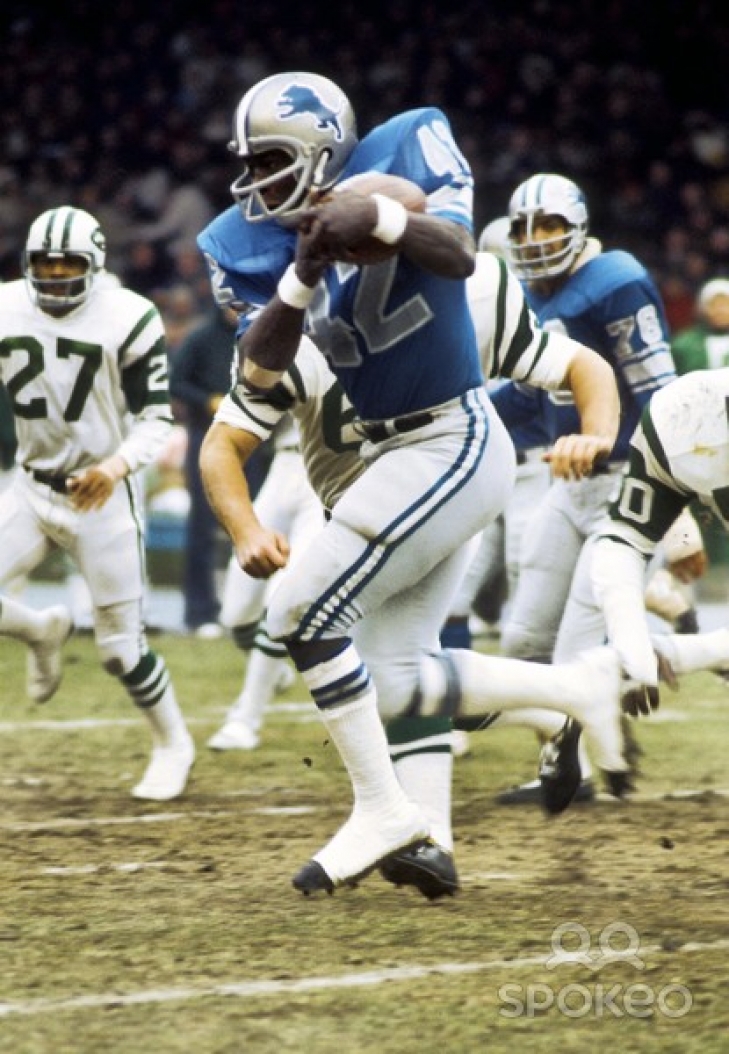
Selected in the second round (34th overall) of the 1969 NFL Draft out of Utah State, Altie Taylor entered the professional ranks known for his bruising style, sure hands, and versatility out of the backfield. Settling into Motown during a transition era for the franchise, the 5-foot-10, 200-pound ball-carrier quickly proved to be a durable, hard-nosed cornerstone for Detroit's offense.
After flashing potential as a rotational rookie, Taylor seized control of the backfield during the 1970 season, starting all 14 games and posting 927 yards from scrimmage to help propel the Lions to a 10–4 record and a playoff berth. Operating as a true dual-threat weapon, his soft hands out of the backfield complemented his rugged interior running, allowing him to consistently move the chains on third downs.
Taylor’s apex came between 1972 and 1974, a three-year stretch in which he served as the team's undisputed primary ground weapon and led Detroit in rushing three straight seasons. His crowning individual campaign arrived in 1973, when he compiled 719 rushing yards, 252 receiving yards, and five touchdowns. Highlighted by a signature 160-yard rushing performance against the rival Green Bay Packers, Taylor's grinding consistency earned him the honor of being named the Lions' Team Offensive MVP.
By 1975, Taylor had etched his name into the franchise record books, surpassing Nick Pietrosante to temporarily become the Detroit Lions' all-time leading rusher with 4,297 yards on the ground. Across his seven-year tenure in Detroit, Taylor accumulated over 6,000 all-purpose yards (including return yards) and scored 30 total touchdowns.
40. Mel Gray
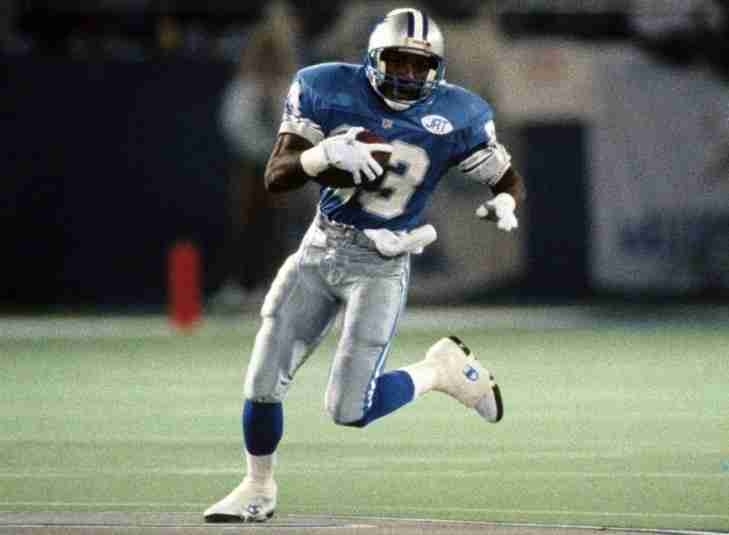
Before recent changes to the kickoff rule changed the game strategy, Mel Gray was a lightning-fast force on the field, particularly in field position. Joining Detroit in 1989 after playing in New Orleans and the USFL, the dynamic return specialist spent six key seasons shaping the Lions' special teams, setting standards for speed and agility that still stand unmatched in franchise history.
Gray saw limited involvement in Detroit’s standard offensive passing schemes, but his exceptional ability as a return specialist made him a key figure in the team's mid-1990s playoff campaigns. When punters and kickers missed the sidelines, Gray turned standard kicks into highlight-worthy plays. His sharp vision, quick burst of speed, and precise cuts often gave Barry Sanders and the Lions' offense advantageous field positions.
His prime years were between 1990 and 1994, a remarkable period when he earned First-Team AP All-Pro honors in three seasons (1990, 1991, 1994) and received four straight Pro Bowl selections. His standout performance was in 1994, leading the league with a remarkable 28.4-yard kickoff return average and returning three kickoffs for touchdowns, notably a 102-yard run versus the Chicago Bears.
By the time he left Detroit after 1994, Gray had nearly 7,000 return yards and 7 touchdowns with the Lions. He was the franchise leader in kickoff returns (216), yards (5,478), and touchdowns (5). Named to the NFL 1990s All-Decade Team as a kickoff returner, Gray’s legacy as a top special teams player in Motown endures.
37. Ed Flanagan
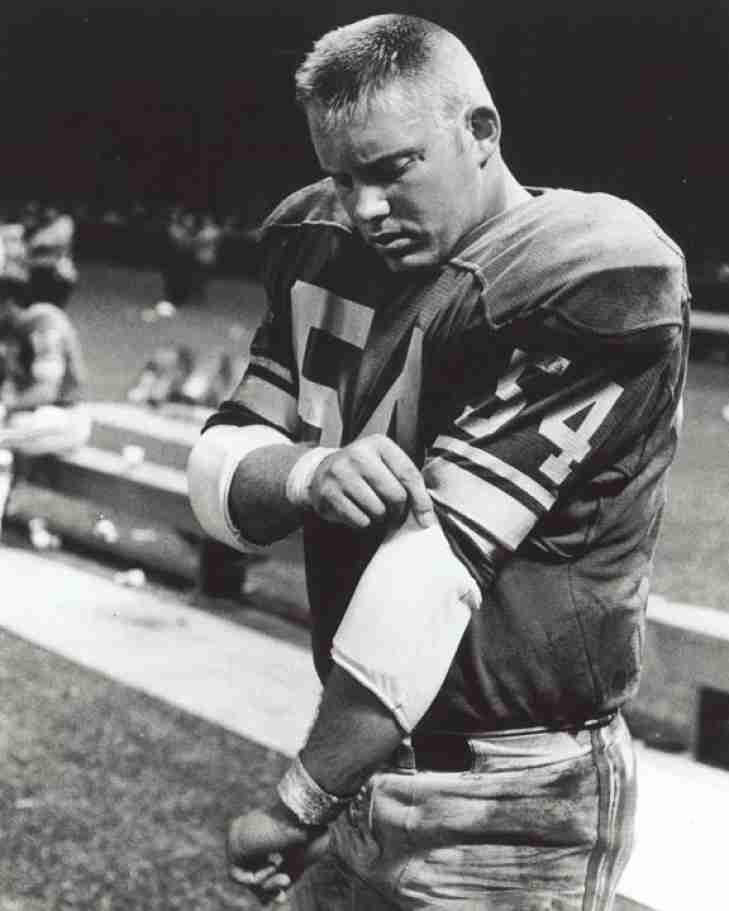
Selected in the fifth round out of Purdue in 1965, Ed Flanagan had an elite athletic foundation and technical mastery that allowed him to make an immediate impact. Stepping onto the field as a rookie, he instantly claimed the starting center spot, anchoring the middle of Detroit's offensive line with quiet brilliance for the next decade.
Flanagan stood out for his exceptional leverage, swift lateral movement, and flawless line calls, serving as the unsung engine for Detroit's offense. Operating in the trenches during a punishing era of interior line play, he earned immense respect from opposing defensive tackles across the NFC who recognized his tactical consistency. His exceptional play earned him four Pro Bowl selections (1969, 1970, 1971, 1973) and two Second-Team AP All-Pro nods (1969, 1970), solidifying his reputation as one of the premier centers of his era.
From 1965 through 1974, he anchored the pivot through a grueling 129 consecutive games, serving as a steady protector for quarterbacks like Greg Landry and Bill Munson while clearing lanes for power runners like Altie Taylor. After ten seasons in Detroit, he capped off his career with a two-year stint with the San Diego Chargers before retiring.
His contributions to the franchise were later recognized with selections to both the Lions 75th Anniversary Team and the All-Time Team.
29. Harley Sewell
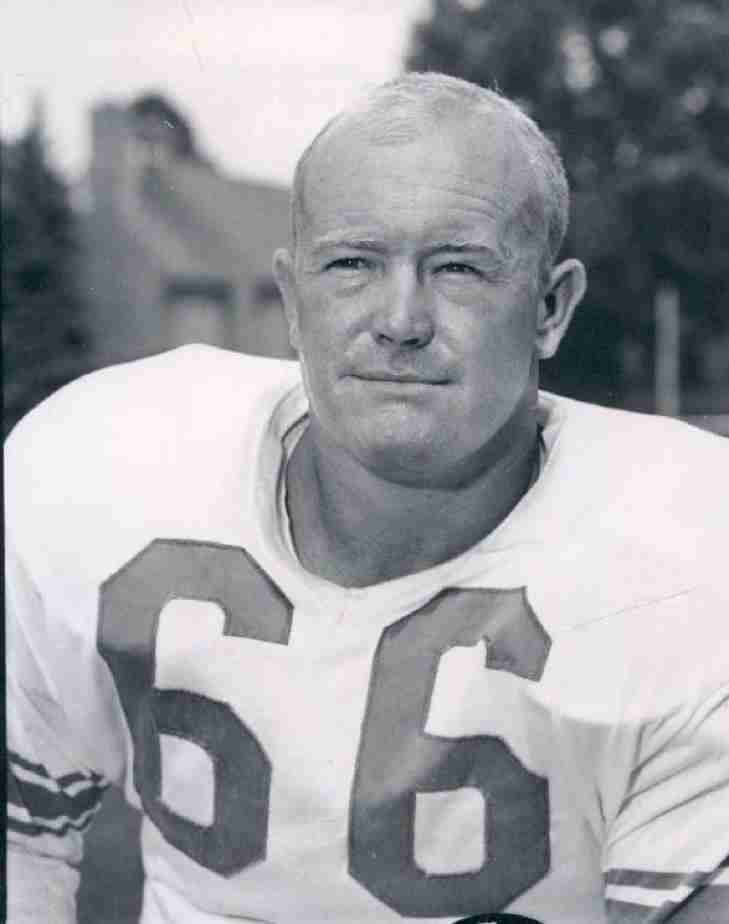
Taking him in the first round (13th overall) out of Texas in the 1953 NFL Draft, the Detroit Lions added an immediate physical presence to their interior line in Harley Sewell. Known for his exceptional speed and leverage as a pulling guard, Sewell stepped into the starting left guard spot as a rookie and instantly solidified Motown's offensive line.
Sewell's mobility made him the ideal lead blocker on sweeps and traps, clearing paths for iconic backs like Doak Walker and Bobby Layne. He earned immediate postseason success, helping power Detroit to an NFL Championship as a rookie in 1953 and capturing a second title ring in 1957. Recognized as one of the premier interior guards of his era, Sewell earned four Pro Bowl selections (1957, 1958, 1959, 1962) and a Second-Team AP All-Pro nod in 1957.
Beyond his offensive line mastery, Sewell was a relentless hustler who also starred on special teams, regularly leading the coverage units in tackles. After ten dependable seasons anchoring the Lions' interior, he concluded his career with a brief stint with the Los Angeles Rams in 1963. Detroit later honored his enduring impact with a spot on the Lions’ 75th Anniversary Team.
Sewell had 111 starts over his 120 games for the team.
20. Matthew Stafford
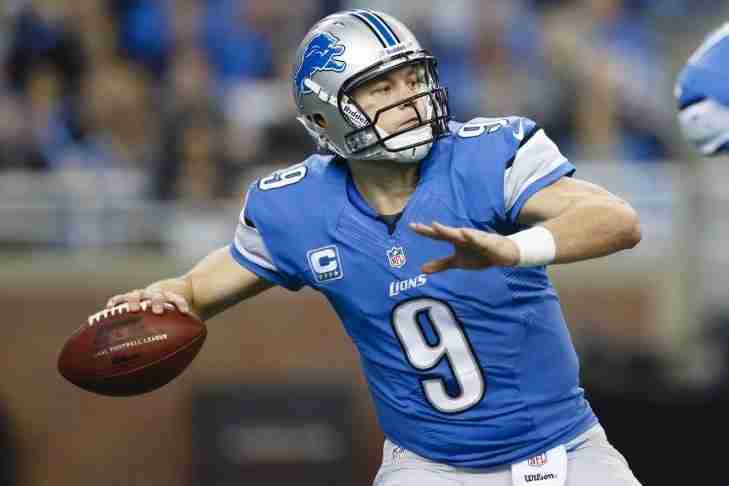
Selected first overall out of Georgia in 2009, Matthew Stafford stepped into a Motor City franchise coming off a bleak 0-16 campaign, tasked with resurrecting the organization from the ground up. Equipped with a signature cannon arm and extraordinary toughness, Stafford locked down the starting job instantly and spent twelve seasons operating as the unquestioned face of the franchise.
Stafford's statistical explosion came in 2011—his first fully healthy season—when he threw for 5,038 yards and 41 touchdowns, earning Comeback Player of the Year honors while leading Detroit to its first playoff berth in over a decade. Possessing lethal arm strength from every platform angle, Stafford made a habit of staging late-game heroics, setting an NFL single-season record in 2016 with eight fourth-quarter comeback victories.
Throughout his run, he developed an iconic connection with Hall of Famer Calvin Johnson, but even after Megatron's retirement, Stafford continued to rack up monster production. He cleared the 4,000-yard passing threshold in seven separate seasons as a Lion (19 overall), earned a Pro Bowl nod in 2014, and snapped a long franchise drought by becoming the first Lions passer since Greg Landry in 1971 to earn a Pro Bowl trip.
Despite his jaw-dropping volume, a lack of consistent defensive support and a nonexistent running game frequently left Stafford fighting uphill, resulting in a 74-90-1 regular-season mark in Detroit. A blockbuster 2021 trade sent him to the Los Angeles Rams, where he immediately validated his elite ceiling by capturing Super Bowl LVI in his inaugural West Coast campaign.
Over his run in Detroit, Stafford compiled 45,109 passing yards, with a 282-144 TD-INT ratio.
,
