

Committee Chairman
37. Carlos Santana
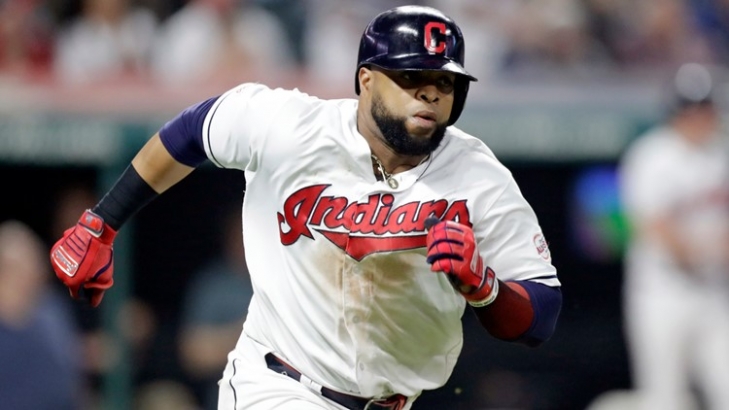
Whenever a nickname perfectly summarizes a player's primary contribution to the game, it becomes the only logical place to start. For Carlos Santana, the moniker "Slamtana" was more than just a catchy title; it was a warning to American League pitchers that a mistake over the plate would likely result in a ball clearing the outfield wall. Arriving in Cleveland as a highly touted catching prospect in 2010, the Dominican slugger evolved into one of the most disciplined offensive forces in the franchise’s modern era, defined by a rare combination of switch-hitting power and an elite refusal to swing at bad pitches.
Santana’s initial run in Cleveland was marked by a steady reliability that saw him transition from behind the plate to first base to preserve his health and his bat. He established a baseline of specialized production that few could match, launching at least 20 home runs in five of his first seven full seasons. While his batting average often hovered in the modest range, he was a model of high-frequency on-base efficiency. His skill was defined by a legendary eye, leading the American League with 113 walks in 2014 and consistently forcing opposing starters to run up high pitch counts early in the game.
After a single-season hiatus in Philadelphia, his return to Cleveland in 2019 provided a triumphant second act that stands as his professional high-water mark. That summer, Santana played with a level of focused intensity that transformed him from a reliable contributor into a legitimate MVP candidate. He reached a career-best .281 average while setting personal records in home runs (34) and RBIs (93), earning his first All-Star selection and a Silver Slugger Award. He was the veteran poise in a young lineup, providing the high-leverage hits required to keep the club in the hunt for a postseason berth.
The final chapter of his Cleveland story was written in 2025, when he returned for a third stint after the club traded Josh Naylor. While this homecoming lacked the statistical fireworks of his 2019 peak—resulting in a .225 average and 11 home runs, it served as a meaningful homecoming for a player who considered the city family.
With Cleveland, Santana compiled 227 home runs and 1,286 hits while leading the American League in walks twice across 1,450 games.
38. Francisco Lindor
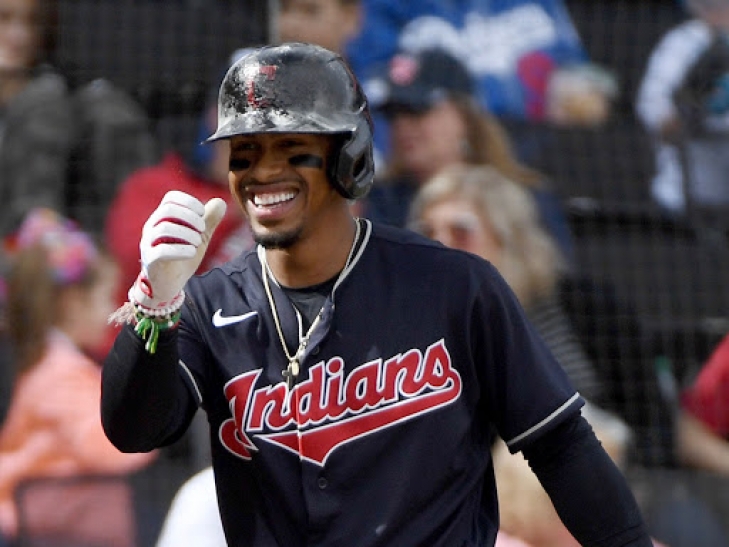
When Francisco Lindor arrived in Cleveland in 2015, he brought a megawatt smile and a generational skillset that instantly transformed the franchise’s trajectory. Known as "Mr. Smile," Lindor played with a joy that masked a ruthless competitive edge, quickly proving that he was the premier total-package shortstop of his era.
Lindor’s impact was immediate, a high-velocity entrance that saw him finish as the Rookie of the Year runner-up with a .313 average. This was merely the prelude to a four-year run of dominance during which he established a permanent presence in the All-Star Game. He was a model of specialized versatility, blending elite contact skills with a surprising power surge that saw him launch at least 32 home runs in three consecutive summers. Between 2016 and 2018, his value was so undeniable that he finished in the top nine of the MVP voting every year, serving as the tactical engine of a Cleveland squad that pushed the 2016 World Series to the final inning.
The most profound aspect of his tenure was the sheer volume of elite production he delivered daily. Lindor was a master of durability and high-frequency output, leading the American League in plate appearances three times and pacing the circuit with 129 runs scored in 2018. His craftsmanship extended far beyond the batter's box; he was a defensive technician who collected two Gold Gloves and a Platinum Glove, proving he was the league’s most efficient run-preventer. He possessed a rare ability to influence every facet of the box score, swiping at least 15 bags annually while maintaining a slugging percentage that hovered near .500.
The stay in Cleveland reached a premature conclusion after the 2020 season when a cost-cutting trade sent him to the New York Mets. With Cleveland, Lindor compiled 138 home runs, 99 stolen bases, and 804 hits while securing four All-Star nods and two Gold Gloves.
44. Luis Tiant
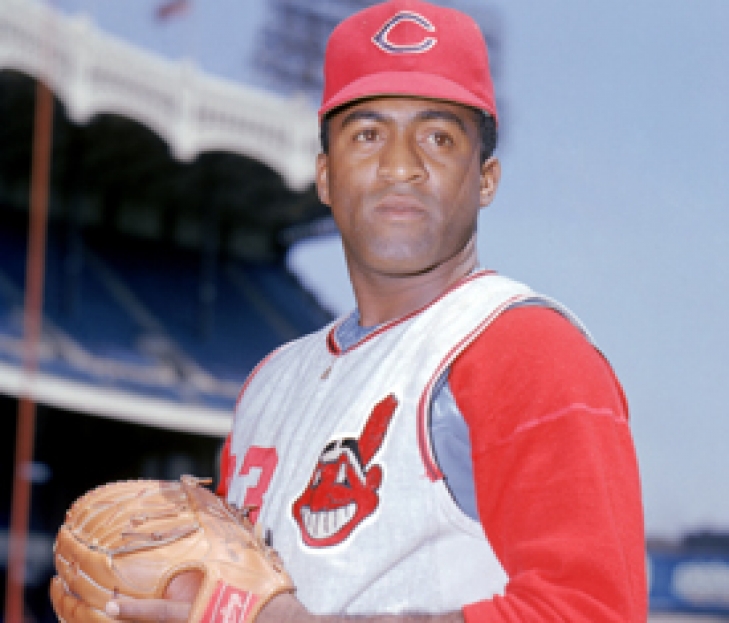
While the high-leg kick and Fu Manchu mustache became icons of Fenway Park, the foundation of Luis Tiant’s legend was laid in the specialized pitching environment of 1960s Cleveland. Arriving from the Mexican League with a deceptive delivery and a professional resilience that would define his two-decade career, "El Tiante" transformed from a high-upside rookie into one of the most untouchable arms in the American League.
Tiant’s tenure in Cleveland began with a high-velocity entrance in 1964, where he posted a 10-4 record and a 2.83 ERA. He immediately established a model of specialized efficiency, ranking tenth in bWAR for pitchers in both his rookie year and 1966. He possessed a rare, high-leverage durability, serving as a pillar of the rotation throughout the mid-60s even when the run support was lean. His approach was built on a unique, corkscrew delivery that hid the ball until the final possible moment, a technical advantage that allowed him to consistently rank among the league leaders in efficiency metrics long before his traditional "win" totals caught up to his true value.
The absolute peak of his Cleveland stay arrived in 1968, a season that remains a statistical landmark in franchise history. Tiant orchestrated a campaign of total dominance, leading the American League in ERA (1.60), hits per nine innings (5.3), and bWAR for pitchers (8.5). He reached the magical 20-win plateau for the first time, punctuating his season with a career-high 264 strikeouts and a fifth-place finish in the MVP voting.
In 1969, Tiant faced a difficult "fall back to earth," leading the league with 20 losses despite maintaining a respectable strikeout rate. However, as the old baseball adage suggests, a pitcher has to be exceptionally talented to be trusted with enough starts to lose 20 games. This professional resilience remained his calling card even as a trade sent him to Minnesota in 1970, a move that eventually paved his way to immortality in Boston. He departed Cleveland with 75 wins and over 1,000 strikeouts, leaving behind a 2.84 ERA that stands as a testament to his elite command of the zone.
He eventually earned his place in the Cleveland Guardians Hall of Fame.
36. Charles Nagy
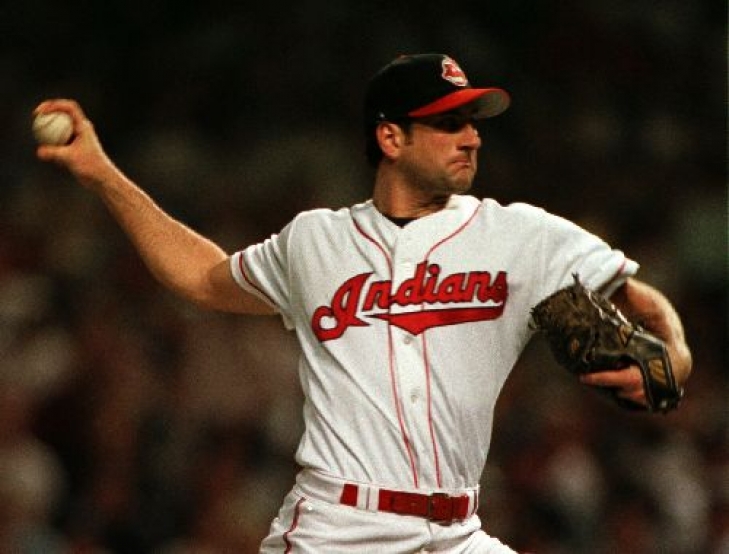
Long before he was a fixture in the Cleveland rotation, Charles Nagy was already a champion, arriving on the North Coast with an Olympic Gold Medal from the 1988 Seoul Games. When he stepped onto the Major League stage in 1990, he traded his national colors for the Tribe’s navy and red, beginning a thirteen-season journey that would see him become the iron man of the franchise's most explosive decade.
Nagy’s career in Cleveland was a study in professional resilience, as he evolved from a young prospect into the staff’s undisputed workhorse. He established himself as a frontline winner during the club's resurgence, authoring a consistent peak that saw him reach the 17-win plateau on three separate occasions. These were not merely volume stats; he was a model of specialized efficiency, earning All-Star honors in each of those 17-win summers and consistently appearing in the top ten of the American League Cy Young voting. He possessed a specialized ability to eat innings, providing a steadying presence for a team that was constantly under the high-leverage pressure of the postseason.
The most profound aspect of his tenure was his role as a statistical titan during the club's legendary run at Jacobs Field. Nagy was a master of the "big game" workload, starting 297 games for the organization and twice leading the league in games started. His craftsmanship reached a statistical summit in the mid-90s, where he finished in the top ten for Pitcher bWAR three times, proving that his value extended far beyond the win-loss column. He served as the tactical engine of a rotation that bridged the gap between the lean years of the early decade and the championship-contending era, securing 129 victories in a Cleveland uniform.
The organization provided the ultimate punctuation on his career in 2007 by inducting him into the Cleveland Hall of Fame.