

Committee Chairman
48. Bert Blyleven
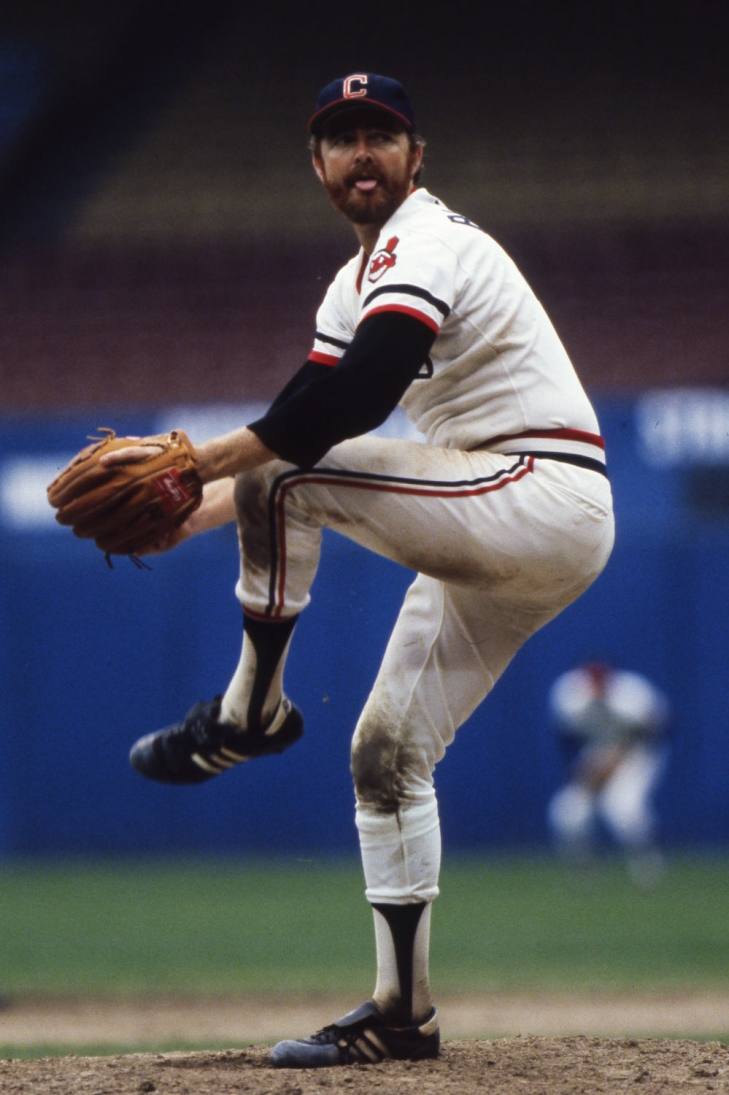
While Bert Blyleven is often draped in the colors of Minnesota or Pittsburgh, his five-season residency in Cleveland provided some of the most statistically dominant pitching of the 1980s. Born in the Netherlands and raised in California, Blyleven arrived in 1981 as a proven champion with a curveball many hitters considered the best in the sport's history.
Blyleven’s arrival in Cleveland was defined by an immediate and relentless efficiency. Despite the strike-shortened nature of the 1981 campaign, he established himself as a model of specialized dominance, finishing the year with an 11-7 record and leading the American League in bWAR for pitchers. He possessed a rare, high-leverage durability that allowed him to navigate a serious elbow injury in 1982 and return with a focused intensity. His approach reached a second era of excellence in 1984, a summer when he orchestrated a masterclass in run prevention. That year, he posted a 19-7 record with a 2.87 ERA, earning a third-place finish in the Cy Young voting and proving he was still the most efficient starter in the league.
Blyleven’s calling card was a high-frequency strikeout ability paired with a "rubber arm" that allowed him to lead the league in shutouts and complete games. Even during a volatile 1985 season, Blyleven remained a model of steady-state production; while the Indians hovered near the bottom of the standings, he earned an All-Star selection on the strength of his individual metrics. He was a tactical engine that kept the club competitive in every start, eventually being traded to Minnesota at the deadline, where he finished the year by leading the league in strikeouts (206) and securing another top-three Cy Young finish.
With Cleveland, Blyleven compiled 48 wins and 548 strikeouts while leading the American League in pitching bWAR in 1981.
The ultimate punctuation on his career arrived in 2011, when he was finally inducted into the Baseball Hall of Fame.
47. Travis Hafner
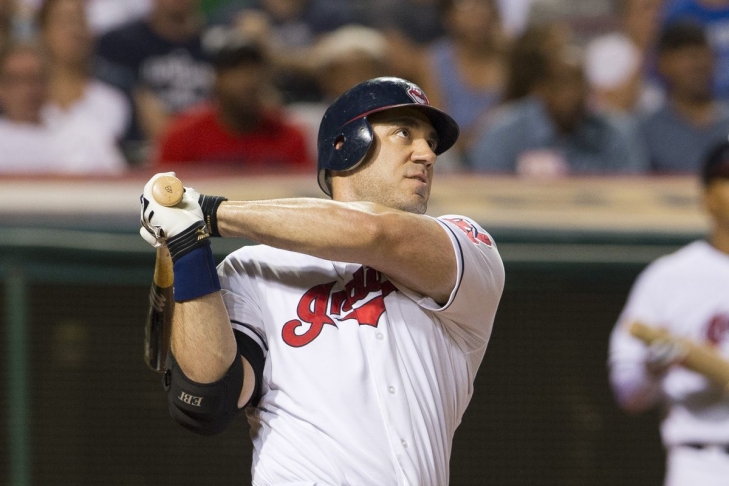
The acquisition of Travis Hafner in late 2002 stands as one of the most lopsided trades in Cleveland history, as the front office managed to extract a premier middle-of-the-order force from Texas for a package that barely registered in the box scores. Known as “Pronk”, a nickname that perfectly captured his imposing physical frame and easygoing demeanor, Hafner arrived in 2003 and quickly transformed the North Coast into a destination for high-velocity offensive output. For a terrifying four-year stretch in the mid-2000s, he was arguably the most feared left-handed hitter in the American League, providing a blend of plate discipline and raw strength that consistently demoralized opposing pitching staffs.
Hafner’s stay in Cleveland was defined by a rapid ascent into the elite tier of modern designated hitters. After securing a full-time role in 2004, he began a relentless run of production, never dipping below 24 home runs or 108 RBIs over four consecutive summers. In 2006, a season that remains a statistical masterpiece. That year, he blasted 42 home runs and led the American League in both slugging percentage (.657) and OPS (1.097). He was a model of steady-state dominance, famously tying the MLB record with six grand slams in a single season, a feat that perfectly illustrated his ability to deliver in the highest-leverage moments.
The most profound aspect of his game was a disciplined eye that balanced his massive power profile. Between 2004 and 2007, Hafner was more than just a slugger; he was a refined contact hitter who maintained a batting average north of .300 for three straight years. He possessed a specialized ability to drive the ball to all fields, serving as the primary engine for an offense that returned to the top of the AL Central standings. While he narrowly missed out on the MVP award, finishing fifth in 2005 and eighth in 2006, he was the undisputed heart of the Tribe’s lineup, providing the veteran-like poise required to anchor a young, explosive roster.
His presence in Cleveland was eventually tested by a series of persistent shoulder and hand injuries that began to sap his strength in 2008. Despite these physical hurdles, he showed a professional resilience by remaining a valuable contributor for the organization through 2012, occasionally flashing the "Pronk" power that had defined his prime.
After a decade of service, he signed with the New York Yankees in 2013, marking the end of one of the most productive eras for a left-handed hitter in club history. He departed with a career .509 slugging percentage as an Indian and a reputation as a man who could change the scoreboard with a single flick of the wrists.
With Cleveland, Hafner compiled 200 home runs, 1,039 hits, and a .906 OPS while leading the league in slugging in 2006.
45. Ray Chapman
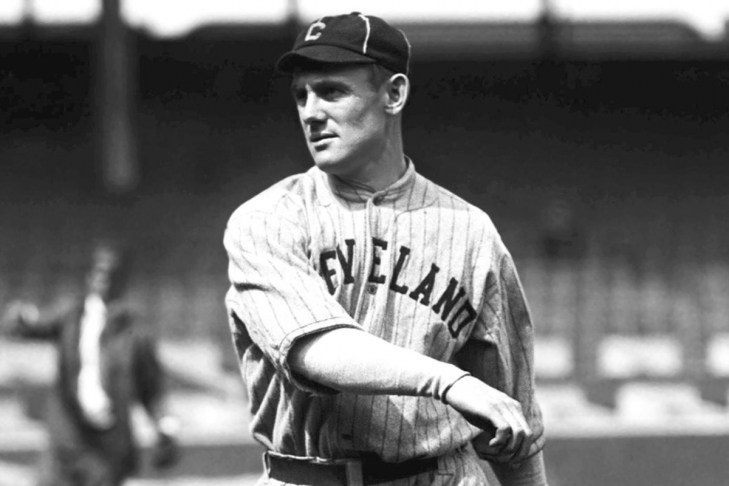
Ray Chapman was more than just a shortstop for Cleveland; he was the soul of an era that balanced the gritty mechanics of the Deadball age with the emerging power of the 1920s. Arriving in 1912, the Kentucky native quickly became a fixture in the middle of the diamond, earning a reputation as one of the most intellectually sharp and physically reliable players in the American League.
Chapman’s tenure in Cleveland was defined by defensive brilliance and a selfless offensive approach. He established himself as an elite run-preventer at shortstop, three times leading the league in putouts, assists, and range factor. While he was a versatile athlete capable of sliding to second or third base when the situation demanded, his mastery of the "six" hole was his primary contribution. Offensively, he was a model of specialized discipline; he was a premier bunter who three times paced the circuit in sacrifice hits, a skill that still sees him ranked sixth on the all-time MLB leaderboard. He possessed a keen eye, leading the league in walks in 1918 and providing the table-setting patience required to ignite the Cleveland offense.
The 1920 season was intended to be the final chapter of his professional journey. Having recently married into a prominent family, Chapman had quietly planned to retire at the conclusion of the year to join the family business. He authored a superb campaign, batting .300 and scoring nearly a run per game, as he led the Indians toward a high-stakes showdown with the Yankees. However, the narrative took a tragic and permanent turn on August 16, 1920. Struck in the temple by a "submarine" delivery from Carl Mays, Chapman collapsed at the plate. In an era where "doctoring" the ball was common, the dark, scuffed baseball was nearly impossible to track in the twilight, and the impact proved fatal. He passed away the following morning, becoming the only player in major league history to die as a direct result of an on-field injury.
With Cleveland, Chapman compiled 1,053 hits, 671 runs, and 233 stolen bases while helping the club to its first World Series title.
40. Charlie Jamieson
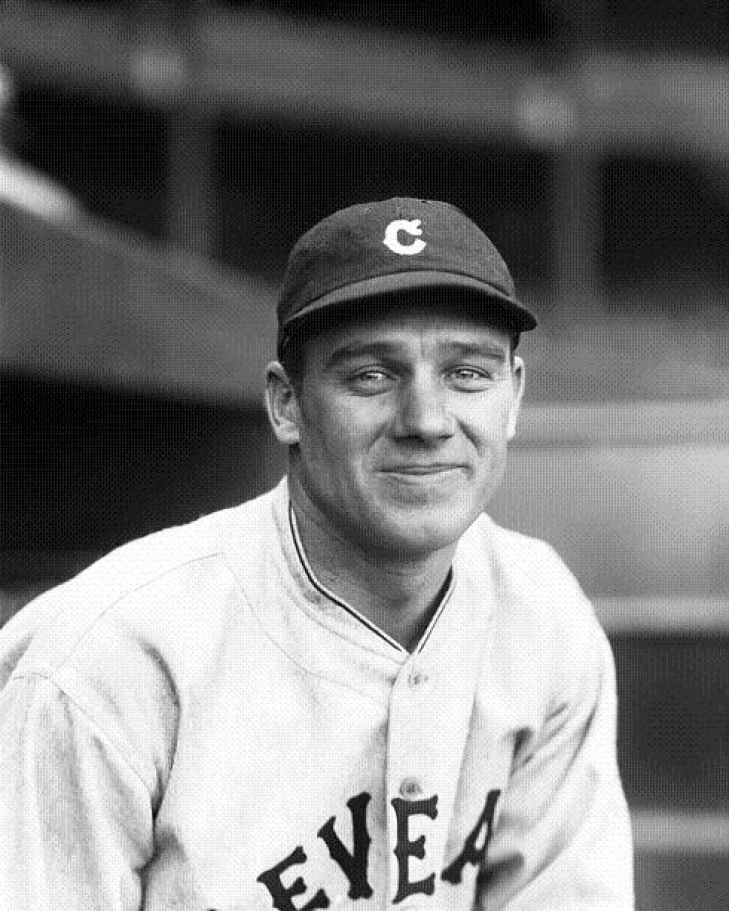
In the high-scoring landscape of the 1920s American League, Charlie Jamieson emerged as the quintessential leadoff man for Cleveland. Arriving via trade in 1919 after modest stints in Washington and Philadelphia, the left-handed outfielder didn't just find a home on the North Coast; he became the table-setter for one of the most prolific offensive eras in franchise history. Known for a specialized ability to manipulate the bat and a relentless approach at the plate, "Cuckoo" Jamieson spent over a decade proving that a hitter didn't need the frame of a titan to become a star.
Jamieson’s tenure in Cleveland was defined by a high-velocity transition from a reserve role to a frontline tactical force. While he provided the veteran poise that helped the 1920 squad capture the franchise's first World Series title, his individual production improved in the years that followed. He was a model of specialized efficiency, authoring a seven-year stretch from 1921 to 1927 where he recorded at least 150 hits annually. This was most evident in 1923, a summer where he led the American League with 222 hits and batted a career-high .345, serving as the high-leverage engine that ignited the Cleveland offense.
The most profound aspect of his game was a professional resilience that allowed him to maintain a .316 average across nearly 1,500 games in a Cleveland uniform. Jamieson was a master of the "small ball" era, twice leading the league in at-bats and consistently ranking among the elite in singles and triples. While he lacked the raw power of the era’s emerging sluggers, launching only 18 home runs during his stay, he compensated with a high-frequency ability to reach base and score. He twice eclipsed the 100-run plateau and was a fixture in the top ten for batting average, proving that his value was built on the steady-state excellence of a professional contact hitter.
Age caught up to him, and after the 1932 season, he left the Majors. He departed with 942 runs scored, 1,753 hits, and a .316 batting average while leading the league in hits in 1923.
The organization provided the ultimate punctuation on his career nearly a century later, inducting him into the Cleveland Hall of Fame in 2016.