

43. Jim Everett
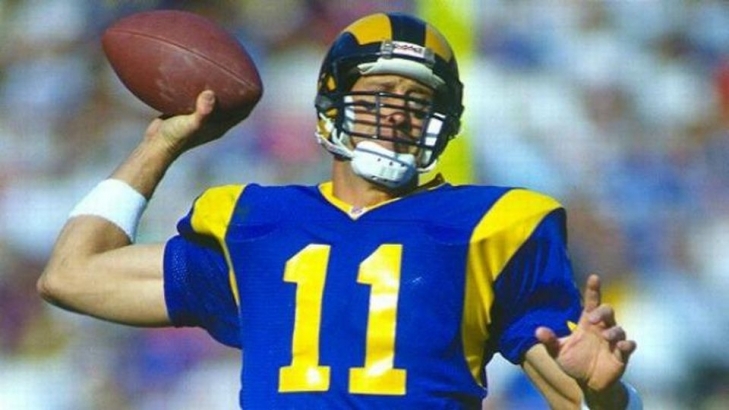
In retrospect, Jim Everett got a bad rap. He feuded with Jim Rome (who labeled him "Chris" in reference to his play comparing him to the female player, Chris Evert), the Rams gave up a lot for his rights, and he had an overall losing record.
32. Fred Dryer
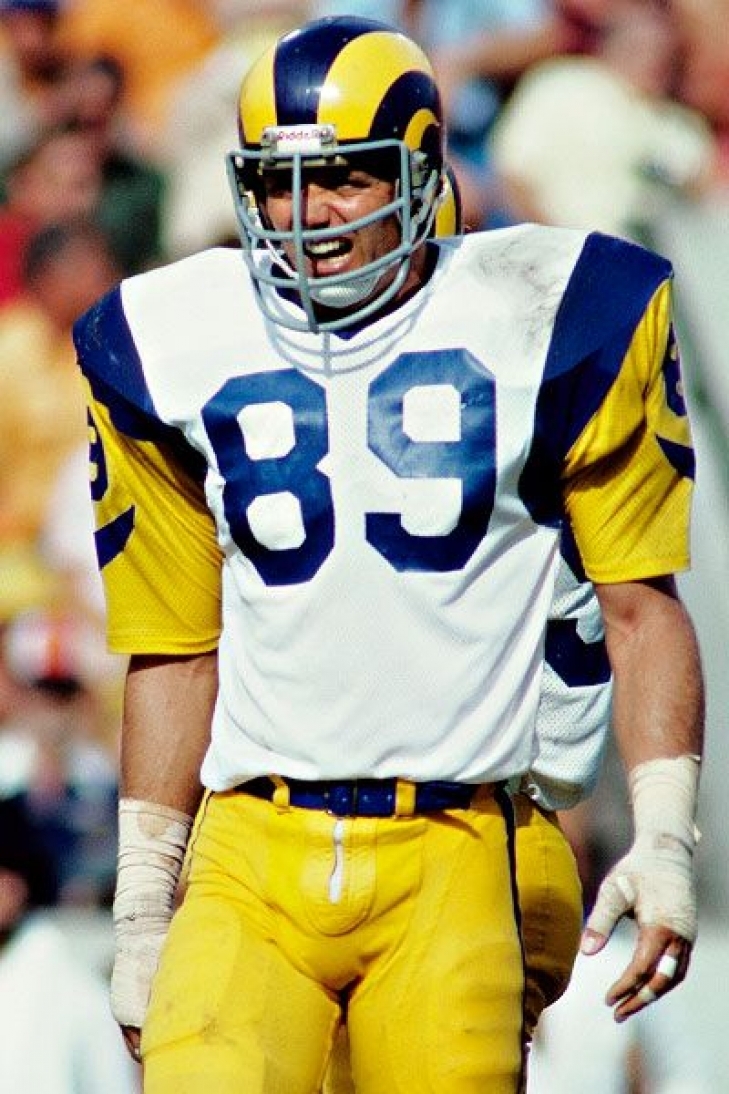
From San Diego, Dryer played collegiately at San Diego State and was drafted in the First Round by the New York Giants in 1969. While Dryer's play was strong for the G-Men, he was not happy there and the Giants became frustrated with him so he would be traded to New England, who he refused to play for as there was no new contract and they traded him to the Los Angeles Rams as the Patriots declined to pay him what he asked.
48. Lamar Lundy
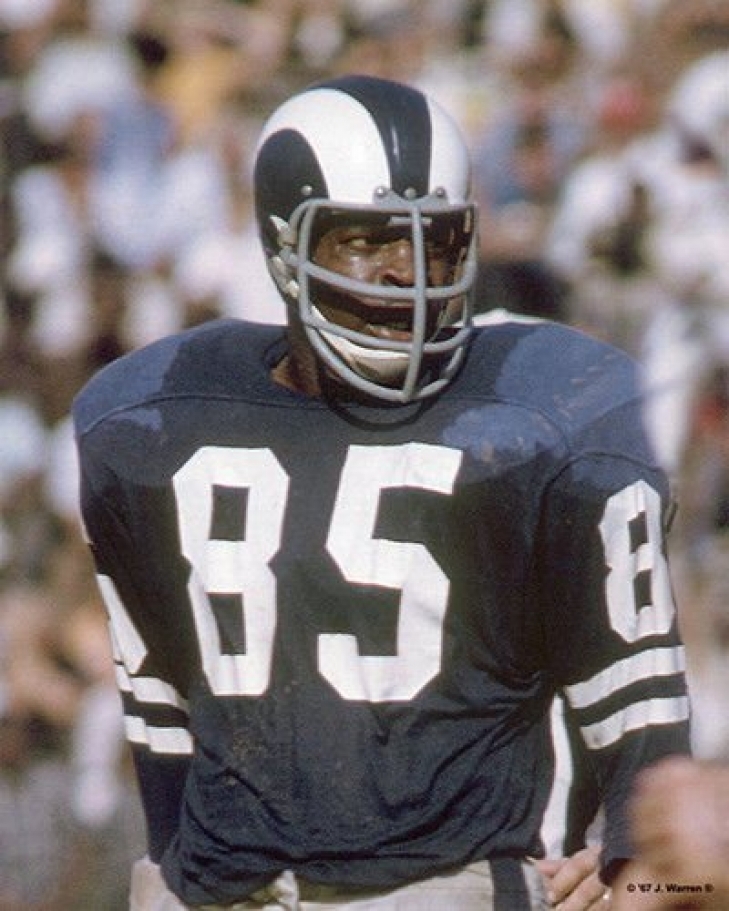
Standing at 6' 7", Lamar Lundy might have been the most imposing figure of the Rams' famed "Fearsome Foursome" and was part of a revolution of sorts that helped to glorify modern defense. The two-sport athlete (he was also a basketball player) was the first black player to receive an athletic scholarship at the University of Purdue, and he opted for a career in Pro Football much to the delight of Los Angeles Rams fans.
47. Andy Robustelli
46. Dave Elmendorf
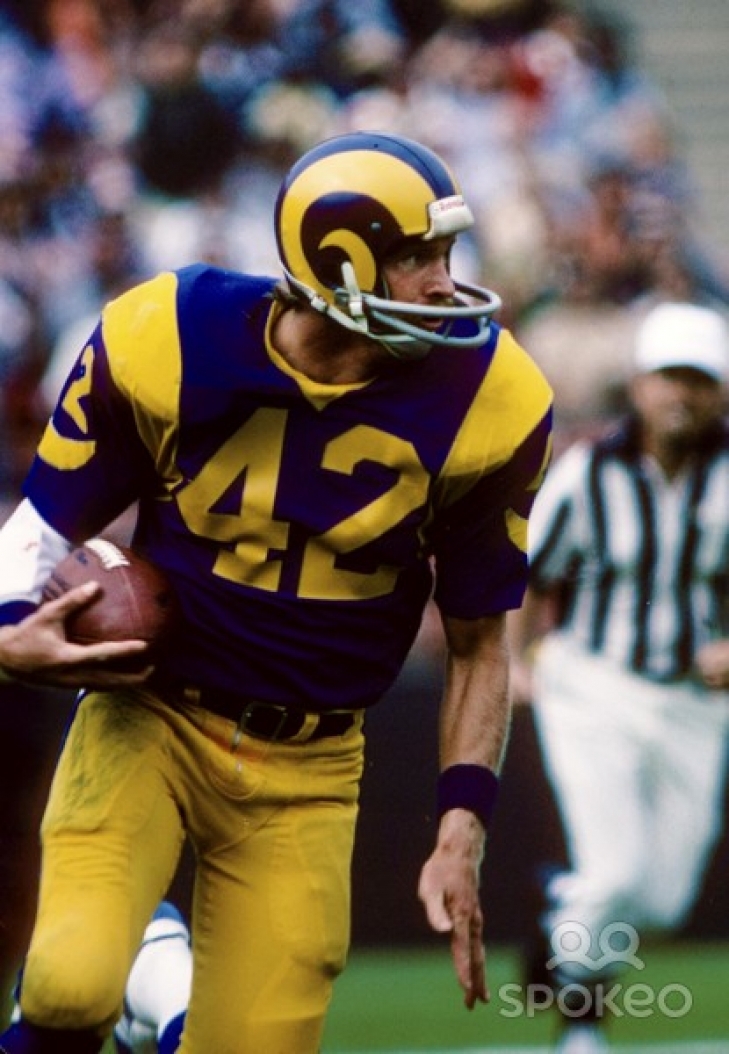
42. Jack Pardee
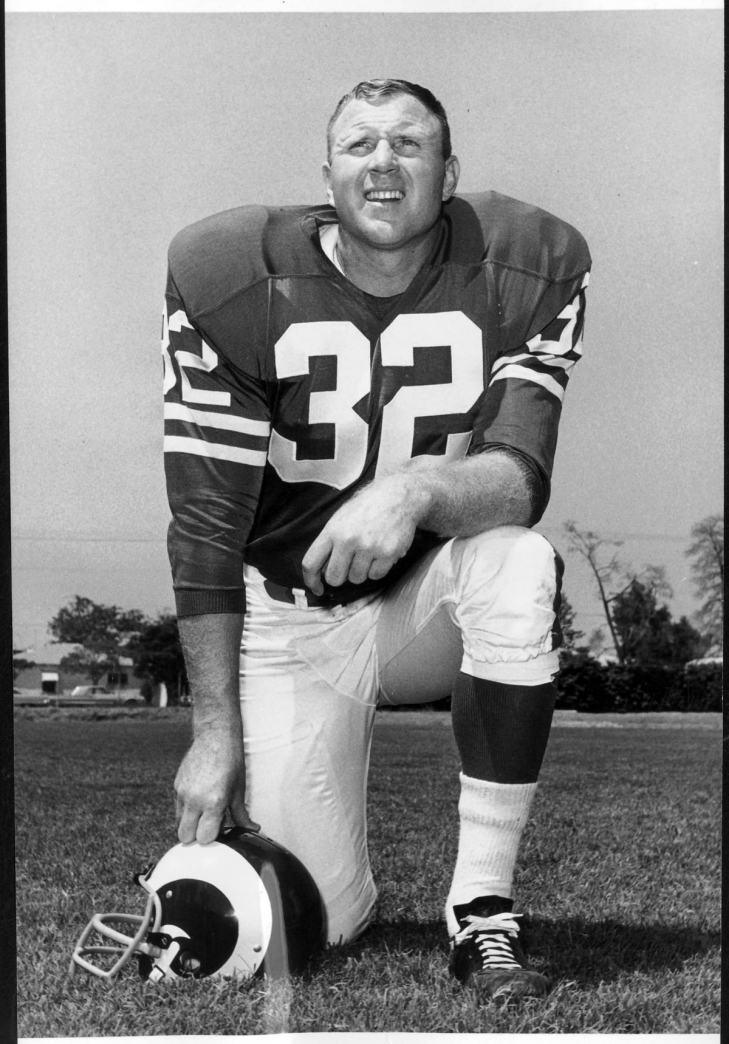
Jack Pardee was the 14th overall pick in 1957, and the Texas A&M Aggie would be a fixture at Linebacker for the Rams for 13 years. Pardee played 169 for Los Angeles, starting 150 of them. In 1963 he would be named a First Team All-Pro as well as being named to the Pro Bowl. He managed to secure 17 Interceptions for the Rams, a good number for a Linebacker.
1. Aaron Donald
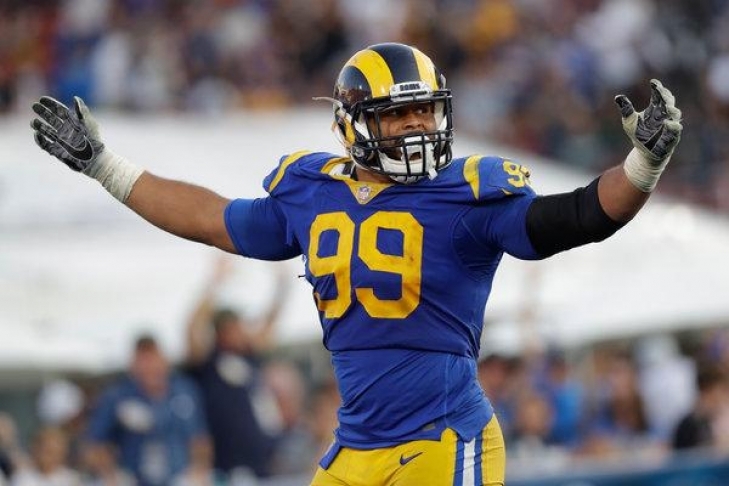
Selected 13th overall out of the University of Pittsburgh in the 2014 NFL Draft, Aaron Donald entered the professional ranks with legendary collegiate credentials. In his final season with the Panthers, Donald put together one of the most dominant individual campaigns in NCAA history, sweeping the ACC Defensive Player of the Year, Lombardi Award, Bronko Nagurski Trophy, Chuck Bednarik Award, and Outland Trophy. Despite initial concerns regarding his 6-foot-1, 280-pound frame, Donald shattered all expectations from the moment he stepped onto an NFL field, capturing the 2014 Defensive Rookie of the Year Award and earning his first of ten consecutive Pro Bowl selections.
What made Donald an absolute force of nature was a rare combination of explosive get-off speed, terrifying leverage, and relentless technique. Operating primarily from the interior defensive tackle position—a spot traditionally tasked with absorbing double-teams—Donald routinely disarmed offensive linemen with a lightning-fast first step and hand-combat mechanics that blew up plays before they could develop. His ability to generate edge-rusher-level pressure from the 3-technique alignment disrupted offensive schemes like no defensive tackle before him, forcing opposing coordinators to completely rewrite their game plans.
Following his stellar rookie year, Donald established himself as the indisputable premier defensive tackle in football, stringing together four consecutive First-Team AP All-Pro selections from 2015 to 2018. His steady trajectory reached new heights in 2017 when he captured his first AP NFL Defensive Player of the Year Award despite playing in just 14 games. Rather than plateauing after reaching the peak of his profession, Donald responded by putting together a 2018 campaign that stands among the greatest single seasons ever recorded by an interior lineman.
During that historic 2018 season, Donald led the NFL with a mind-boggling 20.5 sacks and 25 tackles for loss, setting the single-season sack record for a defensive tackle. Behind his game-breaking dominance, the Rams marched all the way to Super Bowl LIII. Joining Lawrence Taylor and J.J. Watt as one of only three players in league history to win back-to-back Defensive Player of the Year honors, Donald's individual brilliance carried Los Angeles back into national prominence. He followed that up in 2019 by capturing his fifth straight First-Team All-Pro nod while once again leading the league with 20 tackles for loss.
As the sport entered a new decade, Donald's dominance remained unchallenged. Named a unanimous choice for the NFL 2010s All-Decade Team, he kicked off the 2020s by capturing his third AP Defensive Player of the Year Award, tying Taylor and Watt for the most in NFL history, while topping the league with a 20 Approximate Value. In 2021, the Rams' aggressive, championship-caliber roster put it all together. Donald capped off his seventh consecutive First-Team All-Pro season by sealing Super Bowl LVI, pressuring Cincinnati's Joe Burrow on fourth down to secure the franchise's second Lombardi Trophy.
Following two more elite seasons that brought his First-Team All-Pro total to eight and extended his streak of Pro Bowl selections to a perfect ten-for-ten, Donald initially announced his retirement from professional football in March 2024. Leaving the game at age 32 with 111.0 career sacks, 176 tackles for loss, and 24 forced fumbles, he solidified his status as a first-ballot Hall of Famer and a consensus pick for the Mount Rushmore of defensive linemen.
However, the story of the legendary wrecking ball received an unexpected, blockbuster addition. In late August 2026, after two full seasons away from the gridiron, Donald sent shockwaves across the sporting landscape by officially coming out of retirement to re-sign with the Los Angeles Rams on a one-year deal. Drawn back by the competitive fire and the opportunity to pair with newly acquired pass-rusher Myles Garrett, Donald's return instantly elevated the Rams into heavy Super Bowl contention once again.
While head coach Sean McVay opted to ramp Donald up slowly—holding him out of the team's Week 1 clash in Australia to ensure peak physical readiness—his presence on the 2026 roster reaffirms his immortal bond with the organization. His decision to put the horns back on serves as the ultimate bonus chapter for a star who spent ten seasons dominating the interior line of scrimmage in Southern California.
Whether viewed through his initial ten-year sprint or his 2026 comeback, Donald's candidacy as the greatest player in Rams history is well earned. His uncanny ability to destroy passing pockets from the inside while remaining a dominant run defender forced NFL offenses to rethink how to protect the quarterback. Facing constant double- and triple-teams for a decade, he simply converted that extra attention into highlight-reel disruption.
Going into this season, Donald compiled 543 total tackles (340 solo, 203 assists), 111.0 sacks, 176 tackles for loss, 256 quarterback hits, 24 forced fumbles, and seven fumble recoveries. Let’s see what he adds in 2026!
#9 Overall, Matthew Stafford, Los Angeles Rams, #3 Quarterback
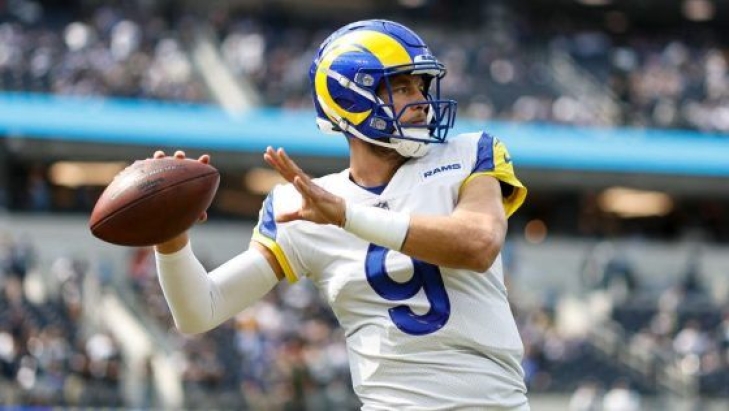
2025 Pre-Season Rank #26, 2024 Pre-Season Rank #31, 2023 Pre-Season Rank #37, 2022 Pre-Season Rank #37, 2021 Pre-Season Rank #59, 2020 Pre-Season Rank #67. Peak Period: 2021-25.
A change of scenery can change the perception.
Matthew Stafford was a Lion for 12 years, racking up passing yards but only a few wins. A Pro Bowl participant once in Detroit, Stafford was entrenched as a second-tier QB. The Rams traded for him, and he became a Super Bowl Champion in his first year in Los Angeles, gaining national recognition. Articles were written (and scoffed at) proclaiming him a Hall of Famer, but his play in L.A. has now placed him not only in the conversation, but to many pundits, a lock.
Much of that came from last season’s performance, where for the first time in his career, he led the NFL in Passing Yards and Touchdown Passes, but most importantly, he won the MVP. He also rocketed up the all-time lists, and is currently 6th in Passing Yards (64,516) and 7th in Touchdown Passes (423), and another monster year will move him even higher. Considering who he has to pass to, that seems very doable.
If Stafford wins a Super Bowl in 2026, and he is favored to do so, get the bust ready now.
#1 Overall, Aaron Donald: Los Angeles Rams, Defensive End, #1 Defensive Lineman/Linebackers/Pass Rushers
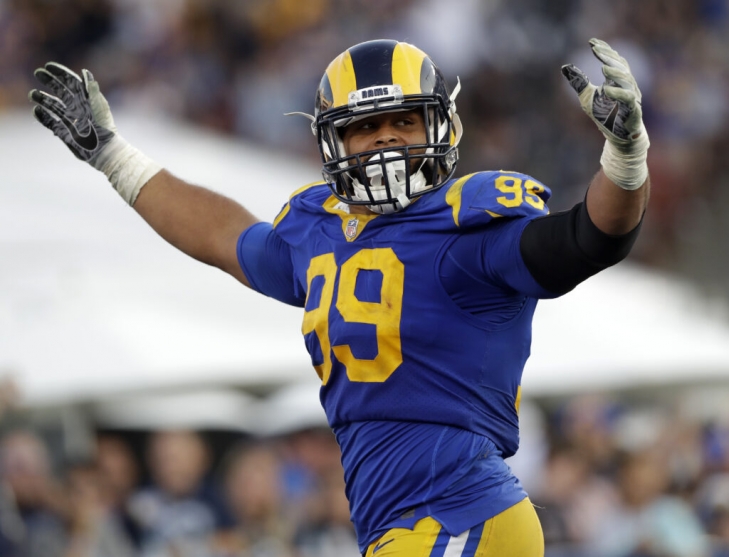
2020 Pre-Season Rank #15, 2021 Pre-Season Rank #5, 2022 Pre-Season Rank #3, 2023 Pre-Season Rank #2. PEAK 2017-21
Well, look who’s back!
When we last saw Aaron Donald on this list, it was heading into the 2023 season, which he completed with another Pro Bowl, giving him a perfect ten-for-ten in that accolade. He then shock-retired, doing so while still having something left.
Let’s see what he still has.
It is easy to see why Donald opted to come back. The Rams begin the season as the most loaded team in football. Quarterback Matthew Stafford is the reigning MVP, and they landed the defending Defensive Player of the Year in Myles Garrett. This team narrowly lost to the Seattle Seahawks in the NFC Championship Game, and now they have a returning Aaron Donald and Myles Garrett? We haven’t even mentioned the acquisitions of Trent McDuffie and Jaley Watson to the Defensive Back Corps!
A quick reminder of who Donald is.
He is a three-time Defensive Player of the Year, and anyone who has ever done that twice has always been enshrined…easily. From 2015 to 2021, he never finished lower than fifth for the DPOY, he led the NFL in Sacks once, Tackles for Loss twice, and also boasts a Super Bowl ring.
He could easily add another.
Should he be ahead of the previous #1, Quarterback Aaron Rodgers? We answer this with this question.
Who is easier to put on the Mount Rushmore of his position? Aaron Donald or Aaron Rodgers?
You can see who we narrowly picked!
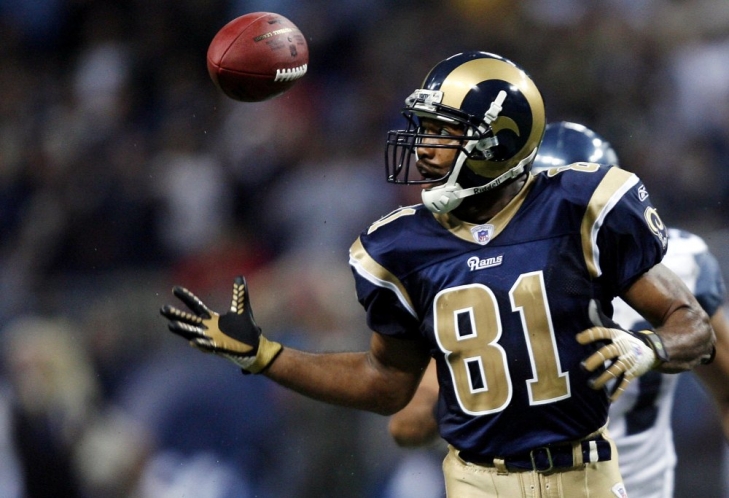
13. Torry Holt
15. Norm Van Brocklin
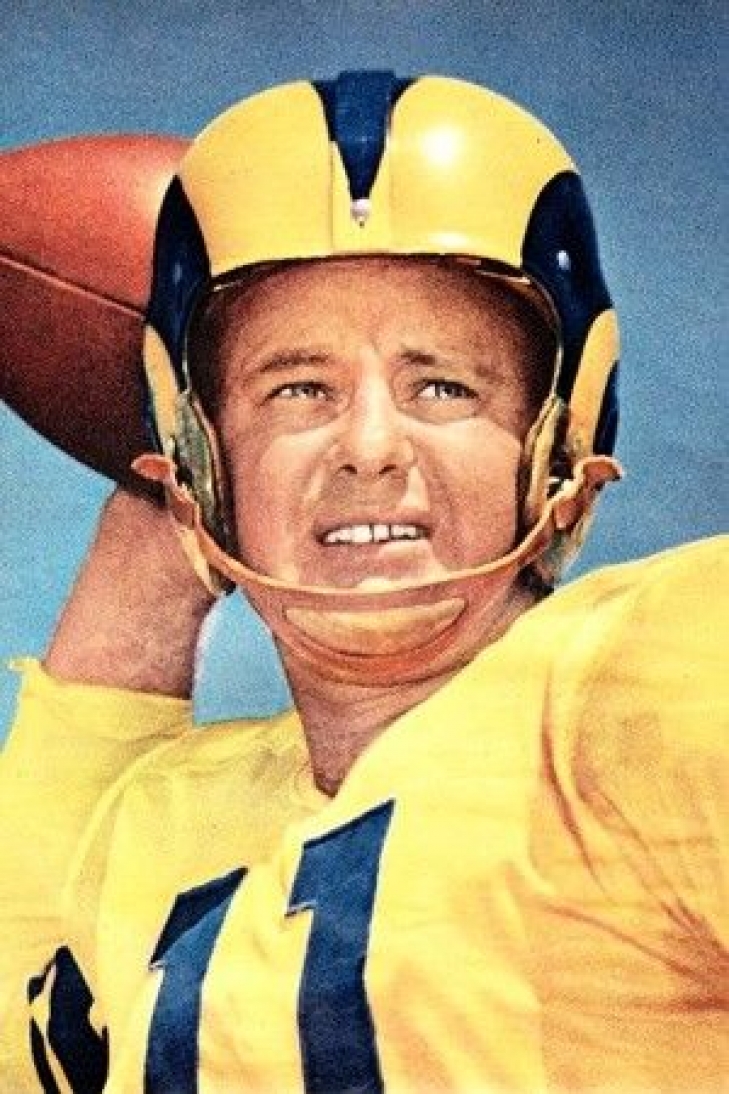
The Rams arguably landed quite a deal when they drafted Norm Van Brocklin in the fourth round of the 1950 NFL Draft as the QB fell not because he wasn't good but because it was speculated by many that he would stay at the University of Oregon for his senior year. He didn't, and the Rams would be the beneficiary of an incredible QB tandem with Bob Waterfield that would win the 1951 NFL Championship.
12. Eric Dickerson
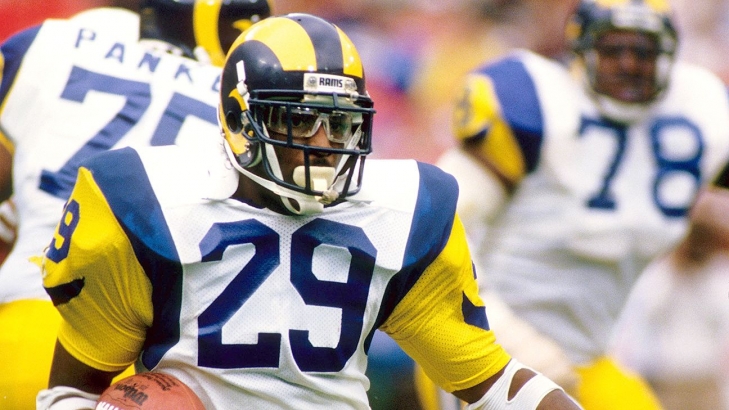
Drafted second overall from SMU in 1983, Eric Dickerson would become the most explosive Running Back in the National Football League. As a rookie, Dickerson would win the Offensive Rookie of the Year in a season where he led the league in Rushing Yards with 1,808 Yards and 18 Touchdowns, the former being good enough to finish first. That was good, but in 1984 what he would accomplish would be ten shades of incredible.
9. Tom Mack
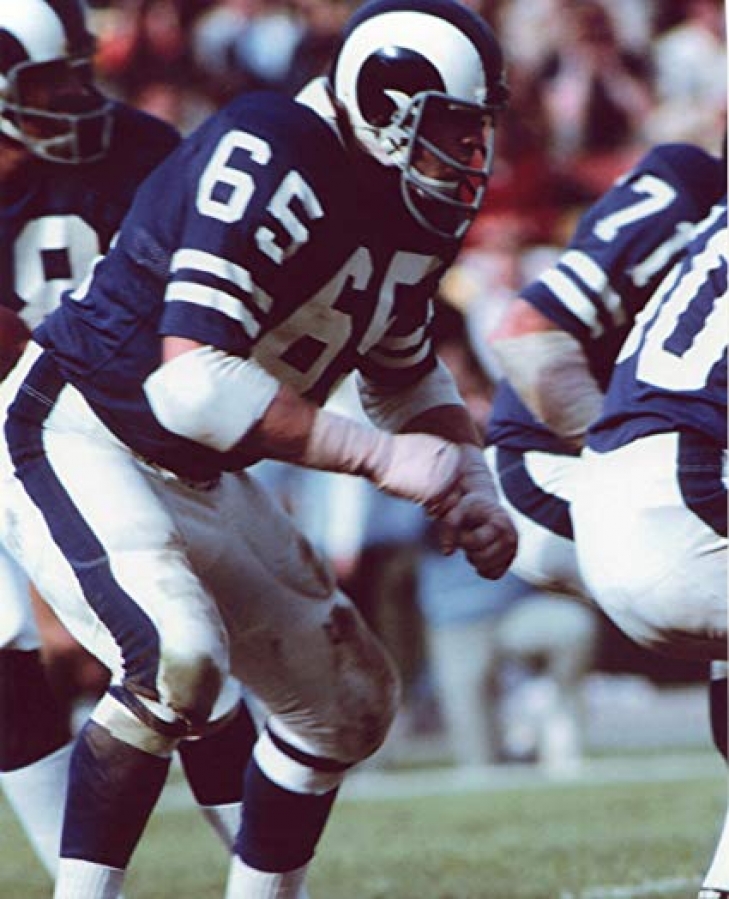
Selected second overall in the 1966 NFL Draft out of the University of Michigan, Tom Mack would become the teams starting Left Guard midway through the 1966 season, and in his sophomore season he would be named to the Pro Bowl. That year would be the first of eleven trips to the annual game honor showcasing the best players in the National Football League. Without question, for over a decade the Los Angeles Rams never had to worry about Left Guard as Mack was clearly among the elite in that role. He would appear in 184 straight games for L.A., the only team he ever played professionally for.
16. Les Richter
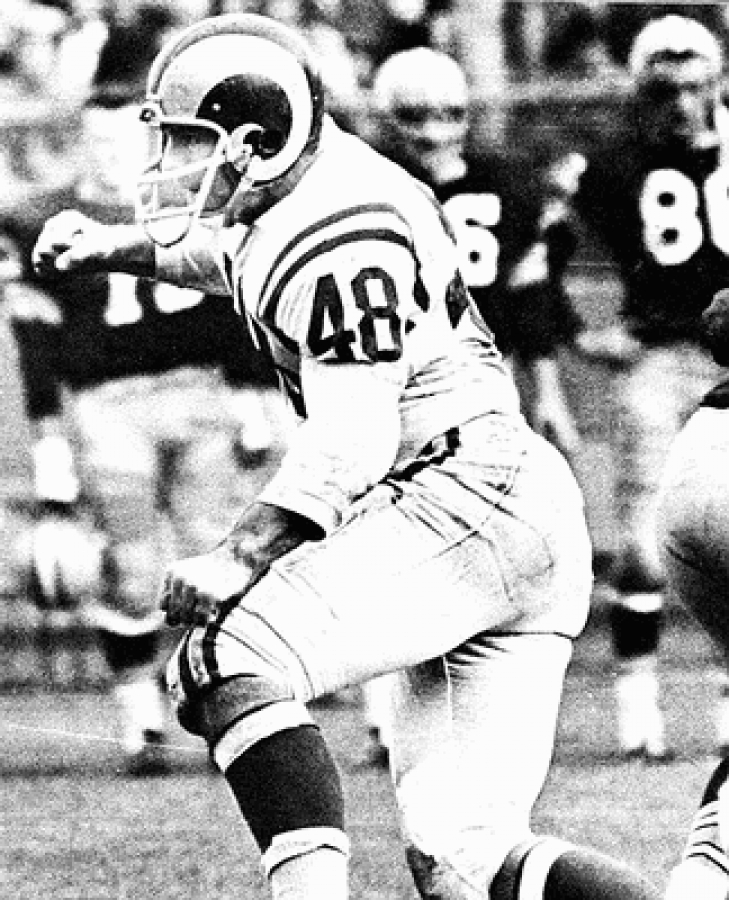
Drafted by the New York Yanks second overall Les Richter never suited up for them as they folded. His rights went to the new Dallas Texans (who pretty much took most of the Yanks), but he never played for them either as he was traded to the Los Angeles Rams for 11 players. While this may look lopsided, it was but in favor of the Rams!
14. Kurt Warner
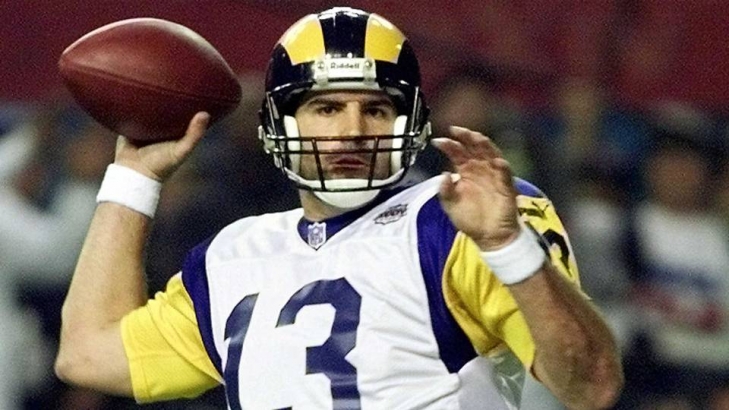
Like so many on the all-time Rams list, Kurt Warner was a hard one to place mainly due to the long existence of the franchise and the number of great players that they had. So when you have a player regardless of the caliber who was only there six seasons but when three of those campaigns were as spectacular as what Warner had from 1999 to 2001 he has to be on this list at a high spot. Though we understand why you might think this is not high enough, or maybe if you believe this is even too high!
11. Elroy "Crazy Legs" Hirsch
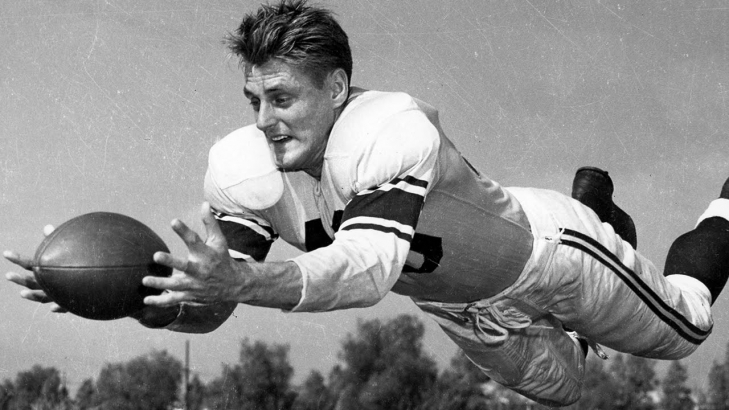
Dubbed "Crazy Legs" for the unique way he ran, Elroy Hirsch is one of the most well-known players of his era. An exceptional athlete at the University of Michigan, Hirsch served as a Marine (like many did back then) and upon his return from duty, he led a College All-Star team to a 16-0 win over the Los Angeles Rams, who were the defending NFL champions and many reporters stated Hirsch was the star of that game.
10. Isaac Bruce
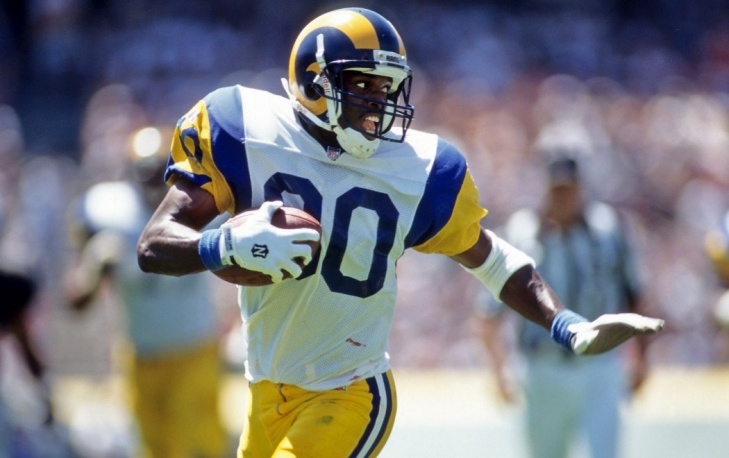
Isaac Bruce starred as the top Wide Receiver for the "Greatest Show on Turf," which is no small statement. A Second Round pick from the University of Memphis, Bruce exploded with a 1,781 Yard season with 13 Touchdowns. Amazingly, he was not a Pro Bowl selection that year but would be the next season when his 1,338 Yards led the NFL. In 1999, Bruce would catch the game-winning Touchdown in Super Bowl XXXIV, and his play was an integral part of the Rams return to Super Bowl the next season, although they would lose to the New England Patriots.
8. Bob Waterfield
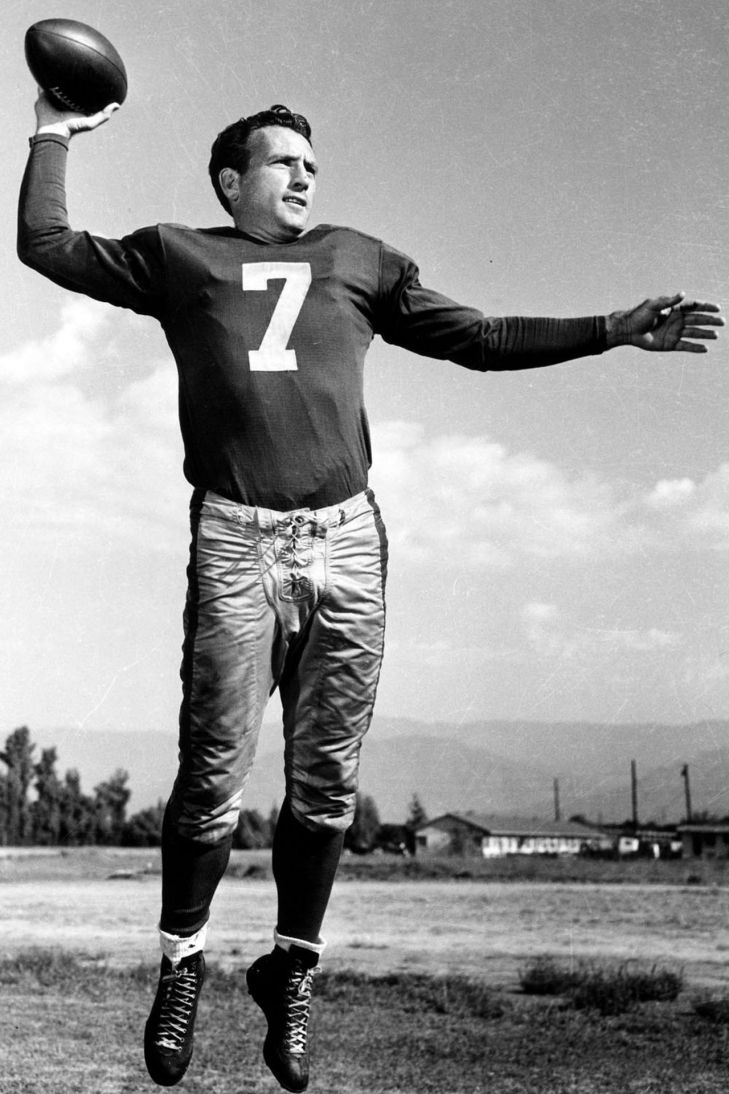
Selected in the fifth round (42nd overall) of the 1944 NFL Draft out of UCLA—where he led the Bruins to their first Rose Bowl appearance—Bob Waterfield stepped into professional football and delivered one of the most remarkable rookie campaigns in gridiron history. Debuting for the Cleveland Rams in 1945, the multi-talented phenom led the league with 14 touchdown passes while guiding the franchise to a 9–1 record and a 15–14 victory over the Washington Redskins in the NFL Championship Game. For his extraordinary debut, Waterfield was named NFL Most Valuable Player, becoming the first rookie in league history to capture the award.
Waterfield was the quintessential triple-threat star of pro football's single-wing transition era, influencing games on offense, defense, and special teams. Beyond his aerial distribution at quarterback, he served as the team's primary placekicker and punter, leading the league in field goals twice and average punting yards in 1948. On defense, his ball-hawking instincts at defensive back produced 20 career interceptions across eight seasons, showcasing an all-around athletic versatility modern football rarely sees.
After their 1945 title, the Rams relocated west to become the Los Angeles Rams in 1946, and Waterfield quickly became a Southern California sports icon. He picked up right where he left off in his new home, finishing second in passing yards (1,747) and throwing a league-high 17 touchdown passes while earning his second consecutive First-Team AP All-Pro selection. Off the field, his star power burned just as brightly when he married Hollywood superstar Jane Russell, turning the couple into one of Los Angeles's original glamour pairings.
While his statistical efficiency fluctuated in subsequent campaigns, Waterfield regained top form in 1949 to earn his third First-Team AP All-Pro selection after leading the NFL with 1,608 passing yards and 23 touchdown passes. He remained at the top of his game as the league entered the 1950s, earning selections to the first two Pro Bowls in 1950 and 1951. His steady leadership in the pocket helped propel Los Angeles to three straight NFL Championship Game appearances from 1949 through 1951.
The peak of the Rams' Southern California revival arrived in 1951, when Waterfield anchored a high-powered offense that captured the NFL Championship with a 24–17 victory over the Cleveland Browns. Managing the offense alongside head coach Joe Stydahar, Waterfield shared signal-calling duties with fellow future Hall of Famer Norm Van Brocklin, creating a lethal two-quarterback system that confounded opposing defensive coordinators and produced one of the most prolific passing attacks of the mid-century era.
Waterfield played one final season in 1952, splitting snaps with Van Brocklin before retiring at age 32 to transition into film production and coaching. He later returned to the franchise as head coach of the Los Angeles Rams from 1960 to 1962. In 1952, the Rams honored his foundational contributions by officially retiring his #7 jersey, ensuring no future Ram would wear his iconic number.
His legacy as one of football's greatest pioneers was permanently sealed in 1965 when he was enshrined in the Pro Football Hall of Fame in Canton, Ohio.
With the Rams, he threw for 814 completions on 1,617 attempts, 11,849 passing yards, and 97 touchdown passes, plus 60 field goals, 315 extra points, and 20 defensive interceptions.
7. Jackie Slater
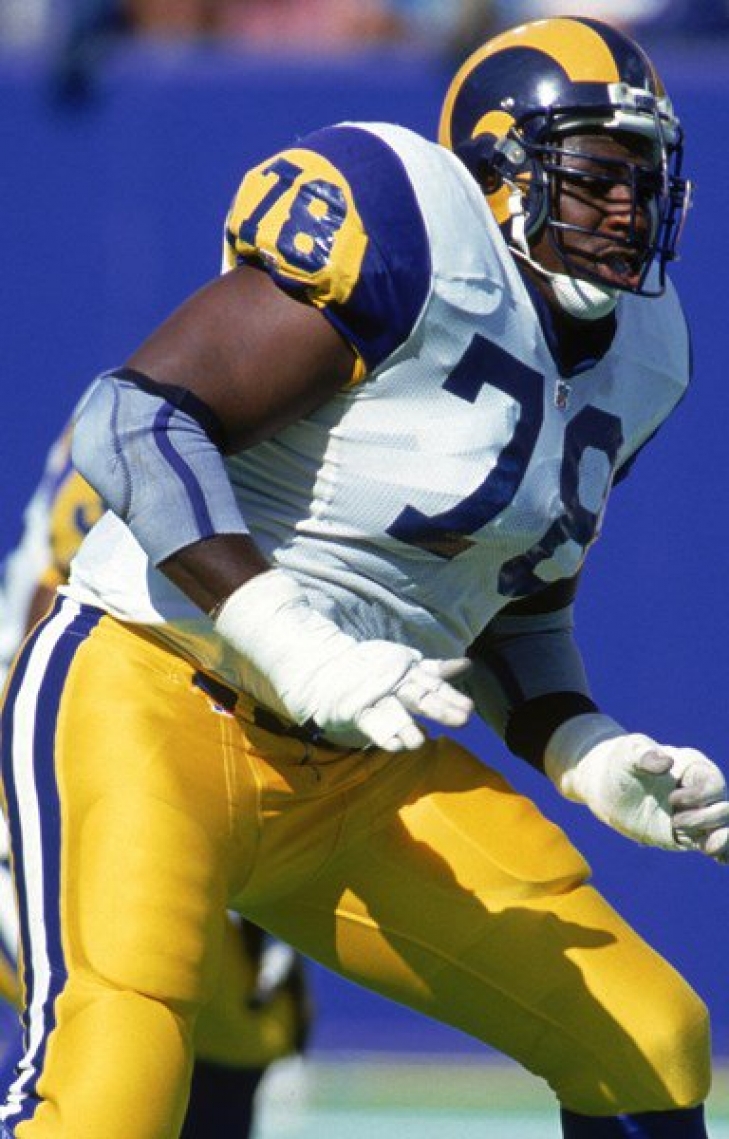
Selected in the third round (86th overall) of the 1976 NFL Draft out of Jackson State—where he played alongside Walter Payton—Jackie Slater arrived in Los Angeles as a backup before becoming the standard for offensive-line longevity. Spending his first three seasons primarily on special teams and as a reserve, Slater absorbed the professional game until taking over as the full-time starting right tackle in 1979. That year, he helped anchor an offensive line that led the Rams to an NFC Championship and a berth in Super Bowl XIV against the Pittsburgh Steelers.
Once entrenched at right tackle, Slater launched a reign of relentless durability that defined two decades in Southern California. From 1979 onward, he was a steady fixture on the edge, starting 211 regular-season games for the franchise. Opposing edge rushers struggled to solve his technique, as his combination of lateral footwork and brute strength neutralized the league's most fearsome pass rushers throughout the 1980s.
Slater earned seven Pro Bowl selections (1983, 1985, 1986, 1987, 1988, 1989, and 1990) and four Second-Team AP All-Pro honors. Whether blocking for Eric Dickerson during his record-breaking 2,105-yard rushing campaign in 1984 or protecting signal-callers like Vince Ferragamo and Jim Everett, Slater consistently anchored one of the league's most dominant front fives.
His 20-season career with a single franchise set an NFL record for offensive linemen, spanning 19 years in Los Angeles (1976–1994) and concluding with a single final game after the team relocated to St. Louis in 1995. By the time he retired, Slater had blocked for 24 different quarterbacks and 37 different running backs, leaving behind an unmatched standard of consistency and professional dedication.
In 1996, the franchise permanently honored his legendary service by retiring his #78 jersey. His transcendent career achieved ultimate gridiron immortality in 2001, when he was enshrined in the Pro Football Hall of Fame in Canton, Ohio.
6. Marshall Faulk
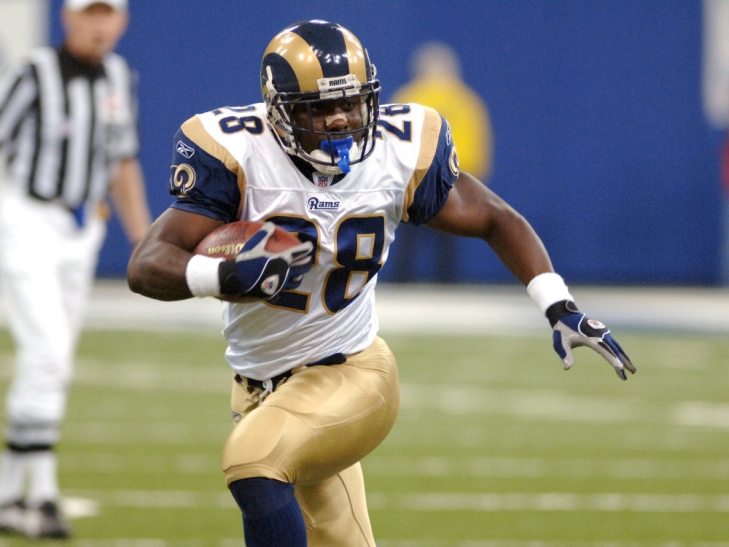
Traded from the Indianapolis Colts in the spring of 1999, Marshall Faulk arrived in St. Louis and immediately revolutionized the running back position. Already an elite dual-threat weapon during his five seasons with the Colts, Faulk elevated his skill set to unheard-of heights under head coach Dick Vermeil and offensive coordinator Mike Martz. His arrival helped transform a struggling franchise into "The Greatest Show on Turf"—the most explosive offensive machine in NFL history.
In his legendary 1999 debut season with the Rams, Faulk put together one of the most remarkable individual campaigns in gridiron history. Playing as both a traditional tailback and an unmatched slot receiver, he rushed for 1,381 yards and caught 87 passes for 1,048 receiving yards. By doing so, he became only the second player in NFL history (joining Roger Craig) to eclipse 1,000 rushing and 1,000 receiving yards in the same season, setting a then-NFL record with 2,429 yards from scrimmage.
Faulk’s versatility and processing speed made him the undisputed engine of the Rams' high-flying attack. Defenses couldn't match up against him, as he could slice through defensive lines between the tackles or split out wide to obliterate linebackers in single coverage. His relentless execution in both phases of the offense gave quarterback Kurt Warner the ultimate escape hatch, propelling St. Louis to a 13–3 record and the franchise's first Super Bowl title in Super Bowl XXXIV.
The dynamic back somehow raised the bar even higher over the next two seasons, producing an unprecedented three-year run of individual brilliance. Faulk captured the AP NFL Most Valuable Player award in 2000 after scoring a staggering 26 touchdowns in just 14 games, followed by winning three consecutive AP NFL Offensive Player of the Year awards from 1999 through 2001. During this historic peak, he earned three consecutive First-Team AP All-Pro selections and guided the Rams back to Super Bowl XXXVI.
Beyond his eye-popping statistical output, Faulk served as an extension of the coaching staff on the field. His elite football IQ allowed him to call out defensive coverages, adjust pass protection schemes at the line of scrimmage, and exploit subtle mechanical flaws in opposing front sevens. His rare vision, combined with pristine route-running precision out of the backfield, redefined expectations for modern all-purpose running backs for generations.
Faulk retired after the 2006 season with over 19,000 all-purpose yards and 136 touchdowns. The Rams retired his No. 28 jersey in 2007. In 2011, he entered the Pro Football Hall of Fame in his first year of eligibility. With the Rams, he compiled 6,959 rushing yards with 58 rushing touchdowns, 470 receptions for 4,071 receiving yards with 27 receiving touchdowns, and 11,030 yards from scrimmage.
