


Site Admin
2. Johnny Bench
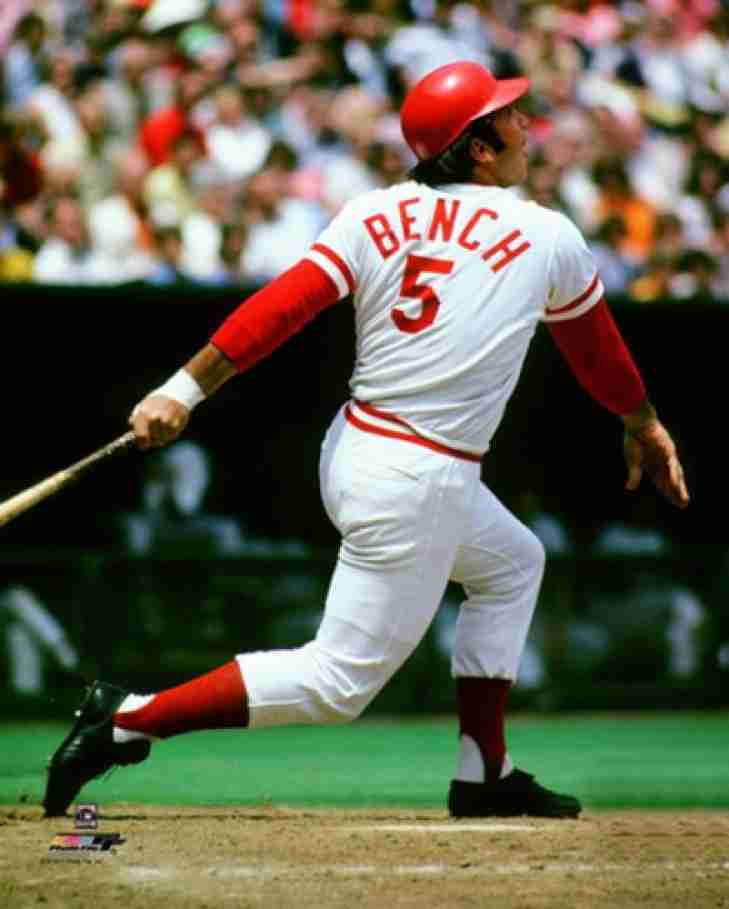
When Johnny Bench arrived in Cincinnati as a 19-year-old rookie in 1968, he didn't just win the Rookie of the Year award; he fundamentally changed how the position was played. Before Bench, catchers were often viewed as defensive specialists who provided little at the plate. Bench shattered that mold, wielding a bat that felt like a lightning bolt. He possessed a massive physical presence and a cannon for an arm that famously allowed him to throw out runners from a crouching position, a feat that terrified baserunners and anchored the Reds' defense for over a decade.
The peak of his residency saw him become the most-decorated catcher in the sport's history. Throughout the 1970s, Bench was the primary power source for the Big Red Machine, claiming two National League MVP awards (1970 and 1972) and leading the league in home runs twice. His 389 career home runs set a record for catchers that stood for decades, but his offensive dominance was matched by his "Cerebral" mastery of the pitching staff. Bench didn't just catch; he orchestrated, earning ten consecutive Gold Gloves and proving that he was as valuable for the runs he prevented as for the ones he drove in.
The middle of his journey was defined by a championship pedigree. Bench was the heartbeat of the back-to-back World Series titles in 1975 and 1976. In the latter, he put on a masterclass in the Fall Classic, claiming the World Series MVP after dismantling the Yankees' pitching staff. He was a 14-time All-Star who rarely took a day off, enduring the physical toll of the "tools of ignorance" with a level of durability that was almost unheard of for a catcher of his era.
However, the final walk toward the exit showed the inevitable wear and tear of a career spent behind the plate. By the early 1980s, the "Big Red Machine" was slowing down, and Bench transitioned to third base and first base to preserve his body. While his power numbers dipped, his clubhouse presence remained the gravity that held the veteran squad together. He played his final game in 1983, a career Red who never wore another professional jersey, concluding one of the most complete careers in the history of the game.
Johnny Bench left the Reds as the undisputed greatest to ever play his position. He was a first-ballot immortal who entered Cooperstown in 1989, and the Reds wasted no time honoring him, retiring his number 5 immediately after his retirement. He arrived as a kid from Oklahoma with a big arm and left as a permanent monument to excellence, the man who proved that a catcher could be both the smartest man on the field and the most dangerous man in the lineup.
1. Pete Rose
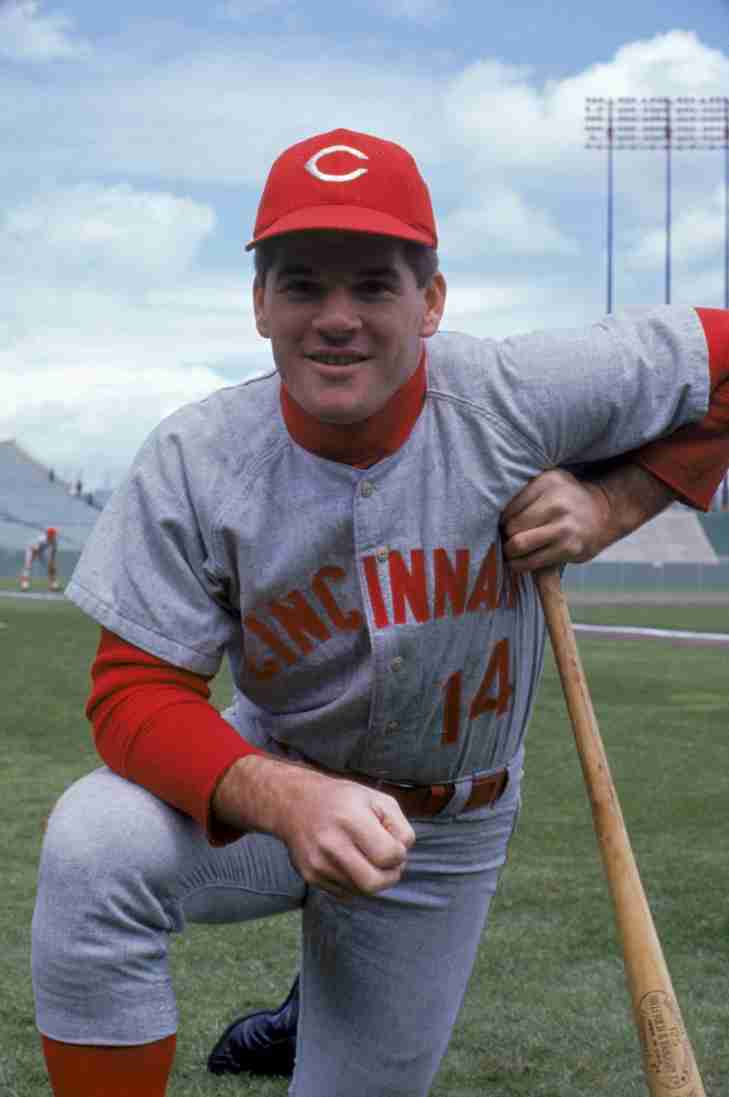
When Pete Rose burst onto the scene in 1963, he arrived with a head-first slide and a relentless motor that earned him the "Charlie Hustle" moniker. A local kid from Cincinnati, he didn't just play for the Reds; he personified the city's blue-collar work ethic. In his debut season, he claimed the National League Rookie of the Year award, signaling the start of a legendary pursuit of history. He was a human metronome of contact hitting, a switch-hitter who treated the baseball like a personal enemy that needed to be conquered four times a day.
The middle chapter of his residency saw him become the emotional and tactical heartbeat of the "Big Red Machine." Throughout the 1970s, Rose was the spark plug for one of the most terrifying lineups in the history of the sport. He claimed three batting titles and the 1973 MVP award, but his value transcended the regular season. In the 1975 World Series, he was the driving force behind a seven-game classic, earning the World Series MVP as the Reds finally reached the summit. He would help lead them to a repeat title in 1976, cementing his status as the premier leadoff threat of his generation.
His statistical footprint in Cincinnati is staggering. Of his all-time record 4,256 career hits, 3,358 were collected in a Reds uniform. He led the National League in hits six times and runs scored four times, providing the constant traffic on the base paths that allowed teammates like Johnny Bench and Joe Morgan to drive him home. He was a 12-time All-Star as a Red, showing a defensive versatility that saw him play everywhere from second base to the outfield, eventually settling in as a vacuum at third base during the championship years.
The departure toward the exit came first in 1978, when he signed with Philadelphia as a free agent, but the story naturally circled back to Cincinnati in 1984. His return as a player-manager was a victory lap for the city, culminating in the historic night in 1985 when he eclipsed Ty Cobb’s all-time hit record. It was a moment of pure sporting transcendence, a local boy making good on the grandest stage possible.
However, the final walk toward the exit in 1989 was shadowed by the controversy that would define his legacy thereafter. Following an investigation into gambling on baseball, Rose accepted a permanent ban from the game. While this has kept him out of the National Baseball Hall of Fame in Cooperstown, the city of Cincinnati refused to let the darkness erase the brilliance of his playing days. In 2016, the Reds officially retired his number 14 and inducted him into the franchise Hall of Fame, a formal acknowledgement that while the league may have closed its doors, the Queen City would always keep a light on for its favorite son.
Rose left the Reds as the undisputed statistical king of the franchise, a man whose 1,066 career multi-hit games in Cincinnati represent a level of consistency that borders on the impossible. He arrived as a scrappy local kid and left as the most prolific hitter to ever live, a player who proved that if you play every game like it’s your last, you might just live forever in the record books.
My Heart Has a Mind of Its Own
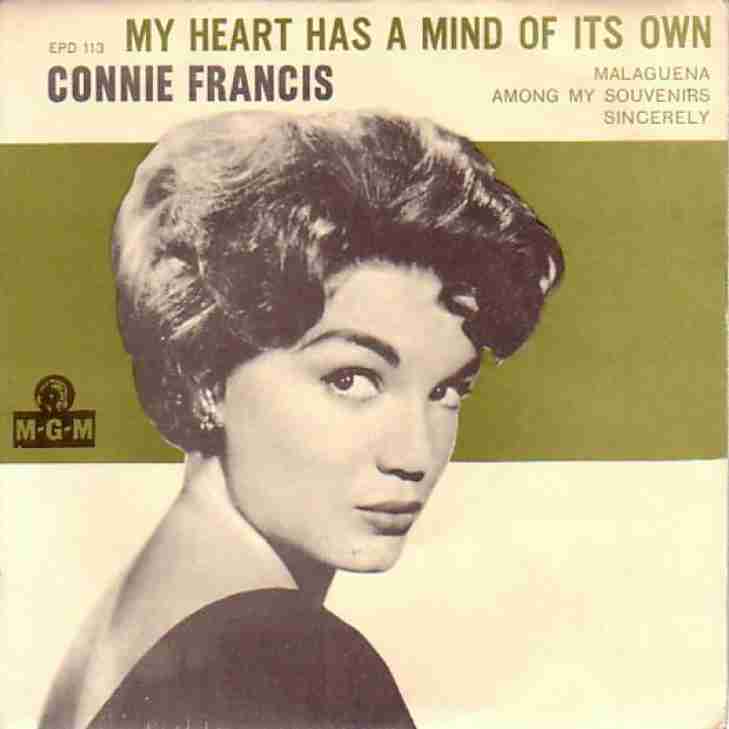
Connie Francis
My Heart Has A Mind of its Own
The Twist
Chubby Checker
The Twist