

Our All-Time Top 50 Kansas City Royals have been revised
Yes, we know that this is taking a while!
As many of you know, we here at Notinhalloffame.com are slowly generating the 50 of each major North American sports team. That being said, we have existing Top 50 lists out and we always consistently look to update them when we can and based on necessity. As such, we are very happy to present the pre-2021 update of our top 50 Kansas City Royals of all-time.
As for all of our top 50 players in hockey we look at the following:
1. Advanced Statistics.
2. Traditional statistics and how they finished in the American League.
3. Playoff accomplishments.
4. Their overall impact on the team and other intangibles not reflected in a stat sheet.
There are no new additions, but as always, we announce our top five immediately, but out full list can be found here.
1. George Brett
3. Kevin Appier
5. Amos Otis
While there were no new entries, there were two movements among active Royals.
Multi-time All-Star Catcher, Salvador Perez, rose from #15 to #13. Second Baseman, Whit Merrifield, climbed from #32 to #27.
We welcome your input and commentsand as always, we thank you for your support.
The Kansas City Royals announce seven finalists for their Hall of Fame
The Kansas City Royals have announced the seven former players who fans can vote for to enter their franchise Hall of Fame.
Those players are:
Carlos Beltran, Outfield: 1998-2004, 899 Hits, 123 Home Runs, 516 RBIs, .287/.352/483. Beltran won the American League Rookie of the Year in 1999 on the strength of a 22 Home Run/27 Stolen Base year. Beltran had three 170-Hit years for Kansas City and was an All-Star in 2004 after he was traded to the Houston Astros. Beltran is likely a future Hall of Famer, after stints with the New York Mets, San Francisco Giants, St. Louis Cardinals, New York Yankees and Texas Rangers.
Billy Butler, Designated Hitter and First Base: 2007-14, 1,273 Hits, 127 Hone Runs, 628 RBIs, .295/.359/.449. Butler was an All-Star in 2012, and had two seasons for Kansas City where he managed 20 Home Runs and a .300 Batting Average. Butler also won the Silver Slugger in 2012.
Kyle Davies, Pitcher: 2007-11, 29-44, 5.34 ERA, 1.576 WHIP. Davies played five years with Kansas City and was a dependable starter.
Johnny Damon, Outfield: 1995-2000, 894 Hits, 65 Home Runs, 352 RBIs, .292/.351/.438. Damon’s career began with Kansas City, where he would lead the American League in Rus Scored (136) and Stolen Bases (46) in his final year as a Royal. He would later win a World Series Ring with the Boston Red Soc in 2004.
Jeremy Guthrie, Pitcher: 2012-15, 41-34, 4.38 ERA, 1.365 WHIP. Guthrie won 15 Games in 2013, and pitched at least 200 Innings that year and the year after. Guthrie also helped the Royals win the 2015 World Series.
Luke Hochevar, Pitcher: 2007-16, 46-65, 4.98 ERA, 1.340 WHIP. Hochevar played his entire Major League career in Kansas City, and he was a reliever on the team that won the 2015 World Series.
Yordano Ventura, Pitcher: 2013-16, 38-31, 3.89 ERA, 1.344 WHIP. Another member of the 2015 World Series Championship, Ventura was in Kansas City’s starting rotation for three seasons, all of which saw him win at least 11 Games. Ventura was killed in a car crash in his native Dominican Republic in January of 2017.
You can vote for this year’s class here.
Unlike the Cardinals Hall of Fame, which we discussed yesterday, the winner of the on-line vote does not gain automatic entry. It will count as three votes towards the total. The other voters are:
All living members of the Royals Hall of Fame
Select members of Royals Front Office Staff
Royals Associates with 15 years or more service
Select members of the Kansas City Chapter of the Baseball Writers of America
Select Kansas City electronic media members
According to the Royals.com site, the qualifications are as follows:
To qualify for the Royals Hall of Fame, players must have been active in the Major Leagues at some time during a period beginning twelve years before and ending three years or more prior to election. Eligible players that received a minimum of ten percent (10%) of the vote in the most recent prior election cycle remain on the ballot for up to five cycles. All eligible players must have been active with the Kansas City Royals for at least three seasons and accumulated a minimum of 1,500 plate appearances or 300 innings pitched. Those eligible shall have ceased to be an active on-field member of the Kansas City Royals (or for any other Major League Organization) in the role for which they are being considered for at least three (3) calendar years preceding the election – but may be otherwise connected to the Royals or another Major League Organization.
Any eligible player receiving votes on seventy-five percent (75%) of the ballots cast will be deemed an elected Royals Hall of Fame member. To remain on the ballot for the next RHOF voting cycle, eligible players must receive a minimum of ten percent (10%) of the ballots cast. In odd-numbered years a separate Veterans Committee vote will consider the candidacy of non-player personnel and players who previously received Royals Hall of Fame Voting (Regular Phase) votes but are no longer eligible for election in that manner.
Alex Gordon to retire at season's end
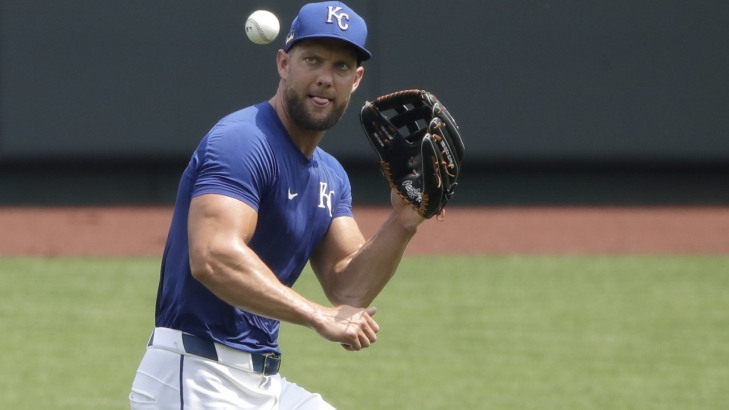
We have a significant retirement that will take place within a week as Kansas City Royals Outfielder, Alex Gordon, has announced that he will be retiring at the season’s end.
Gordon was drafted second overall in 2005, and the Golden Spikes Award winner made his debut for the Royals in 2007. Gordon would become one of the best defensive players in franchise history, winning eight Gold Gloves while becoming a three-time All-Star. He led the American League in Doubles in 2012, and he had a pair of 20 Home Run campaigns. Gordon helped Kansas City win the 2015 World Series, and he blasted a Home Run in Game 1 that forced extra innings and led to a Kansas City victory.
At present, Gordon has 190 career Home Runs with 1,641 Hits.
Gordon will be eligible for the Baseball Hall of Fame in 2026, and while he is unlikely to make Cooperstown, he will be on the ballot.
Our All-Time Top 50 Kansas City Royals have been revised
Yes, we know that this is taking a while!
As many of you know, we here at Notinhalloffame.com are slowly generating the 50 of each major North American sports team. That being said, we have existing Top 50 lists out and we always consistently look to update them when we can and based on necessity. As such, we are very happy to present the first revision of our top 50 Kansas City Royals of all-time.
As for all of our top 50 players in baseball we look at the following:
1. Advanced Statistics.
2. Traditional statistics and how they finished in the American League.
This is the first revision since we put up this list in 2017.
The complete list can be found here, but as always we announce our top five in this article. They are:
1. George Brett
3. Kevin Appier
5. Amos Otis
As the Royals are in rebuilding mode the last two years, beyond minor tinkering, very little has changed. The top five remains intact from our original list. There is one new entry in Whit Merrifield, their current Second Baseman. He debuts at #32.
We welcome your input and commentsand as always, we thank you for your support.
23. Whit Merrifield
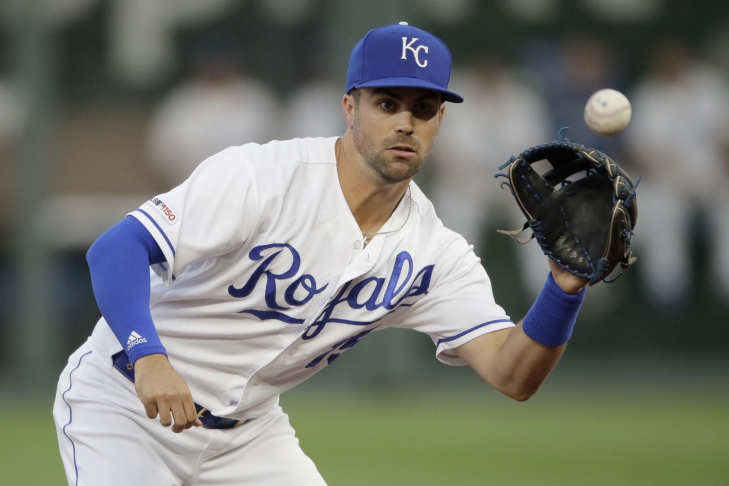
Whit Merrifield joined the Kansas City organization as a ninth-round selection in the 2010 draft, famously arriving with a championship pedigree after driving in the winning run for South Carolina in the College World Series. A quintessential late-bloomer, he spent six seasons grinding through the minors before finally making his debut in 2016 at the age of 27.
After seizing the starting second base job in late 2016, he demonstrated a specialized ability to dictate the pace of a game from the top of the order. He surged into the league lead in stolen bases in 2017 with 34, a feat he followed up in 2018 by leading the entire major leagues in both hits (192) and steals (45). This period of rapid growth served as the essential lead-in to his status as the "hit king" of the American League, showing the organization that he was a foundational winner who simply refused to take a day off.
He led the AL in hits in back-to-back seasons, while also topping the American League in triples (10) in 2019 and doubles (42) in 2021. He earned two All-Star selections during his time in Missouri, proving that his skill set was as sharp in the field as it was on the basepaths.
With the club moving toward a younger core, Merrifield was traded to the Toronto Blue Jays in August in exchange for Max Castillo and Samad Taylor. Merrifield compiled 1,001 hits, a .286 average, and three AL stolen base titles as a Royal.
Our Top 50 Kansas City Royals are now up
Yes, this is taking a while!
As many of you know, we here at Notinhalloffame.com are slowly generating the 50 of each major North American sports team. We have a new one to unveil today, that of the Kansas City Royals, two time World Series Champions.
As for all of our top 50 players in basketball we look at the following:
- Advanced Statistics.
- Traditional statistics and how they finished in the American League.
- Playoff accomplishments.
- Their overall impact on the team and other intangibles not reflected in a stat sheet.
Remember, this is ONLY based on what a player does on that particular team and not what he accomplished elsewhere and also note that we have placed an increased importance on the first two categories.
This list is updated up until the end of the 2016-17 Season.
The complete list can be found here, but as always we announce our top five in this article. They are:
We will continue our adjustments on our existing lists and will continue developing our new lists.
As always we thank you for your support.
39. Danny Tartabull
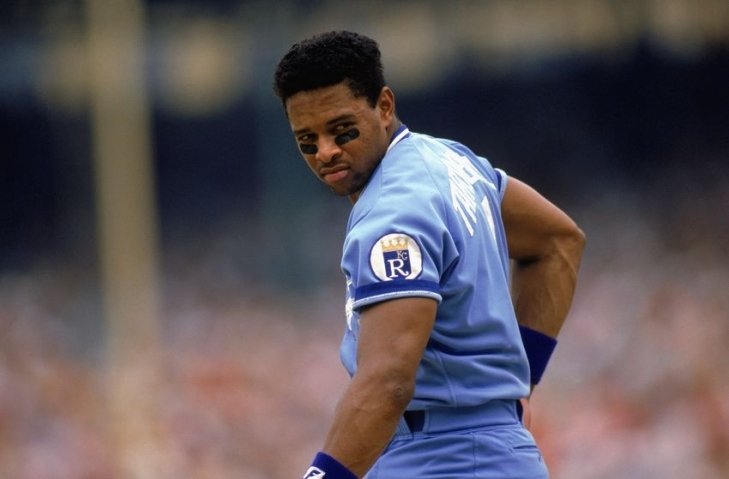
Danny Tartabull arrived in the Kansas City organization via a December 1986 trade with the Seattle Mariners, a deal that sent Scott Bankhead and Mike Kingery to Seattle. A second-generation big leaguer, Tartabull possessed a specialized, violent swing that generated some of the highest exit velocities of the late 1980s.
Tartabull had his best season in 1991; he led the major leagues with a .593 slugging percentage and recorded a career-high 31 home runs. He also had 100 RBIs and a career-best .316 batting average, was 12th in MVP voting, and earned his only All-Star game appearance.
Between 1987 and 1991, Tartabull recorded four seasons with at least 25 home runs and three seasons with over 100 RBIs. He also got on base often, posting a .290 batting average and a .376 on-base percentage for the team.
After his breakout in 1991, Tartabull signed a massive five-year contract with the New York Yankees. Statistically speaking, he was not as good in Yankee pinstripes, but the Seinfeld guest appearance gave him a pop culture moment that he never would have obtained as a Royal.
With Kansas City, Tartabull compiled 674 hits and 124 home runs.
49. Dick Drago
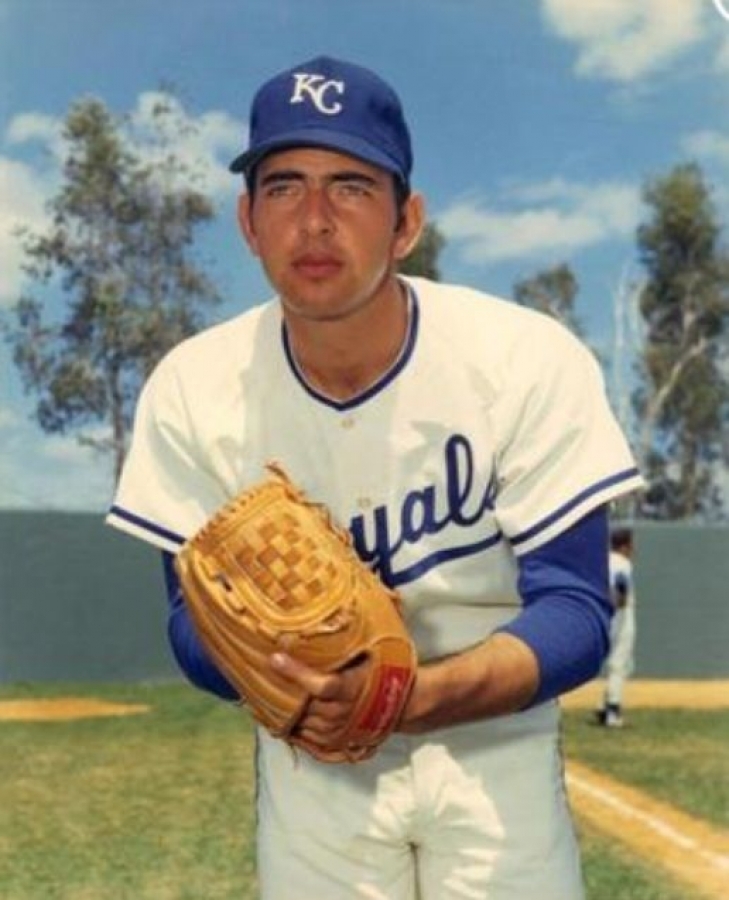
Dick Drago arrived in the Kansas City organization via the 1968 Expansion Draft, a right-hander plucked from the Detroit Tigers system before he had ever thrown a pitch in the big leagues. While the move thrust him into a foundational role earlier than expected, he proved to be a nice find for the fledgling franchise.
Drago’s best year by far was in 1971. He was manipulating the strike zone at will, recording 17 wins and a localized best 2.98 ERA. He showed the organization he was a foundational professional by tossing 241 innings and leading the staff with 15 complete games, a performance that earned him a fifth-place finish in the Cy Young voting. His tactical value was defined by his elite precision, as he consistently ranked among the league's top ten in fewest walks per nine innings.
Between 1970 and 1972, Drago was a club workhorse, averaging nearly 33 starts per season and proving to be a foundational leader for a young pitching staff. While his 61-70 record reflected the growing pains of a new franchise, his specialized 3.52 ERA and his technical mastery of the "low-walk" approach made him essential for the Royals.
After the 1973 season, Drago was traded to the Boston Red Sox in exchange for Cecil Upshaw. With Kansas City, Drago had 61 wins, 63 complete games, and a 3.52 ERA.
50. Jarrod Dyson
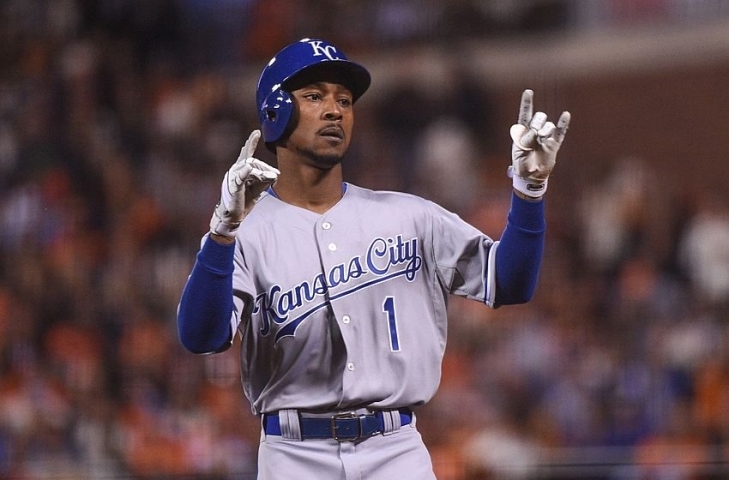
Jarrod Dyson arrived in the Kansas City organization as a 50th-round draft pick in 2006, a position that usually suggests a short professional shelf life. However, he possessed a specialized, game-breaking speed that eventually made him one of the most tactical weapons in franchise history. While he never commanded a traditional full-time role, he provided a foundational level of late-inning pressure, proving that elite athleticism could impact a game just as much as a home run.
Though he rarely exceeded 300 plate appearances in a season, he demonstrated a localized ability to transform the tempo of a game the moment he stepped onto the dirt. He showed the organization he was a foundational winner by using his speed in center field, where he led all American League center fielders in Range Factor per Game. This high-frequency defensive coverage was paired with a relentless threat on the basepaths, as he recorded at least 30 stolen bases in four seasons despite limited starting opportunities.
The 2015 World Series run served as the ultimate punctuation for his specialized role. While he wasn't a primary fixture in the postseason box scores, he provided the foundational baserunning that helped secure the title, famously scoring a crucial run in the 12th inning of the clinching Game 5 against the Mets. His tactical value was reflected in a surprisingly high 11.7 bWAR during his first tenure, a number that highlighted how his specialized defensive range and elite base-stealing outweighed his modest hitting totals. He proved that true greatness is found in mastering a niche, finishing his initial run in Kansas City as one of the most efficient "substitutes" the league had ever seen.
The journey took a turn in 2017 when he was traded to the Seattle Mariners, beginning a four-year tour of the league that included stops in Arizona, Pittsburgh, and Chicago. After this period away, he returned to the Heartland as a free agent in 2021, providing a veteran bridge for a young clubhouse. This final stay was brief, as he was claimed off waivers by the Toronto Blue Jays that summer.
Overall in Kansas City, Dyson compiled 176 stolen bases, 467 hits, and a 2015 World Series ring.
47. Jose Rosado
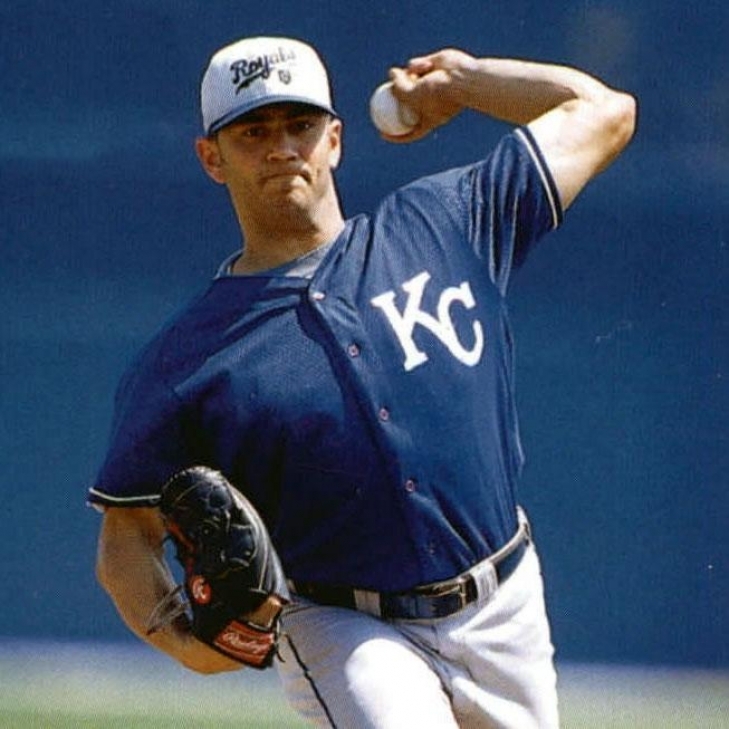
Jose Rosado arrived in the Kansas City organization as a 12th-round selection in 1994, a left-hander whose deceptive delivery and poised mound presence propelled him through the system at a breakneck pace. He debuted in 1996 and immediately looked like the specialized ace the franchise had been searching for since the departure of Kevin Appier.
Right out of the gate, when he was called up in 1996, Rosado proved he belonged in the Majors. He only made 16 starts that summer, but posted a 3.21 ERA and a 1.114 WHIP and finished fourth in the American League Rookie of the Year voting. This success served as the lead-in to 1997, where he earned his first All-Star selection and proved his durability by tossing over 200 innings and recording 12 victories.
In 1999, he reached another peak of individual recognition, earning his second All-Star nod and famously picking up the win for the American League in the Midsummer Classic. He had a personal best of 141 strikeouts, but he was unable to build on his momentum.
Shoulder injuries compounded in 2000, and he was forced to retire at 25, leaving one of the biggest “what ifs?” in organizational history. Rosado compiled 37 wins, 480 strikeouts, and two All-Star selections over his career.
46. Cookie Rojas
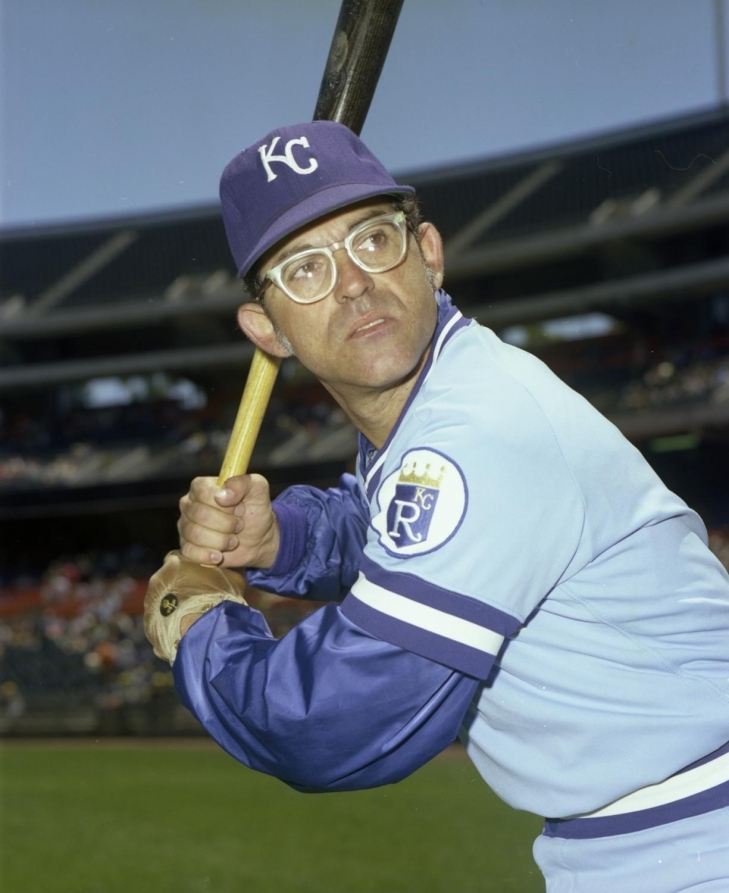
Cookie Rojas arrived in Kansas City via a June 1970 trade with the Philadelphia Phillies, a veteran infielder brought in to provide a stabilizing presence for a franchise still in its infancy. While he had already established himself as a versatile defender in the National League, it was with the Royals where he matured into a perennial All-Star and a foundational leader.
Rojas found an immediate rhythm upon his arrival, especially in his first full season (1971) with the club. That year, he demonstrated a specialized ability to manipulate the bat, recording a .300 batting average and earning the first of four consecutive All-Star selections. He showed the organization he was a foundational professional by finishing among the league leaders in several contact-oriented categories, a performance that earned him his first career MVP votes. This style of play became his calling card, as he followed up with a 1972 season where he recorded 134 hits and a career-best 65 RBIs.
Between 1971 and 1974, Rojas was the primary engine of the Royals' infield, averaging over 140 hits and maintaining a respectable .270 average during a period where league-wide offense was often suppressed. He also showed the organization he was a foundational leader by mentoring a young George Brett and Frank White. Though his advanced metrics, such as a career .309 on-base percentage, suggested limits to his overall offensive impact, his localized popularity and four straight All-Star nods reflected his status as the face of the team’s early success.
As the 1970s progressed and the roster evolved into a powerhouse, his role naturally shifted toward a veteran bench presence. He remained a high-quality contributor throughout the 1977 season, helping the team secure back-to-back division titles. Following that championship run, he moved into a coaching capacity, effectively ending his playing days in Kansas City.
Rojas compiled 845 hits, four All-Star selections, and a .268 batting average in powder blue.
26. Danny Duffy
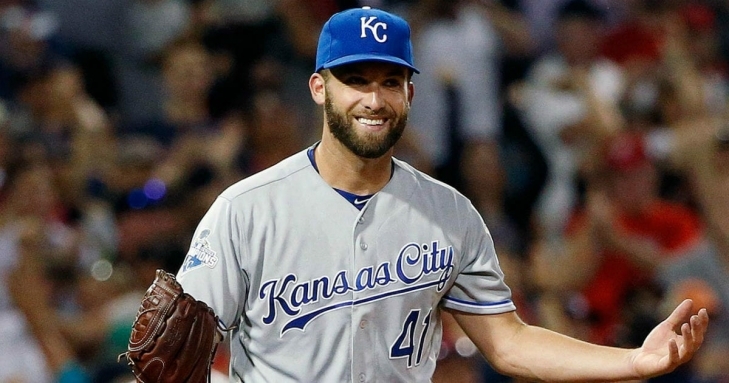
Danny Duffy joined the Kansas City organization as a third-round selection in 2007, a high-ceiling left-hander who would become one of the most beloved figures of the modern era. After making his debut in 2011 and overcoming Tommy John surgery early in his career, he evolved into a foundational piece of the rotation.
In 2014, he moved into the rotation full-time and posted a career-best 2.53 ERA, setting the stage for the team’s historic postseason run. During the 2015 championship season, he demonstrated a specialized resilience by transitioning to a relief role late in the year. He showed the organization he was a foundational winner by tossing high-leverage innings in the ALDS, ALCS, and World Series, helping Kansas City secure its first title in 30 years.
In 2016, he evolved into a true staff ace, recording a career-high 12-3 record and a franchise-record 16 strikeouts in a single game against Tampa Bay. He showed the organization that he was a foundational star by recording 188 strikeouts and earning the first of back-to-back Opening Day starts in 2017. He possessed a rare, durable quality that saw him pitch at an elite level for Team USA in the 2017 World Baseball Classic, helping secure a gold medal. Despite recurring shoulder issues that surfaced in 2018 and 2019, he remained the emotional heartbeat of the rotation, famously declaring "Bury me a Royal" to signal his lifelong commitment to the organization.
In July 2021, Duffy was traded to the Dodgers, an exit motivated by the Royals’ desire to give the veteran a chance at another ring while acquiring a player to be named later. A flexor strain prevented him from ever making an appearance for Los Angeles. With K.C., Duffy compiled a 68-68 record, 1,048 strikeouts, and the 2015 World Series title.
40. Kelvin Herrera
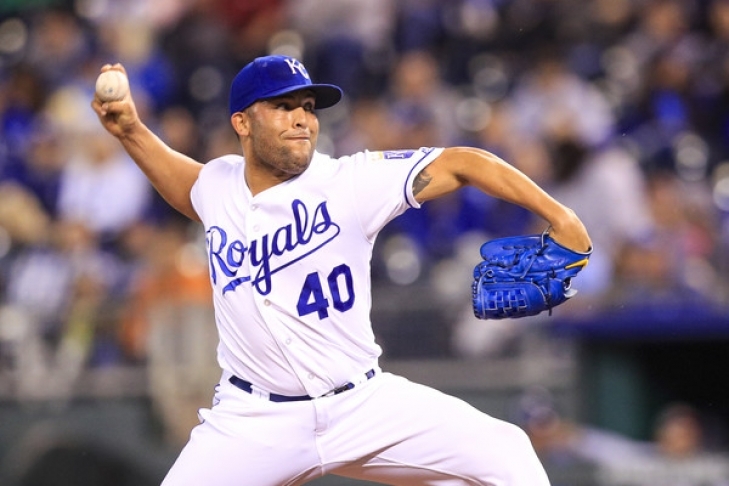
Signed as an amateur free agent in 2006, Kelvin Herrera was a fire-balling right-hander from the Dominican Republic who would eventually become a foundational pillar of the most dominant bullpen in modern baseball history. Known for a specialized triple-digit fastball that appeared effortless, he transitioned from a young prospect into a high-leverage weapon.
Herrera was at his best during the back-to-back World Series runs of 2014 and 2015. He demonstrated a specialized ability to bridge the gap to the ninth inning as the seventh-inning anchor of the legendary "HDH" trio alongside Wade Davis and Greg Holland. He showed the organization he was a foundational winner by posting a staggering 1.26 ERA across 22 postseason appearances for Kansas City. It was an overall performance that helped secure the 2015 World Series title and earned him consecutive All-Star selections in 2015 and 2016.
Notably, in 2013, he demonstrated a specialized ability to handle international pressure by helping the Dominican Republic secure a gold medal in the World Baseball Classic.
Herrera was traded to the Washington Nationals in June of 2018, but he left the Royals with 57 saves, a 23-26 record, and a postseason ERA of 1.26.
44. Al Cowens
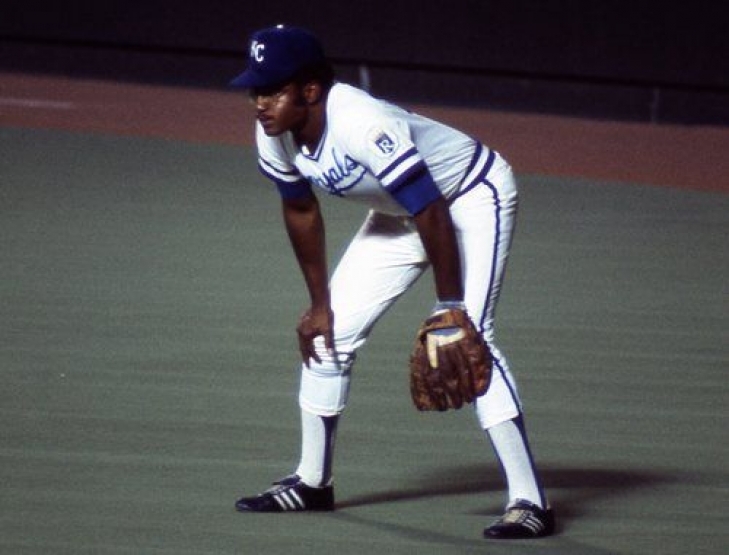
Al Cowens arrived in the Kansas City organization as a 75th-round draft pick in 1969, a staggering underdog story for a player who would eventually become a cornerstone of the franchise's first great era. He secured the starting right-field job by 1974, and in 1977, Cowens exploded with one of the best offensive seasons in franchise history of the 1970s.
That year, Cowens recorded career highs in home runs (23), RBIs (112), and batting average (.312). He showed the organization he was a foundational superstar by finishing as the runner-up for the American League MVP, falling just short of Rod Carew. His value was equally high on the grass, where he led the league in Total Zone Runs and earned a Gold Glove Award, cementing his reputation as a premier two-way threat.
While many remember his long-standing feud with pitcher Ed Farmer, sparked by a broken jaw sustained in a 1979 pitch and culminating in a famous 1980 brawl, his real legacy in the Heartland was built on his durability and steady offensive production. Cowens was traded to the California Angels after the 1979 season.
With the Royals, Cowens amassed 784 hits with 80 stolen bases and a .282 batting average.
41. Joe Randa
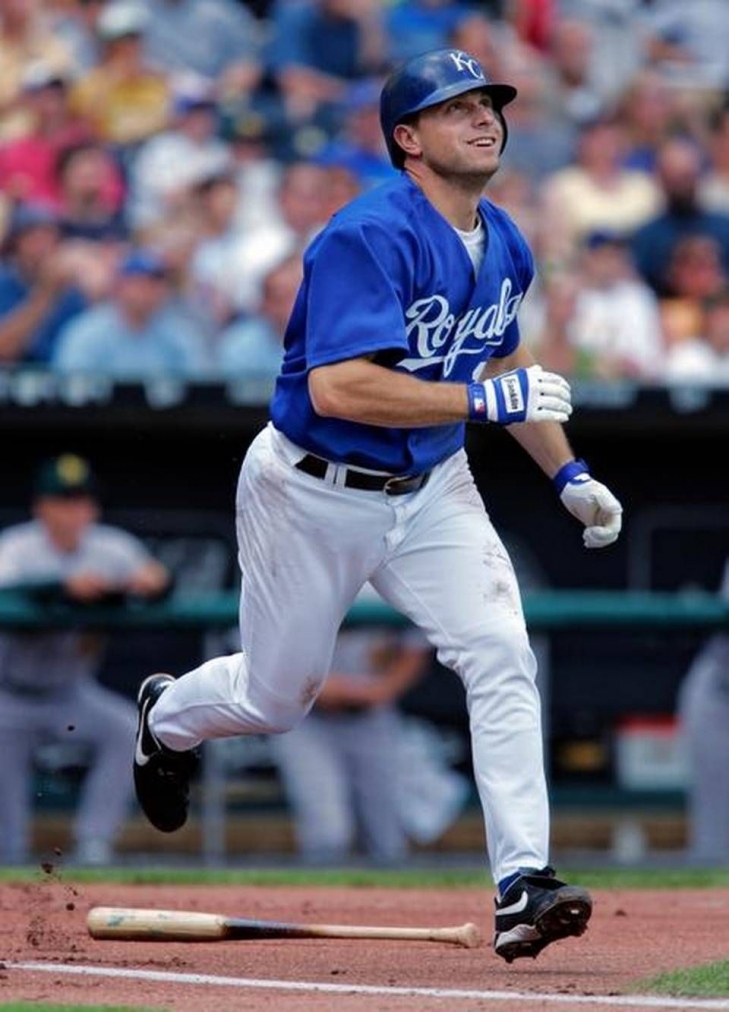
Joe Randa arrived in the Kansas City organization as an 11th-round selection in 1991, but his path to becoming a franchise fixture was anything but linear. After debuting in 1995 and appearing to be a casualty of the team's high-frequency roster turnover, moving through Pittsburgh, Detroit, and the Mets in short order, he returned to the Heartland in 1999.
In his first year back in Kansas City, he demonstrated a specialized ability to spray the ball across the turf at Kauffman Stadium, recording a career-high 197 hits and a .314 batting average, along with 16 home runs and 84 RBIs. This breakout performance served as the lead-in to 2000, where he evolved into a premier run-producer, driving in a career-high 106 runs and maintaining a .304 average.
His tenure was equally defined by his specialized defensive consistency and by a reputation as the emotional heartbeat of the clubhouse. Known as "The Joker" for his ever-present smile, he demonstrated a tactical reliability at third base, setting a franchise record in 2003 by going 75 consecutive games without an error. Even during lean years, he was producing, highlighted by a historic 2004 performance where he became one of only three Royals to collect six hits in a single game.
After the 2024 season, Randa departed for the Cincinnati Reds as a free agent. With Kansas City, he collected 1,084 hits, 563 RBIs, and a .288 batting average.
29. Greg Holland
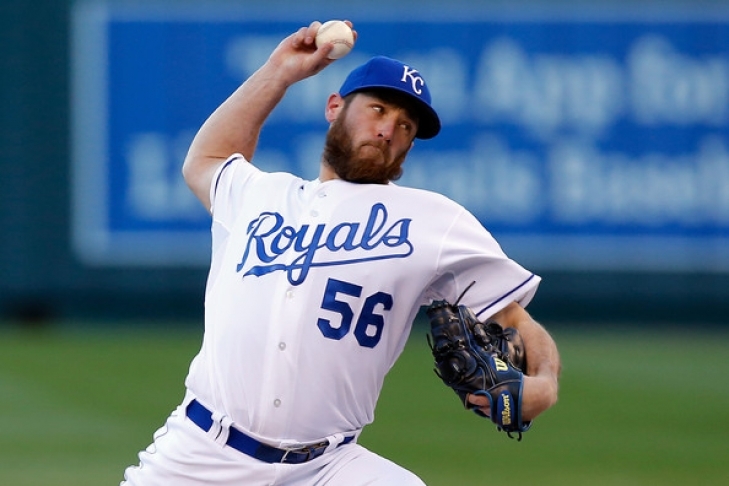
Greg Holland was developed as a pure reliever from the moment the Royals drafted him in 2007. Armed with a high-90s four-seam fastball and a biting slider, he never started a single game for the organization. He spent two seasons as a high-leverage setup man before the 2012 trade of Jonathan Broxton to Cincinnati opened the door for him to become the full-time closer.
Holland reached a historic peak of efficiency during the 2013 and 2014 campaigns. In 2013, he recorded a franchise-record 47 saves and followed it with 46 the next year. He maintained an elite dominance during this stretch with back-to-back ERAs under 1.50 and WHIPs under 1.000, earning two All-Star selections and the inaugural Mariano Rivera AL Reliever of the Year Award. He showed the organization he was a foundational winner by serving as the final hammer for the "H-D-H" bullpen that led Kansas City back to the World Series in 2014.
Everything culminated in a difficult 19-month stretch beginning in late 2015. While he battled through 32 saves that year, his effectiveness dipped as he pitched through a significant UCL tear. He missed the entire 2015 postseason and the subsequent World Series title to undergo Tommy John surgery. After a five-year journey through several NL clubs, he returned to the Royals in 2020 as a veteran mentor, proving he could still deliver in a setup capacity. He left for Texas in 2022, departing with 159 saves, ranking fourth in franchise history.
36. Al Fitzmorris
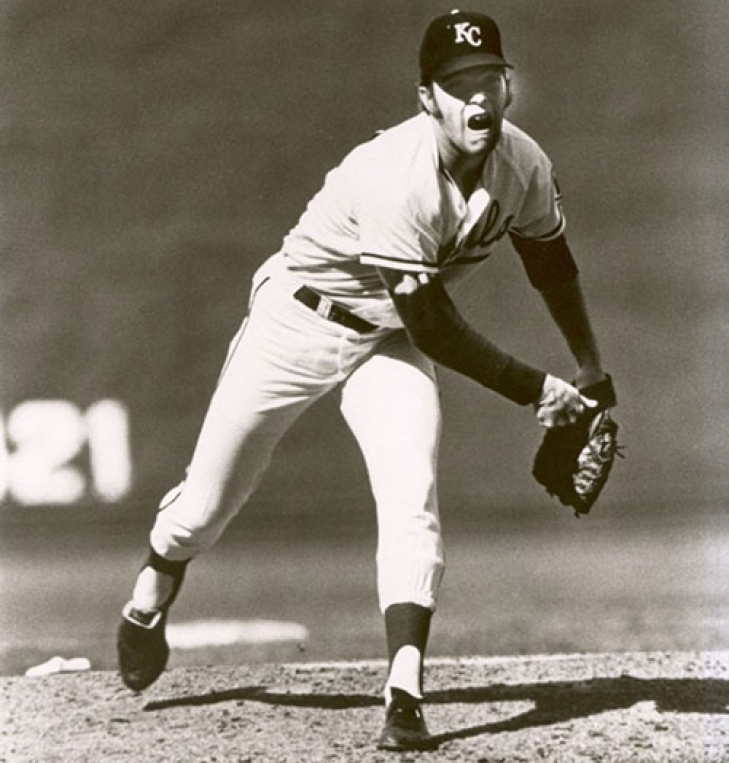
Al Fitzmorris was a cornerstone of the original Kansas City rotation, joining the organization as a selection from the Chicago White Sox in the 1968 Expansion Draft. While it took several years to find a permanent role in the shifting hierarchy of the new franchise, he eventually emerged as one of the most reliable right-handers of the early 1970s.
Fitzmorris spent the first half of his Kansas City tenure as a versatile weapon, moving between the bullpen and the rotation while the club searched for its identity. He demonstrated a specialized ability to eat innings in 1973, when he was promoted to a full-time starter and recorded eight wins with a 3.25 ERA. This transition served as the essential lead-in to his most productive stretch, where he evolved into a consistent winner for a team that was beginning to challenge the Oakland dynasty for supremacy in the American League West.
The 1974 through 1976 campaigns represented the peak of Fitzmorris's efficiency. He won at least 13 games each season, peaking with a 16-win season in 1975, and helped them reach their first playoff appearance in 1976. That would be his swansong in Kansas City, as he departed the organization exactly as he had arrived, when the Toronto Blue Jays selected him in the 1976 Expansion Draft.
Fitzmorris compiled a 70-48 record, a 3.51 ERA, and 450 strikeouts for the club.
38. Billy Butler
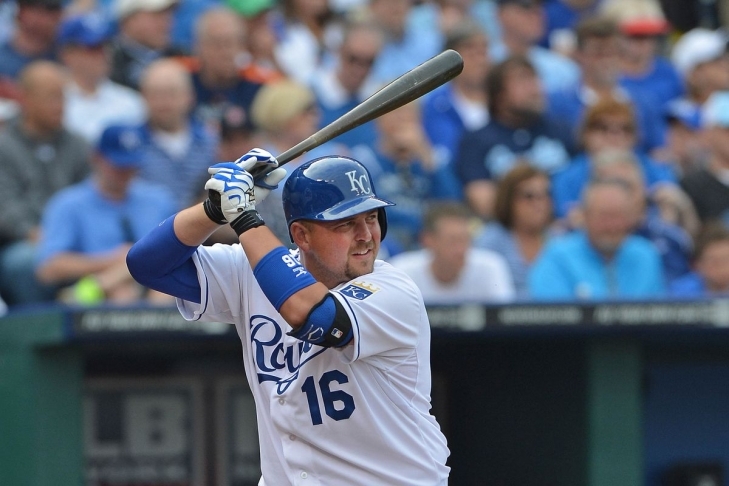
Billy Butler arrived in the Kansas City organization as a first-round selection in 2004, a hitter whose natural affinity for the gaps made him one of the most prolific doubles machines in franchise history. While his defensive limitations eventually led to a permanent role as a designated hitter, he became the club’s primary offensive engine during the lean years of the late 2000s.
Debuting for the Royals in 2007, Butler recorded a career-high 29 home runs and 107 RBIs while batting .313. That season, he won his first career All-Star selection and won the Edgar Martinez Award as the American League’s premier designated hitter. This performance was the crown jewel of a five-year stretch (2009–2013) where he consistently delivered at least 15 home runs and 80 RBIs.
He had three seasons in which he batted .300, and in 2014, his veteran presence helped the Royals reach the World Series, but that was when his Kansas City run came to an end. Butler signed with the Oakland Athletics, though he would never have a season as he did in powder blue.
As a Royal, Butler compiled 1,273 hits, 127 home runs, and the 2012 Silver Slugger Award.
42. Mike Macfarlane
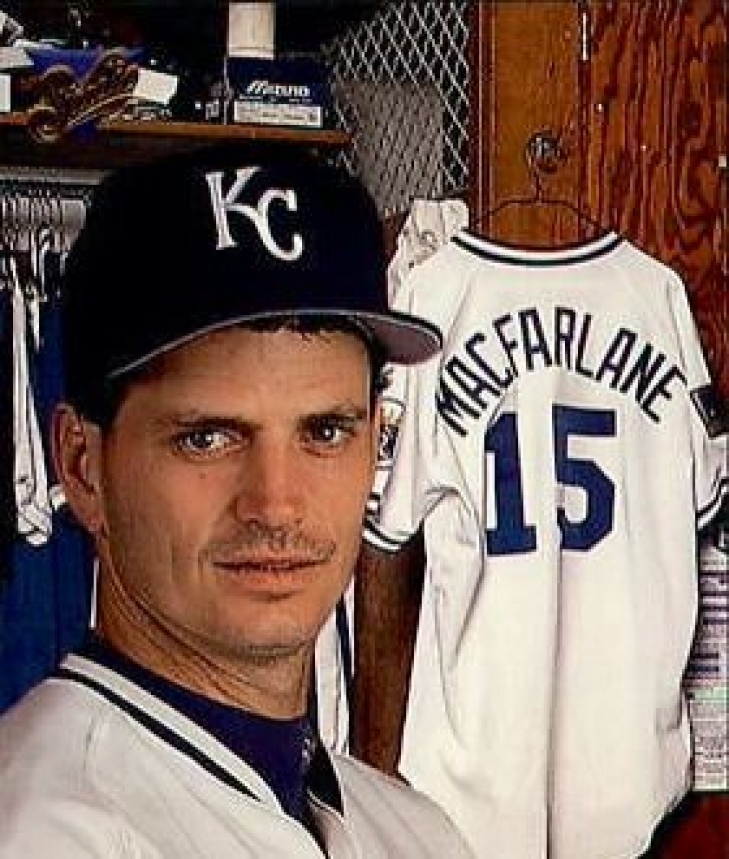
Mike Macfarlane arrived in the Kansas City organization as a fourth-round selection in 1985, a physically sturdy catcher with a reputation for intense preparation and a "blue-collar" approach to the game. He debuted in 1987 and eventually outlasted several high-profile competitors to become the team’s primary signal-caller.
Known mostly for his defensive ability, Macfarlane could occasionally help with his bat. During the 1993 campaign, a season in which he emerged as one of the premier power-hitting catchers in the American League, he belted a career-high 20 home runs and recorded 67 RBIs. He was also willing to sacrifice his body for the team, leading the league in hit-by-pitches in 1992, a category he would again lead in 1994.
Macfarlane was also a favorite of many of the Royals’ staff. He may have been a light hitter, but he had enough power in his bat to gain him at-bats. Macfarlane departed for Boston as a free agent after the 1994 season, but that was short-lived; he returned in ’95 for a second run that lasted until a mid-season 1998 trade to Oakland.
As a Royal, he compiled 717 hits, 103 home runs, and a reputation as a master handler of pitching staffs.
35. Mike Moustakas
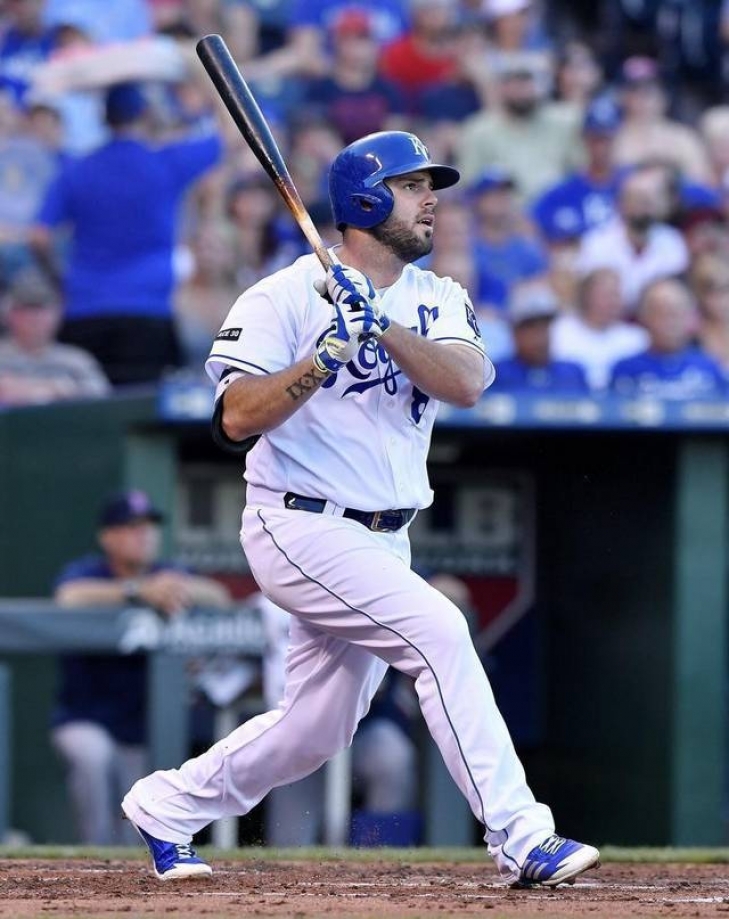
Mike Moustakas arrived in Kansas City as the second overall pick in the 2007 draft, carrying the heavy expectations of a franchise desperate for a turnaround. While his traditional numbers often sparked debate among evaluators, he became the emotional heartbeat of the team's championship era.
In the middle of the 2010s, “Moose” was the man in the Royals baseball. Moustakas first demonstrated a specialized ability to deliver in the clutch during the historic 2014 postseason run. After a regular season where he struggled with consistency, he evolved into a tactical legend in October, belting five home runs during the playoffs and making an iconic diving catch into the dugout during the ALCS. The year after, he carried that momentum into the 2015 championship campaign, where he earned his first All-Star selection, hit 22 home runs, and provided the veteran-like poise needed to secure the franchise's first World Series title in thirty years.
In 2017, he surged into the record books by belting a franchise-record 38 home runs, finally eclipsing Steve Balboni’s long-standing mark. He showed the organization he was a foundational star by earning his second All-Star nod and finishing the year with a career-high .521 slugging percentage. While he would record another 20-home run season in 2018, his overall rank remains hindered by a .306 career on-base percentage as a Royal.
Moustakas was traded to Milwaukee during the 2018 season, and left behind 139 home runs and 858 hits.
