

182. Andres Galarraga
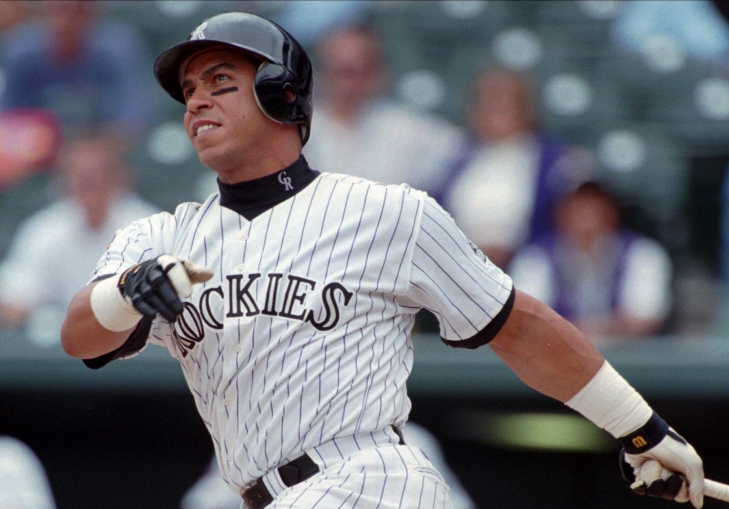
The Montreal Expos had earned a reputation for scouting and signing Latin American talent, and one of the best examples of that was Venezuelan First Baseman, Andres Galarraga.
Galarraga debuted in Montreal in 1985, and after a rocky start, he batted .305 in 1987 and was an All-Star the season after, when he posted a .302 Batting Average and was the league leader in Hits (184) and Doubles (42). Like every homegrown star of the Expos of the late 80s and early 90s, Galarraga left when the impending free agent was traded to St. Louis.
The Venezuelan was injured for most of the year and only played in 95 Games for the Cards, but he signed with the expansion Colorado Rockies in 1993, which ushered in the best era of his career.
Coors Field was an excellent fit for Galarraga, who batted .370 in the Rockies' first season, and he gave them their first batting champion. The First Baseman was an All-Star that year, and he showed off greater power numbers, hitting 31 Home Runs in both 1994 and 1995, the first time he ever eclipsed 30. Galarraga blasted 47 in 1996 with 150 RBIs, both of which would lead the National League. He was sixth in MVP voting that year and was seventh the year after with a 41 HR/140 RBI year, which, like the season before, also saw Galarraga bat over .300.
Galarraga joined the Atlanta Braves in 1998 and was an All-Star again, showcasing excellent power metrics (44 HR, 121 RBI). Non-Hodgkin's Lymphoma kept him out of the entire 1999 season. He came back in 2000, providing Atlanta with 28 Home Runs and an even 100 in RBIs, and Galarraga was chosen for his fifth and final All-Star Game. That was his last good year in baseball, and he finished off his career with stints in Texas, San Francisco, Montreal (again), San Francisco (again), and Anaheim.
A valid criticism of Galarraga was his propensity to strike out. He was the leader in whiffs in four different seasons, and he would have 2,003 Strikeouts in his career. Galarraga would accumulate 2,333 Hits, 399 Home Runs, and 1,425 Runs Batted In over his 19-year career.
Our Top 50 All-Time Colorado Rockies are now up

Ok, maybe we are trying to justify the slow pace of getting our Top 50 players of each franchise up, but we do have another one, and yes it is a return to the diamond.
As we are doing all of the franchises by random, the Colorado Rockies are up next, because…why…well, why not?
An expansion team in 1993, the Rockies have only made the playoffs three times, going as far as representing the National League in the World Series in 2007, though they were systematically destroyed in a four game sweep by the Boston Red Sox.
Casual fans still think the ball launches out of Coors Field (humidors have taken care of that) but that was the case in the 90’s and offense was a premium for the Rockies.
Perhaps this is why so many of those on this list are from the 90’s!
The entire list can be found here, but as per tradition we always unveil the top five in our news item which are as follows:
As always, we look forward to your feedback and look for us to unveil a new top 50 soon.
9. Andres Galarraga
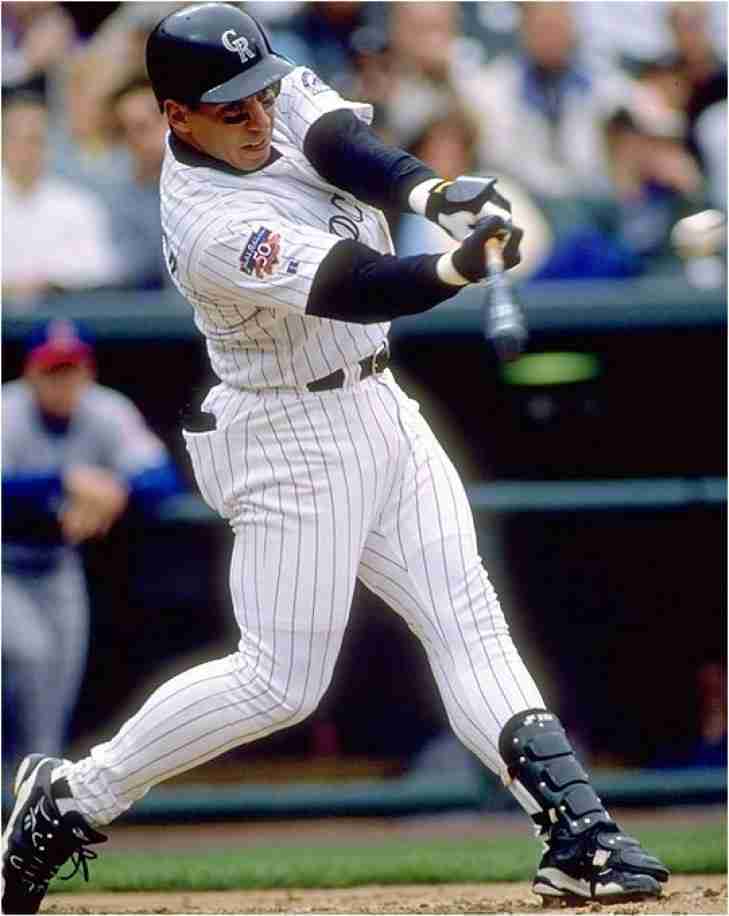
Galarraga’s path to Colorado was forged by a daring vision from Rockies manager Don Baylor, who had worked with him in St. Louis. Believing that Galarraga’s recent struggles were an anomaly caused by injury rather than a decline in skill, Baylor pushed the expansion franchise to sign the free agent for their inaugural 1993 season. It proved to be a masterstroke of talent evaluation; Galarraga matured instantly into the premier offensive threat for the young club. He authored a breathtaking debut where his average skyrocketed from .243 the previous year to a league-leading .370, making him the first Venezuelan player to capture a Major League Batting Title and setting the tone for the most explosive offense in the game.
The most impressive aspect of his tenure was the sheer volume of runs he produced during the mid-90s. Galarraga was a master of the middle of the order, launching 30 or more home runs in four of his five seasons with the Rockies. He reached an incredible peak in 1996 when he swept the National League power titles, leading the circuit with 47 home runs and 150 RBIs. While he frequently contended with a high strikeout rate, his ability to produce in high-leverage moments was undeniable; he finished in the top ten of the MVP voting four times during his five-year stay, serving as the tactical anchor for the 1995 squad that secured the franchise’s first-ever postseason berth.
His presence was defined by a charismatic, wide-grinned joy and a physical style of play that earned him his famous nickname. Despite the challenges of maintaining high defensive efficiency at his size, "The Big Cat" patrolled first base with surprising agility, making him a central figure in the city's sporting culture. Whether he was lacing a line drive into the gap or clearing the bleachers at Coors Field, he competed with a professional intensity that made him a local immortal. He proved that a player could become the face of a new franchise through a rare combination of historic hitting and a magnetic personality.
After the 1997 season, he moved on to Atlanta as a free agent, but he left the organization as a key figure in Colorado’s formative years. He departed Colorado with 172 home runs, 575 RBIs, and 757 hits with an epic .316/.367/.598 slash line.
32. Andres Galarraga
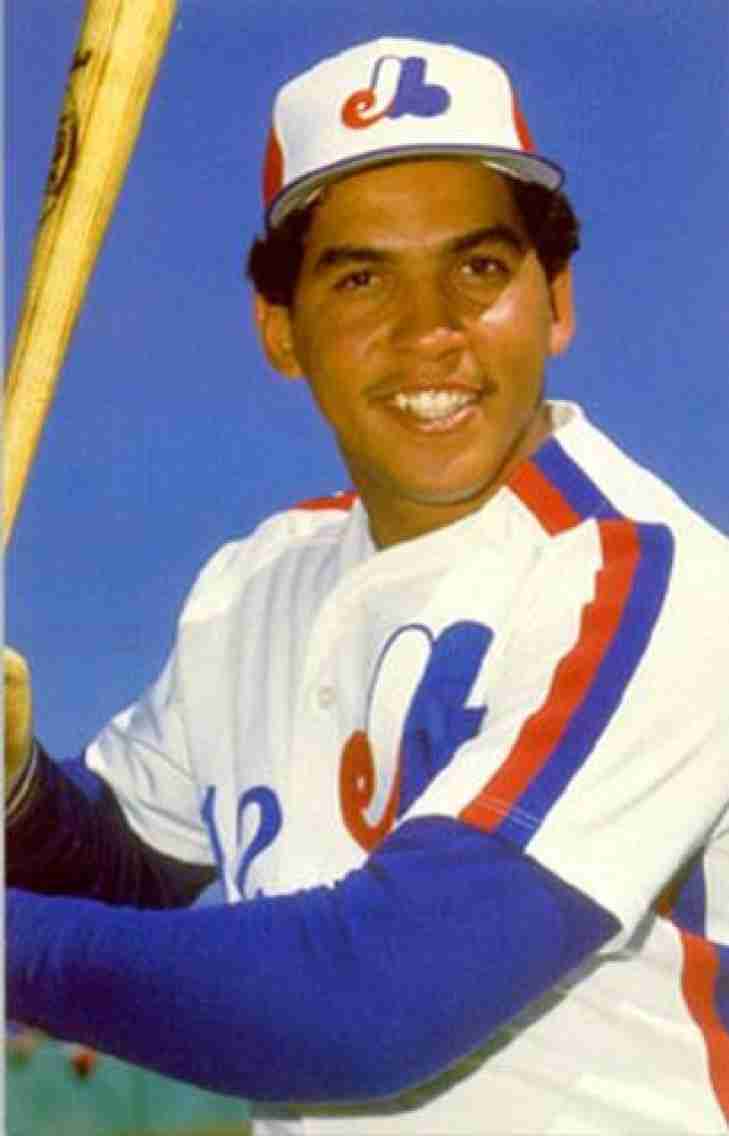
Long before he was launching tape-measure home runs into the thin air of Mile High Stadium, Andrés Galarraga was captivating fans in French Canada with a completely different brand of baseball. Signed out of Venezuela as an amateur free agent in 1979, the man globally known as "The Big Cat" initially made his mark not with jaw-dropping power, but with an impossibly agile glove. For a man of his imposing physical stature, Galarraga patrolled the first base bag with the grace of a shortstop, executing diving stops and picking low throws out of the Stade Olympique dirt with mesmerizing ease.
Once his offensive game caught up to his elite defensive instincts, he transformed into one of the most complete and feared first basemen in the National League.
The 1988 season is considered Galarraga’s peak with the Expos. He excelled against National League pitchers, delivering a breakout year that earned him his first All-Star nod, a Silver Slugger, and his first of two Gold Gloves in a row. The Big Cat led the Senior Circuit with 184 hits and 42 doubles, also hitting 29 home runs while maintaining a strong .302 batting average. Galarraga ranked seventh in MVP voting that year. His performance boosted Montreal’s offense and proved to the baseball world that he was more than just a great defender.
Despite his immense talent, Galarraga’s style of play also came with a significant amount of swing-and-miss. While he brought elite run-producing power to the middle of the lineup, he also led the National League in strikeouts for three consecutive seasons (1988–1990).
As his strikeout totals grew and a knee injury limited his 1991 performance, the struggling Expos faced a harsh reality. They couldn't afford to keep their star first baseman once he became a free agent, so they traded Galarraga to the St. Louis Cardinals for pitcher Ken Hill after 1991. Though he struggled there, reuniting with former Expos manager Don Baylor in Colorado sparked a legendary, MVP-level second half of his career. He would make a brief return in 2002 as an elder statesman before winding down his career after the 2004 season.
With Montreal, Galarraga had 906 hits, 171 doubles, 115 home runs, and 456 RBIs, along with a .269/.327/447 slash line (118 OPS+).
