


Committee Chairman
1. Clayton Kershaw
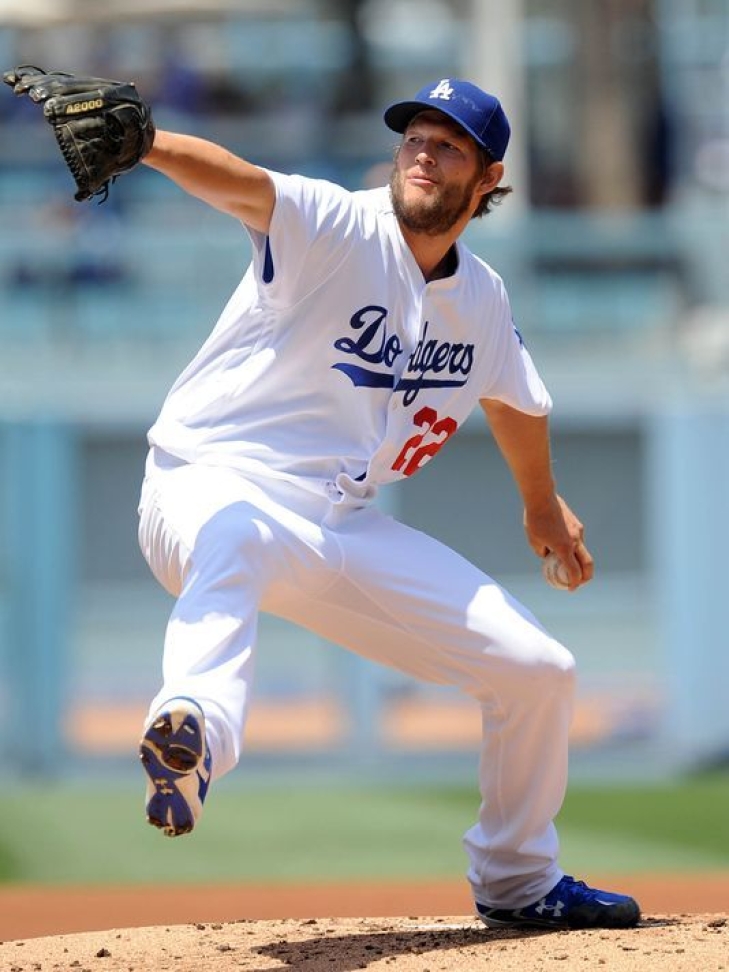
When making these lists, they are supposed to be fun and to use the proverbial number 99.9, which is the percentage they are. With the Los Angeles Dodgers, it was so hard, and there were so many people we could choose from within the top tier that choosing amongst icons was befuddling. Especially considering the man we decided at the top is not who you might think.
Clayton Kershaw arrived in Los Angeles as the seventh overall pick in the 2006 draft, a Texas high school phenom whose looping curveball and high-velocity heater immediately invited comparisons to the great Sandy Koufax. He reached the big leagues just two years later, a raw southpaw tasked with upholding a pitching lineage that defines the Dodgers’ identity. For nearly two decades in blue, he has provided a specialized brand of mound dominance, proving that a generational arm could withstand the immense pressure of the Hollywood spotlight to become a foundational icon of the franchise.
The early chapters of his tenure were defined by a methodical evolution from a high-upside prospect into a tactical workhorse. After a 2008 debut that saw him finish as the league’s youngest player, Kershaw showed the organization he was a professional mainstay by posting a stellar 2.79 ERA in 2009, his first full season in the rotation. He followed that by eclipsing the 200-inning and 200-strikeout marks for the first time in 2010, recording a specialized complete-game shutout against San Francisco that served as a harbinger of the dominance to come.
The 2011 campaign was the season that marked his breakout on the global stage. That summer, he demonstrated a technical mastery of the strike zone, winning the Pitching Triple Crown by leading the National League in wins (21), strikeouts (248), and ERA (2.28). He showed the organization he was a premier superstar by earning his first career Cy Young Award, a performance that signaled the beginning of a decade-long reign. This breakout was merely the opening act for a pitcher who would eventually make the All-Star Game a nearly annual tradition.
His tenure saw an unprecedented level of individual recognition between 2013 and 2014, a two-year stretch that established him as the gold standard in the sport. During this peak, he secured back-to-back Cy Young Awards, including a historic 2014 season where he also captured the National League MVP. He showed the organization he was a foundational outlier by posting a specialized 1.77 ERA and a 0.857 WHIP, marks that echoed the legendary numbers of the dead-ball era. His tactical value was defined by his ability to go deep into games while maintaining elite efficiency, famously tossing a no-hitter in 2014 that remains one of the greatest individual performances in Dodger Stadium history.
Between 2011 and 2017, he won five ERA titles, proving to be a foundational workhorse who consistently led the league in WHIP and strikeout-to-walk ratio. He demonstrated a specialized durability during this stretch, remaining a perennial Cy Young contender even as he navigated back and shoulder issues. His tactical mastery of the "Kershaw Curve" and a devastating slider ensured he remained a high-quality threat every time he took the ball, anchoring a rotation that reached the postseason in every season from 2013 onward.
The only thing Kershaw had left to do was win the World Series, which he did in 2020. While critics had often highlighted his postseason struggles, Kershaw demonstrated a foundational resilience during the Dodgers' title run. He showed the organization he was a high-caliber winner by securing two victories in the World Series against the Tampa Bay Rays, posting a 2.31 ERA over his two starts. This historic performance allowed him to finally lift the trophy, securing the ring that many felt was the final missing piece of a first-ballot Hall of Fame resume.
As the decade turned, the trajectory of his career shifted toward a veteran leadership role, though his efficiency remained remarkably high. He earned his 200th career win in 2023 and surpassed the milestone of 3,000 strikeouts in 2025. Despite dealing with a set of injuries that limited his availability during the team’s 2024 championship run, his presence in the dugout remained a tactical asset for a club that eventually secured its second title of the decade. He proved that true greatness is found in the ability to adapt, evolving from a power pitcher into a technical master as he entered his late thirties.
Kershaw had his farewell tour in 2025, which again resulted in a third World Series. He retired with three Cy Young Awards, an MVP, and three World Series rings, 223 wins, 3,052 strikeouts, and his status as the greatest Dodger of all time is a technical certainty. He proved that true greatness is found in the legacy of a player who carries himself with the same poise and humility regardless of the hardware in his trophy case, a journey that now heads directly to a first-ballot induction in Cooperstown.
50. Kevin Mitchell
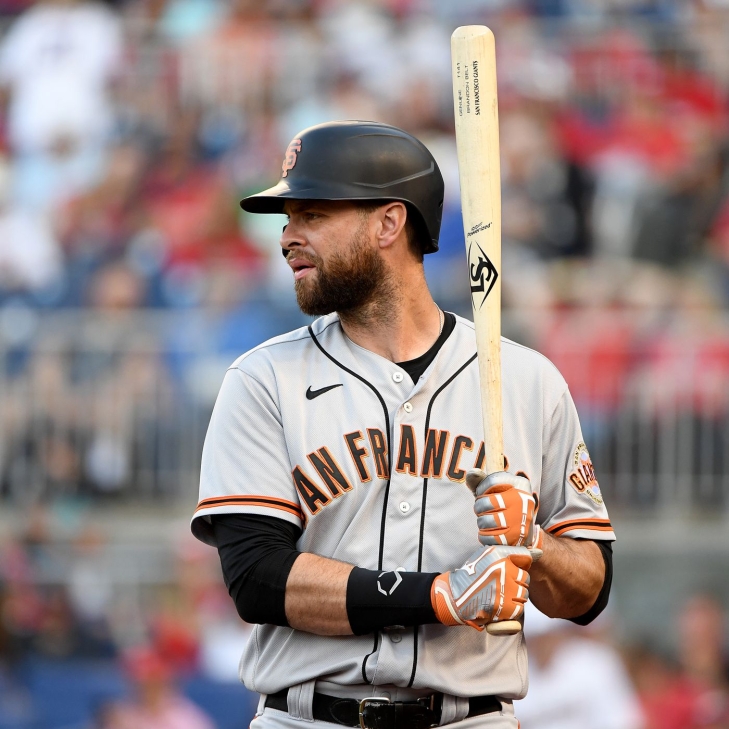
Few players in the modern history of the San Francisco Giants have exhibited a more remarkable and electrifying display of offensive prowess than Kevin Mitchell. Originally signed by the New York Mets as an undrafted free agent from San Diego, this versatile athlete established a reputation as a highly valuable utility player, notably scoring a decisive run in the tenth inning of Game 6 to secure the Mets’ victory in the 1986 World Series. Nonetheless, his early career was characterized by frequent transitions, as front offices struggled to establish a consistent defensive position for his dynamic raw talent. This situation was rectified in July 1987, when the Giants acquired him through a significant seven-player trade with the Padres. The moment Manager Roger Craig positioned Mitchell in left field, a formidable force was effectively unleashed upon the Bay Area.
Mitchell’s extraordinary performance during the iconic 1989 season marked a peak in his offensive career, showcasing a transcendent level of skill. He wielded a fierce, rapid right-handed swing that struck fear into pitchers, turning Candlestick Park into his personal power station. With a summer comparable to a Triple Crown contender, he led Major League Baseball by hitting 47 home runs and adding 125 RBIs. Mitchell also topped the league in slugging percentage (.635), OPS (1.023), and total bases (345). This season earned him his first All-Star selection and helped the Giants reach the 1989 World Series. His exceptional dominance during the era was recognized when he became the first Giant since Willie McCovey in 1969 to win the National League Most Valuable Player Award.
While his bat earned him awards, Mitchell created one of baseball's most memorable defensive moments on April 26, 1989. In St. Louis, he sprinted into the left-field corner on a deep fly by Ozzie Smith. Recognizing he had misjudged the ball's path, he extended his bare right hand and caught it cleanly in mid-air, stunning the crowd.
He retained his impressive middle-of-the-order presence during the 1990 season, confirming his MVP form was legitimate. Mitchell earned his second consecutive All-Star selection, maintaining a strong .290 batting average, hitting 35 home runs, and driving in 93 RBIs, ranking among the league's top power hitters. Despite ongoing knee injuries and weight changes causing physical strain that affected his durability, he played through 113 games in 1991, still delivering an impressive 27 home runs and 69 RBIs for a team in transition.
Desperate to acquire frontline starting pitching, the Giants' front office made a tough strategic calculation in December 1991, trading their iconic power hitter to the Seattle Mariners in a multi-player package for Bill Swift and Mike Jackson. Mitchell would go on to bounce through several major-league destinations—including a highly productive, late-career offensive resurgence with the Cincinnati Reds—before eventually retiring in 1998.
Mitchell has 514 hits, 143 home runs, and 411 RBIs with a sharp .278 batting average and a powerful .530 slugging mark as a Giant. In 2010, Mitchell was chosen for the Giants’ Wall of Fame.
49. Freddie Fitzsimmons
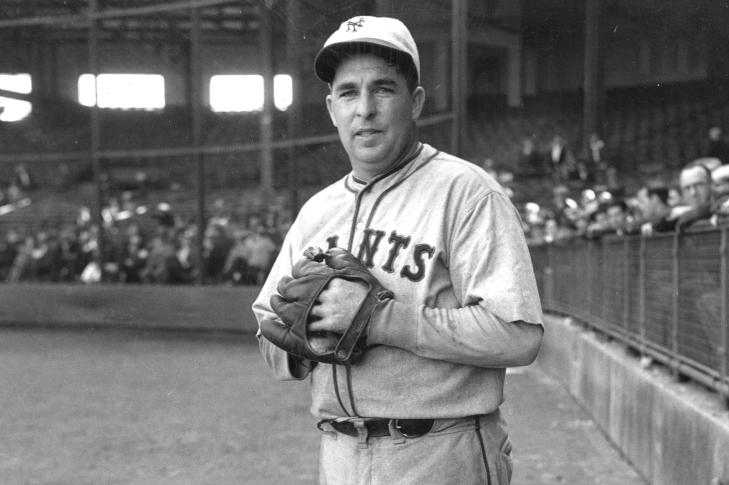
The modern pitching "workhorse' concept finds its true origin in an unorthodox yet formidable right-hander from Indiana. Freddie Fitzsimmons, not resembling the typical athletic star with his heavy frame—earning him the nickname "Fat Freddie"—mastered one of the most powerful, knee-buckling knuckle-curves in the game. Picked up from the Indianapolis Indians in 1925, he employed a distinctive, spinning delivery, turning his back completely to the batter before releasing his pitches. Once he secured a spot under John McGraw at the Polo Grounds, Fitzsimmons became the dependable, relentless force in the New York pitching staff.
Fitzsimmons was best known for his extraordinary durability and ability to pitch heavy workloads. During a time when pitching staffs were often pushed to exhaustion, he was a stable presence in the regular season, consistently pitching over 200 innings for nine straight summers from 1926 to 1934. Although he didn't rely on high strikeout numbers, his sensible approach focused on making contact, which often resulted in weak groundballs. He excelled at preventing runs and frequently ranked in the top ten in WHIP in the National League, with his peak coming in 1928 when he achieved a remarkable 20–9 record over 261 innings.
Demonstrating that his substantial workload was effectively complemented by a high level of efficiency, Fitzsimmons secured the National League batting average crown during the 1930 season, leading the Junior Circuit with an impressive 19–7 record (.731). This consistent excellence ensured that he would not suffer a losing record in any regular season during his first decade with the New York team. Together with the left-handed pitcher Carl Hubbell, Fitzsimmons formed a formidable lefty-righty combination that regularly propelled the Giants into October. He supported his peak of 20 wins with 19 victories in 1930, followed by consecutive 18-win seasons in 1931 and 1934. His reliable performance was a crucial factor in guiding the team to National League pennants in 1933 and 1936, as well as during a notably competitive pursuit of the 1934 pennant. Although a series of unfortunate circumstances in the postseason resulted in a 0–3 record in those Fall Classic appearances, his consistent regular-season effort was the primary reason the franchise secured a World Championship banner in 1933.
By the summer of 1937, a shifting roster dynamic and a 6–10 start to his campaign prompted the front office to make a difficult transitional decision, trading the beloved veteran to the Brooklyn Dodgers in exchange for Tom Baker. Fitzsimmons defied the aging curve in Flatbush, even setting a historic National League record with an astonishing .889 winning percentage (16–2) at age 38 in 1940, before eventually transitioning into a successful major-league manager and coach.
With the Giants, Fitzsimmons had a 170–114 record, a 3.69 ERA, and 619 strikeouts across 398 total appearances.
45. Hooks Wiltse
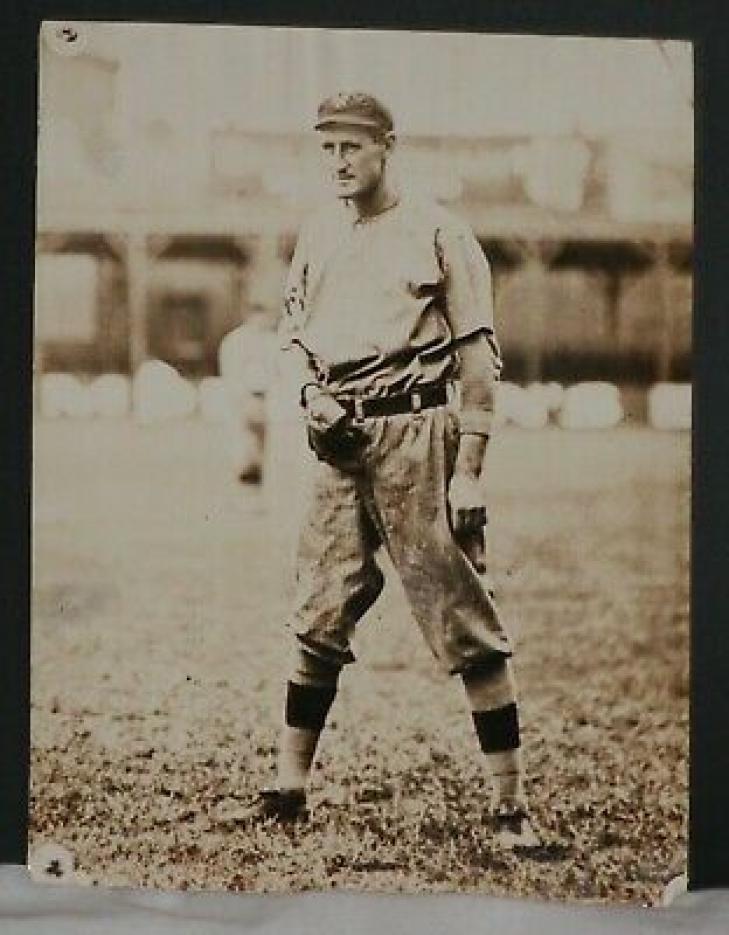
Hooks Wiltse didn’t just throw a curveball; he weaponized it. In an era dominated by blazing fastballs and deceptive spitballs, the crafty southpaw possessed a sharp, sweeping breaking ball that was universally recognized as far more lethal than his heater—a rarity for the Deadball Era that quickly earned him his iconic nickname. Joining John McGraw’s powerhouse New York Giants in 1904, Wiltse made the most explosive first impression in major-league history by winning his first 12 consecutive decisions, a legendary rookie record that stood unmatched for 70 years.
Wiltse quickly became the ideal left-handed counterpart to the legendary Christy Mathewson. Together, they formed one of the most renowned and successful lefty-righty pairings in baseball history, amassing 435 wins over their 11 years in Manhattan. Wiltse's efficient pitching contributed significantly to the Giants winning five National League pennants during that period. Although he sat in the dugout during the 1905 World Series while Mathewson threw three historic shutouts to win the title, it was Wiltse's regular-season performance that fueled their success.
His career's peak came during an impressive late-decade period when he became a back-to-back 20-win pitcher, recording a 23–14 record in 1908 and following it with a 20–11 season in 1909.
Although it might seem that the heavy workload of the Deadball Era took a toll on him, his efficiency tells a different story. In his peak years, Wiltse was a top-tier run suppressor, maintaining a season ERA below 2.50 for five straight summers from 1905 to 1909, with a career-low of 2.00. It was only after 1910, as he entered his thirties and his shoulder fatigue persisted, that his ERA rose above that 2.50 mark.
Beyond his prowess on the mound, Wiltse was seen as one of the most versatile athletes on the team. McGraw often relied on his keen instincts for pinch-hitting and defensive roles, even assigning him to first base in Game 2 of the 1913 World Series. He concluded his time with the Giants with 155 hits and a solid .215 batting average. After shifting to a relief pitcher role, the Giants released him after the 1914 season, which led to a brief final stint with the Brooklyn Tip-Tops of the Federal League.
Wiltse's ten-year New York residency includes a 136–85 record, 2.48 ERA, and 948 strikeouts in 339 games.
