


Committee Chairman
Felix Hernandez will be inducted into the Seattle Mariners Hall of Fame
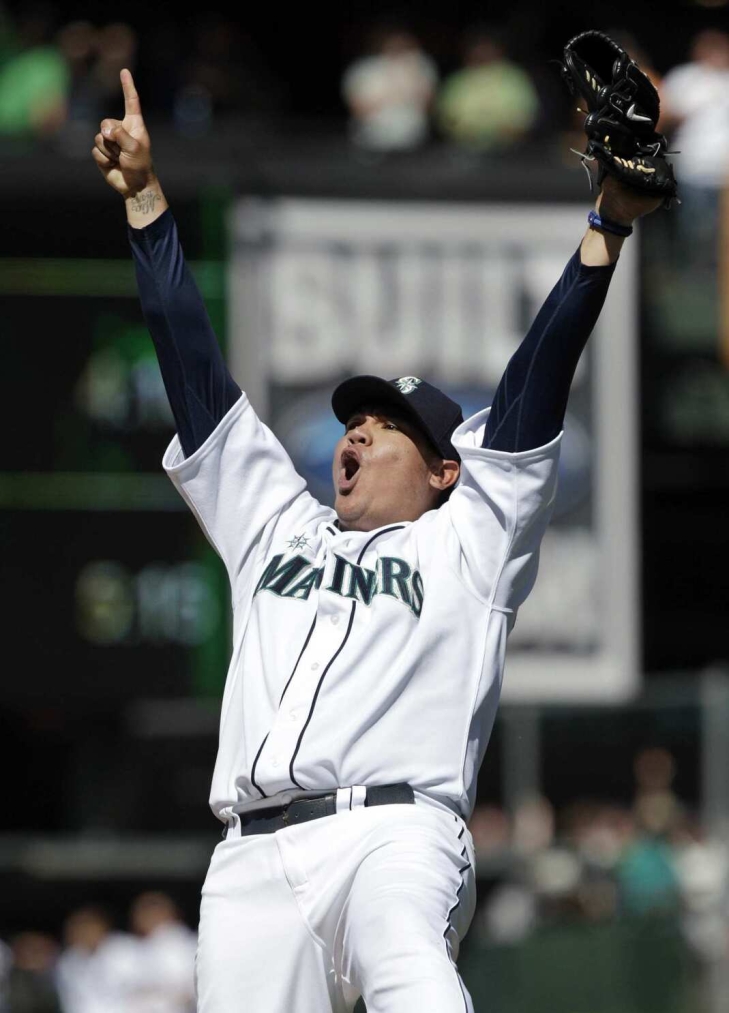
Regular visitors of Notinhalloffame.com know that we are slowly working on the top 50 of every major team in the NHL, NBA, NFL and MLB. Once that is done, we intend to look at how each team honor their past players, coaches and executives. As such, it is important to us that the Seattle Mariners have announced that Felix Hernandez will become the 11th member of their franchise Hall of Fame.
Hernandez played his entire MLB career with the Mariners, the team where he would become the "King" of the Pacific Northwest and all of Baseball.
“King Felix” made his first appearance in the Majors in 2005, and after showing gradual improvement over his first few seasons, Hernandez took the throne in 2009, leading the American League in Wins (19), H/9 (7.5), and finishing second in Cy Young voting. Hernandez was better in 210, winning the Cy Young, with a league-leading 2.27 ERA and 7.0 H/9, while also finishing atop the leaderboard in Innings Pitched (249.2).
Hernandez would not win the Cy Young again, but he was a contender for the award for years to come. From 2011 to 2015, he was a perennial All-Star (he went to six in total), and the last of those four years, he was in the top eight in Cy Young votes, including another second-place finish in 2014. That year, Hernandez led the AL in ERA (2.14), WHIP (0.915), and H/9 (6.5).
Hernandez played until 2019, retiring with a career record of 169-136 and 2,524 Strikeouts.
The ceremony will take place on a date to be determined in August. Hernandez will join Alvin Davis, Dave Niehaus, Jay Buhner, Edgar Martinez, Randy Johnson, Dan Wilson, Ken Griffey Jr., Lou Piniella, Jamie Moyer and Ichiro Suzuki.
We here at Notinhalloffame.com would like to congratulate Felix Hernandez for this impending honor.
Notinhalloffame NHL Cup Standings Update (80)
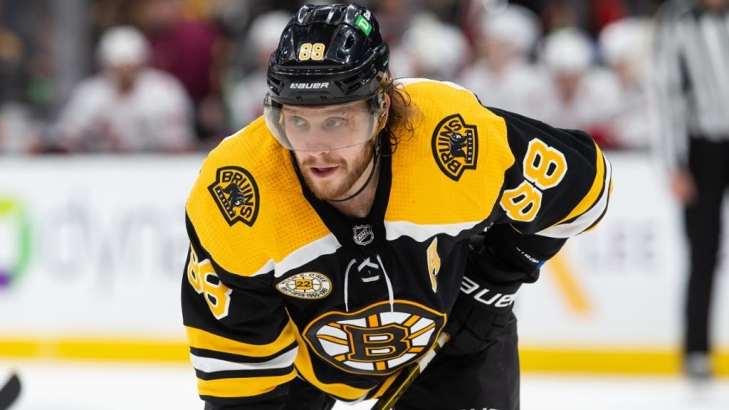
If you are a regular visitor at Notinhalloffame.com, you know that we created the Notinhalloffame NHL Cup, where in every regular season game, we award points (5-4-3-2-1) to the top five performers. This is the second year that we have done this, and Edmonton’s Connor McDavid won the first one.
To keep everyone regularly in the loop this time, we have decided to give regular updates, starting at when the first player cracked 40 Points, and tell all of you the top ten. We will this going forward with every update as the first player breaches the elevated ten-point threshold afterward.
Here is the current top ten, based on the first player to breach 80 Notinhalloffame Cup Points:
1. Connor McDavid, Edmonton Oilers. 80 Cup Points: 43 Games, 35 G, 44 A, 79 P, +2, 9.0 PS. (#1 on last update)
There are a lot of stories at the near-halfway mark of the 2022/23 NHL Season, with one of the top ones being Connor McDavid running away with every major statistical category. Last year’s Notinhalloffame NHL Cup winner is extending his lead and he is currently the league-leader in Goals (35), Assists (44), Points (79) and Point Shares (9.0).
2. David Pastrnak, Boston Bruins. 74 Cup Points: 40 Games, 32 G, 26 A, 58 P, +20, 7.9 PS. (#3 on last update)
The Bruins are one of the NHL’s top teams and Pastrnak is their top scorer. The Bruins star is averaging 1.39 Points per Game, slightly more than his First Team All-Star campaign in 2019-20.
3 (Tie). Mikko Rantanen, Colorado Avalanche. 68 Cup Points: 39 Games, 27 G, 23 A, 50 P, +6, 6.1 PS. (#3 on last update)
Rantanen remains at #3, and is also in the top ten in Goals and Points, while leading the NHL in Even Strength Goals (22). The Avs star has 1.28 PPG, the highest of his career.
3 (Tie). Jason Robertson, Dallas Stars. 68 Cup Points: 42 Games, 29 G, 29 A, 58 P, +23, 8.1 PS. (#6 on last update)
Robertson is on pace to shatter last season’s 41-38-79 output, and the fourth-year player is now the undeniable top dog of the Stars lineup. He is currently tied for the league-lead in Even Strength Goals (22).
5. Jack Hughes, New Jersey Devils. 63 Cup Points, 41 Games, 26 G, 23 A, 49 P, +14, 6.4 PS. (not on last update)
Hughes explodes back into the top ten, ranked higher in Cup Point standings than he has ever been. He is seven Points away from tying last year’s number.
6. Brayden Point, Tampa Bay Lightning, 62 Cup Points: 39 Games, 23 G, 17 A, 40 P, +2, 4.7 PS. (#2 on last update)
Point drops large from #2, and though he is having a good year, and is a point-per-game player, there are still quite a few players with higher point tallies than the Tampa Center. Saying that, Point has been the most clutch player for the Lightning, and a reason we love this process!
7. Auston Matthews, Toronto Maple Leafs. 60 Cup Points: 41 Games, 20 G, 27 A, 47 P, +17, 5.5 PS. (#7 on last update)
Matthews is the defending Hart winner but he is not on the PPG pace he was last year, though when Toronto wins, the odds are that he was the biggest reason why. Is this season a disappointment so far for Matthews?
8 (Tie). Kirill Kaprizov, Minnesota Wild. 58 Cup Points: 40 Games, 24 G, 25 A, 49 P, -1, 5.6 PS. (#8 on last update)
Kaprizov is easily Minnesota’s best player and if he stays healthy should have his second straight 100-Point year.
8 (Tie). Linus Ullmark, Boston Bruins. 58 Cup Points: 26 Games, 22-1-1, 1.87 GAA, .938 Save Percentage, 6.9 PS. (#8 on last update)
Ullmark is the highest ranked Goalie, and his ascendence to likely All-Star has been colossal for Boston’s rise to the top portion of the standings. Ullmark leads all Goalies in Wins, GAA, Save Percentage and Goalie Point Shares.
10 (Tie). Sidney Crosby, Pittsburgh Penguins, 57 Cup Points: 40 Games, 21 G, 27 A, 48 P, +1, 5.3 PS. (Not on last update)
Crosby is back where he belongs in the top ten, and he has never had a year where he averaged less than a Point per Game.
10 (Tie). Alex Ovechkin, Washington Capitals, 57 Cup Points: 39 Games, 29 G, 19 A, 48 P, 0, 5.9 PS. (#9 on last update)
Ovechkin is closing on Wayne Gretzky’s all-time Goal record, and is tied currently with Sidney Crosby. How perfect is that?
Vancouver’s Elias Pettersson fell off the top ten.
Our next update will occur when the first player breaks 90 Cup Points.
Notinhalloffame NBA Cup Standings Update (160)
If you are a regular visitor at Notinhalloffame.com, you know that we created the Notinhalloffame NBA Cup, where in every regular season game, we award points (5-4-3-2-1) to the top five performers. This is the third year that we have done this, and Denver’s Nikola Jokic won the first two.
To keep everyone regularly in the loop this time, we have decided to give regular updates, starting at when the first player cracked 100 Points, and tell all of you the top ten. We will this going forward with every update as the first player breaches the elevated ten-point threshold afterward.
Here is the current top ten, based on the first player to breach 160 Notinhalloffame Cup Points:
1. Luka Doncic, Dallas Mavericks, 160 Points: 38 Games, 34.2 PPG, 8.9 RPG, 8.7 APG, 1.7 SPG, 0.6 BPG, 31.5 PER, 7.5 WS. (#2 on last ranking)
Doncic is back at #1, and for our money is still he front runner for the MVP. The European star is currently leading the NBA in Points per Game (34.2) and Usage Percentage (38.6).
2. Kevin Durant, Brooklyn Nets, 153 Points: 39 Games, 29.7 PPG, 6.7 RPG, 5.3 APG, 0.8 SPG, 1.5 BPG, 26.8 PER, 6.4 WS. (#1 on last ranking)
The Nets were on fire, and Durant was posting his best numbers over the past three years. K.D. is now on the injured list with an MCL injury, and will miss a month, that will cost him the MVP and of course, the NIHOF Cup.
3. Jayson Tatum, Boston Celtics, 151 Points: 40 Games, 30.8 PPG, 8.2 RPG, 4.2 APG, 1.1 SPG, 0.8 BPG, 24.9 PER, 5.9 WS. (#3 on last ranking)
Tatum continues to get better which should scare the hell out of anybody cheering against the Celtics. He has never finished a season averaging over 30 Points per Game, and Tatum is over that now, while generating serious MVP consideration.
4. Giannis Antetokounmpo, Milwaukee Bucks, 148 Points: 30 Games, 31.0 PPG, 11.9 RPG, 5.3 APG, 0.8 SPG, 0.9 BPG, 27.1 PER, 4.5 WS. (#3 on last ranking)
Giannis moves up another spot and the two-time MVP’s Bucks look ready to win it all. He is in the top five in Rebounds and Points per Game.
5. Nikola Jokic, Denver Nuggets, 145 Points: 38 Games, 24.9 PPG, 11.0 RPG, 9.7 APG, 1.4 SPG, 0.6 BPG, 32.0 PER, 8.3 WS. (#5 on last ranking)
The “Joker” has been great lately, and we know someone wants to get that third Cup! He is currently leading the NBA in PER 32.0, VORP (4.6), Box Plus/Minus (12.5) and Win Shares (8.3).
6. Shai Gilgeous-Alexander, Oklahoma City Thunder, 142 Points: 37 Games, 30.8 PPG, 4.8 RPG, 5.6 APG, 1.6 SPG, 1.1 BPG, 26.6 PER, 5.6 WS. (#6 on last ranking)
Gilgeous-Alexander is going to be an All-Star this year, and is shattering last year’s averages, which were already good. How great will this Canadian be?
7. Jaylen Brown, Boston Celtics, 137 Points: 40 Games, 27.2 PPG, 7.1 RPG, 3.2 APG, 1.1 SPG, 0.5 BPG, 20.3 PER, 3.3 WS. (#8 on last ranking)
Brown’s appearance here gives Boston the only team to have two players in the top ten, and he currently has the highest traditional numbers of his career.
8. Ja Morant, Memphis Grizzlies, 134 Points: 34 Games, 27.6 PPG, 5.9 RPG, 7.9 APG, 1.0 SPG, 0.3 BPG, 24.2 PER, 3.8 WS. (#7 on last ranking)
Morant is the face of the Grizzles, and he is posting similar numbers from last year, when he took Memphis to the next level.
9. Joel Embiid, Philadelphia 76ers, 127 Points: 29 Games, 33.6 PPG, 9.9 RPG, 4.4 APG, 1.1 SPG, 1.7 BPG, 30.9 PER, 5.2 WS. (#9 on last ranking)
Embiid is currently second in Points per Game (behind Doncic), but is currently dealing with a foot injury.
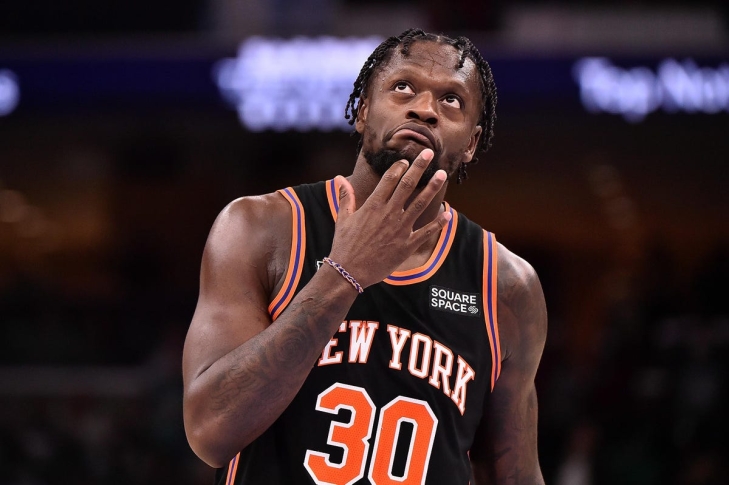
10. Julius Randle, New York Knicks, 125 Points: 42 Games, 24.1 PPG, 10.3 RPG, 3.8 APG, 0.8 SPG, 0.4 BPG, 20.5 PER, 4.8 WS. (#10 on last ranking)
Randle makes his first appearance this year in the top ten, and currently has the same PPG (24.1), as his All-Star year two years ago (24.1).
Our next update will happen after the first player breaches 170 Cup Points.
26. Bill Russell

Bill Russell debuted in 1969 and was a versatile athlete who began his career in the outfield before being asked to move to the infield to fill a critical vacancy. Known for his steady hand and quiet professionalism, he served as the defensive anchor of the longest-running infield in the sport's history.
Initially serving as a utility player and outfielder during his early seasons, Russell shifted to shortstop in 1972 to fill Maury Wills' role. He quickly became a top-tier defender, leading the National League in Defensive bWAR (2.3) and assists (427) in 1973. Recognized for his dependability, he was an essential part of the legendary infield alongside Steve Garvey, Davey Lopes, and Ron Cey, a group that remained a steady fixture in the lineup for more than eight years.
Although he earned three All-Star selections (1973, 1976, and 1980), his most impactful performances were observed during the most prominent moments. During the 1978 World Series, he was electric, batting .423 with 11 hits. He remained an essential member of the team roster into the early 1980s, ultimately contributing to the Dodgers’ 1981 World Series victory. Throughout his career, he established himself as a dependable catalyst at the plate, concluding his playing tenure with 1,926 hits.
He hung up his cleats in 1986. After retiring as the player with the most games played in the team’s West Coast history (2,181), he transitioned into a coaching role and eventually served as the Dodgers’ manager from 1996 to 1998. In 2022, the organization honored his 30-year association with the club by naming him a "Legend of Dodger Baseball."
