


Committee Chairman
27. Justin Turner
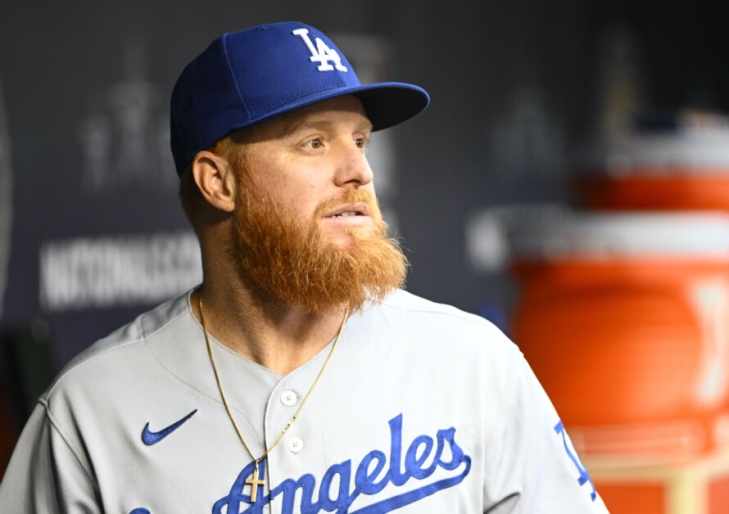
Can you imagine Justin Turner as anything other than a Los Angeles Dodger? He was, and it can also be argued that he was lucky to ever play in L.A., as Turner seemed to have two steps away from the diamond.
Turner first made the Majors in 2009 with Baltimore and would later spend time with the Mets, but he was not impressive for either team and was non-tendered in 2013, making him a Free Agent. He was signed by the Dodgers after starring in a Cal State Fullerton alumni Game, made the Los Angeles roster in 2014, and was set to erase his past performance.
In 2014, Turner seized an opportunity due to injuries and achieved an unexpected high performance, batting .340 over 109 games. He quickly became a key player, demonstrating that his improved swing mechanics were a reliable asset rather than a coincidence. By 2016, he reached a new level of individual recognition, hitting a career-high 27 home runs and placing ninth in MVP voting. He nearly matched this success in 2017, batting .322 with a .945 OPS and earning his first All-Star appearance.
Turner became a postseason legend, creating iconic moments in Chavez Ravine. In the 2017 NLCS, he hit a walk-off home run on Kirk Gibson’s anniversary, earning NLCS MVP. He provided leadership and clutch production that helped the Dodgers reach three World Series in four years, winning in 2020. During this run, he set franchise records in postseason hits, home runs, and RBIs, demonstrating mastery in high-stakes games.
Despite his status as the "Face of the Franchise" and his recent win of the Roberto Clemente Award, the organization chose not to exercise his $16 million option, favoring a younger, more flexible roster. Turner compiled 1,088 hits, 156 home runs, and a .296 batting average for the team.
32. Davey Lopes
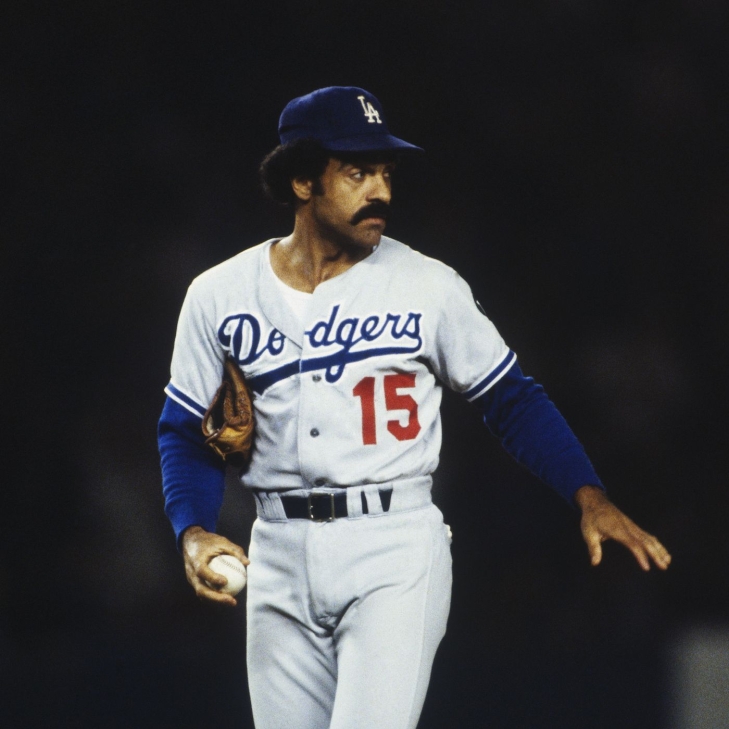
A 2nd-round draft pick, Davey Lopes made his Major League debut with Los Angeles in 1972 and won the starting job at Second Base the following year.
Lopes established dominance on the basepaths, winning back-to-back National League Stolen Base titles with 77 steals in 1975 and 63 in 1976. He set a major league record by successfully converting 38 consecutive stolen base attempts without being caught. As a leadoff hitter, he proved to be a formidable threat, capable of manufacturing a run immediately.
As the 70s went on, Lopes became even more powerful in his game. In 1979, he hit a career-high 28 home runs, tying with teammates Steve Garvey and Ron Cey for the team lead. He was a regular presence at the All-Star Game during that time, earning four straight selections from 1978 to 1981 and even receiving the Gold Glove Award in 1978. His time in Los Angeles reached a memorable peak in 1981, when he played a key role in helping the Dodgers win the World Series over the Yankees. His performance that season marked a fitting ending to his impressive ten-year journey with the team.
After the 1982 season, Lopes was traded to Oakland. With the Dodgers, Lopes batted .262 with 1,204 Hits and 418 Stolen Bases.
Lopes parlayed his leadership skills into a successful career as a Coach, winning a second World Series Ring with the Phillies in 2008.
The King Clancy Memorial Trophy
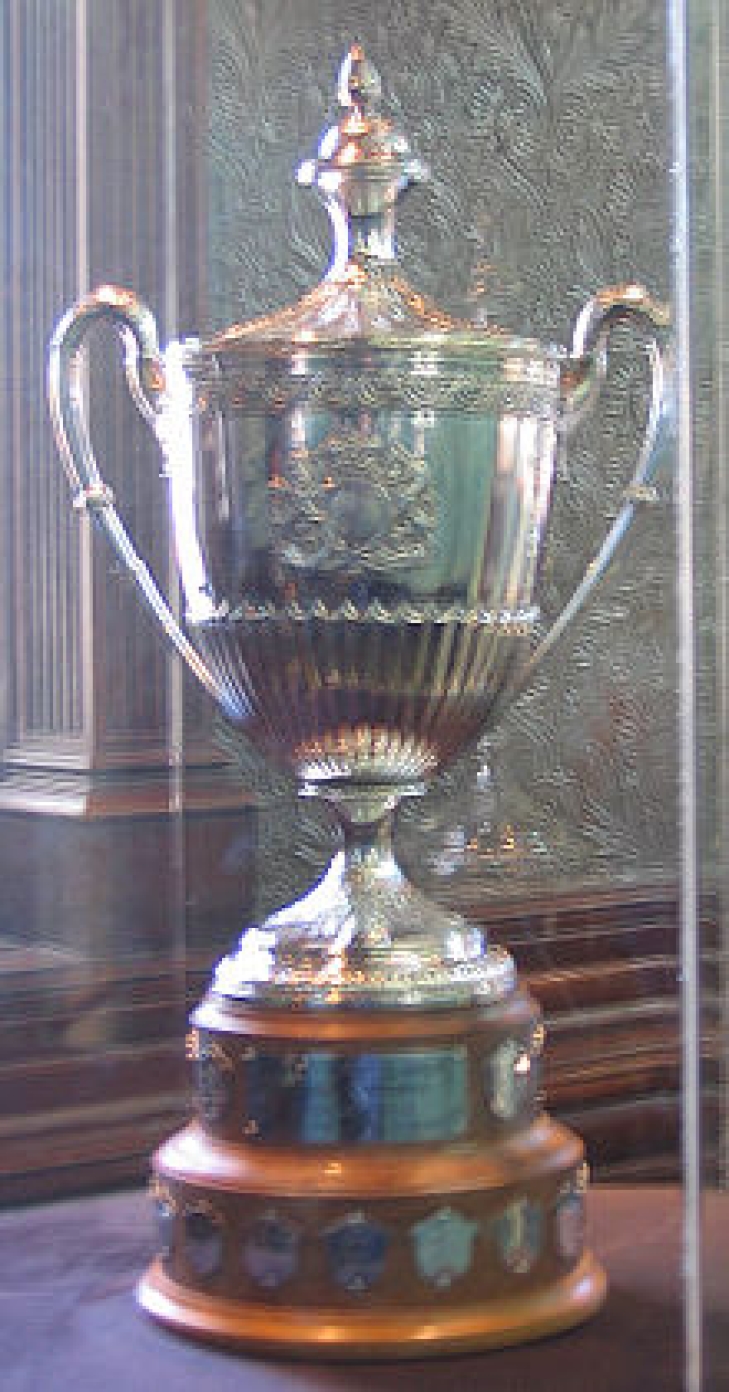
First awarded in 1988, the King Clancy Memorial Award is given annually to the player who best exemplifies leadership on and off the ice who has also made significant contributions to his community.
The award is named after King Clancy, who played for the original Ottawa Senators and Toronto Maple Leafs, was later a successful coach and executive, and was known for his philanthropy.
An award like this often is given to a player, usually a very good one, near the end of his career, though this should not be viewed as a “lifetime achievement award”, as players whit little to no philanthropic endeavors will not win.
The results are as follows:
There are currently 28 former Frank J. Selke Trophy winners who are Hockey Hall of Fame eligible, with 11 entering, yielding a percentage of 39.2.
If we go by yearly winners, there is a small increase to 29 eligible years with 12 of them generating a Hockey Hall of Famer. That is a 41.4 Percentage.
The following are the past players who have won the King Clancy Memorial Trophy and are eligible for the Hockey Hall of Fame and have been enshrined.
1988: Lanny McDonald, Calgary Flames, Right Wing. 10 Goals, 13 Assists, 23 Points, +2, 0.6 Point Shares.
By this point, Lanny was still an effective leader but was not necessarily at a point where he was putting the puck in the net. Still good in doing the unsung work of the game, McDonald only score 23 Points this season, but was a season away from retirement, but more importantly winning his first Stanley Cup. Lanny won the inaugural award for his charitable work both in Calgary and Toronto, and is an excellent first choice for this award.
Inducted into the Hall of Fame in 1992.
1989: Bryan Trottier, New York Islanders, Center. 17 Goals, 28 Assists, 45 Points, -7, 2.6 Point Shares.
Like Lanny McDonald, Bryan Trottier was in clear decline at this point and was coming off his worst performance of the year, though he would have four more seasons in the NHL each of which would follow the pattern of being his worst offensive output. Trottier was however a bona fide star earlier in his career with the Islanders Dynasty and was active in Special Olympics and Make-A-Wish Program.
Inducted into the Hall of Fame in 1997.
1990: Kevin Lowe, Edmonton Oilers, Defenseman. 7 Goals, 26 Assists, 33 Points, +18, 6.0 Point Shares.
Lowe was in the second half of his career, but was already a proven winner with four Stanley Cups and a fifth one this year. The Defenseman was active in the community with Christmas-related charities.
Inducted into the Hall of Fame in 2020.
1991: Ray Bourque, Boston Bruins, Defense. 21 Goals, 60 Assists, 81 Points, +11, 11.2 Point Shares.
This is the first King Clancy winner who had a solid career after winning this award. Bourque was only 31 and was still a Norris Trophy Winner and Stanley Cup Champion after this accolade. Bourque was a community leader in Boston, and this year he served as the Honourable Chairman for Boston’s Floating Hospital.
Inducted into the Hall of Fame in 2004.
1995: Joe Nieuwendyk, Calgary Flames, Center. 21 Goals, 29 Assists, 50 Points, +11, 5.5 Point Shares.
Joe Nieuwendyk was in the prime of his career at this point and would soon move on to the Dallas Stars and win the Stanley Cup and Conn Smythe, a performance that might have put him over the Hall of Fame hump. The Forward, who was the Flames captain at the time, spearheaded the team’s humanitarian efforts in the community.
Inducted into the Hall of Fame in 2011.
2002: Ron Francis, Carolina Hurricanes, Center. 27 Goals, 50 Assists, 77 Points, +4, 8.7 Point Shares.
Francis also won his third Lady Byng this season, and won the Clancy based on his work with Duke’s Children’s Hospital. He is one of the fev players to have over 1,700 career Points.
Inducted into the Hall of Fame in 2007.
2003: Brendan Shanahan, Detroit Red Wings, Left Wing. 30 Goals, 38 Assists, 68 Points, +5, 7.9 Point Shares.
Shanahan’s charitable endeavors featured the creation of a program that assisted in the purchase and installation of smoke detectors in low-income homes. The power forward won three Stanley Cups with the Red Wings and had 1,354 career Points.
Inducted into the Hall of Fame in 2013.
2004: Jarome Iginla, Calgary Flames, Right Wing. 41 Goals, 32 Assists, 73 Points, +21, 11.1 Point Shares.
Iginla was in the prime of his career, capturing his second Rocket Richard award as the game’s leading goal scorer, and he was also named a Second Team All-Star. Within the community, Iginla was at the center of the Flames’ philanthropic endeavors and he personally donated 1,000 dollars for every goal he scored.
Inducted into the Hall of Fame in 2020.
2012: Daniel Alfredsson, Ottawa Senators, Right Wing. 27 Goals, 32 Assists, 59 Points, +16, 7.5 Point Shares.
Alfredsson won the Calder in 1996, and the Mark Messier Leadership Award the year after this King Clancy win. While he was a Senator (15 year), Alfredsson was a pillar of the local Ottawa community and was constant in his charitable work.
Inducted into the Hall of Fame in 2022.
2016: Henrik Sedin, Vancouver Canucks, Center. 11 Goals, 44 Assists, 55 Points, 0, 5.4 Point Shares.
The Canucks Captain, along with his brother, Daniel created the Sedin Foundation in 2014, and underwent plans for Clubhouse 36, an after-school program for at-risk kids.
Inducted into the Hall of Fame in 2022.
2018: Daniel Sedin, Vancouver Canucks, Left Wing. 23 Goals, 32 Assists, 55 Points, -21, 5.4 Point Shares.
See below! Daniel was involved in the same charities that Henrik was, and you have to wonder how he was not a co-winner with his twin two years earlier.
Inducted into the Hall of Fame in 2022.
2018 (2): Henrik Sedin, Vancouver Canucks, Center. 3 Goals, 47 Assists, 50 Points, -22, 2.7 Point Shares.
Henrik was the co-winner with his twin brother, Daniel, and this is likely the only time that we will ever see a repeat winner. The Sedins were in their final season, and their charitable donations across Vancouver and beyond made them legends.
Inducted into the Hall of Fame in 2022.
The following are the players who have won the King Clancy Memorial Trophy who are eligible for the Hockey Hall of Fame and have not been selected:
1991: Dave Taylor, Los Angeles Kings, Right Wing. 23 Goals, 30 Assists, 53 Points, +27, 4.6 Point Shares.
Dave Taylor, who played his entire career with the Los Angeles Kings, would win his only individual trophies this season as not only did he capture the Clancy, he was also awarded the Bill Masterton. Taylor was 35 when he won this accolade and had his best years behind him. Still, his charitable work in SoCal, especially involving those with speech impediments earned this award.
Eligible Since 1997. Ranked #17 on Notinhalloffame.com.
1993: Dave Poulin, Boston Bruins, Center. 16 Goals, 33 Assists, 49 Points, +29, 3.5 Point Shares.
Dave Poulin had a solid career and was one of the better defensive forwards in the game. 1993 was his last decent year and he would retire two years later. In this season, Poulin was honored for his work as the Co-Chairman of the March of Dimes.
Eligible Since 1998. Unranked on Notinhalloffame.com.
1994: Adam Graves, New York Rangers, Left Wing. 52 Goals, 27 Assists, 79 Points, +27, 9.8 Point Shares.
To date, Adam Graves is the youngest winner of the King Clancy, and the 1993-94 Season was by far his most memorable. This was the season where he would win in his second Stanley Cup, and was a major part of the win. This is also the only season where he was named a post season All-Star. Still, this was his peak, and a career worthy of Hall of Very Good, which should not detract from the work he did to win the Clancy. Graves was the Celebrity Chairman of New York’s Dynamic Family Program, and he did other charitable work in NYC.
Eligible Since 2006. Ranked #67 on Notinhalloffame.com.
1996: Kris King, Winnipeg Jets, Left Wing. 9 Goals, 11 Assists, 20 Points, -7, 0.0 Point Shares.
The King Clancy Award would be the only NHL Award that fourteen-year NHL veteran, Kris King would win. The rugged forward was a fan favorite but was never going to be considered a Hall of Famer, but he was to those he helped. King was the Team Captain, and the man who spearheaded the Jets charities.
Eligible Since 2004. Unranked on Notinhalloffame.com.
1997: Trevor Linden, Vancouver Canucks, Center. 9 Goals, 31 Assists, 40 Points, -5, 3.3 Point Shares.
Linden’s King Clancy win was the only major award that he won, but the ultra-popular player was one of the most beloved players in Vancouver’s history. Linden won the Clancy by developing the “Captain’s Crew”, a program that brought underprivileged kids to his private suite to games.
Eligible Since 2011. Ranked #80 on Notinhalloffame.com.
1998: Kelly Chase, St. Louis Blues, Right Wing. 4 Goals, 3 Assists, 7 Points, +10, -0.3 Point Shares.
Not only is this the only NHL Award that Kelly Chase won, this is the only time he was remotely close. Chase was a goon, who never had 100 career Points but off the ice, his charitable efforts made him a saint. He was involved with the Gateway Project, which helped mentally challenged kids get involved with sports.
Eligible Since 2003. Unranked on Notinhalloffame.com.
1999: Rob Ray, Buffalo Sabres, Right Wing. 0 Goals, 4 Assists, 4 Points, -2, -0.3 Point Shares.
Scoring only 4 Points in this campaign, like Kelly Chase, Rob Ray was a popular figure for his fisticuffs. Ray, who would play a total of 900 NHL Games and would lead the NHL in Penalty Minutes twice, including his King Clancy Award winning season. Despite his tough guy exterior, Ray’s charitable work included the March of Dimes, Walk America and the Make-A-Wish Foundation.
Eligible Since 2007. Unranked on Notinhalloffame.com.
2000: Curtis Joseph, Toronto Maple Leafs, Goalie. 36 Wins, 20 Losses, 7 Ties, 2.49 GAA, .915 Save Percentage, 13.4 Point Shares.
Joseph was the first Goalie to win the King Clancy, and this would be the only major award he won, though he was in the top ten for the Vezina six times, including a third-place finish this year. He helped a lot of sick kids, starting “Cujo’s Kids”, placing ill children in luxury suites for Leafs home games, and he also developed a room at the Sick Kids Hospital in Toronto that resembled the Leafs locker room.
Eligible Since 2012. Ranked #16 on Notinhalloffame.com.
2001: Shjon Podein, Colorado Avalabche, Right Wing. 15 Goals, 17 Assists, 32 Points, +7, 2.9 Point Shares.
Podein formed the Shjon Podein Children’s Foundation designed to help sick and underprivileged children. The Avs would win the Stanley Cup this year
Eligible Since 2009. Unranked on Notinhalloffame.com.
2006: Olaf Kolzig, Washington Capitals, Goalie. 20 Wins, 28 Losses, 11 Ties/Overtime Losses, 3.53 GAA, .896, 11.0 Point Shares.
Kolzig became the second Goalie to win the King Clancy, and the veteran won based on his co-founding of “Athletes against Autism”, which was generated by discovering his own son had the affliction.
Eligible Since 2012. Ranked #132 on Notinhalloffame.com.
2007: Saku Koivu, Montreal Canadiens, Center. 22 Goals, 53 Assists, 75 Points, -21, 6.9 Point Shares.
Koivu won the Bill Masterton Trophy win in 2002 after coming back from cancer, and he started his own cancer foundation, which by this time had raised over 2.5 million dollars.
Eligible Since 2017. Ranked #131 on Notinhalloffame.com.
2008: Vincent Lecavalier, Tampa Bay Lightning, Center. 40 Goals, 52 Assists, 92 Points, -17, 10.7 Point Shares.
Lecavalier was already a long time established offensive star for the Lightning, and was a Stanley Cup champ with the Bolts four years prior. The Center had formed his own charitable foundation, which won him this award.
Eligible Since 2019. Ranked #23 on Notinhalloffame.com.
2009: Ethan Moreau, Edmonton Oilers, Left Wing. 14 Goals, 12 Assists, 26 Points, +0, 1.9 Point Shares.
Moreau was in the 13th of a 16-year career, 11 of which were as an Oiler. The gritty player worked within the Edmonton’s inner city specifically with High Schools.
Eligible Since 2015. Unranked on Notinhalloffame.com.
2010: Shane Doan, Phoenix Coyotes, Right Wing. 18 Goals, 37 Assists, 55 Points, +3, 5.5 Point Shares.
Doan was with the Coyotes for all of his 21 seasons (20 when the franchise was in Arizona), and he spearheaded most of the team’s charitable endeavors. He won the Mark Messier Leadership Award two years later and had 972 career Points.
Eligible Since 2013. Ranked #58 on Notinhalloffame.com.
2011: Doug Weight, New York Islanders, Center. 2 Goals, 7 Assists, 9 Points, -3, 0.5 Point Shares.
Weight won his final year of a 20-season run, and his charity and philanthropy spread across six teams.
Eligible Since 2013. Ranked #63 on Notinhalloffame.com.
2014: Andrew Ference, Edmonton Oilers, Defense. 3 Goals, 15 Assists, 18 Points, -18, 2.4 Point Shares.
Ference was then the Oilers Team Captain, and was in charge of the November Project, designed to increase community involvement. This was his third last season of a 16-year career.
Eligible Since 2019. Unranked on Notinhalloffame.com.
2015: Henrik Zetterberg, Detroit Red Wings, Left Wing. 17 Goals, 49 Assists, 66 Points, -6, 6.7 Point Shares.
Zetterberg had long been active in the community of Detroit and was also raising money for relief efforts in Ethiopia, Guatemala and Nepal. He played his entire career with Detroit, where he won a Stanley Cup, a Conn Smythe and scored 960 Points.
Eligible Since 2021. Ranked #25 on Notinhalloffame.com.
The following are the players who have won the NHL King Clancy Trophy who have retired but have not met the mandatory years out of the game to qualify for the Hockey Hall of Fame:
2021: Pekka Rinne, Nashville Predators, Goalie. 10 Wins, 12 Losses, 1 Tie/Overtime Loss, 2.84 GAA, .907 Save Percentage, 3.8 Point Shares.
Rinne was in his final season, where he established himself as one of the best players in the history of the young franchise of Nashville. The Finnish Goalie won the Clancy for the co-creation (with Shea Weber) of the 365 Fund, raising money for cancer. He also participated in the Predators’ “Feed the Frontline” initiative to supply meals to the frontline workers during COVID.
Eligible in 2024.
2022: P.K. Subban, New Jersey Devils, Defense. 5 Goals, 17 Assists, 22 Points, -8, 3.4 Point Shares.
Subban concluded his NHL career this year, and while he was playing in New Jersey, his main work was in Montreal, where he raised $1 million is support of Le Spot, a mental health organization. He also donated to Ukrainian relief, COVID relief and diversity and inclusion in hockey.
Eligible in 2025.
The following are the past players who have won the NHL King Clancy Trophy and are eligible for the Hockey Hall of Fame, and are still active.
2013: Patrice Bergeron, Boston Bruins, Center. 10 Goals, 22 Assists, 32 Points, +24, 12.6 Point Shares, 4.3 Defensive Point Shares.
Bergeron formed Patrice’s Pals, a charity that brings hospital patients and sick kids to watch Bruins games in luxury suites. Bergeron won five Frank J. Selke trophies.
37 Years Old, Playing for the Boston Bruins.
2017: Nick Foligno, Columbus Blue Jackets, Left Wing. 26 Goals, 25 Assists, 51 Points, -4, 5.9 Point Shares.
Foligno donated over $1 million to children’s hospitals in the Columbus and Boston area, and created a foundation in honor of his mother in 2009.
35 Years Old, Playing for the Boston Bruins.
2019: Jason Zucker, Minnesota Wild, Left Wing. 21 Goals, 21 Assists, 42 Points, -9, 4.1 Point Shares.
Zucker began a foundation the year before that raised over $1 million for the Minnesota Masonic Children’s Hospital.
30 Years Old, Playing for the Pittsburgh Penguins.
2020: Matt Dumba, Minnesota Wild, Defense. 6 Goals, 18 Assists, 24 Points, -7, 3.6 Point Shares.
Dumba was a founding member of the Hockey Diversity Alliance, and he helped to spearhead the “Rebuild Minnesota” project to help business impacted by the George Floyd protests. He also raised funds for COVID-19 relief.
28 Years Old, Playing for the Minnesota Wild.
The King Clancy Memorial Award can generate players of all skill level, but their class is always high. This may not be the best Hall of Fame metric, but it does measure heart.
How do the All-Pros impact the Pro Football Hall of Fame?
One of the biggest metrics that can help a football player enter the Pro Football Hall of Fame is a First Team All-Pro, and though there are multiple groups that issue them, it is the AP version that is considered the gold standard. We look at the winners, and analyze how much this could impact their Hall of Fame potential.
Quarterback: Patrick Mahomes, Kansas City Chiefs. Pre-Season Notinhalloffame Active HOF Rank #21, #6 Quarterback. (148 pts, 49 First Place).
Mahomes led the NFL in Passing Yards (5,250), Touchdowns (41) and QBR (77.6), and his Chiefs could win it all again. He is the favorite to win the MVP, and if he does, it will be his second. Let’s go one step further, should Kansas City win the Super Bowl, a two-time MVP and two-time Super Bowl champion will not be kept out of Canton. This could be the year that cements it.
Others receiving AP Votes:
Jalen Hurts, Philadelphia Eagles 22 pts, 1 First Place
Jake Allen, Buffalo Bills, 15 pts
Joe Burrow, Cincinnati Bengals, 15 pts
Running Back: Josh Jacobs, Las Vegas Raiders. Pre-Season Notinhalloffame Active HOF Rank UNRANKED. (131 pts, 42 First Place).
Jacobs captures the All-Pro in his fourth NFL season, while winning his first Rushing Title (1,653 Yards). A Running Back can make the Hall of Fame without a First Team All-Pro and Rushing Title, but it is a lot easier with them on your resume. Jacobs is now a bona fide Hall of Fame threat.
Others receiving AP Votes:
Nick Chubb, Cleveland Browns 36 pts, 5 First Place
Christian McCaffrey, San Francisco 49ers, 16 pts, 3 First Place
Derrick Henry, Tennessee Titans, 8 pts
Austin Ekeler, Los Angeles Chargers, 6 pts
Saquon Barkley, New York Giants, 3pts
Tight End: Travis Kelce, Kansas City Chiefs. Pre-Season Notinhalloffame Active HOF Rank #12, #1 Tight End. (150 pts, 50 First Place).
Kelce had another phenomenal year, adding Pro Bowl #8, adding a fourth First Team All-Pro and eclipsing 10,000 Yards. This was his second-best season in Yards, and best in Touchdowns. If anyone doubted his HOF credentials, they should not be now.
Others receiving AP Votes:
George Kittle, San Francisco 49ers 38 pts
T.J. Hockenson, Minnesota Vikings, 7 pts
Mark Andrews, Baltimore Ravens, 3 pts
Wide Receiver: Justin Jefferson, Minnesota Vikings. Pre-Season Notinhalloffame Active HOF Rank #130, #18 Wide Receiver. (150 pts, 50 First Place).
Jefferson is in the MVP and OPOY conversation, and he led the NFL in Receptions (128) and Receiving Yards (1,809). He is now three-for-three in Pro Bowls, and his Hall of Fame stock skyrockets this year. If Jefferson stays healthy, we see a bust in his future.
Wide Receiver: Tyreek Hill, Miami Dolphins. Pre-Season Notinhalloffame Active HOF Rank #28, #4 Wide Receiver. (144 pts, 47 First Place).
Hill was every bit the superstar in Miami that he was in Kansas City, but in what his fourth First Team All-Pro (three as a WR, one as a returner), he shattered his previous record in Receiving Yards (1,710 this year, 1,479 in 2018). He has been a Pro Bowl Selection all seven of his years, but the WR line is huge to enter Canton. Hill is way ahead of Jefferson right now, but he does not have a RECY Title like the Viking.
Wide Receiver: Davante Adams, Las Vegas Raiders. Pre-Season Notinhalloffame Active HOF Rank #43, #7 Wide Receiver. (100 pts, 26 First Place).
Davante Adams’ new team did not do well, but Adams himself was spectacular, posting his second consecutive 1,500-Yard Season, and third straight First Team All-Pro. The now six-time Pro Bowler should breach 10,000 Yards next year, and he is also 13 away from 100 Touchdowns. The Canton bar is rising for WR numbers, but Adams shows all the skills to make it.
Others receiving AP Votes:
A.J. Brown, Philadelphia Eagles 76 pts, 13 First Place
Stefon Diggs, Buffalo Bills, 74 pts, 13 First Place
CeeDee Lamb, Dallas Cowboys, 28 pts
Amon-Ra St. Brown, Detroit Lions, 11 pts, 1 First Place
Jaylen Waddle, Miami Dolphins, 10 pts
Ja’Marr Chase, Cincinnati Bengals, 7 pts
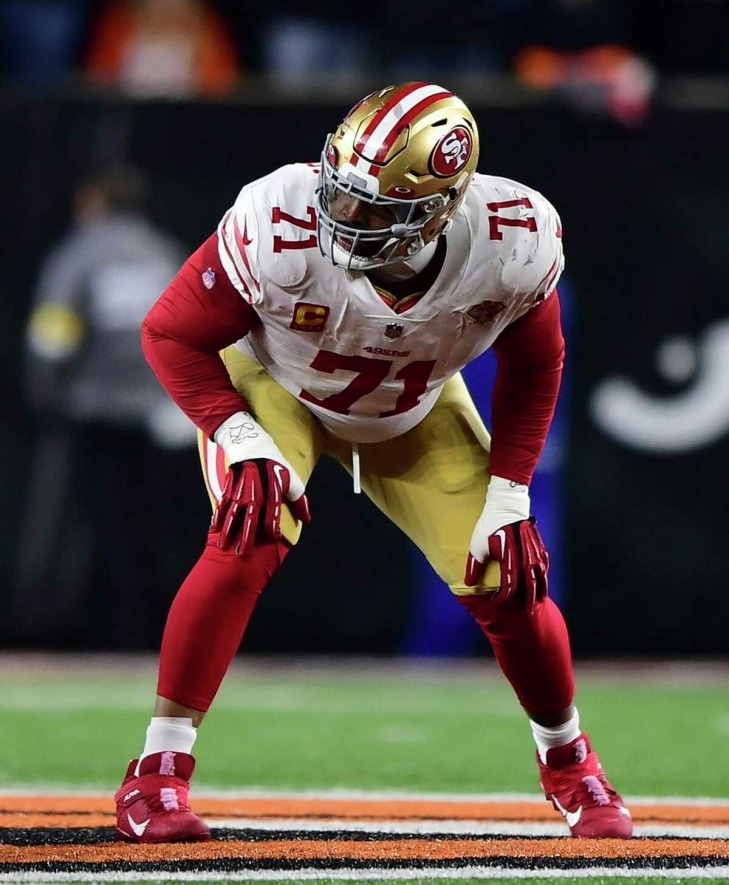
Left Tackle: Trent Williams, San Francisco 49ers. Pre-Season Notinhalloffame Active HOF Rank #20, #4 Offensive Lineman. (127 pts, 39 First Place).
Williams had another phenomenal year and the success of the Niners, along with his personal story makes him a great Hall of Fame candidate. The 10-time Pro Bowler is now on a two-year First Team All-Pro streak and if he makes the Hall, it is the tenure in San Francisco that got him through. Bluntly, we will argue that Williams is helped more than anyone else with this honor.
Others receiving AP Votes:
Andrew Thomas, New York Giants, 49 pts, 10 First Place
Laremy Tunsil, Houston Texans, 13 pts
Terron Armstead, Miami Dolphins, 7 pts, 1 First Place
Christian Darrisaw, Minnesota Vikings, 3 pts
Jonah Williams, Cincinnati Bengals, 1 pt
Left Guard: Joel Bitonio, Cleveland Browns. Pre-Season Notinhalloffame Active HOF Rank #94, #14 Offensive Lineman. (118 pts, 36 First Place).
After the 2021 Season, the pundits thought that Bitonio had his best season to date, but 2022 might have been as good. Not only is he on a five-year streak of Pro Bowls, the Guard has been an AP All-Pro the last five seasons, the last two on the First Team.
Others receiving AP Votes:
Joe Thuney, Kansas City Chiefs, 57 pts, 8 First Place
Quentin Nelson, Indianapolis Colts, 11 pts, 3 First Place
Landon Dickerson, Philadelphia Eagles, 11 pts, 2 First Place
Ben Powers, Baltimore Ravens, 3 pts, 1 First Place
Centers: Jason Kelce, Philadelphia Eagles. Pre-Season Notinhalloffame Active HOF Rank #36, #6 Offensive Lineman. (112 pts, 32 First Place).
Jason’s brother, Travis, looks Canton bound, but will there be a set of brothers. The Eagles Center looks to be making that a reality with a fifth First Team All-Pro in the past six years. Throw in a potential Super Bowl, and did his legacy rise enough? The tricky part is that Centers struggle more than other O-Linemen for induction.
Others receiving AP Votes:
Creed Humphrey, Kansas City Chiefs, 77 pts, 16 First Place
Frank Ragnow, Detroit Lions, 11 pts, 2 First Place
Right Guard: Zack Martin, Dallas Cowboys. Pre-Season Notinhalloffame Active HOF Rank #11, #1 Offensive Lineman. (111 pts, 35 First Place).
Six First Team All-Pros in only eight years. Martin keeps adding to what should be his Hall of Fame resume, and the pattern continues of elite linemen punctuating his case.
Others receiving AP Votes:
Chris Lindstrom, Atlanta Falcons, 60 pts, 14 First Place
Michael Onwenu, New England Patriots, 15 pts
Brandon Scherff, Jacksonville Jaguars, 6 pts
Wyatt Teller, Cleveland Browns, 3 pts, 1 First Place
Zion Johnson, Los Angeles Chargers, 2 pts
Issac Seumalo, Philadelphia Eagles, 2 pts
Right Tackle: Lane Johnson, Philadelphia Eagles. Pre-Season Notinhalloffame Active HOF Rank #143, #17 Offensive Lineman. (137 pts, 44 First Place).
Johnson sneaked into our top 150 pre-season rank, and the early-30s Tackle added his second First Team since 2017, an accolade he desperately needs to make a Hall of Fame run.
Others receiving AP Votes:
Tristan Wirfs, Tampa Bay Buccaneers, 34 pts, 5 First Place
Penei Sewell, Detroit Lions, 27 pts, 1 First Place
Kaleb McGary, Atlanta Falcons, 1 pt
Brian O’Neill, Minnesota Vikings, 1 pt
Edge Rusher: Nick Bosa, San Francisco 49ers. Pre-Season Notinhalloffame Active HOF Rank Unranked. (137 pts, 44 First Place).
Bosa has been tagged as a future DPOY when he won the DROY in 2019, and this could be the year. He might have been unranked on our pre-season list of active players based on Hall of Fame credentials, but this year’s sack leader (18.5), will vault on to it easily.
Edge Rusher: Micah Parsons, Dallas Cowboys. Pre-Season Notinhalloffame Active HOF Rank Unranked. (112 pts, 33 First Place).
Last year’s DROY is like Bosa, in that he is not yet ranked on our active HOF monitor, and is a DPOY contender. We frankly have more belief in Parsons than Bosa in the future, but what these two young Edge Rushers accomplish in the next five years could be legendary.
Others receiving AP Votes:
Myles Garrett, Cleveland Browns, 60 pts, 10 First Place
Haason Reddick, Philadelphia Eagles, 33 pts, 6 First Place
Maxx Crosby, Las Vegas Raiders, 29 pts, 2 First Place
Matt Judon, New England Patriots,15 pts
Brian Burns, Carolina Panthers, 2 pts
T.J. Watt, Pittsburgh Steelers, 1pt
Interior Linemen: Chris Jones, Kansas City Chiefs. Pre-Season Notinhalloffame Active HOF Rank #100, #15 Defensive Lineman. (148 pts, 49 First Place).
Jones added a fourth Pro Bowl this season, but this is First Team All-Pro number one, after earning three on the Second Team. Jones is 28, super talented, but needed this to gain a two-digit rank from us, and a step towards HOF contention.
Interior Linemen: Quinnen Williams, New York Jets. Pre-Season Notinhalloffame Active HOF Rank Unranked. (148 pts, 49 First Place).
Williams had a breakout year for the surprising Jets, though his first three seasons in the NFL were average. He is the First Team All-Pro that we are looking to see the most in 2023.
Others receiving AP Votes:
Dexter Lawrence, New York Giants, 69 pts, 18 First Place
Jeffery Simmons, Tennessee Titans, 24 pts, 3 First Place
Christian Wilkins, Miami Dolphins, 15 pts, 2 First Place
Cameron Heyward, Pittsburgh Steelers, 14 pts
Jonathan Allen, Washington Commanders, 11 pts, 3 First Place
Aaron Donald, Los Angeles Rams, 10 pts, 2 First Place
Jason Hargrave, Philadelphia Eagles, 6 pts
Daron Payne, Washington Commanders, 5 pts
Grady Jarrett, Atlanta Falcons, 3 pts, 1 First Place
DeForest Buckner, Indianapolis Colts, 1 pt
Linebacker: Fred Warner, San Francisco 49ers. Pre-Season Notinhalloffame Active HOF Rank #118, #13 Linebacker. (134 pts, 42 First Place).
Warner mimicked his 2020, with a Pro Bowl and First Team All-Pro, but he can’t fall back like he did last year.
Linebacker: Roquan Smith, Baltimore Ravens. Pre-Season Notinhalloffame Active HOF Rank #133, #15 Linebacker. (89 pts, 27 First Place).
Smith was traded during the season from Chicago to Baltimore and was third in Combined Tackles (169) this year. His arrival as a First Team All-Pro should not be a surprise to anyone.
Linebacker: Matt Milano, Buffalo Bills. Pre-Season Notinhalloffame Active HOF Rank Unranked. (85 pts, 25 First Place).
For the first time in his six-year career, Milano makes an AP All-Pro team, but is this a vault to greatness or a one-year blip?
Others receiving AP Votes:
Bobby Wagner, Los Angeles Rams, 54 pts, 13 First Place
C.J. Mosley, New York Jets, 42 pts, 9 First Place
Demario Davis, New Orleans Saints, 41 pts, 8 First Place
Dre Greenlaw, San Francisco 49ers, 40 pts, 8 First Place
Foyesade Oluokun, Jacksonville Jaguars, 24 pts, 4 First Place
Lavonte David, Tampa Bay Buccaneers, 23 pts, 3 First Place
T.J. Edwards, Philadelphia Eagles, 23 pts, 3 First Place
Nick Bolton, Kansas City Chiefs, 15 pts, 3 First Place
Jordyn Brooks, Seattle Seahawks, 6 pts, 2 First Place
Devin White, Tampa Bay Buccaneers, 5 pts, 1 First Place
Zaire Franklin, Indianapolis Colts, 4 pts, 1 First Place
Germaine Pratt, Cincinnati Bengals, 4 pts, 1 First Place
Tremaine Edmunds, Buffalo Bills, 2 pts
David Long, Tennessee Titans, 2 pts
Alex Singleton, Denver Broncos, 2 pts
Logan Wilson, Cincinnati Bengals, 1 pt
Cornerback: Sauce Gardner, New York Jets. Pre-Season Notinhalloffame Active HOF Rank Unranked. (136 pts, 43 First Place).
The obvious 2022 Defensive Rookie of the Year, Gardner joins an elite group of players to become a First Team All-Pro in their debut NFL season. This could be a special player.
Cornerback: Patrick Surtain II, Denver Broncos. Pre-Season Notinhalloffame Active HOF Rank Unranked. (79 pts, 20 First Place).
Surtain was the brightest spot on a disappointing Denver squad, but the sophomore made the elevation needed to take toward the Hall.
Others receiving AP Votes:
Jaire Alexander, Green Bay Packers, 62 pts, 16 First Place
James Bradberry, Philadelphia Eagles, 40 pts, 8 First Place
Darius Slay, Philadelphia Eagles, 20 pts, 5 First Place
Jalen Ramsey, Los Angeles Rams, 19 pts, 4 First Place
Tariq Woolen, Seattle Seahawks, 13 pts, 2 First Team
Patrick Peterson, Minnesota Vikings, 10 pts
Xavien Howard, Miami Dolphins, 5 pts, 1 First Team
Tyson Campbell, Jacksonville Jaguars, 4 pts, 1 First Team
Charvarius Ward, San Francisco 49ers, 4 pts
Jaycee Horn, Carolina Panthers, 3 pts
Trevon Diggs, Dallas Cowboys, 2 pts
Marlon Humphrey, Baltimore Ravens, 1 pt
L’Jarius Sneed, Kansas City Chiefs, 1 pt
Cameron Sutton, Pittsburgh Steelers, 1 pt
Safety: Minkah Fitzpatrick, Pittsburgh Steelers. Pre-Season Notinhalloffame Active HOF Rank #99, #6 Safety. (139 pts, 45 First Place).
2022 was a year of redemption for Fitzpatrick, who struggled in 2021 after a two-year First Team All-Pro run. Adding a third one this year, Fitzpatrick led the league in Interceptions (6) and is a DPOY contender.
Safety: Talanoa Hufanga, San Francisco 49ers. Pre-Season Notinhalloffame Active HOF Rank Unranked. (49 pts, 12 First Place).
Hufanga only beat Derwin James by four votes for his first All-Pro, and his 49 votes are the lowest of any First Team All-Pro. Nevertheless, Hufanaga had a much-improved sophomore season, but do we really know he is yet? Let’s see how he builds on this year.
Others receiving AP Votes:
Derwin James, Los Angeles Chargers, 45 pts, 13 First Place
Justin Simmons, Denver Broncos, 39 pts, 8 First Place
Jordan Poyer, Buffalo Bills, 25 pts, 5 First Place
Ryan Neal, Seattle Seahawks, 14 pts, 3 First Place
Tyrann Mathieu, New Orleans Saints, 13 pts, 2 First Place
Vonn Bell, Cincinnati Bengals, 12 pts, 3 First Place
Quandre Diggs, Seattle Seahawks, 12 pts, 2 First Place
Kevin Byard, Tennessee Titans, 12 pts, 2 First Place
Budda Baker, Arizona Cardinals, 9 pts, 2 First Place
Rayshawn Jenkins, Jacksonville Jaguars, 6 pts, 1 First Place
Kyle Dugger, New England Patriots, 6 pts, 1 First Place
Harrison Smith, Minnesota Vikings, 5 pts, 1 First Place
C.J. Gardner Johnson, Philadelphia Eagles, 3 pts
Kamren Curl, Washington Commanders, 2 pts
Jalen Pitre, Houston Texans, 2 pts
Jessie Bates, Cincinnati Bengals, 2 pt
Cam Bynum, Minnesota Vikings, 1 pt
Grant Delpit, Cleveland Browns, 1 pt
Jevon Holland, Miami Dolphins, 1 pt
Devin McCourty, New England Patriots, 1 pt
Rodney McLeod, Indianapolis Colts, 1 pt
Antoine Winfield, Tampa Bay Buccaneers, 1 pt
Place Kicker: Daniel Carlson, Las Vegas Raiders. Pre-Season Notinhalloffame Active HOF Rank Unranked. (85 pts, 25 First Place).
Realistically, the only active PK on the HOF radar is Justin Tucker, who finished second. Carlson is only in his fifth season (and was a Second Team All-Pro last year) has the time, but Kickers always struggle to make Canton.
Others receiving AP Votes:
Justin Tucker, Baltimore Ravens, 52 pts, 12 First Place
Jason Myers, Seattle Seahawks, 32 pts, 7 First Place
Brett Maher, Dallas Cowboys, 9 pts, 1 First Place
Ka’imi Fairbairn, Houston Texans, 7 pts, 2 First Place
Tyler Bass, Buffalo Bills, 4 pts, 1 First Place
Matt Gay, Los Angeles Rams, 4 pts, 1 First Place
Eddy Pineiro, Carolina Panthers, 4 pts, 1 First Place
Cameron Dicker, Los Angeles Chargers, 1 pt
Jake Elliott, Philadelphia Eagles, 1 pt
Graham Gano, New York Giants, 1 pt
Punter: Tommy Townsend, Kansas City Chiefs. Pre-Season Notinhalloffame Active HOF Rank Unranked. (100 pts, 28 First Place).
Shane Lechler could not make it to the Semis, so that tells you all you need to know for a Punter to make the Pro Football Hall of Fame.
Others receiving AP Votes:
Ryan Stonehouse, Tennessee Titans, 45 pts, 13 First Place
A.J. Cole, Las Vegas Raiders, 22 pts, 2 First Place
Johnny Hekker, Carolina Panthers, 12 pts, 2 First Place
Tress Way, Washington Commanders, 11 pts, 3 First Place
Logan Cooke, Jacksonville Jaguars, 4 pts, 1 First Place
J.K. Scott, Los Angeles Chargers, 4 pts, 1 First Place
Michael Dickson, Seattle Seahawks, 2 pts
Kick Returner: Keisean Nixon, Green Bay Packers. Pre-Season Notinhalloffame Active HOF Rank Unranked. (136 pts, 44 First Place).
In Nixon’s fourth NFL season, he found a role in year one in Green Bay, leading the league in Kick Return Yards (1,009).
Others receiving AP Votes:
Kene Nwangwu, Minnesota Vikings, 27 pts
Nyheim Hines, Buffalo Bills, 23 pts, 5 First Place
Dallis Flowers, Indianapolis Colts, 8 pts, 1 First Place
KaVontae Turpin, Dallas Cowboys, 2 pts
Jamal Agnew, Jacksonville, Jaguars, 1 pt
Devin Duvernay, Baltimore Ravens, 1 pt
Marcus Jones, New England Patriots, 1 pt
Boston Scott, Philadelphia Eagles, 1 pt
Punt Returner: Marcus Jones, New England Patriots. Pre-Season Notinhalloffame Active HOF Rank Unranked. (143 pts, 47 First Place).
Jones is a rookie Cornerback, who started four Games in that position, while leading the NFL in Punt Return Yards (362).
Others receiving AP Votes:
Kalif Raymond, Detroit Lions, 25 pts, 1 First Place
Ray-Ray McCloud, San Francisco 49ers, 12 pts
Avery Williams, Atlanta Falcons, 6 pts
Devin Duvernay, Baltimore Ravens, 3 pts, 1 First Place
DeAndre Carter, Los Angeles Chargers, 3 pts
Donovan Peoples-Jones, Cleveland Browns, 3 pts
KaVontae Turpin, Dallas Cowboys, 3 pts
Jamal Agnew, Philadelphia Eagles, 1 pt
Trent Taylor, Cincinnati Bengals, 1 pt
Special Teams: Jeremy Reaves, Washington Commanders. Pre-Season Notinhalloffame Active HOF Rank Unranked. (91 pts, 24 First Place).
Unless you are Matthew Slater, a First Team All-Pro means nothing for HOF contention at Special Teams.
Others receiving AP Votes:
George Odum, San Francisco 49ers, 72 pts, 19 First Place
Justin Hardee, New York Jets, 19 pts, 4 First Place
Josh Mercellus, Minnesota Vikings, 4 pts, 1 First Place
Matthew Slater, New England Patriots, 4 pts
Nick Bellore, Seattle Seahawks, 3 pts, 1 First Place
C.J. Goodwin, Dallas Cowboys, 3 pts, 1 First Place
J.T. Gray, New Orleans Saints, 1 pt
Jordan Kunaszyk, Cleveland Browns, 1 pt
Brenden Schooler, New England Patriots, 1 pt
Josh Woods, Detroit Lions, 1 pt
Long Snapper: Andrew DePaola, Minnesota Vikings. Pre-Season Notinhalloffame Active HOF Rank Unranked. (87 pts, 26 First Place).
No Long Snapper ever made the Pro Football Hall of Fame. No one ever will.
Others receiving AP Votes:
Nick Moore, Baltimore Ravens, 29 pts, 8 First Place
Luke Rhodes, Indianapolis Colts, 25 pts, 7 First Place
Zach Wood, New Orleans Saints, 23 pts, 2 First Place
Morgan Cox, Tennessee Titans, 19 pts, 4 First Place
Jon Weeks, Houston Texans, 4 pts, 1 First Place
Liam McCullough, Atlanta Falcons, 3 pts, 1 First Place
Trent Sieg, Las Vegas Raiders, 3 pts, 1 First Place
Josh Harris, Los Angeles Chargers, 3 pts
Rick Lovato, Philadelphia Eagles, 2 pts
J.J. Jansen, Carolina Panthers, 1 pt
Patrick Scales, Chicago Bears, 1 pt
