


Site Admin
17. Paul Posluszny
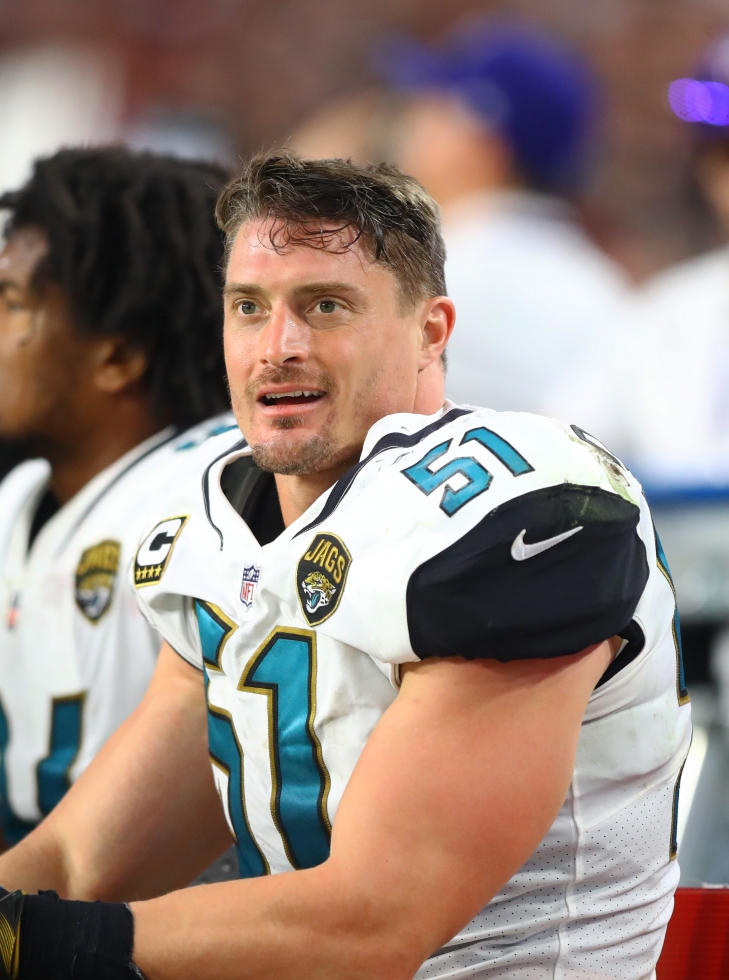
After entering the league as a second-round pick with Buffalo, middle linebacker Paul Posluszny signed with Jacksonville in 2011 and proceeded to outshine his solid early career, becoming the central nerve center for the Jaguars' defense over the next seven seasons. Combining classical linebacking instincts with remarkable durability, Posluszny served as a relentless tackling machine, commanding the defense through various defensive shifts and rebuilding years.
Posluszny’s peak performance arrived during the 2013 season, when he earned his lone career Pro Bowl selection after leading the entire NFL with 122 solo tackles while adding 162 combined tackles, 3.0 sacks, and two interceptions (including a 59-yard pick-six). Over his tenure in North Florida, he produced five seasons with at least 119 combined tackles and cracked triple digits in solo tackles three times. In his final season in 2017, Posluszny adapted seamlessly to a reduced rotational role, providing veteran leadership that helped power Jacksonville's defense to the AFC Championship Game before he officially retired in the spring of 2018.
With Jacksonville, he compiled 13.0 sacks, 816 combined tackles (587 solo, 229 assists), 45 tackles for loss, 36 pass deflections, 11 interceptions, four forced fumbles, and two fumble recoveries.
15. Kevin Hardy
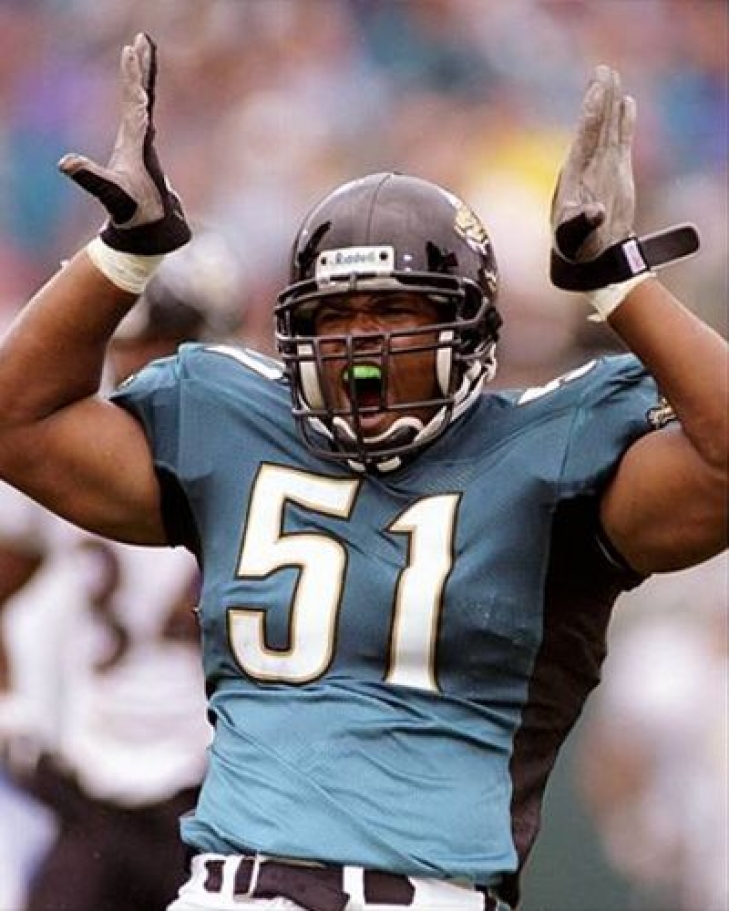
Selected second overall out of Illinois in the 1996 NFL Draft, consensus All-American linebacker Kevin Hardy arrived in North Florida as a cornerstone blueprint for an ambitious second-year franchise. Stepping straight into the starting lineup, Hardy possessed an elite blend of sideline-to-sideline range and pass-rushing instincts, earning PFWA All-Rookie Team honors while helping propel the young Jaguars to a shock appearance in the AFC Championship Game during his debut campaign.
Hardy’s multi-faceted playmaking served as an engine for Jacksonville’s linebacking corps through the late 1990s. After putting up a 112-tackle season in 1998, he put together a career-defining performance during Jacksonville's dominant 14–2 run in 1999. That year, Hardy recorded 96 combined tackles, a career-high 10.5 sacks, two forced fumbles, and an interception, accumulating a team-high 17 Approximate Value. His remarkable campaign earned him Pro Bowl honors and a First-Team AP All-Pro selection. Following six seasons anchoring the defense in teal, Hardy went on to play for Dallas and Cincinnati before concluding his nine-year NFL career.
Overall, Hardy had 28.5 sacks, 504 combined tackles (402 solo, 102 assists), 30 tackles for loss and five interceptions for the Jags.
14. Daryl Smith
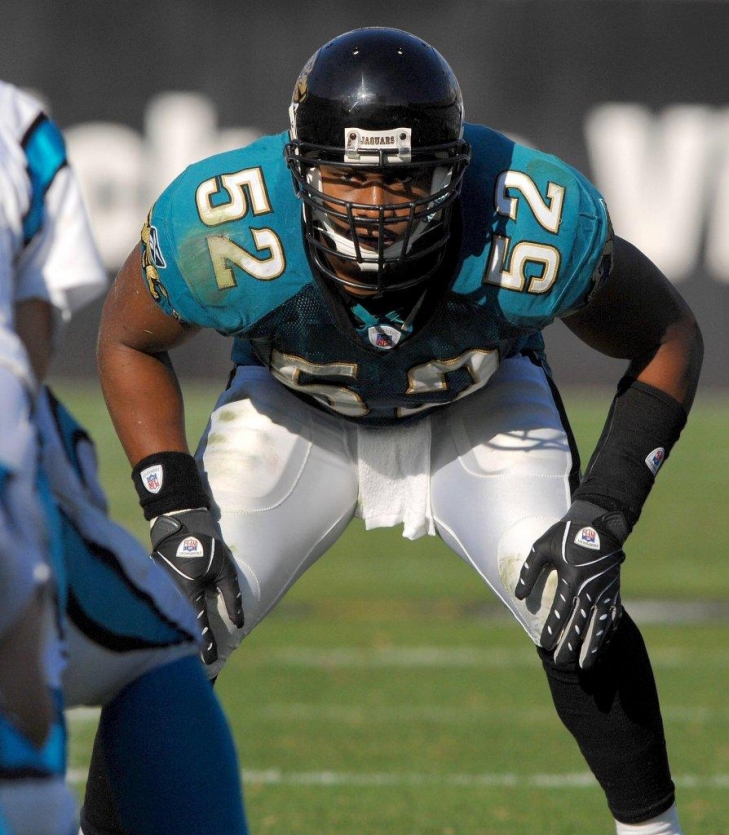
Selected in the second round (39th overall) out of Georgia Tech in the 2004 NFL Draft, Daryl Smith quickly proved that the transition from college stardom to the professional ranks required zero warm-up time. Earning a starting spot right out of training camp as a rookie, Smith displayed the sharp diagnostic skills and sure tackling that would make him an indispensable fixture in North Florida for nearly a decade.
While often operating in the shadow of flashier league names, Smith served as the steady, highly versatile anchor for Jacksonville's defensive unit. Capable of seamless shifts between outside linebacker and middle linebacker, he adapted to multiple defensive schemes without missing a beat. He produced two campaigns with a career-high 107 combined tackles (2009 and 2011), regularly disrupting backfields on blitzes and matching up effectively against tight ends in coverage. Following nine productive years in teal, Smith spent three years with Baltimore and a final season in Tampa Bay, though his signature years were defined by his relentless work in Jacksonville.
Overall, as a Jaguar, Smith had 21.5 sacks, 682 combined tackles (540 solo, 142 assists), 57 tackles for loss and nine forced fumbles.
13. David Garrard
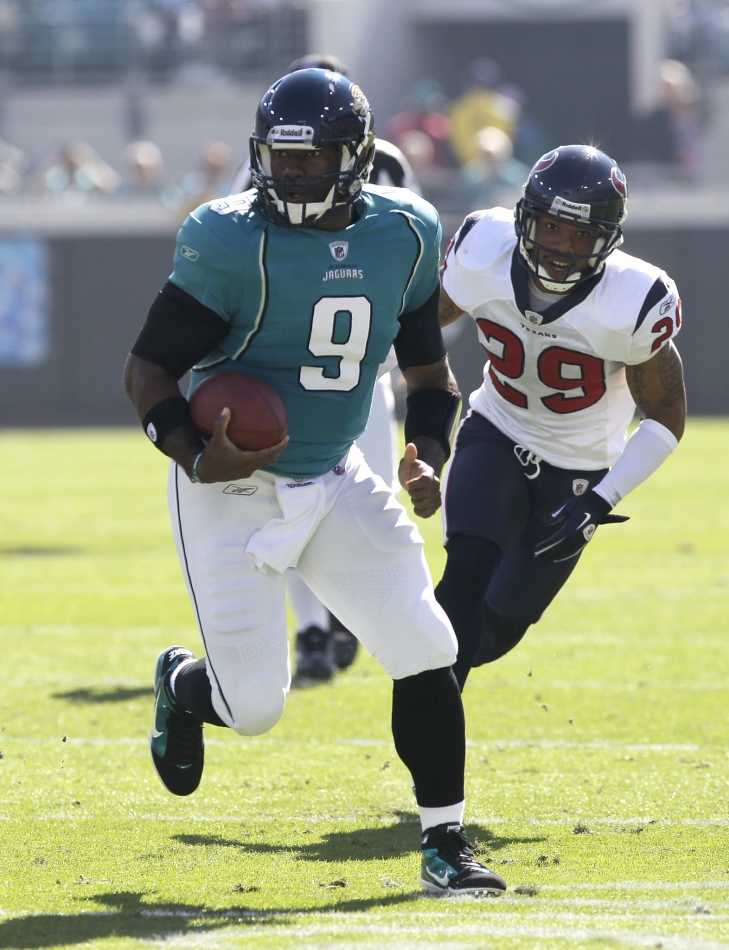
Selected in the fourth round (108th overall) out of East Carolina in the 2002 NFL Draft, David Garrard entered the professional ranks initially slated to serve as the long-term backup to veteran Mark Brunell. That depth chart dynamic shifted a year later when Jacksonville drafted Byron Leftwich in the first round. Over the next several seasons, Garrard stepped up whenever called upon—including a key stretch in 2005 where he went 5–1 as a starter to push the Jaguars into the playoffs—before permanently claiming the starting job ahead of the 2007 campaign.
Garrard’s first year as the undisputed full-time starter in 2007 produced a career-defining performance. Combining calm decision-making with powerful mobility, he threw 18 touchdown passes against just three interceptions all season, leading Jacksonville to an 11–5 record and a 102.2 passer rating. In the wild-card round against Pittsburgh, Garrard authored one of the most iconic moments in franchise history, converting a daring fourth-and-2 scramble late in the fourth quarter to set up the game-winning field goal. Two years later, Garrard achieved national recognition with a Pro Bowl selection in 2009 after throwing for 3,597 yards and rushing for three additional scores.
After starting 14 games in 2010, Garrard was surprisingly released just days before the 2011 regular-season opener. He subsequently underwent surgery to repair a herniated disc. Though he later signed contracts with the Miami Dolphins in 2012 and the New York Jets in 2013, knee complications prevented him from ever taking another snap in a regular-season game. As a result, every official down of his nine-year NFL playing career was contested exclusively in Jacksonville teal and black.
Over his career, Garrard compiled 16,003 passing yards, 89 passing touchdowns, and 54 interceptions, alongside 380 rushing attempts for 1,746 rushing yards and 17 rushing touchdowns.
