


Committee Chairman
Gibson J45 Standard vs Hummingbird: Decisive Comparison for Your Ideal Guitar
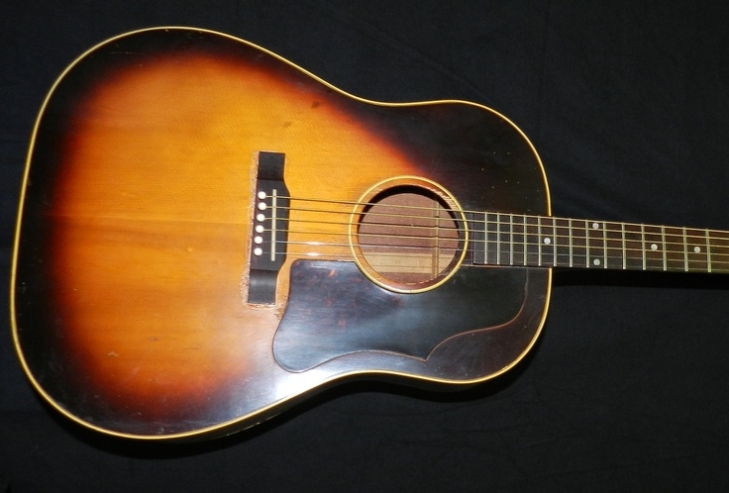
Ah, the delightful conundrum of selecting between two guitar legends! Gibson, the venerable craftsman of guitars, has introduced two titans to the music world: the Gibson J45 Standard and the Gibson Hummingbird.
It's akin to the delightful quandary of choosing your favourite ice cream flavour; both are delectable, but they possess distinct flavours. Let's delve into this musical showdown and determine which one might become your cherished six-string companion.
Identifying the Models
Gibson J45 Standard
The J45 Standard is akin to the James Bond of guitars—sleek, versatile, and prepared to handle any musical mission. Its round-shoulder dreadnought shape and slim-taper neck make it as comfortable as your beloved pair of pyjamas.
Constructed with a solid Sitka spruce top and mahogany back and sides, this guitar emanates a warm, inviting tone that's akin to a melodic embrace.
Key features of the Gibson J45 Standard:
- Round-shoulder dreadnought shape
- Solid Sitka spruce top
- Mahogany back and sides
- Slim-taper neck
Gibson Hummingbird
In contrast, the Hummingbird stands as the rock star in Gibson's lineup. It's comparable to the Mick Jagger of guitars — dazzling and unforgettable. Adorned with its square-shoulder dreadnought shape and elaborate pickguard, it's a visual feast.
This guitar's larger body and rounded neck contribute to a resounding and warmer tone, accentuated by a robust bass presence. Much like the J45 Standard, it is meticulously crafted with a solid Sitka spruce top and mahogany back and sides, ensuring top-tier craftsmanship.
Notable aspects of the Gibson Hummingbird:
- Square-shoulder dreadnought shape
- Solid Sitka spruce top
- Mahogany back and sides
- Rounded neck profile
In essence, the Gibson J45 Standard is akin to your reliable confidant, always there when needed, while the Hummingbird is the ostentatious life of the party, commanding the spotlight. However, the pressing question is, how do they sound?
Sound and Tone Comparison
Let's elevate our knowledge amplifier and contrast the sound and tone of these exceptional instruments.
Volume and Sustain Differences
The J45 and Hummingbird are analogous to two distinct flavours of your favoured snack. The J45, with its round-shoulder dreadnought design, offers a measured and precise sound—a serene jazz station in the realm of guitars.
Conversely, the Hummingbird, with its square-shoulder dreadnought configuration, ushers in thunderous resonance, delivering a resounding bass and a volume level that could rouse the neighbours.
Regarding sustain, the J45 may relinquish its grip slightly earlier than the Hummingbird, but we are merely dealing with fractions of a second here. It becomes a consequential factor solely when striving to sustain a note indefinitely.
Tonal Variations
In the domain of tonal disparity, these guitars emulate two distinctive radio stations. The J45 emits warm, melodic, and woody tones—perfect for singer-songwriters and aficionados of a sonorous midrange. It's akin to the cozy armchair of tonal resonance, inviting and familiar.
Conversely, the Hummingbird offers a brighter, crisper tonal quality. It resembles the high-definition television of guitars, bestowing each note with unparalleled clarity and lending an extra sheen to your chords. Moreover, its pronounced bass imparts a profound dimension akin to descending into a melodic abyss.
Both instruments are user-friendly, yet they exhibit distinct neck profiles. The J45 boasts a sleeker neck, catering to those with more delicate fingers. In contrast, the Hummingbird features a sturdier grip with its thicker, rounded neck, ideal for unleashing your inner guitar virtuoso.
Final Verdict
In the ultimate face-off between the Gibson J45 Standard and the Hummingbird, it becomes apparent that both guitars reign as sovereigns of the guitar realm. Each possesses unique attributes, reminiscent of siblings with their individual idiosyncrasies. The J45 Standard embodies the role of the dependable, affable sibling, while the Hummingbird embraces the flamboyant, captivating persona.
So, who emerges victorious? The verdict lies entirely in your hands, esteemed guitarist. Your musical style, tonal preferences, and ergonomic inclinations will dictate the champion. Therefore, venture forth to your nearest music emporium, strum away, and may the most resonant Gibson capture your heart!
Sep 18 Update: Notinhalloffame MLB Cup Standings.
It is with great pleasure that we continue the third annual Notinhalloffame MLB Regular Season Cup, and let us explain how this works:
With every single regular season game, we anointed the best five players in the game with descending points, 5-4-3-2-1.
We knew the following:
- The top players for the MLB NIHOF Cup are not always the best in the league, as injuries keep players out of games, and a premium on staying healthy can help pile up points. It also does not hurt to be a top player on an average or mediocre team, as they can amass Cup points easier that elite players on loaded squads.
- In Baseball, it is more common than in Basketball and Hockey for a player to accrue points with a single Home Run in a game, and overall favors position players. Starting Pitchers have a hard time with approximately 30-35 Starts and throwing less innings than in previous generations. This also is true for closers, which is not made for this process.
- Please remember, that this is NOT necessarily who we think were the best players this year, and does not reflect overall consistency. Treat this the way did, as a fun process and more of a compilation of temporary statistical domination.
At present 1,089 (up from 1,076 last week) players have generated at least one Cup Point.
So, MLB players! Get your agents to work winning this into your contracts!
This is the second-to-last update, with standings as of the afternoon of September 25.
1. Shohei Ohtani: Los Angeles Angels, Designated Hitter & Pitcher: (Ranked #1 Last Week)
202 Cup Points, 135 Games, 1.50 Cup Points per Game, 44 Home Runs, 95 Runs Batted In, 20 SB, .304/.412/.654, 10.1 bWAR & 10-5, 3.14 ERA, 167 SO, 1.061 WHIP.
Oh boy. We have said from the start that this is an award built for Ohtani who can compile points in two different avenues, but September saw hm shut down in both of them. Weeks ago, we thought that he built up enough a gap to gold Acuna and Betts at bay, but that no longer seems to be the case. As of this writing, Ohtani is still the American League leader in bWAR (10.1), Triples (8), Home Runs (44), Walks (91), OBP (.412), OPS (1.066), OPS+ (182) and Total Bases (325). Is this enough with a week left to still win the AL MVP? We think so, but not for the NIHOF Cup where two National League stars are likely to overtake him. Oh, the drama!
2. Ronald Acuna: Atlanta Braves, Outfield: (Ranked #2 Last Week)
200 Cup Points, 153 Games, 1.31 Cup Points per Game, 40 Home Runs, 101 Runs Batted In, 66 SB, .336/.415/.595, 8.0 bWAR.
Acuna leads all National League batters in Stolen Bases (68), Hits (210), Runs Scored (143), OBP (.415), OPS+ (167) and Total Bases (372), and he recently joined the 40-40 Club. He is also second in bWAR (8.0), Batting (.336), and (.595). Acuna is also the runaway leader in Power-Speed # (50.4), and it looks like he will overtake Ohtani for #1 in Cup Points before season’s end
3. Mookie Betts: Los Angeles Dodgers, Outfield: (Ranked #3, Last Week)
192 Cup Points, 146 Games, 1.32 Cup Points per Game, 39 Home Runs, 105 Runs Batted In, 13 SB, .309/.410/.590, 8.1 bWAR.
Betts has been on fire over the last month, propelling himself to second in Cup Standings before relinquishing it back to Acuna. In the National League, he took over the top spot in bWAR (8.1) and is in the top four in Batting, OBP, Slugging, OPS, OPS+, Runs, Doubles, Hits and RBIs. Betts is also fifth in Home Runs (39).
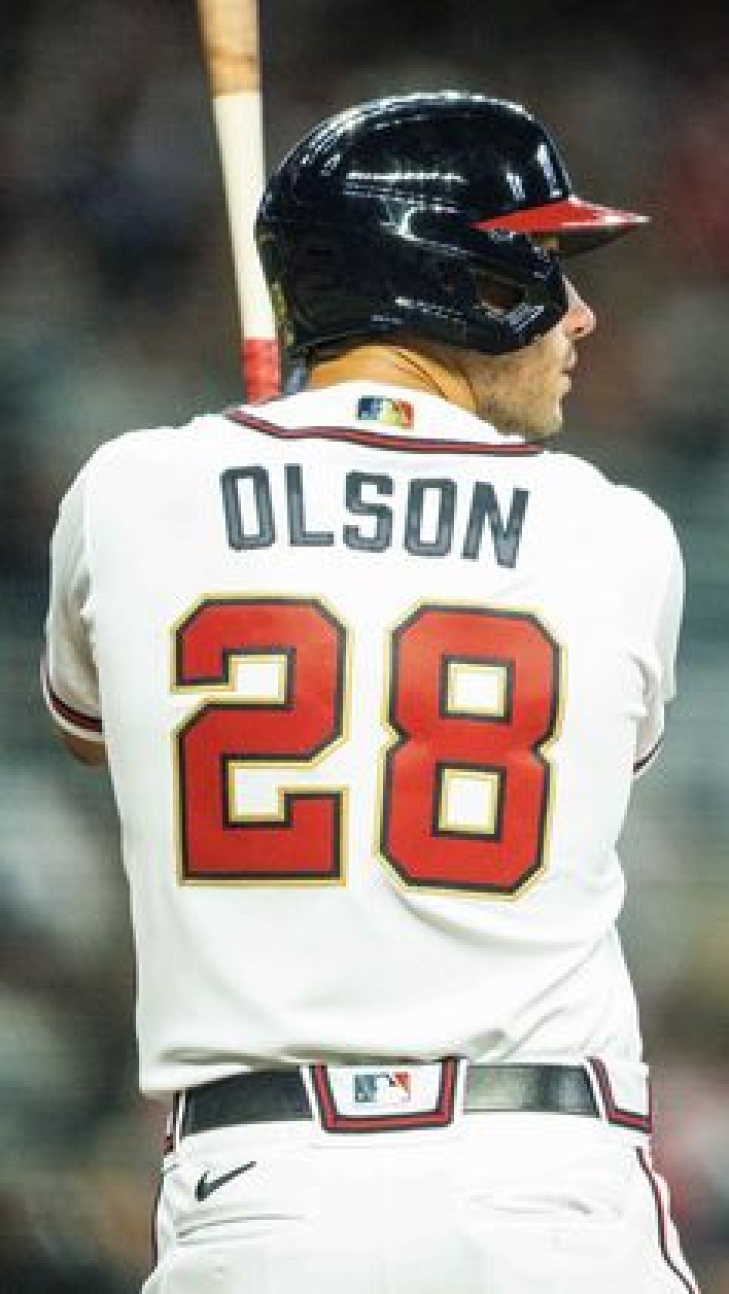
4. Matt Olson: Atlanta Braves, First Base: (Ranked #4 Last Week)
175 Cup Points, 156 Games, 1.12 Cup Points per Game, 53 Home Runs, 133 Runs Batted In, 1 SB, .281/.388/.606, 6.9 bWAR.
Olson has the National League lead in both Home Runs (53), RBIs (1333), and Slugging (.606), and is third in bWAR (6.9) and OPS (.994). He is enjoying the best year of his career.
5. Juan Soto: San Diego Padres, Outfield: (Ranked #7, Last Week)
172 Cup Points, 138 Games, 1.05 Cup Points per Game, 33 Home Runs, 105 Runs Batted In, 11 SB, .273/.408/.514, 5.1 bWAR.
Soto is the National League leader in Walks (137) and is third in OBP (.408), fifth in OPS (.922), and tenth in Slugging (.514). He has also moved up to fourth in RBIs (105) and tenth in Home Runs (33).
6. Freddie Freeman: Los Angeles Dodgers, First Base: (Ranked #6, Last Week)
163 Cup Points, 154 Games, 1.06 Cup Points per Game, 26 Home Runs, 96 Runs Batted In, 22 SB, .332/.408/.560, 6.2 bWAR.
Freeman has the NL lead in Doubles (57), while also currently placing third in Batting (.332) and fourth in OBP (.408), OPS (.968) and Slugging (.560). He is also second in Hits (203) and Runs (125).
7. Corbin Carroll: Arizona Diamondbacks, Outfield: (#8, Last Week)
153 Cup Points, 149 Games, 1.03 Cup Points per Game, 25 Home Runs, 73 Runs Batted In, 50 SB, .285/.361/.508, 5.3 bWAR.
The Diamondbacks have the likely National League Rookie of the Year in Carroll who is in the top ten in bWAR, Runs, Stolen Bases, Batting, OBP and Slugging and is first in Triples (9).
8. Kyle Tucker: Houston Astros, Outfield: (#6, Last Week)
151 Cup Points, 151 Games, 1.00 Cup Points per Game, 28 Home Runs, 109 Runs Batted In, 29 SB, .281/.367/.509, 4.9 bWAR.
Tucker took over the American League in RBIs (109), and in regards to the Slash Line, Tucker is seventh in OBP (.367), eighth in Slugging (.509) and sixth in OPS (.876). He is also in the top ten in Hits, Home Runs, Stolen Bases and Extra Base Hits.
9. Rafael Devers: Boston Red Sox, Third Base: (Ranked #7 Last Week)
150 Cup Points, 135 Games, 1.00 Cup Points per Game, 33 Home Runs, 98 Runs Batted In, 4 SB, .274/.354/.511, 3.6 bWAR.
Devers remains a surprise being so high as he was not in the All-Star Game, nor was considered a significant snub. He and is currently fourth in the AL in RBIs (98), fifth in Home Runs (33) and seventh in Slugging (.511) and OPS (.864).
10. Kyle Schwarber: Philadelphia Phillies, Outfield: (Ranked #9, Last Week)
146 Cup Points, 155 Games, 0.94 Cup Points per Game, 45 Home Runs, 100 Runs Batted In, 0 SB, .197/.345/.472, 0.6 bWAR.
Despite the very low bWAR (0.6) and Batting Average (.197), Schwarber gets on base, has power, and when it matters, he is often clutch. This is his first foray into the top ten, and Schwarber has always been a player that Managers love, providing there is only one of him on the team. He is second in Walks (124) and Home Runs (45) and ninth in RBIs (100). What a strange player to be ranked this high!
Nobody fell out of the top ten.
Our next update will be the final result
45. John David Crow
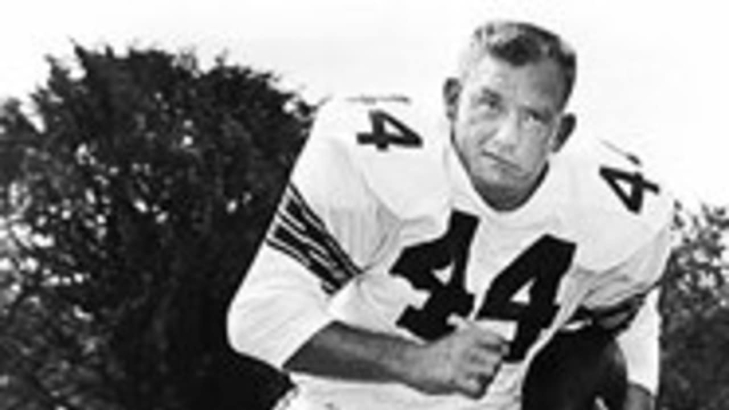
When Bear Bryant famously remarked that if voters didn't award John David Crow the 1957 Heisman Trophy, "they ought to do away with the thing," the college football landscape took notice. The Chicago Cardinals certainly did, selecting the Texas A&M star second overall in the 1958 NFL Draft. After a knee injury limited his rookie campaign to seven games, Crow quickly validated the hype, evolving into one of the most versatile backfield threats of his era.
At 6 feet 2 inches and 220 pounds, Crow possessed rare size and functional power for a 1960s halfback, combining a bruising inside running style with smooth hands out of the backfield and elite blocking ability. Beyond his primary duties, he stood as one of the most lethal halfback-passers in league history, completing 33 career passes for 759 yards and five touchdowns.
His initial breakout arrived in 1959, when he generated 994 scrimmage yards and seven touchdowns to secure his first Pro Bowl selection. However, his game reached legendary status during the franchise's inaugural season in St. Louis in 1960. Crow spearheaded the offense by rushing for a career-high 1,071 yards, averaging an astounding 5.9 yards per carry—while adding 462 receiving yards. His 1,533 yards from scrimmage led the entire NFL, earning him Second-Team All-Pro honors and his second Pro Bowl invitation.
Crow’s physical, violent running style frequently exposed him to severe injuries. He was restricted to eight games in 1961, but responded with a monster rebound in 1962. Pounding the rock in goal-line sets, Crow scored a league-leading 17 total touchdowns (14 rushing, 3 receiving) while racking up nearly 1,000 yards from scrimmage to capture his third Pro Bowl selection in St. Louis.
Crow’s 14 rushing touchdowns in 1962 set a single-season Cardinals record, showcasing the punishing goal-line efficiency that defined his prime years.
Plagued by a knee injury that limited him to three games in 1963 and a quiet 1964 season, Crow departed for San Francisco in 1965. He made one final Pro Bowl as a 49er before retiring in 1968. In seven years wearing the Big Red jersey, Crow compiled 5,450 scrimmage yards and 50 total touchdowns (33 rushing, 17 receiving), earning a spot on the NFL 1960s All-Decade Team.
41. Pat Fischer
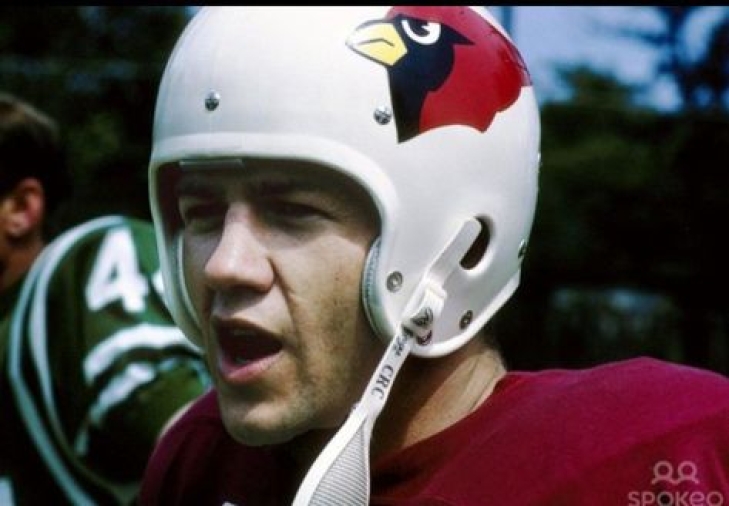
As good as Pat Fischer was at Nebraska, he stood at only 5' 9" and fell all the way to the 17th Round (232nd Overall) in the 1961 Draft. Fischer was barely expected to make the team, let alone win a starting job, but once he did, he would become one of the most seasoned Cornerbacks in NFL history.
Fischer saw more time as a Returner as a rookie, but by his third season, he was a full-time starter at Left Cornerback, pioneering the bump and run coverage and picking eight interceptions in 1963. Fischer had a career-best 10 Interceptions the season after, returning two for Touchdowns. The voters named him a First Team All-Pro, the first and only time that would happen in his career. Fischer would add a second Pro Bowl in 1965, but he was targeted far less after his explosive 1964 campaign, thus seeing his Interceptions drop.
Fischer signed with the Redskins after the 1967 Season and achieved far greater fame. Twenty-nine of his 57 Interceptions were as a Cardinal, though he is best remembered as a Redskin.
