


Committee Chairman
39. Bobby Joe Conrad
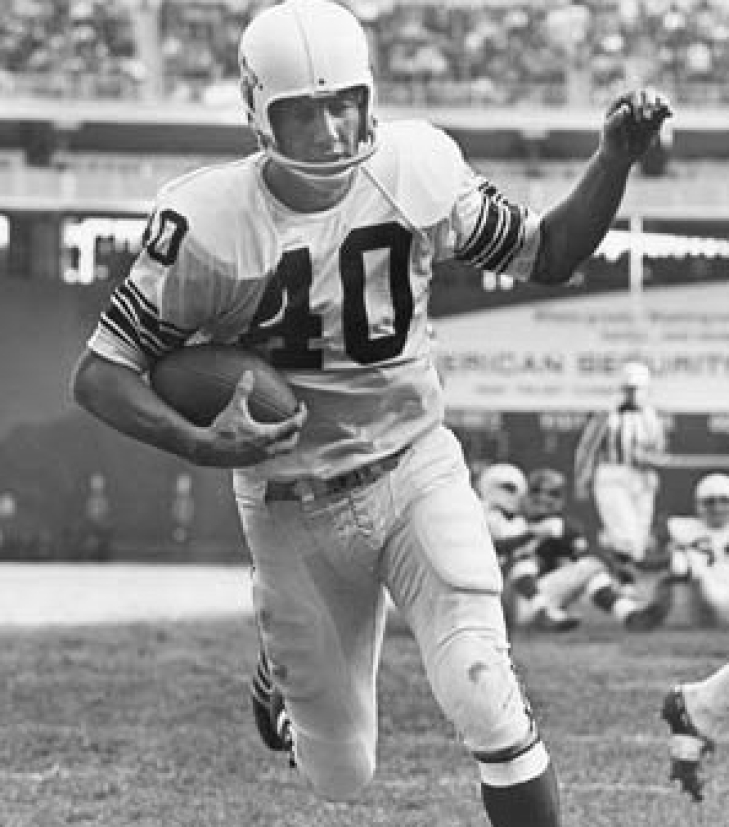
Long before positional versatility became a headlining trend, a fifth-round draft choice out of Texas A&M quietly became the ultimate utility knife for the Cardinals franchise. Drafted by the New York Giants in 1958 and traded to Chicago before ever playing a snap, Bobby Joe Conrad arrived without a set home on the depth chart. What followed was an 11-year run in a Big Red uniform defined by total adaptability, as Conrad transitioned seamlessly from defensive back to halfback, placekicker, and ultimately one of the premier flankers in professional football.
Conrad was not a runaway burner, but he possessed uncanny spatial awareness, soft hands, and crisp route precision. His football IQ allowed him to learn multiple playbooks on the fly: as a rookie in 1958, he picked off 4 passes as a defensive safety, took handoffs as a halfback over the next two seasons, handled placekicking duties, and eventually slid out to flanker in 1962.
Once locked in at receiver, Conrad hit an extraordinary peak alongside quarterback Charley Johnson. His 1963 season stood as a masterclass in possession efficiency: Conrad led the entire NFL with 73 receptions, generating 967 receiving yards and 10 touchdowns to earn First-Team All-Pro honors.
He backed that performance up in 1964 with 61 catches for 780 yards and 6 touchdowns, collecting his first career Pro Bowl invitation. Conrad added another stellar campaign in 1965, leading the team with 909 receiving yards. Across an eight-year span from 1961 to 1968, he established a remarkable franchise record by catching a pass in 101 consecutive games.
When Conrad departed St. Louis following the 1968 season, he left as the Cardinals' all-time leader in receptions with 418 catches, a benchmark that stood for two decades. After a final reserve campaign with the Dallas Cowboys in 1969, Conrad called it a career. In eleven seasons with the Cardinals, he compiled 418 receptions, 5,828 receiving yards, 38 receiving touchdowns, 14 field goals, and 7,633 all-purpose yards.
44. Pat Tilley
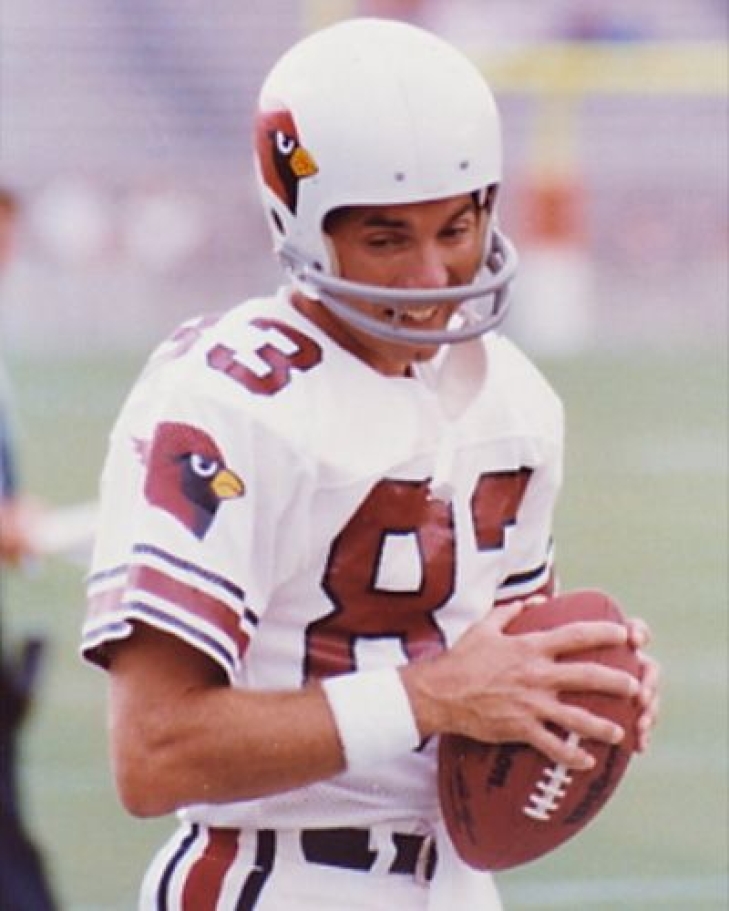
Although high-profile deep threats like Mel Gray and Roy Green grabbed national attention, the St. Louis Cardinals discovered their key possession receiver in the 1976 NFL Draft's fourth round. Drafted 114th overall from Louisiana Tech, Pat Tilley entered the Big Red offense discreetly, but his route precision, fearless catches over the middle, and durability made him a dependable target for 11 seasons, establishing himself as one of the franchise's most reliable players.
Tilley didn't have elite speed for breakaways, but he compensated with precise route running and excellent spatial awareness against zone defenses. Whether in the slot or near the sideline, he served as a reliable safety valve for quarterbacks Jim Hart and later Neil Lomax, regularly converting crucial third downs.
Tilley took full control of a starting job in 1978, launching a run in which he led the Cardinals in receiving yards for five consecutive seasons (1978–1982). He recorded four straight years with at least 900 receiving yards. His performance earned him a Pro Bowl selection in 1980 after hauling in 68 passes for 966 yards and six touchdowns.
His statistical peak arrived during the 1981 campaign. Tilley posted his first career 1,000-yard season, catching 66 passes for 1,040 receiving yards while averaging 15.8 yards per catch. He remained a vital piece of the offense through the mid-1980s, starting every game from 1983 through 1985.
Tilley retired following the 1986 season, spending his entire 11-year NFL career wearing a St. Louis jersey. At the time of his retirement, his 468 receptions ranked second in franchise history, behind only Jackie Smith. Across 147 regular-season games, he accumulated 7,005 receiving yards and 37 touchdown catches.
37. Tim McDonald
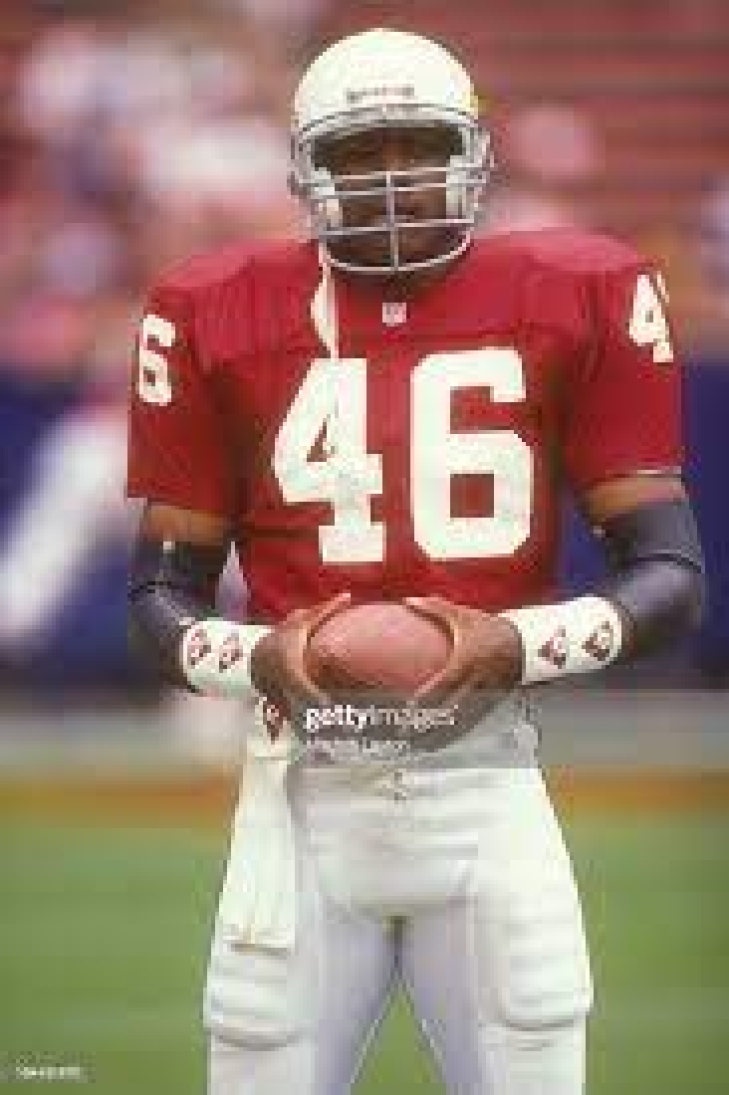
Following in a long line of elite defensive backs out of Southern California, Tim McDonald brought instantly noticeable hitting power and instincts to the professional ranks. Selected in the second round (34th overall) of the 1987 NFL Draft by St. Louis, the physical safety spent his rookie year learning the ropes before taking over the starter's role during the franchise's inaugural 1988 season in Phoenix.
McDonald set an uncompromising physical boundary in the secondary. Functioning virtually as an extra linebacker in run support, he patrolled the box with punishing tackling technique while possessing the range to shadow tight ends and slot receivers downfield. His bone-jarring hits forced opposing wideouts to think twice before crossing the middle.
After stepping into the starting lineup in 1988, McDonald made his mark by leading the NFL with four forced fumbles. His true breakout arrived during the 1989 campaign, when he put together a dominant, career-best statistical season: racking up 155 tackles alongside 7 interceptions (returning one for a touchdown) to capture his first First-Team All-Pro selection and Pro Bowl nod. In 1989, McDonald delivered one of the most complete single-season performances by an NFL safety, combining 155 tackles with 7 interceptions.
As quarterbacks grew increasingly reluctant to test his area of the field, McDonald remained a cornerstone of the secondary, earning consecutive Pro Bowl invitations in 1991 and 1992. Despite playing on roster builds that struggled to contend, his individual play consistently ranked among the gold standards for strong safeties across the league.
In 1993, McDonald joined San Francisco as a prominent free agent, aiming for a championship-level setup. He subsequently won Super Bowl XXIX with the 49ers and earned three additional Pro Bowl selections. Out of his 40 career interceptions, half (20) occurred during his six seasons with the Cardinals. With the squad (1987–1992), McDonald recorded 20 interceptions, 605 tackles, 3 Pro Bowl selections, and 1 First-Team All-Pro honor.
36. Neil Lomax
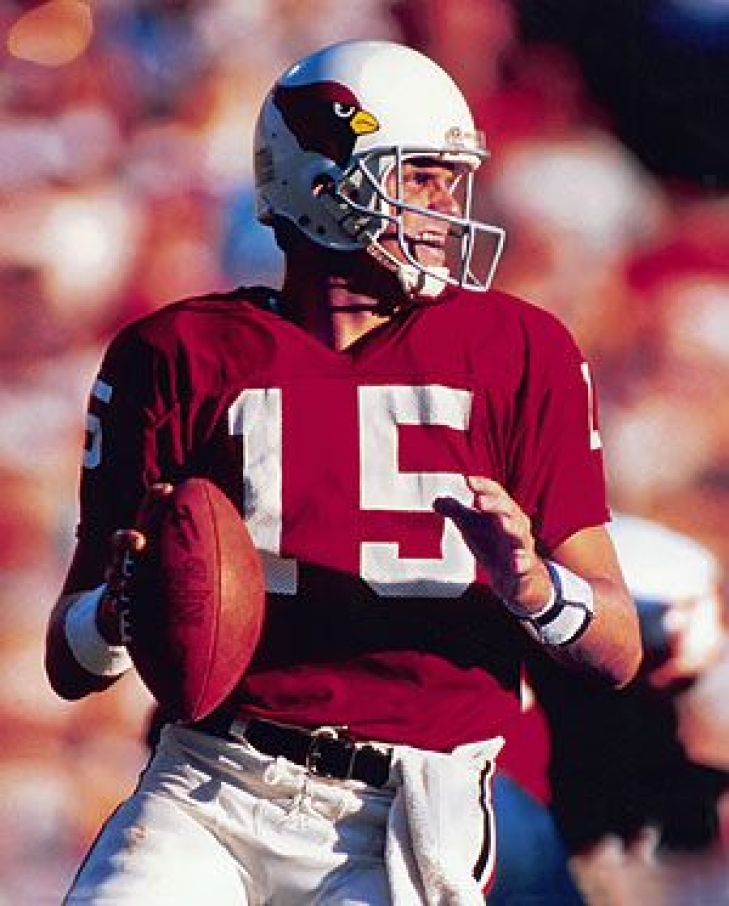
In the past, small-school quarterbacks often drew first-round draft attention, but a prolific passer from Portland State showed that strong arm talent can succeed anywhere. Neil Lomax set NCAA records in Mouse Davis’s renowned Run and Shoot offense, showcasing his arm strength. He entered the 1981 NFL Draft, where the St. Louis Cardinals picked him in the second round (33rd overall). With Jim Hart as a franchise legend in the locker room, Lomax was positioned as the heir and quickly proved that his quick release could uplift an entire team.
Lomax had a traditional drop-back frame, a quick release, and a knack for deep balls. In a tough, physical NFC East, he thrived by speeding up the game, confusing safeties, and allowing deep routes to unfold. With talented receivers like Roy Green and Pat Tilley, Lomax made St. Louis one of the most explosive passing teams in the league.
After earning PFWA All-Rookie honors and taking over late in his first 1981 season, Lomax officially became the starting quarterback in 1983. He had a standout 1984 season, setting a personal best with 4,614 passing yards and 28 touchdowns, which earned him his first Pro Bowl selection. His passing total that year was one of the most impressive single-season performances in league history at the time. Lomax's 4,614 yards in 1984 set a franchise record and marked a period when his deep throws were considered among the most dangerous in professional football.
Lomax delivered another masterclass during the strike-shortened 1987 season. Pacing the NFL with 3,387 passing yards and 275 completions, he threw 24 touchdown passes in just 12 games, earning his second Pro Bowl selection. He remained a steady presence under center as the franchise relocated to Phoenix in 1988, throwing for nearly 3,400 yards in his debut desert campaign.
Sadly, severe hip arthritis ended his career at his physical prime. The joint deterioration sidelined him for the entire 1989 season. Despite intense rehabilitation efforts, he couldn't overcome the pain, leading to his retirement in early 1990 at only 30 years old. Over his career, Lomax achieved 22,771 passing yards, 136 touchdown passes, and 10 rushing touchdowns in 108 regular-season games.
