


Committee Chairman
WWE's Secret Weapon: Testosterone Boosters for Peak Performance

World Wrestling Entertainment (WWE) is globally renowned for showcasing athletes with seemingly superhuman strength, stamina, and physique. One crucial, yet often underplayed, element fueling these extraordinary performances is testosterone boosters.
These compounds not only provide the necessary vigour and energy but also aid in faster recovery and muscle growth, making them indispensable to the arduous routines of WWE superstars.
Furthermore, understanding the nuanced application and effects of these boosters is pivotal for both the industry insiders and the enthusiastic audience who avidly follow the sport.
Testosterone Boosters Explained
Essential Benefits
Testosterone boosters are supplements designed to increase testosterone levels in the blood. Elevated testosterone offers various advantages, such as enhanced muscle mass development, increased strength and endurance, improved recovery rates post-exercise, and sharpened focus and concentration.
Moreover, they play a significant role in maintaining bone density and red blood cell production, crucial factors contributing to an athlete’s overall health and vitality.
Natural Versus Synthetic
There's a distinction between natural and synthetic testosterone boosters. Many athletes and professionals often gravitate towards the best testosterone boosters, which are a blend of both natural and synthetic ingredients. Natural boosters, derived from herbs and dietary elements, tend to have milder effects with lower risk profiles.
Ingredients like fenugreek, ginger, and ashwagandha are prominent in this category. In contrast, synthetic boosters are stronger and faster-acting but might introduce more severe side effects, necessitating careful administration and monitoring.
Understanding this difference is imperative for athletes, as it enables them to make informed decisions about which type of booster best aligns with their health profiles and performance goals.
WWE Superstars and Testosterone
Performance Enhancement
For WWE superstars, presenting an optimal physical appearance while performing high-intensity moves is paramount. Testosterone boosters assist in sculpting a lean, muscular physique, rendering the athletes capable of executing strenuous routines effortlessly.
Elevated testosterone levels also underpin increased aggression and competitive drive, crucial traits for captivating performances inside the ring. Additionally, with the audience's expectations continually escalating, these boosters are invaluable in helping wrestlers meet and surpass these anticipatory standards with each performance.
Recovery and Longevity
Athletes in the WWE engage in rigorous schedules, with frequent travel and limited downtime. Testosterone boosters play a vital role in hastening recovery after strenuous matches, reducing fatigue, and mitigating the risk of injury.
These supplements also contribute to the athletes’ career longevity by maintaining peak physical condition and mitigating age-related testosterone decline. The wear and tear wrestlers experience are significant, making the recuperative properties of testosterone boosters an essential aspect of their dietary and health regimen.
Administering Testosterone Boosters
Safe Usage Guidelines
WWE athletes adhere to stringent guidelines to ensure safe and responsible usage of testosterone boosters. They undergo regular medical assessments to monitor testosterone levels, liver function, and overall health.
Medical professionals guide the administration, adjusting dosages to avoid overdose or unhealthy dependence, thereby safeguarding the athletes' wellbeing. This meticulous approach to testosterone supplementation ensures not only the athletes' peak performance but also their long-term health and welfare in a highly demanding profession.
Ethical Considerations
Though testosterone boosters offer undeniable benefits, ethical considerations around their use cannot be overlooked. WWE implements strict policies and testing procedures to prevent abuse of these supplements, maintaining a fair and level playing field.
These efforts also serve to uphold the integrity of the sport and protect the athletes from potential long-term health risks associated with supplement misuse. Engaging in open dialogues about these ethical considerations further reinforces the commitment to fairness and health within the WWE community and its wide-reaching influence.
Navigating Side Effects of Testosterone Boosters
Potential Risks Involved
Using testosterone boosters isn’t without its risks, and it’s vital for WWE superstars and their medical teams to acknowledge and navigate these potential side effects meticulously.
These supplements can sometimes lead to acne, sleep apnea, enlarged breasts in men, and mood fluctuations. Additionally, there's the risk of heart diseases and mental health issues, especially when the boosters are misused or overused without medical supervision. Awareness and understanding of these potential side effects are crucial for the athletes to use testosterone boosters responsibly and sustainably.
Proactive Management Strategies
For optimal health, WWE athletes and their health advisors employ proactive strategies to mitigate and manage the side effects of testosterone boosters. Individualized plans, taking into account each wrestler’s health profile, performance needs, and career goals, are formulated.
Regular screenings and health check-ups are conducted to monitor the athletes’ response to testosterone supplementation and adjust dosages accordingly. Lifestyle modifications, including dietary changes and stress management techniques, are often recommended to counterbalance the side effects, ensuring that the athletes remain in prime condition for both performances and life outside the ring.
Conclusion
Testosterone boosters are an integral component of a WWE superstar’s toolkit for peak performance, providing the necessary physiological support for both in-ring actions and recovery.
Administered judiciously and ethically, these supplements enable the athletes to entertain millions worldwide with their remarkable strength, resilience, and charisma while safeguarding their health and careers.
For enthusiasts and aspiring wrestlers, understanding the role and responsible use of testosterone boosters is crucial for navigating a successful and healthy journey in the exhilarating world of WWE. The insightful exploration of testosterone boosters’ nuanced applications highlights their indispensable role in crafting the awe-inspiring spectacles that WWE admirers cherish and celebrate.
10 Key Historical Events Every Student Should Know Back to Front
Do you know what’s marvelous about the digital age? You can plunge into the past while lounging on your couch!
That’s right; you can embark on a historical exploration without budging from your living room. So put that write my essay no plagiarism search on hold because you’re about to travel back in time to key events that every student should know inside and out.
What Makes These Events So Key?
Before we set off, let’s clarify why these events are groundbreaking. They offer insights into our collective past and the factors that have formed our world. Understanding them can unlock a new perspective on the present and perhaps even the future.
So buckle up, put aside your assignment writing service order for a moment, and let’s journey back in time.
The Fall of the Roman Empire (476 AD)
The fall of the Western Roman Empire was a gradual process. Yet, it’s conventionally dated to 476 AD, when Romulus Augustulus, the last Roman emperor in the West, was overthrown by a Germanic chieftain, Odoacer.
The fall marked the end of 1,200 years of continuous Roman rule and the beginning of the Middle Ages in Europe. The decline is attributed to multiple causes, for instance:
- military threats from the outside;
- economic instability;
- social decay from within.
The Crusades (1096-1291 AD)
The Crusades were a series of religious wars sanctioned by the Latin Church during the High Middle Ages and Late Middle Ages. The goal was to reclaim Jerusalem and other sacred sites in the Middle East from Muslim rule.
The Crusades had significant political and economic repercussions, including the growth of trade and cities in Europe and the strengthening of monarchies.
The Renaissance (14th-17th Century)
Following the Middle Ages, this period inspired profound developments in virtually all aspects of society. In particular, there was a renewed interest in classical learning and the humanist ideals of ancient Greece and Rome. All of it led to significant advancements in art, science, and intellectual thought.
The Industrial Revolution (1760-1840)
The Industrial Revolution marked a major shift in human history. Traditional agrarian societies in Europe and America became more industrial and urban. New manufacturing processes and machines, including the steam engine, significantly boosted production capacity.
The Industrial Revolution also resulted in important social changes:
- urbanization;
- a growing middle class;
- new views on work and wealth.
The American Revolution (1775-1783)
The American Revolution was a war of American colonies against British rule. In response to increased taxation and lack of representation in the British Parliament, these colonies formed the United States of America.
The ideals introduced during this period, such as liberty and democracy, still influence American society and other democracies around the world.
The French Revolution (1789-1799)
The French Revolution is a pivotal period in the history of France, Europe, and Western civilization. It marked the collapse of the Bourbon Monarchy and the rise of radical political factions. Eventually, it led to the rise of Napoleon Bonaparte.
World War I (1914-1918)
World War I, also known as the Great War, was a global conflict mainly fought between the Allies (France, Russia, and the United Kingdom) and the Central Powers (Germany, Austria-Hungary, and Turkey).
The war resulted in the deaths of over 16 million people, making it one of the deadliest conflicts in human history. The war and its aftermath also led to revolutions in many of the nations involved and the beginning of the League of Nations.
The Great Depression (1929-1933)
The Great Depression was the most severe worldwide recession. It started in the United States following a major fall in stock prices and quickly spread globally.
Unemployment and poverty soared, leading to the rise of the welfare state and various populist movements.
World War II (1939-1945)
World War II was a global war between the Allies and the Axis Powers. More than 100 million people from over 30 countries were affected by it.
This war led to the formation of the United Nations. Also, a new world order marked the struggle between the United States and the USSR, setting the stage for the Cold War.
The Civil Rights Movement (1954-1968)
The Civil Rights Movement in the US aimed to fight racial discrimination and segregation.
Landmark legislation, including the Civil Rights Act of 1964, the Voting Rights Act of 1965, and the Fair Housing Act of 1968, were passed during this period. In its aftermath, the Civil Rights Movement transformed the nature of American society.
Now, as a keen student (or assignment writer), you may notice that these events are not listed in isolation. Instead, they are intrinsically linked. Let’s take a closer look at these connections:
- The fall of the Roman Empire gave rise to the Middle Ages, out of which emerged the Crusades.
- The Crusades significantly influenced the Renaissance.
- The Renaissance set the stage for the Enlightenment, which inspired the American and French Revolutions.
- These revolutions laid the groundwork for World War I and the Great Depression.
- The Great Depression was a significant factor in the outbreak of World War II.
- World War II, in turn, significantly influenced the Civil Rights Movement.
To fully comprehend the complexity of history, it is crucial to see it as a network of interrelated events, not just isolated incidents. You don’t necessarily need the best assignment services to understand that.
So, What’s Next?
Armed with this knowledge, you’re all set to explore these key historical events on your own or with the help of your history teacher. Consider this a launchpad for a more in-depth study of these events and their impacts.
Knowledge of these key events can help shape your understanding of our present-day world and how we got here.
So, remember: you’re not just learning about the past. You’re discovering how we, as a civilization, have come to where we are today. Enjoy your journey through time!
RIP: Dick Butkus
We lost a legend today
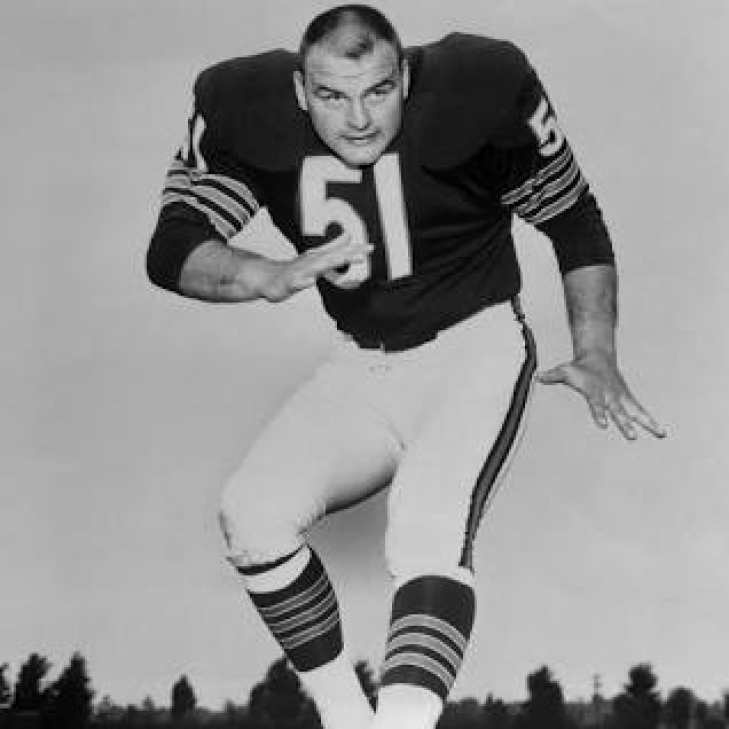
Chicago Bears icon, Dick Butkus, passed away today at the age of 80.
A beast at the University of Illinois, Dick Butkus was a two-time All-American who won the Big Ten MVP in 1963. Butkus stayed close to home as a pro, as he was taken with the third overall pick in 1965.
Chicago was not a powerhouse when Butkus played, but he was the reason to pay attention to the team. One of the most punishing tacklers in football history, offensive skill players were quaking with the knowledge that they could be on the end of a Butkus tackle. Butkus would define the middle linebacker position, and his versatility became a standard that only a few have come to match.
Butkus played in the NFL for nine seasons, and was a pro bowler for the first eight and a first team all-pro for five of them. He is also one of a handful of people who won the Defensive Player of the Year twice.
After Butkus retired, he would become a successful actor appearing in many commercials and television shows. He was chosen for the Pro Football Hall of Fame in 1979 and the College Football Hall of Fame in 1983. Butkus was also named to the 1960s and 1970s All-Decade Teams, and NFL 75th and 100th Anniversary Teams.
We here at Notinhalloffame.com would like to extend our condolences to the fans, friends and family of Dick Butkus.
Our All-Time Top 50 Brooklyn Nets Have Been Revised to Reflect the 2022-23 Season

Yes, we know that this is taking a while!
As many of you know, we here at Notinhalloffame.com are slowly generating the 50 of each major North American sports team. That being said, we have existing Top 50 lists out and we always consistently look to update them when we can and based on necessity. As such, we are very happy to present our post 2022/23 revision of our top 50 Brooklyn Nets.
As for all of our top 50 players in basketball we look at the following:
1. Advanced Statistics.
2. Traditional statistics and how they finished in the National Basketball Association.
3. Playoff accomplishments.
4. Their overall impact on the team and other intangibles not reflected in a stat sheet.
Last year, Brooklyn made it to the playoffs, but they lost both Kevin Durant and Kyrie Irving who wanted out, this ending what should have been an NBA contender. There is one new entrant and four elevations.
As always, we present our top five, which was not affected by the last season:
1. Jason Kidd
4. Brook Lopez
5. Vince Carter
You can find the entire list here.
Kevin Durant, who finished the year in Phoenix, went to #13 from #26, and the other of the departed, Kyrie Irving, rose to #17 from #25, which, yes, shocked us too. Remember, this plays more into the team in question and that with so few players who can make an impact, elevating is easy for stars…even disgruntled ones.
Shooting Guard, Joe Harris, who is now with Detroit, went up one spot to #33.
The returning Spencer Dinwiddie, who came back to the Nets in the Kyrie trade, went up two spots to #35.
The lone new entrant is Nic Claxton, who debuts at #40.
We welcome your input and comments and as always, we thank you for your support.
