

33. Sherrill Headrick
Sherrill Headrick was not drafted by anyone in either the National Football League or the American League but the former star at TCU would find a home with the Dallas Texans and he immediately became a standout Linebacker in the new American Football League. Headrick was named an AFL First Team All-Pro in his first three seasons of football and he would assist the Texans in winning an AFL Title in 1962, the last year that the franchise was in Texas.
31. E.J. Holub
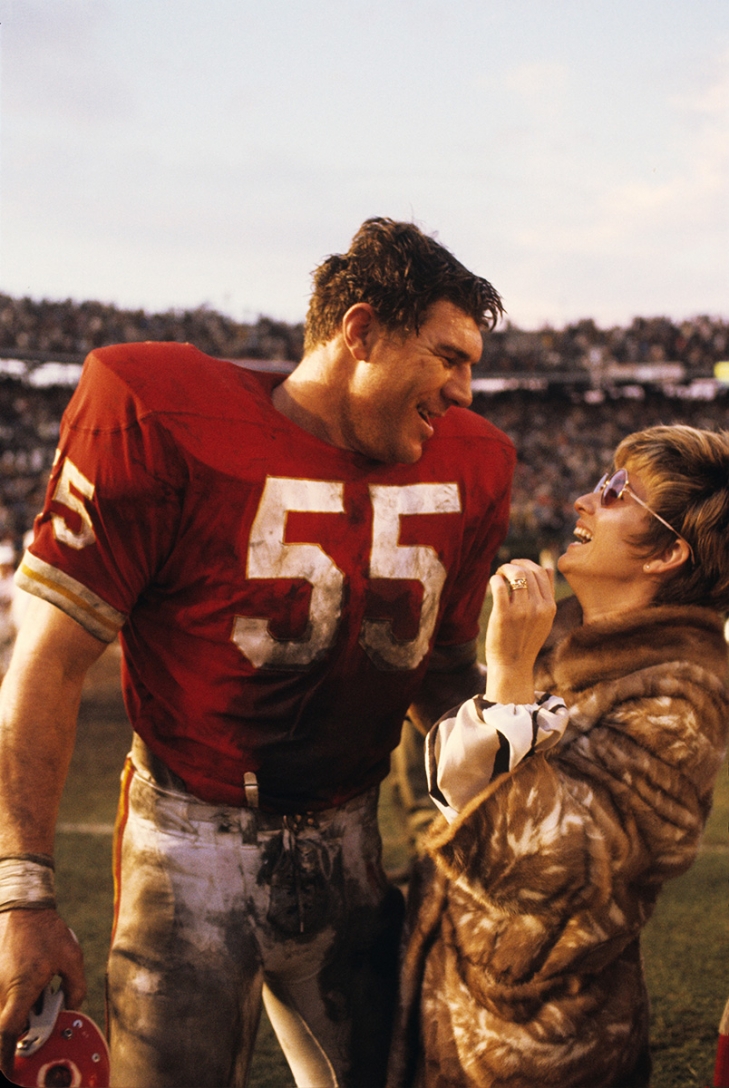
E.J. Holub, the first man who would have his number retired at Texas Tech would make professional football history as in the 60s, he was a rare player to start at two different positions (Linebacker and Center). WIth today's football climate, we are unlikely to ever see that again.
28. John Alt
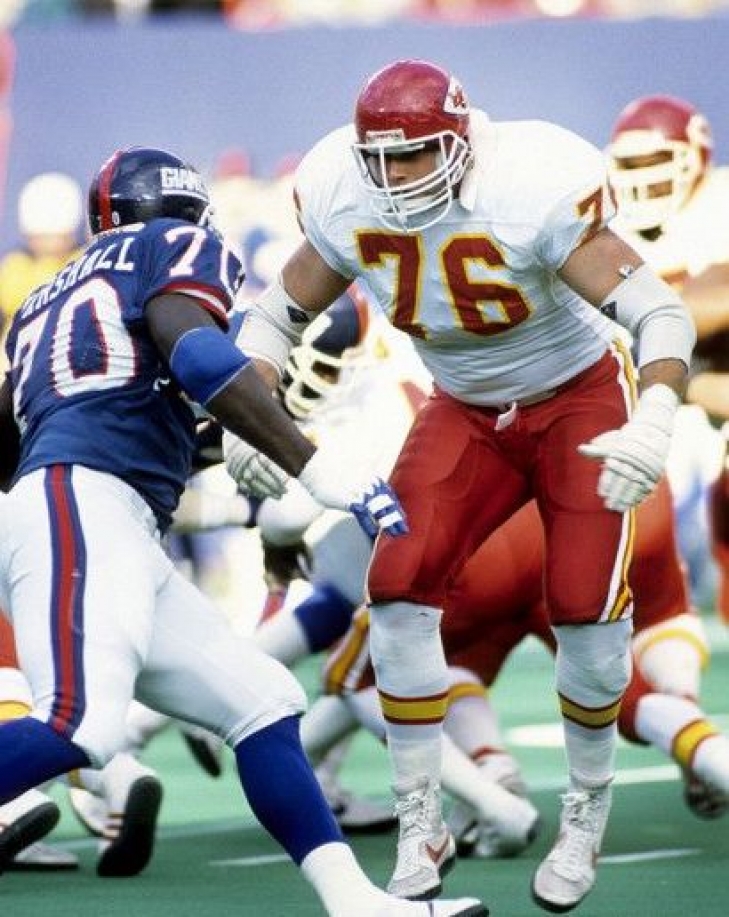
24. Art Still
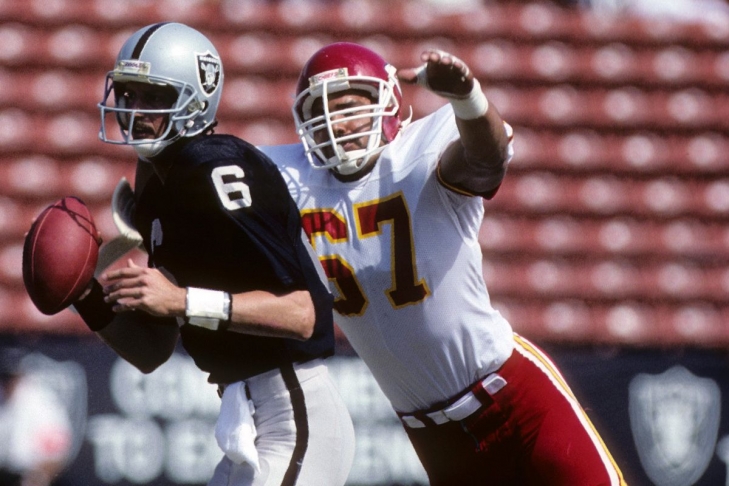
17. Tamba Hali
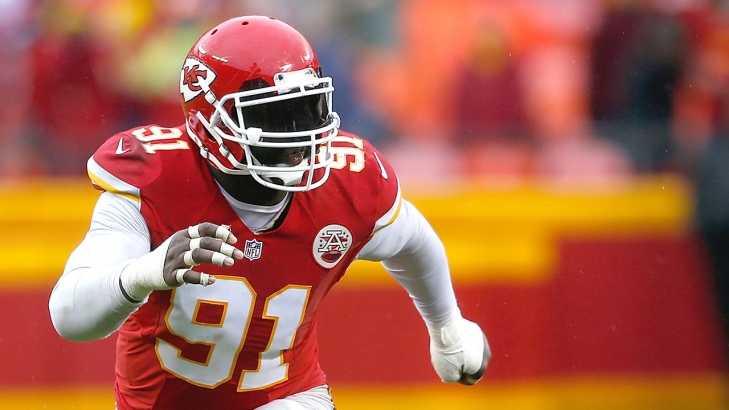
Originally from Liberia, Tamba Hali arrived in the United States at age 10 and the athletically gifted youngster took to football like a duck to water. Hali went to Penn State and the Chiefs would draft him 20th overall in 2006 and he played Defensive End for the first three seasons of his career. Moving to the Right Outside Linebacker in 2009, he would net 14.5 Quarterbacks in 2010 and would have double-digit Sacks again in 2011 and 2013 and from 2011 to 2015 he would be chosen for the Pro Bowl.
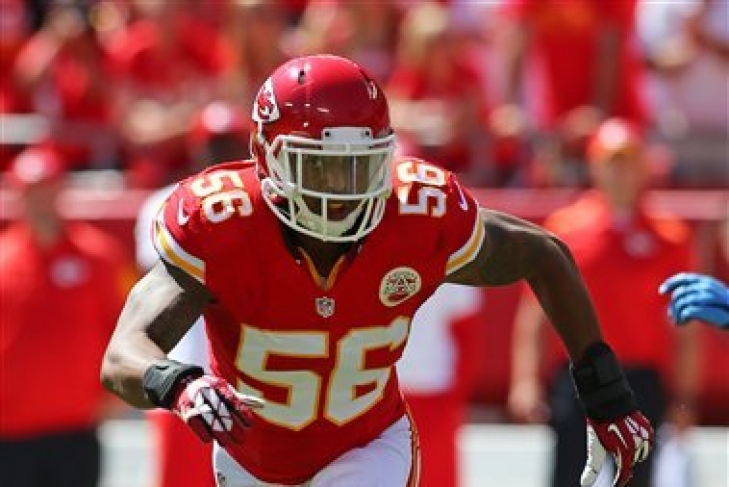
16. Derrick Johnson
13. Jerry Mays

Another defensive superstar from the 1960s, Jerry Mays came out of SMU and in his second season was already an AFL All-Star and an AFL Champion, assisting the then Dallas Texans win an AFL Championship. Incredibly agile, Mays would be an AFL All-Star at both Defensive End and Defensive Tackle, Mays was a six-time All-Star and one time Pro Bowl Selection and was chosen First Team All-Pro twice (1965 & 1966) and was a team captain in both Kansas City’s Super Bowl I loss and Super Bowl IV win. He entered the Chiefs Hall of Fame in 1972, as the third inductee.
18. Deron Cherry
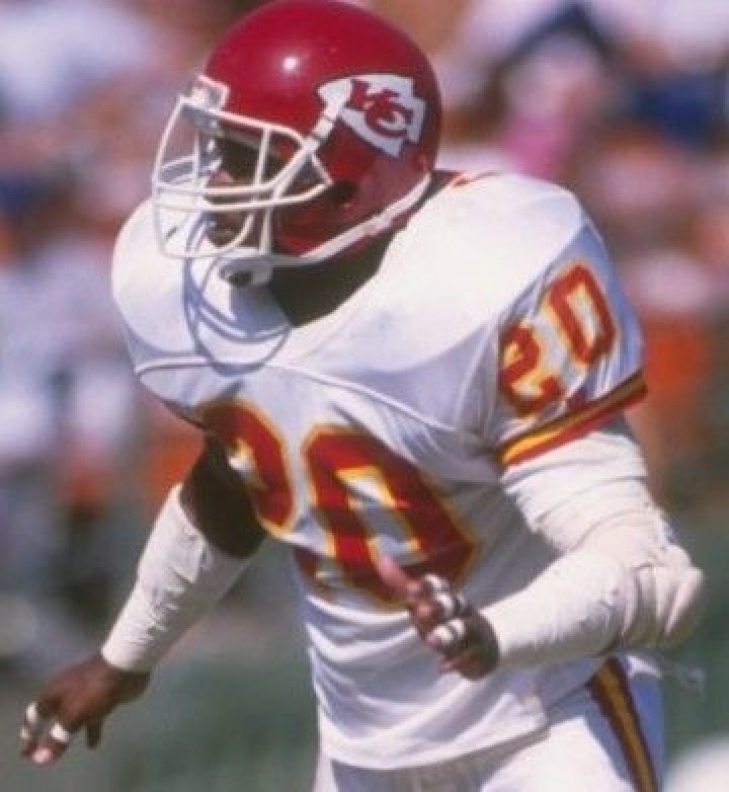
Deron Cherry was a team MVP at Rutgers where he was both a Safety and a Punter. He went undrafted in 1981 however was signed as a Free Agent by the Chiefs where he attempted to become the team’s Punter. It didn’t stick but he was brought back to tryout at Safety and the rest as they say is history.
4. Travis Kelce
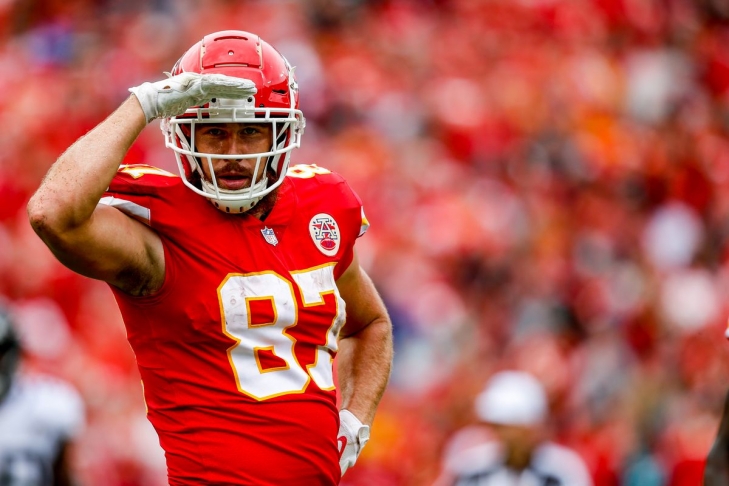
For years, conventional wisdom dictated that any tight end in Kansas City would permanently play second fiddle to Tony Gonzalez. Selected in the third round out of Cincinnati in 2013, Travis Kelce didn't just challenge that narrative—he dismantled it entirely. Combining a receiver's route-running ingenuity with an improvisational flair, Kelce evolved from a fiery young prospect into the most prolific postseason target in NFL history and a global pop-culture phenomenon.
Kelce's career took a major turn after missing nearly all of his 2013 rookie season due to knee surgery. He made a strong comeback with two consecutive 800-yard seasons, culminating in a breakout year in 2016 when he recorded 1,125 receiving yards and earned his first First-Team All-Pro honor. This marked the start of a remarkable period of elite performance. Kelce's unique advantage was his almost telepathic rapport with Patrick Mahomes; he had an exceptional ability to interpret defensive zone coverages instantly, dropping his route stems to find open space as Mahomes exited the pocket on scrambled plays.
Between 2016 and 2022, Kelce made history as the first tight end to achieve seven straight 1,000-yard receiving seasons. His standout year was 2020, when he set the NFL tight end record with 1,416 yards and 11 touchdowns in 15 games. He continued his excellence in 2022 with a career-best 110 receptions, 1,338 yards, and 12 touchdowns, becoming the key player in an offense that won Super Bowl LVII.
Beyond his regular-season stats, Kelce built his ultimate legacy in January and February. Serving as Kansas City's postseason safety valve, he surpassed Jerry Rice for the most career playoff receptions in NFL history and captured three Super Bowl rings (LIV, LVII, LVIII). Whether hauling in clutch touchdown passes in comeback victories or engineering clock-killing drives, Kelce became the Chiefs' defining big-game weapon in their modern dynasty.
Off the field, Kelce’s cultural footprint exploded into unprecedented territory. Hosting Saturday Night Live in 2023 validated his charismatic star power, but his high-profile relationship with music icon Taylor Swift launched him into a tier of global fame rarely seen for an American football player. Yet through the intense media spotlight, Kelce remained intensely focused on his craft, continuing to serve as the emotional heart and vocal leader of Andy Reid’s squad.
Even as age and defensive double-teams began to alter his usage, Kelce’s impact remained vital through the 2024 and 2025 campaigns. Across a challenging 2025 season where the Chiefs navigated team-wide adjustments, he still pulled down 76 passes for 851 yards and five touchdowns, earning his 11th consecutive Pro Bowl nod and officially surpassing Tony Gonzalez as Kansas City's all-time leader in career receiving touchdowns.
Now entering the 2026 season as a senior statesman of the locker room, Kelce stands at the summit of tight end royalty. With his place in Canton long since sealed, every snap he takes only adds polish to a career that has redefined the tight end position for future generations.
Kelce enters this year having already accumulated 113 receptions, 13,157 receiving yards, and 85 receiving touchdowns, all franchise records for touchdowns and catches.
11. Johnny Robinson
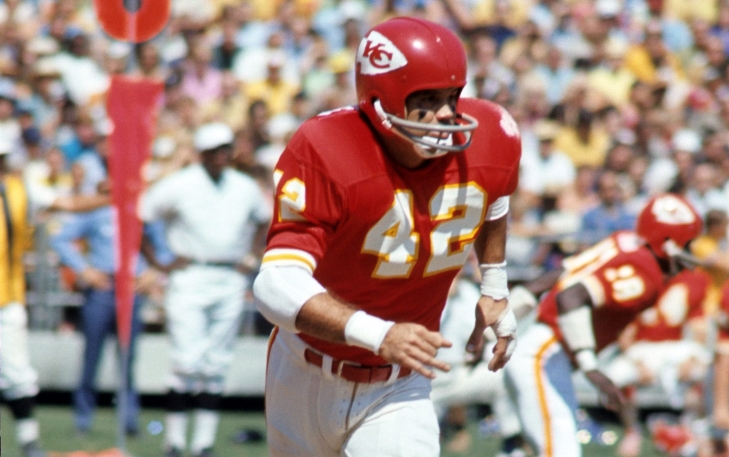
Yep…another defensive star from the late ’60s/early ’70s.
Johnny Robinson is arguably the greatest Safety in Kansas City Chief history though he did not start his professional career that way.
10. Jim Tyrer
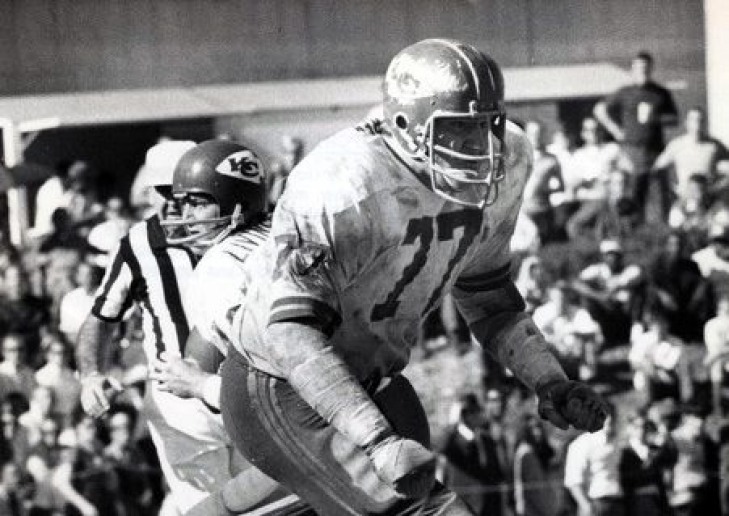
Jim Tyrer was definitely the top Offensive Lineman for the Kansas City Chiefs throughout the 1960s and there is a case to be made that he was among the top tier in the AFL. Tyrer was a First Team AFL All-Pro five times (and also a First Team All-Pro twice) and a vital part of the O-Line that protected Len Dawson for years. Notably, he was also a seven time AFL All-Star, a two time Pro Bowl winner and he was a part of three AFL Titles and the Super Bowl IV win.
14. Emmitt Thomas
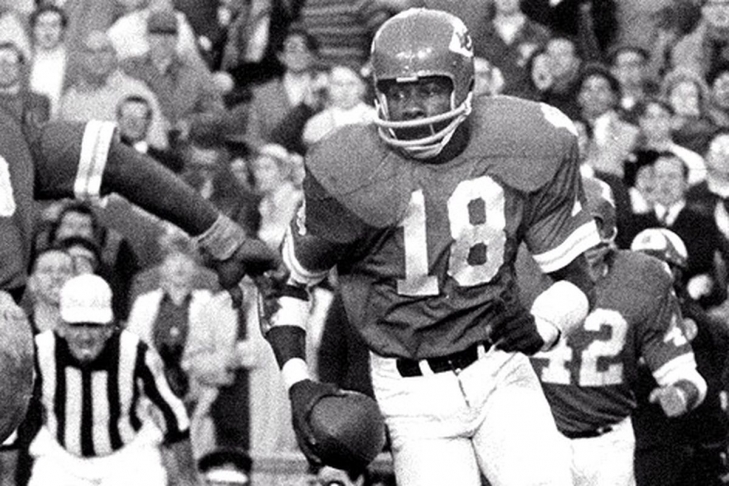
Emmitt Thomas is the franchise leader in Interceptions (58, one more than Johnny Robinson) and was a two-time league leader in that statistic (1969 & 1974). Making a case as the greatest Cornerback in Chiefs history, Thomas played thirteen of his NFL seasons with Kansas City and he was named to the AFL All-Star Team once (’68) and was a four-time Pro Bowl Selection (1971, 1972, 1974 & 1975), the last of which was First Team All-Pro worthy. In that season his league-leading 12 Interceptions was matched by an also league-high 214 Interception Return Yards. Like so many on the upper echelon of this list, Thomas was a member of the Super Bowl IV winning team and was also an AFL Champion in 1966.
9. Willie Lanier
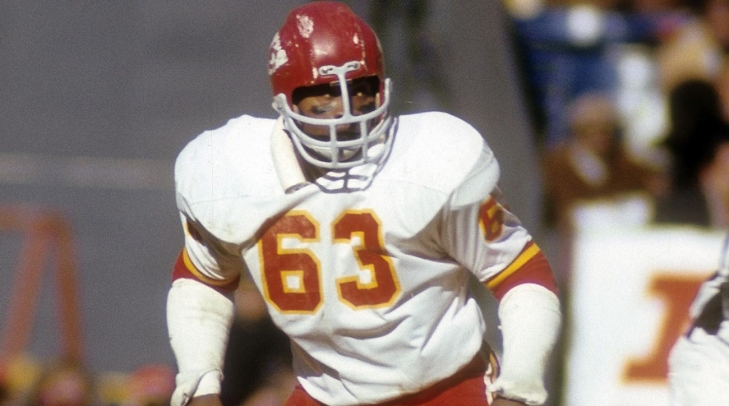
If you are reading this from the top to the bottom you are probably realizing that the late 60’s/early 70’s Kansas City Defense was pretty damned good and here we are with another defensive stud from that era in our top ten.
8. Buck Buchanan
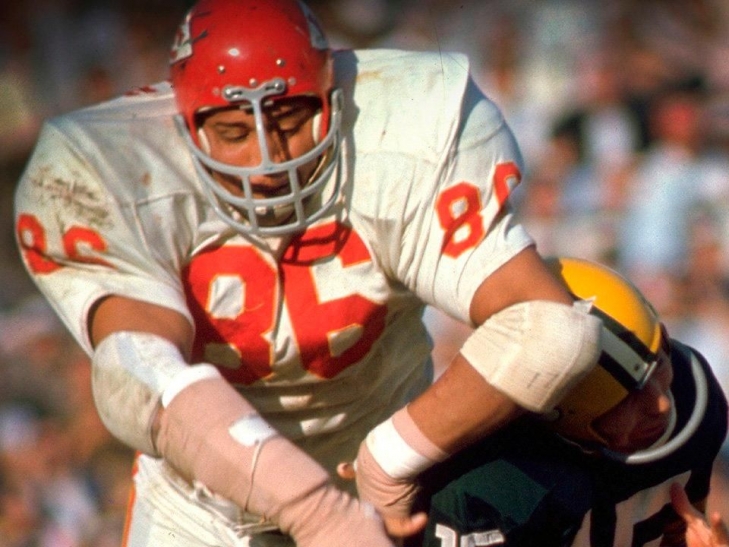
Buck Buchanan was a proven force at Grambling; so much so that the Kansas City Chiefs made him the first overall draft pick in the 1963 AFL Draft, the first time a black player was chosen at that spot.
6. Will Shields
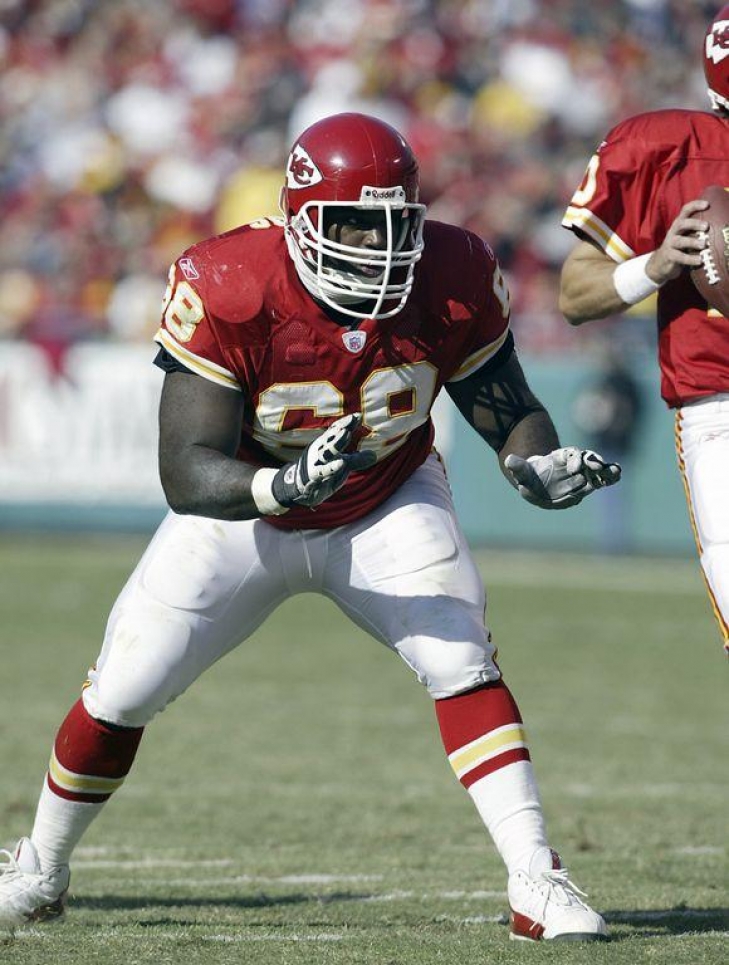
The Kansas City Chiefs have had their share of great players on the Offensive Line, but there is one who stands above the rest; Will Shields.
3. Tony Gonzalez
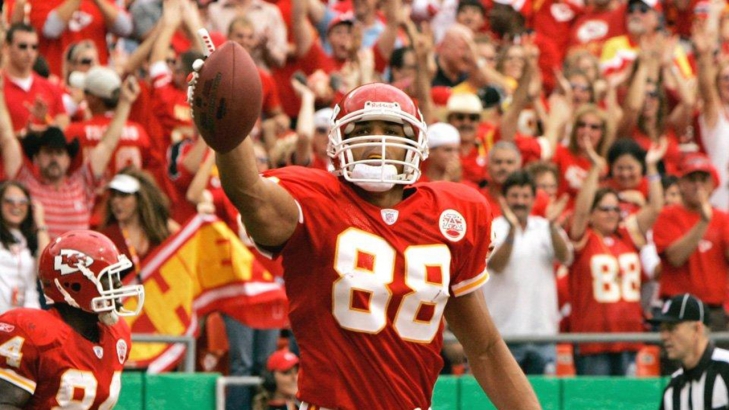
When the Kansas City Chiefs traded up to select Tony Gonzalez 13th overall out of California in 1997, they weren't just picking a tight end—they were securing a two-sport athlete who would fundamentally rewrite the blueprint for offensive football. Armed with a basketball player's footwork, elite aerial body control, and soft hands honed on the hardwood, Gonzalez completely transformed a blocking-centric position into the premier focal point of a modern passing attack.
After showing modest promise as a rookie, Gonzalez demonstrated star potential in 1998 with 59 receptions and fully broke out in 1999. During that third season, he received his first of ten straight Pro Bowl selections in red and gold and earned First-Team All-Pro honors with 76 catches for 849 yards and 11 touchdowns. In 2000, he continued his ascent by recording a remarkable 93 catches for 1,203 yards and nine touchdowns, establishing that a tight end could be the primary receiver for an offense.
Gonzalez showed remarkable consistency despite major roster changes, acting as the key driver for Dick Vermeil's dynamic early-2000s offenses with Trent Green and Priest Holmes. In 2001, he accumulated 917 receiving yards and six touchdowns, caught 63 passes in 2002, and in 2003, he had 71 catches for 916 yards and 10 touchdowns, aiding Kansas City's 13–3 season. His signature dunking of the goal post became a weekly highlight at Arrowhead Stadium, setting a new standard for tight end achievements.
His outstanding statistical achievement occurred during the 2004 season, when he excelled in secondary coverages to top the NFL with 102 receptions, accumulating a career-high 1,258 receiving yards and seven touchdowns. This impressive season set the then-record for single-season catches by a tight end and demonstrated his ability to thoroughly disrupt defensive strategies aimed at limiting him.
Despite the Chiefs entering a tough rebuilding phase later in the decade, Gonzalez remained highly productive. In 2005, he achieved 78 catches for 905 yards, followed by 900 yards in 2006. He then had two strong 1,000-yard seasons in 2007 (99 catches, 1,172 yards) and 2008 (96 catches, 1,058 yards, 10 touchdowns). Over his 12 impressive years with Kansas City, he surpassed 900 receiving yards seven times and exceeded 1,000 yards four times.
Beyond his staggering statistical volume, Gonzalez was an absolute marvel of physical durability. Over 12 seasons in Kansas City, he missed only one game, absorbing thousands of hits over the middle while pioneering dietary and training habits that extended his prime deep into his thirties. He departed Kansas City in 2009 after a trade to Atlanta, leaving behind a legacy as the most prolific pass-catcher in Chiefs history and the standard-bearer for all tight ends who followed.
Enshrined into the Chiefs Hall of Fame in 2018 and entering the Pro Football Hall of Fame on the first ballot in 2019, his career received ultimate national recognition in 2020 when he was named to the prestigious NFL 100th Anniversary All-Time Team as one of the game's immortal figures. Statistically, as a Chief, he had 916 receptions, 10,940 receiving yards, and 76 receiving touchdowns in Kansas City—all franchise records at the time of his departure.
2. Bobby Bell
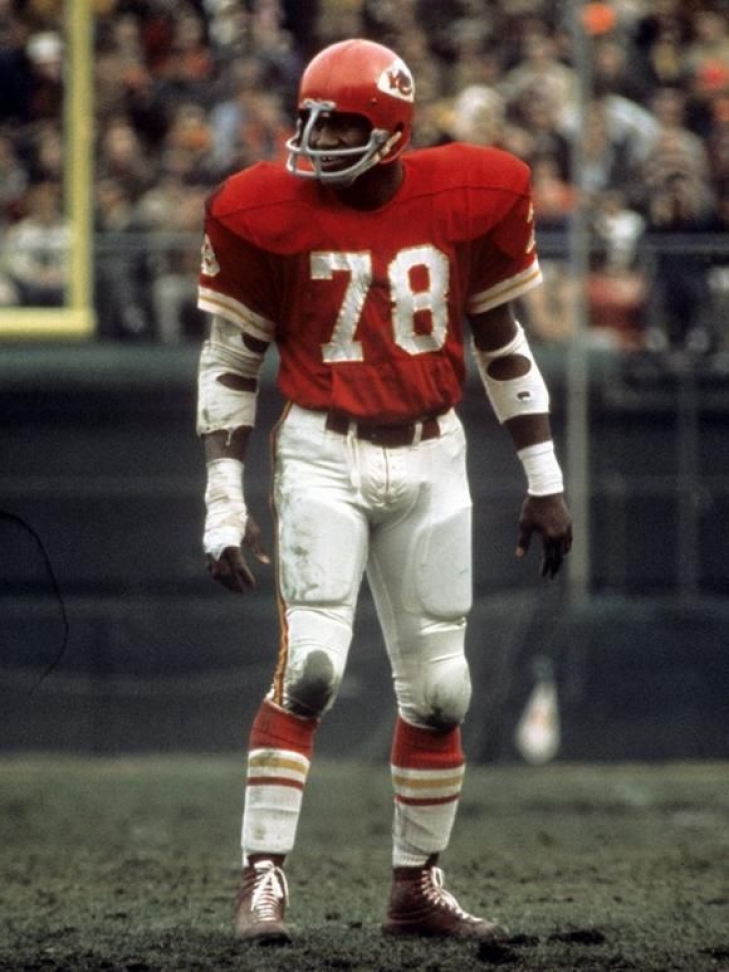
Before modern NFL scouting built templates for hybrid defender archetypes, Bobby Bell was already breaking the mold. Standing 6-foot-4 and 228 pounds with 4.5 track speed, Bell had a freakish athletic profile decades ahead of its time. A high school quarterback and a national champion tackle at the University of Minnesota, he captured the 1962 Outland Trophy as the nation's premier interior college lineman. When the Chiefs scooped him up in the seventh round of the 1963 AFL draft, they secured the ultimate chess piece for head coach Hank Stram.
Stram famously stated that Bell was so talented he could master all 22 positions on a successful football team and perform excellently in each one. Bell initially spent two seasons playing at defensive end, setting the edge, before switching permanently to outside linebacker in Stram's innovative "stack defense." His extraordinary range enabled him to disrupt running plays behind the line of scrimmage, drop back into coverage like a safety, and even take care of long-snapping duties on special teams seamlessly.
His versatility from the start set the stage for a remarkable series of individual awards. After an impressive rookie year, Bell was recognized as an AFL All-Star or NFL Pro Bowler for nine straight seasons from 1964 to 1972, including six consecutive First-Team All-AFL/NFL selections. Acting as the key athletic threat on a star-studded defense with middle linebacker Willie Lanier and tackle Buck Buchanan, Bell provided Kansas City with a solution for every offensive strategy in professional football.
Bell was a defensive force capable of controlling any situation on any down. He was an aggressive, top-tier open-field tackler who almost always completed wraps, tackling ball-carriers in space before they could break to the outside. His constant effort and quick closing speed made him a formidable blitzing option off the edge, enabling him to consistently pressure opposing quarterbacks during his twelve years in Missouri.
Although sacks did not become an official NFL statistic until 1982, internal Chiefs tracking shows Bell amassed 40.0 career quarterback sacks. Combined with his 26 career interceptions, Bell is an unofficial charter member of pro football's elite 20-20 club. More impressively, he converted those turnovers into points, scoring nine career defensive touchdowns—including six pick-sixes, which tied the all-time NFL record for linebackers.
Without Bell anchoring the defense, imagining Kansas City creating the legendary legacy of the 1960s franchise is difficult. His coverage ability and playmaking skills led the Chiefs to three AFL Championships and appearances in Super Bowls I and IV. In Super Bowl IV, where they defeated the Minnesota Vikings, Bell's defense limited Minnesota to just 67 rushing yards, marking one of the most dominant championship performances in professional football history.
Bell spent 12 seasons with the Kansas City Chiefs (1963–1974), playing in 168 games with 159 starts. He recorded 26 interceptions for 479 yards, six interception return touchdowns, 40.0 unofficial sacks, nine fumble recoveries, and nine touchdowns. A Super Bowl IV Champion, two-time AFL Champion, nine-time Pro Bowler, six-time All-Pro, and member of the NFL 1970s All-Decade Team, he entered the Chiefs Hall of Honor in 1980, and in 1983, he was chosen for the Pro Football Hall of Fame. He would earn one more colossal honor when, in 2020, he was named to the NFL 100th Anniversary Team.
6. Derrick Thomas
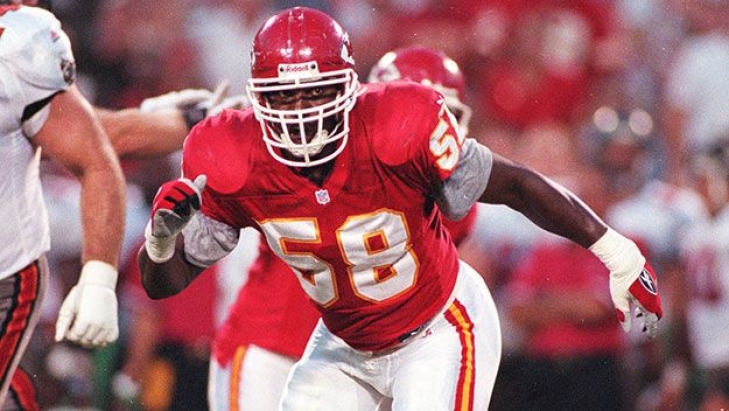
Selected fourth overall out of Alabama in 1989 after capturing the Butkus Award as the nation’s top collegiate linebacker, Derrick Thomas arrived in Kansas City with a first-step acceleration off the edge that instantly altered NFL passing offenses. His twitchy, lightning-fast snap anticipation transformed him into the premier edge rusher of his generation, making him an immediate cornerstone for Marty Schottenheimer's rebuilding Chiefs defense.
Thomas exploded onto the professional scene in 1989, racking up 10.0 sacks and forcing three fumbles to capture NFL Defensive Rookie of the Year honors alongside his first of nine consecutive Pro Bowl selections. Opposing offensive tackles simply could not match his elite dip-and-bend movement along the perimeter. He followed up his rookie campaign with an extraordinary 1990 season, leading the entire NFL with a franchise-record 20.0 sacks to earn First-Team All-Pro honors.
The crown jewel of that 1990 campaign unfolded on Veterans Day against the Seattle Seahawks, when Thomas set an NFL single-game record by sacking quarterback Dave Krieg seven times. He perfected a signature "sack-and-strip" technique, actively chopping at the ball rather than just taking down the passer. That technique yielded 45 career forced fumbles and 19 fumble recoveries, consistently converting defensive pressure into instant turnover points for Kansas City.
Throughout the 1990s, Thomas served as the heartbeat of a feared Chiefs defense alongside Neil Smith and Dan Saleaumua. He earned three First-Team All-Pro selections (1990, 1992, 1996) and topped double-digit sacks in seven different seasons, including a 1998 opener where he dropped Raiders quarterback Jeff Gruden's squad six times in a single afternoon. His presence turned Arrowhead Stadium into a nightmare environment for visiting quarterbacks, establishing an electric atmosphere that defined an era.
Off the field, Thomas was equally impactful, cementing his legacy as a true community hero through his extensive philanthropic work. In 1990, he founded the Third and Long Foundation to help inner-city children learn to read, devoting countless hours to youth literacy programs across the metropolitan area. His unselfish community service earned him the prestigious NFL Man of the Year Award in 1993, making him deeply beloved across the region. By decade’s end, he was an easy pick for the 1990s All-Decade Team.
Tragedy struck the organization and the football world in January 2000. Following a motor vehicle accident on an icy highway while en route to Kansas City International Airport, Thomas suffered chest trauma that left him paralyzed below the chest. Less than a month later, on February 8, 2000, he passed away suddenly at age 33 from a pulmonary embolism, leaving behind a heartbroken fan base and an irreplaceable void in the sport.
His memory remains deeply woven into the fabric of the franchise. The Chiefs inducted Thomas into the Chiefs Hall of Honor in 2001 and officially retired his iconic No. 58 jersey in 2009. That same year, he received ultimate national immortality with his posthumous election into the Pro Football Hall of Fame in Canton. Thomas played in 169 regular-season games with 157 starts. He compiled 126.5 official sacks, 45 forced fumbles, 19 fumble recoveries, 641 tackles, and four defensive touchdowns in red and gold—departing as the franchise’s all-time leader in sacks.
5. Len Dawson
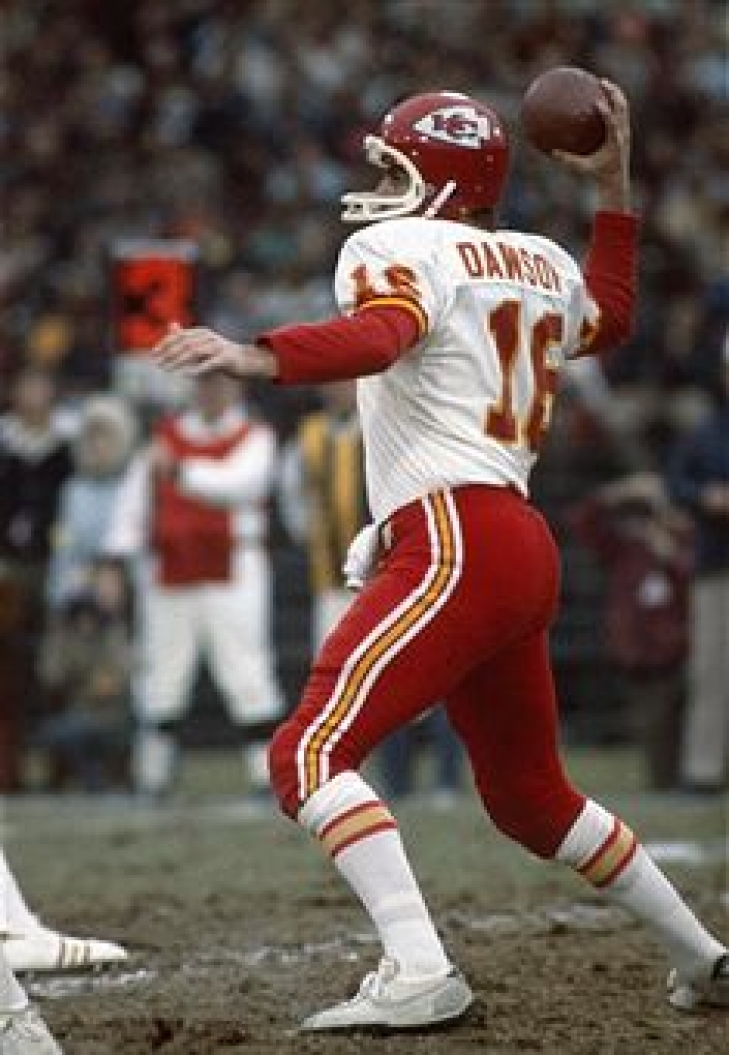
Before he became the undisputed royalty of Kansas City football, Len Dawson looked like a first-round draft bust buried on NFL sidelines. Selected fifth overall by Pittsburgh out of Purdue in 1957, Dawson spent three anonymous seasons underutilized by the Steelers before being shipped to Cleveland, where he languished behind Milt Plum. Released after five NFL seasons with just two career touchdown passes to his name, Dawson’s professional career seemed dead on arrival until former Purdue assistant Hank Stram threw him a lifeline with the AFL’s Dallas Texans in 1962.
Reunited with Stram, Dawson immediately unspooled one of the most remarkable career turnarounds in pro football history. Taking the reins of Stram’s innovative "moving pocket" offense, Dawson brought clinical precision and icy composure to a fledgling league often criticized for chaotic play. Nicknamed "Lenny the Cool" for his unflappable demeanor under pressure, he transformed the Texans into an instant juggernaut, leading the AFL with 29 touchdown passes and a 98.3 passer rating in his very first season as a full-time starter.
The memorable 1962 campaign ended with a double-overtime win against the Houston Oilers in the AFL Championship, earning the franchise its first league title. When Lamar Hunt moved the team north to Missouri to form the Kansas City Chiefs the next year, the team’s location shifted, but Dawson's consistent brilliance did not change. He became the standard for efficiency throughout the decade, consistently leading the AFL in passing.
Dawson’s mastery of Stram’s scheme was unmatched in his era. He won six AFL passer rating titles (1962, 1964–1968)—including five straight seasons on top—and led the league in touchdown passes four times (1962, 1963, 1965, 1966). Unlike opponents who focused on deep vertical throws, Dawson dissected defenses with pinpoint accuracy, leading the league in completion percentage in eight seasons and consistently achieving touchdown-to-interception ratios that were far ahead of his time.
In 1966, Dawson led Kansas City to an 11–2–1 record and a decisive victory over Buffalo in the AFL title game, securing their place in the first AFL-NFL World Championship Game (Super Bowl I). Although the Chiefs ultimately lost to Vince Lombardi’s Green Bay Packers, Dawson impressed many by completing 16 of 27 passes against a renowned NFL defense, demonstrating to skeptical fans across the country that the AFL’s top quarterback had exceptional, world-class skills.
Three years later, Dawson created his career's defining masterpiece in 1969. Although he missed five games due to a knee injury and faced false, sensationalized gambling accusations before Super Bowl IV against the favored Minnesota Vikings, Dawson stayed resilient. His steady leadership kept Kansas City focused as they dominated Minnesota's renowned "Purple People Eaters" defense, winning 23–7. Dawson received Super Bowl MVP honors, confirming the AFL's strength just months prior to the official merger.
Dawson was more than just a champion with his awards; he was a tough physical player who took harsh hits during an era with almost no protective rules for quarterbacks. He led the Chiefs through their integration into the unified NFL, starting until he retired after the 1975 season at age 40. By retirement, he had played 14 seasons in Chiefs red, setting statistical records that stood for nearly 50 years until Patrick Mahomes came along.
His post-playing career further cemented his reputation as a local legend. Dawson smoothly shifted into a popular broadcaster, leading local sports coverage in Kansas City and working for decades as the color commentator for the Chiefs Radio Network, while also hosting HBO's Inside the NFL. His unique ability to earn trust both on the field and at home made him the enduring elder figure in Kansas City sports culture.
With the Chiefs, Dawson compiled 28,507 passing yards, 237 passing touchdowns, and 178 interceptions in red and gold, along with 1,241 rushing yards and nine rushing touchdowns. A Super Bowl IV champion and MVP, three-time AFL Champion (1962, 1966, 1969), six-time AFL All-Star, 1968 Pro Bowler, and 1962 First-Team All-AFL selection, Dawson had his No. 16 jersey retired by the Chiefs and remains a universally revered pillar of football history; he was inducted into the Pro Football Hall of Fame in 2009.
Derrick Johnson Retired
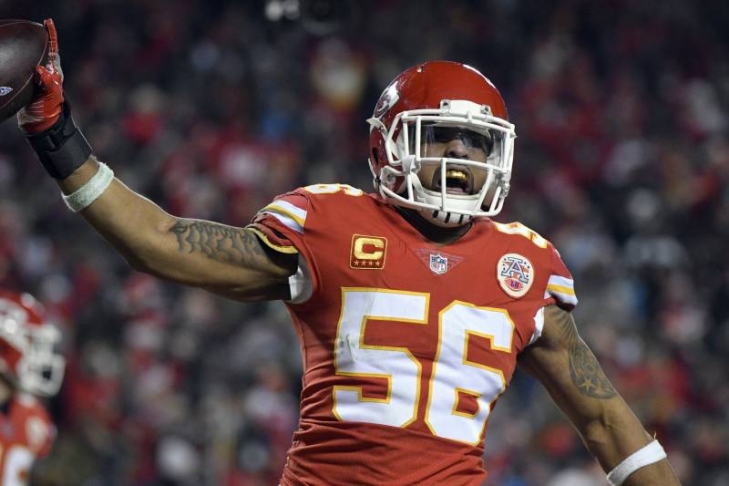
The retirements just keep on coming in the National Football League!
Linebacker, Derrick Johnson just signed a one-day contract with the Kansas City Chiefs so that he could retire at Arrowhead. He had played with the Oakland Raiders last year after playing with Chiefs from 2005 to 2017.
Johnson was drafted 15thoverall from the University of Texas where he was slotted immediately as the team’s Left Outside Linebacker. He would switch to Right Inside Linebacker in 2010 and would go on a four-year streak of 100 or more tackles. He would be named to the Pro Bowl in 2011, 2012, 2013 and 2015 and was a First Team All-Pro in 2011. His career at Kansas City would see him record 27.5 Sacks, 14 Interceptions and 1,151 Tackles.
Coincidentally, we have almost completed our Notinhalloffame.com All-Time Top 50 Kansas City Chiefs and Johnson is currently penciled in at #13.
We here at Notinhalloffae.com would like to wish Derrick Johnson the best in his post-playing career.
