


Site Admin
11. Curly Lambeau
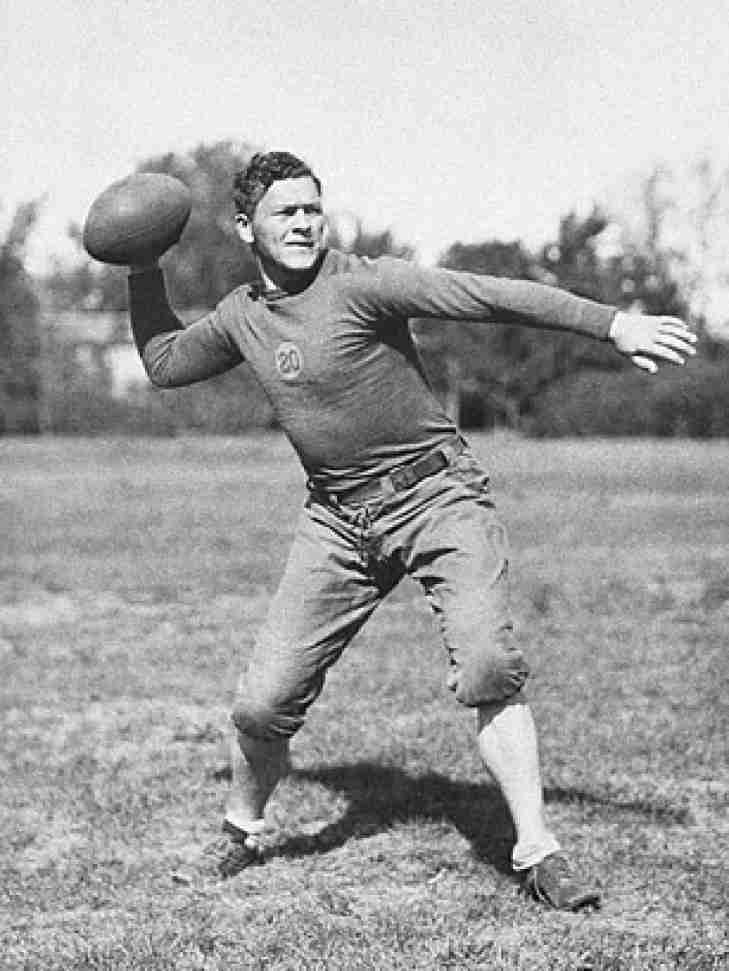
Would there be a Green Bay Packers football team if it were not for Curly Lambeau?
Considering he founded the team, we can safely say no!
Organizing a town team in 1919 with $50 worth of equipment from his employer, the Indian Packing Company, Earl "Curly" Lambeau didn't just build a franchise—he created the bedrock of pro football in Green Bay. Serving as the team's primary tailback, passer, and head coach, Lambeau was an offensive visionary who popularized the forward pass long before it became standard practice in the rugged, run-heavy early years of the NFL.
Operating as Green Bay’s primary offensive engine throughout the 1920s, Lambeau delivered almost every "first" in franchise history, throwing the Packers' first official pass, scoring their first passing touchdown, and kicking their first field goal. A natural leader with a booming presence, he weaponized the passing game behind Knute Rockne’s Notre Dame Box system, leading Green Bay into the NFL in 1921 and keeping the team competitive through the league's grueling early era.
His decade-long dual role as a player-coach culminated in 1929 with a crowning achievement. Lambeau spearheaded Green Bay to an undefeated 12–0–1 record, capturing the franchise's very first NFL Championship in his final season taking snaps on the field. That victory established the Packers as a national powerhouse and set the stage for Lambeau's transition into a full-time head coach, where he added five more NFL titles (1930, 1931, 1936, 1939, 1944) and drafted legendary figures like Don Hutson.
Though his coaching tenure in Green Bay ended in 1949 after 31 seasons, his name became permanently etched into the soul of the sport when New City Stadium was renamed Lambeau Field following his passing in 1965.
As a player including pre-NFL years), Lambeau played in 77 official NFL games. He compiled 1,260 passing yards, 24 passing touchdowns, eight rushing touchdowns, and three field goals as a player, winning six overall NFL Championships as a player and head coach. An inaugural charter member of the Pro Football Hall of Fame in 1963 and member of the Packers Hall of Fame (1970), Lambeau remains the foundational architect of Title Town.
10. Paul Hornung
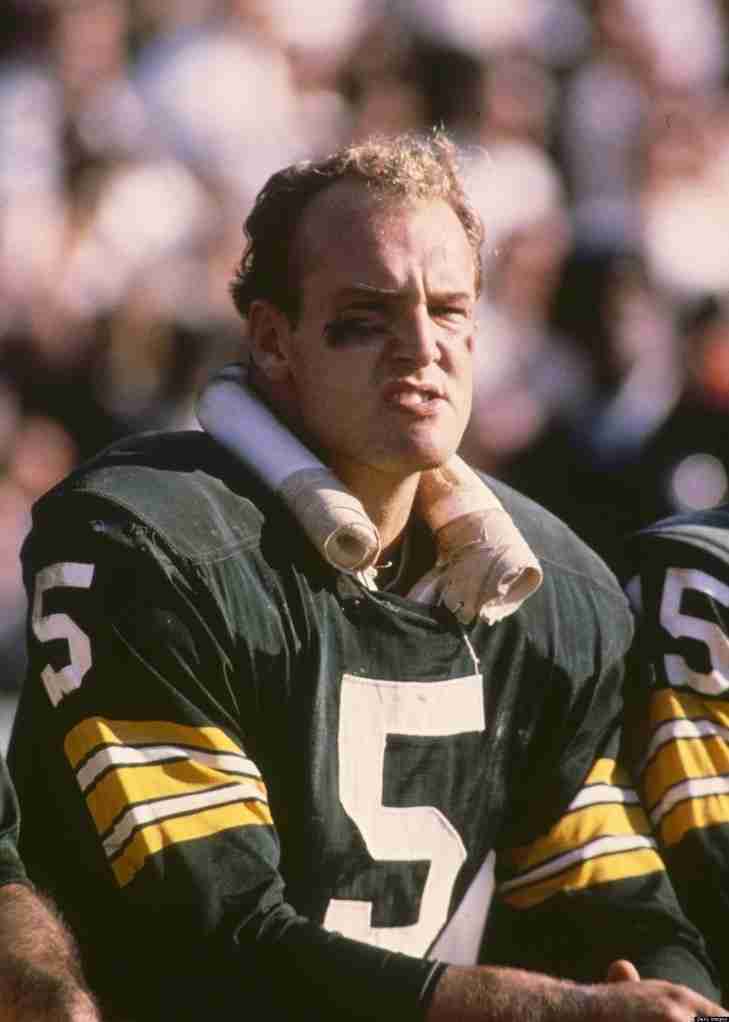
Paul Hornung, who won the 1956 Heisman Trophy as a versatile quarterback at Notre Dame, joined Green Bay as the top overall pick in the 1957 NFL Draft. Nicknamed "The Golden Boy," he initially faced challenges in settling into a specific position under earlier coaching staffs. However, everything changed when Vince Lombardi took charge in 1959, transitioning Hornung to halfback and unleashing one of the most adaptable offensive players of his era.
Under Lombardi's scheme, Hornung became the key read on the legendary Green Bay Power Sweep. With exceptional field vision and surprising power, he paired with fullback Jim Taylor to give the Packers a relentless 1-2 punch in the backfield. Beyond running the football, Hornung was a legitimate threat to throw on halfback options and served as Green Bay’s primary placekicker. That triple-threat production led to a historic individual run from 1959 through 1961, during which he led the NFL in scoring for three consecutive seasons.
His peak came in 1960, when he set an NFL single-season record by scoring 176 points—15 touchdowns, 15 field goals, and 41 extra points —a record that stood for 46 years. Hornung was named First-Team All-Pro in 1960 and 1961, and he earned the NFL MVP award in 1961. He consistently excelled in high-stakes games, setting a championship-game record with 19 points in the 1961 victory over the New York Giants and achieving a tough 105-yard rushing performance in the 1965 title game win against Cleveland.
Though his prime was shortened by a yearlong gambling suspension in 1963 alongside Alex Karras and by nagging pin-bone nerve injuries in his neck, Hornung's clutch big-game factor was essential to four NFL Championship teams. He retired as a true cornerstone of the 1960s Lombardi dynasty and as a member of the NFL’s 1960s All-Decade Team.
Over his career, Hornung played in 104 regular-season games, compiling 3,711 rushing yards, 130 receptions for 1,480 receiving yards, 62 total touchdowns (50 rushing, 12 receiving), 66 field goals, 190 extra points, and 760 total points, alongside four NFL Championship rings and a Super Bowl I title. He joined the Packers Hall of Fame (1975); Hornung was enshrined in the Pro Football Hall of Fame in 1986.
8. Willie Davis

Arriving in Green Bay via trade with Cleveland in 1960, Willie Davis stepped into Titletown and instantly established himself as the quick-striking cornerstone of Vince Lombardi’s defense. After serving two years in the U.S. Army and being misplaced on offense by the Browns, the Grambling State product unlocked his Hall of Fame potential the moment Lombardi permanently installed him at left defensive end.
Davis combined exceptional speed, long-limbed leverage, and a powerful first step right off the snap. In a time when defensive line play focused mainly on stopping the run, Davis changed the game by relentlessly pursuing opposing quarterbacks. His quickness was unmatched by offensive tackles, enabling him to collapse pockets, disrupt timing, and consistently force turnovers in the backfield.
His ten-year tenure in Green Bay, away from Honolulu, brought remarkable achievements. Davis led a defensive line with Henry Jordan, helping the Packers win five NFL Championships and two Super Bowls (I and II). From 1962 to 1967, he achieved an impressive run, earning five consecutive Pro Bowl selections and five First-Team All-Pro honors (1962, 1964–1967). Lombardi highly valued his consistent leadership, appointing Davis as the Packers' defensive captain — the first African American to hold such a position in franchise history.
Although sacks were not officially recorded in the NFL during his playing career, modern analysis and research by Pro Football Reference attribute Davis with 99.5 sacks while with Green Bay, including five seasons with double-digit totals. He was also highly skilled at forcing turnovers, setting a franchise record with 21 opponent fumble recoveries. His durability was unmatched, as he played all 10 seasons with the Packers without missing a game.
With the Packers, Davis compiled 99.5 unofficial sacks, 21 fumble recoveries (22 total), two safeties, and one defensive touchdown, alongside five NFL Championship rings and two Super Bowl titles. A member of the NFL’s 1960s All-Decade Team, Davis was inducted into the Packers Hall of Fame in 1975 and enshrined into the Pro Football Hall of Fame in 1981.
7. Willie Wood
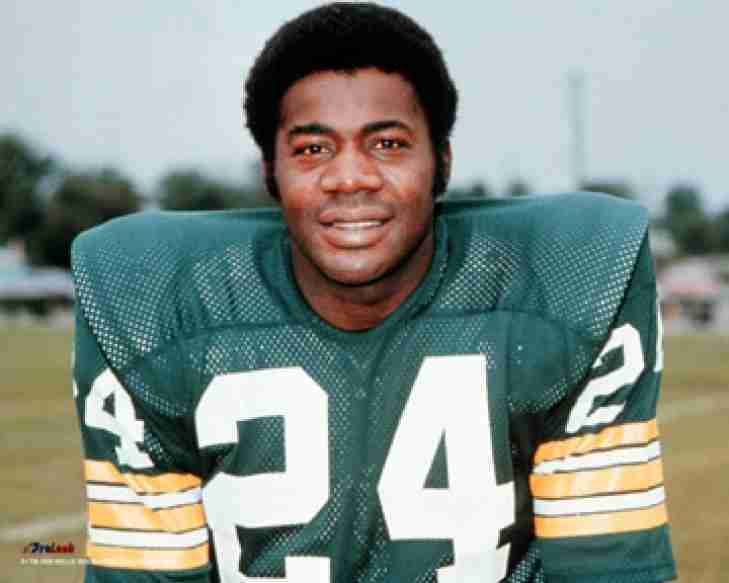
Writing a personal pitch letter directly to Vince Lombardi in 1960 proved to be the ultimate gamble for Willie Wood, an undrafted quarterback out of USC who couldn't catch an NFL draft call. Lombardi brought him in for a free-agent tryout, immediately moved the quick-footed athlete to free safety, and watched him turn into the back-end general of Green Bay's defense for the next twelve years.
By his second season in 1961, Wood was installed as the starting safety, and he celebrated his third year by putting together a defensive masterclass in 1962. He led the NFL with 12 interceptions, earned his first of eight career Pro Bowl trips, and secured First-Team All-Pro honors while helping power Green Bay to its second consecutive world championship. Wood’s closing speed and uncanny spatial awareness turned the Packers' secondary into a no-fly zone throughout the 1960s, while his vision made him a dual threat as the league's top punt returner in 1964 with a 13.3-yard average.
Wood's defining signature moment arrived on pro football's biggest stage in Super Bowl I. With Green Bay holding a tight 14–10 lead over Kansas City early in the third quarter, Wood stepped in front of a Len Dawson pass, picking it off and returning it 50 yards down to the Chiefs' 5-yard line to set up the game-clinching touchdown. That momentum-shifting turnover sparked a blowout and cemented Wood’s reputation as one of the game's ultimate big-stage performers, anchored alongside Herb Adderley in a secondary that won five NFL Championships and two Super Bowls.
His individual accolades piled high across the decade, yielding nine overall All-Pro honors—including five First-Team All-Pro selections (1964–1967, 1969)—and five total rings. Wood retired following the 1971 season having never missed a single game in his 12-year career, leaving as the premier free safety of his era and earning a spot on the NFL’s 1960s All-Decade Team.
Wood retired after the 1971 season. He compiled 48 interceptions for 699 return yards, two pick-sixes, 139 punt returns for 1,391 yards (a 10.0 career average), and two punt return touchdowns, along with five NFL Championship rings and two Super Bowl titles. Wood was enshrined in the Pro Football Hall of Fame in 1989.
