


Site Admin
382. Polen Usuplehilvan

381. Jelena Dokic

4. Forrest Gregg
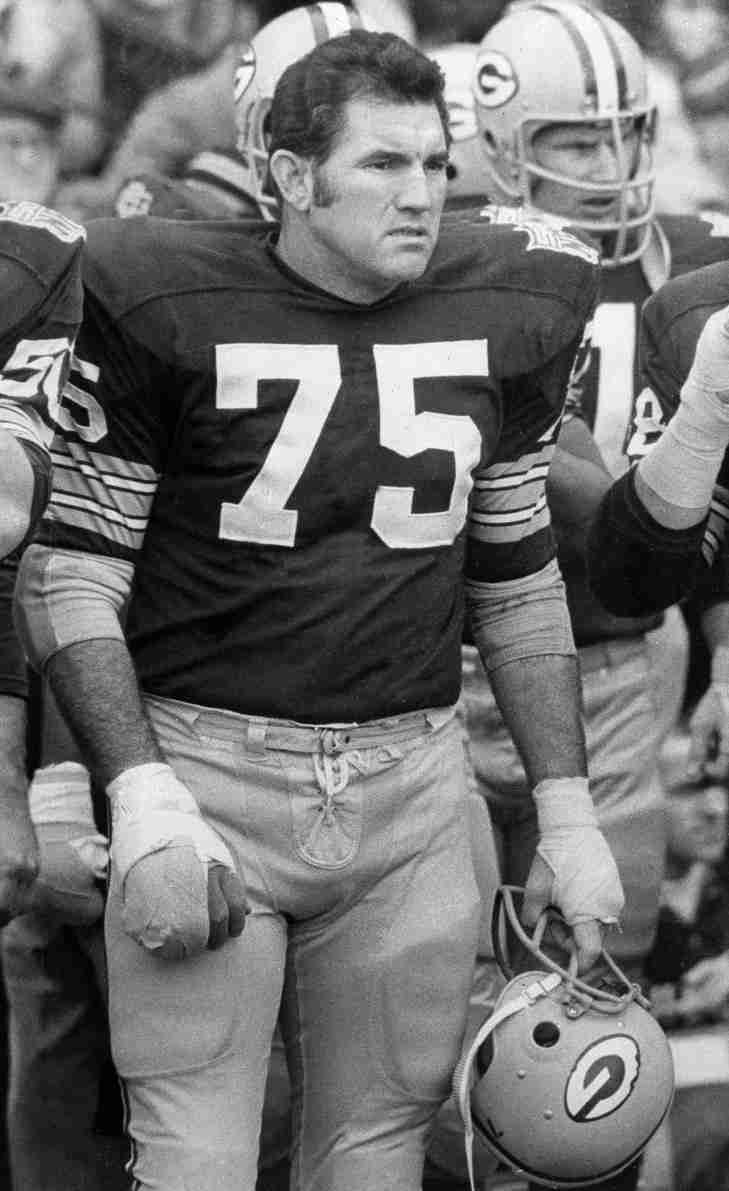
After being drafted in the second round of the 1956 NFL Draft out of SMU, Forrest Gregg moved to Green Bay, where he quietly developed one of the most physically imposing careers among offensive linemen in pro football history. At 6-foot-4 and 250 pounds, Gregg combined technical skill, quickness off the line, and sharp mental acuity. He became a cornerstone of Vince Lombardi's offensive line, consistently playing right tackle and shifting inside to guard as needed during games.
Lombardi famously gave Gregg the ultimate compliment a head coach could bestow, calling him "the finest player I ever coached" in his book Run to Daylight. That praise was earned through flawless execution on the gridiron. Gregg was the lead technician behind Green Bay's iconic power sweep, consistently firing off the ball with surgical precision to seal off edge defenders and clear lanes for Paul Hornung and Jim Taylor. His pass protection was equally flawless, giving Bart Starr a pristine pocket to operate in during the franchise's 1960s dynasty's highest-stakes moments.
Beyond his elite technique, Gregg stood among the ultimate ironmen in professional sports history. From his rookie season in 1956 through the 1970 campaign, he appeared in a then-league-record 188 consecutive regular-season games. His relentless work ethic and durability produced a remarkable run of individual accolades; between 1959 and 1968, he earned nine Pro Bowl nods and was named First-Team All-Pro seven times (1960, 1962–1967).
Gregg's consistent role on the right side of the line was crucial to Green Bay's five NFL Championship wins (1961, 1962, 1965, 1966, 1967), including Super Bowls I and II. After 14 successful seasons with the Packers, he finished his playing career with the Dallas Cowboys in 1971, earning a sixth ring in Super Bowl VI. He returned to the team in 1984, coaching for four seasons as Green Bay's head coach.
With Green Bay, Gregg played in 193 games, starting 156. He was part of the NFL 1960s All-Decade Team and the NFL's 75th and 100th Anniversary All-Time Teams, and was inducted into the Green Bay Packers Hall of Fame in 1977. That year, he was also enshrined in the Pro Football Hall of Fame.
6. Ray Nitschke
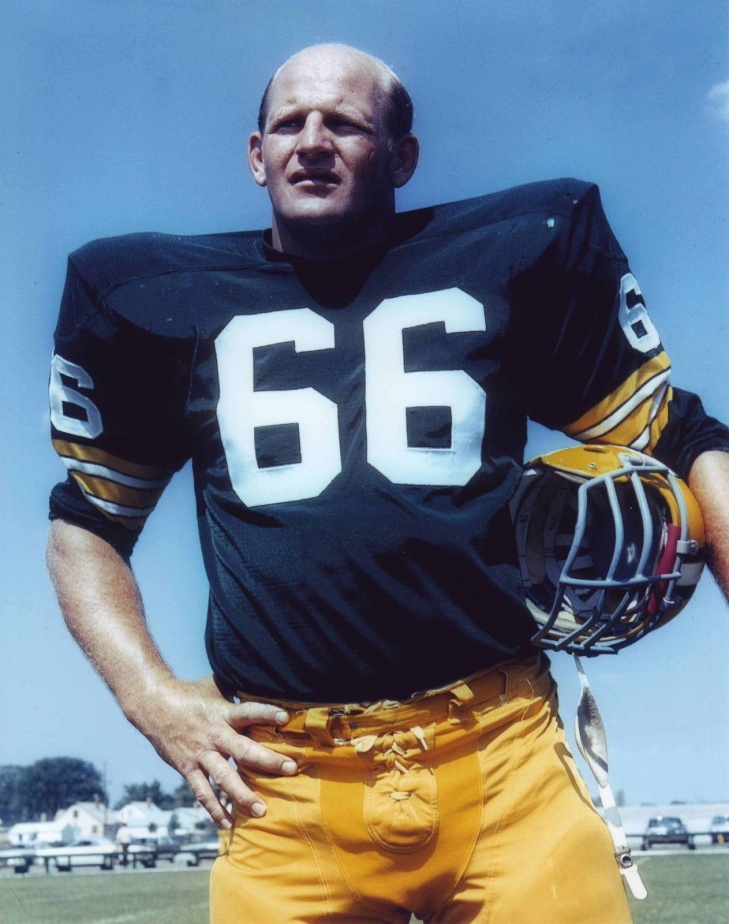
Missing teeth, a menacing glare, and an unyielding physical style turned Ray Nitschke into the undisputed heartbeat of Vince Lombardi’s defense. Arriving in 1958 as a third-round pick out of Illinois—where he played both full-time fullback and linebacker—Nitschke took full ownership of the middle linebacker position by 1962, transforming it into an art form of raw intimidation and tactical mastery.
Nitschke was the key figure for a Green Bay defense that won five NFL Championships (1961, 1962, 1965, 1966, 1967) and the first two Super Bowls. His talent shined brightly during major games; notably, in the harsh conditions of the 1962 NFL Championship against the New York Giants, Nitschke recovered two fumbles and deflected a pass leading to an interception, earning him MVP honors in the tough 16–7 win.
Between 1962 and 1969, Nitschke reached his career-defining peak, with Green Bay's defense consistently finishing no lower than fourth in total yards allowed. He was named All-Pro seven times over this eight-year period, with a standout 1964 season that included two interceptions, First-Team All-Pro honors, and his only Pro Bowl appearance. His most impressive stretch was in 1966, when he was again named First-Team All-Pro, accumulating tackles for loss and leading a defense that allowed just 11.7 points per game—a league low—and helped secure Super Bowl I.
While his bone-jarring tackles against the run defined his reputation, Nitschke was also exceptionally smooth dropping into pass coverage. He snared 25 career interceptions and recovered 23 fumbles, displaying soft hands and elite instincts that repeatedly snuffed out opposing drives. Though Pro Bowl voters inexplicably overlooked him for most of his career, his peers and sports writers recognized his true dominance, naming him to both the NFL’s 1960s All-Decade Team and the NFL 75th Anniversary All-Time Team.
He anchored the middle of the field in Green Bay for fifteen grueling seasons, retiring after the 1972 campaign as one of the most revered figures in franchise history.
Over his career, he accumulated 25 interceptions for 385 return yards, two pick-sixes, and 23 fumble recoveries, alongside five NFL Championship rings and two Super Bowl titles. A 1964 Pro Bowler, two-time First-Team All-Pro, seven-time overall All-Pro, and member of the Packers Hall of Fame, Nitschke was enshrined in the Pro Football Hall of Fame in 1978 before having his No. 66 officially retired by Green Bay in 1986.
