


Site Admin
12. Ben Oglivie
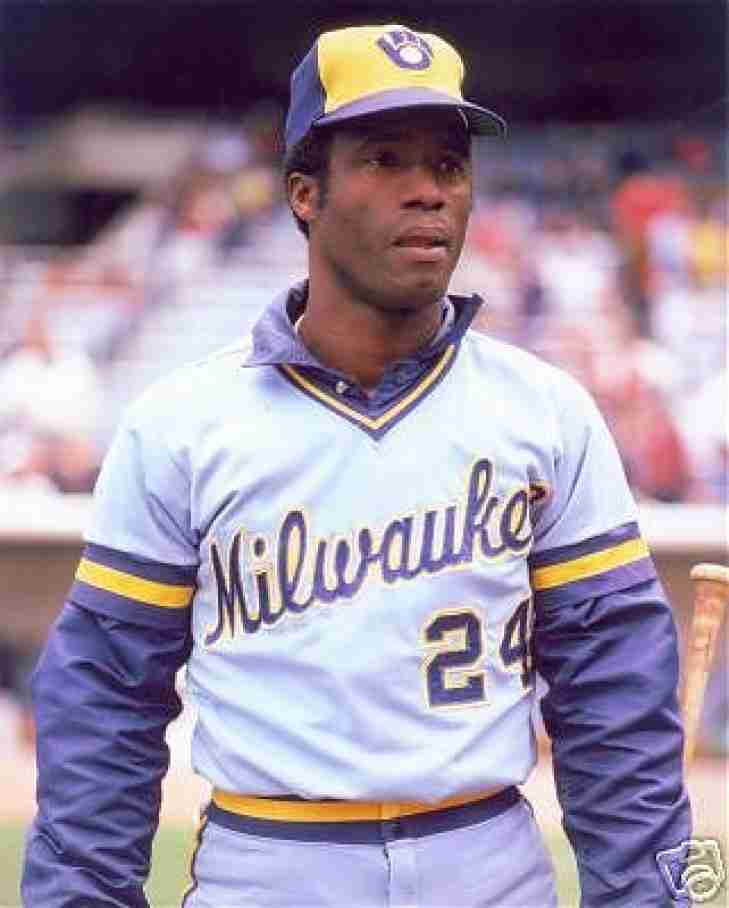
From Panama, Ben Oglivie joined the Brewers in late 1977 as part of a trade with the Detroit Tigers, a move that placed a thoughtful, cerebral power hitter into the heart of Milwaukee's emerging order.
In his debut year at the club in 1978, Oglivie showcased his value with a .303 batting average and 142 hits. In 1979, he stepped up further by hitting 29 home runs, demonstrating that his slim build packed unexpected power. This period cemented his role as a reliable professional who could support a lineup alongside rising stars such as Robin Yount and Paul Molitor, offering the veteran leadership essential for a successful team.
During the 1980 campaign, he demonstrated a season of exceptional efficiency. He showcased a complete mastery of American League pitching by hitting a career-high 41 home runs, making him the first non-American-born player to lead the AL in that category. He combined this power with 118 RBIs and earned his first of three consecutive All-Star selections, along with a Silver Slugger Award. At this peak, he was a strategic force in the middle of the lineup, famously capable of hitting both for average and power, delivering clutch production that kept the Brewers competitive in the race for the title.
Despite consistently hitting double-digit home runs into the mid-1980s, his standout season was in 1982, when he hit 34 homers and drove in 102 RBIs, aiding the American League pennant victory. He finished his career with Milwaukee after 1986, leaving a record of 176 home runs and 1,144 hits. His career demonstrates that perseverance and professionalism can lead to the top of the leaderboards, ultimately earning him a permanent place on the Brewers Wall of Honor.
8. Don Money
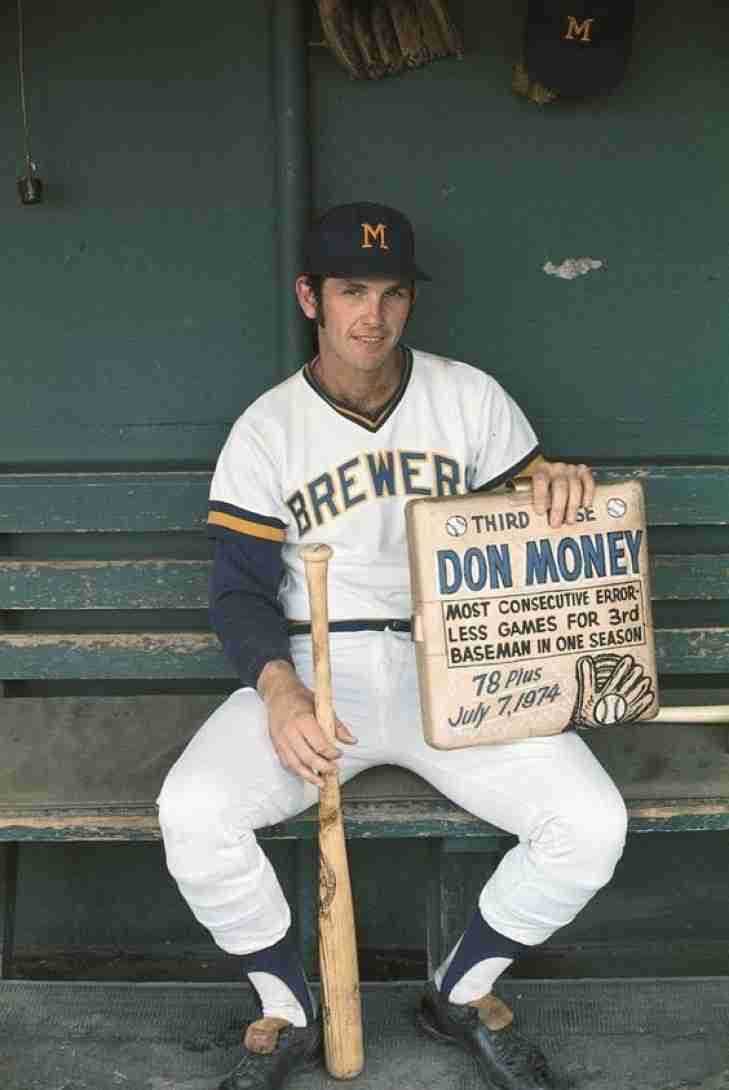
In 1973, Don Money joined the Brewers through a seven-player deal with the Phillies, significantly enhancing their infield stability. Known as "Brooks" for his ability to emulate Brooks Robinson's defensive skills at third base, Money became the franchise’s first real star during its early years. Over eleven seasons with the team, he served as a versatile and strategic player, smoothly transitioning between second, third, and first base, while maintaining a reliable and professional presence at the top of the batting order.
In his first season with the club in 1973, Money topped the American League in fielding percentage at third base, setting a major league record by going 88 consecutive games without an error. Though he was a skilled defender, he also made a significant impact offensively, leading the league in at-bats in 1974 and earning his first of four All-Star honors.
Money hit his offensive peak between 1977 and 1978, producing some of the most outstanding seasons ever by a second baseman for the team. In 1977, he achieved a career-high power year, hitting 25 home runs and driving in 83 RBIs. The next year, in 1978, he batted .293 and became the first Brewer to be voted as a starting player in the All-Star Game.
The final years of his tenure saw him transition into a vital bench piece and designated hitter as the team reached its ultimate summit. He was a member of the 1982 "Harvey's Wallbangers" squad that captured the American League pennant, contributing key hits during the World Series against St. Louis.
Retiring after the 1983 season, Money left Milwaukee with 1,168 hits, 134 home runs, and a .270 batting average.
10. George Scott
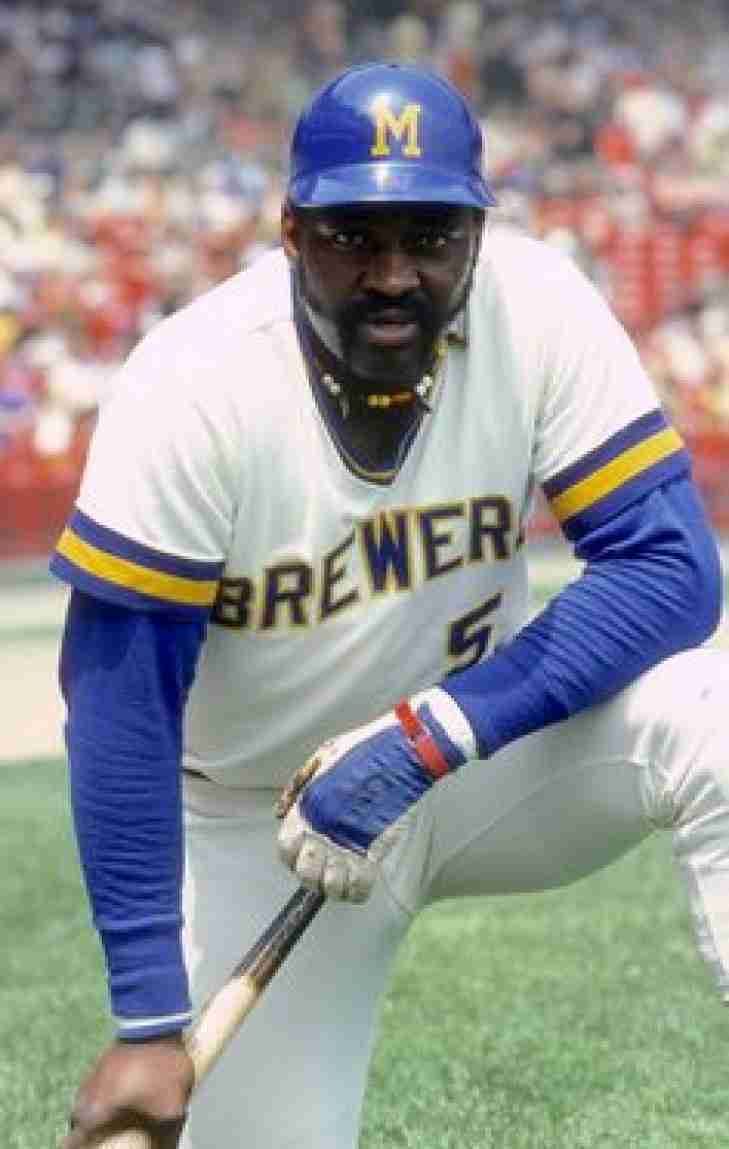
George Scott arrived in Milwaukee in late 1971 as part of a ten-player trade with the Red Sox, bringing a charismatic, powerful first baseman to the Brewers. Nicknamed "Boomer" for his power, Scott quickly became the team's offensive and defensive leader.
Scott showcased a glove that was nearly a vacuum at first base, earning a Gold Glove each season he played for the Brewers (1972–1976). His defense was stellar, and his bat was also strong; he had over 150 hits and 20 home runs in his debut season. This period established him as an elite two-way player who earned MVP votes each year, providing the Brewers with star power for their roster.
During the 1975 season, he led a decorated franchise campaign, mastering AL pitching by hitting 36 home runs and 109 RBIs, earning an All-Star and ranking eighth in MVP voting. He called his home runs “taters," a famous nickname for his power., and a term still used today.
After the 1976 season, he was traded back to the Boston Red Sox in a deal that brought future franchise icon Cecil Cooper to the Brewers. With Milwaukee, Scott had 851 hits, 115 home runs, and 5 Gold Glove Awards.
7. Prince Fielder
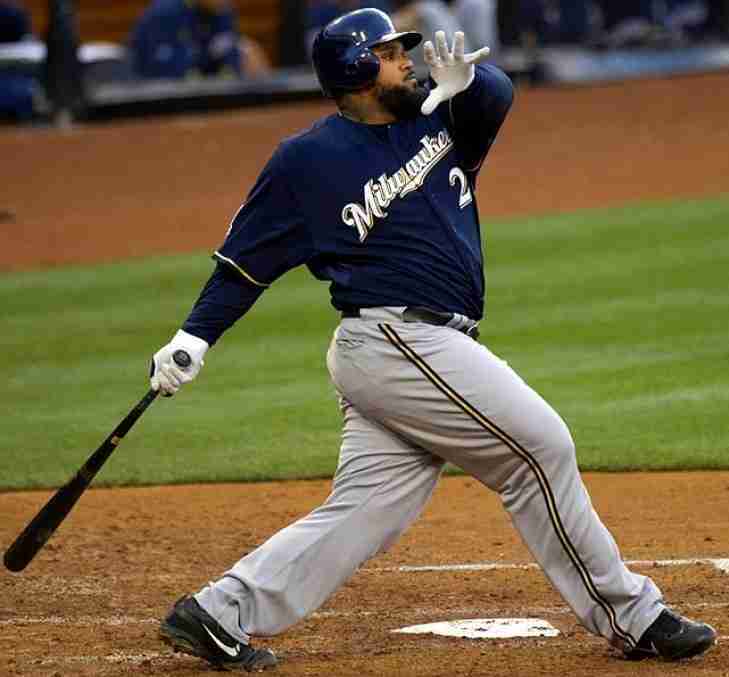
A highly touted first-round pick in 2002, Prince Fielder was a physically imposing left-handed slugger who had spent his childhood taking batting practice in big league stadiums alongside his father, Cecil. Debuting in 2005, he quickly became the centerpiece of a young, explosive core that aimed to bring winning baseball back to the shores of Lake Michigan.
In 2007, his second full season, Fielder blasted 50 home runs, making him the youngest player in baseball history to reach that plateau and surpassing the franchise record previously held by Gorman Thomas. This early stretch served as the formal introduction to a player who paired elite strength with a surprising technical discipline at the plate, earning him his first of three Silver Slugger Awards and a third-place finish in the MVP voting. Basically, like father, like son!
In 2009 and 2011, Fielder established himself as a top power hitter. In 2009, he led the National League with 141 RBIs and was the first Brewer to win the Home Run Derby. In 2011, he hit 38 home runs and drove in 120 runs, securing his spot as a perennial All-Star. His high offensive level included an on-base percentage over .400 in three seasons.
Between 2006 and 2011, he was a fixture in the middle of the diamond, famously playing in 162 games in three seasons. While mainly known for power, he showed versatility with a .299 batting average as a Brewer, proving he's a complete hitter rather than a one-dimensional slugger. His stats include 230 home runs and 656 RBIs, reflecting a high-volume contribution during the team's most successful era.
After helping the Brewers reach the 2011 NLCS, he departed in free agency for the Detroit Tigers. Fielder was inducted into the Brewers Wall of Honor in 2018 and the Walk of Fame in 2022.
