


Site Admin
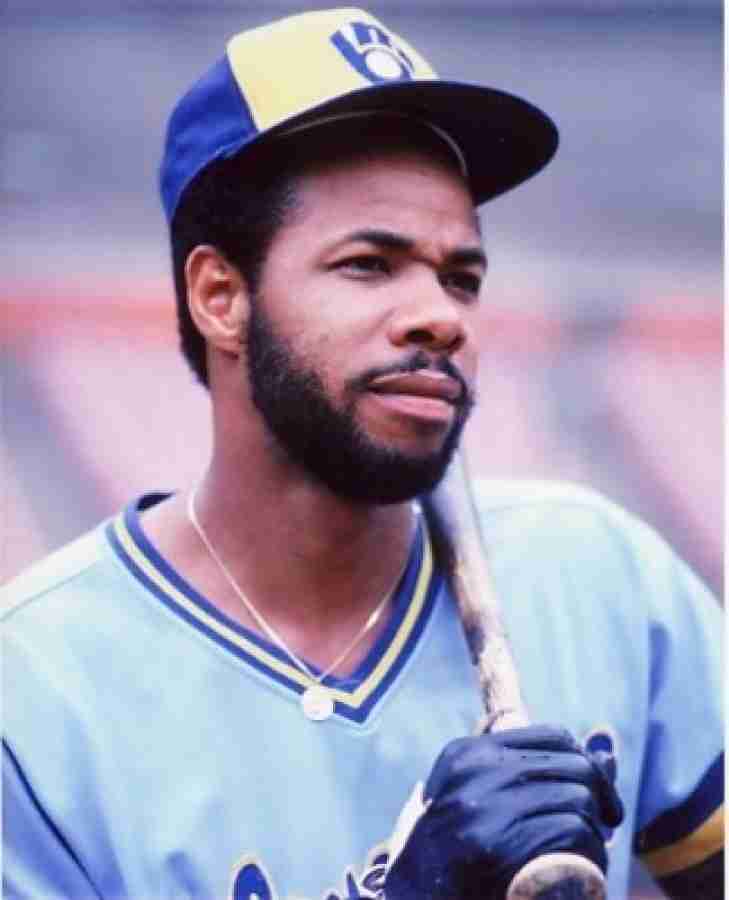
4. Cecil Cooper
3. Ryan Braun
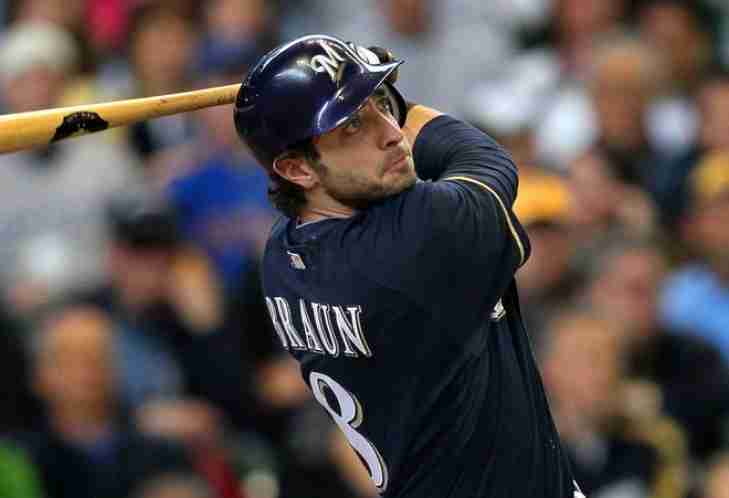
Ryan Braun arrived in Milwaukee in 2007 as a high-caliber prospect with a "five-tool" label that he spent the next fourteen seasons largely validating. While his defensive work at third base and later left field was often characterized as average, his offensive impact was immediate and staggering.
Braun won the 2007 Rookie of the Year Award while setting a rookie record for slugging percentage (.634). He quickly proved to be a professional mainstay, earning the first of five consecutive Silver Slugger Awards and becoming a perennial fixture at the All-Star Game. This early stretch served as the formal introduction to a player who could impact the game with both a specialized batting average and the speed to record 216 stolen bases over his career.
Between 2008 and 2010, Braun remained a professional mainstay, earning three consecutive All-Star selections and three Silver Slugger Awards. He showed the organization he was a premier run producer by averaging over 30 home runs and 100 RBIs during this three-year stretch, notably hitting a dramatic go-ahead home run on the final day of the 2008 season to clinch the Brewers' first playoff berth in 26 years. His ability to hit for both average and power made him a perennial fixture in the top ten of the MVP voting well before he reached his ultimate peak.
Braun reached a ceiling of individual production during the 2011 campaign, in a season that saw him lead the Brewers to a division title. That summer, he showcased high-frequency efficiency in capturing the National League MVP, batting .332 with 33 home runs and 33 stolen bases. He followed that performance with a 2012 season where he led the league in home runs (41) and runs scored (108), recording a second consecutive slugging title.
His career featured a traumatic, localized scandal that permanently altered the perception of his legacy. In 2011, Braun tested positive for PEDs and famously avoided suspension by discrediting the sample collector, Dino Laurenzi Jr., with accusations of bias. However, he was later implicated in the Biogenesis investigation, ultimately admitting to wrongdoing and serving a 65-game suspension in 2013. While this period remains a stain on his career, he showed the organization specialized resilience by returning to a high level of play, earning a sixth All-Star selection in 2015 and remaining the team’s most reliable power source.
He officially retired after the 2020 season, walking away as the all-time franchise leader in home runs (352) and currently ranks second only to Robin Yount in several major offensive categories, including RBIs (1,154) and extra-base hits. He remained a professional mainstay until his final at-bat in 2020, recording 1,963 hits and a career .296 batting average. While the controversies of his peak may hinder his path to Cooperstown, his induction into the Brewers Walk of Fame in 2024 served as the final punctuation to his career.
2. Paul Molitor
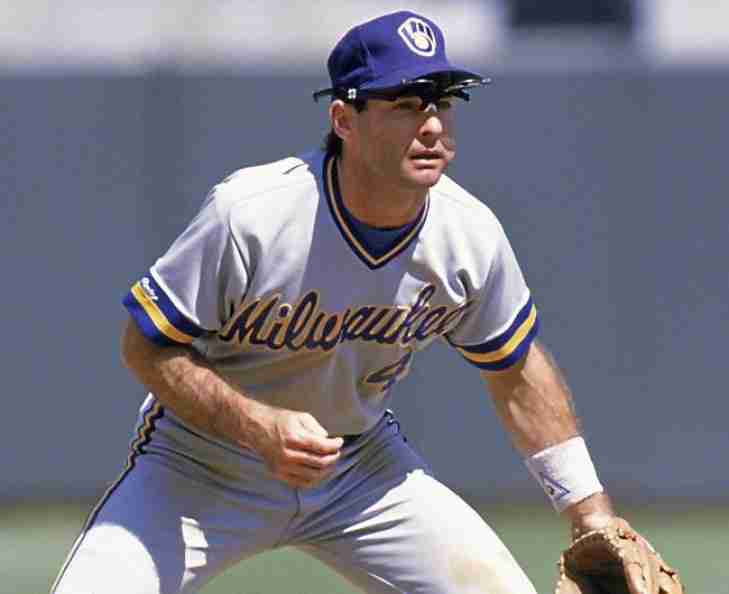
Paul Molitor arrived in Milwaukee in 1978, a first-round pick who skipped the minor leagues almost entirely to become the catalytic "Ignitor" of the Brew Crew. While he shared the clubhouse with larger-than-life power hitters, he provided a brand of scientific, high-frequency hitting that made him one of the most complete offensive forces in baseball history.
In 1979, his first full season, Molitor demonstrated a high rate of finding gaps, batting .322, and recording 188 hits. He quickly proved to be a professional mainstay who could impact the game with his legs as much as his bat, reaching the 30-stolen base mark in his debut campaign, a feat he would repeat seven more times while wearing the Milwaukee pinstripes. This early stretch established him as the league's premier table-setter, providing a high-quality floor for a lineup that would soon become the most feared in the Junior Circuit.
During the 1982 "Harvey’s Wallbangers" era, Molitor led the American League in runs scored (136). He showcased a historic mastery on the game's biggest stage, setting a World Series record with five hits in Game 1 against the Cardinals and finishing the Fall Classic with a .355 average. While injuries frequently tested his durability in the mid-80s, he returned to reach a historic peak of efficiency in 1987. That summer, he authored a 39-game hitting streak, the longest in the American League since Joe DiMaggio, while batting a career-high .353 and capturing the first of his four Silver Slugger Awards.
His tenure featured a remarkable accumulation of stats that placed him at the very top of the organization's leaderboards. Between 1978 and 1992, he was a steady source of run production, leading the league in runs three times and hits once. He left behind a statistical footprint in Milwaukee that remains the definitive benchmark for speed and contact, departing as the all-time franchise leader in stolen bases (412) and triples (86). The tactical value of his bat was such that he recorded 2,281 hits and a .303 batting average as a Brewer.
It was a bittersweet departure following the 1992 season, an exit driven by a stark disconnect between the player’s loyalty and the front office’s financial strategy. Despite Molitor's stated desire to remain a "Lifer" in Milwaukee, the cost-conscious Brewers offered him a one-year deal that included a significant pay cut. This opened the door for the defending-champion Toronto Blue Jays, who offered a three-year, $13 million contract that the Brewers were unwilling to match.
The longevity of his excellence left a mark, finalized in 1999 when the organization retired his number 4. He earned a first-ballot induction into the Baseball Hall of Fame in 2004.
1. Robin Yount
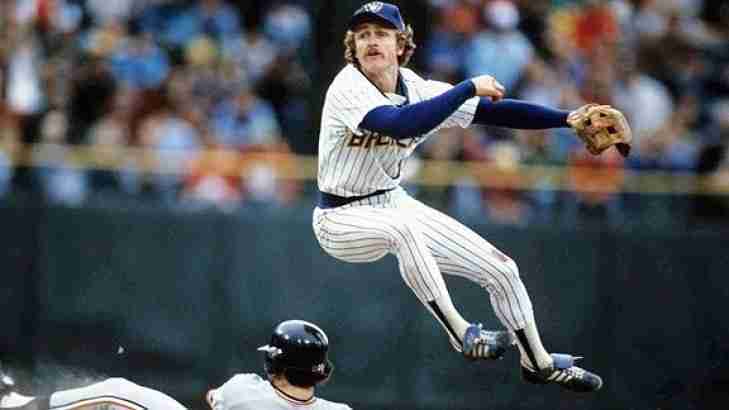
Robin Yount arrived in Milwaukee in 1974 as a startlingly young 18-year-old, a first-round pick who bypassed the seasoning of a traditional minor league apprenticeship to start on Opening Day. While he initially navigated the growing pains of a teenager in the American League, he quickly evolved into the heartbeat of the organization. For twenty seasons, he provided a brand of versatile brilliance that saw him master two distinct positions, standing as the definitive lifer and a foundational pillar who remains the undisputed benchmark for every player who has worn the Brewers' uniform.
After breaking Mel Ott’s record for the most games played before turning 20, Yount showed the organization he was a professional mainstay by anchoring the shortstop position with a combination of elite range and developing power. By 1980, he had transformed into a high-caliber offensive threat, leading the league in doubles (49) and earning his first All-Star selection. This early stretch served as the formal introduction to a player who would collect more hits during the 1980s than any other practitioner in the sport.
During the 1982 campaign, Yount led the "Harvey’s Wallbangers" squad to the franchise's first pennant. That summer, he showcased a technical mastery at the plate, leading the league in hits (210), doubles (46), and slugging percentage (.578) while capturing his first American League MVP and a Gold Glove at shortstop. He remained a high-stakes performer during the World Series, batting a blistering .414 against the Cardinals. This individual recognition was not his first peak; he reinvented himself following a shoulder injury, moving to center field and winning a second MVP Award in 1989, becoming one of the few players to ever win the honor at two different positions.
Between 1974 and 1993, he never donned another uniform, methodically amassing a franchise-record 77.4 bWAR. He was a tactical force who could impact the game with specialized speed, recording 271 stolen bases, and a consistent bat that produced six seasons with a batting average over .300. He left behind a statistical footprint in Milwaukee that includes being the all-time leader in games played (2,856), runs (1,632), hits (3,142), and RBIs (1,406), figures that reflect a lifespan of unwavering commitment to one city.
In 1992, he recorded his 3,000th career hit, a moment that served as the final punctuation mark on a Hall of Fame journey. He walked away from the game a year later, leaving a mark in Wisconsin that transcends the box score. He remained a professional icon long after his final out, becoming a first-ballot Hall of Famer in 1999, the same year the Brewers raised his number 19 to the rafters.
It will be a long time before anyone supplants Yount as the greatest Brewer of all time.
